

P0123 on 2011-2018 Ford Focus 2.0L: Throttle Position Sensor Circuit High Fixes
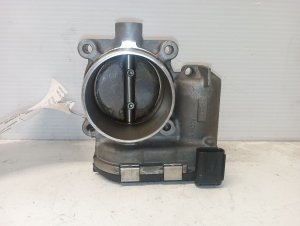
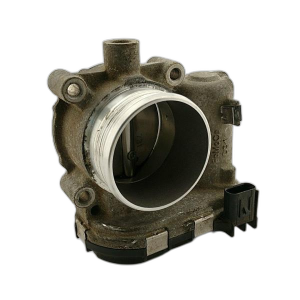
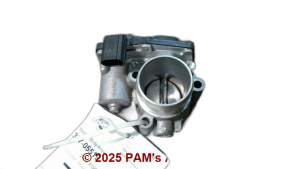
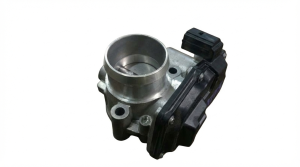
On a 2011-2018 Ford Focus, code P0123 is almost always caused by a failing electronic throttle body. The throttle position sensor (TPS) is integrated into the throttle body and is not sold separately. The most common OEM part number is CM5Z-9E926-D. Expect to pay $100-$250 for a new throttle body assembly and plan for a 1/5 difficulty DIY replacement.
- Code P0123 on a 2011-2018 Focus almost always points to a failed electronic throttle body.
- Do not attempt to buy a separate throttle position sensor (TPS); it is integrated into the throttle body assembly for this car.
- Driving is not recommended as the car can enter a dangerous 'limp mode' with little to no warning.
- Replacement is a straightforward DIY job that requires basic tools and a throttle relearn procedure afterward.
- Cleaning the throttle body will not fix this specific electronic fault.
What's Unique About the 2011-2018 Ford Focus
The third-generation Ford Focus (2012-2018) is notorious for electronic throttle body failures. This is a well-documented issue that causes a sudden loss of power, known as "limp mode," which can be a significant safety hazard. Ford acknowledged the problem by issuing Customer Satisfaction Program 13N03, which extended the warranty on the throttle body to 10 years or 150,000 miles, citing contamination on the internal motor contacts. This program has since expired for most owners. Unlike many other vehicles, the throttle position sensor (TPS) on this Focus is integrated into the throttle body and cannot be replaced separately, meaning the entire assembly must be changed.
Generation note: The 2011-2018 year range covers the end of the second generation (2011) and the entire third generation (2012-2018) of the Ford Focus in North America. The electronic throttle body failure is a particularly widespread and well-known issue on the third-generation models, leading to Ford's 13N03 warranty extension.
Symptoms You May Notice
- Check Engine Light is on
- Wrench light appears on the dashboard
- Sudden loss of engine power (entering "limp mode")
- Poor or hesitant acceleration
- Rough or unstable idle
- Bucking or jerking
- Hard starting
- Engine stalling
- Replacing only the Throttle Position Sensor (TPS). On this vehicle, the TPS is not a separate, serviceable part; it is integrated into the throttle body assembly.
- Cleaning the throttle body. While cleaning a dirty throttle body can solve some idling issues, it will not fix the internal electronic failure that causes code P0123 on this platform.
Most Likely Causes
- Failing Electronic Throttle Body 🔴 High Probability → Shop Fuel Injection Throttle Body This is a widely recognized failure point on 2012-2018 models. Internal electronic components, specifically the contacts for the throttle position sensor, become contaminated or wear out, leading to incorrect voltage signals. This was the specific reason cited by Ford for their 13N03 Customer Satisfaction Program.
How to confirm: Use an OBD-II scanner to confirm P0123 and check for related throttle body codes (e.g., P2111, P2112). Test the sensor's voltage with a multimeter; if it reads consistently high (near 5V) regardless of throttle position, the sensor has failed.
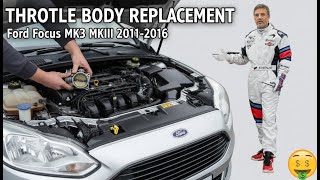
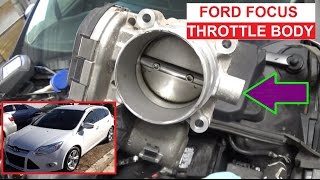
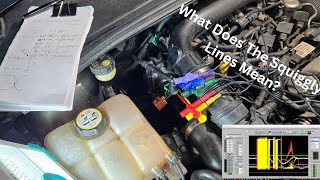
Typical fix: Replace the entire electronic throttle body assembly. 🎬 Watch: This step-by-step guide shows you how to replace the assembly. The throttle position sensor is integrated and not sold separately for this model. The common OEM part number is CM5Z-9E926-D, which supersedes older versions like CM5Z-9E926-A and CM5Z-9E926-B.
Est. part cost: $100-$250 - Wiring or Connector Issue 🟡 Medium Probability On 2012-2014 models, the engine wiring harness can chafe against the intake manifold near the throttle body, causing wires to short to power or break. This specific issue is addressed in Ford's Technical Service Bulletin 18-2062.
How to confirm: Visually inspect the wiring harness and connector going to the throttle body for any signs of damage, corrosion, or loose pins. Specifically check the area where the harness passes the intake manifold. Check for a short to power on the signal wire using a multimeter.
Typical fix: Repair the damaged section of wiring or clean/replace the connector. Use automotive-grade tape or split-loom tubing to protect the repaired area from future chafing.
Est. part cost: $5-$50
Rare But Worth Checking
- Powertrain Control Module (PCM) Fault: → Shop Engine Control Module (ECM) This is very rare. Before suspecting the PCM, all other possibilities, especially the throttle body and wiring, must be thoroughly ruled out. A faulty PCM can sometimes incorrectly interpret sensor data or have a failed input circuit.
Diagnosis Steps
- Read the codes: Use an OBD-II scanner to confirm P0123 and note any other codes present, such as P2111, P2112, or P2135.
- Inspect the wiring: Carefully examine the wiring harness and connector leading to the throttle body. On 2012-2014 models, pay close attention to the area where the harness passes the intake manifold for signs of chafing, as noted in TSB 18-2062.
- Test the sensor voltage: Using a multimeter, back-probe the throttle position sensor's signal wire at the connector. With the key on but the engine off, the voltage should be around 0.5V at closed throttle and sweep smoothly up to around 4.5V at wide-open throttle. A reading that is stuck high (at or near 5V) confirms a high circuit condition.
- Check for shorts: Verify that the signal wire is not shorted to a power source in the harness. A continuity test between the signal wire and a 12V source can confirm this.
- Confirm the cause: If the wiring is intact and the voltage is stuck high, the failure is internal to the electronic throttle body assembly.
- Replace the throttle body: If confirmed faulty, replace the entire throttle body assembly. The most common OEM part number is CM5Z-9E926-D.
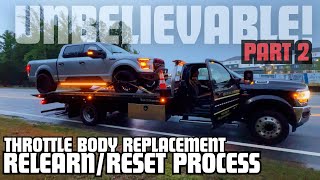
- Perform a relearn procedure: After replacement, a throttle body relearn procedure is necessary. This can often be done by disconnecting the negative battery terminal for 15-20 minutes to clear the PCM's memory. Alternatively, a specific drive cycle may be required: let the vehicle idle for a few minutes, then drive with varied speeds and loads to allow the PCM to learn the new 🎬 Watch: A mechanic demonstrates the proper throttle body relearn process. throttle body's parameters.
Parts You'll Likely Need
- Electronic Throttle Body Assembly
(OEM #CM5Z-9E926-D)— This is the most common failure point for code P0123 on this vehicle. The integrated throttle position sensor fails internally, requiring the replacement of the entire unit.
Trusted brands: Motorcraft, Bosch, Hitachi, SKP
OEM price range: $180-$250
Aftermarket price range: $100-$180
Related Codes That Often Appear With This One
- P2111 — Indicates 'Throttle Actuator Control System - Stuck Open'. This and other throttle actuator codes are common companions because the PCM loses trust in the throttle's position and may shut down the actuator.
- P2112 — Indicates 'Throttle Actuator Control System - Stuck Closed'. This is another common code that appears with throttle body failure, often triggering limp mode.
- P2135 — Indicates 'Throttle/Pedal Position Sensor/Switch A/B Voltage Correlation'. This code can appear alongside P0123 if the PCM detects a discrepancy between the two internal throttle position sensors.
Technical Service Bulletins (TSBs) & Recalls
- TSB 18-2062: Addresses various drivability concerns on 2012-2014 Focus 2.0L models caused by an engine wiring harness chafing against the intake manifold near the throttle body. This can cause shorts or open circuits leading to multiple DTCs, including those related to the throttle body.
- Customer Satisfaction Program 13N03: While technically not a TSB, this program served a similar function by acknowledging a defect and providing a remedy. It extended the warranty on the throttle body to 10 years/150,000 miles due to internal contamination causing electrical connectivity issues.
Platform-Specific Known Issues
- The 2012-2018 Ford Focus has a widely known issue with premature electronic throttle body failure, which led Ford to create Customer Satisfaction Program 13N03, extending the warranty on the part to 10 years or 150,000 miles. This program has expired for most vehicles but serves as official acknowledgment of the defect.
- On 2012-2014 models, TSB 18-2062 highlights a problem where the engine wiring harness can rub against the intake manifold, causing various throttle-related codes, including P0123.
Mechanic-Grade Diagnostic Values
- Throttle Position Sensor 'A' (TP1) Signal Voltage — expected: Approx. 0.5V-1.0V at closed throttle, sweeping smoothly to ~4.5V at wide-open throttle (Key On, Engine Off).. Failure: Voltage is stuck at or near 5.0V regardless of throttle plate angle, or does not sweep smoothly.
- 5V Reference Voltage (VREF) at throttle body connector C175B — expected: 4.8V - 5.2V with Key On, Engine Off.. Failure: Voltage is significantly lower than 4.8V (possible open/short in harness or PCM issue) or higher than 5.2V (possible alternator overcharging issue).
- Sensor Ground Continuity at throttle body connector C175B — expected: Less than 1.0 ohm of resistance between the sensor ground pin and the negative battery terminal.. Failure: High resistance or an open circuit (OL) indicates a bad ground path, which can cause the signal voltage to float high.
Scan Tool Commands That Help
- FORScan: PCM > Reset All Adaptations — This function should be used after replacing the electronic throttle body. It clears the PCM's Keep Alive Memory (KAM), forcing it to relearn the idle and throttle position values for the new part, which is critical for preventing high idle or erratic behavior after installation.
- Ford IDS (or equivalent professional scanner): Key-On-Engine-Off (KOEO) and Key-On-Engine-Running (KOER) Self-Tests — These dealer-level tests command all modules to check themselves and report status. This can sometimes reveal intermittent faults or codes that are not captured in the continuous memory read by basic OBD-II scanners.
Wiring & Ground Locations
- C175B — The 6-pin electrical connector directly on the electronic throttle body assembly.. This is the primary connection point for all voltage and signal tests. A visual inspection for corrosion, moisture, or pushed-out pins is the first step before any electrical testing.
- G104 — Typically located on the driver's side fender apron, near the battery tray or main engine harness connection.. This is a major powertrain ground point. While the TPS has a dedicated sensor return to the PCM, a poor main ground at G104 can introduce electrical noise and voltage offsets throughout the system, potentially causing a variety of sensor errors, including a false P0123.
- TSB 18-2062 Chafing Point — On 2012-2014 models, inspect the engine wiring harness where it routes past the intake manifold, near the throttle body.. This specific location is known for the harness to rub through, causing wires (including the TPS signal, reference, or ground) to short to each other or to the engine block, directly causing the P0123 code.
Real Owner Repair Stories
- Compilation of multiple forum threads on FocusFanatics and Reddit (2012-2016 Ford Focus 2.0L) — Sudden limp mode, wrench light, check engine light with codes P0123, P2111, P2112.
❌ Tried (didn't work) Cleaning the throttle body with throttle body cleaner., Clearing the codes, only for them to return immediately or within a short drive.
✅ What actually fixed it Replacement of the entire electronic throttle body assembly with an OEM Motorcraft part (CM5Z-9E926-D). After replacement, some users experienced a high idle, which was resolved by performing a throttle relearn procedure (either by disconnecting the battery for 20 minutes or letting the car idle for 10-15 minutes before driving).
OEM Part Supersession History
CM5Z-9E926-A, CM5Z-9E926-B→CM5Z-9E926-D— The original parts were prone to premature failure due to contamination of internal contacts. The later revisions are presumed to have improved durability to address this known defect.
Heads up: None. The newer part number is a direct, backward-compatible replacement for the older versions.
Model Year Variations Within This Range
- 2012-2014: These model years are specifically called out in TSB 18-2062 for having an engine wiring harness that is prone to chafing against the intake manifold. While all 2011-2018 models are susceptible to the internal throttle body failure, these earlier third-generation models have a higher likelihood of the issue being caused by a wiring fault.
Diagnostic Flowchart
Other Known Issues on This Vehicle
Issues unrelated to this code that are worth knowing about as an owner of this generation:
- DPS6 PowerShift Dual-Clutch Transmission Failure 🔴 High — Extremely widespread on 2012-2016 Focus models with automatic transmissions. Issues include shuddering, hesitation, slipping, and complete failure, often requiring multiple clutch pack replacements or a new Transmission Control Module (TCM). (Ref: Subject of multiple warranty extensions and a major class-action lawsuit settlement.)
- Faulty Canister Purge Valve (EVAP System) 🟠 Medium — Very common issue causing rough idle, stalling after refueling, and difficulty starting. Can lead to a distorted fuel tank if not addressed. (Ref: Recall 18S32 was issued to reprogram the PCM to detect a stuck purge valve and prevent fuel tank damage.)
- Electronic Power Steering Assist Failure 🔴 High — Common on 2012-2014 models. Can result in a sudden and complete loss of power steering, making the vehicle very difficult to steer, sometimes accompanied by a 'Steering Assist Fault' message. (Ref: Multiple TSBs and a recall (14V-514) were issued for related steering gear problems, including missing ball bearings or faulty motor sensors.)
- Passenger-Side Engine Mount Failure 🟠 Medium — The hydraulic passenger-side engine mount is known to leak and collapse, causing excessive engine vibration to be felt in the cabin, especially at idle and during acceleration.
Used vs. New Parts: Buying Guide for This Vehicle
When a used part is the smart pick: Almost never. Given that the original equipment throttle body has a well-documented high failure rate, purchasing a used part is a significant gamble. It should only be considered as a temporary, low-cost option if the donor vehicle is known to have very low mileage (<50,000 miles).
Donor-vehicle mileage cap: roughly under 50000 miles for the part to have meaningful remaining life.
What to inspect on the donor part:
- Verify the part number is the latest revision (CM5Z-9E926-D).
- Inspect the connector for any signs of corrosion, bent pins, or heat damage.
- There are no reliable visual cues to determine the health of the internal electronics, which is the primary failure point.
OEM-only on this vehicle (don't cheap out):
- Electronic Throttle Body Assembly
Aftermarket brands forum-validated for this vehicle:
- Motorcraft (OEM)
- Bosch (often an OEM supplier)
- Hitachi (often an OEM supplier)
Brands owners have reported issues with on this vehicle:
- Unbranded 'white-box' parts from online marketplaces.
- Parts labeled as 'remanufactured' without a reputable brand name and warranty, as they often have a high rate of being defective out of the box or failing shortly after installation.
Real Owner Stories
Aggregated from forums and TSBs cited above. Mileages and costs reflect what owners reported in those sources.
2013 Ford Focus SE 2.0L
Symptoms: Car started stalling and losing power when hitting the gas pedal; the vehicle would struggle, stall, and shudder.
What fixed it: Replacement of the throttle body and the crankshaft position sensor.
Source hint: Reddit r/FordFocus report in owner_reports context
2012 Ford Focus SEL 2.0L
Symptoms: Check engine light with codes for the throttle body being stuck.
What fixed it: Replacement of the electronic throttle body assembly.
Source hint: FocusFanatics.com thread '2012-sel-p2111-p2112-throttle-body-replacement'
Related OBD-II Codes
Frequently Asked Questions
Is there a warranty extension for the throttle body on my 2012-2018 Ford Focus?
My 2013 Focus is bucking and showing P0123; could this be a wiring issue instead of the sensor?
What is the correct replacement part number for the throttle body on a 2.0L Focus?
Can I just replace the Throttle Position Sensor (TPS) on my 2014 Focus?
Do I need to do anything special after installing the new throttle body?
Does the 1.0L EcoBoost Focus have this same P0123 throttle body issue?
Helpful Videos
We Have This Part in Stock

The information in this article is provided for general reference and educational purposes only. Vehicle specifications, procedures, and part compatibility can vary by production date, trim level, and region. Always consult your vehicle's factory service manual and verify part numbers before purchasing or performing repairs. Safety-critical components such as airbags, seat belts, and braking systems should be installed by a qualified professional.
- Ford Focus:
- 🧭 Diagnostic Flowchart
- 🎬 Helpful Videos
- 🛍️ Shop This Part
- What's Unique About the 2011-2018 Ford Focus
- Symptoms You May Notice
- Most Likely Causes
- Rare But Worth Checking
- Diagnosis Steps
- Parts You'll Likely Need
- Related Codes That Often Appear With This One
- Technical Service Bulletins (TSBs) & Recalls
- Platform-Specific Known Issues
- Mechanic-Grade Diagnostic Values
- Scan Tool Commands That Help
- Wiring & Ground Locations
- Real Owner Repair Stories
- OEM Part Supersession History
- Model Year Variations Within This Range
- Other Known Issues on This Vehicle
- Used vs. New Parts: Buying Guide for This Vehicle
- Real Owner Stories
- 2013 Ford Focus SE 2.0L
- 2012 Ford Focus SEL 2.0L
- Related OBD-II Codes
- Frequently Asked Questions
- 🎟️ Get 5% Off