

P0123 on 2012-2018 Ford Focus 2.0L: Causes and Fixes for Throttle Position Sensor High Voltage
On a 2012-2018 Ford Focus, P0123 almost always means the throttle body is failing. The sensor is built-in, so the whole assembly needs replacement. Expect to pay $150-$300 for an OEM part; it's a straightforward DIY job. Before replacing, check for wiring harness chafing near the intake manifold, a known issue on 2012-2014 models.
- P0123 on your Focus means the throttle position sensor is sending a high voltage signal.
- The most likely cause is a failed throttle body assembly, as the sensor is built-in and cannot be replaced separately.
- Before buying a new throttle body, always inspect the wiring and connector for damage, as this is a cheaper fix. Check for chafing near the intake manifold per TSB 18-2062, especially on 2012-2014 models.
- Replacement is a DIY-friendly job, and the correct OEM part is Motorcraft TB-15.
- A throttle body relearn procedure is necessary after replacement.
What's Unique About the 2012-2018 Ford Focus
The 2012-2018 Ford Focus uses an electronic throttle body (ETB) where the throttle position sensor (TPS) is not sold as a separate, replaceable part. This is a critical detail, as a sensor failure requires replacing the entire throttle body assembly. Ford acknowledged the high failure rate of these units by issuing Customer Satisfaction Program 13N03, which extended the throttle body warranty to 10 years or 150,000 miles, though this has now expired for most vehicles. Additionally, TSB 18-2062 was released for 2012-2014 models to address wiring harness chafing near the intake manifold, which can cause this and other throttle-related codes.
Symptoms You May Notice
- Check Engine Light is on
- Wrench light may be illuminated on the dash
- Vehicle enters "limp mode" with severely reduced power
- Hesitation or stumbling during acceleration
- Rough or unstable idle
- Engine stalling, especially when coming to a stop
- Poor fuel economy
- Unpredictable or erratic throttle response
- Replacing only the accelerator pedal position (APP) sensor. While the APP sensor and TPS work together, P0123 specifically points to the sensor at the throttle body, not the pedal. A Reddit user initially replaced the throttle body and crankshaft sensor for codes including P0123, but the final fix was the accelerator pedal; however, this is less common.
Most Likely Causes
- Faulty Throttle Body Assembly 🔴 High Probability → Shop Fuel Injection Throttle Body The throttle position sensor (TPS) is integrated into the assembly and is a well-documented common failure point due to internal electronic faults. It cannot be replaced separately. Ford's Customer Satisfaction Program 13N03 acknowledged this widespread issue.
How to confirm: After verifying the wiring is intact, this is the most likely cause. With a scan tool, observe the TPS voltage (PID: TP1). If it's stuck high (near 5V) regardless of throttle command or pedal input, the assembly is bad. This was confirmed by Ford's extended warranty program for this specific part.
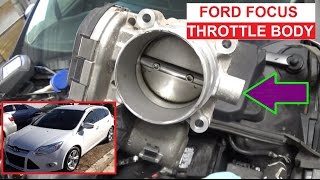
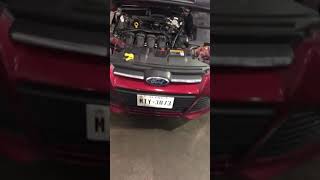
Typical fix: Replace the entire throttle body assembly. The OEM Motorcraft part number is TB-15 🎬 Watch: A quick guide to locating and replacing the throttle body. (replaces CP9Z-9E926-A and is superseded by CP9Z-9E926-D). A throttle body relearn procedure is required after installation.
Est. part cost: $150-$300 - Wiring Harness or Connector Issue 🟡 Medium Probability Vibrations and heat can cause wires to chafe or pins in the connector to develop corrosion or a poor connection. TSB 18-2062 specifically notes that on 2012-2014 models, the engine harness can chafe against the intake manifold, causing a short to power.
How to confirm: Visually inspect the wiring harness leading to the throttle body, paying close attention to where it runs near the intake manifold, for any signs of damage, chafing, or melting. Disconnect the connector and check for corrosion, moisture, or bent/backed-out pins. Use a multimeter to check for 5V reference, good ground, and for a short to power on the signal wire.
Typical fix: Repair the damaged section of wiring or clean/replace the connector pigtail. Apply protective conduit or re-route the harness to prevent future chafing.
Est. part cost: $15-$50 - Dirty or Sticking Throttle Body ⚪ Low Probability → Shop Fuel Injection Throttle Body Carbon buildup from the PCV system can cause the throttle plate to not close properly. While this can cause erratic sensor readings, it's much less likely to cause a persistent 'high voltage' code compared to an internal electronic failure.
How to confirm: Remove the intake ducting and visually inspect the throttle bore and plate for heavy carbon deposits. Check if the plate moves freely. Cleaning is unlikely to fix a P0123 code on this platform, as the failure is typically electronic, not mechanical.
Typical fix: Clean the throttle body bore and plate with a dedicated throttle body cleaner and a soft cloth. Do not spray cleaner directly into the electronics. This is unlikely to be a permanent fix for P0123.
Est. part cost: $5-$15
Rare But Worth Checking
- Faulty Powertrain Control Module (PCM): → Shop Engine Control Module (ECM) This is very rare. The PCM should only be considered after all other possibilities, especially the throttle body and wiring, have been exhaustively tested and ruled out. A faulty PCM is often misdiagnosed.
Diagnosis Steps
- Read the code with an OBD-II scanner and check for any other related codes. Note the freeze frame data to see the engine conditions when the code was set.
- Visually inspect the wiring harness going to the throttle body. On 2012-2014 models, pay special attention to the area where the harness may contact the intake manifold, as outlined in TSB 18-2062. Look for chafing, melting, or corrosion.
- Disconnect the throttle body connector and inspect the pins on both the harness side and the throttle body side for corrosion, moisture, or damage. Clean with electrical contact cleaner if necessary.
- With the key on, engine off, use a multimeter to verify you have a stable 5-volt reference (VREF) and a good ground (ETCRTN) at the connector.
- If wiring appears good, reconnect the connector. Using a scan tool's live data function, monitor the Throttle Position Sensor 'A' voltage (PID: TP1). It should be stuck high, likely near 5 volts. If it reads normally, the problem may be intermittent.
- If the voltage is stuck high and the wiring is confirmed to be good, the throttle body assembly has failed and needs to be replaced. The OEM part is Motorcraft TB-15.
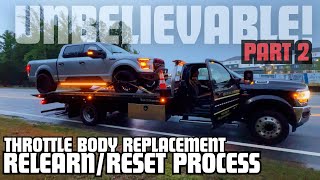
- After replacement, perform a Keep Alive Memory (KAM) reset. This can be done with a scan tool like FORScan or by disconnecting the negative battery terminal for at least 15 minutes. After the reset, let the engine idle for several minutes to relearn idle trims before driving. 🎬 Watch: How to perform the critical throttle body relearn procedure.
Parts You'll Likely Need
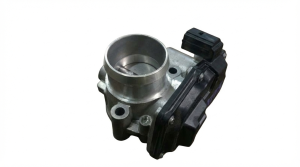
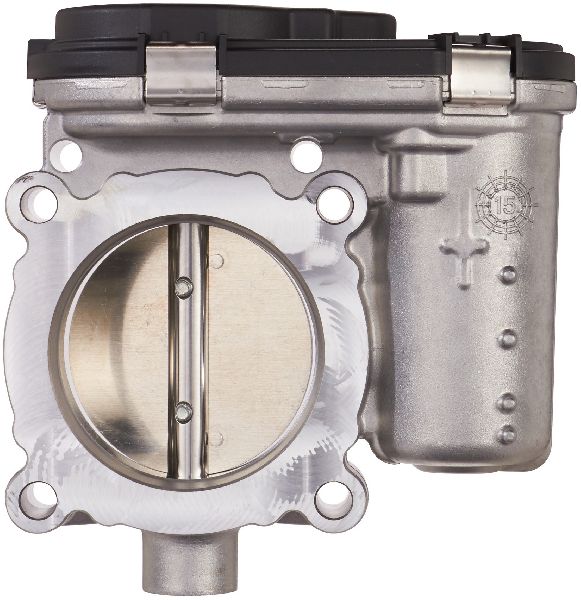
- Electronic Throttle Body Assembly
(OEM #CP9Z-9E926-D, CP9Z-9E926-A, DS7E-9F991-BB (Motorcraft TB-15))— This is the most common cause of P0123, as the non-serviceable throttle position sensor (TPS) is integrated into this assembly.
Trusted brands: Motorcraft, Bosch, Hitachi, Dorman
OEM price range: $200-$350
Aftermarket price range: $150-$250
Related Codes That Often Appear With This One
- P0122 — Throttle Position Sensor 'A' Circuit Low. A failing sensor can have erratic readings, sometimes sending a signal that is too high (P0123) and other times too low (P0122). TSB 18-2062 lists this as a possible related code from wiring harness chafing.
- P2135 — Throttle/Pedal Position Sensor/Switch 'A'/'B' Voltage Correlation. This code indicates a mismatch between the two internal throttle position sensors, which is very common when the throttle body assembly is failing and is also listed in TSB 18-2062.
- P2111 — Throttle Actuator Control System - Stuck Open. If the throttle body is physically stuck due to carbon buildup or mechanical failure, it can trigger this code alongside the sensor circuit code. Also listed in TSB 18-2062.
- P2112 — Throttle Actuator Control System - Stuck Closed. Similar to P2111, a mechanical or electronic fault in the throttle body can prevent it from opening correctly, triggering this code. This is a very common companion code when the throttle body fails.
Technical Service Bulletins (TSBs) & Recalls
- TSB 18-2062: Addresses engine wiring harness chafing against the intake manifold 🎬 See this video for examples of common engine harness damage. on 2012-2014 Focus models, which can cause various throttle-related DTCs including P0123.
- Customer Satisfaction Program 13N03: Not a TSB, but an extended warranty program from Ford that covered the replacement of the faulty electronic throttle body for 10 years/150,000 miles, confirming the widespread nature of the problem.
Platform-Specific Known Issues
- TSB 18-2062: Wiring Harness Chafing: For 2012-2014 models, Ford issued a TSB regarding the engine wiring harness chafing against the intake manifold. This can damage wires for the throttle body and other sensors, leading to codes like P0123, P0122, P2135, P2111, and P2112. A visual inspection of this area is a critical first step in diagnosis.
- Customer Satisfaction Program 13N03: Ford acknowledged the high failure rate of the electronic throttle body on these models and extended the warranty to 10 years or 150,000 miles. While this program has likely expired for most vehicles, it serves as official confirmation of the part's propensity to fail.
Mechanic-Grade Diagnostic Values
- Throttle Position Sensor 'A' (TP1) Signal Voltage — expected: Approx. 0.5V - 1.0V at closed throttle (idle), smoothly increasing to approx. 4.0V - 4.8V at wide-open throttle (WOT).. Failure: Voltage is stuck high (near 5.0V) regardless of throttle position, or the voltage is erratic, jumping, or has dead spots when the throttle is slowly opened and closed.
- Throttle Position Sensor Reference Voltage (VREF) — expected: Approx. 5.0V (±0.5V) at the throttle body connector with key on, engine off.. Failure: Voltage is significantly lower than 4.5V, higher than 5.5V, or absent. This indicates a wiring or PCM issue.
- Sensor Ground (ETCRTN) Circuit — expected: Near 0V, with good continuity to chassis ground.. Failure: Voltage is present on the ground wire, or there is high resistance between the ground pin and the battery negative terminal, indicating a poor ground connection.
Scan Tool Commands That Help
- FORScan, Ford IDS, or other professional scan tools: Keep Alive Memory (KAM) Reset — After replacing the throttle body or disconnecting the battery, this function clears the learned adaptive values for idle and fuel trims, forcing the PCM to relearn the characteristics of the new part. This is the correct procedure instead of a specific 'throttle relearn' command.
Wiring & Ground Locations
- Main Engine Bay Grounds — Underneath the air filter box. There are typically two ground points bolted to the chassis in this area, often with 8mm and 10mm bolts.. The PCM and its sensors rely on these grounds. A corroded or loose ground here can cause erratic sensor readings, including the high voltage seen in a P0123 code.
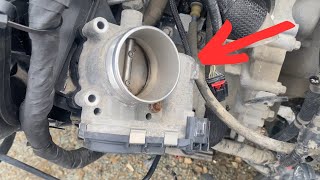
- Throttle Body Connector (C134) — The 6-pin electrical connector plugged directly into the electronic throttle body assembly.. This is the direct connection for the TPS signal, reference voltage, and ground. Corrosion, moisture, or backed-out pins in this connector are a direct cause of signal faults. The harness near this connector is the subject of TSB 18-2062 for 2012-2014 models.
- TSB 18-2062 Chafing Point — On 2012-2014 models, inspect the engine wiring harness where it runs close to or touches the intake manifold.. Vibrations can cause the harness to rub through, potentially shorting the TPS signal wire to a power source, which would directly cause a P0123 code.
Real Owner Repair Stories
- AliExpress Reviewer (2013 Ford Focus 2.3L (likely a typo, refers to 2.0L)) — Sudden acceleration surges, erratic idle (dropping below 600 RPM), near stalling at stoplights, and Check Engine Light with codes P0121 and P0221.
✅ What actually fixed it The owner tested the TPS signal wire with a multimeter and observed the voltage jumping erratically, spiking to 5.0V and dropping to 0.1V, instead of moving smoothly. This confirmed a faulty sensor. Replacing the entire throttle body assembly resolved all symptoms and codes.
OEM Part Supersession History
CP9Z-9E926-A→CP9Z-9E926-D— Likely an internal revision to improve reliability and address the common failure mode.
Heads up: Both parts are interchangeable for the 2012-2018 2.0L GDI engine.CM5E-9F991-AD→DS7E-9F991-BB— Part number change corresponding to vehicle updates or supplier changes.
Heads up: These parts are generally cross-compatible within the 2012-2018 generation, but it is always best to verify by VIN.
Model Year Variations Within This Range
- 2012-2014: These model years are specifically called out in TSB 18-2062 for a potential wiring harness chafing issue against the intake manifold. While the throttle body can fail on any year, this specific wiring failure mode is more likely on pre-facelift models.
- 2015-2018: These are post-facelift models. The wiring harness routing was likely revised, making the chafing issue from TSB 18-2062 less common. However, the internal electronic failure of the throttle body assembly itself remains a common problem across the entire 2012-2018 range.
Diagnostic Flowchart
Other Known Issues on This Vehicle
Issues unrelated to this code that are worth knowing about as an owner of this generation:
- DPS6 'PowerShift' Dual-Clutch Automatic Transmission Failure 🔴 High — Extremely common on 2012-2016 models. Issues include shuddering, hesitation from a stop, delayed shifts, and complete transmission failure. Problems can start early in the vehicle's life. (Ref: Multiple TSBs and a warranty extension to 7 years/100,000 miles were issued. Subject of major class-action lawsuits.)
- Collapsed Passenger-Side Hydraulic Engine Mount 🟠 Medium — Very common. The fluid-filled mount collapses, causing the engine to rest on the frame bracket. This results in severe vibration in the cabin, especially at idle in Drive. Often fails before 100,000 miles. (Ref: No specific recall, but it is a widely documented failure.)
- Fuel Tank Deformation due to Faulty Purge Valve 🔴 High — Widespread enough to trigger a massive recall (NHTSA 18V-735 / Ford 18S32) affecting over 1.4 million 2012-2018 Focus vehicles. A stuck-open canister purge valve (CPV) creates excessive vacuum, deforming the plastic fuel tank. (Ref: Recall 18S32. Symptoms include erratic fuel gauge, MIL with codes like P1450, and potential engine stalling.)
- Power Steering Assist Failure 🔴 High — Reported by numerous owners, particularly on 2012 models. Can result in a sudden and complete loss of power steering, making the vehicle very difficult to steer, especially at low speeds. (Ref: TSB 12-2-17 was issued for a 'steering wander' issue, but more catastrophic failures are also reported.)
Used vs. New Parts: Buying Guide for This Vehicle
When a used part is the smart pick: Due to the extremely high and well-documented failure rate of this specific part, buying a used throttle body is a significant gamble and generally not recommended. It should only be considered as a last resort for budget reasons.
Donor-vehicle mileage cap: roughly under 50000 miles for the part to have meaningful remaining life.
What to inspect on the donor part:
- Verify the donor vehicle had low mileage.
- Inspect the electrical connector for any signs of corrosion, moisture, or bent pins.
- Manually move the throttle plate to ensure it moves smoothly without binding or sticking.
- If possible, get the part from a vehicle that was not wrecked in the front end.
OEM-only on this vehicle (don't cheap out):
- Electronic Throttle Body (ETB) - While good aftermarket options exist, the OEM Motorcraft part is the most reliable baseline, despite its known flaws. Inconsistent quality control on cheaper aftermarket units can lead to repeat failures.
Aftermarket brands forum-validated for this vehicle:
- Dorman (Often features an OE FIX, such as a non-contact Hall Effect sensor to improve durability)
- Bosch
- Hitachi
Brands owners have reported issues with on this vehicle:
- Generic, unbranded parts from online marketplaces can have poor quality control and may fail prematurely.
Real Owner Stories
Aggregated from forums and TSBs cited above. Mileages and costs reflect what owners reported in those sources.
2012-2014 Ford Focus 2.0L
Symptoms: The engine wiring harness chafed against the intake manifold, leading to multiple throttle-related codes including P0123.
What fixed it: Repairing the damaged section of the wiring harness as specified in TSB 18-2062.
Source hint: TSB 18-2062: Addresses engine wiring harness chafing against the intake manifold on 2012-2014 Focus models
2012-2018 Ford Focus 2.0L Ti-VCT GDI — ~150000 miles
Symptoms: The vehicle experienced a high failure rate of the electronic throttle body, leading Ford to extend the warranty coverage.
What fixed it: Replacement of the electronic throttle body assembly.
Source hint: Customer Satisfaction Program 13N03
2012-2018 Ford Focus 2.0L
Symptoms: The car entered 'limp mode' with severely reduced power and a P0123 code; the TPS voltage was stuck high near 5V.
What fixed it: Replacement of the entire throttle body assembly with Motorcraft part TB-15 and performing a KAM reset.
Source hint: FocusFanatics.com forum discussions
Related OBD-II Codes
Frequently Asked Questions
Does Ford Customer Satisfaction Program 13N03 cover my 2012-2018 Focus throttle body replacement?
Can I just replace the Throttle Position Sensor (TPS) on my 2.0L Ti-VCT GDI engine?
Does TSB 18-2062 apply to my 2015 Ford Focus?
What part number should I use to replace the throttle body on my Focus?
Is there a special procedure I need to follow after installing a new throttle body?
Could my P0123 code be related to the massive fuel tank recall?
Helpful Videos

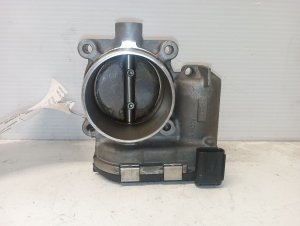
Used OEM Parts in Stock
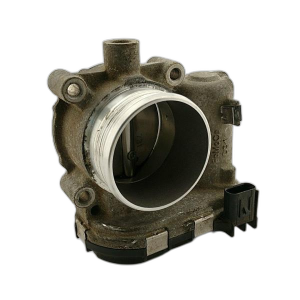
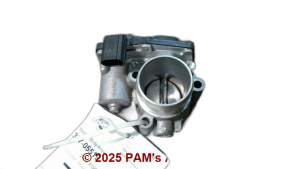
New Aftermarket Parts Available


The information in this article is provided for general reference and educational purposes only. Vehicle specifications, procedures, and part compatibility can vary by production date, trim level, and region. Always consult your vehicle's factory service manual and verify part numbers before purchasing or performing repairs. Safety-critical components such as airbags, seat belts, and braking systems should be installed by a qualified professional.
- Ford Focus:
- 🧭 Diagnostic Flowchart
- 🎬 Helpful Videos
- 🛍️ Shop This Part
- What's Unique About the 2012-2018 Ford Focus
- Symptoms You May Notice
- Most Likely Causes
- Rare But Worth Checking
- Diagnosis Steps
- Parts You'll Likely Need
- Related Codes That Often Appear With This One
- Technical Service Bulletins (TSBs) & Recalls
- Platform-Specific Known Issues
- Mechanic-Grade Diagnostic Values
- Scan Tool Commands That Help
- Wiring & Ground Locations
- Real Owner Repair Stories
- OEM Part Supersession History
- Model Year Variations Within This Range
- Other Known Issues on This Vehicle
- Used vs. New Parts: Buying Guide for This Vehicle
- Real Owner Stories
- 2012-2014 Ford Focus 2.0L
- 2012-2018 Ford Focus 2.0L Ti-VCT GDI — ~150000 miles
- 2012-2018 Ford Focus 2.0L
- Related OBD-II Codes
- Frequently Asked Questions
- 🎟️ Get 5% Off