

P0123 on 2005-2010 Ford Mustang 4.0L V6: Causes, Fixes, and Part Numbers
For a 2005-2010 Mustang with the 4.0L V6, code P0123 almost always means the Throttle Position Sensor (TPS) has failed. It's a simple, DIY-friendly repair, and the part is relatively inexpensive. Expect to pay $30-$85 for an aftermarket sensor or $65-$110 for a genuine Motorcraft part, which is highly recommended for reliability.
- P0123 on this Mustang almost always points to a failed Throttle Position Sensor (TPS).
- Symptoms include poor acceleration, rough idle, and harsh automatic shifts.
- This is a very easy and inexpensive DIY repair.
What's Unique About the 2005-2010 Ford Mustang
On the S197 generation Mustang with the 4.0L Cologne V6, this is a very common and straightforward issue. Unlike some vehicles where the TPS is integrated into a costly throttle body assembly, the sensor on this engine is a separate, easily serviceable part. This makes the fix significantly cheaper and simpler for DIYers. This is a key difference from the V8 models of the same generation, which use an Electronic Throttle Body (ETB) with an integrated, non-serviceable sensor. Owner communities strongly recommend using the OEM Motorcraft sensor, as aftermarket versions have a reputation for premature failure or being faulty out of the box.
Symptoms You May Notice
- Check Engine Light is on
- Poor, hesitant, or jerky acceleration
- Rough or unstable idle
- Engine stalling, especially when returning to idle
- Reduced engine power or entering 'limp mode'
- Harsh or erratic shifting on automatic transmissions
- Decreased fuel economy
- Engine may stall after revving and letting off the gas
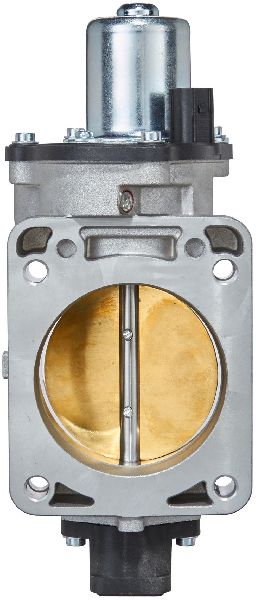
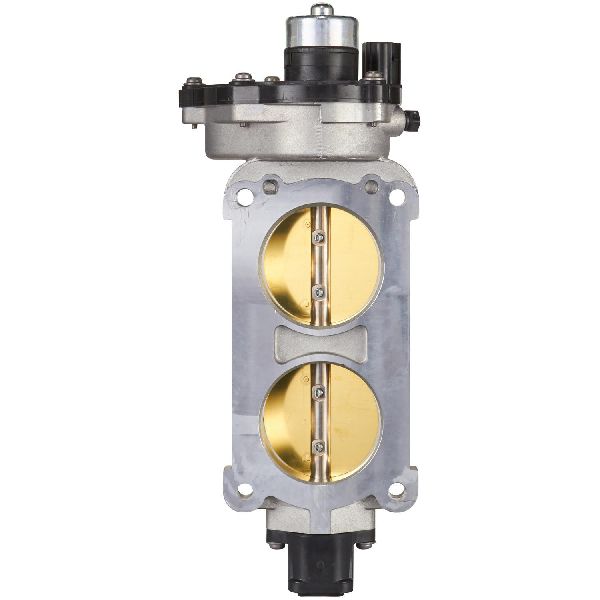
- Replacing the entire throttle body assembly. On the 4.0L V6, the TPS is a separate, serviceable part. Replacing the whole throttle body is unnecessary and expensive for a P0123 code.
- Assuming a transmission failure due to harsh shifting. The PCM uses TPS data to control shift points; a bad sensor signal can mimic transmission problems. This is a notorious issue on platform mates like the Ford Ranger.
Most Likely Causes
- Faulty Throttle Position Sensor (TPS) 🔴 High Probability → Shop Fuel Injection Throttle Body The sensor's internal resistive contacts wear out over time from heat and the constant rotational movement of the throttle shaft. This is a very common failure point on the 4.0L SOHC engine family.
How to confirm: Use a multimeter to back-probe the sensor's signal wire (often grey/white). With the key on and engine off, the voltage should be stuck high (near 5V) regardless of throttle position. A healthy sensor shows ~0.6-1.0V at closed throttle and sweeps smoothly to ~4.5V at wide-open throttle. Any dead spots, erratic jumps, or a constantly high reading confirms a bad sensor.
Typical fix: Replace the Throttle Position Sensor. The repair is simple, involving the removal of two screws and an electrical connector. After replacement, it's a good practice to disconnect the battery for 15-20 minutes to reset the PCM's learned values.
Est. part cost: $30-$110 - Wiring or Connector Issue ⚪ Low Probability Engine bay heat can make wiring brittle over time. The harness near the throttle body is subject to vibration and chafing, which can lead to a short in the signal wire to the 5V reference wire.
How to confirm: Visually inspect the wiring harness and connector for any signs of melting, chafing, corrosion, or loose pins. Perform a 'wiggle test' on the harness while monitoring the TPS voltage with a multimeter to see if the reading changes erratically.
Typical fix: Repair the damaged section of wiring or replace the connector pigtail. The pigtail connector is available as an aftermarket part, such as Dorman 645-241.
Est. part cost: $15-$40
Rare But Worth Checking
- Faulty Powertrain Control Module (PCM): → Shop Engine Control Module (ECM) This is extremely rare. All other possibilities, especially the sensor and wiring, should be exhaustively ruled out before considering the PCM as the cause.
Diagnosis Steps
- Confirm the code P0123 is present using an OBD-II scanner. Check for any other related codes, such as P0122, P2104, or P1121.
- Visually inspect the Throttle Position Sensor, its connector, and the surrounding wiring for any obvious damage, corrosion, or loose connections.
- With the ignition in the 'ON' position (engine off), use a multimeter set to DC volts to back-probe the TPS signal wire.
- At closed throttle, the voltage should be approximately 0.6V to 1.0V.
- Slowly open the throttle by hand. The voltage should increase smoothly and steadily to about 4.5V at wide-open throttle.
- If the voltage is stuck high (at or near 5V) regardless of throttle position, the sensor has failed and needs replacement.
- If the voltage is erratic, has dead spots, or jumps, the sensor is faulty and needs replacement.
- If the sensor tests good, perform a 'wiggle test' on the wiring harness while watching the multimeter to check for intermittent shorts or opens in the wiring.
- As a final check, verify the 5V reference and ground circuits at the sensor connector to rule out wiring issues upstream of the sensor.
- If both the sensor and wiring are confirmed to be good, the issue may be with the PCM, but this is highly unlikely.
Parts You'll Likely Need
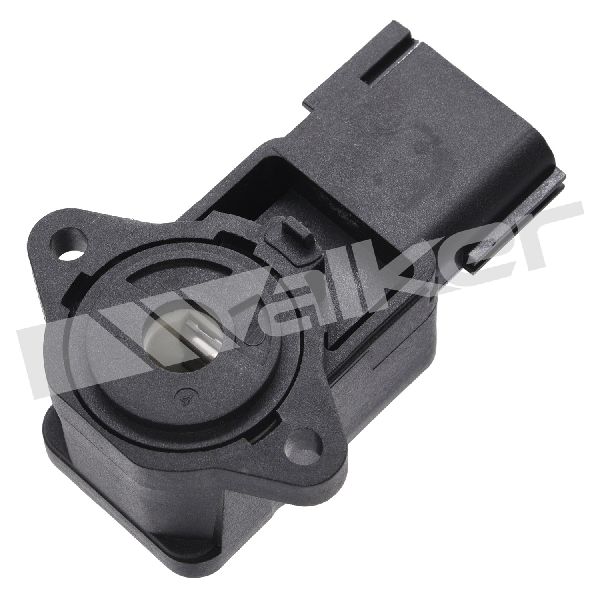
- Throttle Position Sensor
(OEM #Motorcraft DY-1164 (Ford Base Part #: 5F9Z-9B989-BA))— This is the most common cause of P0123. The sensor itself wears out and fails, sending an incorrect high voltage signal to the PCM.
Trusted brands: Motorcraft (highly recommended), Bosch, Standard Motor Products (SMP), NGK/NTK
OEM price range: $65-$110
Aftermarket price range: $30-$85 - TPS Connector Pigtail
(OEM #Dorman 645-241)— If the wiring check reveals a damaged or corroded connector, replacing the pigtail is the standard repair.
Trusted brands: Dorman, NAPA, Standard Motor Products
OEM price range: N/A
Aftermarket price range: $15-$40
Related Codes That Often Appear With This One
- P2104 — This code means 'Throttle Actuator Control System - Forced Idle'. It's an informational code indicating the PCM has put the vehicle into a 'limp mode' because of a fault it detected, such as P0123.
- P2106 — This code means 'Throttle Actuator Control System - Forced Limited Power'. Like P2104, this indicates the PCM has activated a fail-safe mode due to the P0123 fault.
- P0122 — This code for 'TPS Circuit Low Input' can sometimes appear with P0123 if the sensor is failing erratically, sending signals that are both too high and too low at different times, or if a user improperly reinstalls the sensor.
- P1121 — A Ford-specific code for 'Throttle Position Sensor Inconsistent with MAF Sensor'. The PCM sees a conflict where the TPS reports high throttle (due to the P0123 fault) but the MAF sensor reports low airflow (because the engine is at idle), indicating a sensor disagreement.
Technical Service Bulletins (TSBs) & Recalls
- While no TSBs point directly to P0123, TSB 00-3-5 for the related Ford Ranger platform noted issues with the TPS connector, suggesting wiring and connection integrity can be a weak point.
Platform-Specific Known Issues
- A common owner experience shared across forums is the immediate and dramatic improvement in both engine response and automatic transmission shifting after replacing a faulty TPS. Many initially suspect a serious transmission problem, only to find it was entirely caused by the bad sensor signal.
Mechanic-Grade Diagnostic Values
- TPS Signal Voltage (Key On, Engine Off) — expected: Approx. 0.6V - 1.0V at closed throttle, sweeping smoothly to ~4.5V at wide-open throttle.. Failure: Voltage is stuck high (near 5.0V) or does not change smoothly with throttle movement.
- TPS VREF (Reference Voltage) at Harness Connector — expected: Approx. 5.0V (typically 4.9V to 5.2V is acceptable).. Failure: Voltage is significantly lower than 4.9V or is absent, indicating a PCM or wiring issue.
- TPS Ground Circuit Resistance at Harness Connector — expected: < 1.0 Ohm continuity to battery negative terminal.. Failure: High resistance or an open circuit, indicating a bad ground wire or connection.
Scan Tool Commands That Help
- N/A (Manual Procedure): KAM (Keep Alive Memory) Reset / Idle Relearn Procedure — After replacing the TPS or disconnecting the battery, this procedure forces the PCM to relearn the new sensor's base values and idle strategy. It is not a scan tool command but a critical manual process for this vehicle.
Wiring & Ground Locations
- G100 — On the right side of the radiator support.. This is a primary chassis ground point in the engine bay. A corroded or loose G100 can cause various sensor reading issues.
- G103 — On the right front of the engine compartment.. Provides a ground path for several engine components. Ensuring it is clean and tight is a key step in ruling out ground-related electrical faults.
- G203 — At the right 'A' pillar, behind the kick panel.. This is an interior ground point that can affect systems connected to the Smart Junction Box (SJB) and PCM.
- TPS Connector — Mounted to the side of the throttle body on the 4.0L V6 engine.. This is the direct connection point for the sensor. The three pins are for 5V Reference, Signal Return, and Ground. Testing voltages here is the primary diagnostic step.
Real Owner Repair Stories
- allfordmustangs.com forum user (2006 Ford Mustang 4.0L V6) — Car would stall after revving and letting off the gas, Check Engine Light on with code P0123.
❌ Tried (didn't work) Initial diagnosis pointed towards the common TPS failure.
✅ What actually fixed it Replacing the Throttle Position Sensor (TPS) resolved all symptoms. The user confirmed the fix was straightforward.
Model Year Variations Within This Range
- 2005-2010: The 4.0L V6 uses a traditional, cable-actuated throttle body with a separate, replaceable TPS. This is fundamentally different from the 4.6L V8 and 5.4L V8 engines in the same S197 chassis, which use a fully Electronic Throttle Body (ETB) where the TPS is integrated and not sold as a separate part.
Diagnostic Flowchart
Other Known Issues on This Vehicle
Issues unrelated to this code that are worth knowing about as an owner of this generation:
- Timing Chain Rattle / Tensioner Failure 🔴 High — Common on higher-mileage engines (100k+ miles). A rattle, often described as a 'diesel' sound, may occur at startup or between 2000-3000 RPM. The 4.0L SOHC has timing chains at both the front and rear of the engine, with the rear chain requiring engine removal for service. (Ref: Multiple TSBs (e.g., 04-15-4) were issued for platform mates like the Explorer and Ranger, but the issue was never fully resolved across all model years.)
- Cracked Plastic Thermostat Housing 🟠 Medium — Extremely common failure point, often occurring between 75,000 and 120,000 miles, leading to coolant leaks.
- Passenger Footwell Water Leak 🟡 Low — Common issue where clogged cowl drains under the passenger-side windshield wiper allow water to back up and leak into the cabin through the cabin air filter opening, potentially damaging the Smart Junction Box (SJB). (Ref: TSB 08-26-7 addresses this water leak issue, providing a diagnostic and repair procedure.)
- Automatic Transmission Exhaust Vibration/Resonance 🟡 Low — Some early models with automatic transmissions could exhibit a noticeable vibration or resonance from the exhaust system around 850 RPM. (Ref: TSB 05-8-6 was issued to address this specific vibration concern.)
Used vs. New Parts: Buying Guide for This Vehicle
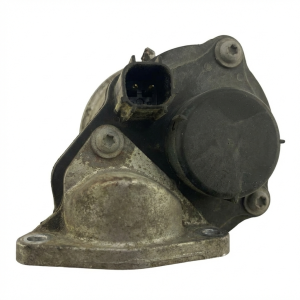
When a used part is the smart pick: A used throttle body assembly from a junkyard is a reasonable choice if you suspect a mechanical issue with your original (like a bent shaft), but it is highly recommended to install a NEW Throttle Position Sensor onto the used throttle body rather than trusting the old sensor.
Donor-vehicle mileage cap: roughly under 80000 miles for the part to have meaningful remaining life.
What to inspect on the donor part:
- Check the throttle shaft for smooth, non-binding movement from closed to wide open.
- Inspect the electrical connector pins on the TPS for any signs of corrosion or damage.
- Avoid parts from vehicles with obvious signs of engine fire, flood damage, or severe front-end collision.
OEM-only on this vehicle (don't cheap out):
- Throttle Position Sensor (TPS) - Due to the high failure rate and poor performance of many aftermarket options, using a genuine Motorcraft sensor is strongly recommended by owner communities and professional mechanics to ensure reliability and avoid repeat repairs.
Aftermarket brands forum-validated for this vehicle:
- NGK/NTK
- Bosch
- Standard Motor Products (SMP)
Brands owners have reported issues with on this vehicle:
- Unbranded, 'white-box' sensors from online marketplaces are frequently reported as being dead-on-arrival or failing within a few months.
Real Owner Stories
Aggregated from forums and TSBs cited above. Mileages and costs reflect what owners reported in those sources.
2006 Ford Mustang 4.0L V6
Symptoms: The engine was stalling and the P0123 code was present.
What fixed it: Replacement of the Throttle Position Sensor (TPS).
Source hint: StangNet forum discussion where a user with a 2006 V6 experiences stalling and code P0123
2005-2010 Ford Mustang 4.0L V6
Symptoms: Stalling issues and a P0123 code indicating high TPS voltage.
What fixed it: Replacing the TPS sensor.
Source hint: AllFordMustangs thread 'p0123-tps-voltage-high.700138/'
2005-2010 Ford Mustang 4.0L V6
Symptoms: Owner suspected a serious transmission problem due to harsh and erratic shifting, along with poor engine response.
What fixed it: Replacing the faulty Throttle Position Sensor (TPS).
Source hint: vehicle_specific_issues: 'A common owner experience shared across forums is the immediate and dramatic improvement in both engine response and automatic transmission shifting after replacing a faulty TPS.'
Related OBD-II Codes
Frequently Asked Questions
Why is my 2005-2010 Mustang V6 shifting so harshly when the P0123 code is active?
Does TSB 08-26-7 relate to my P0123 code?
Should I use an aftermarket sensor or a Motorcraft part for my 4.0L Mustang?
Is there a specific wiring repair kit for the TPS connector on my Mustang?
Do I need to do anything special after replacing the TPS on my 4.0L V6?
Can I use a TPS from a Ford Ranger or Explorer on my Mustang?
Helpful Videos
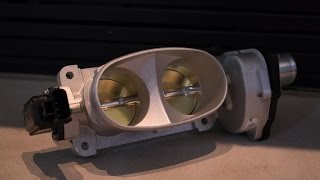
Used OEM Parts in Stock
New Aftermarket Parts Available


The information in this article is provided for general reference and educational purposes only. Vehicle specifications, procedures, and part compatibility can vary by production date, trim level, and region. Always consult your vehicle's factory service manual and verify part numbers before purchasing or performing repairs. Safety-critical components such as airbags, seat belts, and braking systems should be installed by a qualified professional.
- Ford Mustang:
- 🧭 Diagnostic Flowchart
- 🎬 Helpful Videos
- 🛍️ Shop This Part
- What's Unique About the 2005-2010 Ford Mustang
- Symptoms You May Notice
- Most Likely Causes
- Rare But Worth Checking
- Diagnosis Steps
- Parts You'll Likely Need
- Related Codes That Often Appear With This One
- Technical Service Bulletins (TSBs) & Recalls
- Platform-Specific Known Issues
- Mechanic-Grade Diagnostic Values
- Scan Tool Commands That Help
- Wiring & Ground Locations
- Real Owner Repair Stories
- Model Year Variations Within This Range
- Other Known Issues on This Vehicle
- Used vs. New Parts: Buying Guide for This Vehicle
- Real Owner Stories
- 2006 Ford Mustang 4.0L V6
- 2005-2010 Ford Mustang 4.0L V6
- 2005-2010 Ford Mustang 4.0L V6
- Related OBD-II Codes
- Frequently Asked Questions
- 🎟️ Get 5% Off