

P0123 on 2011-2014 Ford Mustang 3.7L V6: Throttle Body Causes and Fixes
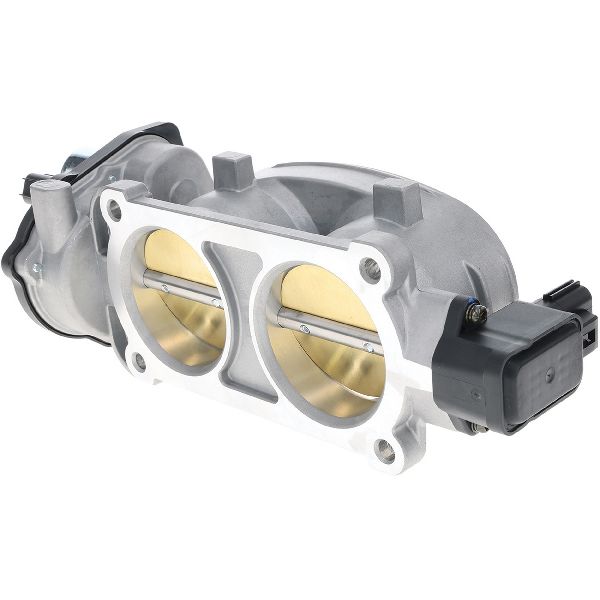
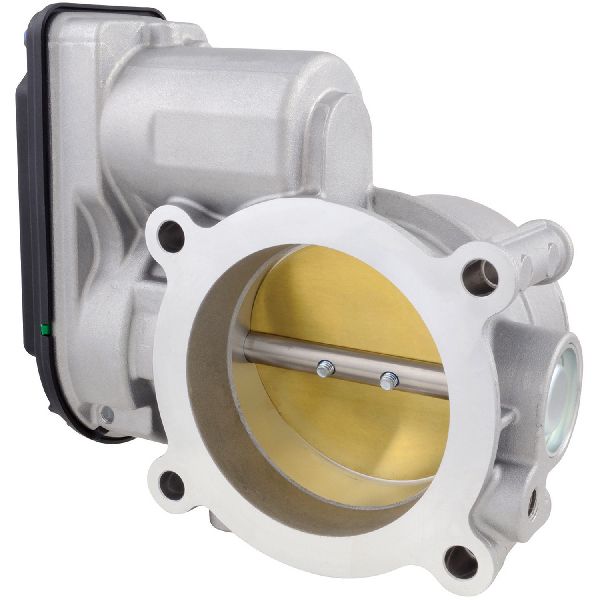
On a 2011-2014 Mustang 3.7L, code P0123 almost always means the entire electronic throttle body assembly has failed. The sensor is internal and not sold separately. Expect to pay $150-$250 for a new Motorcraft throttle body, with a DIY difficulty of 2/5.
- P0123 on a 2011-2014 Mustang 3.7L is almost certainly a failed electronic throttle body.
- The throttle position sensor (TPS) is integrated and cannot be replaced separately.
- Ford acknowledged this issue with Customer Satisfaction Program 16B23 for 2011-2012 models.
- The correct replacement part is the entire throttle body assembly, OEM part number AT4Z-9E926-B.
- It is a straightforward DIY repair (2/5 difficulty) that takes less than an hour.
What's Unique About the 2011-2014 Ford Mustang
The 3.7L Cyclone V6 in this Mustang generation uses an electronic throttle body (ETB) where the throttle position sensors are integrated and cannot be replaced separately. This specific part was known to be problematic, leading Ford to issue Customer Satisfaction Program 16B23 for some 2011-2012 models due to internal contamination of motor contacts causing increased electrical resistance and signal faults. Therefore, unlike older vehicles where you might just replace a small sensor, a P0123 code on this Mustang almost always points to replacing the entire throttle body assembly.
Symptoms You May Notice
- Check Engine Light illuminated
- Wrench light illuminated on the dashboard
- Vehicle enters 'limp mode' (Failure Mode Effects Management) with drastically reduced engine power
- Poor, hesitant, or erratic acceleration
- Bucking or jerking while driving
- Engine stalling or rough idling
- Sudden unintended acceleration (in rare cases)
- Replacing only the accelerator pedal assembly. P0123 specifically points to the 'A' circuit on the throttle body, not the pedal sensor, which has its own set of codes (e.g., P2138).
- Attempting to find a separate throttle position sensor to purchase. On this engine, the sensor is part of the complete throttle body assembly and is not sold separately by Ford.
- Cleaning a dirty throttle body. While cleaning a dirty throttle body can resolve some idle or hesitation issues, it will not fix the internal electrical failure that causes a P0123 code.
Most Likely Causes
- Failed Electronic Throttle Body (ETB) Assembly 🔴 High Probability → Shop Fuel Injection Throttle Body This is a well-documented failure point. Ford issued Customer Satisfaction Program 16B23 for 2011-2012 models to replace faulty ETBs due to internal contamination causing electrical resistance and signal faults. The throttle position sensor is integrated into the assembly and cannot be serviced separately. The failure is so common that it led to a defect petition with the NHTSA (PE13-003) investigating widespread throttle body failures across many Ford models.
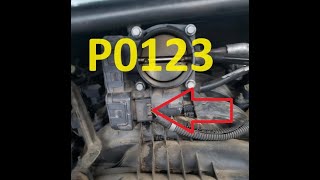
How to confirm: With the key on and engine off, use a scan tool to monitor the TP1 voltage PID. If the voltage is stuck high (e.g., near 5.0V) and does not change as you press the accelerator pedal, the ETB has failed internally. A multimeter can also be used to back-probe the signal wire at the ETB connector to verify the high voltage reading. A reading of 12V on the signal wire could indicate a severe internal short or a bent pin in the PCM connector.
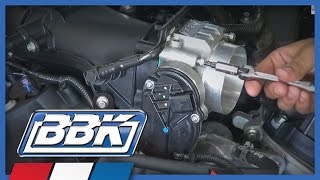
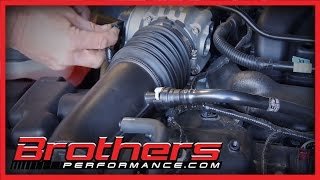
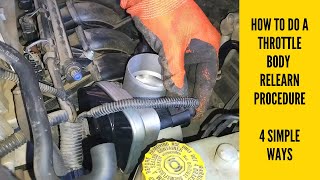
Typical fix: Replace the entire electronic throttle body assembly. The OEM part number is AT4Z-9E926-B, which supersedes the original AT4Z-9E926-A. 🎬 See this step-by-step throttle body replacement walkthrough After replacement, perform a Keep Alive Memory (KAM) reset by disconnecting the negative battery terminal for at least 15 minutes to allow the PCM to relearn idle and throttle values. 🎬 Watch: Four ways to perform a throttle body relearn
Est. part cost: $150 - $250 - Wiring Harness or Connector Issue ⚪ Low Probability
How to confirm: Visually inspect the wiring harness and electrical connector going to the throttle body for any signs of damage, corrosion, or loose pins. With a multimeter, check for a stable 5V reference and a good ground at the connector. Wiggle the harness to see if the voltage reading fluctuates, which would indicate an intermittent short or open.
Typical fix: Repair the damaged section of the wiring harness or clean/replace the connector.
Est. part cost: $10 - $50
Rare But Worth Checking
- Faulty Powertrain Control Module (PCM): → Shop Engine Control Module (ECM) This is very rare. The PCM should only be considered after the throttle body and wiring have been definitively ruled out as the cause. A bent pin at the PCM connector could also cause a short to power, leading to a P0123 code. Additionally, failed ignition coils on this platform are known to sometimes damage the PCM, though this typically presents with P035x codes.
- Failing Alternator: An alternator producing excessive voltage can cause high readings on various sensors. This would typically trigger other fault codes, such as P0562 (System Voltage Low) or a related high voltage code, and is not a likely primary cause for an isolated P0123.
Diagnosis Steps
- Connect an OBD-II scanner and confirm that P0123 is the active code. Note any other codes present, especially P2111 or P2112.
- Using the scanner's live data function, monitor the PID for 'TP1' or 'TPS A' voltage. With the key on and engine off, the reading should be around 0.5-1.0V at idle (pedal released) and sweep smoothly up to ~4.5V at wide-open throttle. A P0123 fault will likely show a voltage stuck high (near 5V) regardless of pedal position. 🎬 Watch: How to diagnose and fix a P0123 code
- If live data confirms a stuck high voltage, the diagnosis is very likely a failed throttle body. Proceed to replacement.
- If live data is unavailable, turn the ignition off and disconnect the throttle body electrical connector. Inspect the connector and pins for corrosion, moisture, or damage.
- If the connector looks good, use a multimeter to test the circuit at the harness connector. Identify the signal, 5V reference, and ground wires. Check for a steady 5V reference and a solid ground from the PCM.
- If the reference voltage and ground are correct, the electronic throttle body assembly is faulty and must be replaced.
- If wiring issues are suspected (e.g., fluctuating readings when wiggling the harness), perform a continuity and short-to-power test on the signal wire between the throttle body connector and the PCM connector.
Parts You'll Likely Need
- Electronic Throttle Body Assembly
(OEM #AT4Z-9E926-B)— This is the most common failure for code P0123 on this specific vehicle. The internal throttle position sensor fails, requiring replacement of the entire assembly. The part number AT4Z-9E926-B supersedes the earlier, more failure-prone AT4Z-9E926-A.
Trusted brands: Motorcraft, Hitachi, Standard Motor Products
OEM price range: $180-$250
Aftermarket price range: $120-$200
Related Codes That Often Appear With This One
- P2111 — Indicates 'Throttle Actuator Control System - Stuck Open'. Both codes relate to the electronic throttle body's inability to function correctly and are often seen together.
- P2112 — Indicates 'Throttle Actuator Control System - Stuck Closed'. This is another common code pointing directly to a failed electronic throttle body. Ford's TSB 10-21-6 and CSP 16B32 specifically mention P2111 and P2112 as key indicators of this failure.
- P0122 — This code is for 'TPS 'A' Circuit Low Input'. Seeing it alongside P0123 could indicate an intermittent wiring problem or a complete failure of the sensor's internal electronics, causing the signal to fluctuate between extremes.
Technical Service Bulletins (TSBs) & Recalls
- Customer Satisfaction Program 16B23: Covered replacement of the electronic throttle body on certain 2011-2012 3.7L models for 'internal motor contacts may develop contamination resulting in increased electrical resistance'. This would cause the wrench light to illuminate and the vehicle to enter limp mode.
- TSB 10-21-6: Addressed idle fluctuation issues and codes P2111/P2112 on some 2010-2011 vehicles with the 3.7L engine by replacing the throttle body. This TSB predates the CSP and shows Ford was aware of issues with the part early on.
Platform-Specific Known Issues
- Ford Customer Satisfaction Program 16B23 was issued for 2011-2012 Mustangs with the 3.7L engine to address this exact issue. It involved replacing the electronic throttle body free of charge due to internal contamination causing electrical faults. The program expired on September 30, 2017, but serves as strong evidence of a known defect.
- A user on MustangForums.com with a 2014 3.7L described the classic symptoms of limp mode and wrench light, which were resolved by replacing the throttle body. This confirms the issue extends beyond the 2011-2012 models covered by the CSP.
- A YouTube video titled 'ERROR CODE P0123 (EASY FIX)' shows a user replacing the throttle position sensor on an older Ford, but the comments and description highlight that for modern Fords like the Mustang, the entire throttle body must be replaced, corroborating the integrated nature of the part.
Mechanic-Grade Diagnostic Values
- TPS Signal 'A' (TP1) Voltage — expected: ~0.9V to 1.0V at closed throttle, sweeping smoothly to ~4.8V at wide-open throttle (Key On, Engine Off).. Failure: Voltage is stuck high, at or near 5.0V, and does not change when the accelerator pedal is pressed.
- TPS 5-Volt Reference (VREF) at Connector C134 — expected: 4.5 to 5.0 Volts DC with key on, engine off.. Failure: Voltage is significantly below 4.5V or is 0V, indicating an open/short in the VREF circuit from the PCM or a bad ground.
Scan Tool Commands That Help
- Ford IDS (or equivalent bidirectional scanner): KAM (Keep Alive Memory) Reset — This function should be performed after replacing the throttle body to clear all learned adaptive memory, including fuel trims and throttle values, from the PCM. It forces a complete relearn of the new component's parameters and is more thorough than a simple battery disconnect.
Wiring & Ground Locations
- C134 — The 6-pin electrical connector located directly on the Electronic Throttle Body assembly.. This is the single connection point for the two throttle position sensor signals (TP1, TP2), the 5V reference, signal return (ground), and the throttle motor control wires. Corrosion, moisture, or backed-out pins here are a primary cause of P0123 and related codes.
- G104 — On the left (driver's) front of the engine compartment, near the battery and inner fender.. This is a primary engine and PCM ground point. A loose or corroded connection at G104 can create a floating ground, causing erratic voltage readings for multiple engine sensors, including the throttle position sensors, potentially triggering false high-voltage codes like P0123.
- G201 — Located on the passenger side kick panel, near the Powertrain Control Module (PCM).. This is a critical ground for the PCM itself. A poor connection here can disrupt the signal return for the throttle sensors, leading to incorrect voltage readings and codes like P0123.
Real Owner Repair Stories
- Reddit user in r/Mustang (2011 Ford Mustang 3.7L V6, 11 years old at time of failure.) — Not specified, but mentioned as a known repair.
✅ What actually fixed it The throttle position sensor failed, which required replacing the entire throttle body assembly. The user confirmed this was one of only two repairs needed in 11 years of ownership.
OEM Part Supersession History
AT4Z-9E926-A→AT4Z-9E926-B— The original -A revision was prone to internal contamination and electronic failure, as documented in Ford's Customer Satisfaction Program 16B23. The -B revision is the updated, more reliable replacement part.
Model Year Variations Within This Range
- 2011-2014: The 3.7L Cyclone V6 was used in both Rear-Wheel Drive (Mustang, F-150) and Front-Wheel Drive (Edge, Explorer, Mazda CX-9) platforms. The FWD versions are known for a failure-prone internal, timing-chain-driven water pump that can leak coolant into the engine oil. The RWD version in the Mustang has a traditional, external water pump that does not have this specific failure mode, making it more reliable in this regard.
- 2011-2012: These model years were specifically covered by Ford's Customer Satisfaction Program 16B23 for free throttle body replacement. While the same part fails on 2013-2014 models, they were not included in the free replacement program.
Diagnostic Flowchart
Other Known Issues on This Vehicle
Issues unrelated to this code that are worth knowing about as an owner of this generation:
- Internal Water Pump Failure 🔴 High — Common after 60,000 miles. While the Mustang's RWD layout makes the pump externally mounted and easier to replace than in transverse applications (like the Edge/Flex), it is still a known failure point. An updated part and hose with a check valve were released to address this.
- Cold Start Ticking/Rattle 🟠 Medium — Common on early 2011 models. A ticking noise from the left-hand cylinder head area upon cold start, which may last for several minutes. Can also be a symptom of timing chain tensioner wear on higher mileage engines. (Ref: TSB 12-1-17)
- Driveshaft Vibration or Clunk 🟡 Low — Reported by some owners, particularly on manual transmission cars. A 'clunk' when shifting or vibration at certain speeds. Many owners upgrade to a one-piece aluminum driveshaft to resolve this.
- Transmission Output Speed Sensor Failure (6R80 Automatic) 🟠 Medium — Can cause the transmission to default to 5th gear on startup, with the wrench light on and a non-functional speedometer. Often throws codes P0720 and P0722. (Ref: TSB 13-6-8)
- Paint/Corrosion on Aluminum Hood 🟡 Low — Bubbling or peeling paint, typically on the leading edge of the aluminum hood, is a widely reported cosmetic issue.
Used vs. New Parts: Buying Guide for This Vehicle
When a used part is the smart pick: Given the extremely high and well-documented failure rate of this specific part, buying a used electronic throttle body is NOT recommended. The risk of purchasing a part that has already failed or is near the end of its service life is very high. The cost savings are minimal compared to the likelihood of having to do the job twice.
Donor-vehicle mileage cap: roughly under 50000 miles for the part to have meaningful remaining life.
What to inspect on the donor part:
- If buying used is unavoidable, source from the latest model year possible (e.g., a 2014).
- Verify the part number on the used unit is the updated AT4Z-9E926-B, not the original AT4Z-9E926-A.
- Inspect the electrical connector pins for any signs of corrosion, discoloration, or damage.
- Check the throttle bore for excessive carbon buildup, which might indicate a high-mileage or poorly maintained donor vehicle.
OEM-only on this vehicle (don't cheap out):
- Electronic Throttle Body Assembly
Aftermarket brands forum-validated for this vehicle:
- Motorcraft (OEM)
- Hitachi (Often an OEM supplier)
Brands owners have reported issues with on this vehicle:
- Unnamed or 'white-box' brands from online marketplaces are frequently cited in forums as being unreliable or failing shortly after installation.
Real Owner Stories
Aggregated from forums and TSBs cited above. Mileages and costs reflect what owners reported in those sources.
2014 Ford Mustang 3.7L V6
Symptoms: Experienced classic symptoms of limp mode and the wrench light illuminating on the dashboard.
What fixed it: Replacement of the throttle body assembly.
Source hint: MustangForums.com thread mentioned in vehicle_specific_issues
2011 Ford Mustang 3.7L V6
Symptoms: Wrench light illuminated and vehicle entered limp mode due to internal motor contacts developing contamination and increased electrical resistance.
What fixed it: Replacement of the electronic throttle body under Customer Satisfaction Program 16B23.
Source hint: Customer Satisfaction Program 16B23
2011 Ford Mustang 3.7L V6
Symptoms: Idle fluctuation issues and throttle-related fault codes.
What fixed it: Replacement of the throttle body as per technical service instructions.
Source hint: TSB 10-21-6
2011-2014 Ford Mustang 3.7L V6
Symptoms: Limp mode failures; noted as a known failure point on the 3.7L platform.
What fixed it: Replacement of the throttle body, described as a relatively easy and inexpensive fix.
Source hint: Reddit - r/Mustang thread on 2011-2014 3.7L reliability
Related OBD-II Codes
Frequently Asked Questions
Can I just replace the Throttle Position Sensor (TPS) on my 2011-2014 Mustang 3.7L?
Is there a recall or program for the throttle body issues on the 2011-2012 Mustang V6?
What is the correct replacement part number for the Mustang 3.7L throttle body?
Does TSB 10-21-6 apply to my 2011 Mustang 3.7L?
What should I do after installing the new throttle body to clear the P0123 code?
Why did my Mustang suddenly lose power and display a wrench light?
Helpful Videos
Used OEM Parts in Stock
New Aftermarket Parts Available


The information in this article is provided for general reference and educational purposes only. Vehicle specifications, procedures, and part compatibility can vary by production date, trim level, and region. Always consult your vehicle's factory service manual and verify part numbers before purchasing or performing repairs. Safety-critical components such as airbags, seat belts, and braking systems should be installed by a qualified professional.
- Ford Mustang:
- 🧭 Diagnostic Flowchart
- 🎬 Helpful Videos
- 🛍️ Shop This Part
- What's Unique About the 2011-2014 Ford Mustang
- Symptoms You May Notice
- Most Likely Causes
- Rare But Worth Checking
- Diagnosis Steps
- Parts You'll Likely Need
- Related Codes That Often Appear With This One
- Technical Service Bulletins (TSBs) & Recalls
- Platform-Specific Known Issues
- Mechanic-Grade Diagnostic Values
- Scan Tool Commands That Help
- Wiring & Ground Locations
- Real Owner Repair Stories
- OEM Part Supersession History
- Model Year Variations Within This Range
- Other Known Issues on This Vehicle
- Used vs. New Parts: Buying Guide for This Vehicle
- Real Owner Stories
- 2014 Ford Mustang 3.7L V6
- 2011 Ford Mustang 3.7L V6
- 2011 Ford Mustang 3.7L V6
- 2011-2014 Ford Mustang 3.7L V6
- Related OBD-II Codes
- Frequently Asked Questions
- 🎟️ Get 5% Off