

P0123 on 2010-2019 Ford Taurus 3.5L: Throttle Position Sensor High Input Causes and Fixes
On the 2010-2019 Ford Taurus with the 3.5L V6, code P0123 almost always points to a failing electronic throttle body assembly. The throttle position sensor (TPS) is integrated and not sold separately. A 'circuit high' reading means the PCM is seeing a voltage above the specified maximum (typically >4.5V). Expect to pay $150-$300 for a new throttle body and perform a relearn procedure after installation.
- P0123 on a 2010-2019 Taurus 3.5L almost always means you need a new electronic throttle body assembly.
- The throttle position sensor (TPS) cannot be purchased or replaced separately.
- Before replacing the throttle body, perform a quick visual inspection of the wiring harness for obvious damage.
- After replacing the part, a throttle body relearn procedure is necessary for the engine to idle and run correctly.
- Symptoms like sudden power loss and stalling are common, so address this code promptly for safety.
What's Unique About the 2010-2019 Ford Taurus
On the Ford 3.5L Cyclone V6 engine, the throttle position sensor (TPS) is not a separate, replaceable part. Instead, it is integrated into the electronic throttle body (ETB) assembly. This means that a P0123 code, which on many other vehicles might be a simple sensor swap, typically requires the replacement of the entire throttle body on this Taurus. This platform is also known for the throttle body being susceptible to contamination from the PCV system and internal electronic faults, which can lead to failure and trigger this code. Ford has issued TSBs and extended warranties (now expired) for these throttle bodies on related platforms, acknowledging a widespread issue.
Symptoms You May Notice
- Check Engine Light illuminated
- Engine goes into 'limp mode' with reduced power
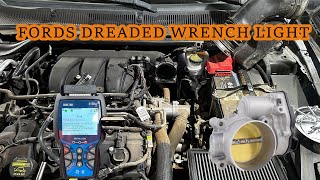
- Wrench light may appear on the dashboard
- Hesitation or stumbling during acceleration
- Rough or unstable idle
- Engine stalling, especially when coming to a stop
- Jerky or unresponsive acceleration
- Sudden unintended acceleration
- Hard starting
- Replacing the accelerator pedal position (APP) sensor. While related, P0123 specifically points to the sensor at the throttle body ('A' circuit), not the pedal, on this vehicle.
- Assuming the TPS can be replaced separately. On this engine, it is integrated with the throttle body, and attempting to find a separate sensor will be fruitless.
Most Likely Causes
- Failing Electronic Throttle Body (ETB) 🔴 High Probability → Shop Fuel Injection Throttle Body This is a well-documented failure point. The TPS is integrated into the ETB on this engine, making the entire unit the point of failure. These units are known to fail from contamination of internal motor contacts and general electronic faults, a fact confirmed by Ford's own TSBs and warranty extensions on similar models.
How to confirm: With a scan tool, observe the TP1 or TPS 'A' voltage with the key on, engine off. If the voltage is stuck high (typically >4.5V) and does not change as the pedal is pressed, the ETB is faul 🎬 See how to test and diagnose P0123 sensor codesty. Also, inspect the throttle bore for heavy carbon buildup. If cleaning does not resolve the issue, replacement is the next step.
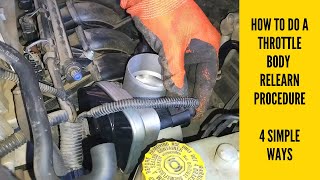
Typical fix: Replace the entire electronic throttle body assembly. A new gasket should be used. A throttle body relearn procedure is required after installation. 🎬 Watch: 4 ways to perform a throttle body relearn
Est. part cost: $150-$300 - Wiring Harness Issue (Short to Voltage) 🟡 Medium Probability The wiring harness near the throttle body is exposed to engine heat and vibration, which can cause insulation to become brittle and crack over time, leading to shorts.
How to confirm: Visually inspect the wiring harness leading to the throttle body for any signs of damage, melting, or corrosion. Perform a 'wiggle test' on the harness and connector while monitoring TPS voltage on a scan tool to see if the reading fluctuates. Use a multimeter to check the signal wire for a short to the 5V reference wire or battery voltage.
Typical fix: Repair the specific wire or replace the damaged section of the harness. In some cases, a new connector pigtail may be needed.
Est. part cost: $10-$100 - Dirty/Sticking Throttle Body ⚪ Low Probability → Shop Fuel Injection Throttle Body The PCV system on the 3.5L Cyclone engine can deposit oil vapor and carbon into the intake, which bakes onto the throttle plate and bore. This can cause the plate to stick or not close properly.
How to confirm: Remove the intake air duct and visually inspect the throttle plate and bore. If there is a thick layer of black carbon, it can cause the plate to not return to its base position, potentially affecting sensor readings at closed throttle.
Typical fix: Clean the throttle body thoroughly with a dedicated throttle body cleaner and a soft brush, ensuring not to damage the electronic components. A relearn procedure may be necessary afterward.
Est. part cost: $10-$20
Rare But Worth Checking
- Faulty Powertrain Control Module (PCM): → Shop Engine Control Module (ECM) A rare but possible cause, especially if you see multiple 'circuit high' codes for different sensors simultaneously (e.g., P0113, P0713). This should only be considered after the throttle body and wiring have been definitively ruled out. A faulty alternator providing excessive voltage can also sometimes trigger this code along with others.
Diagnosis Steps
- Use a scan tool to confirm P0123 is the active code and check for any other accompanying codes, especially P0223, P2111, or P2112.
- Access live data on the scan tool. With the key on and engine off, monitor the voltage for TPS 'A' (sometimes labeled TP1). A normal reading at closed throttle should be around 0.5V-1.0V. If it reads high (e.g., 4.5V or higher), it confirms the 'circuit high' condition.
- Slowly press the accelerator pedal to the floor. The voltage should smoothly increase to ~4.5V. If it's stuck high, jumps erratically, or doesn't change, the problem is likely the throttle body or wiring.
- Disconnect the throttle body electrical connector. Inspect the connector and pins for corrosion, moisture, pushed-out pins, or damage.
- Inspect the wiring harness leading to the throttle body for any visible signs of fraying, melting, or chafing against other components. Perform a 'wiggle test' on the harness while monitoring live data to see if it affects the connection.
- If wiring appears okay and the voltage is stuck high, the electronic throttle body assembly is the most probable cause of failure and should be replaced.
- After replacement, clear the codes and perform a throttle body relearn procedure. This typically involves letting the engine idle for several minutes, sometimes after a battery disconnect, to allow the PCM to recalibrate the new throttle body's position.
- If the problem persists, check for a short to voltage on the signal wire and verify the 5V reference and ground circuits at the PCM.
Parts You'll Likely Need
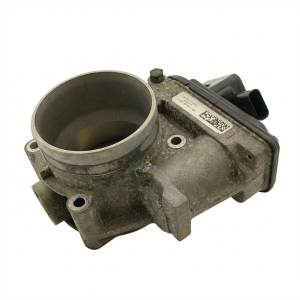
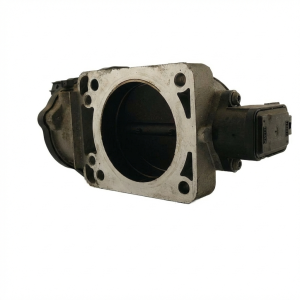
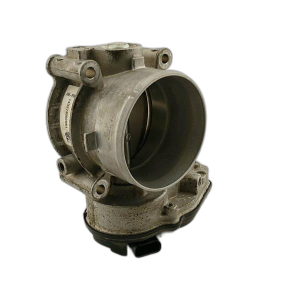
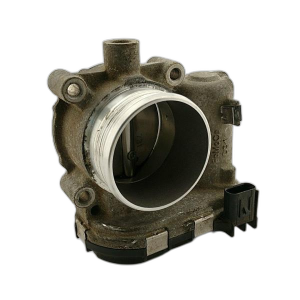
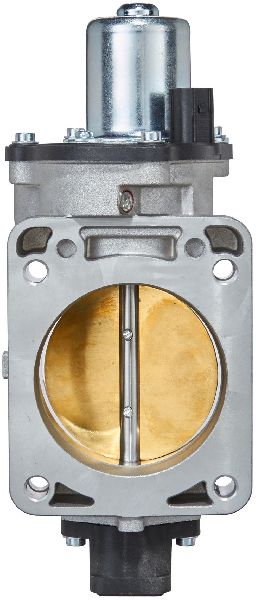
- Electronic Throttle Body Assembly
(OEM #AA5Z-9E926-A (Replaced by TB-12), DS7Z-9E926-H)— This is the most common failure for code P0123 on this vehicle because the non-serviceable Throttle Position Sensor is integrated into this assembly.
Trusted brands: Motorcraft, Bosch, Hitachi, Standard Motor Products (SMP)
OEM price range: $250-$350
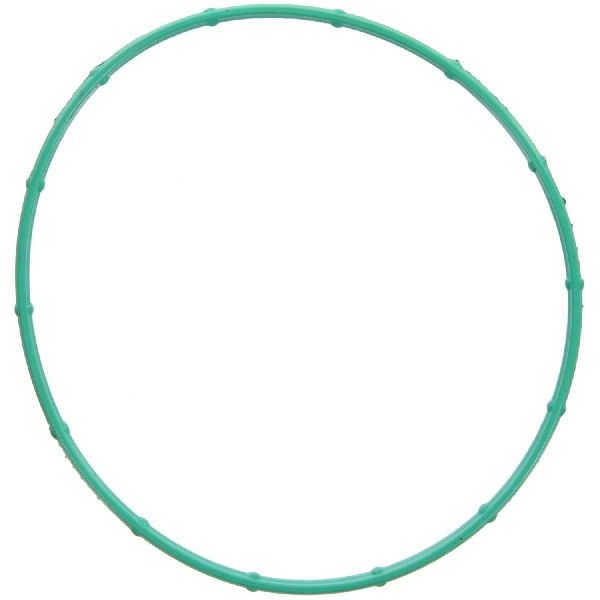
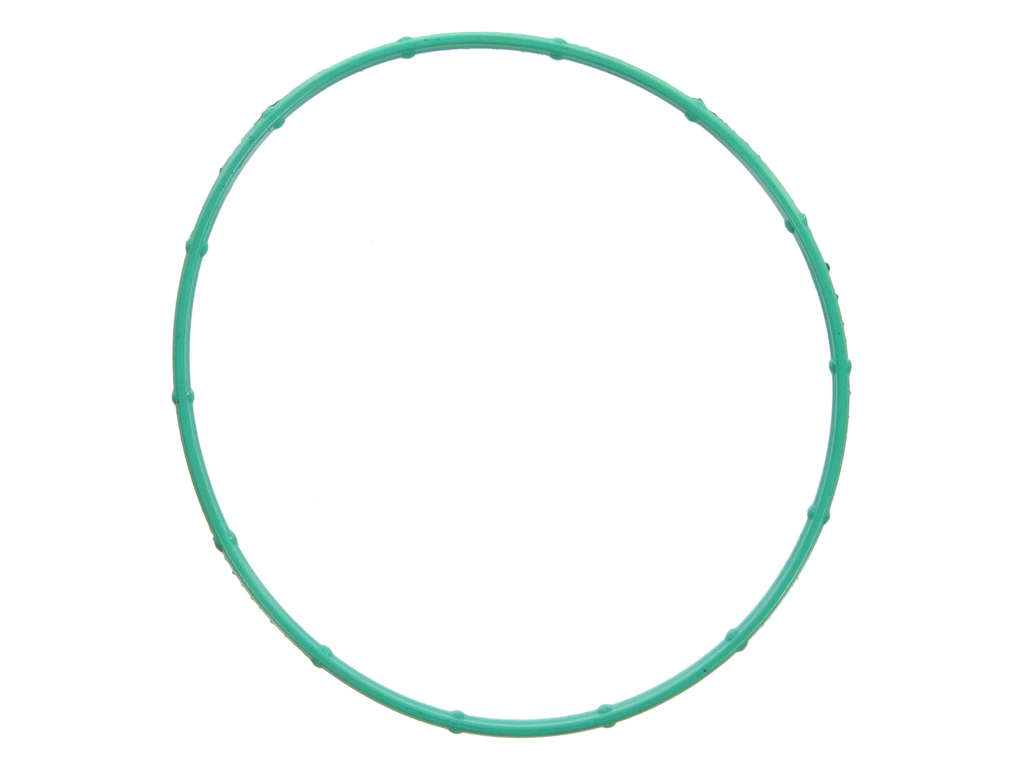
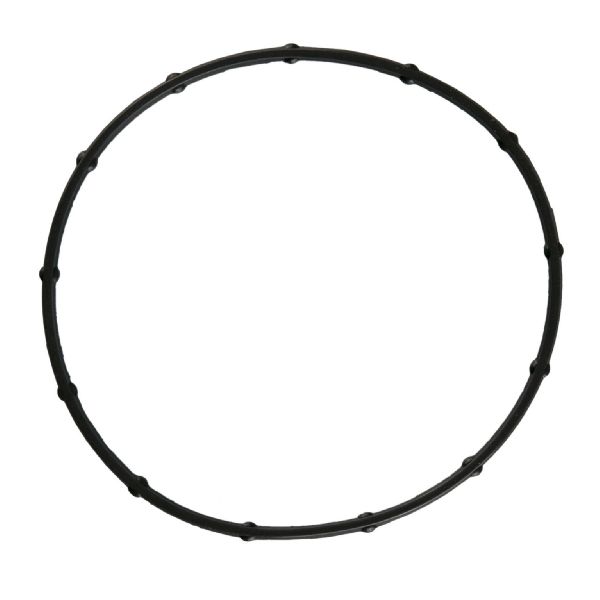
Aftermarket price range: $150-$250 - Throttle Body Gasket
(OEM #Motorcraft CG769)— A new gasket should always be used when replacing the throttle body to prevent vacuum leaks.
Trusted brands: Motorcraft, Fel-Pro
OEM price range: $10-$20
Aftermarket price range: $5-$15
Related Codes That Often Appear With This One
- P0223 — This is the 'circuit high' code for the redundant, secondary throttle position sensor ('B' circuit). Seeing P0123 and P0223 together strongly indicates a failure within the electronic throttle body assembly where both sensors are housed.
- P2111 / P2112 — These codes relate to the throttle actuator control system being stuck open or closed. They often appear with TPS codes when the throttle body is failing mechanically or electronically, and were the subject of Ford TSB 10-21-6.
- P0068 — This code indicates a correlation problem between the MAF/MAP sensors and the throttle position. A faulty throttle body giving incorrect position data is a common cause of this code.
Technical Service Bulletins (TSBs) & Recalls
- TSB 10-21-6: Addresses idle speed fluctuations and codes P2111/P2112 on some 2010 3.5L engines by recommending throttle body replacement.
- TSB 16-0139: Addresses issues with the electronic throttle body on related models.
- Customer Satisfaction Program 13N03: An expired warranty extension for electronic throttle bodies on certain Ford vehicles due to high failure rates.
Platform-Specific Known Issues
- The integrated throttle position sensor within the electronic throttle body is a known high-failure item on the 3.5L Cyclone engine family.
- Oil and carbon buildup from the PCV system can contaminate the throttle body, leading to sticking plates and sensor correlation errors.
- Ford's Customer Satisfaction Program 13N03 extended the warranty on these throttle bodies for up to 10 years/150,000 miles on some models, indicating a widespread, acknowledged defect. This program has since expired.
Mechanic-Grade Diagnostic Values
- TPS 'A' (TP1) Signal Voltage: Key On, Engine Off, Throttle Closed — expected: 0.5V - 1.0V. Failure: Voltage is stuck high (above 4.5V) and does not change, indicating a 'Circuit High' fault.
- TPS 'A' (TP1) Signal Voltage: Key On, Engine Off, Throttle Wide Open — expected: ~4.5V. Failure: Voltage does not sweep smoothly from the closed throttle reading or is stuck at a high value regardless of pedal position.
- 5V Reference Voltage (VREF) at Throttle Body Connector — expected: 4.8V to 5.2V. Failure: Voltage is missing, low, or shorted to battery voltage, indicating a wiring or PCM issue, not a faulty throttle body.
- Live Data Scan Tool PID: TP Relative — expected: Should read around 19-20% at idle/closed throttle.. Failure: Reading is stuck at a high percentage (e.g., >80%) or does not correlate with the physical throttle plate angle.
Scan Tool Commands That Help
- Ford IDS / FORScan: Throttle Body Actuator Test — Use this bidirectional control to command the throttle plate to open and close while observing live data PIDs (TP1, TP2). This directly tests the functionality of the throttle motor and sensors, helping to confirm if the entire assembly is faulty.
- Ford IDS / FORScan: KAM (Keep Alive Memory) Reset — This function must be performed after replacing the throttle body. It clears the PCM's learned adaptive values for idle and throttle position, forcing it to relearn with the new component. Failure to do this can result in a persistent high idle, rough idle, or incorrect throttle response after the repair.
- Ford IDS: TPS Calibration Module — After installing a new throttle body, this function can be used to formally calibrate the new sensor's range with the PCM, ensuring precise readings.
Wiring & Ground Locations
- Throttle Body Connector (C1734) — The 6-pin electrical connector on the electronic throttle body itself.. This is the primary connection point for all signals. Knowing the pin functions is critical for testing. The typical pinout includes: TP1 (Signal), TP2 (Signal), VREF (5V Reference), RTN (Ground), TACM+ (Motor Control), TACM- (Motor Control).
- G103 / G104 — Major chassis ground points located in the engine bay, typically on or near the driver's side shock/strut tower or inner fender.. A corroded or loose connection at these primary grounds can create a floating ground, causing incorrect voltage readings for many engine sensors, including the TPS. This can mimic a sensor failure.
- G105 — The main battery negative cable to engine block ground point.. This is the most critical engine ground. High resistance here can affect the entire engine management system and cause erratic behavior and fault codes.
Real Owner Repair Stories
- CarComplaints.com User (2013 Ford Taurus Limited 3.6L V6 (Note: likely a typo by user, should be 3.5L)) — Car completely stalled with no warning. Previously experienced sudden loss of power and throttle response, with the car shaking and dropping to low idle RPM.
❌ Tried (didn't work) Restarting the car would temporarily resolve the issue.
✅ What actually fixed it The user recognized the symptoms from a similar issue on their Ford Flex and knew the electronic throttle body needed to be replaced. The replacement resolved the stalling and limp mode events. - Reddit user on r/MechanicAdvice (2013 Ford Taurus) — Randomly loses accelerator pedal function while driving, wrench icon appears, car sputters at idle. Pulling over and restarting the car temporarily fixes it.
✅ What actually fixed it The user was asking for confirmation, and the symptoms described are classic signs of a failing electronic throttle body on this platform, which is the presumed fix.
OEM Part Supersession History
AA5Z-9E926-A→AA5Z-9E926-B, also known as Motorcraft TB-12— Standard part revision, likely to improve reliability and address the known failure modes of the original design.
Heads up: The parts are interchangeable, but using the latest revision (AA5Z-9E926-B or later) is highly recommended.
Model Year Variations Within This Range
- 2017+: Some later model Ford engines (post-2017) began using a SENT (Single Edge Nibble Transmission) protocol for the throttle position sensor. This replaces the analog voltage signal with a digital one. While this may not apply to all 2017-2019 Taurus models, it's a potential variation to be aware of during diagnosis, as testing procedures for SENT sensors are different from traditional analog sensors.
Diagnostic Flowchart
Other Known Issues on This Vehicle
Issues unrelated to this code that are worth knowing about as an owner of this generation:
- Internal Water Pump Failure 🔴 High — Common after 80,000-150,000 miles. Failure is almost inevitable and can be catastrophic, as a failed seal can leak coolant directly into the engine oil, destroying the engine with little warning.
- Power Transfer Unit (PTU) Failure (AWD Models) 🔴 High — Commonly occurs between 60,000-100,000 miles. The unit is located near the hot exhaust, causing the gear oil to break down. It was designed without a drain plug, making service difficult and often neglected, leading to expensive failure.
- Timing Chain Wear (Primarily EcoBoost, but affects NA) 🟠 Medium — More prevalent on early EcoBoost versions but can affect naturally aspirated 3.5L engines at higher mileage (>150,000 miles). Symptoms include a startup rattle. Can be related to water pump jobs, as the timing components are often replaced at the same time. (Ref: TSB 23-2143 (EcoBoost))
Used vs. New Parts: Buying Guide for This Vehicle
When a used part is the smart pick: A used throttle body is NOT recommended for this repair. This part has a very high, well-documented failure rate due to internal electronic faults. Buying a used part from a junkyard carries a significant risk of receiving a part that has already failed or is near the end of its service life.
Donor-vehicle mileage cap: roughly under 30000 miles for the part to have meaningful remaining life.
What to inspect on the donor part:
- If forced to buy used, source from the lowest-mileage vehicle possible.
- Avoid parts from vehicles in regions with extreme heat, which accelerates electronic failure.
- Ensure the connector pins are perfectly straight and free of any corrosion.
- Verify the part number is the latest possible revision (e.g., AA5Z-9E926-B or newer).
OEM-only on this vehicle (don't cheap out):
- While not strictly 'OEM-only', using a Motorcraft (Ford's OEM brand) or a reputable OEM-supplier like Bosch or Hitachi is strongly advised over budget or remanufactured options for this specific part.
Aftermarket brands forum-validated for this vehicle:
- Motorcraft (OEM)
- Bosch
- Standard Motor Products (SMP)
- Hitachi
Brands owners have reported issues with on this vehicle:
- Unbranded 'no-name' parts from online marketplaces.
- Remanufactured units from brands with inconsistent quality reviews (e.g., Cardone can be hit-or-miss according to some professional opinions).
Real Owner Stories
Aggregated from forums and TSBs cited above. Mileages and costs reflect what owners reported in those sources.
2014 Ford Taurus 3.5L
Symptoms: P0123 and other 'circuit high' codes present; discussion regarding whether the throttle body or the PCM was the root cause.
What fixed it: The throttle body was identified as the common suspect for these circuit high codes.
Source hint: r/MechanicAdvice - A thread on a 2014 Taurus with P0123 and other 'circuit high' codes
Ford Expedition 3.5L EcoBoost
Symptoms: Sudden power loss while driving.
What fixed it: Dealer replaced the electronic throttle body under a customer satisfaction program.
Source hint: FordExpeditionForum.com - Thread 'Throttle Body replacement under TSB/or Recal (EB 3.5L)'
Related OBD-II Codes
Frequently Asked Questions
Is there a warranty extension for the throttle body on my 2010-2019 Ford Taurus 3.5L?
My 2010 Taurus has an unstable idle and P0123; is there a specific TSB for this?
Can I just clean the throttle body on my 3.5L Cyclone engine to fix P0123?
Do I need to do anything special after replacing the throttle body on my Taurus?
Why does the P0123 code cause my Taurus to go into 'limp mode'?
Helpful Videos

Used OEM Parts in Stock
New Aftermarket Parts Available


The information in this article is provided for general reference and educational purposes only. Vehicle specifications, procedures, and part compatibility can vary by production date, trim level, and region. Always consult your vehicle's factory service manual and verify part numbers before purchasing or performing repairs. Safety-critical components such as airbags, seat belts, and braking systems should be installed by a qualified professional.
- Ford Taurus:
- 🧭 Diagnostic Flowchart
- 🎬 Helpful Videos
- 🛍️ Shop This Part
- What's Unique About the 2010-2019 Ford Taurus
- Symptoms You May Notice
- Most Likely Causes
- Rare But Worth Checking
- Diagnosis Steps
- Parts You'll Likely Need
- Related Codes That Often Appear With This One
- Technical Service Bulletins (TSBs) & Recalls
- Platform-Specific Known Issues
- Mechanic-Grade Diagnostic Values
- Scan Tool Commands That Help
- Wiring & Ground Locations
- Real Owner Repair Stories
- OEM Part Supersession History
- Model Year Variations Within This Range
- Other Known Issues on This Vehicle
- Used vs. New Parts: Buying Guide for This Vehicle
- Real Owner Stories
- 2014 Ford Taurus 3.5L
- Ford Expedition 3.5L EcoBoost
- Related OBD-II Codes
- Frequently Asked Questions
- 🎟️ Get 5% Off