

P0123 on 2007-2014 GMC Sierra 1500: Throttle Position Sensor Causes and Fixes
P0123 on a GMC Sierra usually means the throttle position sensor (TPS) has failed, causing a 'Reduced Engine Power' warning. The most common fix is replacing the faulty sensor or the entire throttle body assembly. Cleaning the throttle body and checking for wiring issues are also key steps.
- P0123 on a 2007-2014 Sierra almost always triggers the 'Reduced Engine Power' message, making the truck very slow to accelerate.
- The most likely cause is a failed Throttle Position Sensor (TPS), a known issue covered by a GM Special Coverage bulletin for many of these model years.
- Before replacing parts, always inspect the wiring and connector at the throttle body for damage and clean the throttle plate of any carbon buildup.
- If you replace the TPS or the entire throttle body, a 'Throttle Relearn' procedure is mandatory to prevent high idle problems.
What's Unique About the 2007-2014 GMC Sierra 1500
This issue is very common on this generation of GM trucks, so much so that General Motors issued a Special Coverage Adjustment (bulletin #11273A, revised June 2013) for 2008-2011 V8 models. The bulletin acknowledges that a faulty throttle position sensor can cause the engine to run rough and trigger the 'Reduced Engine Power' message, with the official fix being a replacement of the throttle position sensor and an ECM reprogram. While GM often sells the complete throttle body assembly, numerous aftermarket brands offer the sensor separately, providing a more affordable repair option for owners.
Generation note: This guide covers two generations of the GMC Sierra 1500: the GMT900 (2007-2013) and the K2XX (2014). The throttle position sensor failure is a well-documented issue on the GMT900 platform, covered by a GM Special Coverage bulletin for 2008-2011 models. While the 2014 K2XX model is a different design, it can still suffer from similar throttle body and sensor issues.
Symptoms You May Notice
- "Reduced Engine Power" message displayed on the dashboard
- Check Engine Light is illuminated
- Severely limited acceleration (limp mode)
- Hesitation or stumbling when pressing the gas pedal
- Rough or unstable engine idle
- Vehicle may be hard to start
- "Service Stabilitrak" message may also appear
- Replacing the accelerator pedal position (APP) sensor. While the APP sensor is part of the throttle control system, P0123 specifically points to the sensor on the throttle body ('A' circuit), not the pedal.
- Replacing the throttle body without performing the idle relearn procedure, leading to a high idle and the assumption that the new part is also faulty.
Most Likely Causes
- Faulty Throttle Position Sensor (TPS) 🔴 High Probability → Shop Fuel Injection Throttle Body The TPS is a known failure point on this platform, as acknowledged by GM's Special Coverage Adjustment #11273A for 2008-2011 models. The internal electronic components wear out over time, leading to incorrect voltage readings.
How to confirm: With a multimeter, back-probe the sensor's signal wire (typically dark green). The voltage should increase smoothly from ~0.5V to ~4.5V as the throttle is opened manually. Any spikes, drops, or a constant high reading indicates a bad sensor.
Typical fix: Replace the throttle position sensor. While GM dealers may only sell the entire throttle body assembly, aftermarket sensors are widely available. A throttle relearn procedure is required after replacement.
Est. part cost: $40-$80 for an aftermarket sensor, $150-$350 for a complete throttle body assembly. - Wiring Harness or Connector Issue 🟡 Medium Probability The engine bay environment can cause wiring to become brittle and connectors to corrode. A specific, hard-to-diagnose issue is 'cross-talk,' where the TPS signal wire (dark green) insulation breaks down and gets voltage interference from an adjacent wire in the harness, causing a false high signal. Another known issue is fretting corrosion on the connector pins, where micro-vibrations create an insulating oxide layer, disrupting the signal.
How to confirm: Visually inspect the wiring harness going to the throttle body for any signs of damage, fraying, or melting. Unplug the connector and check for corrosion or bent pins. Wiggle the harness with the engine running to see if it affects idle. A definitive test for cross-talk involves cutting the signal wire near the ECM (Pin 65 on the gray connector for some models) and running a new, separate wire directly to the throttle body connector.
Typical fix: Repair the damaged section of wire, clean the connector with electrical contact cleaner, or replace the connector pigtail. Applying dielectric grease can prevent future fretting corrosion. In cases of internal harness shorts (cross-talk), running a new dedicated wire from the ECM to the TPS is a confirmed fix by some technicians.
Est. part cost: $10-$30 for a connector pigtail or wiring repair supplies. - Dirty or Sticking Throttle Body 🟡 Medium Probability → Shop Fuel Injection Throttle Body
How to confirm: Remove the air intake tube connected to the throttle body. Visually inspect the throttle bore and plate for heavy carbon buildup. Manually move the throttle plate to feel for any sticking or binding that would prevent it from returning to its base position.
Typical fix: Clean the throttle body bore and plate thoroughly with a dedicated throttle body cleaner and a soft brush or rag. Do not spray cleaner directly into an attached electronic throttle body. A throttle relearn procedure is required after cleaning.
Est. part cost: $5-$15 for a can of throttle body cleaner. - Bad Ground Connection ⚪ Low Probability
How to confirm: Locate the main engine and chassis ground points, especially G103 and G104 on the engine block. Ensure they are clean, tight, and free of corrosion. A voltage drop test can be performed on the ground circuit. In one documented case, a ground wire that had broken inside its insulation was the root cause of identical symptoms.
Typical fix: Clean the grounding point with a wire brush and re-secure the connection. If a ground wire is broken, it must be repaired or replaced.
Est. part cost: $1-$20 for cleaning supplies or a new ground strap.
Rare But Worth Checking
- Faulty Engine Control Module (ECM): → Shop Engine Control Module (ECM) While rare, the ECM itself can fail. This should only be considered after all other possibilities, including wiring, have been exhaustively ruled out. Sometimes an ECM software update (reflash) is needed to correct logic errors, as mentioned in GM's TSB for the related code P2135.
Diagnosis Steps
- Scan for any other accompanying trouble codes. Codes like P2135 or P1516 strongly point to the throttle body system.
- Using a scan tool, observe the live data for 'TPS Sensor 1 Voltage'. With the Key On, Engine Off, it should be around 0.2-1.0V. If it reads high (e.g., 4.5V or higher), the problem is active.
- Inspect the throttle body connector for corrosion, moisture, or pushed-out pins. Check the wiring harness for any visible damage, chafing, or melting.
- Remove the air intake hose and inspect the throttle body for heavy carbon buildup that could cause the plate to stick.
- If wiring and cleanliness look good, test the sensor. Back-probe the signal wire (dark green) at the TPS connector with a multimeter. Slowly open the throttle by hand. The voltage should sweep smoothly up to ~4.5V and back down without any glitches or dropouts. A jumpy or fixed high reading confirms a bad sensor.
- Verify the sensor's 5V reference (approx. 4.75–5.25 V) and ground circuits are good at the connector. A bad ground at the engine block (G103 or G104) can also cause this issue.
- If the sensor and wiring test good, the issue may be a dirty throttle body or, in rare cases, the ECM itself.
Parts You'll Likely Need
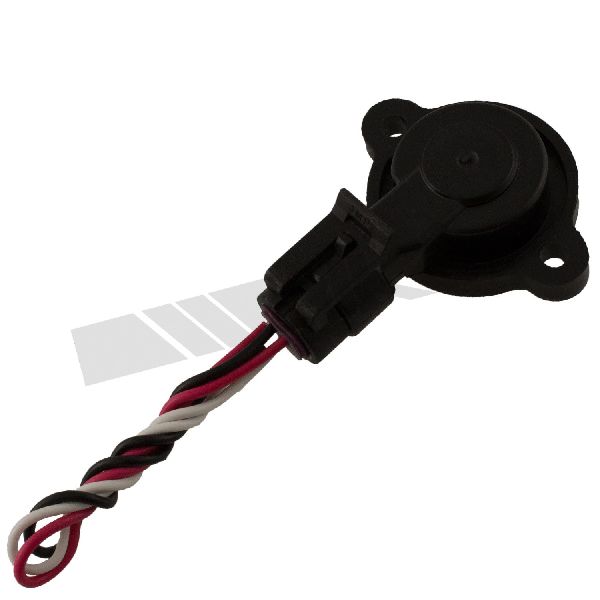
- Throttle Position Sensor (TPS)
(OEM #19259452)— This is the most common failure part for code P0123 on this platform, as confirmed by owner experiences and a GM service bulletin. However, many technicians recommend replacing the entire throttle body.
Trusted brands: ACDelco, Dorman, NGK, Walker Products
OEM price range: $50-$90
Aftermarket price range: $40-$70 - Throttle Body Assembly
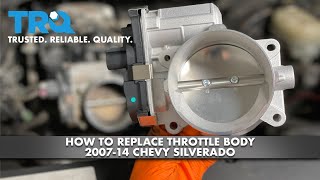
(OEM #12670981 (supersedes earlier numbers like 217-3151))— GM often recommends or only sells the complete assembly, which includes a new TPS, motor, and a clean throttle body. This is a comprehensive fix that eliminates multiple potential causes at once and is the most common professional repair. 🎬 Watch: Step-by-step throttle body replacement walkthrough
Trusted brands: ACDelco, Bosch, Hitachi
OEM price range: $250-$350
Aftermarket price range: $150-$250
Related Codes That Often Appear With This One
- P2135 — This code indicates a correlation error between the two throttle position sensors (A and B). It's very common to see P2135 alongside P0123, as a failure in one sensor will cause its readings to disagree with the other.
- P1516 — This GM-specific code relates to the Throttle Actuator Control (TAC) module performance. It often appears when the ECM detects a problem with the throttle body's ability to respond to commands, which can be caused by a faulty TPS or a bad ground.
- P0223 — This is the equivalent of P0123 but for the secondary throttle position sensor ('B' circuit). It's common for both codes to appear together if there is a shared power, ground, or connector issue.
Technical Service Bulletins (TSBs) & Recalls
- GM Special Coverage Adjustment #11273A: Titled 'Throttle Position Sensor Replacement', this bulletin was revised in June 2013 to expand coverage to 2008-2011 GM trucks and SUVs with V8 engines. It covers the replacement of the TPS and reprogramming of the ECM at no charge for this specific condition.
Platform-Specific Known Issues
- Owner Experience: Intermittent 'Reduced Engine Power' Fixed by New Ground: An owner on YouTube chased an intermittent 'Reduced Engine Power' light with codes P1516 and others. The issue would only happen when hitting bumps. After checking multiple grounds, the problem was traced to a main ground wire that had corroded and broken internally near its terminal, even though it looked intact from the outside. A slight tug on the wire caused it to separate completely. Repairing this single ground wire resolved all symptoms.
- Forum Discussion: Dealer Fix under Special Coverage #11273A: On a GM-Trucks.com forum thread, a user with a 2011 Silverado experienced the exact 'Reduced Engine Power' symptoms while driving at highway speed. The dealer diagnosed a failed TPS, replaced it, and reprogrammed the ECU under the special coverage bulletin, resolving the issue for a total cost of $260.
Mechanic-Grade Diagnostic Values
- TPS 5V Reference (Vref) at connector — expected: 4.75–5.25 V (Key On, Engine Off). Failure: Voltage significantly lower or higher than this range indicates an ECM or wiring issue.
- TPS Sensor 1 Signal Voltage (Dark Green wire) — expected: ~0.2–1.0 V at closed throttle, sweeping smoothly to ~4.0–4.8 V at wide-open throttle.. Failure: A reading stuck high (near 5V) or any spikes/dropouts during the sweep indicates a faulty sensor or short circuit.
- TPS Sensor 1 Signal Wire at ECM Connector — expected: Pin 65 on the gray ECM connector (for some models).. Failure: Testing at this pin helps differentiate between a wiring problem and an ECM problem.
Scan Tool Commands That Help
- GM Tech2 / GDS2 or compatible professional scanner: Throttle/Idle Learn — Required after replacing the throttle body, cleaning the throttle body, or sometimes after disconnecting the battery to reset the learned idle and off-idle throttle positions. Failure to perform this can result in a high or unstable idle.
- Manual Procedure (No Scan Tool): Idle Learn Procedure — A commonly cited manual relearn involves idling the engine in Park for 3 minutes, turning the ignition off for 60 seconds, and then idling in Park for another 3 minutes. This forces the ECM to relearn the idle airflow.
Wiring & Ground Locations
- G103 / G104 — On the rear of the engine block/cylinder heads. G103 is often on the right (passenger side) rear of the block, and G104 on the left (driver side) rear.. These are primary engine ground points. A loose or corroded connection here can disrupt the ground circuit for various sensors, including the TPS, causing erratic or high voltage readings.
- Throttle Body Connector — Directly on the electronic throttle body at the front of the intake manifold.. This connector is prone to fretting corrosion due to engine vibration, which creates an insulating oxide layer on the pins, leading to high resistance and faulty signals. It's also the primary location for checking for pushed-out pins or harness damage.
- TPS Signal Wire (Dark Green) — Runs within the main engine harness from the throttle body connector to the ECM (Pin 65 on some models).. This specific wire is known to suffer from 'cross-talk,' where its insulation breaks down and it picks up voltage from an adjacent wire in the harness, causing a false high signal that triggers P0123.
Real Owner Repair Stories
- YouTube channel 'scannerdanner' (2011 Chevy Silverado 5.3L) — Intermittent 'Reduced Engine Power' message, codes P0123, P2135. Problem was worse when the engine was hot.
❌ Tried (didn't work) Replacing the throttle body, Replacing the accelerator pedal position (APP) sensor
✅ What actually fixed it The technician identified a 'cross-talk' issue in the wiring harness. The signal wire for TPS 1 was picking up voltage from another wire. The final fix was to cut the original signal wire (dark green) near the ECM and run a new, separate wire directly from the ECM to the throttle body connector, bypassing the compromised section of the harness. - GM-Trucks.com forum user (2011 Silverado, 52,000 miles) — While on the highway, got 'Reduced Engine Power', 'Service Traction Control', and 'Service Stabilitrak' messages with codes P0121 and P2135.
❌ Tried (didn't work) Limping the vehicle to the dealer was the first step.
✅ What actually fixed it The Chevrolet dealer replaced the throttle position sensor (TPS) on the throttle body and reprogrammed the ECU. This was covered under a GM service bulletin. The repair cost $260 and the truck ran fine for over 27,000 miles afterward.
When the Usual Fixes Don't Work
- In a well-documented case on a 2011 Silverado with P0123, both the throttle body and accelerator pedal were replaced without fixing the issue. The root cause was not a failed component but a wiring failure ('cross-talk') within the main harness. The only successful repair was to abandon the factory signal wire and run a new wire directly from the ECM to the throttle position sensor. This highlights that for persistent P0123 issues, the wiring harness itself must be considered a primary suspect, not just the bolt-on parts.
OEM Part Supersession History
217-3151, 12632172, 12669016→12670981— GM regularly updates part designs to integrate new materials, technologies, or fix known failure modes.
Heads up: While many throttle bodies look similar, using the wrong part number can cause idle issues or other DTCs. Always verify the correct part number for your specific VIN. The replacement part requires programming/relearn procedures.
Model Year Variations Within This Range
- 2008-2011 (V8 Models): These specific model years are covered by GM Special Coverage Adjustment #11273A for the throttle position sensor. This provides extended warranty coverage for this specific failure, which may cover the cost of repair at a dealership.
Diagnostic Flowchart
Other Known Issues on This Vehicle
Issues unrelated to this code that are worth knowing about as an owner of this generation:
- Active Fuel Management (AFM) Lifter Failure 🔴 High — Common, especially on 2010-2013 5.3L engines. Can occur at various mileages, often heralded by excessive oil consumption. (Ref: Multiple TSBs exist. Lawsuits have been filed regarding this issue.)
- Cracked Dashboard 🟠 Medium — Extremely common across the entire 2007-2013 GMT900 lineup, often starting as early as two years into the vehicle's life. Cracks typically appear above the instrument cluster and near the passenger airbag. (Ref: No recall, considered a cosmetic issue by GM. Class action lawsuits were attempted but largely unsuccessful.)
- 4L60E/6L80 Transmission Problems 🟠 Medium — The 4L60E (used in earlier models) is known for failures like a broken sun shell or worn 3-4 clutch packs, typically between 100,000-150,000 miles. The 6L80 can have issues with harsh shifts or torque converter problems. (Ref: Numerous TSBs for various shift quality and component failure issues.)
- Excessive Oil Consumption 🔴 High — Closely related to the AFM lifter issue, owners report consuming 1-4 quarts of oil between changes. A class-action lawsuit targeted 2010-2013 models with the 5.3L engine for issues with the PCV system and piston rings. (Ref: Yes, related to TSBs for AFM system repairs.)
- 4WD Transfer Case Position Sensor/Switch Failure 🟡 Low — A very common issue where the truck will display a "Service 4-Wheel-Drive" message. The switch or sensor fails, preventing engagement of 4WD. Typically occurs over 100,000 miles.
Used vs. New Parts: Buying Guide for This Vehicle
When a used part is the smart pick: A used throttle body assembly from a low-mileage donor vehicle can be a cost-effective option, as it includes the sensor and motor. Given the high failure rate of the sensor, a used part is a gamble, but can be a viable short-term fix if the price is low enough.
Donor-vehicle mileage cap: roughly under 75000 miles for the part to have meaningful remaining life.
What to inspect on the donor part:
- Check for a clean throttle plate and bore with minimal carbon buildup.
- Ensure the connector pins are straight, clean, and show no signs of green or white corrosion.
- Verify the part number matches your original part or its supersession.
- Ask for the donor vehicle's mileage if possible.
Aftermarket brands forum-validated for this vehicle:
- ACDelco (OEM)
- Bosch
- Hitachi
Brands owners have reported issues with on this vehicle:
- Some owners have reported premature failures with unbranded, 'white-box' parts from online marketplaces. Dorman offers an 'OE FIX' version with an improved shaft seal designed to prevent contamination, which may offer better longevity than the original design.
Real Owner Stories
Aggregated from forums and TSBs cited above. Mileages and costs reflect what owners reported in those sources.
2011 Chevrolet Silverado (V8)
Symptoms: Experienced 'Reduced Engine Power' symptoms while driving at highway speeds.
What fixed it: The dealer diagnosed a failed TPS, replaced the sensor, and reprogrammed the ECU under special coverage.
Cost: $260-$260
Source hint: GM-Trucks.com forum thread titled 'p2135-code-reduced-engine-power-service-traction-contro/'
2007-2013 GMC Sierra 1500
Symptoms: Intermittent 'Reduced Engine Power' light and P1516 code that would only trigger when hitting bumps.
What fixed it: Repairing a main ground wire that had corroded and broken internally near its terminal, despite looking intact from the outside.
Source hint: youtube.com - 'How to Fix REDUCED ENGINE POWER (Free Fix) | Vortec Chevy & GMC' by 'Poor Man Mods'
2007-2014 GMC Sierra 1500
Symptoms: Complex wiring issue causing a P0123 code due to voltage interference (cross-talk).
What fixed it: Running a new, separate signal wire directly from the ECM (Pin 65 on the gray connector) to the throttle body connector.
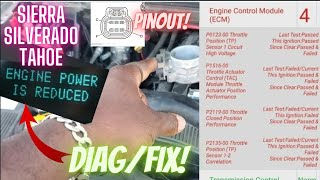
Source hint: youtube.com - 'GMC Sierra Chevy Silverado Tahoe P0123... Diag/FIX' by Global Commerce CA
Related OBD-II Codes
Frequently Asked Questions
Does GM Special Coverage Adjustment #11273A apply to my 2012 GMC Sierra 1500?
Can I replace just the Throttle Position Sensor (TPS) on my Sierra, or do I need the whole throttle body?
Why does my dashboard say 'Reduced Engine Power' and 'Service Stabilitrak' at the same time?
What is 'cross-talk' in the Sierra's wiring harness?
Where are the main engine ground points I should check on my GMC Sierra?
Helpful Videos

Used OEM Parts in Stock
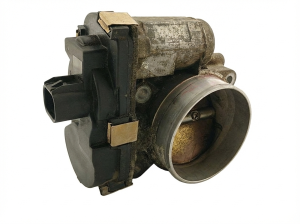
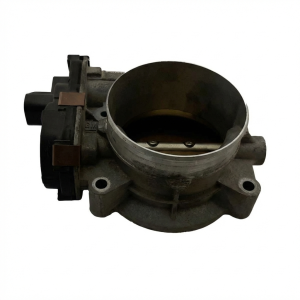
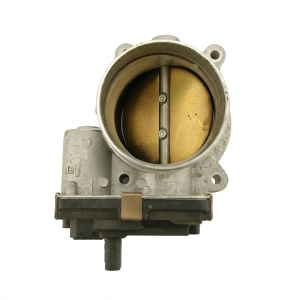
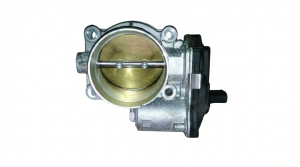
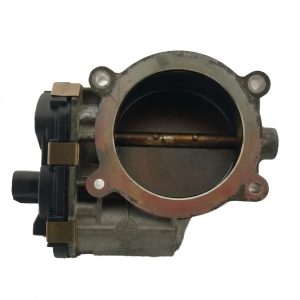
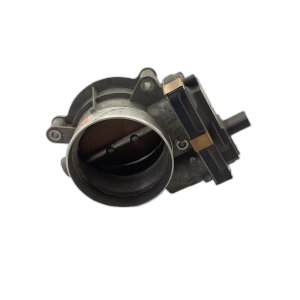
New Aftermarket Parts Available

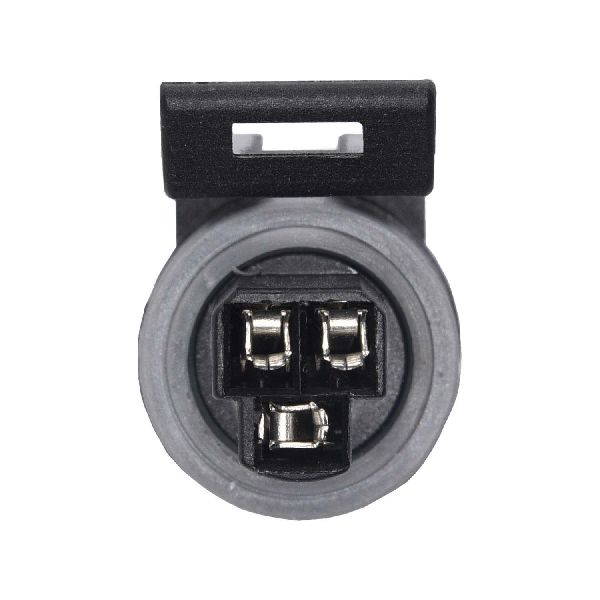
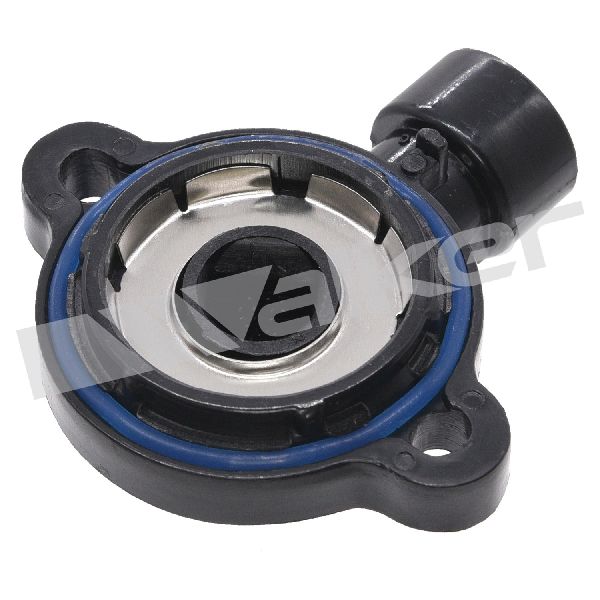

The information in this article is provided for general reference and educational purposes only. Vehicle specifications, procedures, and part compatibility can vary by production date, trim level, and region. Always consult your vehicle's factory service manual and verify part numbers before purchasing or performing repairs. Safety-critical components such as airbags, seat belts, and braking systems should be installed by a qualified professional.
- GMC Sierra 1500:
- 🧭 Diagnostic Flowchart
- 🎬 Helpful Videos
- 🛍️ Shop This Part
- What's Unique About the 2007-2014 GMC Sierra 1500
- Symptoms You May Notice
- Most Likely Causes
- Rare But Worth Checking
- Diagnosis Steps
- Parts You'll Likely Need
- Related Codes That Often Appear With This One
- Technical Service Bulletins (TSBs) & Recalls
- Platform-Specific Known Issues
- Mechanic-Grade Diagnostic Values
- Scan Tool Commands That Help
- Wiring & Ground Locations
- Real Owner Repair Stories
- When the Usual Fixes Don't Work
- OEM Part Supersession History
- Model Year Variations Within This Range
- Other Known Issues on This Vehicle
- Used vs. New Parts: Buying Guide for This Vehicle
- Real Owner Stories
- 2011 Chevrolet Silverado (V8)
- 2007-2013 GMC Sierra 1500
- 2007-2014 GMC Sierra 1500
- Related OBD-II Codes
- Frequently Asked Questions
- 🎟️ Get 5% Off