

P0123 on 1998-2002 Honda Accord: Throttle Position Sensor Circuit High Guide
On a 1998-2002 Accord (both I4 and V6), P0123 almost always means the Throttle Position Sensor (TPS) has failed. Honda sells the full throttle body, but the common, cost-effective fix is an aftermarket sensor for about $20-$50. This DIY repair requires drilling out two factory rivets, installing the new sensor with screws, and carefully calibrating it with a multimeter to ~0.49V at closed throttle.
- P0123 on a '98-'02 Accord is almost certainly a bad Throttle Position Sensor (TPS).
- You can save significant money by replacing only the sensor, but be prepared to drill out the old rivets and calibrate the new part with a multimeter.
- Symptoms include hesitation, poor acceleration, and erratic automatic shifting that can be mistaken for a failed transmission.
- Always check the wiring and connector before replacing parts, especially the shared ground if you have multiple sensor codes (P0113, P0118).
- Failure to properly calibrate a new aftermarket TPS to ~0.49V at idle will result in continued performance problems.
What's Unique About the 1998-2002 Honda Accord
The 6th generation Accord (1998-2002), with either the F-series 4-cylinder (F23A1, F23A4, F23A5) or J-series V6 (J30A1), uses a mechanical throttle cable, not a modern drive-by-wire system. This means the P0123 code relates directly to the sensor mounted on the throttle body itself. A key issue for this vehicle is that Honda did not sell the TPS as a separate part; the official repair was to replace the entire throttle body assembly. The original sensors are secured with non-serviceable rivets that must be drilled out for replacement, making the common DIY fix of using an aftermarket sensor a bit more involved.
Symptoms You May Notice
- Check Engine Light is on
- Hesitation or stumbling during acceleration
- Poor or erratic acceleration (bogging down)
- Rough or unstable idle
- For automatic transmissions, harsh, delayed, or erratic shifting as the PCM can't match engine load to shift points
- Poor fuel economy
- Engine may enter 'limp mode' with reduced power
- In some cases, difficulty starting
- Replacing the entire throttle body when only the sensor is needed. While this is the official Honda repair, it's far more expensive and often unnecessary if you're willing to drill out the rivets for the sensor.
- Replacing the transmission. Because a bad TPS causes severe and erratic shifting, it is sometimes misdiagnosed as a catastrophic transmission failure. Always diagnose and fix engine codes before condemning the transmission.
Most Likely Causes
- Faulty Throttle Position Sensor (TPS) 🔴 High Probability → Shop Fuel Injection Throttle Body The TPS is a mechanical sensor with a carbon track and wiper that wears out over tens of thousands of throttle movements. This wear creates dead spots or, in the case of P0123, a short that sends a constant high voltage signal to the PCM.
How to confirm: With the key on and engine off, use a multimeter to back-probe the sensor's signal wire (typically Yellow/Blue or Red/Black depending on engine). The voltage should be around 0.49V at closed throttle and sweep smoothly up to ~4.5V at wide-open throttle. A P0123 code is often caused by the voltage being stuck high (near 5V) regardless of throttle position.
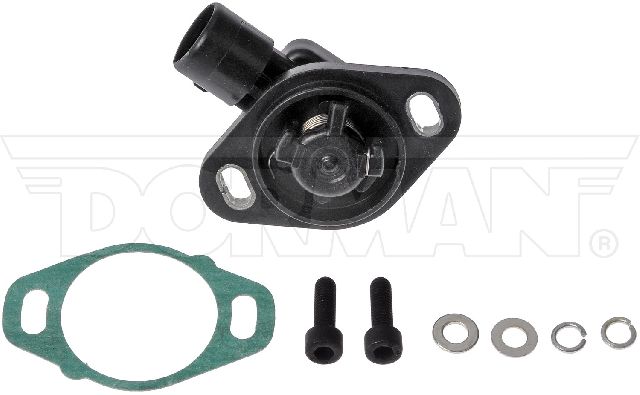
Typical fix: Replace the throttle position sensor. This requires drilling out the two factory rivets, installing the new sensor with the provided screws, and calibrating it to the correct closed-throttle voltage.
Est. part cost: $20-$50 for an aftermarket sensor. - Wiring or Connector Issue 🟡 Medium Probability Engine bay heat and vibration over 20+ years can make wiring brittle and connector pins loose. A short to power on the signal wire or a corroded ground can cause a high voltage reading.
How to confirm: Visually inspect the wiring harness and 3-pin connector for the TPS. Look for any signs of damage, corrosion, or loose pins. Verify you have a steady 5V reference and a good ground at the connector. A unique diagnostic clue can be the simultaneous appearance of P0123 (TPS), P0113 (IAT), and P0118 (ECT), which all share a common ground circuit; a fault here can trigger all three codes.
Typical fix: Repair the damaged section of the wiring harness or clean/replace the connector. If multiple sensor codes appear, inspect ground G101 on the thermostat housing.
Est. part cost: $5-$30 for wiring repair supplies.
Rare But Worth Checking
- Faulty Powertrain Control Module (PCM): → Shop Engine Control Module (ECM) This is very rare. The PCM's input circuit could fail, causing it to misread the TPS signal. All other possibilities, especially the sensor, wiring, and grounds, should be exhaustively ruled out before considering the PCM. A forum user on Honda-Tech noted that multiple simultaneous high-input sensor codes could point to a bad ECU, but a shared ground fault is more likely.
- Binding or Dirty Throttle Body: → Shop Fuel Injection Throttle Body While a dirty throttle body can cause idle and performance issues, it's less likely to cause a 'circuit high' code. It's more likely to cause the throttle plate to stick slightly open, which would result in a slightly high but not maxed-out voltage reading. Cleaning is good maintenance but unlikely to fix a P0123.
Diagnosis Steps
- Read the code with an OBD-II scanner to confirm P0123 is present. Note any other codes.
- With the key on, engine off, use a scan tool to view live data for the Throttle Position Sensor. Check if the reading is stuck at a high percentage (e.g., 90-100%) even with the throttle closed.
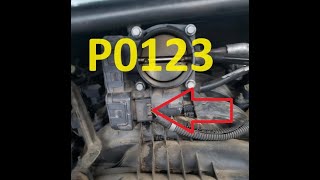
- If live data is unavailable, locate the TPS on the side of the throttle body. It will have a 3-wire connector.
- Inspect the connector and wiring for any visible damage, corrosion, or looseness.
- Using a multimeter set to DC Volts, back-probe the connector with the key on, engine off. Verify the 5V reference wire and the ground wire are working correctly.
- Check the signal wire voltage. At closed throttle, it should be approximately 0.49V. As you manually open the throttle, the voltage should increase smoothly and linearly to about 4.5V at wide-open throttle.
- If the voltage is stuck high (e.g., near 5V) and does not change with throttle movement, the sensor has failed and needs replacement.
- If the voltage is erratic or has dead spots during the sweep, the sensor is failing and needs replacement.
- If the sensor and its immediate connector test fine, check the wiring for continuity and shorts between the TPS and the PCM. Pay special attention to shared ground points if other sensor codes are present.
Parts You'll Likely Need
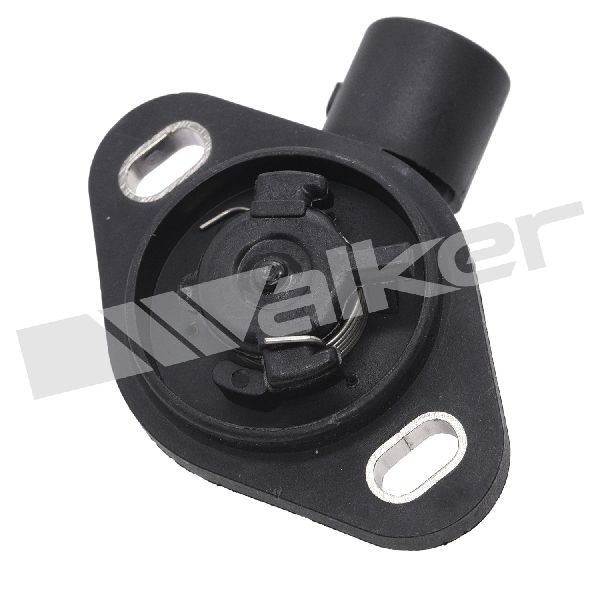
- Throttle Position Sensor (TPS)
(OEM #Not sold separately by Honda)— This is the most common point of failure for code P0123. The internal contacts wear out, causing the high voltage reading.
Trusted brands: Standard Motor Products (P/N: TH145), Denso (P/N: 198-5001), Hitachi, Dorman
OEM price range: $150-$300 (for full throttle body assembly)
Aftermarket price range: $20-$50 (for sensor only) - Throttle Body Assembly
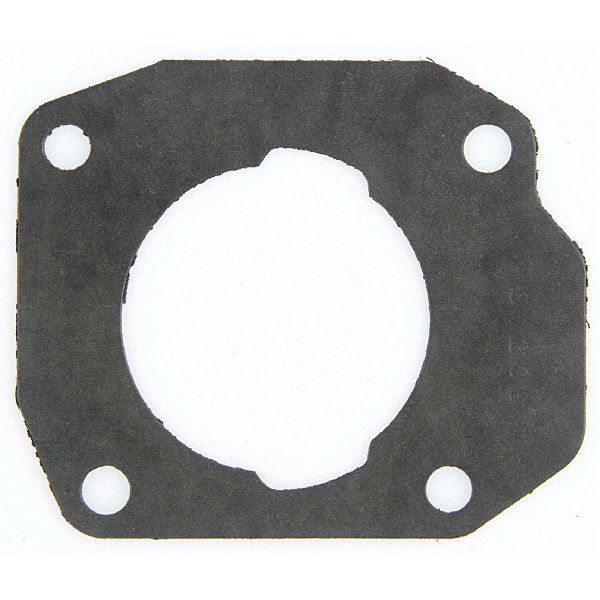
(OEM #16400-PAA-A61 (for F23A1 engine, example))— This is the official OEM replacement part, as Honda did not sell the sensor separately. It's a guaranteed fix but much more expensive.
Trusted brands: Honda Genuine
OEM price range: $150-$300
Aftermarket price range: $100-$200
Related Codes That Often Appear With This One
- P0122 — This code is for 'TPS Circuit Low Voltage'. Seeing both P0122 and P0123 intermittently can indicate a sensor that is failing erratically or has a loose internal connection.
- P0700-series transmission codes — The PCM uses TPS data to control shift logic. If the PCM gets an invalid TPS signal, it can't command shifts correctly, which may trigger secondary transmission codes and cause the 'D4' light to flash.
- P0113, P0118 — Codes for Intake Air Temp (IAT) and Engine Coolant Temp (ECT) sensor circuit high. On some models, these sensors share a common ground with the TPS. A single ground fault can cause all three codes to appear at once, pointing to a wiring issue rather than three failed sensors.
Technical Service Bulletins (TSBs) & Recalls
- While not for P0123, this TSB acknowledges the widespread automatic transmission failures in 2000-2001 Accords and extended the warranty. It's relevant as P0123 symptoms can mimic transmission failure.
Platform-Specific Known Issues
- The original TPS is riveted to the throttle body. Replacement requires carefully drilling out these rivets and using the screws that typically come with an aftermarket sensor.
- Aftermarket sensors MUST be calibrated. After installation, with the new sensor loosely bolted, connect its wiring and turn the key to ON (engine off). Connect a multimeter to the signal wire and rotate the sensor until the reading is 0.49V (+/- 0.04V) with the throttle fully closed. Then, tighten the screws without moving the sensor.
- Failure to calibrate will result in continued shifting problems, poor idle, and other performance issues, even with a new sensor.
Mechanic-Grade Diagnostic Values
- TPS Reference Voltage at Connector — expected: ~5.0V. Failure: No voltage or significantly lower voltage indicates a problem with the PCM or the wiring from the PCM.
- TPS Signal Voltage (Closed Throttle) — expected: 0.45V - 0.50V (Target 0.49V). Failure: Voltage stuck high (near 5V) for P0123. Any reading outside the specified range indicates a bad sensor or incorrect calibration.
- TPS Signal Voltage (Wide Open Throttle) — expected: ~4.5V. Failure: Voltage does not sweep smoothly up to this value, or has dead spots, indicating a worn sensor.
- TPS Sensor Resistance (between power and ground pins) — expected: Approximately 4-5 kΩ (kilo-ohms). Failure: A reading of infinity (open circuit) or zero (short circuit) indicates a failed sensor. This is a secondary check to the primary voltage tests.
Wiring & Ground Locations
- G101 — Bolted to the thermostat housing or, on some models, the driver's side of the intake manifold. It is a collection of several ground wires to a single ring terminal.. This is the main ECU/PCM ground. A loose or corroded G101 is a known cause of multiple sensor codes appearing at once, including P0123, P0113 (IAT), and P0118 (ECT), as they share this ground path. A bad connection here can cause erratic voltage readings that the PCM interprets as a sensor failure.
- TPS Connector (3-pin) — On the throttle body, connected to the Throttle Position Sensor.. This is the direct connection point for testing. Wire colors can vary slightly by year and engine, but a common configuration is: Pin 1: Yellow/Blue (5V Reference), Pin 2: Red/Black (Signal), Pin 3: Green/Blue (Sensor Ground). Always verify with a wiring diagram for your specific vehicle.
Real Owner Repair Stories
- Honda-Tech Forum (Honda Accord (year not specified, but within 1990-2002 range)) — Check Engine Light with codes P0113 (IAT High), P0118 (ECT High), and P0123 (TPS High) all appearing simultaneously.
❌ Tried (didn't work) Initial thought was three separate failed sensors.
✅ What actually fixed it The root cause was identified as a bad ground connection at G101. The user noted that the wire had frayed inside the loom near the thermostat housing, causing an intermittent connection. The fix was to repair the ground wire, which resolved all three codes simultaneously.
OEM Part Supersession History
16400-PAA-A61→N/A— This part number for the 4-cylinder automatic transmission throttle body assembly has not been officially superseded and remains the primary OEM part number for replacement.
Heads up: While the part number is consistent, be aware that throttle bodies for manual vs. automatic transmissions are different, as are those for 4-cylinder vs. V6 engines. Ensure the part number matches the vehicle's specific configuration.
Model Year Variations Within This Range
- 2001-2002: The Accord received a facelift for the 2001 model year, which included revised exterior styling, interior updates, and making side airbags and traction control more widely available. However, for the purposes of diagnosing P0123, the core components (throttle body, TPS, engine wiring, PCM) remained mechanically and electrically similar to the 1998-2000 models. The diagnostic and repair procedure is effectively identical across the entire 1998-2002 generation.
Diagnostic Flowchart
Other Known Issues on This Vehicle
Issues unrelated to this code that are worth knowing about as an owner of this generation:
- Automatic Transmission Failure 🔴 High — Extremely common, especially on V6 models. Failures often occur between 60,000 and 100,000 miles, characterized by slipping, harsh shifting, and flashing 'D4' light. (Ref: Honda extended the warranty on some 2000-2001 models to 93 months/109k miles (TSB 02-062) due to widespread issues with the torque converter and clutch packs.)
- Faulty Ignition Switch 🔴 High — Widespread issue where internal contacts wear, causing the engine to stall while driving. (Ref: Subject to multiple recalls (e.g., NHTSA recall 02V120000, Honda recall 02-031) to replace the electrical portion of the switch.)
- Clogged EGR Ports (V6 Models) 🟠 Medium — Very common on the J30A1 V6 engine. Carbon buildup clogs the EGR passage in the intake manifold, leading to codes like P0401 or P1491, rough idle, and failed emissions tests. (Ref: Honda issued a TSB for cleaning the port and installing a pipe kit to mitigate the issue.)
- Leaking/Failing Front Motor Mount 🟡 Low — The front hydraulic motor mount is prone to leaking its fluid and collapsing, causing increased vibration at idle and when in gear.
- Clear Coat and Paint Failure 🟡 Low — Common for this generation, especially on dark-colored vehicles. The clear coat peels and the paint oxidizes, particularly on the roof, hood, and trunk.
Used vs. New Parts: Buying Guide for This Vehicle
When a used part is the smart pick: A used OEM throttle body assembly from a junkyard or online seller is an excellent choice for this repair. It is often cheaper than a new aftermarket sensor and provides the original, factory-calibrated Honda TPS, which is generally higher quality and more reliable than budget aftermarket options.
Donor-vehicle mileage cap: roughly under 150000 miles for the part to have meaningful remaining life.
What to inspect on the donor part:
- Check for a clean throttle plate with minimal carbon buildup.
- Ensure the TPS connector is not cracked, broken, or corroded.
- Verify the throttle return spring has good tension and the plate moves smoothly without binding.
- If possible, ask for the donor vehicle's mileage. Lower is always better.
OEM-only on this vehicle (don't cheap out):
- While not strictly 'OEM-only', using a complete used OEM throttle body assembly is often a better and more reliable repair than just replacing the sensor with a new aftermarket one, due to the quality of the original sensor and the factory calibration.
Aftermarket brands forum-validated for this vehicle:
- Dorman
- Walker Products
- Standard Motor Products (SMP)
- Denso
Brands owners have reported issues with on this vehicle:
- Unnamed, no-brand 'economy' sensors from online marketplaces can have very high failure rates and inconsistent quality. It is often worth paying slightly more for a recognized brand.
Real Owner Stories
Aggregated from forums and TSBs cited above. Mileages and costs reflect what owners reported in those sources.
2000 Honda Accord — ~85000 miles
Symptoms: Harsh shifting, slipping, and a flashing 'D4' light; symptoms that can be confused with TPS issues but are related to the torque converter and clutch packs.
What fixed it: Transmission repair/replacement under the extended warranty (93 months/109k miles) provided by TSB 02-062.
Source hint: TSB 02-062 and 'Known Issues: Automatic Transmission Failure' section
1998-2002 Honda Accord
Symptoms: P0123 (TPS), P0113 (IAT), and P0118 (ECT) codes appearing at the same time.
What fixed it: Inspecting and repairing the shared ground circuit, specifically ground G101 on the thermostat housing.
Source hint: honda-tech.com: CELs P0113,P0118 and P0123
2002 Honda Accord
Symptoms: Engine stalling while driving, which can be confused with the stalling or hesitation caused by a bad TPS.
What fixed it: Replacement of the electrical portion of the ignition switch under recall 02-031.
Source hint: 6th Gen Accord DIY and Performance Forums: DIY: Ignition Switch replacement (Recall number 02-031)
Related OBD-II Codes
Frequently Asked Questions
Can I just bolt on a new TPS to my 1998-2002 Accord throttle body?
Does TSB 02-062 mean my P0123 code is related to a transmission failure?
Why am I getting P0123 along with P0113 and P0118 all at once?
Is there a recall for the stalling issues I'm having alongside the P0123 code?
How much should I expect to pay for a replacement TPS part?
What voltage should I see when testing the TPS signal wire?
Helpful Videos
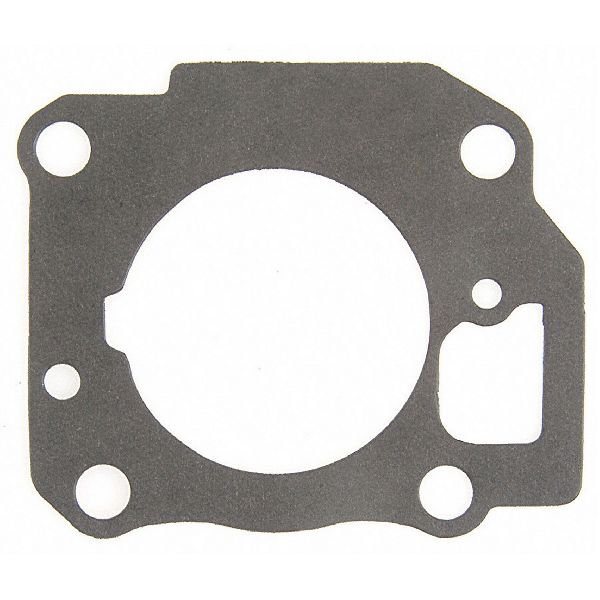
We Have This Part in Stock



The information in this article is provided for general reference and educational purposes only. Vehicle specifications, procedures, and part compatibility can vary by production date, trim level, and region. Always consult your vehicle's factory service manual and verify part numbers before purchasing or performing repairs. Safety-critical components such as airbags, seat belts, and braking systems should be installed by a qualified professional.
- Honda Accord:
- 🧭 Diagnostic Flowchart
- 🎬 Helpful Videos
- 🛍️ Shop This Part
- What's Unique About the 1998-2002 Honda Accord
- Symptoms You May Notice
- Most Likely Causes
- Rare But Worth Checking
- Diagnosis Steps
- Parts You'll Likely Need
- Related Codes That Often Appear With This One
- Technical Service Bulletins (TSBs) & Recalls
- Platform-Specific Known Issues
- Mechanic-Grade Diagnostic Values
- Wiring & Ground Locations
- Real Owner Repair Stories
- OEM Part Supersession History
- Model Year Variations Within This Range
- Other Known Issues on This Vehicle
- Used vs. New Parts: Buying Guide for This Vehicle
- Real Owner Stories
- 2000 Honda Accord — ~85000 miles
- 1998-2002 Honda Accord
- 2002 Honda Accord
- Related OBD-II Codes
- Frequently Asked Questions
- 🎟️ Get 5% Off