

P0123 on 2006-2011 Honda Civic: Throttle Position Sensor Circuit High Input Causes and Fixes
This code indicates the engine computer (ECM) has detected a voltage signal from the Throttle Position Sensor (TPS) that is higher than the normal operating range, typically over 4.5V. For the 8th gen Civic, the sensor is integrated into the throttle body, so the most common fix is replacing the entire throttle body assembly. Other causes include wiring problems or a poor connection.
- P0123 on a 2006-2011 Civic means the throttle position sensor is sending an abnormally high voltage signal, almost always requiring replacement of the entire throttle body assembly.
- The OEM part number for the throttle body on the 1.8L engine is 16400-RNA-A01.
- Before buying parts, always check the wiring and connector to the throttle body for damage or corrosion, as this can cause the same code.
- Driving with this code is unsafe due to potential stalling and severely reduced or erratic engine power.
- A DIY replacement is possible for those with moderate experience, but a specific idle relearn procedure must be performed afterward for the car to run correctly.
What's Unique About the 2006-2011 Honda Civic
For the 8th generation Honda Civic (2006-2011) with the R18A1 engine, the Throttle Position Sensor (TPS) is not sold as a separate, replaceable part. It is integrated into the electronic throttle body assembly. This design means that if the sensor itself fails—a common occurrence—the entire throttle body must be replaced. This is different from many older vehicles where the TPS could be unbolted and replaced individually, making the repair more expensive and involved than a simple sensor swap.
Generation note: The 2006-2011 year range covers the entire eighth generation of the Honda Civic. The information provided is consistent across all model years within this generation, particularly for the common 1.8L R18A1 engine.
Symptoms You May Notice
- Check Engine Light is on
- Hesitation or stumbling during acceleration
- Poor, sluggish, or erratic acceleration
- Engine stalling or rough/high idle
- Vehicle enters 'limp mode' with severely limited engine power
- Hard starting or no-start condition
- Increased fuel consumption
- Replacing only the accelerator pedal position (APP) sensor. While the APP sensor also relates to throttle control, P0123 specifically points to the sensor 'A' on the throttle body itself.
- Assuming cleaning the throttle body will fix a circuit code. While cleaning is good maintenance, it will not fix an internal electronic failure within the TPS that causes a P0123 code.
Most Likely Causes
- Faulty Throttle Body Assembly (Integrated TPS) 🔴 High Probability → Shop Fuel Injection Throttle Body The TPS is an electronic component that wears out over time. Since it's integrated into the throttle body on this Civic generation, internal failure of the sensor's potentiometer requires replacing the whole unit. 🎬 Watch: How to test and replace the throttle position sensor This is the most frequent point of failure for this code on this car.
How to confirm: Use a diagnostic scanner to monitor the TPS voltage (often listed as 'TP Sensor A' or similar). If the voltage reads high (near 5V) regardless of pedal position, or doesn't change smoothly as you press the accelerator, the sensor has likely failed. A healthy sensor should read ~0.5V at idle and rise smoothly to ~4.5V at wide-open throttle.
Typical fix: Replace the entire throttle body assembly. After replacement, a throttle body relearn procedure must be performed to ensure proper idle and performance.
Est. part cost: $200-$500 - Wiring or Connector Issue 🟡 Medium Probability Engine vibration and heat can cause wires in the harness leading to the throttle body to fray, break, or short to power. The connector pins can also become corroded or loose.
How to confirm: Visually inspect the wiring harness and the 6-pin connector at the throttle body for any signs of damage, corrosion, or loose pins. Use a multimeter to check for a stable 5-volt reference and good ground at the connector. Wiggle the harness while monitoring voltage to check for intermittent shorts.
Typical fix: Repair the damaged section of the wiring harness or clean/replace the connector. Secure the harness away from sharp edges or heat sources.
Est. part cost: $10-$50
Rare But Worth Checking
- Faulty Powertrain Control Module (PCM): → Shop Engine Control Module (ECM) This is very rare. The PCM should only be considered after all other possibilities, including the throttle body and wiring, have been thoroughly ruled out with comprehensive testing.
- Dirty Throttle Body: → Shop Fuel Injection Throttle Body While a dirty throttle body can cause idle and performance issues, it's less likely to cause a 'Circuit High' code. It's more often associated with sticking or range/performance codes. However, severe carbon buildup could theoretically hinder plate movement and cause erratic sensor readings. 🎬 See this guide on cleaning the throttle body and relearning idle
Diagnosis Steps
- Connect an OBD-II scanner and verify P0123 is active. Note any other codes, especially P0223.
- Use the scanner's live data function to observe the 'Throttle Position Sensor A' voltage.
- With the Key On, Engine Off (KOEO), the voltage should be low, around 0.5V.
- Slowly press the accelerator pedal to the floor. The voltage should increase smoothly and linearly to about 4.5V at wide-open throttle.
- If the voltage is stuck high (e.g., 4.8V or higher) and does not change, or if it jumps erratically, this points towards a faulty sensor or a wiring short.
- Turn the ignition off. Disconnect the 6-pin electrical connector at the throttle body.
- Inspect the connector terminals and wiring for corrosion, pushed-out pins, or visible damage.
- With the connector disconnected and KOEO, use a multimeter to check the harness-side connector. You should find a 5V reference wire and a ground wire. If the 5V reference is missing or the ground is poor, the problem is in the wiring or PCM.
- If wiring checks out, the throttle body assembly is almost certainly the fault and requires replacement.
- After replacing the throttle body, perform the 'Idle Relearn Procedure'.
Parts You'll Likely Need
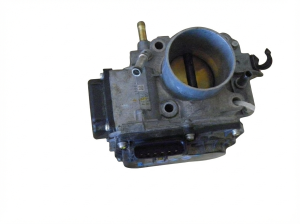
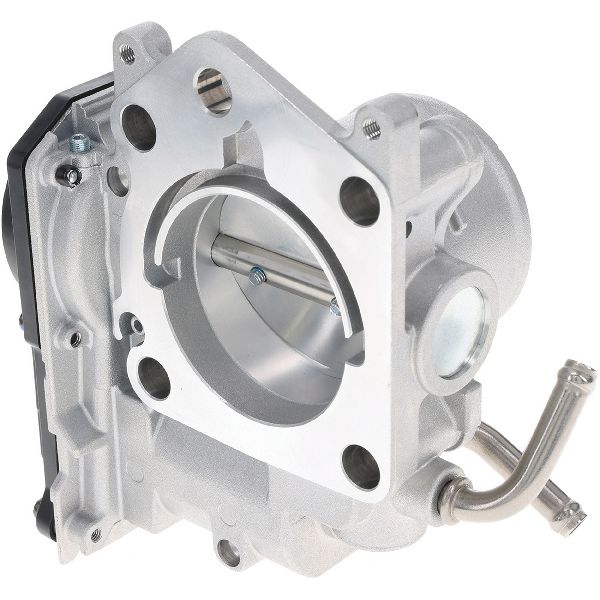
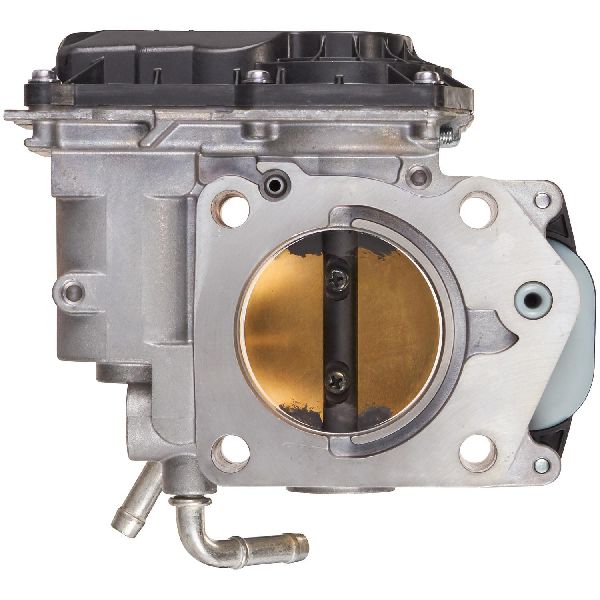
- Throttle Body Assembly
(OEM #16400-RNA-A01)— The Throttle Position Sensor (TPS) is integrated into the throttle body for this vehicle generation. A failed sensor requires the replacement of the entire assembly. This part number is for the 1.8L engine.
Trusted brands: Honda (OEM), Hitachi (Often the OE supplier), Bosch, Dorman
OEM price range: $400-$600
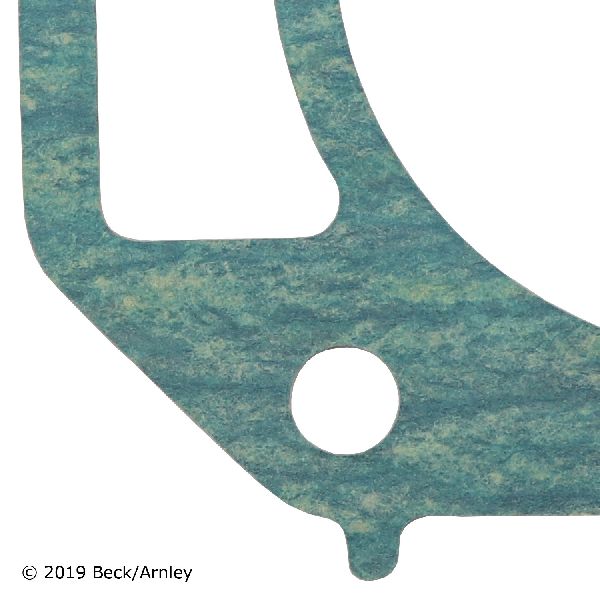
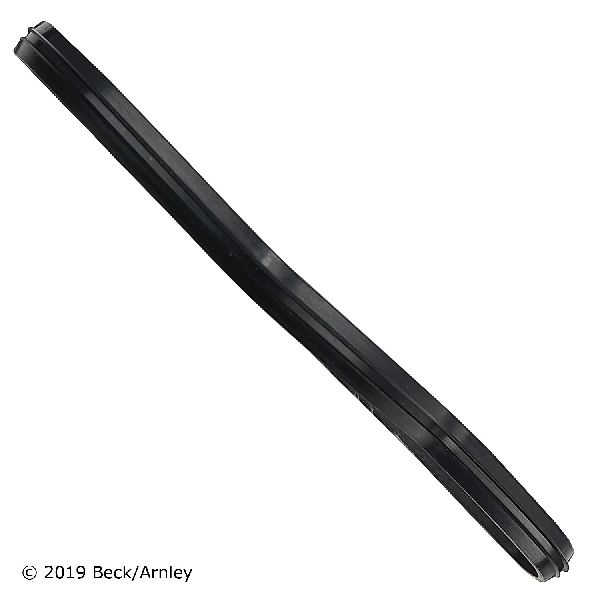
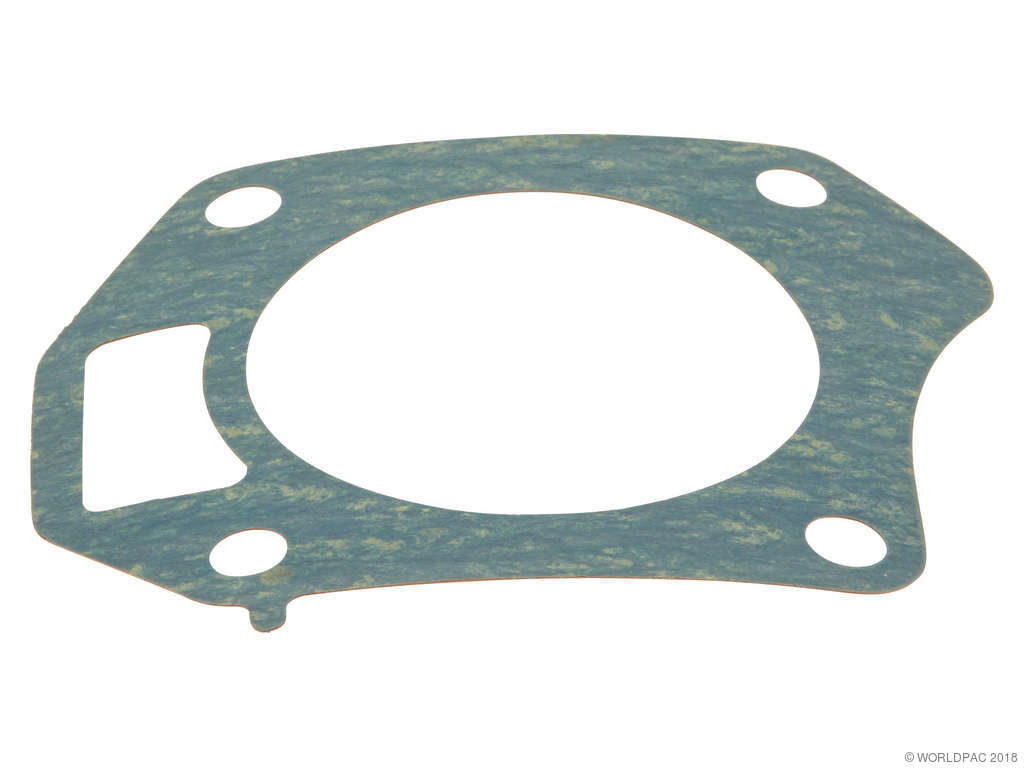
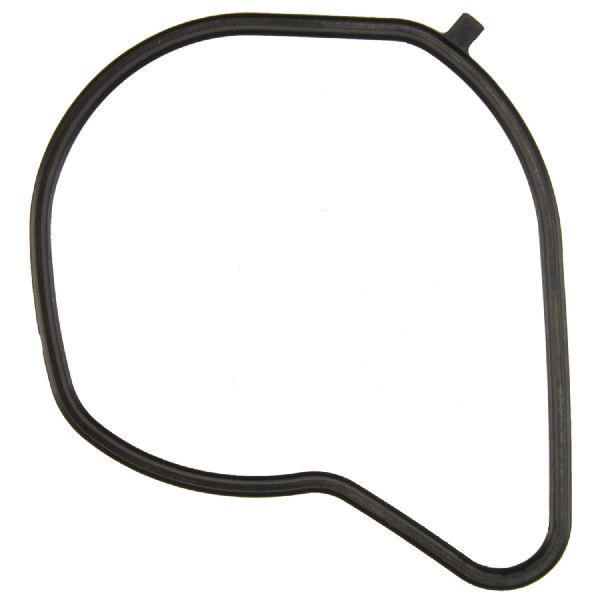
Aftermarket price range: $150-$350 - Throttle Body Gasket
(OEM #17107-RNA-A01)— It is highly recommended to replace the gasket whenever the throttle body is removed to prevent vacuum leaks.
Trusted brands: Honda (OEM), Fel-Pro, Mahle
OEM price range: $5-$15
Aftermarket price range: $3-$10
Related Codes That Often Appear With This One
- P0223 — This code is for 'Throttle/Pedal Position Sensor/Switch 'B' Circuit High'. Electronic throttle bodies use two redundant TPS sensors (A and B) to ensure safety and accuracy. A wiring issue (like a short to power) or a catastrophic internal failure of the throttle body can affect both sensor circuits simultaneously, causing both P0123 and P0223 to be stored.
Technical Service Bulletins (TSBs) & Recalls
- No specific Technical Service Bulletins (TSBs) were found to be widely issued for the P0123 code on this specific vehicle model during the search. The issue is typically addressed as a standard diagnostic and component replacement procedure.
Platform-Specific Known Issues
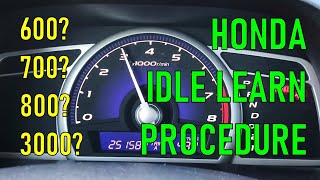
- Throttle Body Relearn Procedure (No Scan Tool Required): → Shop Fuel Injection Throttle Body After replacing the throttle body or disconnecting the battery, an idle relearn is critical. The procedure for the 8th gen Civic is: 1. Ensure all electrical accessories (A/C, radio, lights) are off. 2. Start the engine and let it warm up to normal operating temperature (cooling fans should cycle on at least once). 3. Let the engine idle (in Park or Neutral) for 5 minutes without touching the throttle. 🎬 Watch: A step-by-step walkthrough of the Honda idle learn procedure The idle should stabilize. If it doesn't, the procedure may need to be repeated.
- Owner Experiences: Cleaning vs. Replacement: Many owners on forums like 8thcivic.com have reported that while cleaning a dirty throttle body can solve some idle issues, it does not fix the P0123 code, which is an electrical fault. The consensus is that once P0123 appears and is confirmed to be the sensor, replacement of the entire throttle body assembly is the only permanent solution.
Mechanic-Grade Diagnostic Values
- TPS 'A' Signal Voltage (KOEO, Throttle Closed) — expected: ~0.5V. Failure: Voltage stuck high (near 5V) or does not match this baseline.
- TPS 'A' Signal Voltage (KOEO, Wide Open Throttle) — expected: ~4.5V. Failure: Voltage does not reach this level or is stuck at a high value regardless of throttle position.
- TPS 'B' Signal Voltage (KOEO) — expected: Both TPS A and TPS B voltages should increase from ~0.5V to ~4.5V as the throttle opens.. Failure: A forum post noted a potential misconception that one sensor's voltage decreases while the other increases. For the 2006 Civic, a user confirmed both increase in tandem. A discrepancy could indicate an issue.
- 5V Reference Voltage at Throttle Body Connector — expected: Approximately 5.0V. Failure: No voltage or significantly lower/higher voltage indicates a wiring or PCM issue, not a faulty throttle body.
Scan Tool Commands That Help
- Honda Diagnostic System (HDS): Data List - TP Sensor A Voltage — To confirm the P0123 fault. A reading of approximately 4.8V or higher with the key on, engine off, confirms the high voltage condition is actively present, pointing away from an intermittent issue.
- Honda Diagnostic System (HDS): Clear All DTCs / Reset ECM/PCM — This is used after the repair is complete to clear the code. It is also a necessary first step before performing the idle relearn procedure to ensure the system starts from a clean slate.
Wiring & Ground Locations
- Throttle Body 6-Pin Connector — Directly on the electronic throttle body, located between the air intake tube and the intake manifold.. This is the primary connection point for all power, ground, and signal wires for the integrated TPS. A visual inspection for corrosion or pushed-out pins is a critical first step. A diagnostic video specifies checking for continuity between terminal #1 of this connector and terminal C20 of the ECM connector.
- ECM/PCM Ground — While specific ground point numbers (e.g., G101) are often on the intake manifold or cylinder head, ensuring the main engine-to-chassis ground strap is clean and secure is vital.. A poor ground can cause floating voltage references and erratic sensor readings, potentially mimicking a sensor failure. The TPS circuit relies on a stable ground provided through the PCM to function correctly.
Real Owner Repair Stories
- Honda-Tech Forum User (2006 Honda Civic) — Low RPM misfires.
❌ Tried (didn't work) Initial diagnosis was confusing due to conflicting information about how the dual TPS sensors should behave.
✅ What actually fixed it The user was diagnosing a misfire but provided a critical piece of information for P0123: on their '06 Civic, they confirmed with a multimeter that both TPS A and TPS B sensor voltages increase together from about 0.5V to 4.5V. This clarifies the expected behavior for diagnosis.
OEM Part Supersession History
16400-RNA-A01→No official supersession found for this specific part number.— N/A
Heads up: This part number, 16400-RNA-A01, is consistently listed for the 2006-2011 Civic with the 1.8L engine. Aftermarket parts may list interchange numbers like 16400-RNB-A01, but sticking to the original OEM number is safest for guaranteed compatibility.
Diagnostic Flowchart
Used vs. New Parts: Buying Guide for This Vehicle
When a used part is the smart pick: Given that the TPS is an electronic wear item integrated into the throttle body, buying a used unit is a significant gamble. It only makes sense if on an extremely tight budget and the donor part is from a very low-mileage vehicle with a known history. The failure is electronic, not purely mechanical, so visual inspection is not a reliable indicator of remaining life.
Donor-vehicle mileage cap: roughly under 50000 miles for the part to have meaningful remaining life.
What to inspect on the donor part:
- Verify the part number on the unit is an exact match (16400-RNA-A01).
- Inspect the 6-pin connector for any signs of corrosion, bent pins, or heat damage.
- Check for a clean throttle plate and bore, which may indicate better overall vehicle care.
- Ask the salvage yard for the VIN or mileage of the donor car if possible.
OEM-only on this vehicle (don't cheap out):
- While not strictly 'OEM-only', using a new OEM (Honda) or OE-supplier (e.g., Hitachi) throttle body is strongly recommended for this repair. The internal sensors are calibrated specifically for the vehicle, and failure of a cheap aftermarket unit will lead to repeating the labor.
Aftermarket brands forum-validated for this vehicle:
- Hitachi (often the original equipment manufacturer)
- Bosch
- Standard Motor Products (SMP)
Brands owners have reported issues with on this vehicle:
- Unbranded, 'white-box' parts from online marketplaces with no warranty or brand reputation. Forum discussions frequently warn against the cheapest available options due to high failure rates and calibration issues.
Real Owner Stories
Aggregated from forums and TSBs cited above. Mileages and costs reflect what owners reported in those sources.
2009 Honda Civic (8th generation)
Symptoms: Low, erratic idle, stalling, or near-stalling, especially when the A/C was turned on.
What fixed it: The owner first cleaned the throttle body and then performed a specific idle relearn procedure to stabilize the idle.
Source hint: youtube_comment from Danny's DIY video 'How to Perform an Idle Relearn WITHOUT a Scan Tool...'
8th generation Honda Civic
Symptoms: Check Engine Light on for code P0123, often accompanied by poor acceleration or the vehicle entering 'limp mode'.
What fixed it: Forum consensus indicates that the only permanent solution was the replacement of the entire throttle body assembly. Owners reported that simply cleaning the unit did not solve the electrical code.
Source hint: 8thcivic.com - Multiple threads
Related OBD-II Codes
Frequently Asked Questions
Do I have to replace the entire throttle body on my 2008 Civic for a P0123 code, or can I just replace the sensor?
After replacing the throttle body on my Civic, is there a special procedure I need to follow?
Can I just clean my throttle body to fix the P0123 code and save money?
How can I test the throttle position sensor on my 2010 Civic before buying a new throttle body?
Are there any official recalls or TSBs from Honda for the P0123 code on this Civic?
My friend's Acura CSX has a P0123 code. Is the fix the same as for my Honda Civic?
Helpful Videos


Used OEM Parts in Stock
New Aftermarket Parts Available

The information in this article is provided for general reference and educational purposes only. Vehicle specifications, procedures, and part compatibility can vary by production date, trim level, and region. Always consult your vehicle's factory service manual and verify part numbers before purchasing or performing repairs. Safety-critical components such as airbags, seat belts, and braking systems should be installed by a qualified professional.
- Honda Civic:
- 🧭 Diagnostic Flowchart
- 🎬 Helpful Videos
- 🛍️ Shop This Part
- What's Unique About the 2006-2011 Honda Civic
- Symptoms You May Notice
- Most Likely Causes
- Rare But Worth Checking
- Diagnosis Steps
- Parts You'll Likely Need
- Related Codes That Often Appear With This One
- Technical Service Bulletins (TSBs) & Recalls
- Platform-Specific Known Issues
- Mechanic-Grade Diagnostic Values
- Scan Tool Commands That Help
- Wiring & Ground Locations
- Real Owner Repair Stories
- OEM Part Supersession History
- Used vs. New Parts: Buying Guide for This Vehicle
- Real Owner Stories
- 2009 Honda Civic (8th generation)
- 8th generation Honda Civic
- Related OBD-II Codes
- Frequently Asked Questions
- 🎟️ Get 5% Off