

P0123 on 2006-2011 Hyundai Accent: Throttle Position Sensor Causes and Fixes
On a 2006-2011 Hyundai Accent, code P0123 is almost always caused by a failed throttle position sensor (TPS). It's an inexpensive, separate part that's easy to replace. Expect to pay around $20-$40 for an aftermarket sensor, with a DIY difficulty of 1/5.
- The most likely cause of a P0123 code on a 2006-2011 Accent is a bad throttle position sensor (TPS).
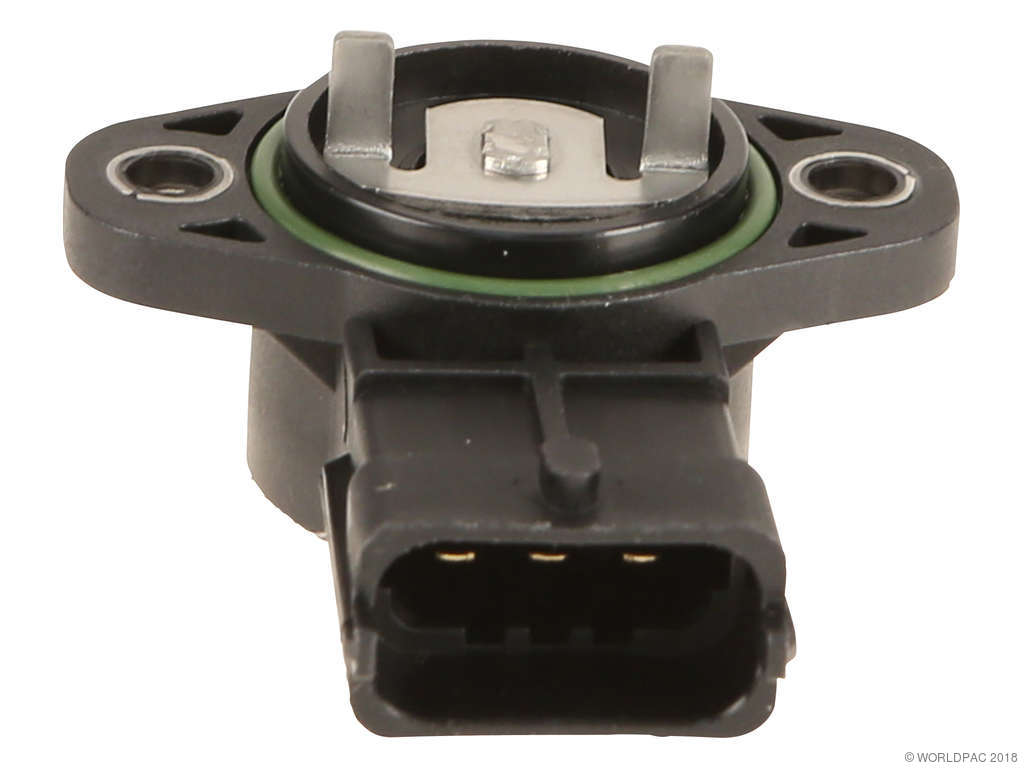
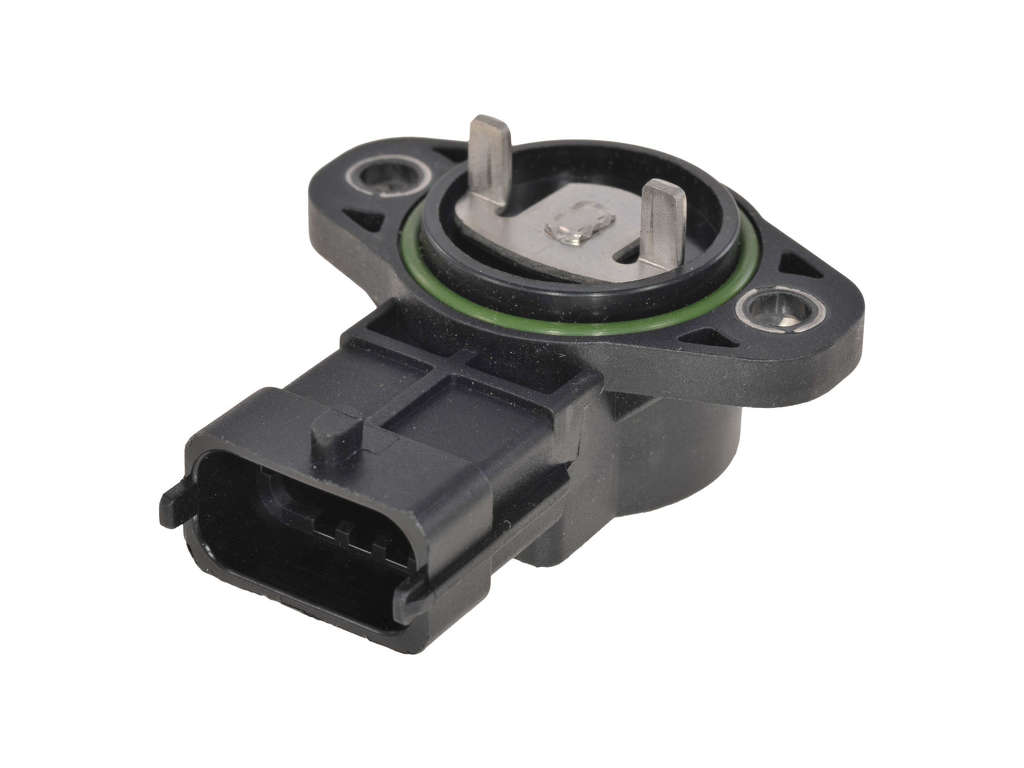
- Unlike many cars, the TPS on this Accent is a separate, inexpensive part (OEM # 35170-26900) that is easy to replace.
- Symptoms are severe and can be a safety hazard; do not drive the vehicle long distances with this code.
- Diagnosis is straightforward with a basic OBD-II scanner that can read live data or a multimeter.
- Always check the wiring and connector for damage, especially right at the connector, before replacing the sensor.
What's Unique About the 2006-2011 Hyundai Accent
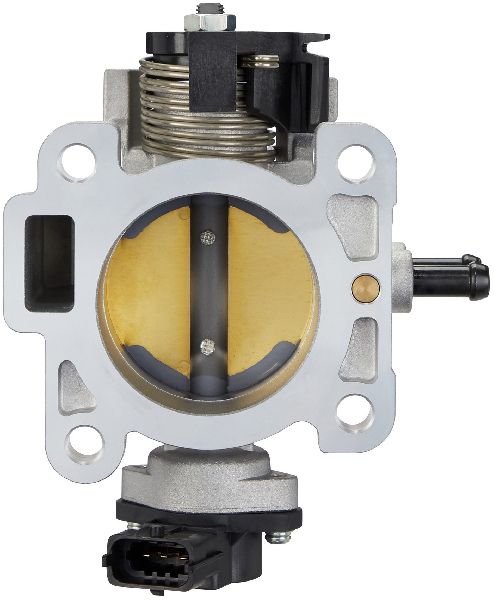
Unlike many newer vehicles where the throttle position sensor is integrated into the expensive throttle body assembly, the 2006-2011 (MC generation) Hyundai Accent uses a separate, individually replaceable TPS. This makes the repair for a P0123 code significantly cheaper and simpler for this specific vehicle, as you do not need to replace the entire throttle body. The fix is often a straightforward, low-cost sensor swap.
Symptoms You May Notice
- Check Engine Light is on
- Hesitation or stumbling during acceleration
- Rough or abnormally high idle
- Poor fuel economy
- Engine stalling unexpectedly, especially when coming to a stop
- Vehicle enters 'limp mode' with severely reduced power
- Jerky or unresponsive acceleration that can be mistaken for a transmission issue
- Sudden, unintended surges in speed
- Difficulty with automatic transmission shifting, such as harsh or delayed shifts
- Replacing the entire throttle body assembly. On this vehicle, the sensor is a separate part.
- Replacing the accelerator pedal position (APP) sensor. The P0123 code specifically points to the sensor on the throttle body, not the pedal.
- Assuming a transmission problem due to jerky acceleration and harsh shifting. The ECM uses TPS data to control shift points, so a bad signal can mimic a failing transmission.
Most Likely Causes
- Failed Throttle Position Sensor (TPS) 🔴 High Probability → Shop Fuel Injection Throttle Body The sensor is a simple potentiometer that wears out over time from the constant movement of the throttle shaft, leading to internal electrical faults, dead spots, or short circuits.
How to confirm: With the key on and engine off, use a scan tool to observe the TPS voltage. It will likely read high (over 4.5V) even with the throttle closed. You can also test with a multimeter for a smooth voltage sweep from ~0.5V to ~4.5V as you manually open the throttle; a failed sensor will have dead spots, jumpy readings, or be stuck at a high voltage.
Typical fix: Replace the throttle position sensor. It is mounted to the side of the throttle body with two screws. 🎬 See this step-by-step TPS replacement walkthrough
Est. part cost: $20-$60 - Wiring or Connector Issue 🟡 Medium Probability Engine vibration and heat can cause wires to fray or the 3-pin connector to become loose, corroded, or filled with debris over time. A short to power on the signal wire or an open ground circuit are common electrical faults.
How to confirm: Visually inspect the wiring harness leading to the TPS for any signs of damage, melting, or breaks. Wiggle the connector with the engine running to see if it affects idle. Check for a short to power on the signal wire or an open ground circuit using a multimeter and a wiring diagram. One owner found a broken wire inside the insulation right at the connector.
Typical fix: Repair the damaged section of the wiring harness or clean/replace the 3-pin connector.
Est. part cost: $5-$25
Rare But Worth Checking
- Faulty Engine Control Module (ECM): → Shop Engine Control Module (ECM) This is very rare. The ECM should only be considered after the TPS and all related wiring have been thoroughly tested and confirmed to be in good working order.
- Dirty Throttle Body: → Shop Fuel Injection Throttle Body While less common for a 'high input' code, severe carbon buildup can prevent the throttle plate from closing properly, causing the TPS to rest at a slightly open, higher-than-normal voltage. This is more often associated with idle issues but is worth checking.
Diagnosis Steps
- Connect an OBD-II scanner to confirm the P0123 code is present.
- View live data on the scanner. Observe the 'Throttle Position' or 'TP Sensor' value with the Key On, Engine Off (KOEO). It should be low (around 10% or ~0.5V). If it reads high (e.g., 90-100% or >4.5V), the sensor or circuit is faulty.
- Slowly press the accelerator pedal to the floor. The TPS value should increase smoothly. If it jumps, sticks, or doesn't change, this points to a bad sensor.
- Visually inspect the TPS connector and wiring harness for any obvious damage, corrosion, or loose connections. Pay close attention to the area where the wires enter the connector.
- If a scanner is not available, use a multimeter to test the sensor. Disconnect the sensor and probe the harness connector to confirm you have a 5V reference wire and a good ground.
- Reconnect the sensor and use T-pins to back-probe the signal wire. The voltage should sweep smoothly from approximately 0.25-0.8V (closed throttle) to 4.0-4.8V (wide-open throttle) as you manually open the throttle plate. A reading that is stuck high confirms the P0123 condition. 🎬 Watch: How to test and replace a faulty TPS
- Before replacing the sensor, consider cleaning the throttle body with a dedicated cleaner, as a sticking plate can sometimes cause incorrect readings.
- If the sensor and wiring test good, the fault may lie within the ECM, but this is extremely unlikely.
Parts You'll Likely Need
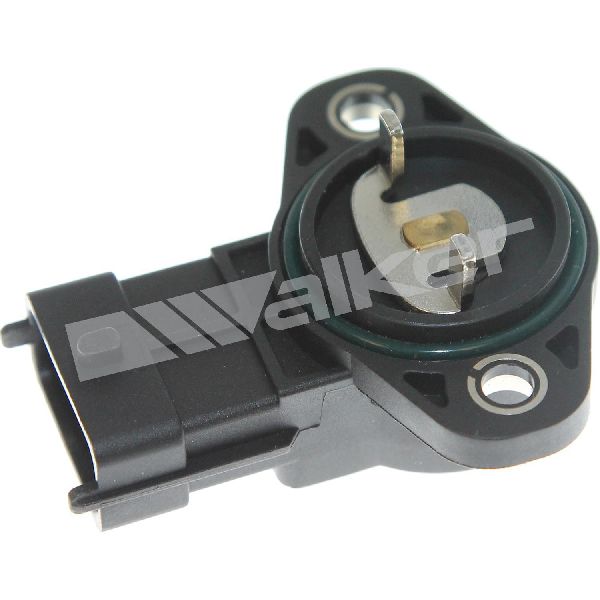
- Throttle Position Sensor
(OEM #35170-26900)— This is the most common failure point for the P0123 code on this specific vehicle.
Trusted brands: Hyundai/Kia Genuine, Standard Motor Products (SMP), Walker Products, Beck/Arnley
OEM price range: $45-$70
Aftermarket price range: $20-$40
Technical Service Bulletins (TSBs) & Recalls
- TSB 13-FL-012: While not directly for P0123, this TSB involves an ECM update for the 2007-2011 Accent 1.6L to address other DTCs (P030x, P0328, P0461). It's a reminder that software updates can sometimes resolve unexpected electronic issues, though it's unlikely to be the primary cause for a P0123.
- TSB 10-FL-016: This TSB for the 2007 Accent 1.6L notes an inconsistency in how the ECM reports EGR/VVT readiness, which was changed in later software updates. This is not directly related to P0123 but shows that ECM logic for this model has been revised over time.
Platform-Specific Known Issues
- Owner Experience: Solved by TPS Replacement: A user on the Car Talk Community forums with a 2006 Accent experienced symptoms of the transmission getting stuck in 3rd gear, which is a common limp-home strategy for this fault. While the initial discussion focused on transmission fluid and sensors, the symptoms are classic for a P0123 fault where the ECM cannot determine the correct throttle angle for shifting.
- Owner Experience: Broken Wire at Connector: A YouTube video by 'Bilal Auto Center' documented a 2006 Accent with P0122 and P0123 codes and a transmission that would not shift correctly. The final diagnosis was a broken wire right at the TPS connector, which was repaired to fix the issue. This highlights the importance of checking the wiring integrity before replacing parts.
Mechanic-Grade Diagnostic Values
- TPS Signal Voltage at Closed Throttle — expected: 0.25V - 0.8V. Failure: A voltage reading stuck high (e.g., >4.5V) indicates a 'Circuit High' fault.
- TPS Signal Voltage at Wide-Open Throttle (WOT) — expected: 4.0V - 4.8V. Failure: Voltage does not reach this range or is erratic during throttle opening.
- TPS Internal Resistance (between terminals 1 and 2) — expected: 0.71 kΩ - 1.38 kΩ at idle, 2.2 kΩ - 3.4 kΩ at WOT. Failure: Readings are outside these ranges or show an open/infinite resistance.
- TPS Internal Resistance (between terminals 2 and 3) — expected: 1.6 kΩ - 2.4 kΩ at all throttle positions. Failure: Reading is outside this range or changes with throttle position.
Scan Tool Commands That Help
- Manual Procedure (No Scan Tool): Throttle Position Relearn / ECU Reset — After replacing the TPS or cleaning the throttle body, a relearn procedure can help the ECU adapt to the new sensor's baseline values. A common method is to disconnect the negative battery terminal for several minutes, press the brake pedal to discharge any remaining power, then reconnect and let the vehicle idle for 10-15 minutes. Another method involves cycling the key from OFF to ON (without starting) for 10-15 seconds, then OFF, repeating 4-5 times to allow the throttle body to cycle and recalibrate.
Wiring & Ground Locations
- Throttle Position Sensor (TPS) — Mounted on the right side of the throttle body, which is located between the air cleaner box and the intake manifold.. This is the primary sensor for this code. Its 3-pin connector and the associated wiring are the most common points of failure besides the sensor itself.
- ECM/PCM — Located in the cabin, typically behind the center of the dash or to the left, near the interior fuse box.. This is where the TPS signal is processed. While rare, a faulty ECM can cause a P0123 code. Testing continuity from the TPS connector to the ECM pins can rule out wiring harness issues.
OEM Part Supersession History
35170-26900→N/A— This part number appears to be stable for the 2006-2011 Accent/Rio platform.
Heads up: Be aware that while the sensor looks similar, part numbers for other Hyundai models or generations (like the LC Accent before 2006 or the RB Accent after 2011) are not compatible.
Diagnostic Flowchart
Other Known Issues on This Vehicle
Issues unrelated to this code that are worth knowing about as an owner of this generation:
- Automatic Transmission Problems 🟠 Medium — Fairly common, especially on the 2009 model. Symptoms include harsh shifting, slipping, or failure to shift.
- Faulty Crankshaft Position Sensor 🟠 Medium — A common failure item that can cause intermittent stalling, no-start conditions, and rough idling. Symptoms can sometimes overlap with a bad TPS.
- Failing Ignition Coils 🟡 Low — Can lead to engine misfires (P030x codes), rough idling, and a check engine light. Relatively common and inexpensive to fix.
- Malfunctioning Stop Lamp Switch 🟡 Low — Widespread across many Hyundai models of the era. Can cause brake lights to stay on or not work, and may prevent shifting out of Park. (Ref: Recall 09V122000)
- Short Gearing on Manual Transmission 🟡 Low — Not a failure, but a design characteristic. The manual transmission is geared very short, causing high RPMs at highway speeds (e.g., ~3500 RPM at 70 MPH), which owners find noisy and inefficient.
Used vs. New Parts: Buying Guide for This Vehicle
When a used part is the smart pick: Given the very low cost of a new aftermarket throttle position sensor (often under $30), buying a used one from a junkyard is not recommended. The labor to install it is the same, and a used part has unknown life remaining. The risk of premature failure outweighs the minimal cost savings.
Donor-vehicle mileage cap: roughly under 50000 miles for the part to have meaningful remaining life.
What to inspect on the donor part:
- If you must buy used, choose a part from a vehicle with the lowest possible mileage.
- Inspect the connector pins for any signs of corrosion or damage.
- Ensure the plastic housing is not cracked or showing signs of heat damage.
OEM-only on this vehicle (don't cheap out):
- For this repair, OEM is not strictly necessary. The TPS is a simple, high-volume part and quality aftermarket versions are widely available and reliable.
Aftermarket brands forum-validated for this vehicle:
- NTK
- Standard Motor Products (SMP)
- Beck/Arnley
- Walker Products
Brands owners have reported issues with on this vehicle:
- Avoid unbranded, 'white-box' parts from online marketplaces with no warranty or return policy. The quality control on these is often non-existent.
Real Owner Stories
Aggregated from forums and TSBs cited above. Mileages and costs reflect what owners reported in those sources.
2006 Hyundai Accent
Symptoms: The car was not shifting gears properly; the RPM would go up to 4000-5000, but the gear wouldn't shift. When I put it in gear, the car would jerk. Check engine light with codes P0122 and P0123.
What fixed it: Repaired a cut wire in the wiring harness leading to the throttle position sensor.
Source hint: YouTube video by 'Bilal Auto Center' (Nabeel Vlog's) titled '2006 Hyundai Accent code p0122 p0123 throttle position sensor'
2006 Hyundai Accent Automatic
Symptoms: Transmission getting stuck in 3rd gear, which is a common limp-home strategy for this fault. Discussion focused on transmission fluid and sensors because the ECM could not determine the correct throttle angle for shifting.
What fixed it: Throttle Position Sensor (TPS) replacement.
Source hint: Car Talk Community - 'Hyundai Accent 06 auto trans problem'
Documented NHTSA Reports
While the following reports involve other Hyundai models, they illustrate common diagnostic paths for the P0123 code within the manufacturer's fleet. NHTSA ODI #11445835 describes a situation where a mechanic replaced the throttle body, yet the vehicle still failed to operate correctly due to P0123 and P0222 codes. Similarly, NHTSA ODI #11292479 notes a persistent issue where multiple codes, including P0123 and P0122, remained even after attempting to address grounding and MAP sensor concerns.
Related OBD-II Codes
Frequently Asked Questions
My 2006 Hyundai Accent is stuck in 3rd gear and jerking when I put it in gear; is this a transmission failure?
Does TSB 13-FL-012 for the 2007-2011 Accent 1.6L fix the P0123 code?
I replaced the TPS on my 2006 Accent but the P0123 code is still there. What else should I check?
Can a dirty throttle body cause P0123 on my Hyundai Accent?
Does the Kia Rio share this same throttle position sensor issue?
What should the TPS voltage sweep look like on a healthy 2006-2011 Accent?
Helpful Videos


Used OEM Parts in Stock
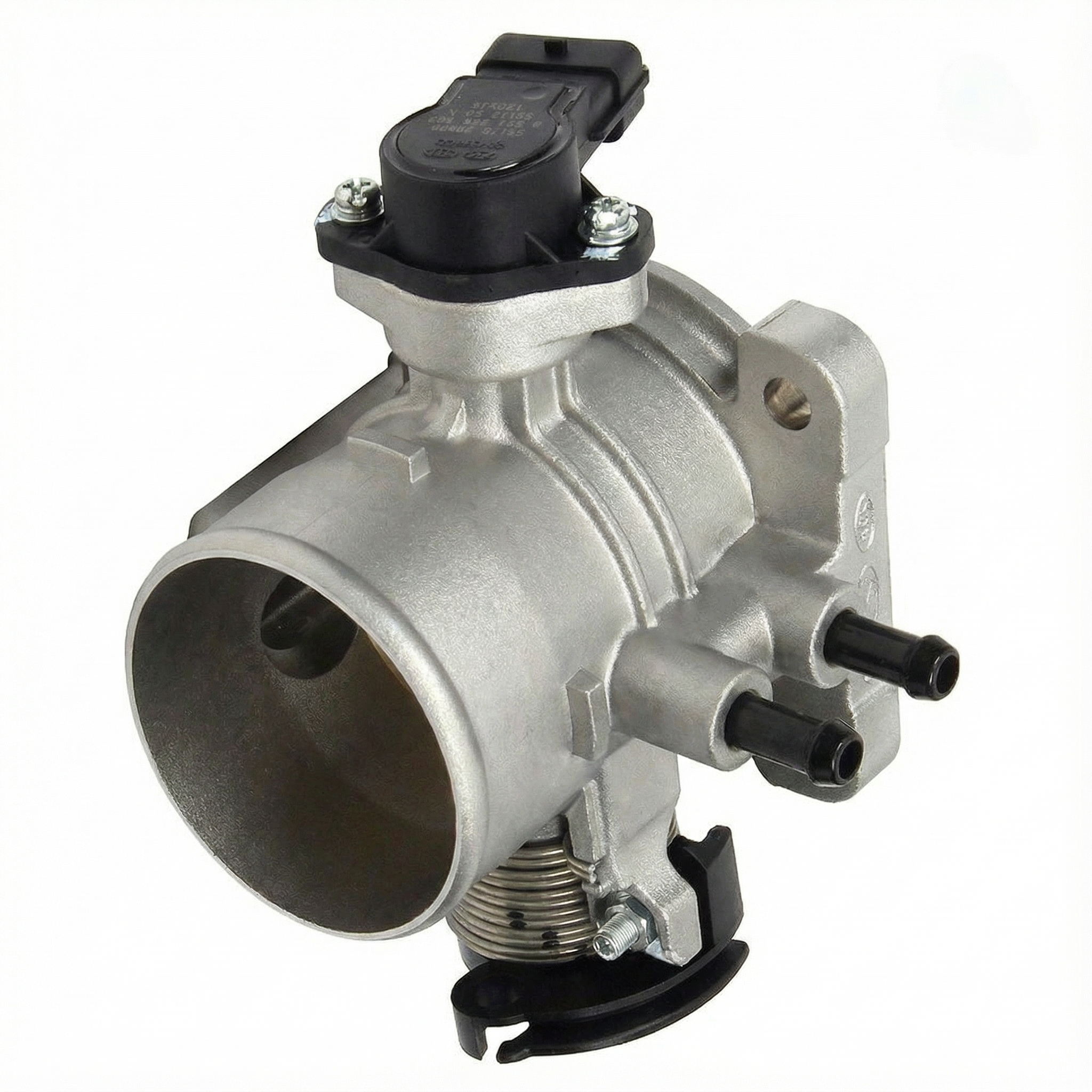
New Aftermarket Parts Available


The information in this article is provided for general reference and educational purposes only. Vehicle specifications, procedures, and part compatibility can vary by production date, trim level, and region. Always consult your vehicle's factory service manual and verify part numbers before purchasing or performing repairs. Safety-critical components such as airbags, seat belts, and braking systems should be installed by a qualified professional.
- Hyundai Accent:
- 🧭 Diagnostic Flowchart
- 🎬 Helpful Videos
- 🛍️ Shop This Part
- What's Unique About the 2006-2011 Hyundai Accent
- Symptoms You May Notice
- Most Likely Causes
- Rare But Worth Checking
- Diagnosis Steps
- Parts You'll Likely Need
- Technical Service Bulletins (TSBs) & Recalls
- Platform-Specific Known Issues
- Mechanic-Grade Diagnostic Values
- Scan Tool Commands That Help
- Wiring & Ground Locations
- OEM Part Supersession History
- Other Known Issues on This Vehicle
- Used vs. New Parts: Buying Guide for This Vehicle
- Real Owner Stories
- 2006 Hyundai Accent
- 2006 Hyundai Accent Automatic
- Documented NHTSA Reports
- Related OBD-II Codes
- Frequently Asked Questions
- 🎟️ Get 5% Off