

P0123 on 2001-2006 Hyundai Santa Fe: Throttle Position Sensor Circuit High Causes and Fixes
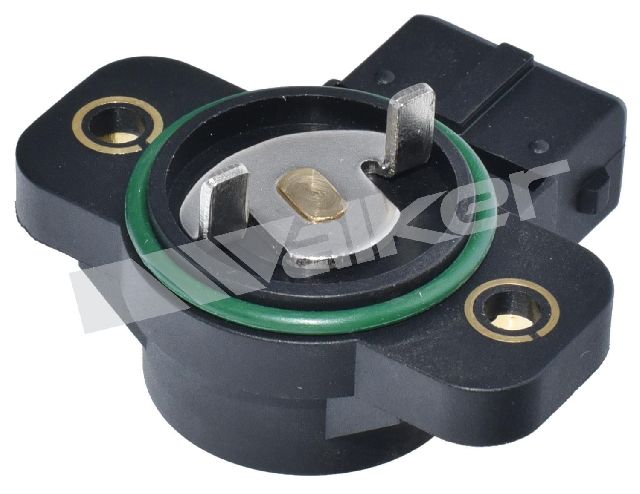
For a 2001-2006 Hyundai Santa Fe, code P0123 almost always means the Throttle Position Sensor (TPS) has failed. The vehicle's computer sees a voltage from the sensor that is stuck high (above 4.75V). Replacing the sensor is the most common fix, costing around $25-$70 for an aftermarket part and is a DIY-friendly job for most home mechanics.
- P0123 on a 2001-2006 Santa Fe is almost always a bad Throttle Position Sensor (TPS).
- Symptoms include stalling, poor acceleration, and a rough idle.
- The fix is typically replacing the TPS, which is an affordable and accessible DIY job with basic tools.
- While cleaning the throttle body is good practice during the repair, it is unlikely to be the sole cause of this specific code.
- Be careful not to strip the small screws holding the sensor to the throttle body during replacement.
What's Unique About the 2001-2006 Hyundai Santa Fe

On the first-generation Hyundai Santa Fe (2001-2006) and its platform mates with the 2.7L V6 engine, the Throttle Position Sensor is a very common failure point due to age and wear. The mechanical throttle body system is relatively straightforward, making diagnosis simpler compared to later electronic throttle control systems. Owners frequently report that replacing the original TPS (OEM Part No. 35170-37100) resolves a variety of drivability issues like stalling, hesitation, and erratic shifting associated with this code.
Symptoms You May Notice
- Check Engine Light is on
- Hesitation or stumbling when accelerating
- Rough or erratic idle (idling too high or too low)
- Engine stalling, especially when coming to a stop or at low speeds
- Poor or sluggish acceleration
- Vehicle jerking or bucking
- Hard, late, or erratic automatic transmission shifting
- Poor fuel economy
- Replacing the entire throttle body when only the sensor is bad. On this vehicle, the TPS is a separate, replaceable component.
- Replacing other components like the Mass Airflow Sensor or oxygen sensors without first diagnosing the TPS circuit, which is the most likely culprit for P0123.
Most Likely Causes

- Defective Throttle Position Sensor (TPS) 🔴 High Probability → Shop Fuel Injection Throttle Body The sensor is a high-wear electronic component that is a known, frequent failure point on this platform. It's the most commonly reported solution for P0123 on this specific vehicle and its engine-mates.
How to confirm: With the key on and engine off, use a scan tool to monitor TPS voltage. It will likely be stuck high (e.g., over 4.75V) regardless of throttle position. Alternatively, use a multimeter to back-probe the signal wire; it should sweep smoothly from ~0.5V at closed throttle to ~4.5V at wide-open throttle. A reading that is stuck high or doesn't change smoothly indicates a bad sensor. With the sensor disconnected, resistance between the power and ground terminals should be between 3.5 and 6.5 kOhms.
Typical fix: Replace the Throttle Position Sensor. It is recommended to disconnect the battery for 15 minutes after replacement to reset the ECU, allowing it to learn the new sensor's parameters.
Est. part cost: $25-$70 - Wiring Harness or Connector Issue 🟡 Medium Probability Aging wiring can become brittle, and the connector at the throttle body is exposed to engine heat and vibration, which can lead to corrosion or loose pins causing a short to power.
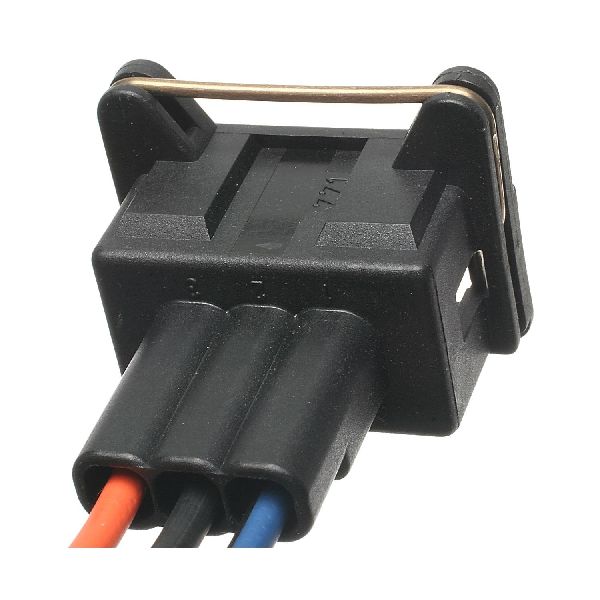
How to confirm: Visually inspect the 3-wire harness and connector going to the TPS for any signs of damage, corrosion, or loose pins. With the TPS disconnected and key on, use a multimeter to check the connector terminals: one pin should have a steady 5V reference, and another should have a good ground (near 0V). Wiggle the harness while monitoring live data (if possible) to see if the voltage reading changes erratically. A loss of the 5V reference can be caused by a short in another sensor on the same circuit.
Typical fix: Repair the damaged section of wiring or clean/replace the connector pigtail.
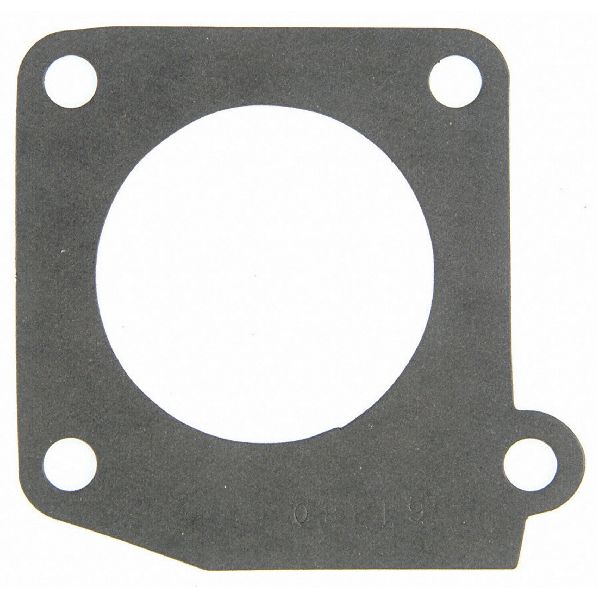
Est. part cost: $15-$50 - Dirty or Binding Throttle Body ⚪ Low Probability → Shop Fuel Injection Throttle Body Carbon buildup can cause the throttle plate to stick, but it's less likely to cause a 'circuit high' code unless the sticking physically prevents the TPS from returning to its home position. It's more often a contributing factor or something to clean while replacing the TPS.
How to confirm: Remove the air intake hose and visually inspect the throttle body and plate for heavy carbon deposits. Manually operate the throttle linkage to feel for any sticking or binding.
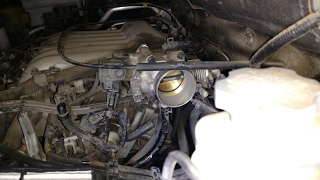
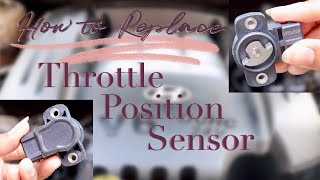
Typical fix: Clean the throttle body bore and plate with a dedicated throttle body cleaner and a soft brush or rag. This is often done concurrently with a TPS replacement. 🎬 Watch: How to replace the TPS and clean the throttle body.
Est. part cost: $10-$15
Rare But Worth Checking
- Faulty Powertrain Control Module (PCM): → Shop Engine Control Module (ECM) This is extremely rare and should only be considered after all other possibilities, including the sensor and wiring, have been definitively ruled out. A faulty PCM can misinterpret a good sensor signal or fail to provide a stable 5V reference. A bent pin on the PCM connector can also cause this issue.
Diagnosis Steps

- Connect an OBD-II scanner to verify code P0123 is present and check for any other codes.
- View live data on the scanner. Observe the 'TP' or 'TPS' voltage/percentage with the key on, engine off. It should be low (~0.5V or <10%) at closed throttle. If it reads high (e.g., >4.75V), the problem is likely the sensor or wiring.
- Slowly press the accelerator pedal to the floor. The voltage/percentage should increase smoothly and linearly to its maximum (~4.5V or >80%). Any jumps, drops, or dead spots indicate a faulty sensor.
- If the reading is stuck high, turn the engine off and disconnect the TPS connector.
- Inspect the 3-pin connector and wiring harness for corrosion, damage, or pushed-out pins.
- If the wiring looks good, turn the ignition back on (engine off) and use a multimeter to check the connector terminals. You should find a 5-volt reference wire, a ground wire (<50mV), and the signal wire (which will be open).
- If the 5V reference and ground are present, the TPS is almost certainly the faulty component.
- If reference voltage or ground is missing, the wiring between the TPS and the PCM needs to be traced and repaired. Be aware that other sensors, such as the MAF and Coolant Temperature Sensor, may share the 5V reference circuit and a fault in one can affect the others.
Parts You'll Likely Need
- Throttle Position Sensor (TPS)
(OEM #35170-37100)— This is the most common failure component for code P0123 on this vehicle, directly responsible for the signal the PCM is reading.
Trusted brands: Standard Motor Products (SMP), Delphi, NTK, Walker, Beck Arnley
OEM price range: $80-$120
Aftermarket price range: $25-$70
Related Codes That Often Appear With This One
- P0122 — Indicates 'TPS Circuit Low Input'. Seeing both P0122 and P0123 intermittently can point to a sensor with an internal failure causing erratic readings across its entire range.
- P0121 — Indicates 'TPS Performance/Rationality'. This code is set when the TPS signal doesn't align with other sensor readings (like the Mass Airflow sensor), which can happen when the TPS is failing or has dead spots.
- P0101 — Indicates a 'Mass Air Flow (MAF) Sensor Circuit Range/Performance' issue. This can sometimes appear with a TPS code if the computer receives conflicting information about engine load from a faulty TPS and the MAF.
Technical Service Bulletins (TSBs) & Recalls
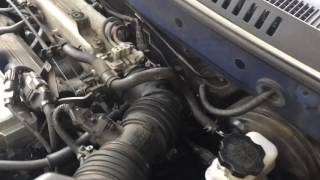
- Kia TSB KT2007112601: While not for Hyundai, this TSB for the mechanically similar 2003 Kia Optima V6 directly addresses DTC P0123 and engine hesitation, noting that an improved Throttle Position Sensor is available. 🎬 See this walkthrough for replacing the TPS on 2.4L engines. This corroborates the known issue with the original part design.
Platform-Specific Known Issues
- The screws holding the TPS to the throttle body can be soft and easily stripped. They are often small Phillips head screws, but some replacements or later models might use a T20 star-shaped bit. Use the correct size driver and apply firm, straight pressure to avoid stripping.
- On the 2.7L V6, accessing the TPS may require removing the entire throttle body, which adds steps like disconnecting the air intake hose and throttle cables but is still manageable for a DIYer.
- After replacing the TPS, it is good practice to perform an ECU reset by disconnecting the negative battery terminal for at least 15 minutes. This clears learned values and allows the computer to properly calibrate to the new sensor's voltage range.
Mechanic-Grade Diagnostic Values
- TPS Resistance (Sensor Disconnected) — expected: 3.5 - 6.5 kOhms between power and ground terminals. Failure: Reading is outside of this range, or infinite (open circuit).
- TPS Signal Voltage (Key On, Engine Off) — expected: Approx. 0.3V - 0.9V at closed throttle, sweeping smoothly to ~4.5V at wide-open throttle.. Failure: Voltage is stuck high (above 4.75V) regardless of throttle position, or has jumps/dropouts when the throttle is opened slowly.
- TPS Connector 5V Reference (Key On, Engine Off, Connector Disconnected) — expected: Approx. 5.0V on the reference wire.. Failure: Voltage is significantly lower than 5V, absent, or higher than 5V, indicating a wiring or PCM issue.
Scan Tool Commands That Help
- N/A - Manual Procedure: ECU/PCM Learned Value Reset — After replacing the TPS or cleaning the throttle body, this procedure forces the engine computer to clear its long-term adaptive memory. This allows it to relearn the idle and throttle parameters with the new/clean components. The most common method is to disconnect the negative battery terminal for 15 minutes.
Wiring & Ground Locations

- PCM Location — Below the center of the dashboard.. The TPS wiring harness terminates at the PCM. In rare cases of a no-fix scenario, a visual inspection of the PCM connectors for corrosion or bent pins is a final step.
- G02 (2.7L Engine) — Under the center console, near the SRS control module.. This is a major chassis ground point. A loose or corroded ground here can cause a variety of difficult-to-diagnose electrical issues, including sensor circuit faults.
- G07 — Behind the left front (driver's side) kick panel.. This is another key interior ground location. The TPS sensor circuit requires a clean ground path back to the PCM; a fault at a primary ground point like this can introduce noise or voltage offsets that trigger codes.
Real Owner Repair Stories
- YouTube video by 'TussinTuning' (2006 Hyundai Tucson 2.7L V6 (mechanically similar)) — P0123 code, high idle. The issue was intermittent and would only appear after the vehicle was driven for about 15 minutes and warmed up.
❌ Tried (didn't work) Initial checks when the engine was cold did not show a fault.
✅ What actually fixed it The technician identified that the TPS was failing due to heat soak. Once warm, its idle voltage would stick at 3.5V instead of the normal <0.8V. Replacing the throttle position sensor resolved the issue. - Hyundai-Forums.com user (2004 Hyundai Santa Fe 2.7L V6) — Code P0121 (TPS Performance), severe bucking and RPM fluctuation after driving 5-7 miles.
❌ Tried (didn't work) The user was initially focused only on the TPS.
✅ What actually fixed it The user diagnosed that the 5V reference voltage supplied by the PCM was dropping out. They correctly identified that this 5V circuit is shared with other sensors like the MAF and Coolant Temperature Sensor. The final fix isn't posted, but the critical takeaway was identifying the shared circuit as the problem area, suggesting another sensor was shorting and bringing the circuit down. - NHTSA ODI #11292479 — A report for a related Hyundai model describes a persistent issue where P0123 appeared alongside multiple other codes (P0122, P0222, P2106). Despite grounding concerns, a local shop eventually identified a faulty MAP sensor as a contributing factor in the circuit malfunction.
- NHTSA ODI #11445835 — An owner reported that even after a mechanic replaced the throttle body, the P0123 code persisted. The report noted that the issue was specifically related to the throttle position pedal circuit, which is not a standard part carried by many auto parts stores.
OEM Part Supersession History
35170-37100→35170-37100— Part number has remained stable.
Heads up: This OEM part number is widely used across various Hyundai and Kia models with the 2.7L V6 engine from this era, including the Sonata, Tiburon, and Kia Optima, indicating good compatibility.
Model Year Variations Within This Range
- 2001-2006: Throttle bodies for models equipped with cruise control are different from those without. While the TPS sensor itself is the same, if you are replacing the entire throttle body assembly with a used part, you must source one from a vehicle with the same cruise control configuration.
- 2005-2006: The 2.4L 4-cylinder engine option was dropped for the 2005 model year facelift. All 2005-2006 Santa Fe models with this body style have a V6 engine.
Diagnostic Flowchart
Used vs. New Parts: Buying Guide for This Vehicle
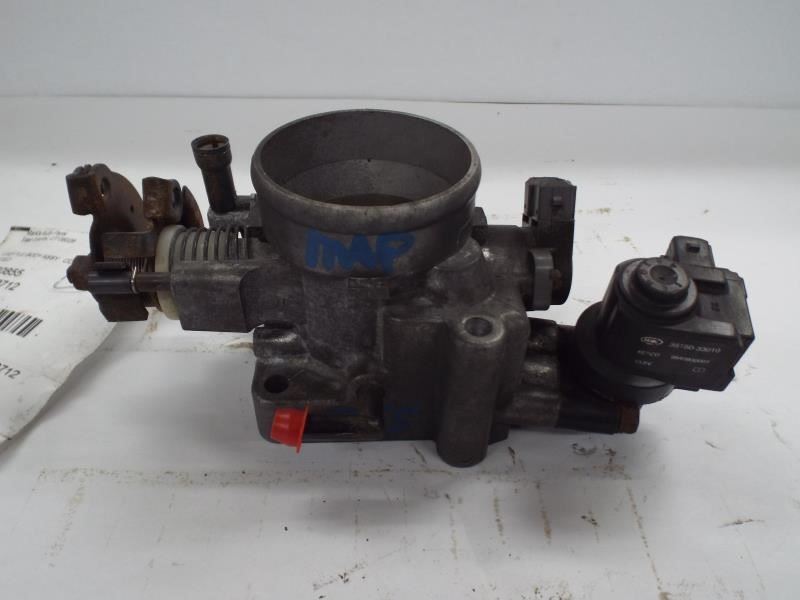
When a used part is the smart pick: Buying a used TPS sensor is not recommended as it is a low-cost, high-wear electronic part. However, purchasing a complete used throttle body assembly from a salvage yard can be a cost-effective option if the entire unit is needed.
Donor-vehicle mileage cap: roughly under 100000 miles for the part to have meaningful remaining life.
What to inspect on the donor part:
- Manually actuate the throttle plate; it should move smoothly with no sticking or binding.
- Inspect the plastic electrical connectors for the TPS and IAC valve; ensure they are not cracked, brittle, or broken.
- Look inside the throttle bore; minimal carbon is acceptable, but avoid units with heavy, caked-on deposits.
- Verify if the donor vehicle had cruise control to match your vehicle's configuration.
OEM-only on this vehicle (don't cheap out):
- No components in this specific repair are considered 'OEM-only'.
Aftermarket brands forum-validated for this vehicle:
- Delphi
- NTK
- Standard Motor Products (SMP)
- Walker Products
Brands owners have reported issues with on this vehicle:
- Duralast (per technician feedback citing poor quality for this specific application)
Real Owner Stories
Aggregated from forums and TSBs cited above. Mileages and costs reflect what owners reported in those sources.
2005 Hyundai Santa Fe 2.7L
Symptoms: The engine was idling high or low, and the throttle would jump around while driving, causing random acceleration and deceleration. The check engine light was on.
What fixed it: Replacing the Throttle Position Sensor (TPS) and cleaning the throttle body resolved the issue.
Source hint: YouTube
2004 Santa Fe 2.7L
Symptoms: The vehicle was bucking and the RPM was fluctuating.
What fixed it: The owner was troubleshooting the 5V reference circuit that the TPS shares with other sensors, which is a key diagnostic step if a new TPS does not solve the problem.
Source hint: Hyundai-Forums.com thread titled '2004 Santa Fe, 2.7 TPS problem'
2001 Santa Fe
Symptoms: A P1701 code, described as 'tps open circuit', appeared even after the Throttle Position Sensor was replaced.
What fixed it: The issue was not resolved by a simple sensor replacement, indicating a persistent underlying problem such as a wiring harness fault or the need to manually clear stored codes.
Source hint: Hyundai-Forums.com thread titled 'Santa Fe Codes'
Related OBD-II Codes
Frequently Asked Questions
What tools do I need to replace the Throttle Position Sensor (TPS) on my Santa Fe, and are the screws difficult to remove?
Do I need to reset the computer (ECU) after replacing the TPS on my 2001-2006 Santa Fe?
Is it difficult to access the TPS on the 2.7L V6 engine?
I saw a Kia TSB (KT2007112601) for code P0123. Is that relevant to my Hyundai Santa Fe?
What voltage readings should I expect from a working TPS on my Santa Fe?
Could another bad sensor cause the P0123 code on this vehicle?
Helpful Videos
Used OEM Parts in Stock
New Aftermarket Parts Available


The information in this article is provided for general reference and educational purposes only. Vehicle specifications, procedures, and part compatibility can vary by production date, trim level, and region. Always consult your vehicle's factory service manual and verify part numbers before purchasing or performing repairs. Safety-critical components such as airbags, seat belts, and braking systems should be installed by a qualified professional.
- Hyundai Santa Fe:
- 🧭 Diagnostic Flowchart
- 🎬 Helpful Videos
- 🛍️ Shop This Part
- What's Unique About the 2001-2006 Hyundai Santa Fe
- Symptoms You May Notice
- Most Likely Causes
- Rare But Worth Checking
- Diagnosis Steps
- Parts You'll Likely Need
- Related Codes That Often Appear With This One
- Technical Service Bulletins (TSBs) & Recalls
- Platform-Specific Known Issues
- Mechanic-Grade Diagnostic Values
- Scan Tool Commands That Help
- Wiring & Ground Locations
- Real Owner Repair Stories
- OEM Part Supersession History
- Model Year Variations Within This Range
- Used vs. New Parts: Buying Guide for This Vehicle
- Real Owner Stories
- 2005 Hyundai Santa Fe 2.7L
- 2004 Santa Fe 2.7L
- 2001 Santa Fe
- Related OBD-II Codes
- Frequently Asked Questions
- 🎟️ Get 5% Off