

P0123 on 2010-2014 Hyundai Sonata: Throttle Position Sensor Circuit High Causes and Fixes
On a 2010-2014 Sonata, code P0123 is most often caused by a failed Throttle Position Sensor (TPS), which is integrated into the throttle body. The fix is usually replacing the entire throttle body assembly. Expect to pay $250-$500 for the part and around 1 hour of labor. Before replacing, always check the wiring harness for damage, a known issue.
- P0123 on a 2010-2014 Sonata means the throttle position sensor signal is too high.
- The most likely cause is a failure of the sensor itself, which is part of the throttle body assembly.
- Before replacing the expensive throttle body, always inspect the wiring harness and connector for damage, as a broken wire can cause the same code.
- The sensor is NOT sold separately. You must buy the complete throttle body assembly.
- Symptoms are severe and include limp mode, stalling, and poor acceleration, making the car unsafe to drive long distances.
- Other Hyundai/Kia models like the Optima, Santa Fe Sport, and Tucson share this same potential failure.
- After replacement, a throttle relearn procedure is necessary.
What's Unique About the 2010-2014 Hyundai Sonata
For the 2010-2014 (YF generation) Sonata, particularly those with the 2.4L GDI engine, the Throttle Position Sensor (TPS) is not a separate, replaceable part. It is integrated directly into the electronic throttle body assembly. This is a key detail, as a sensor failure requires replacing the entire throttle body, not just a small, inexpensive sensor. This design simplifies the assembly but increases the cost of repair for this specific fault.
Symptoms You May Notice
- Check Engine Light is on
- Electronic Stability Control (ESC) light may also illuminate
- Vehicle enters 'limp mode' with drastically reduced engine power
- Poor, hesitant, or delayed acceleration
- Engine may stall or have a rough, unstable idle
- Hard starting
- Unpredictable or sudden acceleration or deceleration
- Replacing the accelerator pedal position sensor (APPS). While the APPS is part of the overall drive-by-wire system, P0123 specifically points to the sensor circuit at the throttle body ('A' circuit), not the pedal.
Most Likely Causes
- Failed Throttle Body Assembly 🔴 High Probability → Shop Fuel Injection Throttle Body The Throttle Position Sensor (TPS) is integrated into the assembly and is a common failure point. It cannot be replaced separately, making the entire unit the point of failure.
How to confirm: After confirming wiring is intact, use a scan tool to monitor TPS voltage. If the voltage reads high (e.g., ~5V) at all times, even with the throttle closed, the sensor inside the throttle body has failed. A scan tool can also be used to command the throttle motor to open and close, verifying mechanical function.
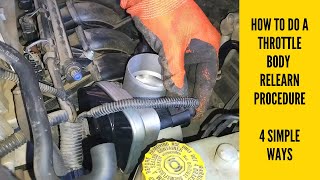
Typical fix: Replace the entire throttle body assembly. After installation, a throttle body relearn procedure is recommended. This can sometimes be done by letting the vehicle idle for several minutes with the A/C on, but a scan tool is the proper method. 🎬 Watch: Four ways to perform a throttle body relearn.
Est. part cost: $250-$500 - Wiring Harness or Connector Issue 🟡 Medium Probability The wiring harness leading to the throttle body can become damaged from heat and vibration, leading to a short to power or a broken ground wire, which can cause a high voltage reading. Some owners report related issues with other harnesses being too taut from the factory.
How to confirm: Visually inspect the wiring and connector for damage, corrosion, or loose pins. Use a multimeter to check for a stable 5V reference, a good ground, and the signal wire voltage at the throttle body connector with the key on, engine off.
Typical fix: Repair the damaged section of the wiring harness or clean/replace the connector.
Est. part cost: $5-$50 - Dirty or Sticking Throttle Body ⚪ Low Probability → Shop Fuel Injection Throttle Body Carbon can build up inside the throttle body, preventing the throttle plate from closing properly. This can cause the TPS to report a higher-than-normal reading at idle, though it's less likely to cause a persistent 'circuit high' fault than an electronic failure.
How to confirm: Remove the air intake hose and visually inspect the throttle bore and plate for black carbon deposits. Check if the plate moves smoothly by hand (with the engine off).
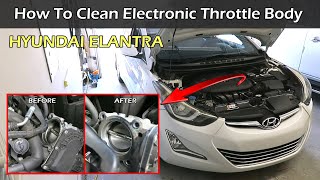
Typical fix: Clean the throttle body thoroughly with a dedicated throttle body cleaner and a soft cloth or brush.
Est. part cost: $10-$15
Rare But Worth Checking
- Faulty Powertrain Control Module (PCM): → Shop Engine Control Module (ECM) This is very rare. The PCM should only be considered after all other possibilities have been exhaustively tested. In some documented cases, a bent pin on the PCM connector itself has been found to cause a P0123 code.
Diagnosis Steps
- Connect an OBD-II scanner and confirm P0123 is present. Check for any other related throttle codes like P0222 or P2135.
- Using the scanner's live data function, observe the 'TPS Voltage' or 'Throttle Position' reading with the key on, engine off. It should be low (~0.5V) at idle and sweep smoothly up to ~4.5V at wide-open throttle.
- If the voltage is stuck high (e.g., 4.8V-5.0V) and does not change when you press the accelerator, proceed to inspect the wiring.
- Disconnect the electrical connector at the throttle body. Inspect for corrosion, bent pins, or damaged wires.
- With the connector unplugged and key on, use a multimeter to test the terminals on the harness side. You should find a 5-volt reference wire, a good ground wire (0 ohms to chassis ground), and the signal wire (should be 0V with sensor unplugged). A video for a 2014 Sonata showed a broken ground wire was the culprit. 🎬 Watch: Diagnostic walkthrough for these specific Hyundai throttle codes.
- If the wiring checks out (good power and ground), the fault is almost certainly the TPS within the throttle body assembly.
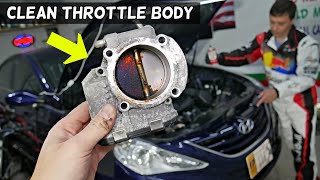
- As a final check, you can try cleaning the throttle body, but if the sensor has failed electronically, cleaning will not resolve 🎬 See how to properly clean your Sonata's throttle body. a 'circuit high' fault.
- If all tests point to the sensor, replace the entire throttle body assembly and perform the throttle relearn procedure.
Parts You'll Likely Need
- Throttle Body Assembly
(OEM #35100-2G710 (for 2.4L GDI), 35100-25400 (for earlier 2.4L MPI))— This is the most common fix because the Throttle Position Sensor (TPS) that causes code P0123 is integrated into this assembly and cannot be purchased separately. Part number 35100-2G710 is common for the 2011+ GDI engines.
Trusted brands: Hyundai (OEM), Hitachi, Dorman, Cardone
OEM price range: $450-$691
Aftermarket price range: $250-$400
Related Codes That Often Appear With This One
- P0222 — This is for TPS 'B' circuit low, and can appear with P0123 if there is a general throttle body or wiring failure affecting multiple sensor circuits.
- P2135 — This code indicates a correlation error between TPS 'A' and 'B' signals. It's very common to see this alongside P0123 as it points directly to a failing throttle body.
- P0121 — Indicates a TPS 'A' Circuit Performance/Range problem. It can be a precursor or companion to P0123 if the sensor is failing erratically.
Technical Service Bulletins (TSBs) & Recalls
- No specific Technical Service Bulletin (TSB) for P0123 on this platform is widely documented. The issue is typically addressed through standard diagnostic procedures. However, TSBs related to ECM software updates (like 12-FL-004 for other models) and major engine recalls (like Campaign 132) exist for this vehicle generation, highlighting the importance of checking for any open campaigns.
Platform-Specific Known Issues
- Recall Campaign 132 (Engine Bearing Wear): While not directly for code P0123, 2011-2012 Sonatas with 2.0T and 2.4L GDI engines were subject to a major recall and warranty extension for premature engine bearing failure. This could cause stalling and a check engine light, symptoms that can overlap with throttle body issues. It's a critical piece of context for the overall health of these engines.
- Wiring Harness Sensitivity: There are owner reports on forums for this generation of Sonata regarding wiring harnesses being stretched too tight from the factory, particularly the knock sensor harness. This can lead to intermittent electrical faults and limp mode, corroborating the idea that wiring should be carefully inspected for any throttle-related code.
Documented NHTSA Reports
NHTSA records for other Hyundai models highlight how persistent these throttle codes can be. NHTSA ODI #11445835 describes a situation where a mechanic replaced the throttle body, but the vehicle still displayed P0123 and P0222 codes. Similarly, NHTSA ODI #11292479 notes a case where a vehicle suffered from multiple codes including P0123, P2106, and P0222, resulting in the car being limped to a shop after grounding issues were suspected.
Mechanic-Grade Diagnostic Values
- TPS Voltage at Closed Throttle (Key On, Engine Off) — expected: 0.20V - 0.47V. Failure: A reading stuck high, near 5.0V, indicates a 'Circuit High' fault.
- TPS Voltage at Wide Open Throttle (Key On, Engine Off) — expected: 4.2V - 4.7V. Failure: Voltage should sweep smoothly from closed to open. Jumps or dead spots indicate a failing sensor.
- Throttle Position Angle at Closed Throttle (Live Data) — expected: ~5.2 degrees. Failure: A significantly different reading at idle can indicate carbon buildup or a miscalibrated sensor.
- Throttle Position Angle at Wide Open Throttle (Live Data) — expected: ~88-90 degrees. Failure: Failure to reach near 90 degrees can indicate a mechanical obstruction or sensor range issue.
- P0123 Fault Trigger Threshold — expected: Voltage < 4.86V. Failure: The PCM will set code P0123 if the TPS signal voltage is > 4.86V for more than 1 second.
Scan Tool Commands That Help
- Hyundai GDS (or equivalent professional scanner): Active Test: ETC Motor — After checking voltages, this command directly actuates the throttle plate motor. The scanner will command the throttle to open and close, typically every second. This allows a technician to verify if the motor and gears inside the throttle body are functioning mechanically, separate from the position sensor's readings.
- Hyundai GDS (or equivalent professional scanner): Resetting Adaptive Values — After replacing the throttle body, this function in the Engine Control module's special functions menu will clear the old learned values for idle and throttle position, forcing the ECU to relearn the new part's characteristics immediately. This is the factory-correct method for a throttle body relearn.
- Manual Procedure (No Scan Tool): Throttle Body Relearn/Reset — After cleaning or replacing the throttle body without a scan tool. The general procedure is: 1) Warm up the engine. 2) Turn ignition to ON (engine off) for 10-15 seconds. 3) Turn ignition OFF for 10-15 seconds. 4) Repeat this cycle 4-5 times. You may hear the throttle body whirring as it calibrates. 5) Start the engine and let it idle for 10-15 minutes to finalize the relearn.
Wiring & Ground Locations
- Throttle Body Connector (GDI Engine) — 6-pin connector on the electronic throttle body assembly.. This is the primary point for testing. A P0123 code is often caused by a short to power on the signal wire or a loss of the ground wire at this connector. Pinout for testing: Pin 1: ETC Motor (+), Pin 2: ETC Motor (-), Pin 3: Sensor Ground, Pin 4: TPS Signal 2, Pin 5: 5V Reference, Pin 6: TPS Signal 1 ('A' Circuit). P0123 relates to a high voltage reading on Pin 6.
Real Owner Repair Stories
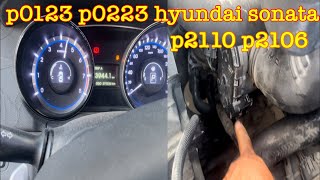
- YouTube - P0123,P0223,P2110,P2106 Hyundai sonata (2014 Hyundai Sonata) — Check Engine Light, multiple throttle-related codes including P0123, vehicle in limp mode.
❌ Tried (didn't work) Initial assumption was a failed throttle body.
✅ What actually fixed it The technician performed a pin-out test at the throttle body connector and found 0V on the ground wire. Tracing the harness back, they discovered a broken ground wire inside the loom a few inches from the connector. Repairing the broken wire resolved all fault codes without needing to replace the throttle body.
Model Year Variations Within This Range
- 2010: The 2010 model year primarily used the 2.4L Theta II MPI (Multi-Point Injection) engine. This engine uses throttle body part number 35100-25400. While still an integrated unit, it is a different part from the later GDI engines.
- 2011-2014: Starting in 2011, the Sonata switched to the 2.4L Theta II GDI (Gasoline Direct Injection) engine. This engine uses the more commonly cited throttle body part number 35100-2G710. The GDI engine produces more power (198 hp vs 178 hp for the MPI). It is critical to order the correct throttle body for the specific engine type.
Diagnostic Flowchart
Used vs. New Parts: Buying Guide for This Vehicle
When a used part is the smart pick: A used throttle body from a junkyard can be a cost-effective option if the budget is tight, but it is a gamble. It makes the most sense if the donor vehicle has low mileage and you can verify its history or see it run.
Donor-vehicle mileage cap: roughly under 60000 miles for the part to have meaningful remaining life.
What to inspect on the donor part:
- Check for a clean throttle plate and bore; heavy carbon buildup suggests high mileage or poor maintenance.
- Ensure the electrical connector pins are straight and free of corrosion.
- If possible, get a part from a vehicle with documented front-end collision damage (implying the engine was running fine) rather than one junked for unknown engine failure.
- Ask for the VIN of the donor car to verify its model year and engine type (MPI vs. GDI).
OEM-only on this vehicle (don't cheap out):
- While not strictly OEM-only, the throttle body is a critical electronic component. An OEM part offers the highest assurance of compatibility and longevity. If buying aftermarket, stick to reputable brands.
Aftermarket brands forum-validated for this vehicle:
- Hitachi (Often the original equipment manufacturer)
- Dorman (Often includes design improvements, but check reviews for the specific part number)
- Standard Motor Products (SMP)
Brands owners have reported issues with on this vehicle:
- Unbranded, no-name parts from online marketplaces can be poorly manufactured, have a high failure rate, and may not calibrate correctly, leading to more frustration and wasted time.
Real Owner Stories
Aggregated from forums and TSBs cited above. Mileages and costs reflect what owners reported in those sources.
2014 Hyundai Sonata
Symptoms: Vehicle had a Check Engine Light on with multiple throttle-related codes, including P0123, and was likely in 'limp mode'.
What fixed it: The technician found and repaired a broken ground wire in the wiring harness going to the throttle body.
Source hint: YouTube: P0123,P0223,P2110,P2106 Hyundai sonata
Hyundai Sonata (similar generation to 2010-2014)
Symptoms: The vehicle would suddenly enter 'limp mode' with reduced power.
What fixed it: The issue was traced to a knock sensor wiring harness that was stretched too taut from the factory, causing an intermittent electrical fault.
Source hint: hyundai-forums.com: 'Limp mode' thread
Hyundai Sonata (unspecified year)
Symptoms: After getting a P0123 code, the owner replaced the TPS, but the engine stalling issue returned as soon as the car warmed up.
What fixed it: The initial part replacement did not fix the issue, indicating a more complex problem, possibly a temperature-related electrical fault in the wiring.
Source hint: Reddit r/Cartalk: 'p0123, replaced TPS, now what?'
Hyundai Veloster
Symptoms: An owner reported having no codes until a mechanic changed the throttle body, but the vehicle still failed to work properly due to codes P0222 and P0123.
What fixed it: The owner noted that the throttle position pedal was identified as the issue, but it was not a regularly carried part at auto parts stores.
Source hint: NHTSA ODI #11445835
Related OBD-II Codes
Frequently Asked Questions
Can I just replace the Throttle Position Sensor (TPS) on my 2010-2014 Sonata, or do I need the whole assembly?
My 2011 Sonata is stalling and has a check engine light. Could this be related to the big engine recall (Campaign 132)?
After I install a new throttle body, is there a special procedure I need to follow?
I've heard these Sonatas can have wiring issues. Could a bad wire cause code P0123?
Is it worth trying to clean the throttle body before replacing it for a P0123 code?
I have a 2012 Kia Optima with code P0123. Is the problem the same as on the Sonata?
Helpful Videos

Used OEM Parts in Stock
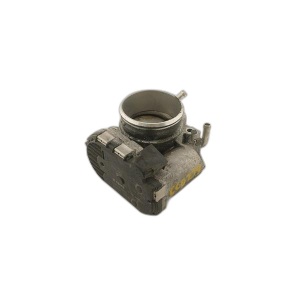
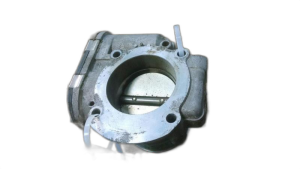
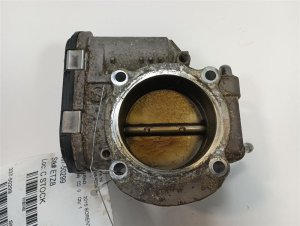
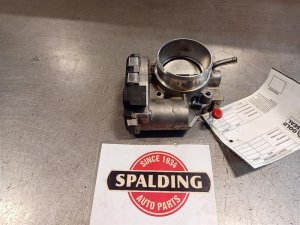
New Aftermarket Parts Available


The information in this article is provided for general reference and educational purposes only. Vehicle specifications, procedures, and part compatibility can vary by production date, trim level, and region. Always consult your vehicle's factory service manual and verify part numbers before purchasing or performing repairs. Safety-critical components such as airbags, seat belts, and braking systems should be installed by a qualified professional.
- Hyundai Sonata:
- 🧭 Diagnostic Flowchart
- 🎬 Helpful Videos
- 🛍️ Shop This Part
- What's Unique About the 2010-2014 Hyundai Sonata
- Symptoms You May Notice
- Most Likely Causes
- Rare But Worth Checking
- Diagnosis Steps
- Parts You'll Likely Need
- Related Codes That Often Appear With This One
- Technical Service Bulletins (TSBs) & Recalls
- Platform-Specific Known Issues
- Documented NHTSA Reports
- Mechanic-Grade Diagnostic Values
- Scan Tool Commands That Help
- Wiring & Ground Locations
- Real Owner Repair Stories
- Model Year Variations Within This Range
- Used vs. New Parts: Buying Guide for This Vehicle
- Real Owner Stories
- 2014 Hyundai Sonata
- Hyundai Sonata (similar generation to 2010-2014)
- Hyundai Sonata (unspecified year)
- Hyundai Veloster
- Related OBD-II Codes
- Frequently Asked Questions
- 🎟️ Get 5% Off