

P0123 on 2011-2013 Mazda CX-9: Throttle Position Sensor High Input Causes and Fixes
On a 2011-2013 Mazda CX-9, code P0123 is almost always caused by a failing electronic throttle body assembly. This is a known issue documented in Mazda Technical Service Bulletins (TSBs). The fix is to replace the entire throttle body, which contains the non-serviceable sensors. The OEM part costs around $470, and labor is typically $180-$270. Often, this code appears with P0222, reinforcing the diagnosis.
- P0123 on a 2011-2013 CX-9 almost always points to a failed electronic throttle body, not just a simple sensor.
- Check for code P0222 appearing alongside P0123; if both are present, it's a near-certain sign the throttle body needs replacement.
- This is a known issue acknowledged by Mazda in multiple service bulletins, which also mention potential wiring harness fixes.
- The repair involves replacing the entire throttle body assembly, a task that is manageable for a DIYer with moderate experience, but a 'relearn' procedure is necessary afterward.
- Do not replace the accelerator pedal sensor; the problem is located on the engine's throttle body.
- Before replacing the throttle body, try cleaning the electrical connector at the throttle body, as a poor connection can sometimes cause the same codes.
What's Unique About the 2011-2013 Mazda CX-9
For this specific generation of the Mazda CX-9, the P0123 code is a well-documented and common issue. Mazda has released multiple Technical Service Bulletins (TSBs) acknowledging the problem. The issue is rarely just the sensor itself; it's an internal failure of the electronic throttle body assembly, which houses two separate, non-serviceable throttle position sensors for redundancy. This is why the code P0123 often appears alongside P0222 (TP Sensor No. 2 Circuit Low Input), as the two internal sensors begin to send conflicting signals to the engine computer when the unit fails.
Diagnostic Flowchart
Tap your situation to follow the diagnostic path that matches what you're seeing on this vehicle.
Symptoms You May Notice
- Check Engine Light (MIL) is on
- Wrench light (Powertrain Malfunction Indicator) is on.
- Significant lack of power and poor acceleration
- Vehicle enters 'limp mode' (reduced power).
- Hesitation or stumbling during acceleration.
- Rough or unstable idle.
- Sudden, unexpected changes in acceleration or deceleration, which can be dangerous.
- Difficulty with gear shifting in automatic transmissions, as the transmission control module also uses TPS data.
- Replacing the Accelerator Pedal Position (APP) Sensor. The APP sensor is located at the gas pedal and reads driver input, while the TPS is on the engine's throttle body. These are different parts.
- Cleaning the throttle body. While a dirty throttle body can cause other issues like a rough idle, it will not cause a 'circuit high' electrical fault code like P0123. The failure is electronic, not due to carbon buildup.
Most Likely Causes
- Faulty Electronic Throttle Body Assembly 🔴 High Probability → Shop Fuel Injection Throttle Body This is a known failure point for this platform, as acknowledged by Mazda in TSBs #01-012-15-3052 and #01-008-13-2771. The internal electronics of the integrated throttle position sensors fail over time, often due to wear or corrosion on the internal contacts.
How to confirm: Use a scan tool to monitor live data for TP Sensor 1 and TP Sensor 2. If Sensor 1 voltage is stuck high (near 5V) and/or P0222 is also present, the throttle body has failed internally. This combination of codes is the strongest indicator.
Typical fix: Replace the entire throttle body assembly. After replacement, a throttle body relearn procedure is required to calibrate the new part with the PCM.
Est. part cost: $350-$500 - Damaged Wiring or Connector ⚪ Low Probability TSB #01-008-13-2771 notes that 'abnormal electrical noise' can cause these codes and provides a fix by installing a sub-harness with a built-in diode (Part No. AJT1-13-ZS8). TSB #01-012-15-3052 also mentions that for some 2011 models, an improved emissions harness may be required. This suggests the wiring is a known weak point.
How to confirm: Visually inspect the wiring harness and connector at the throttle body for any signs of damage, corrosion, or loose pins. Perform a 'wiggle test' on the harness while monitoring live data to see if the voltage signal changes. Some owners suggest cleaning the connector pins with a contact cleaner as a first step.
Typical fix: Repair the damaged section of the wiring harness, replace the connector pigtail, or install the diode sub-harness specified in the TSB.
Est. part cost: $20-$100
Rare But Worth Checking
- Faulty Powertrain Control Module (PCM): → Shop Engine Control Module (ECM) This is extremely rare. The PCM should only be considered after definitively ruling out the throttle body and all related wiring. A faulty PCM might send a P0123 code without any actual issue in the sensor circuit.
Diagnosis Steps
- Connect an OBD-II scanner and confirm P0123 is present. Check for other codes, especially P0222, as their presence together strongly points to the throttle body.
- Using the scanner's live data function, observe the voltage for 'TP1' and 'TP2'. With the key on and engine off, TP1 voltage should be low (around 0.5V) and increase smoothly to ~4.5V as the throttle is manually opened or the pedal is pressed.
- If the TP1 voltage is stuck high (e.g., above 4.85V) regardless of throttle position, the sensor circuit is faulty.
- Perform a thorough visual inspection of the throttle body electrical connector (0140-222) and its wiring harness. Look for any chafed wires, corrosion in the connector, or loose pins. Consider cleaning the connector with electrical contact cleaner.
- If wiring appears intact and P0222 is also present, the throttle body assembly is the most likely cause of failure.
- If only P0123 is present and wiring looks good, you can test the circuit for a short to voltage, but this is less common than internal throttle body failure on this vehicle.
- If the throttle body is replaced, clear the codes and perform a throttle body relearn procedure. A common method is to turn the ignition ON (engine off) for one minute, then OFF for one minute. Then, start the engine and let it idle until it reaches operating temperature (when the cooling fans turn on).
Parts You'll Likely Need
- Electronic Throttle Body Assembly
(OEM #CY01-13-640A)— This is the most common failure part for code P0123 on this vehicle. The assembly includes the non-serviceable throttle position sensors that cause the fault. The part number CY01-13-640A has been superseded by several others, including TK21-13-640.
Trusted brands: Mazda (OEM), Hitachi (Often the OEM supplier), Cardone (Remanufactured), Duralast
OEM price range: $350-$480
Aftermarket price range: $250-$400
Related Codes That Often Appear With This One
- P0222 — P0222 means 'Throttle Position Sensor No. 2 Circuit Low Input.' The throttle body contains two sensors for redundancy. When the assembly fails, one sensor often reads high (P0123) and the other reads low (P0222). Their appearance together is a very strong indicator of a failed throttle body assembly, as noted in Mazda TSBs #01-012-15-3052 and #01-008-13-2771.
Technical Service Bulletins (TSBs) & Recalls
- 01-012-15-3052: Notes that some vehicles may experience a lack of power and wrench light with DTCs P0123 (TP SENSOR NO.1 CIRCUIT HIGH INPUT) and P0222. It lists potential causes as connector malfunction, short circuits, or a faulty TP sensor (within the throttle body).
- 01-008-13-2771: Describes MIL illumination with DTCs P0123 and/or P0222 due to 'abnormal electrical noise' and provides a repair procedure to install a throttle body sub-harness with a diode.
Platform-Specific Known Issues
- Mazda issued Technical Service Bulletin #01-012-15-3052 for 2011-2013 CX-9s that experience a lack of power and wrench light with DTCs P0123 and P0222. It outlines diagnostic steps and points toward harness or throttle body replacement.
- Mazda also issued TSB #01-008-13-2771 for 2011-2013 models (including the Mazda 6) with MIL illumination and codes P0123 and/or P0222, attributing the cause to electrical noise and recommending a sub-harness with a diode.
- In some cases on 2011 models, an improved emissions harness (part number TG20-67-020C) may be required to fix the issue permanently.
Mechanic-Grade Diagnostic Values
- TP Sensor 1 (TP1) Voltage (Key On, Engine Off) — expected: Approx. 0.45V at closed throttle, sweeping smoothly towards 4.5V-5.0V at wide-open throttle.. Failure: Voltage is stuck high, above 4.85V, regardless of throttle plate angle.
Scan Tool Commands That Help
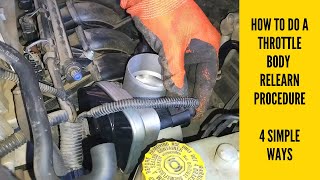
- Manual Procedure (No Tool): Throttle Body Relearn/Initialization — Required after replacing the throttle body or disconnecting the vehicle's battery to ensure the PCM learns the new sensor's home and range-of-motion values. Failure to do so can cause idle and performance issues. 🎬 Watch: Four ways to perform a throttle body relearn procedure A common procedure is: 1. Turn ignition ON (engine off) for one minute. 2. Turn ignition OFF for one minute. 3. Start the engine and let it idle until it reaches full operating temperature (cooling fans cycle on).
- Professional Scan Tool (e.g., Mazda IDS, Launch): Throttle Valve Actuation Test — To actively command the throttle plate to open and close while observing live data. This bidirectional test helps confirm if the throttle motor and sensors are responding correctly to PCM commands, isolating a faulty component from a wiring issue.
Wiring & Ground Locations
- Connector 0140-222 — The main electrical connector on the electronic throttle body assembly.. This is the primary connection point for the TPS sensors. TSB #01-008/13 details a repair that involves de-pinning and repinning this connector to install a diode sub-harness. The pinout is: #1 BR, #2 L/O*, #3 Y*, #4 G/V, #5 Y/V, #6 L/G (* indicates pre-installed wires on the new harness).
- Ground Point G3 — Located on the left side of the engine compartment.. A poor engine ground can introduce electrical noise or voltage offsets that may affect sensor readings. Ensuring this ground is clean and tight is a fundamental step in diagnosing any electronic fault.
- Technician Tip: Add-a-Ground — Run a dedicated 8 or 10-gauge wire from one of the throttle body mounting bolts directly to a known-good chassis or battery ground point.. The throttle body is mounted to a plastic intake manifold, so its ground path relies on a small wire in the harness. Some technicians add a redundant, direct ground to eliminate any possibility of a poor ground path causing erratic sensor behavior, which can sometimes improve throttle response even if no code is present.
Real Owner Repair Stories
- Pelican Parts Forum (General, applies to platforms with P0123/P0222 codes) — Car goes into limp home mode with P0123 and P0222 codes stored.
❌ Tried (didn't work) Initial diagnosis pointed towards replacing the entire throttle body or wiring harness.
✅ What actually fixed it The problem was resolved by simply disconnecting the electrical plugs at the throttle body, spraying them with a corrosion inhibitor and contact cleaner (ACF50 was mentioned), and reconnecting them. This suggests the fault was caused by a poor electrical connection or minor corrosion on the pins, not a complete failure of the throttle body itself.
OEM Part Supersession History
N/A→AJT1-13-ZS8— To correct an issue with abnormal electrical noise causing false P0123/P0222 codes.
Heads up: This is not a replacement part, but a required add-on sub-harness to fix a specific electrical noise condition as per TSB #01-008/13. It is installed into the existing throttle body connector.
Helpful Videos

We Have This Part in Stock



The information in this article is provided for general reference and educational purposes only. Vehicle specifications, procedures, and part compatibility can vary by production date, trim level, and region. Always consult your vehicle's factory service manual and verify part numbers before purchasing or performing repairs. Safety-critical components such as airbags, seat belts, and braking systems should be installed by a qualified professional.
- Mazda CX-9:
- 🧭 Diagnostic Flowchart
- 🎬 Helpful Videos
- 🛍️ Shop This Part
- What's Unique About the 2011-2013 Mazda CX-9
- Symptoms You May Notice
- Most Likely Causes
- Rare But Worth Checking
- Diagnosis Steps
- Parts You'll Likely Need
- Related Codes That Often Appear With This One
- Technical Service Bulletins (TSBs) & Recalls
- Platform-Specific Known Issues
- Mechanic-Grade Diagnostic Values
- Scan Tool Commands That Help
- Wiring & Ground Locations
- Real Owner Repair Stories
- OEM Part Supersession History
- 🎟️ Get 5% Off