

P0123 on 2012-2019 Nissan Versa: Throttle Position Sensor Circuit High Causes and Fixes
On a 2012-2019 Nissan Versa, code P0123 is almost always caused by a failed throttle position sensor, which is integrated into the electronic throttle body. The fix is to replace the entire throttle body assembly, which costs $650-$1,000+ at a shop, or $200-$500 for a DIY replacement. A tricky 'relearn' procedure is mandatory after replacement.
- P0123 on a 2012-2019 Versa almost always means you need a new throttle body assembly, as the sensor is built-in.
- Do not drive the vehicle. The risk of the engine stalling or not accelerating is high and can be dangerous.
- Before buying an expensive throttle body, always check the related engine fuses and inspect the throttle body's wiring connector for damage or corrosion.
- After replacing the throttle body, an 'Idle Air Volume Learn' procedure is mandatory. If this is not performed, the car will likely have a very high or unstable idle.
What's Unique About the 2012-2019 Nissan Versa
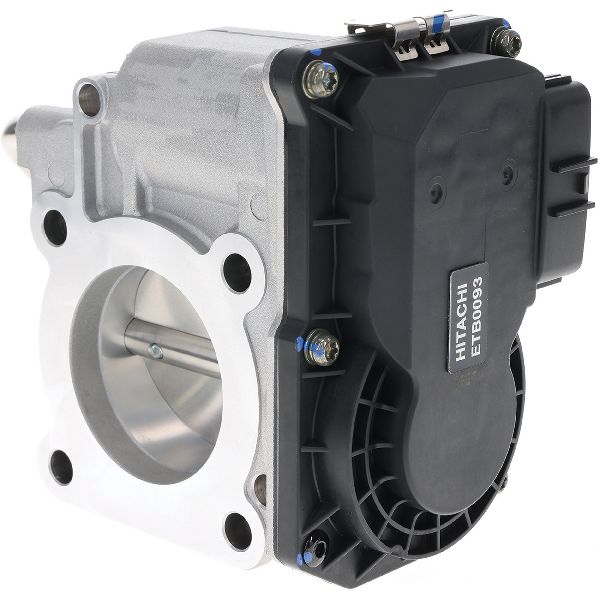
For the second-generation Nissan Versa (2012-2019) and its platform mates with the HR16DE engine, the throttle position sensor (TPS) is not sold as a separate, replaceable part. It is permanently integrated into the electronic throttle body assembly. This design means that if the sensor fails—the most common cause of P0123—the entire throttle body unit must be replaced. This makes the repair more expensive and complex than on older vehicles where the sensor could be swapped out independently.
Symptoms You May Notice
- Check Engine Light is on
- Hesitation or stumbling during acceleration
- No throttle response (pressing the gas pedal does nothing)
- Engine goes into 'limp mode' with severely reduced power
- Rough, high, or unstable idle (may idle at 2000+ RPM)
- Engine may stall unexpectedly, especially at low speeds
- Sluggish performance, unable to accelerate past a certain speed (e.g., 60 mph)
- Replacing the accelerator pedal assembly. The P0123 code specifically refers to the sensor at the throttle body ('Circuit A'), not the pedal sensor. While they work together, they are distinct parts with their own trouble codes (e.g., P2122, P2127).
- Cleaning a dirty throttle body. While cleaning a carboned-up throttle body can solve some idle issues, it will not fix an internal electrical failure of the TPS that causes a P0123 code. In some cases, aggressive cleaning can even damage the sensor.
Most Likely Causes
- Faulty Electronic Throttle Body Assembly (Integrated TPS) 🔴 High Probability → Shop Fuel Injection Throttle Body The internal contacts of the throttle position sensor wear out over time, a common failure on many drive-by-wire systems. On this platform, the sensor is integrated into the throttle body assembly, meaning the entire unit is a single point of failure and must be replaced when the sensor fails.
How to confirm: Using a scan tool's live data, observe the 'TP Sensor 1' or 'TPS A' voltage with the key on, engine off. If the voltage is stuck high (e.g., at 5.0V) and does not change as the gas pedal is pressed, the sensor has failed. Since it's integrated, this condemns the throttle body. A multimeter check at the disconnected sensor should show an open or shorted circuit internally.
Typical fix: Replace the entire electronic throttle body assembly. A mandatory 'Idle Air Volume Learn' procedure must be performed immediately after replacement to stabilize the idle.
Est. part cost: $450-$900 (OEM), $180-$500 (Aftermarket) - Wiring or Connector Issue 🟡 Medium Probability The wiring harness connector at the throttle body is exposed to engine heat and vibration, which can lead to frayed wires, loose pins, or corrosion over time, causing a short to power or an open circuit.
How to confirm: Visually inspect the wiring harness leading to the throttle body for any signs of melting, chafing, or corrosion. Unplug the connector and check for bent, pushed-out, or corroded pins. Use a multimeter to check for a stable 5-volt reference and good ground at the connector with the key on. Wiggle the harness while monitoring voltage to check for intermittent shorts.
Typical fix: Repair the damaged section of the wiring harness or clean/replace the connector pigtail.
Est. part cost: $10-$50 - Blown Fuse ⚪ Low Probability A short circuit in a related component can blow a fuse that supplies power or reference voltage to the throttle control system, leading to erratic sensor readings.
How to confirm: Check the fuses in the under-hood fuse box (IPDM - Intelligent Power Distribution Module) related to the ECM or engine controls. A YouTube video demonstrated a case on a Nissan where a blown fuse in the IPDM was the root cause for P0123 and P0223, 🎬 Watch this video showing how a blown fuse causes these codes. as it cut the 5V reference to the throttle body.
Typical fix: Find and fix the source of the short circuit, then replace the blown fuse with one of the same amperage.
Est. part cost: $1-$5
Rare But Worth Checking
- Faulty Powertrain Control Module (ECM): → Shop Engine Control Module (ECM) This is extremely rare. The ECM should only be suspected after the throttle body, wiring, and fuses have been exhaustively tested and confirmed to be good. An ECM failure is the least likely cause.
Diagnosis Steps
- Connect an OBD-II scanner and confirm P0123 is present. Check for other related codes like P0223 or P2135, which strongly point to the throttle body. 🎬 See a real-world diagnostic walkthrough of these exact codes.
- View live data on the scanner. Observe the 'TP Sensor 1' or 'TPS A' voltage. With the key on and engine off, it should be around 0.5V-0.7V. If it's stuck at or near 5.0V, the circuit has a fault.
- Perform a visual inspection of the throttle body connector and its wiring harness. Look for any obvious signs of damage, corrosion, or loose connections.
- If the wiring looks good, disconnect the throttle body connector. Use a multimeter to verify a 5-volt reference signal and a good ground are present at the correct pins on the harness side with the ignition ON.
- If the 5V reference or ground is missing, inspect the engine control fuses in the IPDM (under-hood fuse box) before suspecting a wiring break or a bad ECM.
- If the reference voltage and ground are good at the harness, the fault is almost certainly within the throttle body assembly itself.
- After replacing the throttle body, you MUST perform the 'Accelerator Pedal Released Position Learn', 'Throttle Valve Closed Position Learn', and 'Idle Air Volume Learn' procedures. This can be done manually with a stopwatch and a series of timed key cycles and pedal presses, but it is often easier and more reliable with a professional scan tool.
Parts You'll Likely Need
- Electronic Throttle Body Assembly
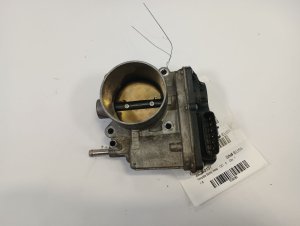
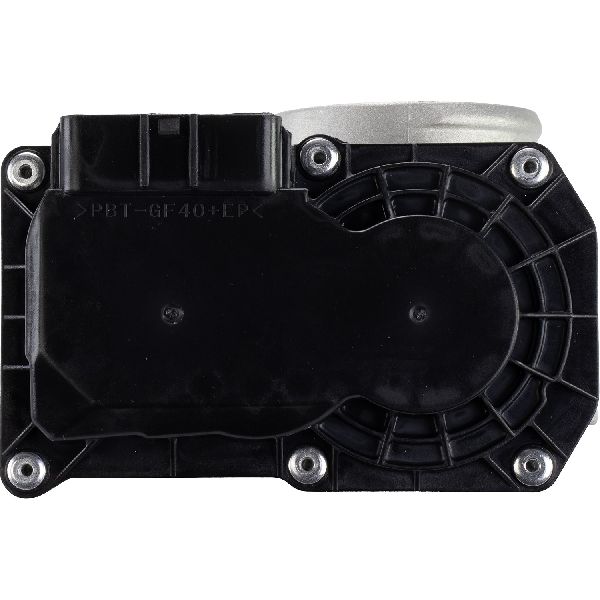
(OEM #16119-3AN1E)— The throttle position sensor (TPS) that causes code P0123 is integrated into this assembly and cannot be replaced separately on the 2012-2019 Versa.
Trusted brands: Nissan (OEM), Hitachi (OEM Supplier, Part #ETB0093), Aisin, Dorman
OEM price range: $550-$900
Aftermarket price range: $180-$500
Related Codes That Often Appear With This One
- P0223 — This code is for 'Throttle/Pedal Position Sensor 'B' Circuit High'. The Versa uses two redundant sensors (TPS1 and TPS2) in the throttle body for safety. When both P0123 (TPS1) and P0223 (TPS2) appear together, it is a very strong indication of an internal failure of the throttle body assembly itself or a loss of the shared 5V reference/ground circuit.
- P2135 — This code means 'Throttle/Pedal Position Sensor/Switch 'A'/'B' Voltage Correlation'. The ECM is seeing that the signals from the two throttle position sensors do not agree with each other. This directly points to a fault within the throttle body assembly where one or both sensors are failing.
Technical Service Bulletins (TSBs) & Recalls
- Nissan Service Campaign PM562: While not for P0123, Nissan issued this voluntary service campaign to reprogram the Transmission Control Module (TCM) on 2012-2014 Versa models to address issues with the CVT transmission, a major known issue on this platform.
Platform-Specific Known Issues
- Owner Experience: Sluggish After Cleaning: A 2015 Versa Note owner on Reddit reported codes for the TPS and MAF sensor. After cleaning the throttle body and replacing the MAF, the car no longer stalled but remained extremely sluggish (unable to pass 60 mph). This highlights that cleaning is often insufficient for an internal electrical fault and replacement is necessary.
- Repair Cost Confirmation: RepairPal estimates the total shop cost for a throttle body replacement on a 2012-2019 Versa to be between $686 and $1064, with the OEM part alone costing upwards of $564.
Mechanic-Grade Diagnostic Values
- Throttle Position Sensor (TPS) 'A' Signal Voltage (Key On, Engine Off, Throttle Closed) — expected: 0.3V - 0.7V. Failure: A reading stuck at or near 5.0V indicates a short to power or internal sensor failure, triggering P0123.
- Throttle Position Sensor (TPS) 'A' Signal Voltage (Key On, Engine Off, Wide Open Throttle) — expected: 4.5V - 4.8V. Failure: Voltage that does not change smoothly from closed to open throttle, or is stuck high, indicates a faulty sensor.
- 5V Reference Voltage at Throttle Body Connector — expected: ~5.0V (typically 4.95V). Failure: No voltage indicates a blown fuse (often in the IPDM), a wiring break, or a faulty ECM.
- Idle Air Volume Learn - Required Preconditions — expected: Battery >12.9V (at idle), Engine Temp 158-212°F, transmission in Park/Neutral, all electrical loads OFF, steering wheel straight.. Failure: The relearn procedure will fail if any of these conditions are not met.
Scan Tool Commands That Help
- Nissan CONSULT or compatible professional scan tool: Idle Air Volume Learn — This is a mandatory function to be used after replacing the electronic throttle body. It commands the ECM to learn the new throttle body's base idle airflow characteristics. Failure to perform this will result in a high or unstable idle.
- Nissan CONSULT or compatible professional scan tool: Throttle Valve Closed Position Learning — This should be performed before the Idle Air Volume Learn. It teaches the ECM the voltage reading of the new sensor at its fully closed, resting state.
- Nissan CONSULT or compatible professional scan tool: Accelerator Pedal Released Position Learning — This is the first of the three relearn procedures. It calibrates the ECM to the resting (zero input) position of the accelerator pedal sensor.
Wiring & Ground Locations
- Engine Ground (Main) — A primary ground strap typically runs from the intake manifold area or transmission case directly to the negative battery terminal or a nearby chassis point.. A poor engine ground can cause floating voltages and unstable sensor readings, including the TPS, potentially leading to a false P0123 code.
- Throttle Body Connector — A 6-pin electrical connector directly on the electronic throttle body assembly.. This is the single point of connection for the dual throttle position sensors and the throttle motor. All voltage and signal tests (5V reference, ground, TPS1 signal, TPS2 signal) are performed here.
- IPDM E/R (Intelligent Power Distribution Module Engine Room) — Located in the engine bay, typically behind the battery.. This module contains the fuses and relays that supply power and reference voltage to the engine sensors, including the throttle body. A blown fuse or internal fault in the IPDM can cut the 5V reference, causing P0123 and P0223.
Real Owner Repair Stories
- YouTube - Mecanica YM (Nissan Versa (year not specified, but relevant generation)) — Vehicle was accelerating on its own, multiple codes including P0123, P0223, P2135.
❌ Tried (didn't work) Replaced accelerator pedal, Replaced throttle body
✅ What actually fixed it The Intelligent Power Distribution Module (IPDM) was faulty and burning out the new components. Replacing the IPDM along with the throttle body finally resolved the issue. - YouTube - NISSAN MECHANIC (Nissan Sunny (similar platform)) — No throttle response, codes P0123 and P0223 present.
❌ Tried (didn't work) Initial diagnosis pointed towards a bad throttle body.
✅ What actually fixed it A diagnostic check found no 5V reference at the throttle body connector. The cause was a single blown fuse inside the IPDM. Replacing the fuse restored power and fixed the problem without needing to replace the throttle body. - NHTSA ODI #10874118 (Nissan Altima) — An owner reported that the same codes, P0223, P0123, and P2135, appeared repeatedly, which the mechanic identified as an electronic throttle control actuator fault.
- NHTSA ODI #10958658 (Nissan Xterra) — A report describes a situation where error codes P0122, P0128, and P0123 would come and go intermittently even after other intake and steering repairs were performed.
OEM Part Supersession History
16119-3AN0A, 16119-3AN0B, 16119-3AN0C, 16119-3AN0D, 16119-3AN1D→16119-3AN1E— Standard part revision and consolidation by the manufacturer over the vehicle's production run.
Heads up: All previous part numbers are replaced by 16119-3AN1E, which is the current and correct OEM part for the entire 2012-2019 model year range.
Diagnostic Flowchart
Other Known Issues on This Vehicle
Issues unrelated to this code that are worth knowing about as an owner of this generation:
- CVT Transmission Failure/Hesitation 🔴 High — Extremely common, often occurring between 70,000 and 100,000 miles. Symptoms include shuddering, jerking, loss of power, and complete failure. (Ref: Multiple class-action lawsuits and warranty extensions (e.g., to 84 months/84,000 miles) have been issued. Service campaign PM562 involved a TCM reprogram for some model years.)
- Intelligent Power Distribution Module (IPDM) Malfunction 🟠 Medium — Can occur over the vehicle's lifetime, causing a wide range of electrical problems like non-functional headlights, wipers, or AC clutch.
- Canister Vent Control Valve Failure 🟡 Low — A common cause for EVAP-related check engine lights (P0442, P0455, P0456). The valve gets stuck, causing a large leak detection.
- Worn Ignition Lock Cylinder 🟠 Medium — Reported in 2013-2016 models, the key becomes hard to turn or sticks, eventually leading to a no-start condition.
- Prematurely Noisy Wheel Bearings 🟡 Low — Some vehicles are prone to noisy wheel bearings that require replacement before 100,000 miles.
Used vs. New Parts: Buying Guide for This Vehicle
When a used part is the smart pick: A used OEM throttle body from a low-mileage, late-model (e.g., 2017-2019) donor vehicle can be a cost-effective alternative to a new aftermarket part, as OEM electronics are often more reliable. However, it is a gamble as the part's history is unknown.
Donor-vehicle mileage cap: roughly under 60000 miles for the part to have meaningful remaining life.
What to inspect on the donor part:
- Check for the absence of heavy carbon buildup or oily residue around the throttle plate.
- Ensure the electrical connector pins are clean, straight, and free of corrosion.
- Verify the part number matches the OEM supersession list (ending in 3AN1E is ideal).
- Ask the seller for the donor vehicle's VIN to verify its year and mileage if possible.
OEM-only on this vehicle (don't cheap out):
- While not strictly OEM-only, many forum users and mechanics express a strong preference for OEM or the OEM supplier (Hitachi) for critical electronic components like the throttle body to avoid compatibility and longevity issues often seen with cheaper aftermarket brands.
Aftermarket brands forum-validated for this vehicle:
- Hitachi (OEM supplier)
- Aisin
- Dorman (often cited, but with mixed reviews depending on the platform)
Brands owners have reported issues with on this vehicle:
- Unnamed, low-cost brands found on sites like eBay or Amazon often have higher failure rates and may not perform the relearn procedure correctly. A brand like ECCPP is an example of a budget-focused option.
Real Owner Stories
Aggregated from forums and TSBs cited above. Mileages and costs reflect what owners reported in those sources.
2015 Nissan Versa Note
Symptoms: The car had codes for the TPS and MAF sensor. After cleaning the throttle body and replacing the MAF, the car stopped stalling but remained extremely sluggish and was unable to accelerate past 60 mph.
What fixed it: The owner reports that cleaning was insufficient for the internal electrical fault, indicating a full throttle body replacement is necessary.
Source hint: Reddit r/MechanicAdvice - 'Nissan Versa Stumped my mechanic.'
2012 Nissan Versa
Symptoms: P0123, P0223, and P1121 codes present; diagnostic check showed issues with the 5V reference and signal voltage at the throttle body connector.
What fixed it: Replacement of the electronic throttle body assembly.
Source hint: YouTube - DJ Mobile Auto Services
NHTSA Reported Incident (ODI #10874118)
Symptoms: An owner reported that the vehicle displayed codes P0223, P0123, and P2135, which were identified as an electronic throttle control actuator fault.
What fixed it: Diagnostic confirmation of an actuator fault.
NHTSA Reported Incident (ODI #10958658)
Symptoms: An owner reported that error codes P0122, P0128, and P0123 would come and go intermittently even after the air intake flow hose was replaced.
What fixed it: Ongoing investigation into recurring sensor codes.
Related OBD-II Codes
Frequently Asked Questions
Can I just clean the throttle body on my 2015 Versa Note to fix the P0123 code?
Is there a TSB for the P0123 code on my 2012-2014 Nissan Versa?
How much should I expect to pay for a throttle body replacement at a shop?
Do I need to do anything special after replacing the throttle body myself?
Could a blown fuse cause a P0123 code on my Nissan?
Is the P0123 issue common on other Nissan models?
Helpful Videos


Used OEM Parts in Stock
New Aftermarket Parts Available




The information in this article is provided for general reference and educational purposes only. Vehicle specifications, procedures, and part compatibility can vary by production date, trim level, and region. Always consult your vehicle's factory service manual and verify part numbers before purchasing or performing repairs. Safety-critical components such as airbags, seat belts, and braking systems should be installed by a qualified professional.
- Nissan Versa:
- 🧭 Diagnostic Flowchart
- 🎬 Helpful Videos
- 🛍️ Shop This Part
- What's Unique About the 2012-2019 Nissan Versa
- Symptoms You May Notice
- Most Likely Causes
- Rare But Worth Checking
- Diagnosis Steps
- Parts You'll Likely Need
- Related Codes That Often Appear With This One
- Technical Service Bulletins (TSBs) & Recalls
- Platform-Specific Known Issues
- Mechanic-Grade Diagnostic Values
- Scan Tool Commands That Help
- Wiring & Ground Locations
- Real Owner Repair Stories
- OEM Part Supersession History
- Other Known Issues on This Vehicle
- Used vs. New Parts: Buying Guide for This Vehicle
- Real Owner Stories
- 2015 Nissan Versa Note
- 2012 Nissan Versa
- NHTSA Reported Incident (ODI #10874118)
- NHTSA Reported Incident (ODI #10958658)
- Related OBD-II Codes
- Frequently Asked Questions
- 🎟️ Get 5% Off