

P0123 on 2009-2013 Toyota Corolla: Throttle Position Sensor 'A' Circuit High Fixes
This code almost always points to a failed Throttle Position Sensor (TPS), which on this Corolla is integrated into the throttle body assembly. You'll likely need to replace the entire throttle body. Expect to pay $150-$300 for an aftermarket part and around 1 hour for DIY replacement. An idle relearn procedure is required after replacement.
- P0123 on a 2009-2013 Corolla means the Throttle Position Sensor (TPS) is sending a 'high voltage' signal (stuck
What's Unique About the 2009-2013 Toyota Corolla
For the 2009-2013 (E140 generation) Toyota Corolla with the 2ZR-FE engine, the Throttle Position Sensor (TPS) is not sold as a separate, replaceable part. It is integrated into the electronic throttle body assembly. While this simplifies diagnosis (as you can't just replace the wrong sensor), it makes the repair more expensive because the entire throttle body unit must be replaced to fix a faulty internal sensor. This design is shared with platform mates like the Toyota Matrix and Pontiac Vibe.
Symptoms You May Notice
- Check Engine Light is on
- Vehicle enters 'limp mode' (failsafe mode) with drastically reduced engine power and acceleration
- Hesitation or stumbling during acceleration
- Engine idles higher than normal (e.g., 1500-2000 RPM)
- Poor or erratic throttle response
- Engine may stall unexpectedly, especially when coming to a stop
- In some cases, a complete no-start condition where the engine cranks but won't turn over.
- Replacing the accelerator pedal position sensor (APPS). The APPS is located on the gas pedal assembly inside the cabin and will typically set different codes (e.g., related to sensor 'B' or 'D/E/F'). P0123 specifically points to the sensor at the throttle body ('A').
- Attempting to find and replace only the TPS sensor. Many parts stores may list a standalone TPS, but for the 2009-2013 Corolla, it is not a serviceable part separate from the throttle body.
Most Likely Causes
- Failed Throttle Body Assembly (Internal TPS) 🔴 High Probability → Shop Fuel Injection Throttle Body The TPS is an electronic component that wears out over time. On this model, it's integrated into the throttle body, making the whole unit the point of failure. The internal electronics fail, causing the signal wire to short to the internal 5V reference, resulting in a constant high voltage reading.
How to confirm: Using a diagnostic scanner, observe the live data for the throttle position. The voltage for TP Sensor 'A' will likely be stuck high (e.g., at or near 4.9V) regardless of pedal position. You can also test the sensor pins with a multimeter, but since the part isn't serviced separately, replacement of the assembly is the ultimate test.
Typical fix: Replace the entire electronic throttle body assembly. After installation, a throttle body idle relearn procedure is required.
Est. part cost: $150-$300 - Wiring Harness or Connector Issue 🟡 Medium Probability Engine vibration and heat can cause wires to fray, break, or connectors to become loose or corroded over time, especially at the pigtail connecting to the throttle body.
How to confirm: Visually inspect the wiring harness and connector going to the throttle body for any signs of damage, corrosion, or loose pins. Perform a continuity test with a multimeter on the signal, power, and ground wires between the ECM and the throttle body connector. Check for a short to power on the signal wire.
Typical fix: Repair the damaged section of wiring or replace the connector pigtail.
Est. part cost: $10-$50
Rare But Worth Checking
- Faulty Powertrain Control Module (PCM/ECM): → Shop Engine Control Module (ECM) This is extremely rare. Before condemning the ECM, all other possibilities, including the throttle body and wiring, must be exhaustively ruled out. An ECM failure is the cause in less than 1% of cases.
- Short to Power in the Signal Circuit: The signal wire from the TPS may be chafed and touching a power source, causing a constant high voltage reading. This is often found during a detailed wiring inspection and can be mistaken for a bad sensor.
- Dirty or Sticking Throttle Body: → Shop Fuel Injection Throttle Body While less common for a 'Circuit High' code, severe carbon buildup could theoretically cause the throttle plate to stick in a slightly open position, causing performance issues. However, it is unlikely to cause a persistent voltage reading over 4.5V and is more often associated with range/performance codes.
Diagnosis Steps
- Connect an OBD-II scanner and confirm that P0123 is the active code. Check for any other pending or stored codes, especially P0223.
- View live data on the scanner. Observe the voltage and percentage for 'Throttle Position Sensor A'. It will likely be stuck at a high value (e.g., >4.5V, often 4.9V) and won't change when the accelerator pedal is pressed.
- Turn the vehicle off. Locate the electronic throttle body on the engine's intake manifold.
- Carefully inspect the electrical connector and wiring harness leading to the throttle body. Look for any signs of damage, corrosion, or loose pins.
- If wiring appears intact, the most likely cause is a failed sensor within the throttle body assembly.
- To be 100% certain, you can use a multimeter to back-probe the connector and verify the signal wire is showing high voltage, but given the integrated nature of the part, this step is often skipped in favor of replacement.
- Replace the throttle body assembly.
- After installation, clear the codes and perform an Idle Relearn Procedure. A common manual method is: 1. Disconnect the negative battery terminal for at least 60 seconds to clear the ECM's memory. 2. Reconnect the battery terminal. 3. Start the engine and let it warm up to normal operating temperature. 4. Allow the engine to idle (in Park or Neutral) for 5-10 minutes without touching the accelerator pedal. The ECU will relearn the new throttle body's idle position.
Parts You'll Likely Need
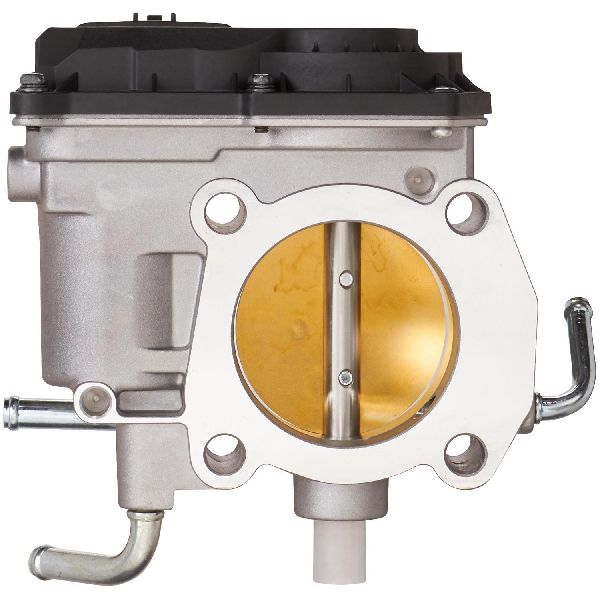
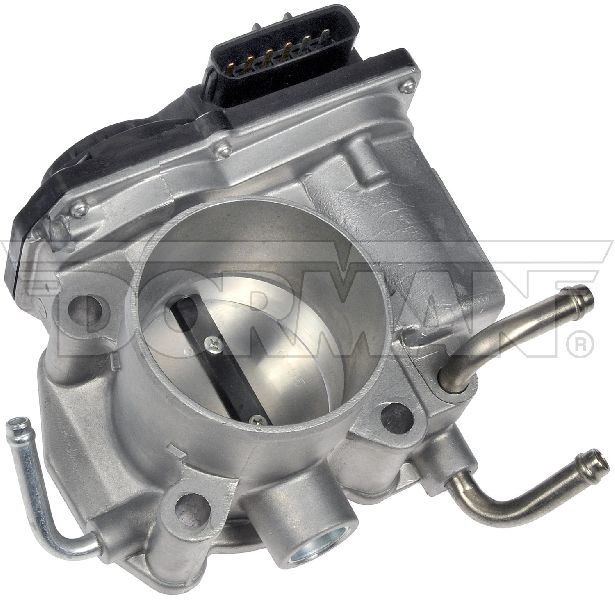
- Electronic Throttle Body Assembly
(OEM #22030-37010)— This is the most common fix because the Throttle Position Sensor (TPS) that causes code P0123 is integrated into this assembly and is not sold separately for this vehicle.
Trusted brands: Denso (OEM Manufacturer), Aisin, Hitachi
OEM price range: $400-$600
Aftermarket price range: $150-$300
Related Codes That Often Appear With This One
- P0121 — P0121 indicates a 'Range/Performance' problem with the TPS. It can appear alongside P0123 if the sensor's signal is not only high but also erratic or out of its expected performance range.
- P0223 — P0223 is for 'Throttle/Pedal Position Sensor/Switch 'B' Circuit High'. Modern throttle bodies use two redundant sensors (A and B) for safety. Seeing P0123 and P0223 together makes a wiring or ECM issue less likely and very strongly points to an internal failure of the throttle body assembly itself, where both sensors are housed.
Technical Service Bulletins (TSBs) & Recalls
- No specific Technical Service Bulletin (TSB) for P0123 on this platform was found. The issue is typically handled as a standard diagnosis and part replacement.
Platform-Specific Known Issues
- This failure is extremely common on the 1.8L 2ZR-FE engine, not just in the Corolla but also in its platform-mates, the Toyota Matrix and Pontiac Vibe. Owners of any of these vehicles should suspect the throttle body first for a P0123 code.
Mechanic-Grade Diagnostic Values
- Throttle Position Sensor 'A' (VTA1) Signal Voltage — expected: Approx. 0.7 V at idle (throttle closed), rising to approx. 3.9 - 4.2 V at wide-open throttle.. Failure: A constant voltage reading above 4.8 V, regardless of throttle position, triggers P0123.
- ECM 5V Reference Voltage (VC Terminal) — expected: 4.5 - 5.5 V with ignition ON, throttle body connector disconnected.. Failure: No voltage or voltage outside this range indicates an ECM or wiring issue, not a sensor fault.
- Continuity Check: Throttle Body Connector to ECM — expected: Below 1 ohm on VTA1, VTA2, VC, and E2 wires between the throttle body connector and the corresponding ECM connector pins.. Failure: High resistance (open circuit) or continuity to ground/power on signal lines indicates a wiring harness fault.
- Continuity Check: Short between VC and VTA1 — expected: No continuity (infinite resistance) between the VC (5V reference) and VTA1 (signal) pins at the harness connector.. Failure: Continuity (low resistance) indicates the wires are shorted together in the harness, which will cause a P0123 code.
Scan Tool Commands That Help
- Toyota Techstream: Data List > Powertrain / Engine and ECT > VTA1, VTA2 — This is the primary diagnostic step to observe the live voltage output from both throttle position sensors (A and B). For P0123, VTA1 will be stuck high.
- Toyota Techstream: Active Test > Powertrain / Engine and ECT — Allows the technician to command the throttle motor to open and close, verifying the mechanical function of the throttle body and observing the sensor response in the Data List simultaneously. This helps differentiate a mechanical jam from an electrical failure.
- Toyota Techstream: Utility > ETCS (Electronic Throttle Control System) > Reset Memory — This function should be performed after replacing the throttle body to clear learned values and force the ECM to relearn the new sensor's idle and range characteristics. This is the dealer-equivalent of the manual idle relearn procedure.
Wiring & Ground Locations
- Throttle Body Connector (E7) — On the electronic throttle body assembly, attached to the intake manifold.. This 6-pin connector houses the power (VC), ground (E2), and signal (VTA1, VTA2) wires for the integrated TPS. Loose pins or corrosion here are a common cause of P0123.
- ECM Terminals (VTA1, VC, E2) — At the Engine Control Module (ECM), located in the engine bay. Specific pin numbers vary slightly by production plant (TMC vs. NUMMI) but can be identified by wiring diagrams.. These are the termination points for the TPS circuits. Testing here confirms if the signal is bad at the source (throttle body) or if the fault lies in the wiring harness or ECM itself.
- Ground Points B3 / B4 — Bolted to the rear of the engine block/cylinder head.. These are primary engine ground points. The TPS ground circuit (E2) ultimately connects here. A loose or corroded ground at B3 or B4 can cause floating voltages and trigger various sensor codes, including P0123.
Real Owner Repair Stories
- YouTube Mechanic Video (2010-2011 Toyota Corolla) — Engine RPMs fluctuating, no throttle response, P0123 code present.
❌ Tried (didn't work) Replacing the throttle body assembly (four times), Replacing the accelerator pedal sensor (twice)
✅ What actually fixed it The female pins inside the throttle body electrical connector were spread too wide, causing a poor connection. The technician tightened the pins (thimbles) to ensure a snug fit on the male pins of the throttle body. This resolved the high voltage reading and fixed all symptoms without replacing any parts.
OEM Part Supersession History
22030-37010→22030-0T040, 22030-37050, 22030-37060— Standard part revision and consolidation by the manufacturer.
Heads up: While later part numbers are generally backward compatible, it is critical to verify fitment with the vehicle's VIN. There were variations based on the manufacturing plant (Japan-built vs. North America-built).
Model Year Variations Within This Range
- 2009-2011: The primary OEM part number cited for the throttle body is 22030-37010. While this part may fit later models, always confirm with VIN as mid-cycle refreshes can introduce subtle changes in electronics or connectors.
Diagnostic Flowchart
Used vs. New Parts: Buying Guide for This Vehicle
When a used part is the smart pick: A used throttle body from a low-mileage, rear-ended donor vehicle can be a cost-effective option, as the failure is electronic wear, not mechanical. Given the high cost of a new OEM unit, a used part can save hundreds of dollars.
Donor-vehicle mileage cap: roughly under 75000 miles for the part to have meaningful remaining life.
What to inspect on the donor part:
- Verify the donor vehicle's mileage. Avoid parts from high-mileage cars.
- Inspect the connector pins on the used throttle body for any signs of corrosion, bending, or damage.
- Check the throttle plate for excessive carbon buildup, which might indicate a hard life.
- Ensure the part number matches or is a known supersession for your vehicle's VIN.
OEM-only on this vehicle (don't cheap out):
- While not strictly 'OEM-only', a genuine Toyota/Denso/Aisin part (new or used) is highly recommended over unbranded aftermarket options. Forum and mechanic consensus suggests aftermarket electronic throttle bodies have a significantly higher failure rate, sometimes within months.
Aftermarket brands forum-validated for this vehicle:
- Denso (Original Equipment Manufacturer)
- Aisin (OEM Supplier)
Brands owners have reported issues with on this vehicle:
- Unbranded, 'white-box' parts from online marketplaces are a significant gamble and often lead to repeat failures.
Real Owner Stories
Aggregated from forums and TSBs cited above. Mileages and costs reflect what owners reported in those sources.
2013 Corolla — 135000 miles
Symptoms: The car would start, but the RPMs would slowly lower until it stalled after about a minute. The check engine light was on with codes P0121, P0123, and P2135.
What fixed it: The owner concluded that the throttle body/sensor assembly needed to be replaced, as cleaning the unit and resetting the computer did not resolve the issue.
Source hint: Reddit r/MechanicAdvice
2010 Toyota Corolla S
Symptoms: The car was stalling at stop lights and signs. The RPMs would drop low, the engine would stutter, and it would hesitate when pressing the gas pedal.
What fixed it: The owner cleaned carbon buildup from the throttle body flap and performed a throttle position sensor relearn procedure by disconnecting the battery.
Source hint: youtube_comment from EFJacob
2010 Corolla
Symptoms: The owner experienced a Check Engine Light and TRAC OFF light with codes P0123 and P0223 stored.
What fixed it: Replacing the entire throttle body assembly fixed the issue and cleared the codes.
Source hint: ToyotaNation Forums - Thread: 'P0121, P0123, P0223...'
Related OBD-II Codes
Frequently Asked Questions
Can I just replace the Throttle Position Sensor (TPS) on my 2011 Corolla, or do I need the whole throttle body?
My scanner shows both P0123 and P0223. Does this mean two different parts have failed?
After replacing the throttle body on my Corolla, is a special scan tool needed for the idle relearn procedure?
I have a 2009 Pontiac Vibe with a P0123 code. Is the problem the same as on the Corolla?
Why would a P0123 code cause my Corolla to crank but not start?
Is this P0123 throttle body issue common on the 2009-2013 Corolla?
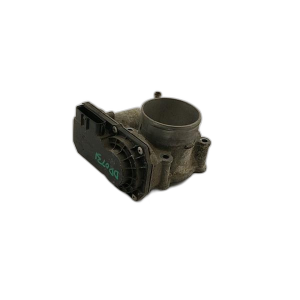
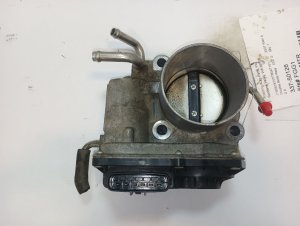
Used OEM Parts in Stock
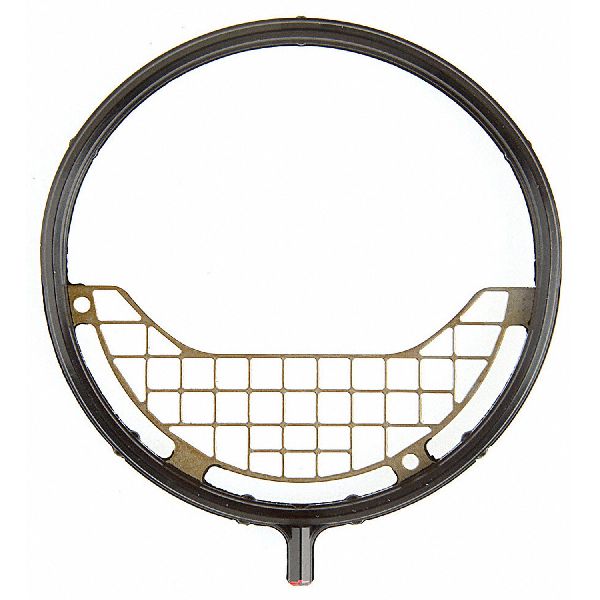
New Aftermarket Parts Available


The information in this article is provided for general reference and educational purposes only. Vehicle specifications, procedures, and part compatibility can vary by production date, trim level, and region. Always consult your vehicle's factory service manual and verify part numbers before purchasing or performing repairs. Safety-critical components such as airbags, seat belts, and braking systems should be installed by a qualified professional.
- Toyota Corolla:
- 🧭 Diagnostic Flowchart
- 🛍️ Shop This Part
- What's Unique About the 2009-2013 Toyota Corolla
- Symptoms You May Notice
- Most Likely Causes
- Rare But Worth Checking
- Diagnosis Steps
- Parts You'll Likely Need
- Related Codes That Often Appear With This One
- Technical Service Bulletins (TSBs) & Recalls
- Platform-Specific Known Issues
- Mechanic-Grade Diagnostic Values
- Scan Tool Commands That Help
- Wiring & Ground Locations
- Real Owner Repair Stories
- OEM Part Supersession History
- Model Year Variations Within This Range
- Used vs. New Parts: Buying Guide for This Vehicle
- Real Owner Stories
- 2013 Corolla — 135000 miles
- 2010 Toyota Corolla S
- 2010 Corolla
- Related OBD-II Codes
- Frequently Asked Questions
- 🎟️ Get 5% Off