

P0123 on 2004-2009 Toyota Prius: Throttle Position Sensor Circuit High Causes and Fixes
On a 2004-2009 Prius, code P0123 almost always indicates a failed throttle position sensor, which is integrated into the throttle body. The fix is to replace the entire throttle body assembly. Expect to pay around $350-$600 for an OEM part and 1-2 hours of labor.
- P0123 on a Gen 2 Prius means the throttle position sensor signal is too high.
- The most common cause is a failed sensor, which is part of the throttle body assembly.
- The fix is to replace the entire throttle body; the sensor is not sold separately.
- DIY replacement is possible and can save significant money, especially if using a tested used part.
- No special 'relearn' procedure is typically required after replacement; disconnecting the 12V battery for a few minutes is sufficient for the ECM to reset.
What's Unique About the 2004-2009 Toyota Prius
The 2004-2009 (Gen 2) Prius uses an electronic 'drive-by-wire' throttle system (ETCS-i). Unlike older cars, there's no physical cable from the gas pedal to the engine. The throttle position sensor (TPS) is a critical component in this system. For this specific Prius model, the TPS is not sold as a separate part; it is integrated into the throttle body assembly. This means a failed sensor requires replacing the entire throttle body, which is a more expensive repair than on vehicles where the sensor can be replaced independently.
Symptoms You May Notice
- Check Engine Light is on
- Master Warning Light (Red Triangle) may be on
- Vehicle enters 'limp mode' with severely reduced power
- Hesitation or stumbling during acceleration
- Rough or unstable idle
- Engine may stall unexpectedly
- Poor fuel economy
- Car may not shift into gear or may have issues with the hybrid system engagement
- Replacing the accelerator pedal position sensor. While it's part of the same overall system, P0123 specifically points to the 'A' circuit, which on this vehicle is the sensor on the throttle body, not the pedal. 🎬 Watch: Understanding the P0123 code and its common causes
Most Likely Causes
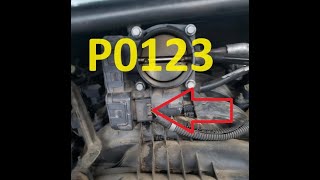
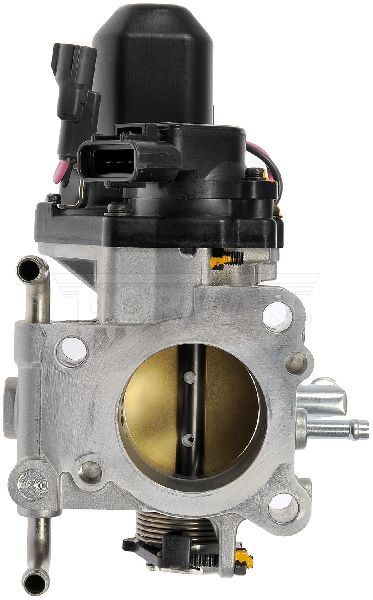
- Failed Throttle Body Assembly (Internal TPS Failure) 🔴 High Probability → Shop Fuel Injection Throttle Body The throttle position sensor is an electronic component with internal contacts that wear out over time, leading to erratic or failed signals. On this Prius, the sensor is integrated into the throttle body and cannot be replaced separately. This is the most common point of failure for this code on this vehicle.
How to confirm: Use a diagnostic scan tool to monitor the live data for the throttle position sensor voltage (VTA1). If the voltage is stuck high (e.g., above 4.5V) regardless of pedal input, the sensor has failed. You can also use a multimeter to test the sensor's output signal.
Typical fix: Replace the entire throttle body assembly. 🎬 Watch: Step-by-step guide to servicing the throttle body housing
Est. part cost: $350-$600 - Wiring or Connector Issue 🟡 Medium Probability
How to confirm: Visually inspect the wiring harness and connector going to the throttle body for any signs of damage, corrosion, or loose pins. Use a multimeter to check for a stable 5V reference voltage and a good ground at the connector. Wiggle the harness while monitoring the TPS voltage on a scan tool to see if the reading fluctuates.
Typical fix: Repair the damaged section of wiring or clean/replace the connector.
Est. part cost: $10-$50 - Dirty or Sticking Throttle Body ⚪ Low Probability → Shop Fuel Injection Throttle Body Carbon can build up in the throttle body over time, which can cause the throttle plate to stick. While this more commonly causes other codes, it can sometimes lead to TPS errors if the plate cannot return to its home position.
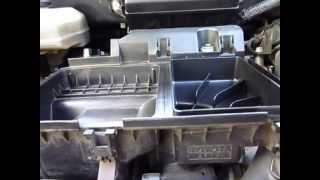
How to confirm: Remove the air intake hose and visually inspect the throttle body bore and plate for black carbon deposits. Check if the plate moves smoothly by hand. 🎬 See how to clean the throttle plate and air filter
Typical fix: Clean the throttle body thoroughly with a dedicated throttle body cleaner and a soft brush.
Est. part cost: $5-$15
Rare But Worth Checking
- Faulty Engine Control Module (ECM): → Shop Engine Control Module (ECM) This is extremely rare. The ECM should only be considered after all other possibilities, including the throttle body and wiring, have been definitively ruled out.
Diagnosis Steps
- Connect an OBD-II scanner to confirm the P0123 code and check for any other related codes. Record the freeze frame data.
- Use the scanner's live data function to monitor the Throttle Position Sensor 'A' voltage (often labeled VTA1). With the key on and engine off, the voltage should be low (~0.5-0.8V) and increase smoothly to ~4.5V as you slowly press the accelerator pedal.
- If the voltage is stuck high (e.g., >4.65V) and does not change with pedal input, the sensor has likely failed.
- If the voltage is erratic, perform a visual inspection of the throttle body connector and wiring harness for damage, corrosion, or loose connections.
- If wiring looks good, disconnect the connector and use a multimeter to verify you have a ~5V reference and a good ground at the harness side of the connector.
- Inspect the throttle body for heavy carbon buildup that might be causing the throttle plate to stick.
- If wiring, ground, and reference voltage are all good, and the voltage reading remains stuck high, the throttle position sensor inside the throttle body has failed.
- Replace the entire throttle body assembly.
Parts You'll Likely Need
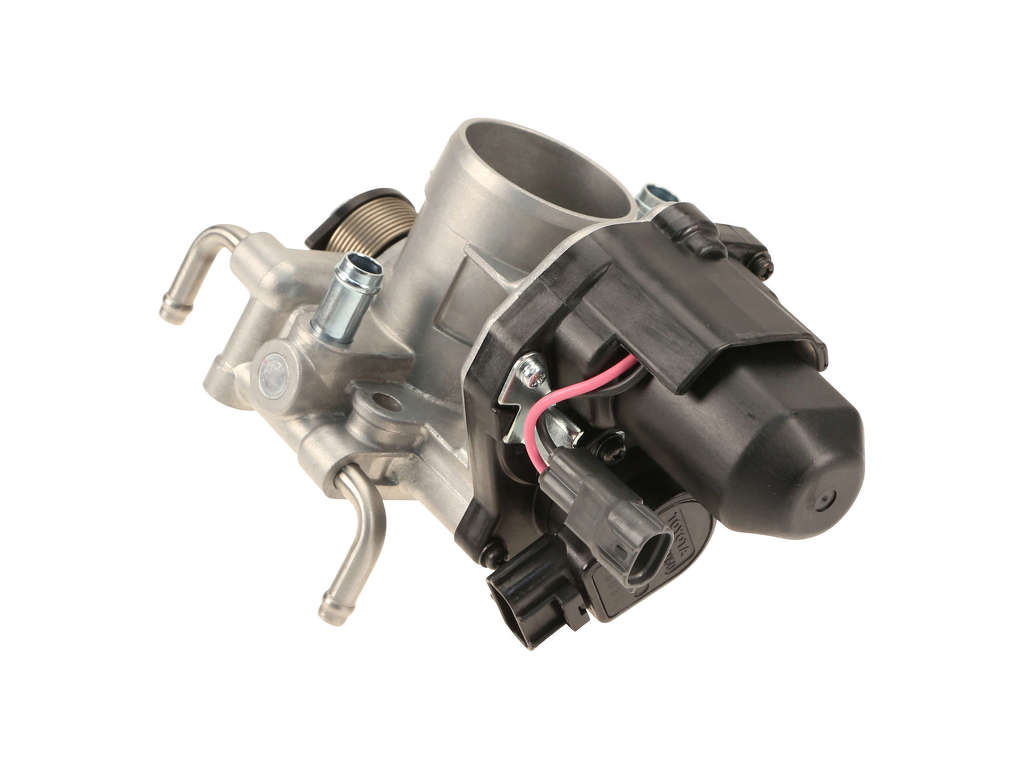
- Throttle Body Assembly
(OEM #22030-21020)— This is the most common fix because the throttle position sensor (TPS) that causes the P0123 code is integrated into the throttle body and is not sold separately for the 2004-2009 Prius. This part number fits the entire 2001-2009 Prius range.
Trusted brands: Toyota (OEM), Aisin, Denso
OEM price range: $400-$620
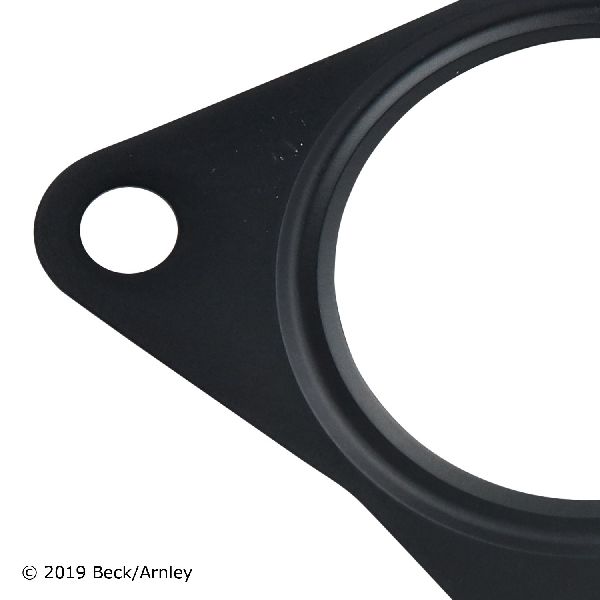
Aftermarket price range: $250-$450 - Throttle Body Gasket
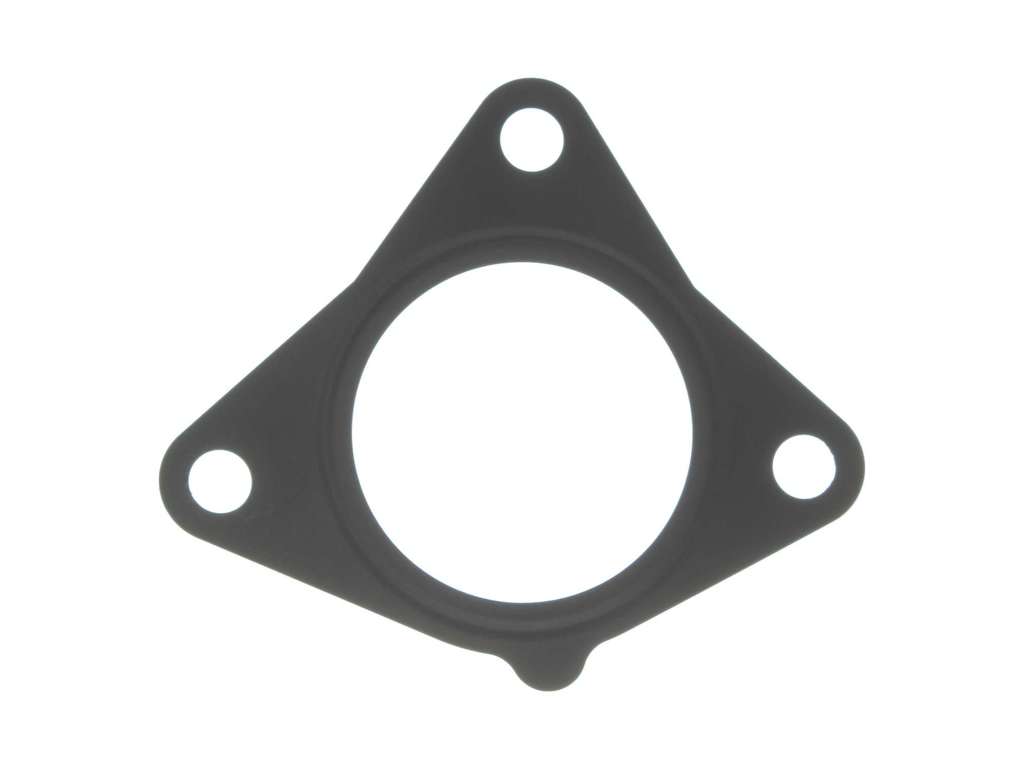
(OEM #22271-21030)— The gasket should always be replaced when the throttle body is removed to prevent vacuum leaks. This is the specific OEM part number for the gasket that fits the 22030-21020 throttle body.
Trusted brands: Toyota (OEM), Fel-Pro, Mahle
OEM price range: $10-$20
Aftermarket price range: $5-$10
Related Codes That Often Appear With This One
- P0121 — This code indicates a 'Throttle/Pedal Position Sensor/Switch 'A' Circuit Range/Performance' problem. It often appears alongside P0123 as the sensor begins to fail, indicating the signal is not just high, but also erratic or out of its expected performance range.
- P0122 — This code for 'Circuit Low Input' can appear intermittently with P0123 if the failing sensor's internal contacts are shorting to both ground and power at different times.
- P2103 — Throttle Actuator Control Motor Circuit Short. This can appear with TPS codes if the internal motor controlling the throttle plate is also failing.
- P2111 — Throttle Actuator Control System - Stuck Open. A user on PriusChat reported seeing this code along with P2103 when their dealer diagnosed a failed throttle body.
Platform-Specific Known Issues
- Owner Experience: Dealer Diagnosis and Cost: A user on PriusChat with a 2008 Prius reported their car stopped running and the dealer diagnosed a failed throttle body based on codes P2103 and P2111. The quoted repair cost was $1,200 for parts and labor. This highlights the high cost of a dealer repair for this issue.
- Owner Experience: DIY with Used Part: In the same PriusChat thread, another user reported having the same codes and symptoms. Instead of paying the dealer, they purchased a used throttle body from a junkyard for $100 and replaced it themselves, which resolved the problem. The user described the job as easy: '3 hoses and 4 bolts after you get the air box off.' This shows a viable, low-cost DIY path for this repair.
Mechanic-Grade Diagnostic Values
- Throttle Position Sensor (VTA1) Voltage - Accelerator Pedal Released — expected: 8% to 20% of full range (approx. 0.4V - 1.0V). Failure: Voltage is stuck high, above the expected range, or near 5V.
- Throttle Position Sensor (VTA1) Voltage - Accelerator Pedal Fully Depressed — expected: 64% to 96% of full range (approx. 3.2V - 4.8V). Failure: Voltage does not respond to pedal input or is stuck at a high value.
- Throttle Position Sensor Redundancy Check (VTA1 vs VTA2) — expected: VTA1 and VTA2 should never be close to the same voltage level.. Failure: If VTA1 is within 0.02V of VTA2, the ECM interprets this as a short circuit and sets a fault code.
- Throttle Position Sensor Internal Resistance — expected: 1.2 to 3.5 kΩ at 25°C (77°F) between terminals 1 and 4.. Failure: Resistance is outside of the specified range.
Scan Tool Commands That Help
- Toyota Techstream: Data List Monitoring (Engine and ECT -> Data List) — This is the primary function used to view live voltage data from the throttle position sensors (VTA1, VTA2) to confirm if the signal is stuck high, which is the main indicator for P0123.
- General OBD-II Scanner or Techstream: Clear DTCs / Reset Memory — Used after the repair (e.g., throttle body replacement) to clear the P0123 code. This is often done in conjunction with disconnecting the 12V battery to ensure all learned values are reset.
Wiring & Ground Locations
- E6 — The main 6-pin connector on the throttle body assembly itself.. This is the primary connection point for the throttle position sensor and throttle control motor. Inspecting pins VTA1, VTA2, VC, and E2 at this connector is critical for diagnosing a P0123. A poor connection, corrosion, or wire damage here can directly cause the code.
- VTA1 (Pin on ECM) — The specific pin on the Engine Control Module (ECM) that receives the primary throttle position signal.. Testing for a short to power on this wire's circuit is a key diagnostic step if the sensor and connector appear fine. A short to a 5V or 12V source along the harness will cause a constant high signal.
- E2 (Pin on ECM) — The sensor ground pin on the Engine Control Module (ECM) for the throttle position sensor.. A bad ground connection (open circuit) on the E2 wire between the throttle body and the ECM can cause the VTA1 signal to float high, triggering a P0123 code even if the sensor itself is good.
Real Owner Repair Stories
- PriusChat Forum User (2005 Toyota Prius) — High idle after attempting to clean the throttle body to fix a P0505 code.
❌ Tried (didn't work) Cleaning the throttle body while on the vehicle.
✅ What actually fixed it The user was advised to check for vacuum leaks and to reset the ECM by disconnecting the 12V battery for several minutes to allow the computer to relearn the idle position with the newly cleaned throttle body.
OEM Part Supersession History
22030-21020→No supersession found. This part number remains the correct fitment for the entire 2004-2009 generation.— N/A
Diagnostic Flowchart
Other Known Issues on This Vehicle
Issues unrelated to this code that are worth knowing about as an owner of this generation:
- Combination Meter (Speedometer) Failure 🔴 High — Very common, especially on higher mileage vehicles or those in climates with extreme temperature swings. The display goes blank intermittently or completely, and can prevent the car from being turned off normally. (Ref: Toyota issued TSB T-SB-0172-09 acknowledging the issue, caused by a failing capacitor on the circuit board. Toyota offered a warranty enhancement, but most vehicles are now far outside the coverage period.)
- Brake Actuator Assembly Failure 🔴 High — A frequent and expensive failure. Owners report a loud, frequent buzzing noise from the actuator, followed by a combination of warning lights (ABS, VSC, (!)) and a change in brake pedal feel. (Ref: Toyota extended the warranty coverage for this component on many vehicles, but did not issue a full recall for the Gen 2, leading to class-action lawsuits. Many owners now face a multi-thousand dollar repair out of pocket.)
- Excessive Oil Consumption 🟠 Medium — Common on engines over 100,000-150,000 miles. Caused by piston rings getting clogged and failing to seal properly, leading to burning oil. Can lead to engine damage if the oil level is not checked and topped off frequently. (Ref: While TSBs were issued for later generation engines (like the 2ZR-FXE), the 1NZ-FXE in the Gen 2 is also known for this issue, often linked to a clogged PCV valve or EGR circuit causing deposits.)
- Hybrid Inverter Coolant Pump Failure 🔴 High — A very common failure point. The pump circulates coolant for the hybrid system's inverter. When it fails, the inverter can overheat, triggering the master warning light ("red triangle") and potentially shutting the car down. (Ref: Toyota issued a recall for this component, but as vehicles age, even replaced pumps are failing again due to wear.)
- HID Headlight Failure 🟠 Medium — On models equipped with High-Intensity Discharge (HID) headlights, it is extremely common for one headlight to intermittently turn off, especially in wet or cold weather. This is often due to a failing bulb or ballast. (Ref: No recall, but a widely discussed problem. The 2004-2005 models used D2R bulbs, while 2006-2009 used D4R bulbs; using the wrong type will cause problems.)
- Main Hybrid Battery (HV Battery) Degradation 🔴 High — Inevitable on all high-mileage or older (10-15+ years) Priuses. Symptoms include poor fuel economy, the engine running more often, and eventually the P0A80 trouble code.
Used vs. New Parts: Buying Guide for This Vehicle
When a used part is the smart pick: A used throttle body is a very common and sensible repair for this vehicle. Since the failure is electronic wear and not typically a mechanical issue, a lower-mileage used part from a reputable salvage yard can provide significant cost savings ($50-$150) compared to a new OEM part ($400+).
Donor-vehicle mileage cap: roughly under 120000 miles for the part to have meaningful remaining life.
What to inspect on the donor part:
- Verify the part number is 22030-21020.
- Source from a donor vehicle with the lowest possible mileage.
- Inspect the electrical connector pins for any signs of corrosion, bending, or damage.
- Look at the throttle plate; while some carbon is normal, excessive black gunk may indicate a high-mileage or poorly maintained donor.
- Ensure there are no cracks or damage to the plastic housing of the sensor/motor assembly.
- Purchase from a seller that offers a warranty or a return policy in case the part is also faulty.
Aftermarket brands forum-validated for this vehicle:
- Aisin (Often the original OEM manufacturer)
- Denso
Brands owners have reported issues with on this vehicle:
- Unbranded, no-name parts from online marketplaces should be treated with caution, as quality control can be inconsistent.
Real Owner Stories
Aggregated from forums and TSBs cited above. Mileages and costs reflect what owners reported in those sources.
2008 Toyota Prius 1.5L
Symptoms: The car stopped running and the dealer found codes P2103 and P2111.
What fixed it: The dealer diagnosed a failed throttle body requiring replacement.
Cost: $1,200-$1,200
Source hint: PriusChat.com thread titled 'Engine stopped - throttle body blamed - options'
2004-2009 Toyota Prius 1.5L
Symptoms: Experienced the same codes and symptoms as the dealer-diagnosed case (car stopped running/limp mode).
What fixed it: Purchased a used throttle body from a junkyard and replaced it manually (3 hoses and 4 bolts).
Cost: $100-$100
Source hint: PriusChat.com thread titled 'Engine stopped - throttle body blamed - options'
Related OBD-II Codes
Frequently Asked Questions
Can I replace just the Throttle Position Sensor (TPS) on my 2004-2009 Prius?
Is there a TSB for the P0123 code or throttle body on the Gen 2 Prius?
How much does a dealer typically charge to fix the throttle issues associated with P0123?
Will cleaning the throttle body fix my P0123 code?
Does the 2004-2009 Prius share this throttle body issue with other Toyota models?
What voltage should I see when testing the TPS with a scan tool?
Helpful Videos

We Have This Part in Stock


The information in this article is provided for general reference and educational purposes only. Vehicle specifications, procedures, and part compatibility can vary by production date, trim level, and region. Always consult your vehicle's factory service manual and verify part numbers before purchasing or performing repairs. Safety-critical components such as airbags, seat belts, and braking systems should be installed by a qualified professional.
- Toyota Prius:
- 🧭 Diagnostic Flowchart
- 🎬 Helpful Videos
- 🛍️ Shop This Part
- What's Unique About the 2004-2009 Toyota Prius
- Symptoms You May Notice
- Most Likely Causes
- Rare But Worth Checking
- Diagnosis Steps
- Parts You'll Likely Need
- Related Codes That Often Appear With This One
- Platform-Specific Known Issues
- Mechanic-Grade Diagnostic Values
- Scan Tool Commands That Help
- Wiring & Ground Locations
- Real Owner Repair Stories
- OEM Part Supersession History
- Other Known Issues on This Vehicle
- Used vs. New Parts: Buying Guide for This Vehicle
- Real Owner Stories
- 2008 Toyota Prius 1.5L
- 2004-2009 Toyota Prius 1.5L
- Related OBD-II Codes
- Frequently Asked Questions
- 🎟️ Get 5% Off