

P0123 on 2010-2015 Toyota Prius: Throttle Position Sensor Circuit High Causes and Fixes
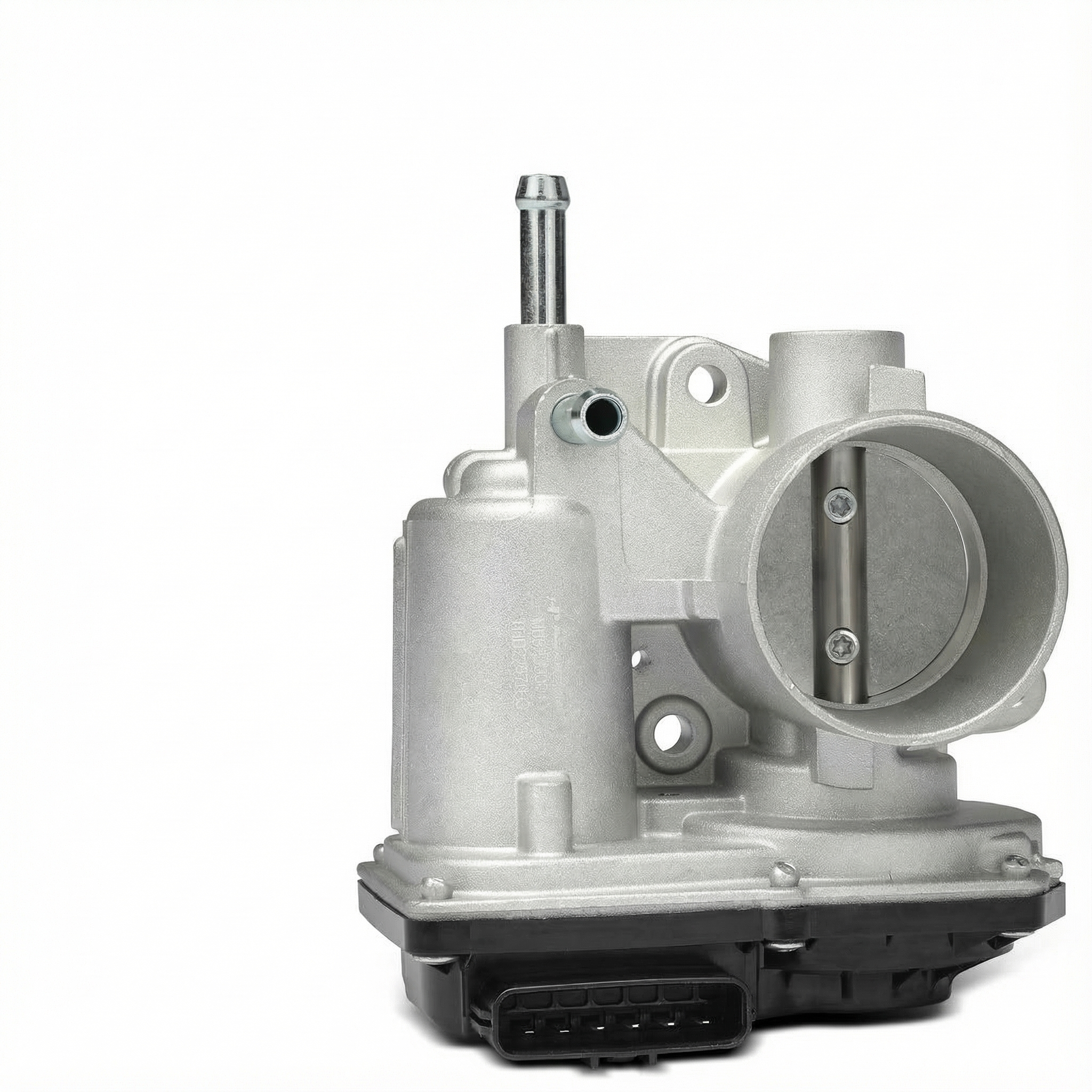
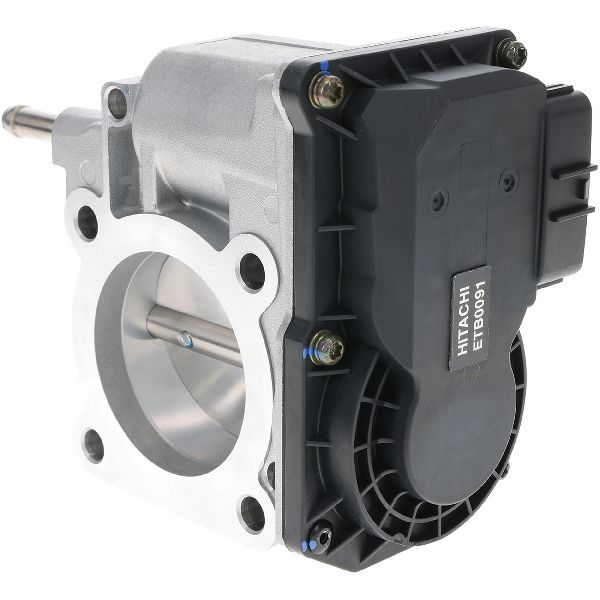
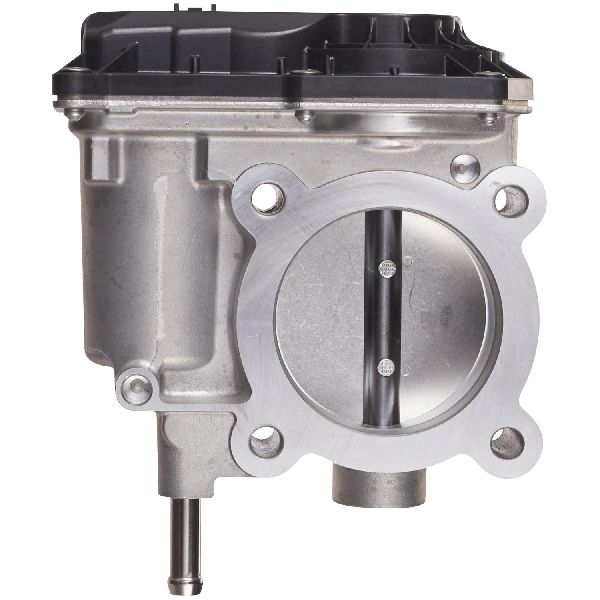
On a 2010-2015 Prius, code P0123 almost always means the throttle body assembly has failed. The sensor is built-in and not sold separately. Expect to pay $400-$600 for an OEM throttle body and $150-$250 for labor. Cleaning the throttle body first is worth a try but rarely solves this specific code.
- P0123 on a 2010-2015 Prius points to a high voltage signal from the throttle position sensor.
- The sensor is part of the throttle body; you cannot buy it separately. The entire throttle body assembly must be replaced to fix a bad sensor.
- Before buying a new throttle body (an expensive part), always check the wiring and connector first for damage or a short circuit.
- Driving with this code is unsafe due to the risk of stalling or unpredictable throttle response.
- The OEM part number for the throttle body is likely 22030-37060, but always confirm with your vehicle's VIN before ordering.
What's Unique About the 2010-2015 Toyota Prius
On the third-generation Prius with the 2ZR-FXE engine, the throttle position sensor is not a separate, replaceable part. It is a non-contact, Hall-effect type sensor integrated directly into the electronic throttle body assembly. While on many other vehicles you could replace just the small sensor, a P0123 code on this Prius model that points to a sensor failure will require replacing the entire throttle body. This makes the repair more expensive and complex than it might be on other cars.
Symptoms You May Notice
- Check Engine Light is on
- Multiple warning lights on the dash, including hybrid system warnings
- Vehicle enters 'limp mode' (reduced engine power)
- Hesitation or stumbling during acceleration
- Rough or unstable idle
- Engine may stall
- Poor fuel economy
- Unintended or sudden acceleration
- Replacing the accelerator pedal position sensor. The pedal sensor has its own set of codes (e.g., P2122, P2127). P0123 specifically points to the sensor at the throttle body.
- Replacing only the throttle position sensor. On this Prius, the sensor is not available as a separate part from the throttle body assembly.
Most Likely Causes
- Failed Throttle Body Assembly 🔴 High Probability → Shop Fuel Injection Throttle Body The integrated, non-contact throttle position sensor (TPS) is a common failure point. Wear and tear on the internal electronic components of the sensor cause it to send an incorrect high voltage signal. This is the most frequently reported cause for a P0123 code that is not related to wiring.
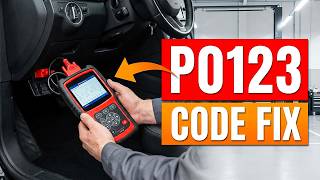
How to confirm: After confirming the wiring is intact, use a scan tool to monitor the TPS voltage (PID: 'VTA1'). If the voltage is stuck high (e.g., over 4.8V) regardless of throttle pedal input, 🎬 See how to troubleshoot a P0123 high input sensor code. or if it doesn't change smoothly, the sensor inside the throttle body has failed.
Typical fix: Replace the entire throttle body assembly. After replacement, the ECM will typically perform an idle relearn procedure on its own. Disconnecting the 12V battery for several minutes before the repair forces this relearn. A formal 'Reset Memory' utility in Toyota Techstream can also be used.
Est. part cost: $350-$600 - Wiring or Connector Issue 🟡 Medium Probability Vibrations, heat, and age can cause wiring to fray or connector pins to become loose or corroded. A short between the 5V reference wire (VC) and the signal wire (VTA1) is a specific cause for a 'Circuit High' code.
How to confirm: Visually inspect the wiring harness leading to the throttle body for any signs of damage, melting, or corrosion. Unplug the connector (E7) and check for bent or corroded pins. Use a multimeter to check for continuity between the VC and VTA1 pins on the harness side; there should be none (infinite resistance).
Typical fix: Repair the damaged section of the wiring harness or clean/replace the connector.
Est. part cost: $10-$50 - Dirty Throttle Body ⚪ Low Probability → Shop Fuel Injection Throttle Body Carbon and oil vapor from the EGR and PCV systems can build up, causing the throttle plate to stick. While this more commonly causes other codes (like idle control or performance range issues), a severely stuck plate could theoretically cause a sensor correlation issue. However, for a 'Circuit High' fault, this is an unlikely root cause.
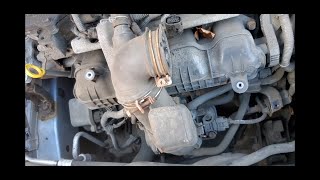
How to confirm: Remove the air intake hose and visually inspect the throttle plate and bore for heavy carbon buildup. A user on PriusChat noted that cleaning should be attempted before replacement, but it rarely fixes an electronic failure code like P0123. 🎬 Watch: How to properly clean the intake and throttle assembly.
Typical fix: Clean the throttle body bore and plate with a dedicated throttle body cleaner and a soft cloth. Be careful not to manually force the plate open on this electronic unit; it's best to do this while the car is off.
Est. part cost: $5-$15
Rare But Worth Checking
- Faulty Engine Control Module (ECM): → Shop Engine Control Module (ECM) This is very rare. The ECM should only be considered after all other possibilities, including the throttle body and wiring, have been exhaustively tested and ruled out.
Diagnosis Steps
- Connect an OBD-II scanner to confirm the P0123 code and check for any other related codes.
- Using the scanner's live data function, monitor the voltage for 'TPS A' (VTA1). With the key on and engine off, the voltage should be low (~0.5-0.7V) and should increase smoothly to ~4.5V as you slowly press the accelerator pedal.
- If the voltage is stuck high (e.g., >4.8V) or does not respond, proceed to inspect the wiring.
- Visually inspect the throttle body connector (E7) and wiring harness for any obvious signs of damage, fraying, or corrosion.
- If the wiring looks good, the most likely cause is a failed sensor within the throttle body assembly.
- As a preliminary step, you can try cleaning the throttle body bore and plate with an appropriate cleaner, but this is unlikely to fix a 'Circuit High' fault.
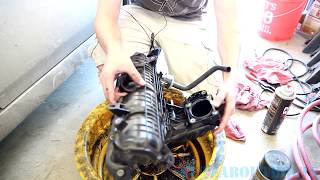
- If all tests point to the sensor, the entire throttle body assembly must be replaced. 🎬 Watch: Step-by-step guide to diagnosing and replacing the Prius throttle body. Disconnect the 12V battery before starting the repair.
- After installing the new throttle body, reconnect the battery. The ECM will automatically perform an idle relearn procedure upon the next startup.
Parts You'll Likely Need
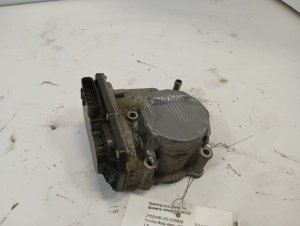
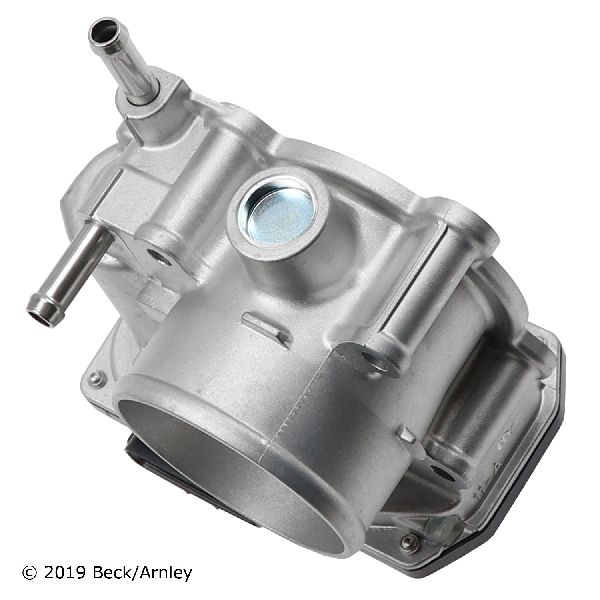
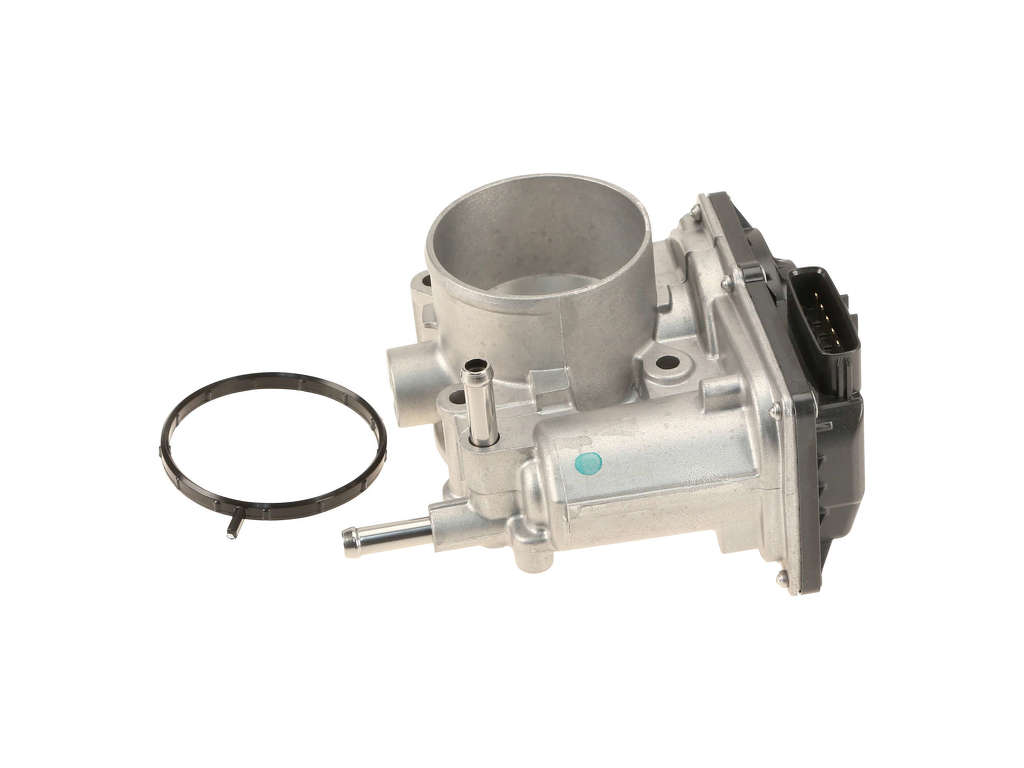
- Throttle Body Assembly
(OEM #22030-37060)— This is the most common fix because the throttle position sensor (TPS) that causes code P0123 is integrated into this assembly and cannot be replaced separately on this vehicle. Part number 22030-37010 may also be applicable to early models, but 22030-37060 is the more common replacement.
Trusted brands: Toyota (Genuine OEM), Aisan (OEM manufacturer), Dorman, Hitachi
OEM price range: $340-$620
Aftermarket price range: $100-$490
Related Codes That Often Appear With This One
- P0121 — P0121 indicates a 'Throttle/Pedal Position Sensor 'A' Circuit Range/Performance' problem. It can appear alongside P0123 if the sensor's signal is both erratic and goes too high. A PriusChat user reported getting both codes, which ultimately pointed to a throttle body issue.
- P0223 — This code is for 'Throttle/Pedal Position Sensor/Switch 'B' Circuit High Input'. The system uses two sensors ('A' / VTA1 and 'B' / VTA2) for redundancy. If both circuits have a high input fault, you may see both codes.
Platform-Specific Known Issues
- A PriusChat forum member described a scenario where the code appeared, and after confirming it wasn't a cleaning issue, they sourced a used throttle body from Car-Part.com for around $100 as a cost-effective fix.
- Another PriusChat thread discusses the replacement process, noting the torque for the mounting bolts is 15 ft-lbs and that two coolant hoses must be disconnected and reconnected, which may introduce air into the cooling system if not done carefully.
Mechanic-Grade Diagnostic Values
- Throttle Position Sensor 'A' (VTA1) Voltage — expected: ~0.5V - 0.7V at closed throttle, increasing smoothly to ~4.0V - 4.5V at wide-open throttle.. Failure: A constant voltage reading above 4.8V, regardless of throttle position.
- ECM 5V Reference Voltage (VC Terminal) — expected: 4.5V - 5.5V with ignition ON, throttle body connector disconnected.. Failure: No voltage or voltage outside this range indicates an ECM or wiring issue, not a sensor fault.
- Continuity Check: Short between VC and VTA1 wires — expected: No continuity (infinite resistance) between the 5V reference (VC) and signal (VTA1) pins at the harness connector.. Failure: Continuity (low resistance) indicates the wires are shorted together in the harness.
- Continuity Check: Wiring Harness to ECM — expected: Below 1 ohm on VTA1, VTA2, VC, and E2 (ground) wires between the throttle body connector and the corresponding ECM pins.. Failure: High resistance (open circuit) or continuity to ground/power on signal lines indicates a wiring harness fault.
Scan Tool Commands That Help
- Toyota Techstream: Data List > VTA1, VTA2 — This is the primary live data to watch. For P0123, the VTA1 value will be stuck at a high voltage (e.g., >4.8V) and will not change with accelerator input, confirming the fault condition the ECM is seeing.
- Toyota Techstream: Active Test > Control the Throttle Opening Angle — This bidirectional command allows the technician to manually command the throttle motor to open and close. This helps verify if the throttle plate is physically stuck or if the motor is functional, separating a mechanical issue from a purely electrical sensor failure.
- Toyota Techstream: Utility > ETCS (Electronic Throttle Control System) > Reset Memory — This function should be performed after replacing the throttle body. It clears all learned values and forces the ECM to immediately relearn the new sensor's idle and full-range characteristics, which is more robust than a simple battery disconnect.
Wiring & Ground Locations
- E7 — The electrical connector on the electronic throttle body assembly itself.. This is the primary connection point to test for voltage, ground, and signal integrity. A fault here (corrosion, bent pins, loose connection) can directly cause P0123.
- Engine Ground Points — There are several key ground wire clusters on the 2ZR-FXE engine. One is on the driver's side of the engine block, another is on the transmission housing, and a cluster connects to the chassis near the coolant reservoir.. A poor engine or ECM ground can cause floating voltages and erratic sensor readings. While less common than a direct sensor failure for P0123, ensuring these grounds are clean and tight is a crucial step in diagnosing any electronic fault.
Real Owner Repair Stories
- PriusChat Forum (2007 Toyota Prius (Gen 2, but same diagnostic principle)) — Engine stopped while driving, Check Engine Light and red triangle on. Car would restart but only run for a moment before stalling again.
❌ Tried (didn't work) The owner did not report trying any fixes themselves before taking it to the dealer.
✅ What actually fixed it The dealer diagnosed a failed throttle body and quoted $1,200 for replacement. Forum members suggested that at the vehicle's high mileage (240,000 miles), the throttle body was likely extremely dirty and had failed electronically, and that oil consumption may have contributed to the problem. The implied fix was throttle body replacement.
OEM Part Supersession History
22030-37010→22030-37060— Typically due to a change in supplier, minor design revision for durability, or manufacturing process update. Toyota does not usually publish the specific reason for a supersession.
Heads up: The parts are generally interchangeable for the 2010-2015 generation, but it is always best practice to order the latest revision (22030-37060) for a replacement part.
Model Year Variations Within This Range
- 2010-2015: While the core 2ZR-FXE engine and throttle body part number remained consistent for the Gen 3 Prius, there were minor cosmetic and feature updates in the 2012 model year facelift. However, these changes did not affect the diagnosis or repair of a P0123 code. The throttle body part itself (22030-37060) is used across the entire generation and even into later hybrid models.
Diagnostic Flowchart
Other Known Issues on This Vehicle
Issues unrelated to this code that are worth knowing about as an owner of this generation:
- Excessive Oil Consumption 🔴 High — Becomes noticeable around 100,000-150,000 miles. Caused by low-tension piston rings and insufficient piston drainage design in models up to mid-2014. (Ref: T-SB-0168-16, T-SB-0169-16)
- EGR (Exhaust Gas Recirculation) System Clogging 🟠 Medium — Commonly occurs after 100,000 miles, leading to rough idle, engine knocking, and potential head gasket failure if ignored. Requires cleaning of the EGR valve, cooler, and intake manifold passages. (Ref: T-SB-0075-13 (for P0401))
- Brake Actuator Assembly Failure 🔴 High — Can occur at various mileages, often over 100k. Results in a loss of braking assist, loud buzzing/clicking from the pump, and multiple brake-related warning lights. It is a very expensive repair. (Ref: Warranty Enhancement Program ZG1 extended coverage, but has since expired for most vehicles.)
- Hybrid Inverter (IPM) Failure 🔴 High — Can cause the vehicle to stall or enter limp mode. More common on earlier years of the generation. (Ref: Recalls 14V053000, 18V684000, and 20V012000 were issued to update software or replace the inverter's Intelligent Power Module (IPM).)
Used vs. New Parts: Buying Guide for This Vehicle
When a used part is the smart pick: A used throttle body is a highly viable and cost-effective option for this repair, especially for DIYers or those on a budget. Since the failure is electronic and not typically due to mechanical wear of the throttle plate itself, a part from a lower-mileage wrecked vehicle can provide significant savings with good reliability.
Donor-vehicle mileage cap: roughly under 120000 miles for the part to have meaningful remaining life.
What to inspect on the donor part:
- Verify the donor vehicle's mileage; lower is always better.
- Inspect the connector pins for any signs of corrosion, moisture, or damage.
- Check the throttle plate and bore. While some carbon is normal, excessive, sludgy buildup could indicate the donor engine had other issues (like high oil consumption) that might have stressed the component.
- Ensure there are no cracks in the plastic housing of the sensor/motor assembly.
- Purchase from a reputable salvage yard that offers a short warranty (e.g., 30-90 days) to protect against a dead-on-arrival part.
OEM-only on this vehicle (don't cheap out):
- While the throttle body itself can be sourced used, internal engine components and complex electronics like the ECM are generally recommended to be purchased new OEM if they fail.
Aftermarket brands forum-validated for this vehicle:
- Aisan (The original OEM manufacturer for Toyota)
- Hitachi
Brands owners have reported issues with on this vehicle:
- Unbranded, no-name parts from online marketplaces should be avoided. While brands like Dorman are available, forum feedback often favors used OEM or new Aisan parts for long-term reliability.
Real Owner Stories
Aggregated from forums and TSBs cited above. Mileages and costs reflect what owners reported in those sources.
2010-2015 Toyota Prius 1.8L
Symptoms: The owner experienced P0121 and P0123 codes (throttle position switch circuit high and circuit range) after performing fuel system repairs.
What fixed it: Reconnecting a connector that runs through the fuel injector harness which had been left disconnected.
Source hint: owner_reports - PriusChat
2010-2015 Toyota Prius 1.8L
Symptoms: The owner confirmed the issue was not related to carbon buildup/cleaning and needed a replacement part.
What fixed it: Sourced a used throttle body from Car-Part.com.
Cost: $100-$100
Source hint: PriusChat Thread: 'Throttle Body Replacement?' (https://priuschat.com/threads/throttle-body-replacement.145098/)
2010-2015 Toyota Prius 1.8L
Symptoms: The vehicle threw a P0121 code, which is closely related to the throttle position sensor performance.
What fixed it: Full throttle body replacement.
Source hint: Reddit r/prius: 'Throttle Body Replacement' (https://www.reddit.com/r/prius/comments/15b22qa/throttle-body-replacement/)
Related OBD-II Codes
Frequently Asked Questions
Can I just replace the Throttle Position Sensor (TPS) on my 2010-2015 Prius?
Do I need to perform a formal 'Reset Memory' with Toyota Techstream after replacing the throttle body?
Is there a TSB for the P0123 code on my Prius?
Will cleaning the throttle body fix the P0123 'Circuit High' fault?
What is the torque specification for the throttle body mounting bolts on the 1.8L engine?
Are there any risks when disconnecting the coolant hoses from the throttle body?
Helpful Videos


Used OEM Parts in Stock
New Aftermarket Parts Available


The information in this article is provided for general reference and educational purposes only. Vehicle specifications, procedures, and part compatibility can vary by production date, trim level, and region. Always consult your vehicle's factory service manual and verify part numbers before purchasing or performing repairs. Safety-critical components such as airbags, seat belts, and braking systems should be installed by a qualified professional.
- Toyota Prius:
- 🧭 Diagnostic Flowchart
- 🎬 Helpful Videos
- 🛍️ Shop This Part
- What's Unique About the 2010-2015 Toyota Prius
- Symptoms You May Notice
- Most Likely Causes
- Rare But Worth Checking
- Diagnosis Steps
- Parts You'll Likely Need
- Related Codes That Often Appear With This One
- Platform-Specific Known Issues
- Mechanic-Grade Diagnostic Values
- Scan Tool Commands That Help
- Wiring & Ground Locations
- Real Owner Repair Stories
- OEM Part Supersession History
- Model Year Variations Within This Range
- Other Known Issues on This Vehicle
- Used vs. New Parts: Buying Guide for This Vehicle
- Real Owner Stories
- 2010-2015 Toyota Prius 1.8L
- 2010-2015 Toyota Prius 1.8L
- 2010-2015 Toyota Prius 1.8L
- Related OBD-II Codes
- Frequently Asked Questions
- 🎟️ Get 5% Off