

P0126 on 2015-2017 Chrysler 200 2.4L: Insufficient Coolant Temperature Fixes
On a 2015-2017 Chrysler 200 with the 2.4L engine, code P0126 almost always means the thermostat is stuck open. The fix is to replace the entire thermostat housing assembly, which includes a new thermostat and sensor. Expect to pay $70-$185 for the part, and the repair is a moderately difficult DIY job. Many owners opt for a more durable aftermarket aluminum housing to prevent repeat failures of the OEM plastic part.
- P0126 on the 2.4L Chrysler 200 almost always points to a thermostat that is stuck open.
- The correct repair is to replace the entire thermostat housing assembly, which includes the thermostat, housing, and coolant temperature sensor.
- Consider using a higher-quality aftermarket aluminum housing for a more durable, long-term repair.
- While it can be a DIY job, be prepared for a challenging repair due to tight access to the thermostat housing, requiring removal of the battery and other components.
- Always check your coolant level first before ordering parts.
What's Unique About the 2015-2017 Chrysler 200
The 2.4L MultiAir (also called Tigershark) engine used in the Chrysler 200 and many other FCA vehicles has a well-documented history of the plastic thermostat housing assembly failing. This leads to the thermostat sticking open, causing the P0126 or the nearly identical P0128 code. The issue is so common that the repair almost always involves replacing the entire integrated unit (housing, thermostat, and sensor) rather than just the thermostat itself. Several aftermarket companies, such as Dorman, offer more durable aluminum housing upgrades to prevent repeat failures caused by the plastic becoming brittle and cracking from heat cycles.
Symptoms You May Notice
- Check Engine Light is on
- Temperature gauge on the dashboard stays low or takes a very long time to reach the middle
- Heater blows lukewarm air or doesn't get very hot
- Reduced fuel economy
- Vehicle may fail an emissions test
- Temperature gauge drops at highway speeds
- Replacing only the Engine Coolant Temperature (ECT) sensor. While a bad sensor can be the cause, the issue is far more likely to be the thermostat. Since the recommended replacement housing includes a new sensor, replacing the sensor alone is often a wasted step.
Most Likely Causes
- Engine Thermostat Stuck Open 🔴 High Probability → Shop Integrated Thermostat Housing Assembly The OEM thermostat is part of a plastic housing assembly that is a known common failure point on the 2.4L MultiAir engine. The plastic can become brittle from engine heat cycles, and the thermostat mechanism fails in the open position.
How to confirm: Monitor the engine temperature with a scan tool's live data function. From a cold start, the temperature should rise steadily to ~195°F. If the temperature rises very slowly, stays well below the typical operating range (e.g., only reaching 175-185°F), or drops at highway speeds, the thermostat is stuck open. You can also feel the upper radiator hose; it should stay cool for several minutes and then get hot suddenly. If it warms up gradually, the thermostat is open.
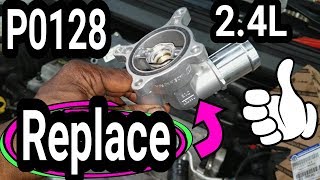
Typical fix: Replace the entire engine thermostat housing assembly. This part is an integrated unit that includes the thermostat, housing, and a new engine coolant temperature (ECT) sensor. Upgrading to an aftermarket aluminum housing is a popular 🎬 Watch: Step-by-step 2.4L thermostat replacement guide, more durable repair.
Est. part cost: $70-$185
Rare But Worth Checking
- Low Engine Coolant Level: Always check the basics first. If the coolant is low, the temperature sensor may not get an accurate reading. Top off the coolant with the correct Mopar OAT coolant (meeting spec MS-12106) and check for leaks before replacing parts.
- Faulty Engine Coolant Temperature (ECT) Sensor: → Shop Engine Coolant Temperature Sensor This is uncommon because a new sensor is included with the recommended thermostat housing assembly replacement. However, if the sensor fails independently, it can send incorrect data to the PCM.
- Cooling Fan Stuck On: → Shop Engine Cooling Fan Blade If the radiator fan runs constantly, even when the engine is cold, it can over-cool the engine. This is usually caused by a faulty fan relay or control module.
Diagnosis Steps
- Check the engine coolant level in the reservoir and radiator (when the engine is cold). Top off if low and inspect for any visible leaks.
- Use an OBD-II scanner to confirm P0126 is the only code present. Note any other codes, especially P0128.
- Use the live data function on the scanner to monitor the Engine Coolant Temperature (ECT) reading. Start the car from cold.
- Observe the ECT data as the car warms up. The temperature should rise steadily to around 195-220°F and then stabilize. If it rises very slowly, never reaches this range, or drops significantly when driving at speed, the thermostat is almost certainly stuck open.
- If the temperature gauge seems erratic or gives an impossible reading (e.g., -40°F), suspect the ECT sensor or its wiring.
- Visually inspect the cooling fan. It should not be running at high speed immediately after a cold start. If it is, diagnose the fan control circuit.
- If the coolant level is correct and the temperature data points to a slow warm-up, the thermostat housing assembly is the confirmed faulty part.
Parts You'll Likely Need
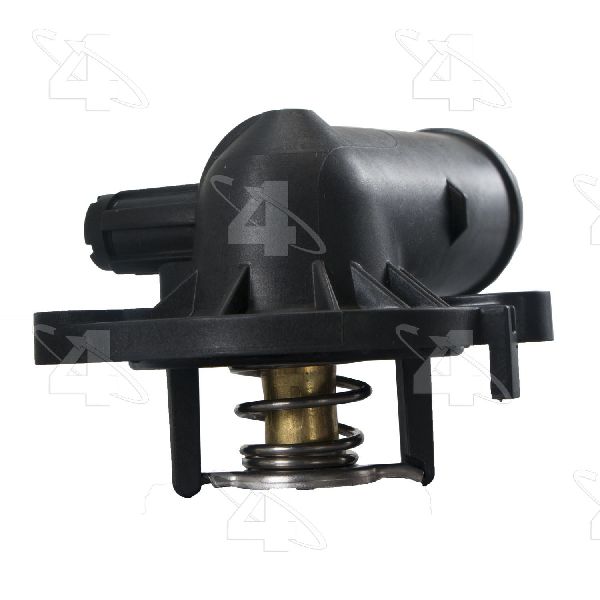
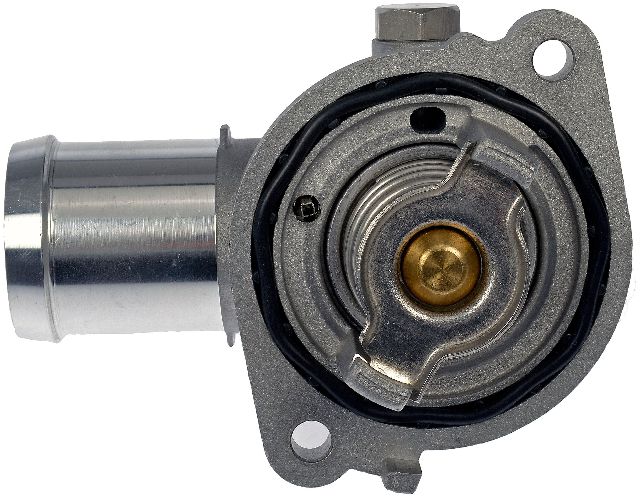
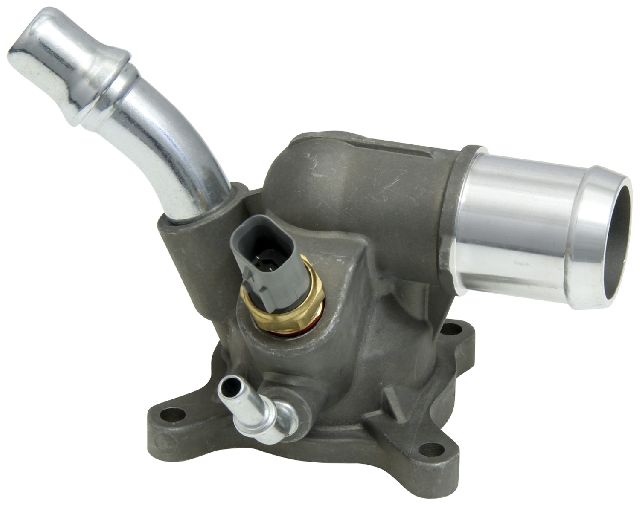
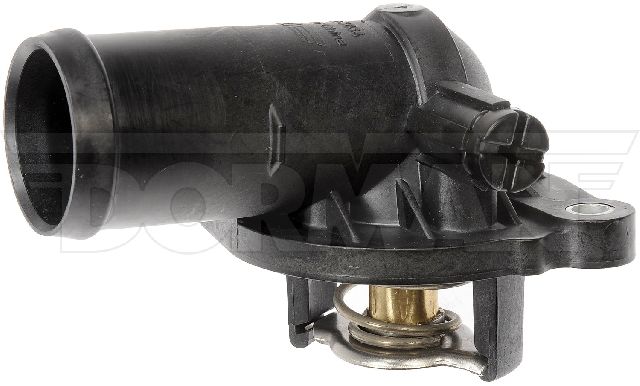
- Engine Coolant Thermostat Housing Assembly
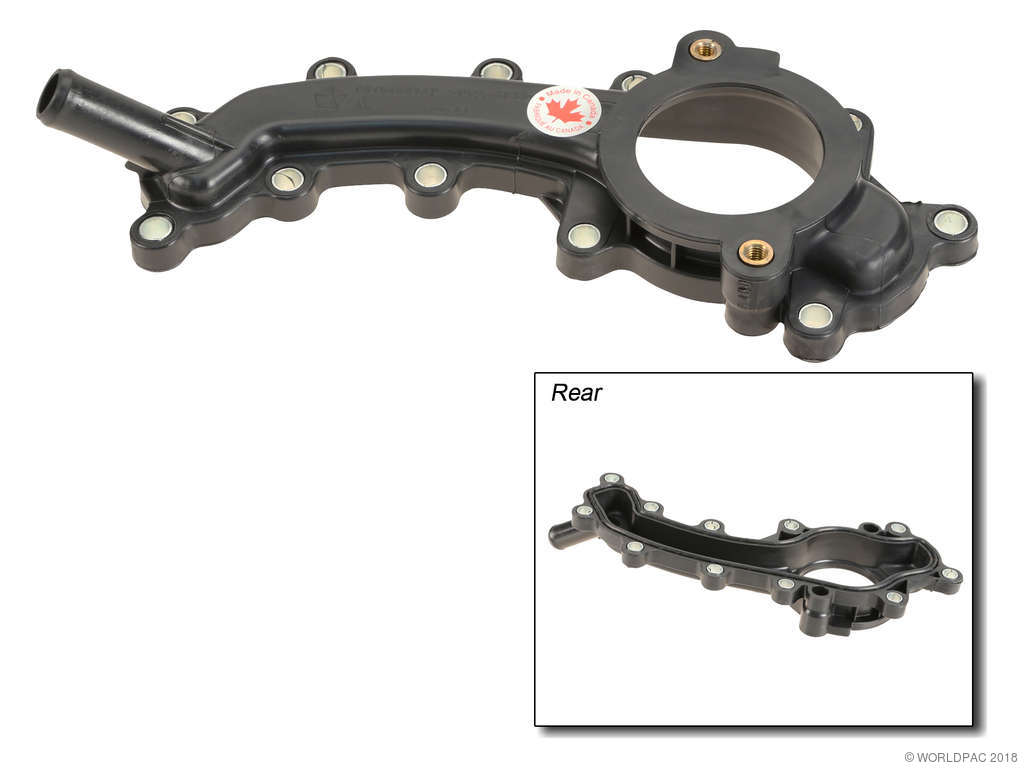
(OEM #5047861AD)— This is the primary failure point for code P0126 on the 2.4L MultiAir engine. The thermostat sticks open, and it is sold as a complete, integrated unit with the housing and sensor.
Trusted brands: Mopar (OEM), Dorman (p/n 902-3101) 🎬 See this 2015 Chrysler 200 thermostat replacement walkthrough, Gates, Motorad, SKP
OEM price range: $110-$185
Aftermarket price range: $70-$120
Related Codes That Often Appear With This One
- P0128 — P0128 (Coolant Thermostat Rationality) is a very similar code that is often triggered by the same cause: a thermostat that is stuck open. It's common to see either code, or sometimes both, for this specific failure.
Technical Service Bulletins (TSBs) & Recalls
- 18-023-16 REV. B: Flash: 2.4L Powertrain Diagnostic and System Improvements.
Platform-Specific Known Issues
- There is a Technical Service Bulletin (TSB 18-023-16 REV. B) for the 2015 Chrysler 200 2.4L that involves a software update for the Powertrain Control Module (PCM) to address various diagnostic and system improvements. While it doesn't specifically list P0126, it's worth checking if your vehicle's software is up to date, especially if the thermostat replacement does not resolve the issue.
- Some owners have reported that the small coolant reservoir hose becomes brittle and can break during the thermostat replacement. It's wise to inspect it and be prepared to replace it if necessary.
Mechanic-Grade Diagnostic Values
- ECT Sensor Resistance — expected: Approximately 2,000-3,000 Ω at 20°C (68°F), dropping to 200-300 Ω at 90°C (194°F).. Failure: Resistance is infinite (open circuit), near zero (short circuit), or does not decrease smoothly as temperature increases.
- ECT Sensor Signal Voltage (at sensor connector, plugged in) — expected: Approximately 2.0V - 3.5V on a cold engine (20°C/68°F), dropping smoothly to around 0.5V - 1.3V at full operating temperature (90°C/194°F).. Failure: Voltage is stuck high (near 5V), stuck low (near 0V), or does not change smoothly as the engine warms up.
- PCM 5V Reference (at sensor connector, unplugged) — expected: A steady 5V on one of the two pins with the key on, engine off.. Failure: Voltage is significantly below 5V or is absent, indicating a problem with the PCM or the wiring between the PCM and the sensor.
Scan Tool Commands That Help
- wiTECH (Chrysler Dealer Tool): Loss of Comm Test — This function is useful if an intermittent wiring fault is suspected. A technician can run this test while performing a 'wiggle test' on the ECT sensor harness. If communication with the PCM drops out, it confirms a physical wiring problem.
Wiring & Ground Locations
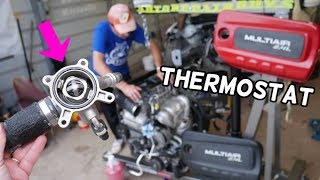
- Engine Coolant Temperature (ECT) Sensor Connector — On the thermostat housing assembly, located on the right (passenger) side of the 2.4L engine. 🎬 Watch: Locate the thermostat housing on a 2.4L engine. This 2-pin connector is the primary point for testing sensor voltage, resistance, and the 5V reference from the PCM. Corrosion or a loose connection here can cause incorrect temperature readings.
Real Owner Repair Stories
- YouTube Channels: Online Mechanic Tips, Carbon's DIY Garage (Platform-mate vehicles with the 2.4L engine (Jeep, Chrysler 200)) — Check Engine Light with code P0128 (nearly identical to P0126), temperature gauge slow to warm up.
❌ Tried (didn't work) The videos focus on the direct fix, but imply that simply checking coolant or replacing only the sensor would be incorrect given the known high failure rate of the integrated thermostat housing.
✅ What actually fixed it Replacing the entire thermostat housing assembly. The repair is noted as being very difficult due to tight access. To gain clearance, mechanics had to remove the battery, the PCM, and a vacuum pump mounted near the housing. One mechanic noted the extreme difficulty of reaching a lower 10mm bolt and recommended taping the socket to the extension to prevent it from being dropped and lost. After replacement and properly bleeding the air from the cooling system, the code was resolved and normal engine temperature was restored.
OEM Part Supersession History
5047263AB, 5047772AB, 5047861AA, etc.→5047861AD— The newer part number features an improved gasket retention system with reinforced ribs. This design helps secure the gasket within the housing groove, preventing it from becoming displaced during operation and causing leaks.
Diagnostic Flowchart
Other Known Issues on This Vehicle
Issues unrelated to this code that are worth knowing about as an owner of this generation:
- Excessive Oil Consumption 🔴 High — Common on 2015-2016 models. Caused by a piston ring design defect. Owners report consuming a quart of oil per 1,000 miles. (Ref: TSB 09-006-20 REV. B (Details oil consumption test). A class-action lawsuit led to warranty extension 'XB1'.)
- Harsh Shifting / Failure of 9-Speed Transmission 🔴 High — Very common on 2015 models. The ZF 9-speed transmission was known for lurching, hard shifts, and unexpectedly shifting to neutral. (Ref: Multiple software update TSBs (e.g., 21-019-17 REV. A, 21-013-16) and a recall (NHTSA 16V-529) were issued to address wiring harness and software issues.)
- Engine Stalling While Driving 🔴 High — Widely reported problem where the engine stalls without warning, sometimes related to low oil levels from the consumption issue or electrical problems. (Ref: Recall for intermittent power loss from a Power Distribution Center connector (NHTSA 15V-115) on some 2015 models.)
- Random Deployment of Active Head Restraints (AHR) 🟠 Medium — A factory defect can cause the active head restraints to deploy without a collision, potentially causing injury. (Ref: Subject of multiple lawsuits, but no specific recall number is consistently cited for this generation.)
Used vs. New Parts: Buying Guide for This Vehicle
When a used part is the smart pick: For this specific repair, a used part is NEVER recommended. The failure is due to the OEM plastic becoming brittle from heat cycles. A used part from a junkyard has already been subjected to the same stress and is likely near the end of its service life.
What to inspect on the donor part:
- Do not purchase a used plastic thermostat housing for this vehicle.
Aftermarket brands forum-validated for this vehicle:
- Dorman (specifically the aluminum housing upgrade, p/n 902-3101)
- Gates
- Motorad
- SKP
Brands owners have reported issues with on this vehicle:
- Unnamed, no-brand 'white box' parts should be avoided due to questionable quality control for such a critical component.
Real Owner Stories
Aggregated from forums and TSBs cited above. Mileages and costs reflect what owners reported in those sources.
2013 Dodge Dart 2.0L
Symptoms: The vehicle experienced a slow warm-up, with engine temperatures only reaching between 176-182°F.
What fixed it: Replacing the thermostat resolved the slow warm-up and temperature issues.
Source hint: BobIsTheOilGuy.com Forums - '2013 Dodge Dart 2.0L P0128'
2015-2017 Chrysler 200 2.4L
Symptoms: The owner was concerned about a P0126 code appearing on their vehicle.
What fixed it: A stuck open thermostat was identified as the almost certain cause requiring replacement.
Source hint: Reddit r/MechanicAdvice - 'P0126, Anything to be worried about?'
Related OBD-II Codes
Frequently Asked Questions
Does TSB 18-023-16 REV. B apply to my 2015 Chrysler 200 with a P0126 code?
Can I just replace the thermostat sensor instead of the whole housing on my 2.4L MultiAir?
Is there a more durable alternative to the plastic OEM thermostat housing?
Why does my Chrysler 200 temperature gauge drop when I am driving on the highway?
Are there any other parts I should be careful with when fixing this code?
Could my P0126 code be related to the 2.4L engine's oil consumption issues?
Helpful Videos

We Have This Part in Stock


The information in this article is provided for general reference and educational purposes only. Vehicle specifications, procedures, and part compatibility can vary by production date, trim level, and region. Always consult your vehicle's factory service manual and verify part numbers before purchasing or performing repairs. Safety-critical components such as airbags, seat belts, and braking systems should be installed by a qualified professional.
- Chrysler 200:
- 🧭 Diagnostic Flowchart
- 🎬 Helpful Videos
- 🛍️ Shop This Part
- What's Unique About the 2015-2017 Chrysler 200
- Symptoms You May Notice
- Most Likely Causes
- Rare But Worth Checking
- Diagnosis Steps
- Parts You'll Likely Need
- Related Codes That Often Appear With This One
- Technical Service Bulletins (TSBs) & Recalls
- Platform-Specific Known Issues
- Mechanic-Grade Diagnostic Values
- Scan Tool Commands That Help
- Wiring & Ground Locations
- Real Owner Repair Stories
- OEM Part Supersession History
- Other Known Issues on This Vehicle
- Used vs. New Parts: Buying Guide for This Vehicle
- Real Owner Stories
- 2013 Dodge Dart 2.0L
- 2015-2017 Chrysler 200 2.4L
- Related OBD-II Codes
- Frequently Asked Questions
- 🎟️ Get 5% Off