

P0126 on 2008-2014 Dodge Avenger 2.4L: Insufficient Coolant Temperature Causes and Fixes
On a 2008-2014 Dodge Avenger with the 2.4L engine, code P0126 is almost always caused by a failed thermostat that is stuck open. The most reliable fix is to replace the entire thermostat housing assembly, which includes the thermostat and often a new coolant temperature sensor. Expect to pay $40-$90 for an aftermarket assembly, with a DIY difficulty of 3/5 due to tight access.
- P0126 on the 2.4L Avenger almost always points to a problem with the thermostat.
- The most probable cause is a stuck-open thermostat, which is part of a plastic housing assembly.
- For a lasting repair, it is strongly recommended to replace the entire thermostat housing assembly, not just the thermostat itself.
- Upgraded aluminum thermostat housings are available and recommended for better durability than the OEM plastic design.
What's Unique About the 2008-2014 Dodge Avenger
The 2.4L World Engine used in this generation of the Dodge Avenger features a thermostat that is integrated into a larger plastic housing assembly. Over time, this plastic can become brittle from heat cycles, leading to two common failures: the thermostat itself can get stuck open, or the housing can develop cracks and leak coolant. Because of this design, it is highly recommended to replace the entire housing assembly rather than just the thermostat, as this prevents future leaks and addresses the most common point of failure for this code on this specific engine. Many aftermarket companies now offer upgraded cast aluminum housings to prevent the cracking issue permanently.
Symptoms You May Notice
- Check Engine Light is on
- Engine temperature gauge on the dashboard reads lower than normal or takes a very long time to reach the middle
- Heater blows lukewarm or cool air, especially when idling
- Noticeably reduced fuel economy
- Engine may run rough or idle high for an extended period after starting
- Cooling fans run constantly, even when the engine is cold
- Replacing only the ECT sensor when the actual problem is a stuck-open thermostat.
- Replacing just the internal thermostat and not the entire housing, which can lead to leaks from the old, brittle plastic soon after.
Most Likely Causes
- Thermostat Stuck Open / Faulty Thermostat Housing Assembly 🔴 High Probability → Shop Integrated Thermostat Housing Assembly The original thermostat is integrated into a plastic housing that becomes brittle with age and heat cycles, making it a very common failure point on the 2.4L World Engine. This is a well-documented issue across many Chrysler, Dodge, and Jeep vehicles using this engine.
How to confirm: Start the engine when it's completely cold. Feel the upper radiator hose. It should remain cool to the touch for several minutes. If it starts to warm up gradually almost immediately after starting, the thermostat is likely stuck open, allowing coolant to circulate to the radiator prematurely.
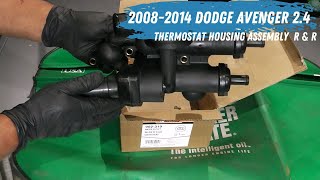
Typical fix: Replace the entire thermostat housing assembly. This part typically includes the thermostat(s), the housing, and often a new engine coolant temperature sensor and gasket. Given the high failure rate of the plastic, replacing the whole unit is the most reliable repair. Consider an upgraded aluminum housing for better durability. 🎬 Watch: Step-by-step 2.4L thermostat housing replacement guide
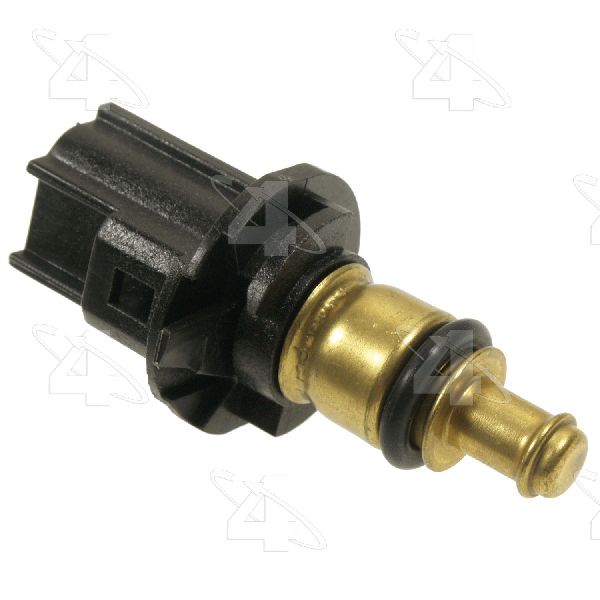
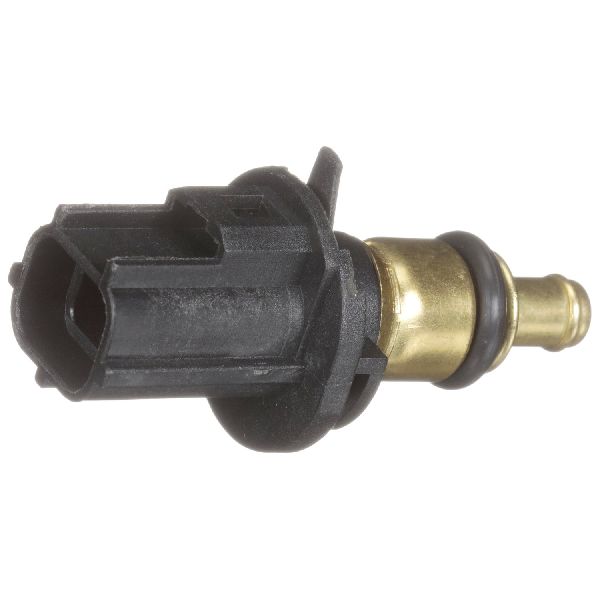
Est. part cost: $40 - $110 - Faulty Engine Coolant Temperature (ECT) Sensor 🟡 Medium Probability → Shop Engine Coolant Temperature Sensor The ECT sensor can fail over time, sending inaccurate readings to the PCM. While less common than the thermostat, it's a known failure point. In many cases, a new ECT sensor is included with the replacement thermostat housing assembly.
How to confirm: Use an OBD-II scanner with live data capability. Compare the ECT sensor reading to the ambient air temperature sensor reading on a cold engine; they should be very close (within 5°F). If the ECT reading is illogical (e.g., -40°F or 250°F on a cold engine), the sensor or its wiring is faulty.
Typical fix: Replace the Engine Coolant Temperature (ECT) sensor. On the 2.4L engine, it is located on the thermostat housing. Since the housing often needs to be replaced anyway, this is usually done at the same time.
Est. part cost: $15 - $40 - Low Engine Coolant Level ⚪ Low Probability The plastic thermostat housing itself is a common source of coolant leaks on this engine as it ages and becomes brittle.
How to confirm: Visually inspect the coolant reservoir and the radiator (only when the engine is completely cool). If the level is low, there is a leak in the system that needs to be found and repaired. Check for white or pink crusty residue around the thermostat housing.
Typical fix: Top off the coolant with the correct Mopar OAT or HOAT coolant and pressure test the cooling system to identify and repair any leaks from hoses, the radiator, water pump, or the thermostat housing itself.
Est. part cost: $15 - $30 for coolant
Rare But Worth Checking
- Cooling Fan Running Constantly: → Shop Engine Cooling Fan Blade If the electric cooling fan is stuck on, it can over-cool the engine, especially during highway driving in cooler weather. This is often caused by a failed fan relay or a faulty ECT sensor sending a fail-safe signal to the PCM.
- Wiring Issue to ECT Sensor: → Shop Engine Coolant Temperature Sensor The wiring or connector for the ECT sensor can become damaged, corroded, or shorted, leading to an incorrect signal being sent to the PCM. A visual inspection of the harness near the thermostat housing is recommended.
Diagnosis Steps
- Check for any other stored trouble codes.
- Inspect the engine coolant level in the reservoir and radiator (when the engine is cold). Top off if necessary with the correct Mopar-specified coolant.
- Visually inspect the thermostat housing, radiator, and all coolant hoses for any signs of leaks. Pay close attention to the seams of the plastic thermostat housing.
- Use an OBD-II scanner to monitor live data. Observe the Engine Coolant Temperature (ECT) reading as the engine warms up from a cold start. The temperature should rise steadily to around 195-205°F and then stabilize.
- If the temperature rises very slowly, struggles to reach 180°F, or drops significantly at highway speeds, the thermostat is most likely stuck open.
- If the temperature reading on the scanner is erratic or clearly incorrect (e.g., stuck at a very low or very high temperature), test the ECT sensor and its wiring. On a cold engine, the ECT reading should be within a few degrees of the Intake Air Temperature (IAT) sensor reading.
- If the coolant level was low, perform a cooling system pressure test to find the source of the leak.
- After repairs, clear the code and perform a drive cycle to ensure the problem is resolved.
Parts You'll Likely Need
- Engine Coolant Thermostat Housing Assembly
(OEM #68003582AB)— This is the most common cause of P0126 on the 2.4L World Engine. The original plastic housing becomes brittle and the integrated thermostat fails by sticking open. Replacing the entire assembly is the most reliable repair. Aftermarket aluminum versions are available for improved longevity.
Trusted brands: Mopar, Dorman (902-319), Gates, Motorad
OEM price range: $80-$120
Aftermarket price range: $40-$90 - Engine Coolant Temperature Sensor — If diagnostics point to an incorrect temperature reading rather than a slow warm-up, the ECT sensor is the likely culprit. Many thermostat housing assemblies include a new sensor, making separate purchase unnecessary in most cases.
Trusted brands: Mopar, NTK, Standard Motor Products
OEM price range: $30-$50
Aftermarket price range: $15-$40
Related Codes That Often Appear With This One
- P0128 — P0128 (Coolant Temperature Below Thermostat Regulating Temperature) is a very similar code. Both indicate the engine is not warming up correctly, and the root causes and diagnostic procedures are virtually identical. It's common to see either code for a stuck-open thermostat.
Platform-Specific Known Issues
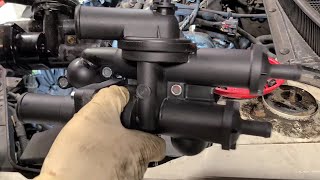
- Access to the thermostat housing can be tight, with some owners reporting difficulty reaching one of the lower mounting bolts without removing the airbox assembly. 🎬 Watch: Replacing the dual thermostats on this 2.4L engine
Mechanic-Grade Diagnostic Values
- ECT Sensor Resistance (cold engine) — expected: 2,000 - 3,000 Ohms (Ω) at 20°C / 68°F.. Failure: A resistance value near 0 Ohms (short) or an infinite reading (open circuit).
- ECT Sensor Resistance (hot engine) — expected: 200 - 300 Ohms (Ω) at 90°C / 194°F.. Failure: Resistance fails to drop as the engine warms up.
- ECT Signal Wire (K2) Voltage, Key On Engine Off — expected: Approximately 2.0V to 3.0V on a cold start.. Failure: Voltage near 0V (short to ground) or 5.0V (open circuit).
- ECT Signal Circuit (K2) to Ground Resistance — expected: Above 100 ohms.. Failure: Resistance below 100 ohms indicates a short to ground in the signal wire.
- ECT Signal Circuit (K2) to Sensor Ground Circuit (K900) Resistance — expected: Above 5.0 ohms.. Failure: Resistance below 5.0 ohms indicates a short between the signal and ground wires.
Wiring & Ground Locations
- ECT Sensor Signal Circuit — Designated as circuit (K2), it runs from the ECT sensor harness connector to the Powertrain Control Module (PCM).. An open, short to ground, or high resistance in this wire will cause the PCM to receive an incorrect temperature reading, which can lead to a P0126 or related temperature codes like P0117/P0118.
- ECT Sensor Ground Circuit — Designated as circuit (K900), it provides the ground path for the sensor back to the PCM.. A poor ground connection on this circuit will skew the sensor's voltage reading, causing the PCM to misinterpret the engine's actual coolant temperature.
- G102 — A primary engine ground point located on the left side of the engine compartment, often near the strut tower.. While the ECT sensor grounds through the PCM, a poor main engine ground at G102 can introduce electrical noise and cause erratic behavior in multiple sensors, potentially contributing to incorrect readings.
Real Owner Repair Stories
- Advance Auto Parts Reviewer (2012 Chrysler 200 2.4L (same engine and part)) — Check Engine Light with code P0128 (functionally identical to P0126 for this issue).
❌ Tried (didn't work) The initial problem was a cracked original thermostat housing.
✅ What actually fixed it The owner replaced the cracked housing with a Dorman 902-319 aftermarket unit. However, one month later the P0128 code returned. The cause was a premature failure of the 170-degree thermostat included in the Dorman kit. The owner fixed it by reinstalling the original Mopar thermostat into the Dorman housing. The reviewer also noted the included gaskets were already deforming after only one month.
OEM Part Supersession History
68003582AB→68003582AC— Standard part revision by the manufacturer, likely for minor improvements in material or design.
Heads up: The parts are interchangeable, with 68003582AC being the newer version.
Model Year Variations Within This Range
- 2008 only: When replacing the thermostat housing on a 2008 model, some parts suppliers note that it requires the use of heater hoses designed for the 2009 and newer models.
Diagnostic Flowchart
Other Known Issues on This Vehicle
Issues unrelated to this code that are worth knowing about as an owner of this generation:
- Electronic Throttle Body Failure 🔴 High — Common failure point. Can occur at various mileages, often leading to limp mode.
- Alternator Failure 🟠 Medium — A frequent complaint, particularly on earlier models of the generation. Can lead to a no-start condition.
- Premature Brake Wear 🟡 Low — Commonly reported by owners throughout the vehicle's life.
- Engine Oil Pressure Loss / Engine Failure 🔴 High — Affects specific 2013 models, but is a critical issue. (Ref: Recall N52)
- Transmission Shifting Issues 🟠 Medium — More prevalent in the 2008 model year, but reported across the generation.
Used vs. New Parts: Buying Guide for This Vehicle
When a used part is the smart pick: For this specific repair, buying a used OEM plastic thermostat housing from a junkyard is NOT recommended. The original plastic part is the primary point of failure due to becoming brittle from heat and age. A used part will have the same inherent weakness and is likely to fail soon after installation.
What to inspect on the donor part:
- Not applicable, as used plastic housings should be avoided.
OEM-only on this vehicle (don't cheap out):
- While the entire housing assembly is available from many brands, some owners have reported premature failure of the thermostats included in aftermarket kits. If using an aftermarket housing, consider using the original Mopar thermostat if it is still functional or purchasing a new Mopar thermostat separately for better reliability.
Aftermarket brands forum-validated for this vehicle:
- Upgraded cast aluminum housings are widely available from various brands on platforms like eBay and Amazon and are considered a significant improvement over the OEM plastic design for preventing cracks and leaks.
Brands owners have reported issues with on this vehicle:
- Dorman (plastic version 902-319): While a popular and readily available option, there are multiple owner reports of the included thermostats failing prematurely, causing the P0128/P0126 code to return within a short period. The included gaskets have also been reported to deform quickly.
Real Owner Stories
Aggregated from forums and TSBs cited above. Mileages and costs reflect what owners reported in those sources.
2008-2014 Dodge Avenger 2.4L
Symptoms: Owners noted tight access to the housing and the benefit of buying an assembly that includes the sensor and gasket.
What fixed it: Replacing the entire thermostat housing assembly.
Source hint: dodge-avenger.com
2008-2014 Dodge Avenger 2.4L
Symptoms: Numerous threads discuss cooling issues and codes like P0128.
What fixed it: Replacing the entire thermostat housing as the definitive fix.
Source hint: avengerforumz.com
Related OBD-II Codes
Frequently Asked Questions
Is there a recall for the 2.4L engine in my 2013 Dodge Avenger regarding engine failure?
Why is my 2.4L Avenger's heater blowing cool air while idling when I have a P0126 code?
Should I just replace the thermostat or the whole housing on my Dodge Avenger?
Can I use any coolant to top off my Avenger after fixing the thermostat housing leak?
I'm having trouble reaching the bolts to replace the thermostat housing; is this normal?
Could my P0126 code be related to the 'limp mode' I'm experiencing?
Helpful Videos
We Have This Part in Stock


The information in this article is provided for general reference and educational purposes only. Vehicle specifications, procedures, and part compatibility can vary by production date, trim level, and region. Always consult your vehicle's factory service manual and verify part numbers before purchasing or performing repairs. Safety-critical components such as airbags, seat belts, and braking systems should be installed by a qualified professional.
- Dodge Avenger:
- 🧭 Diagnostic Flowchart
- 🎬 Helpful Videos
- 🛍️ Shop This Part
- What's Unique About the 2008-2014 Dodge Avenger
- Symptoms You May Notice
- Most Likely Causes
- Rare But Worth Checking
- Diagnosis Steps
- Parts You'll Likely Need
- Related Codes That Often Appear With This One
- Platform-Specific Known Issues
- Mechanic-Grade Diagnostic Values
- Wiring & Ground Locations
- Real Owner Repair Stories
- OEM Part Supersession History
- Model Year Variations Within This Range
- Other Known Issues on This Vehicle
- Used vs. New Parts: Buying Guide for This Vehicle
- Real Owner Stories
- 2008-2014 Dodge Avenger 2.4L
- 2008-2014 Dodge Avenger 2.4L
- Related OBD-II Codes
- Frequently Asked Questions
- 🎟️ Get 5% Off