

P0126 on 2013-2018 Ford C-Max Hybrid: Causes and Fixes for Insufficient Coolant Temperature
On a 2013-2018 Ford C-Max Hybrid, code P0126 is almost always caused by a faulty engine thermostat that is stuck open. This prevents the engine from reaching its optimal operating temperature. Replacing the thermostat and its housing is the most common and effective fix. Expect the OEM part to cost between $40 and $100.
- Code P0126 on your Ford C-Max Hybrid most likely means you need a new thermostat.
- It is safe to drive for a short time, but you should get it fixed to avoid poor fuel economy and potential long-term engine wear.
- The repair is straightforward for a DIYer with moderate experience; the main part needed is a thermostat housing assembly.
- Always use the correct type of Ford engine coolant when refilling the system.
What's Unique About the 2013-2018 Ford C-Max
The Ford C-Max uses a 2.0L Atkinson-cycle gasoline engine paired with an electric motor. While the hybrid system has its own cooling needs, this code specifically relates to the gasoline engine's cooling system. Because the gasoline engine may shut off frequently in city driving (allowing the electric motor to take over), it can sometimes take longer for the driver to notice warm-up issues like a lack of cabin heat. However, the fundamental cause of P0126 on this vehicle is the same as on its non-hybrid platform mates (Ford Fusion, Lincoln MKZ), most often involving a mechanical thermostat that has failed in the open position.
Symptoms You May Notice
- Check Engine Light is on
- Engine takes a very long time to warm up, or the temperature gauge never reaches the middle
- Heater blows lukewarm or cold air, especially when idling or at lower speeds.
- Reduced fuel economy.
- Temperature gauge on the dashboard stays low or drops at highway speeds
- Replacing the Engine Coolant Temperature (ECT) sensor when the thermostat is actually the problem. It's crucial to diagnose the thermostat's function by monitoring warm-up times and temperature stability at speed before replacing the sensor.
Most Likely Causes
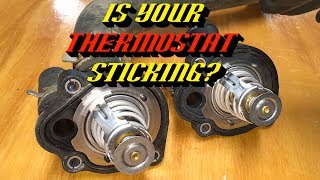
- Engine Thermostat Stuck Open 🔴 High Probability → Shop Integrated Thermostat Housing Assembly This is a common failure point for most modern vehicles, including the C-Max and its platform mates. The thermostat is a mechanical valve designed to fail in the open position as a safety measure to prevent overheating. When stuck open, it allows coolant to circulate to the radiator continuously, preventing the engine from reaching operating temperature.
How to confirm: Monitor the engine coolant temperature using a scan tool's live data. If the temperature rises very slowly, never reaches the target of ~195-215°F, or drops significantly at highway speeds, the thermostat is almost certainly stuck open. You can also feel the upper radiator hose shortly after a cold start; if it gets warm right away, coolant is flowing prematurely, confirming an open thermostat.
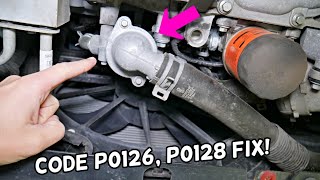
Typical fix: Replace the engine thermostat and gasket/housing. It is strongly recommended to replace the entire thermostat housing assembly, not just the thermostat itself. 🎬 Watch: How to replace the thermostat on a C-Max It is also required to drain and refill the engine coolant at the same time.
Est. part cost: $40-$100 - Faulty Engine Coolant Temperature (ECT) Sensor 🟡 Medium Probability → Shop Engine Coolant Temperature Sensor While less common than thermostat failure, ECT sensors can degrade over time, sending inaccurate readings to the PCM.
How to confirm: Use a scan tool to compare the ECT sensor reading to the ambient air temperature sensor reading on a cold engine (after sitting overnight); they should be within a few degrees of each other. If the ECT reading is illogical (e.g., -40°F on a warm day), the sensor is bad. You can also test the sensor's resistance with a multimeter and compare it to the specifications in a service manual.
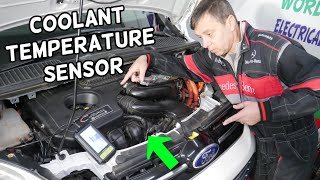
Typical fix: Replace the Engine Coolant Temperature (ECT) sensor. On the 2.0L Hybrid engine, the sensor is typically located on the cylinder head, often near the thermostat housing. 🎬 Watch: Locate the coolant temperature sensor on your hybrid
Est. part cost: $25-$60 - Low Engine Coolant Level ⚪ Low Probability
How to confirm: Visually inspect the coolant level in the degas bottle (coolant reservoir) when the engine is cold. If the level is below the 'MIN' line, it is low. Also, check for any visible signs of coolant leaks on the ground or around the engine bay, particularly near the water pump or thermostat housing.
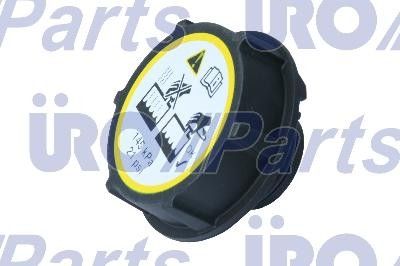
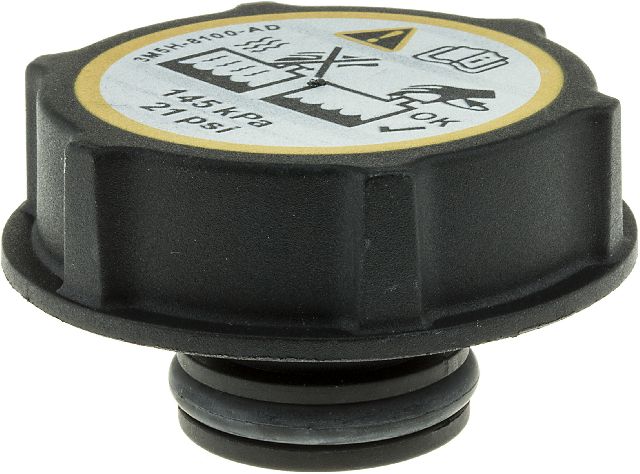
Typical fix: Top off the coolant with the correct Ford-specified type (Motorcraft Orange VC-3-D or Yellow VC-13-G, depending on the exact model year and build date - check your owner's manual or the coolant reservoir cap). If the level drops again, you must find and repair the source of the leak.
Est. part cost: $20-$40 for a gallon of coolant
Rare But Worth Checking
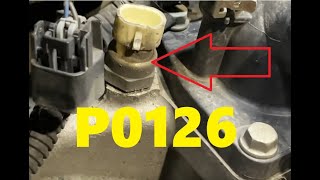
- Air in the Cooling System: If the cooling system was recently serviced (e.g., hose or radiator replacement), an air pocket could be trapped. This can cause erratic temperature readings or prevent proper circulation. The system must be properly bled to remove all air. 🎬 Watch: Understand the causes and fixes for code P0126
- Cooling Fan Stuck On: → Shop Engine Cooling Fan Blade If the electric cooling fan runs continuously at high speed from a cold start, it can over-cool the engine, preventing it from reaching operating temperature. This is usually caused by a failed fan relay, fan control module, or a short in the wiring.
- Wiring Issue to ECT Sensor: → Shop Engine Coolant Temperature Sensor A damaged, corroded, or shorted wire or connector in the ECT sensor circuit can cause the PCM to receive an incorrect, low-temperature signal, triggering P0126 even if the sensor and thermostat are functional.
Diagnosis Steps
- Check for other stored DTCs. Address any other codes first.
- With a cold engine, check the coolant level in the reservoir. Ensure it is between the MIN and MAX lines.
- Use an OBD-II scanner with live data capability. Start the cold engine and monitor the Engine Coolant Temperature (ECT) reading.
- Observe the temperature as you drive. It should steadily climb to around 195-215°F and remain stable. If it takes more than 15-20 minutes of driving to reach this temperature, or if the temperature drops significantly while driving at highway speeds, the thermostat is very likely stuck open.
- If the temperature reading on the scanner seems incorrect or doesn't change, the ECT sensor itself or its wiring may be faulty. Check the wiring for damage. Compare the cold ECT reading to the Intake Air Temperature (IAT) reading; they should be within a few degrees of each other.
- If the thermostat and ECT sensor are confirmed to be working, check for a cooling fan that is running constantly, even when the engine is cold.
- If the system was recently serviced, bleed the cooling system according to the manufacturer's procedure to remove any trapped air pockets. Failure to do so can cause overheating in parts of the engine despite the P0126 code.
Parts You'll Likely Need
- Engine Coolant Thermostat Assembly
(OEM #RT-1248 (Motorcraft) or DS7Z-8575-A)— This is the most common cause of P0126, as the internal valve gets stuck in the open position, preventing the engine from warming up properly. The part is sold as a complete housing assembly.
Trusted brands: Motorcraft, Gates, Stant
OEM price range: $60-$120
Aftermarket price range: $40-$80 - Engine Coolant Temperature (ECT) Sensor — This sensor can fail and send incorrect temperature readings to the computer, triggering the code even if the engine temperature is normal.
Trusted brands: Motorcraft, Bosch, Delphi
OEM price range: $40-$70
Aftermarket price range: $25-$50 - Engine Coolant
(OEM #Motorcraft VC-3-D (Orange) or VC-13-G (Yellow))— The cooling system must be drained to replace the thermostat, so a coolant refill is required. It is critical to use the Ford-specified type to prevent cooling system damage. Check your manual, as Ford transitioned from Orange to Yellow coolant during this period.
Trusted brands: Motorcraft
OEM price range: $25-$40
Related Codes That Often Appear With This One
- P0128 — P0128 (Coolant Temperature Below Thermostat Regulating Temperature) is a very similar code that often appears for the exact same reasons. Both point to the engine running too cold, and the root cause is almost always a stuck-open thermostat.
Mechanic-Grade Diagnostic Values
- Engine Coolant Temperature (ECT) Sensor Resistance — expected: 2,000 - 3,000 Ohms (Ω) at 68°F (20°C).. Failure: Resistance is near zero (shorted) or infinite (open circuit).
- Engine Coolant Temperature (ECT) Sensor Resistance (Hot) — expected: 200 - 300 Ohms (Ω) at ~200°F (93°C).. Failure: Resistance does not drop significantly as the engine warms up.
- Engine Coolant Temperature (ECT) Sensor Signal Voltage (Cold Engine) — expected: ~2.0V - 3.0V at ~68°F (20°C).. Failure: Voltage is stuck near 5.0V (open circuit) or 0V (short to ground).
- Engine Coolant Temperature (ECT) Sensor Signal Voltage (Hot Engine) — expected: ~0.5V at operating temperature (~195°F / 90°C).. Failure: Voltage does not drop as the engine warms, or provides an erratic reading.
Wiring & Ground Locations
- Engine Coolant Temperature (ECT) Sensor — On the top of the cylinder head, located between ignition coils for cylinders #3 and #4.. This is the primary sensor the PCM uses to determine if the engine is reaching operating temperature. A faulty sensor or bad connection here will directly cause this code.
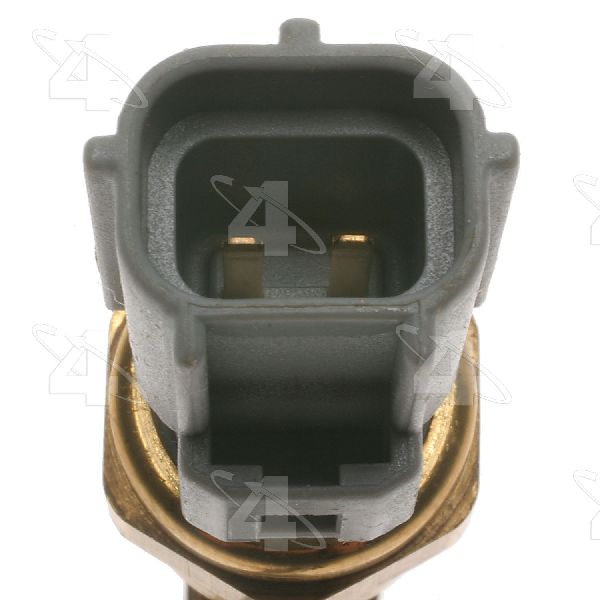
- ECT Sensor Connector (C1064) — Connects to the ECT sensor between cylinders #3 and #4. It is a 2-pin connector.. The connector is a common point of failure due to heat and vibration. Corrosion or damage can cause incorrect readings. The wires are typically 20 AWG gauge; one wire is Yellow, the other is Green with a White trace.
- Ground Point G104 / G105 — These are primary engine/transmission ground points. G104 is located at the rear of the transmission, and G105 is on the engine block.. A poor ground connection for the engine sensors can cause erratic or incorrect readings, leading to false codes. While not a primary cause, it should be checked if sensor and thermostat replacement do not solve the issue.
- Secondary ECT Sensor (Energi models only) — On the C-Max Energi (plug-in hybrid) model, a second ECT sensor is located on the heater hose line on the back side of the engine.. While P0126 typically relates to the main engine warm-up, a fault in this secondary sensor could potentially contribute to cooling system codes on Energi models.
Real Owner Repair Stories
- YouTube Channel 'Electrical Car Repair LIVE' (2013 Ford C-Max Hybrid) — Check Engine Light with codes P0126 and P0128.
❌ Tried (didn't work) The video focuses on direct diagnosis, warning against misdiagnosis.
✅ What actually fixed it The video identifies the stuck-open thermostat as the direct cause and demonstrates its location on the 2.0L Hybrid engine, recommending replacement of the entire thermostat housing assembly.
OEM Part Supersession History
Motorcraft Orange Antifreeze/Coolant (VC-3-D)→Motorcraft Yellow Antifreeze/Coolant (VC-13-G)— The original Orange coolant (an OAT formula similar to Dex-Cool) was phased out due to issues like potential clogging of heater cores. The new Yellow coolant is a Phosphated OAT (P-OAT) formula.
Heads up: The new Motorcraft Yellow coolant IS backward-compatible and can be used to top-off or completely replace the old Orange coolant without a flush, provided the system is not contaminated.
Model Year Variations Within This Range
- 2013-~2018: Vehicles in this range were factory-filled with Motorcraft Orange Antifreeze/Coolant (spec WSS-M97B44-D).
- Post-~2018/Service Replacement: Later models and all service replacements now use Motorcraft Yellow Antifreeze/Coolant (spec WSS-M97B57-A2). This coolant is backward-compatible. The Yellow coolant is concentrated and must be mixed 50/50 with distilled water, whereas the Orange was often sold pre-diluted.
Diagnostic Flowchart
Other Known Issues on This Vehicle
Issues unrelated to this code that are worth knowing about as an owner of this generation:
- Transmission Failure / Bearing Noise 🔴 High — A significant number of early-model (2013-2014) C-Max and Fusion Hybrids experienced premature transfer shaft bearing failure in the HF35 transmission, leading to grinding/thumping noises and eventual transmission replacement. (Ref: Ford issued a Customer Satisfaction Program for this issue, but it was not a formal recall.)
- 12-Volt Battery Parasitic Drain 🟠 Medium — Widespread reports of the 12v battery dying unexpectedly, even after short periods of non-use. This is often attributed to software glitches in the SYNC system or other modules failing to go to sleep properly. (Ref: Several TSBs exist related to software updates for various modules to address parasitic drains.)
- Shift Cable Bushing Failure 🔴 High — The bushing that attaches the shifter cable to the transmission can degrade and detach, preventing the vehicle from shifting into the intended gear or causing it to not be in Park when indicated. (Ref: Ford Recall 22S43)
- Electronic Power Steering (EPAS) Failure 🔴 High — Some owners experience a sudden loss of power steering assist, sometimes intermittently at startup or completely while driving. This is often caused by an internal failure of the electronic steering rack. (Ref: While recalls existed for other Ford models with similar EPAS systems, the C-Max was often not included, leading to costly owner repairs.)
Used vs. New Parts: Buying Guide for This Vehicle
When a used part is the smart pick: For this repair, using used parts is generally not recommended. The primary failure part, the thermostat, is a wear item with a plastic housing that becomes brittle. A used sensor (ECT) is also a risk for a low-cost part. A used coolant reservoir is acceptable if the original is cracked, but it's not a direct cause of P0126.
Donor-vehicle mileage cap: roughly under 50000 miles for the part to have meaningful remaining life.
What to inspect on the donor part:
- For a thermostat: Do not buy used.
- For an ECT sensor: Do not buy used.
- For a wiring pigtail/connector: Ensure there is no corrosion on the pins, the locking tab is intact, and there are several inches of wire to allow for a proper splice.
OEM-only on this vehicle (don't cheap out):
- Engine Coolant: Strongly recommend using only Motorcraft-specified Orange (VC-3-D) or Yellow (VC-13-G) coolant. Using generic 'all makes, all models' coolant can lead to premature component failure or corrosion.
Aftermarket brands forum-validated for this vehicle:
- Thermostat: Motorcraft (OEM), Gates, Stant
- ECT Sensor: Motorcraft (OEM), Bosch, Delphi, Standard Motor Products (SMP)
Brands owners have reported issues with on this vehicle:
- No-name, unbranded thermostat assemblies from online marketplaces should be avoided, as they have a high failure rate (either failing open quickly or, more dangerously, failing closed).
Real Owner Stories
Aggregated from forums and TSBs cited above. Mileages and costs reflect what owners reported in those sources.
2013 Ford C-Max Hybrid 2.0L
Symptoms: The vehicle experienced a transmission failure involving the transfer shaft bearing, which caused grinding and thumping noises.
What fixed it: Transmission replacement.
Source hint: Reddit r/cmaxhybrid/comments/s7v91k/my_daughters_2013_ford_c_max_and_its_transmission/
Documented NHTSA Reports
Ford Hybrid Platform Reference
Symptoms: An owner reported a "Coolant Thermostat Temperature Below Thermostat Regulating" condition occurring twice, alongside other powertrain control module malfunctions.
What fixed it: NHTSA ODI #10899284 describes this code appearing in conjunction with engine control module and warning output circuit issues.
Related OBD-II Codes
Frequently Asked Questions
My 2013 C-Max is showing P0126; is there a recall for the cooling system?
Can I use any 'all-makes' coolant to top off my C-Max Hybrid if the level is low?
The heater in my C-Max is blowing cold air at stoplights. Is this related to P0126?
Should I just replace the thermostat or the whole housing on my 2.0L Hybrid engine?
My temperature gauge drops when I'm on the highway. Does this confirm a bad sensor?
Is the P0126 issue common to the Fusion Hybrid as well?
Helpful Videos
We Have This Part in Stock


The information in this article is provided for general reference and educational purposes only. Vehicle specifications, procedures, and part compatibility can vary by production date, trim level, and region. Always consult your vehicle's factory service manual and verify part numbers before purchasing or performing repairs. Safety-critical components such as airbags, seat belts, and braking systems should be installed by a qualified professional.
- Ford C-Max:
- 🧭 Diagnostic Flowchart
- 🎬 Helpful Videos
- 🛍️ Shop This Part
- What's Unique About the 2013-2018 Ford C-Max
- Symptoms You May Notice
- Most Likely Causes
- Rare But Worth Checking
- Diagnosis Steps
- Parts You'll Likely Need
- Related Codes That Often Appear With This One
- Mechanic-Grade Diagnostic Values
- Wiring & Ground Locations
- Real Owner Repair Stories
- OEM Part Supersession History
- Model Year Variations Within This Range
- Other Known Issues on This Vehicle
- Used vs. New Parts: Buying Guide for This Vehicle
- Real Owner Stories
- 2013 Ford C-Max Hybrid 2.0L
- Documented NHTSA Reports
- Ford Hybrid Platform Reference
- Related OBD-II Codes
- Frequently Asked Questions
- 🎟️ Get 5% Off