

P0126 on 2012-2018 Ford Focus 2.0L: Insufficient Coolant Temp Causes and Fixes
On a 2012-2018 Ford Focus with the 2.0L GDI engine, code P0126 is almost always caused by a thermostat stuck in the open position. The fix is to replace the entire thermostat and housing assembly. The OEM Motorcraft part (CP9Z-8592-G / RT-1219) costs about $50-$85 and is a moderately difficult DIY job due to its location under the intake manifold, making it a 2-3 hour job.
- P0126 on a 2012-2018 Focus almost always points to a stuck-open thermostat.
- Symptoms include a low-reading temperature gauge, poor cabin heat, and reduced fuel economy.
- While the thermostat part is inexpensive, its location under the intake manifold makes replacement a 2-3 hour job.
- Before replacing parts, use a scan tool to watch the coolant temperature rise from a cold start to confirm the diagnosis.
- Always use the correct Ford-specified orange coolant (Motorcraft VC-3-D) when refilling the system.
What's Unique About the 2012-2018 Ford Focus
On the third-generation Ford Focus with the 2.0L GDI engine, this code is a very common and well-documented issue. The overwhelming cause is a failed thermostat that gets stuck open. Unlike many other cars where the thermostat is easily accessible, on this specific engine it is buried under the intake manifold, above the alternator, making the replacement more labor-intensive. Additionally, this engine uses a Cylinder Head Temperature (CHT) sensor instead of a traditional screw-in Engine Coolant Temperature (ECT) sensor, though its function in triggering this code is the same.
Symptoms You May Notice
- Check Engine Light is illuminated.
- Temperature gauge on the dashboard reads lower than normal or never reaches the middle.
- Temperature gauge may drop towards 'Cold' when driving at highway speeds.
- Heater blows lukewarm or cold air, especially in colder weather.
- Noticeable decrease in fuel economy.
- Engine fan may run constantly, even when the engine is not hot.
- Replacing the CHT sensor when the thermostat is the actual cause. Because the thermostat is the most common failure and a more involved repair, it's crucial to diagnose it properly with a scan tool before replacing the more easily accessible sensor.
Most Likely Causes
- Thermostat Stuck Open 🔴 High Probability → Shop Integrated Thermostat Housing Assembly This is a widely documented failure point for the 2.0L GDI engine in this platform. The thermostat fails in the open position, allowing coolant to constantly circulate through the radiator, preventing the engine from warming up properly. Ford has released multiple revisions of the part to improve durability.
How to confirm: Use a scan tool to monitor coolant temperature (CHT). On a cold start, the temperature should rise steadily to ~195-200°F and then dip slightly as the thermostat opens. If the temperature rises very slowly, never reaches operating temp, or drops significantly at highway speeds, the thermostat is almost certainly stuck open.
Typical fix: Replace the entire thermostat and housing assembly. Due to its location under the intake manifold, this is a more involved job than on many other vehicles, requiring removal of the air intake components for access. 🎬 See a video on locating and replacing the thermostat It is recommended to use the latest OEM part revision for longevity.
Est. part cost: $50-$85 - Faulty Cylinder Head Temperature (CHT) Sensor 🟡 Medium Probability Sensors are a common failure item on any modern vehicle. If the sensor sends an inaccurately low temperature reading to the computer, the PCM will believe the engine isn't warming up, even if it is. This is the second most likely cause after the thermostat.
How to confirm: With a cold engine, use a scan tool to compare the CHT reading with the Intake Air Temperature (IAT) reading. They should be within a few degrees of each other. If the CHT reads significantly lower or shows an erratic value, the sensor is likely faulty.
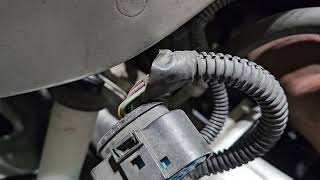
Typical fix: Replace the CHT sensor. It is located on the back of the cylinder head, and access requires removing the air filter housing and intake ducting.
Est. part cost: $25-$60 - Low Engine Coolant Level ⚪ Low Probability
How to confirm: Visually inspect the coolant reservoir. When the engine is cold, the level should be between the 'MIN' and 'MAX' lines. If it's low, the system may have a leak, which needs to be addressed.
Typical fix: Top off the coolant with the correct Ford-specified type (Motorcraft Orange or the backward-compatible Yellow) and bleed the system of any air. Find and repair the source of any leaks.
Est. part cost: $20-$30 for coolant
Rare But Worth Checking
- Wiring Harness Chafing: On 2012-2014 models, Ford issued TSB 18-2062 for a wiring harness that can chafe against the intake manifold. While P0126 isn't a primary listed code, the TSB addresses various drivability issues and DTCs caused by damaged wiring. The CHT sensor circuit is in this harness and could potentially be affected. If the thermostat and sensor have been replaced and the code persists, this wiring harness should be inspected for damage.
Diagnosis Steps
- Check for other Diagnostic Trouble Codes (DTCs) to see if other issues are present.
- With the engine cold, check the coolant level in the expansion tank. Ensure it is between the MIN and MAX lines.
- Connect a scan tool and monitor the live data for the Cylinder Head Temperature (CHT).
- Compare the CHT reading to the Intake Air Temperature (IAT) reading on a cold engine. They should be within 5°F (3°C) of each other.
- Start the engine and continue to monitor the CHT. Watch for a smooth, steady increase in temperature.
- If the temperature rises very slowly, or if you drive the vehicle and the temperature drops at highway speeds, the thermostat is almost certainly stuck open and needs to be replaced.
- If the temperature reading is erratic, stays at a very low fixed value, or doesn't match ambient temperature when cold, suspect a faulty CHT sensor or a wiring issue.
- For 2012-2014 models, if other diagnostics are inconclusive, inspect the engine wiring harness near the intake manifold for signs of chafing, as noted in TSB 18-2062.
Parts You'll Likely Need
- Thermostat and Housing Assembly
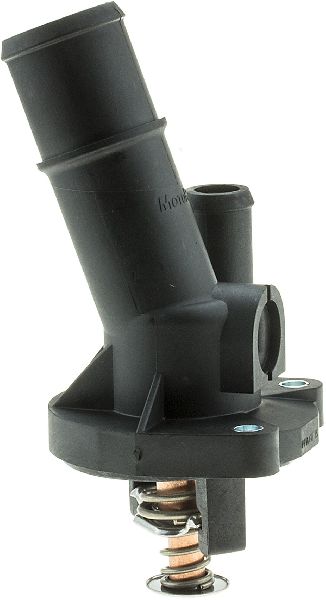
(OEM #CP9Z-8592-G (Motorcraft RT-1219))— This is the most common failure part for code P0126 on this vehicle. The thermostat gets stuck open, preventing the engine from reaching operating temperature. The latest 'G' revision is recommended.
Trusted brands: Motorcraft, Dorman, Gates
OEM price range: $50-$85
Aftermarket price range: $20-$50 - Cylinder Head Temperature (CHT) Sensor
(OEM #CM5Z-12A648-A (Motorcraft DY-1162))— This is the second most likely cause. A faulty sensor can send incorrect temperature data to the PCM, triggering the code.
Trusted brands: Motorcraft, Bosch, NTK
OEM price range: $40-$60
Aftermarket price range: $25-$45 - Ford Motorcraft Yellow Antifreeze/Coolant
(OEM #VC-13-G)— The cooling system will need to be drained and refilled when replacing the thermostat. Ford has superseded the original Orange coolant (VC-3-D) with the new Yellow P-OAT coolant, which is backward-compatible.
Trusted brands: Motorcraft
OEM price range: $20-$30 per gallon
Related Codes That Often Appear With This One
- P0128 — P0128 (Coolant Temperature Below Thermostat Regulating Temperature) is very similar to P0126. Both indicate the engine is running too cool, and they share the same common causes, often appearing together or interchangeably depending on the specific conditions met. 🎬 Watch how to diagnose and fix these codes
Technical Service Bulletins (TSBs) & Recalls
- TSB 18-2062: For 2012-2014 Focus 2.0L GDI models, addresses potential for the engine wiring harness to chafe against the intake manifold, which can damage various sensor circuits. While not listing P0126 specifically, it covers DTCs for other sensors in the same harness and is relevant for hard-to-diagnose electrical faults.
Platform-Specific Known Issues
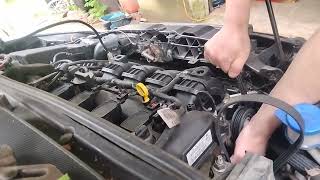
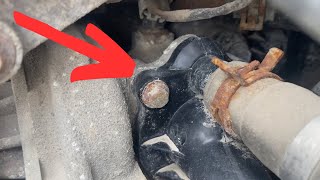
- DIY Repair Experience: An owner on YouTube documented the replacement process, showing the tight access behind the headlight and under the intake manifold. They noted that one of the three housing bolts is best accessed from underneath the car. It is also critical to protect the alternator below the thermostat housing from coolant spills during the repair. 🎬 Watch this step-by-step thermostat replacement walkthrough
- Coolant Bleeding: After replacing the thermostat, it is crucial to properly bleed the cooling system to remove air pockets. This involves filling the reservoir, running the engine with the heater on high, and topping off the coolant as the thermostat opens and circulates the fluid.
Mechanic-Grade Diagnostic Values
- CHT Sensor Signal Voltage (at sensor, engine running) — expected: ~2.03 Volts at 194°F (90°C). Failure: Voltage that does not correspond to known temperature values, or is erratic. A voltage reading greater than 4.6V typically indicates an open circuit.
- CHT Sensor VREF (at connector, unplugged, Key On) — expected: ~5.0 Volts. Failure: 0 volts or significantly less than 5.0 volts indicates a problem in the wiring or the PCM's 5V reference circuit.
- CHT Sensor Ground Circuit Voltage Drop (at connector, Key On) — expected: Below 100mV (0.1V). Failure: Voltage significantly higher than 100mV indicates high resistance in the ground circuit back to the PCM.
Hidden / Shadow Codes Worth Checking
- P0126:00: This is the ISO/SAE controlled version of the P0126 code, with the ':00' being a Failure Type Byte (FTB). While not a 'hidden' code, its presence on a dealer-level scanner like Ford IDS confirms the specific fault type and that no sub-type has been identified. (see via Ford IDS, MDARS, or other professional-grade scan tools.)
Scan Tool Commands That Help
- Ford IDS / MDARS: PCM Reprogramming — A Mazda TSB for a similar engine and code P0126 notes that a deformed coolant control valve can cause the issue. The fix involves replacing the valve and reprogramming the PCM with updated software to prevent reoccurrence. This may be applicable if the thermostat and sensor have been replaced without success.
Wiring & Ground Locations
- G104 — A primary engine harness ground point bolted to the chassis on the left front side of the engine compartment, often located underneath the air filter box assembly.. This ground is shared by multiple engine sensors. A loose or corroded connection at G104 can cause erratic sensor readings, including for the CHT sensor, leading to incorrect temperature data being sent to the PCM.
- CHT Sensor Connector — On the back of the cylinder head, near the thermostat housing. Access requires removing the air intake ducting.. This is the primary connection point for testing the CHT sensor circuit. The connector itself or its wiring can become damaged, causing an open or short that mimics a failed sensor.
Real Owner Repair Stories
- YouTube channel 'Electrical Car Repair LIVE' (2013 Ford Focus 2.0L) — Check Engine Light with codes P0126 and P0128.
❌ Tried (didn't work) Initially, the owner replaced the thermostat assembly, which is the most common cause.
✅ What actually fixed it When the code returned after replacing the thermostat and bleeding the system, the owner then replaced the Cylinder Head Temperature (CHT) sensor. This resolved the code, indicating the sensor was the secondary failure point. - YouTube channel 'GTSAM' (2011 Ford Focus (similar 2.0L engine design)) — Temperature gauge dropping out completely then returning, A/C cutting out, and a Check Engine Light.
✅ What actually fixed it The problem was a failed CHT sensor. The video highlights a critical tool requirement: an extra-deep 19mm socket is necessary to remove and install the sensor because of its long body. A standard deep socket is not long enough. - NHTSA ODI #10899284 — An owner reported a "Coolant Thermostat Temperature Below Thermostat Regulating" condition twice, with code P0126 appearing alongside other powertrain control module concerns.
"I Checked Everything" — The Actual Cause
- For code P0126, a common diagnostic dead-end occurs when a technician replaces the thermostat (the most likely cause) but the code returns. In these cases, the fault is almost always the next component in the chain: the Cylinder Head Temperature (CHT) sensor providing an inaccurate reading, or a fault in the sensor's wiring/connector. Verifying the CHT sensor's output with a scan tool or multimeter is the crucial next step before suspecting a larger issue.
OEM Part Supersession History
CP9Z-8592-A/B/C (Implied)→CP9Z-8592-G (Motorcraft RT-1219)— Ford has released multiple revisions of the thermostat housing assembly to improve durability and prevent the common 'stuck open' failure.
Heads up: While earlier versions will physically fit, the latest 'G' revision is strongly recommended for longevity. Using an older part from new-old-stock or a salvage yard risks experiencing the same failure prematurely.
Diagnostic Flowchart
Other Known Issues on This Vehicle
Issues unrelated to this code that are worth knowing about as an owner of this generation:
- DPS6 PowerShift Dual-Clutch Transmission Failure 🔴 High — Extremely common across all model years (2012-2018). Issues include shuddering, hesitation, delayed shifts, and complete failure. (Ref: Multiple lawsuits and extended warranties (e.g., 14M01, 14M02) were issued, but problems persist even on later models.)
- Faulty Canister Purge Valve (CPV) 🟠 Medium — Very common, leading to rough idle, stalling (especially after refueling), and difficulty starting. (Ref: Subject of recalls (e.g., 18S32, 19S22) and a customer satisfaction program (24N07) for replacement.)
- Premature Engine Mount Failure 🟠 Medium — The passenger-side hydraulic engine mount is known to fail prematurely, often before 50,000 miles, causing excessive vibration at idle and noise in the cabin.
- Electronic Power Steering Assist Failure 🔴 High — Some owners report a sudden loss of power steering assist, accompanied by a warning message. This can happen intermittently or become permanent. (Ref: No widespread recall, but a known issue. Repair often requires replacing the entire steering rack.)
Used vs. New Parts: Buying Guide for This Vehicle
When a used part is the smart pick: For this specific repair, using a used part is generally not recommended. The thermostat and CHT sensor are high-failure, low-cost wear items. The significant labor required to access the thermostat housing makes installing a used part with unknown remaining life a poor value proposition.
Donor-vehicle mileage cap: roughly under 50000 miles for the part to have meaningful remaining life.
What to inspect on the donor part:
- For a thermostat housing, inspect the plastic for any hairline cracks, chalkiness, or brittleness, especially around hose connections.
- Avoid parts from a vehicle showing signs of cooling system neglect (e.g., sludgy, rusty, or mixed-color coolant in the reservoir).
- For a CHT sensor, ensure the connector pins are straight, clean, and free of corrosion.
OEM-only on this vehicle (don't cheap out):
- Thermostat and Housing Assembly
Aftermarket brands forum-validated for this vehicle:
- Motorcraft (OEM)
- Gates
- Stant
Brands owners have reported issues with on this vehicle:
- Unbranded 'white-box' or no-name parts from online marketplaces have a higher reported failure rate. While Dorman is a major aftermarket brand, some owners express caution, though their 'OE Fix' lines are often well-regarded.
Real Owner Stories
Aggregated from forums and TSBs cited above. Mileages and costs reflect what owners reported in those sources.
2015 Ford Focus ST 2.0L EcoBoost
Symptoms: Vehicle was not reaching the correct temperature; Check Engine Light came on with codes P0128 and P0126 just five minutes after driving.
What fixed it: Research and community feedback indicated a faulty thermostat was the cause.
Source hint: owner_reports source r/FocusST
2012-2018 Ford Focus 2.0L GDI
Symptoms: Owner documented the repair process showing tight access behind the headlight and under the intake manifold; noted one of the three housing bolts is best reached from under the car.
What fixed it: Replacement of the thermostat housing assembly, ensuring the alternator was protected from coolant spills and the system was properly bled.
Source hint: vehicle_specific_issues: DIY Repair Experience
2014 Ford Focus 2.0L GDI
Symptoms: P0126 code present; community discussion regarding the difficulty of the DIY repair and the high likelihood of a stuck-open thermostat.
What fixed it: Replacing the thermostat assembly.
Source hint: https://www.reddit.com/r/FordFocus/comments/107z12z/p0126_code_on_2014_focus/
Related OBD-II Codes
Frequently Asked Questions
I have a 2013 Ford Focus with P0126; does TSB 18-2062 apply to my vehicle?
Why is my Ford Focus heater blowing lukewarm air when the P0126 code is active?
Is it true that I have to remove the intake manifold to fix P0126 on a 2012-2018 Focus?
What specific coolant should I use when refilling my 2015 Focus after a thermostat repair?
Can a low coolant level cause the P0126 code on my Focus?
My engine fan is running constantly even though it's cold outside; is this related to P0126?
Helpful Videos
We Have This Part in Stock


The information in this article is provided for general reference and educational purposes only. Vehicle specifications, procedures, and part compatibility can vary by production date, trim level, and region. Always consult your vehicle's factory service manual and verify part numbers before purchasing or performing repairs. Safety-critical components such as airbags, seat belts, and braking systems should be installed by a qualified professional.
- Ford Focus:
- 🧭 Diagnostic Flowchart
- 🎬 Helpful Videos
- 🛍️ Shop This Part
- What's Unique About the 2012-2018 Ford Focus
- Symptoms You May Notice
- Most Likely Causes
- Rare But Worth Checking
- Diagnosis Steps
- Parts You'll Likely Need
- Related Codes That Often Appear With This One
- Technical Service Bulletins (TSBs) & Recalls
- Platform-Specific Known Issues
- Mechanic-Grade Diagnostic Values
- Hidden / Shadow Codes Worth Checking
- Scan Tool Commands That Help
- Wiring & Ground Locations
- Real Owner Repair Stories
- "I Checked Everything" — The Actual Cause
- OEM Part Supersession History
- Other Known Issues on This Vehicle
- Used vs. New Parts: Buying Guide for This Vehicle
- Real Owner Stories
- 2015 Ford Focus ST 2.0L EcoBoost
- 2012-2018 Ford Focus 2.0L GDI
- 2014 Ford Focus 2.0L GDI
- Related OBD-II Codes
- Frequently Asked Questions
- 🎟️ Get 5% Off