

P0126 on 2008-2019 Ford Taurus 3.5L: Insufficient Coolant Temperature Causes and Fixes
On the 2008-2019 Ford Taurus with the 3.5L V6, code P0126 almost always means the engine thermostat is stuck open. Replacing the thermostat (Motorcraft RT-1217 is a common OEM part) and gasket is the most common fix. Expect the part cost to be around $25-$75.
- P0126 on your Taurus almost certainly means you need a new thermostat.
- Symptoms to watch for are a low temperature gauge reading and poor cabin heat.
- This is a DIY-friendly repair for those with basic tools and mechanical ability.
- Always replace the thermostat gasket and bleed the cooling system properly after the repair.
- While fixing this code, be aware of the 3.5L engine's separate, more serious internal water pump issue.
What's Unique About the 2008-2019 Ford Taurus
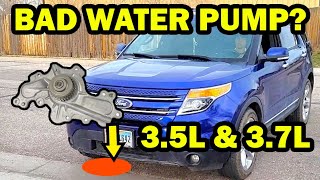
For the 3.5L Duratec V6 in the Taurus, this code is a very common and straightforward issue. The platform is not prone to complex electrical issues causing this code. A key detail for this engine is its use of a Cylinder Head Temperature (CHT) sensor, which measures the temperature of the metal head rather than the coolant directly. This sensor is located under the lower intake manifold, making it a labor-intensive repair if it fails. Additionally, owners must be aware that the water pump on this engine is internally driven by the timing chain. While not directly related to the P0126 code (a bad pump usually causes overheating), a failing water pump is a known, severe issue for this engine that can cause catastrophic failure by leaking coolant into the oil. The pump's weep hole is designed to leak externally first, dripping coolant onto the ground from an area just behind and below the alternator. When servicing the cooling system for a P0126, it's a critical opportunity to inspect this area for any coolant 'crusties' or drips, which are early warnings of impending water pump failure.
🎬 See: How to inspect for water pump leaksGeneration note: This guide covers the fifth-generation (2008-2009) and sixth-generation (2010-2019) Ford Taurus. Both generations used the 3.5L Duratec V6 and share the same fundamental cooling system design and common causes for this code. The thermostat replacement procedure is similar across both generations. A key variation is the factory-fill coolant type; see model year variations for details.
Symptoms You May Notice
- Check Engine Light is on
- Temperature gauge on the dashboard reads lower than normal or takes a very long time to rise
- Heater blows lukewarm or cold air, especially when idling or at low speeds
- Noticeable decrease in fuel economy
- Engine may run rough or idle high for longer than usual after a cold start
- Replacing the PCM (Powertrain Control Module). This is almost never the cause for an isolated P0126 code and should only be considered after all other cooling system components and wiring have been thoroughly tested.
- Replacing the water pump. While the 3.5L Duratec has known water pump issues, a failing pump typically causes leaks or overheating, not an under-heating condition like P0126.
Most Likely Causes
- Engine Thermostat Stuck Open 🔴 High Probability → Shop Integrated Thermostat Housing Assembly Thermostats are wear-and-tear items. Over time, the spring mechanism can fail, causing it to stick in the open position, which is the most common failure mode for this part and the primary cause of P0126. 🎬 Watch: Quick DIY methods to fix this code
How to confirm: After starting the engine from cold, feel the upper radiator hose. If it starts to get warm within the first couple of minutes, the thermostat is likely stuck open, as it should remain closed to block coolant flow until the engine warms up to its opening temperature (around 190°F for the OEM part). A scan tool can also be used to watch the Cylinder Head Temperature (CHT) sensor data; a slow, linear rise without a plateau indicates a stuck-open thermostat.
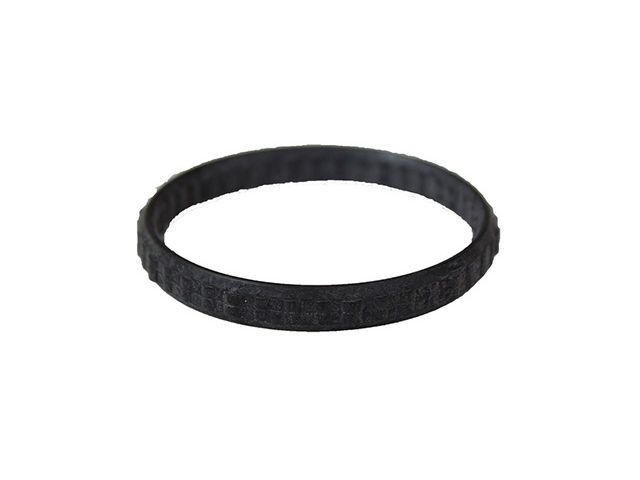
Typical fix: Replace the engine thermostat and the corresponding gasket or seal. It is recommended to drain and refill the cooling system with the correct Ford-specified coolant. Check model year variations for the correct type.
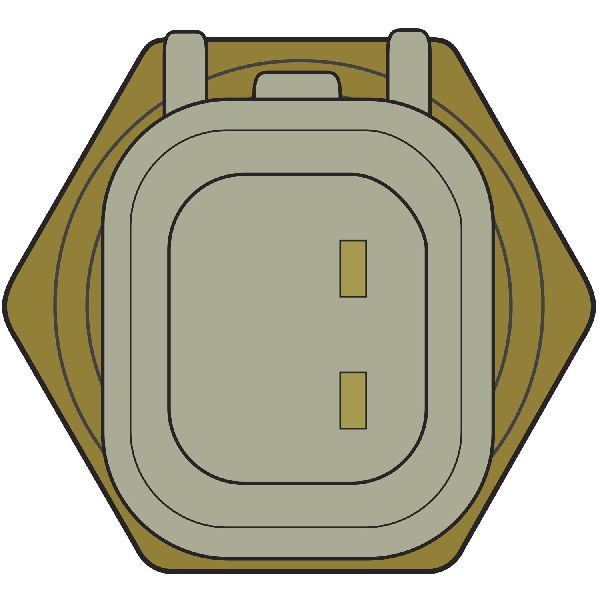
Est. part cost: $25-$75 - Faulty Cylinder Head Temperature (CHT) Sensor 🟡 Medium Probability The CHT sensor can fail electrically or develop resistance issues over time, sending an inaccurate (typically colder) reading to the PCM. Unlike a traditional ECT, it's buried under the intake manifold, making it a high-labor repair. 🎬 Watch: Step-by-step CHT sensor replacement guide
How to confirm: Use a scan tool to compare the CHT reading to the ambient air temperature sensor reading on a cold engine; they should be very close. If the CHT reads significantly lower, the sensor is likely faulty. You can also test the sensor's resistance with a multimeter and compare it to specifications.
Typical fix: Replace the Cylinder Head Temperature (CHT) sensor. This requires removing the upper and lower intake manifolds and replacing the associated gaskets.
Est. part cost: $25-$60 for the sensor, plus intake gaskets. - Low Engine Coolant Level ⚪ Low Probability While not a direct cause of the engine running too cool, a very low coolant level can cause air pockets in the system, leading to erratic readings from the CHT sensor or insufficient heat transfer.
How to confirm: Visually inspect the coolant level in the overflow reservoir and the radiator (when the engine is cold). If the level is below the 'MIN' line, there is a leak that needs to be found and repaired.
Typical fix: Find and repair the source of the coolant leak, then refill and bleed the cooling system with the correct Ford-specified coolant.
Est. part cost: $20-$30 for coolant, plus parts for leak repair.
Rare But Worth Checking
- Cooling Fan Running Constantly: → Shop Engine Cooling Fan Blade If the electric cooling fan assembly fails in the 'on' position, it will run as soon as the car is started, causing the engine to take too long to warm up. This can be caused by a failed fan control module, a shorted CHT sensor defaulting the fans on, or an A/C system fault.
- Wiring Issue to CHT Sensor: A damaged wire or corroded connector in the CHT sensor circuit can cause a high resistance reading, which the PCM interprets as a very cold temperature. The wiring is routed in the engine valley and can be susceptible to heat damage over time.
Diagnosis Steps
- Check for other stored DTCs. Codes like P0117 (CHT Circuit Low) or P0118 (CHT Circuit High) might point more directly to a CHT sensor circuit fault.
- With a cold engine, check the coolant level in the reservoir and radiator. Top off if necessary with the correct Ford-spec coolant.
- Visually inspect for coolant leaks around hoses, the radiator, and the thermostat housing. Pay special attention to the area behind the alternator for signs of drips or 'crusties', which indicates a failing internal water pump.
- Connect an OBD-II scan tool. Turn the key to the 'ON' position without starting the engine. Compare the live data from the Cylinder Head Temperature (CHT) sensor and the Intake Air Temperature (IAT) sensor. They should be within a few degrees of each other and match the ambient temperature.
- Start the engine and monitor the CHT reading on the scan tool. Observe how quickly the temperature rises.
- Simultaneously, carefully feel the upper radiator hose. If it becomes warm almost immediately, the thermostat is stuck open and allowing coolant to circulate prematurely. The hose should remain cool until the engine reaches the thermostat's opening temperature (around 190°F).
- If the temperature rises very slowly and the hose gets warm right away, the thermostat is the most likely culprit and should be replaced.
- If the temperature gauge on the dash and the scan tool reading seem incorrect or behave erratically, test the CHT sensor and its wiring circuit using resistance and voltage values.
Parts You'll Likely Need
- Engine Coolant Thermostat
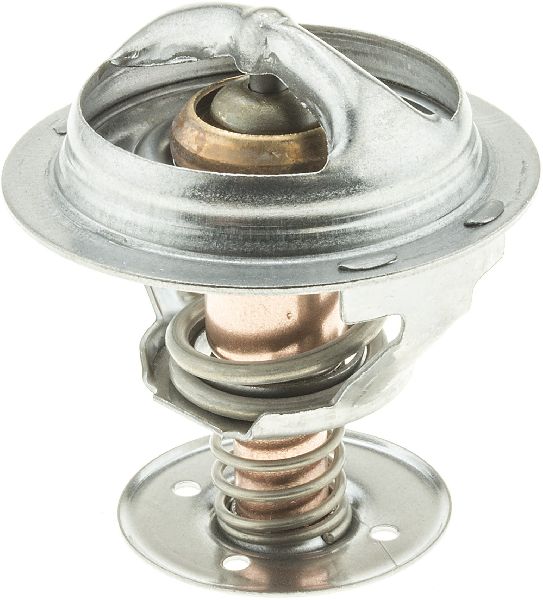
(OEM #Motorcraft RT-1217 (replaces RT-1213, BL3Z-8575-B). Note: This is a 190°F thermostat.)— This is the most common cause of P0126, accounting for the vast majority of cases. It fails in the open position, preventing the engine from warming up correctly.
Trusted brands: Motorcraft, Gates, Stant
OEM price range: $40-$60
Aftermarket price range: $25-$45 - Thermostat Gasket/Seal
(OEM #Often included with the thermostat assembly.)— A new gasket is required to ensure a leak-proof seal when replacing the thermostat.
Trusted brands: Motorcraft, Fel-Pro
OEM price range: $5-$15
Aftermarket price range: $3-$10 - Engine Coolant
(OEM #Motorcraft Orange Antifreeze/Coolant (VC-3DIL-B, Spec: WSS-M97B44-D2) or the superseding Motorcraft Yellow Antifreeze/Coolant (VC-13DL-G, Spec: WSS-M97B57-A2).)— Required to refill the system after draining to replace the thermostat. Using the specified coolant is critical to prevent corrosion and seal degradation. Check model year variations for specifics.
Trusted brands: Motorcraft, Zerex, Prestone
OEM price range: $20-$25 per gallon
Aftermarket price range: $15-$20 per gallon (ensure it meets the correct Ford specification)
Related Codes That Often Appear With This One
- P0128 — P0128 (Coolant Temperature Below Thermostat Regulating Temperature) is a very similar code. Both point to the engine not reaching operating temperature, and both are most often caused by a stuck-open thermostat.
Platform-Specific Known Issues
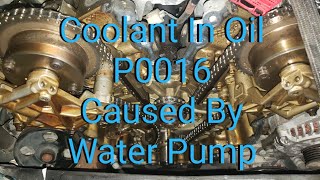
- The 3.5L Duratec V6 features an internal, timing-chain-driven water pump. While a thermostat replacement is a straightforward repair, be aware that any major coolant leak or signs of coolant in the oil could indicate a much more serious water pump failure, which is a common and catastrophic issue on this engine.
Mechanic-Grade Diagnostic Values
- Cylinder Head Temperature (CHT) Sensor Resistance — expected: ~37,000 Ω (37 kΩ) at 68°F (20°C); ~2,400 Ω (2.4 kΩ) at 176°F (80°C); ~1,100 Ω (1.1 kΩ) at 212°F (100°C). Resistance is high when cold and drops as temperature increases.. Failure: A resistance reading that is drastically different from the expected value at a known temperature, or a reading that does not change as the engine warms up.
- Cylinder Head Temperature (CHT) Sensor Signal Voltage — expected: Approximately 3.4V at 60°F (15.5°C) with key on, engine off. Voltage should decrease as the engine head warms up.. Failure: Voltage that is stuck high (near 5.0V) or low (near 0V), or does not change logically as the engine temperature changes.
Scan Tool Commands That Help
- Ford IDS (or equivalent professional scanner): Datalogger / Live Data Monitoring — This is the primary diagnostic method. A technician will graph the Cylinder Head Temperature (CHT), Intake Air Temperature (IAT), and engine run time on one screen to verify if the temperature is rising at the rate expected by the PCM. A flat or slowly rising CHT trace while the upper radiator hose gets warm confirms a stuck-open thermostat.
- Ford IDS (or equivalent professional scanner): Bi-Directional Controls (Cooling Fan) — Used to diagnose a rare cause of P0126. The technician can command the cooling fans on and off to verify the fan control module and fan assembly are working correctly and not stuck in the 'on' position, which would prevent a normal warm-up.
Wiring & Ground Locations
- Cylinder Head Temperature (CHT) Sensor — In the engine valley, threaded into the front of the right-side (Bank 1) cylinder head, underneath the lower intake manifold.. This is the primary sensor the PCM uses to determine engine warm-up time. Its location makes it a high-labor repair, so confirming a stuck thermostat first is critical.
- CHT Sensor Circuit at PCM — At the main Powertrain Control Module (PCM) connector. The CHT signal wire is typically Yellow/Light Green, and the Signal Return (ground) wire is Grey/Red.. Testing for resistance across these two pins at the PCM connector can validate the integrity of the entire CHT sensor circuit (sensor and wiring) without having to first remove the intake manifold.
- G105 / G107 — Main engine compartment grounds, typically located on the firewall or strut tower area at the rear of the engine bay.. A poor engine or PCM ground can cause erratic behavior in multiple sensors, including the CHT. While not a common cause for an isolated P0126, checking that main grounds are clean and tight is good practice during diagnosis.
OEM Part Supersession History
Motorcraft Orange Antifreeze/Coolant (VC-3-D / VC-3DIL-B)→Motorcraft Yellow Antifreeze/Coolant (VC-13-G / VC-13DL-G)— Ford introduced a new P-OAT (Phosphate Organic Acid Technology) coolant formulation for improved corrosion protection.
Heads up: Ford has stated the new Yellow coolant is fully compatible with and can be mixed with the old Orange coolant. No flush is required when topping off or replacing Orange with Yellow.
Model Year Variations Within This Range
- 2008-2010: These earlier models may have been factory-filled with Motorcraft Premium Gold Antifreeze/Coolant (Spec: WSS-M97B51-A1). While Orange or the new Yellow coolant can be used as a service replacement, mixing Gold with Orange/Yellow is not recommended and a full system flush should be performed when switching types.
- 2011-2019: These later models were factory-filled with Motorcraft Orange Antifreeze/Coolant (Spec: WSS-M97B44-D2). This coolant has been officially superseded by Motorcraft Yellow (WSS-M97B57-A2), which is directly compatible and can be mixed.
Diagnostic Flowchart
Other Known Issues on This Vehicle
Issues unrelated to this code that are worth knowing about as an owner of this generation:
- Internal Water Pump Failure 🔴 High — Common between 60,000 and 150,000 miles. Considered a 'when, not if' failure by many owners and technicians. (Ref: No recall, but subject of a dismissed class-action lawsuit (Roe v. Ford Motor Company).)
- Power Transfer Unit (PTU) Failure (AWD Models) 🔴 High — Common on AWD models. Fluid overheats due to proximity to exhaust, leading to seal and bearing failure, often before 100,000 miles.
- Electronic Throttle Body (ETB) Failure 🟠 Medium — Fairly common issue causing sudden 'limp mode' and loss of power. Can occur at various mileages. (Ref: Ford issued Customer Satisfaction Program 13N03, extending the warranty on the ETB for this known issue.)
- Cracked Flex Plate 🟠 Medium — Less common, but presents as a rhythmic ticking or knocking sound from the transmission bellhousing area.
- Front Axle 'Click' or 'Pop' on Acceleration 🟡 Low — A common noise complaint when accelerating from a stop or shifting between Drive and Reverse. (Ref: TSB 13-5-14 describes installing a thrust washer (Part No. BB5Z-7G273-B) to resolve the noise.)
Used vs. New Parts: Buying Guide for This Vehicle
When a used part is the smart pick: For this specific repair, using used parts is not recommended. The primary failure parts are the thermostat and potentially the CHT sensor, both of which are wear items with a finite lifespan. The labor involved, especially for the CHT sensor, is too high to justify installing a used part with unknown history.
What to inspect on the donor part:
- Not applicable. Do not use used thermostats or CHT sensors for this repair.
OEM-only on this vehicle (don't cheap out):
- Cylinder Head Temperature (CHT) Sensor: Due to the extremely high labor cost (3-5 hours) to access this sensor under the intake manifold, using a high-quality OEM Motorcraft part (DY-1144 or DY-1145 depending on specific application) is strongly advised to prevent premature failure and a repeat of the costly repair.
Aftermarket brands forum-validated for this vehicle:
- Thermostat: Stant, Gates
- Coolant: Zerex (specifically their DEX-COOL Orange or G48/G05 formulas that meet Ford specs), Prestone (ensure formula meets WSS-M97B44-D2 or newer spec)
Brands owners have reported issues with on this vehicle:
- Ultra-cheap, no-name CHT sensors from online marketplaces. The risk of early failure outweighs the small cost savings given the high labor cost for replacement.
Real Owner Stories
Aggregated from forums and TSBs cited above. Mileages and costs reflect what owners reported in those sources.
2013 Ford Taurus 3.5L V6
Symptoms: Owner received a P0126 code on their 3.5L engine.
What fixed it: Replacing the thermostat.
Source hint: https://www.taurusclub.com/threads/p0126-code.313010/
2008-2019 Ford Taurus 3.5L V6 — ~105000 miles
Symptoms: The community discussed expected operating temperatures and identified a likely stuck-open thermostat.
What fixed it: Replacing the thermostat to correct the engine operating temperature.
Source hint: https://www.reddit.com/r/MechanicAdvice/comments/shz1cv/p0126_anything_to_be_worried_about/
Ford Owner Report
Symptoms: An owner reported a P0126 code for "coolant thermostat temperature below thermostat regulating" occurring twice, alongside other electrical circuit malfunctions.
What fixed it: While the specific fix was not detailed, the report highlights the occurrence of this code in conjunction with other powertrain control issues.
Source hint: NHTSA ODI #10899284
Related OBD-II Codes
Frequently Asked Questions
Is the P0126 code on my 2008-2019 Ford Taurus related to the common internal water pump failure?
Why is my Taurus heater blowing cold air at idle when the P0126 code is present?
Does the Ford Customer Satisfaction Program 13N03 apply to my P0126 code?
Can I check if my CHT sensor is bad without removing the intake manifold?
Is there a specific coolant I should use when fixing the P0126 fault on my Taurus?
Helpful Videos
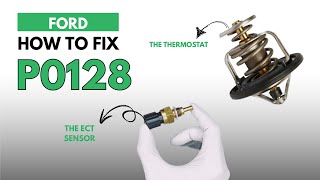
![How to Fix FORD P0128 Engine Code in 3 Minutes [2 DIY Methods / Only $7.34]](https://img.youtube.com/vi/nUD6fDJpoV4/mqdefault.jpg)
We Have This Part in Stock


The information in this article is provided for general reference and educational purposes only. Vehicle specifications, procedures, and part compatibility can vary by production date, trim level, and region. Always consult your vehicle's factory service manual and verify part numbers before purchasing or performing repairs. Safety-critical components such as airbags, seat belts, and braking systems should be installed by a qualified professional.
- Ford Taurus:
- 🧭 Diagnostic Flowchart
- 🎬 Helpful Videos
- 🛍️ Shop This Part
- What's Unique About the 2008-2019 Ford Taurus
- Symptoms You May Notice
- Most Likely Causes
- Rare But Worth Checking
- Diagnosis Steps
- Parts You'll Likely Need
- Related Codes That Often Appear With This One
- Platform-Specific Known Issues
- Mechanic-Grade Diagnostic Values
- Scan Tool Commands That Help
- Wiring & Ground Locations
- OEM Part Supersession History
- Model Year Variations Within This Range
- Other Known Issues on This Vehicle
- Used vs. New Parts: Buying Guide for This Vehicle
- Real Owner Stories
- 2013 Ford Taurus 3.5L V6
- 2008-2019 Ford Taurus 3.5L V6 — ~105000 miles
- Ford Owner Report
- Related OBD-II Codes
- Frequently Asked Questions
- 🎟️ Get 5% Off