

P0126 on 2017-2020 Genesis G80: Insufficient Coolant Temperature Causes and Fixes
On a 2017-2020 Genesis G80, code P0126 is most often caused by a failed engine thermostat that is stuck open. This is a more complex and expensive part than a traditional thermostat. Expect a professional repair to cost between $700 and $1,500, depending on the model year.
- P0126 on a Genesis G80 means the engine is not warming up correctly, most likely due to a thermostat stuck open.
- The most common fix is replacing the engine thermostat assembly, which is a significantly more expensive part on this vehicle than on many others.
- Before replacing parts, always check the coolant level first, as a low level can cause this code.
What's Unique About the 2017-2020 Genesis G80
For the Genesis G80, the thermostat is not a simple, inexpensive mechanical valve. It is an electronically controlled component integrated into a larger housing, sometimes called a coolant control valve or electric thermostat. This assembly includes a failsafe thermostat that can fail prematurely. This complexity leads to a significantly higher part cost and more involved replacement procedure compared to many other vehicles. Repair estimates for this component can be surprisingly high, particularly for the 2017-2019 model years which can range from $1,422 to $1,525.
Symptoms You May Notice
- Check Engine Light is illuminated
- Engine takes an unusually long time to warm up
- Temperature gauge on the dashboard stays on the 'Cold' side or reads lower than normal
- Cabin heater blows lukewarm or cool air, especially when driving
- Noticeable decrease in fuel economy
- Rough or high idle when the engine is cold
- Replacing the oxygen sensors. Because the code relates to the engine not entering 'closed-loop' fuel control, some may mistakenly blame the O2 sensors. However, the root cause is the engine temperature, not the sensors themselves.
Most Likely Causes
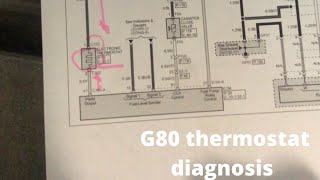
- Failed Engine Thermostat (Stuck Open) 🔴 High Probability → Shop Integrated Thermostat Housing Assembly The G80 uses an electronically controlled thermostat assembly which can fail. A TSB for a related code (P0597) on 2018 G80s indicates a known issue with the electric thermostat. A diagnostic video for a G80 showed 🎬 Watch: Genesis G80 thermostat diagnosis and replacement walkthrough an open circuit in the thermostat's heater control, which is a common failure mode for this type of component. Another TSB mentions that coolant can enter a dry area of the integrated failsafe thermostat, causing it to open at too low a temperature.
How to confirm: Monitor the engine coolant temperature using an OBD-II scanner's live data. If the temperature rises very slowly or drops significantly at highway speeds, the thermostat is likely stuck open. You can also feel the upper radiator hose after a cold start; it should remain cool until the engine reaches operating temperature (180°F+). If it gets warm right away, the thermostat is open.
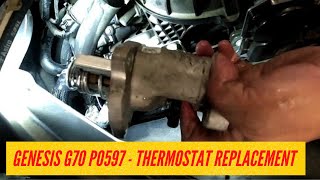
Typical fix: Replace the entire thermostat and housing assembly, also known as the coolant control valve. This requires draining the coolant, removing several components for access, 🎬 See: Genesis 3.3T thermostat replacement process and then refilling and bleeding the cooling system. For vehicles with electronic thermostats, a scan tool may be required to properly bleed the system.
Est. part cost: $180-$255 (OEM Part No. 25500-3L100 or 25500-3L200). RepairPal estimates the part cost much higher, around $1,202 for a professional repair. - Faulty Engine Coolant Temperature (ECT) Sensor 🟡 Medium Probability → Shop Engine Coolant Temperature Sensor
How to confirm: Use an OBD-II scanner to compare the ECT sensor reading on a cold engine to the ambient air temperature sensor reading. They should be very close. If the ECT reading is illogical (e.g., -40°F on a warm day), the sensor is bad. You can also test the sensor's resistance with a multimeter and compare it to the manufacturer's specifications at different temperatures. At 20°C (68°F), the resistance should be approximately 2,200-3,000Ω.
Typical fix: Replace the engine coolant temperature sensor. This involves partially draining the coolant and unscrewing the old sensor to install the new one.
Est. part cost: $250-$330 - Low Engine Coolant Level ⚪ Low Probability
How to confirm: Visually inspect the coolant reservoir when the engine is cold. The level should be between the 'MIN' and 'MAX' lines. If it's low, there is a leak in the cooling system that must be found and repaired.
Typical fix: Top off the coolant with the correct type (specified by Genesis) and identify and repair the source of the leak (e.g., a cracked hose, loose clamp, or failing water pump).
Est. part cost: $20-$50 (for coolant, plus cost of leak repair)
Rare But Worth Checking
- Cooling Fan Stuck On: → Shop Engine Cooling Fan Blade If the electric cooling fan runs at high speed as soon as the car is started (when cold), it can over-cool the engine and prevent it from warming up properly. This is usually caused by a faulty fan control module or a short in the wiring.
- Wiring Issue to ECT Sensor: → Shop Engine Coolant Temperature Sensor A damaged wire or corroded connector in the ECT sensor circuit can cause an incorrect reading to be sent to the PCM, triggering the code.
Diagnosis Steps
- Check the engine coolant level in the reservoir (when the engine is cold). Ensure it is between the MIN and MAX marks.
- Use an OBD-II scanner to read the live data for the Engine Coolant Temperature (ECT). On a cold start, the ECT should be close to the ambient air temperature.
- Start the engine and monitor the ECT reading. It should climb steadily to around 195-220°F and then stabilize. If it warms up extremely slowly, or if the temperature drops significantly when driving at speed, the thermostat is likely stuck open.
- Check the electric cooling fans. They should not be running at high speed when the engine is cold.
- If the temperature reading on the scanner is erratic or seems incorrect (e.g., stays very low even when the engine feels hot), the ECT sensor or its wiring is the likely problem.
- Inspect the wiring and connector for the ECT sensor for any signs of damage, corrosion, or looseness.
- If the thermostat is suspected, confirm by feeling the upper radiator hose. It should not become hot until the engine temperature reaches at least 180°F. If it warms up almost immediately, the thermostat has failed in the open position.
Parts You'll Likely Need
- Engine Coolant Thermostat Assembly
(OEM #25500-3L100, 25500-3L200)— This is the most common cause of P0126. On the G80, it is a complex assembly that includes the housing and electronic controls, and it typically fails in the 'open' position. TSB 20-EM-003HG specifically calls for replacing the thermostat with part number 25500-3L200 on certain 2018 models.
Trusted brands: Hyundai/Genesis OE
OEM price range: $180-$255
Aftermarket price range: $165-$200 - Engine Coolant Temperature Sensor
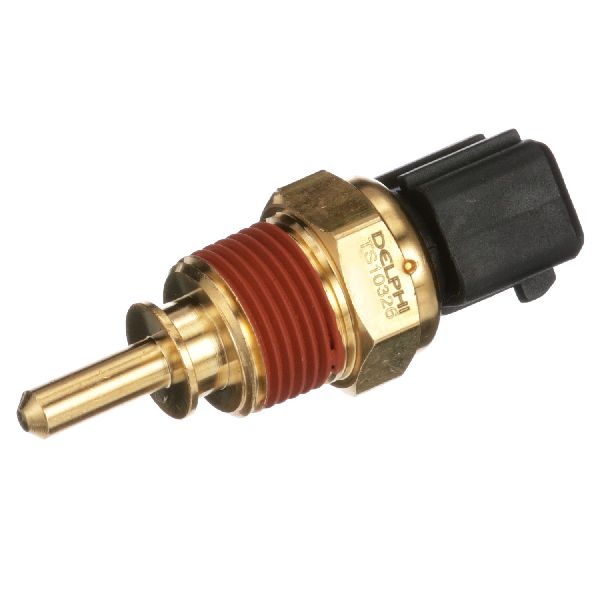
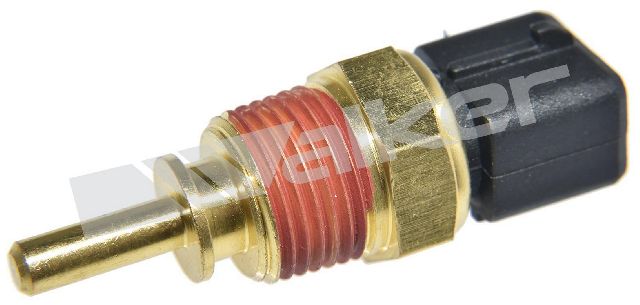
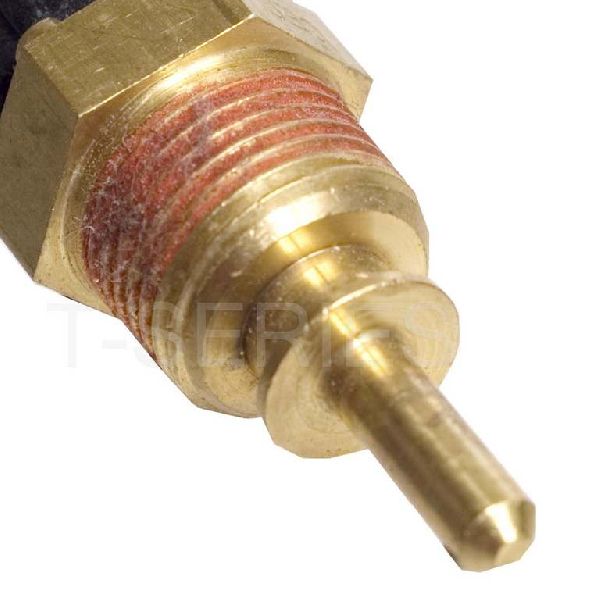
(OEM #39220-38030)— This sensor provides the temperature data to the engine computer. If it sends an inaccurate low reading, it will trigger code P0126.
Trusted brands: Hyundai/Genesis OE
OEM price range: $279-$329
Aftermarket price range: $50-$100
Related Codes That Often Appear With This One
- P0128 — P0128 (Coolant Thermostat - Coolant Temperature Below Thermostat Regulating Temperature) is a very similar code and often points directly to a faulty thermostat.
- P0597 — P0597 (Thermostat Heater Control Circuit Open) can appear on vehicles with electronically controlled thermostats, like the G80, and points specifically to an electrical failure within the thermostat assembly. A TSB (20-EM-003HG) was issued for this code on certain 2018 G80s.
Technical Service Bulletins (TSBs) & Recalls
- TSB 20-EM-003HG: Addresses DTC P0597 (Thermostat Heater Control Circuit/Open) on certain 2018 G80 3.3T/3.8L and 2017-2018 G90 3.3T vehicles by replacing the electric thermostat with an updated part (25500-3L200).
- A TSB referenced by the NHTSA mentions a production variety of the failsafe thermostat integrated into the coolant control valve that could result in unintended opening at lower temperatures. The fix is to replace the coolant control valve.
Platform-Specific Known Issues
- High Repair Cost Discrepancy: While OEM parts can be found online for $180-$255, professional repair estimates from sources like RepairPal show a total cost of $1,422-$1,525 for 2017-2019 models, with the part itself priced around $1,202. This suggests a significant markup on the part from dealerships or a more complex labor process than estimated.
Mechanic-Grade Diagnostic Values
- Engine Coolant Temperature (ECT) Sensor Resistance — expected: Approximately 2,200 - 3,000 Ω at 20°C (68°F) and 250 - 350 Ω at 80°C (176°F).. Failure: Readings significantly outside these ranges indicate a faulty sensor.
- Engine Coolant Temperature (ECT) Sensor Voltage (Signal Wire to Ground) — expected: Approximately 2.0V - 3.0V on a cold engine, dropping to around 0.5V when the engine is at full operating temperature.. Failure: Voltage that is stuck high or low, or does not change smoothly as the engine warms up, points to a sensor or wiring issue.
Scan Tool Commands That Help
- Genesis GDS (Global Diagnostic System): Integrated Thermal Control Module / Coolant Bleeding Function — After replacing the thermostat assembly or draining the coolant, this service function is required to properly bleed air from the complex cooling system. Failure to use this function can leave air pockets, leading to overheating or a repeat of the P0126 code.
Wiring & Ground Locations
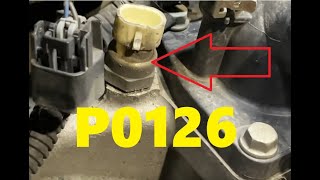
- ECT Sensor Connector — Typically located on or near the thermostat housing assembly where the upper radiator hose connects to the engine.. This connector is the primary interface for the sensor. Corrosion or damage here will directly cause incorrect temperature readings, leading to P0126 or related codes.
- Engine Block to Chassis Ground — A primary ground strap is typically located on the back of the engine block and connects to the vehicle's chassis/firewall.. A poor engine ground can cause a variety of sensor reading issues, including the ECT sensor. Verifying this connection is clean and tight is a crucial step in diagnosing any electrical fault.
OEM Part Supersession History
25500-3L100→25500-3L200 (for 3.3T models)— The original electronic thermostat assemblies were prone to internal heater circuit failure, which would set code P0597. The updated parts address this issue.
Heads up: While 25500-3L100 is still listed for the 3.8L engine in some catalogs, TSB 21-EM-006HG specifies 25500-3L200 for the 3.3T and 25500-3L100 for the 3.8L as the replacement parts for the P0597 issue. It is critical to use the updated part for affected vehicles to prevent a repeat failure.
Model Year Variations Within This Range
- 2017-2018 models built before 8/30/2017: These earlier models are more susceptible to the electronic thermostat failure addressed by TSB 21-EM-006HG. Later models likely came from the factory with the improved thermostat assembly.
Diagnostic Flowchart
Other Known Issues on This Vehicle
Issues unrelated to this code that are worth knowing about as an owner of this generation:
- ABS Module Malfunction / Fire Risk 🔴 High — Subject of NHTSA recall 21V160000 affecting 2015-2016 Genesis and 2017-2020 G80 models. An electrical short can occur in the ABS module. (Ref: 21V160000)
- Left Turbocharger Oil Feed Pipe Leak 🔴 High — Affects 3.3L V6 turbocharged engines. The pipe can deteriorate and leak oil onto hot exhaust components, creating a fire risk. Covered by NHTSA recall 24V191000. (Ref: 24V191000)
- Starter Solenoid Water Intrusion 🔴 High — Water can enter the starter solenoid, causing an electrical short and potential engine compartment fire. Covered by NHTSA recall 24V107000 for 2017-2019 G80s. (Ref: 24V107000)
- Panoramic Sunroof Creaking/Popping 🟡 Low — A common complaint among G80 and G70 owners. The noise is an annoyance but not a structural failure.
- Excessive Oil Consumption 🟠 Medium — Some owners of 2015-2019 models have reported excessive oil consumption, which can threaten engine longevity if not monitored.
- Oxidation on Window Trim 🟡 Low — The exterior trim around the windows on G80 Sport and G70 models can oxidize and become discolored. A TSB exists for the G70. (Ref: TSB exists for G70)
Used vs. New Parts: Buying Guide for This Vehicle
When a used part is the smart pick: For this specific repair, using a used part is not recommended for the primary cause (the thermostat assembly). For secondary causes like a wiring connector, a used pigtail from a salvage yard is a viable option.
Donor-vehicle mileage cap: roughly under 50000 miles for the part to have meaningful remaining life.
What to inspect on the donor part:
- For an ECT sensor, ensure the donor vehicle was not in a front-end collision.
- Check the connector pins for any signs of corrosion or damage.
- If possible, test the resistance of the used sensor before purchasing to ensure it's within spec.
OEM-only on this vehicle (don't cheap out):
- Engine Coolant Thermostat Assembly: Due to the high failure rate of the original part and the specific TSB calling for an updated version, only a new OEM part should be used to ensure a lasting repair.
Brands owners have reported issues with on this vehicle:
- Generic/unbranded thermostat assemblies and ECT sensors should be avoided, as their quality and calibration may not meet OEM specifications, potentially causing the code to return.
Real Owner Stories
Aggregated from forums and TSBs cited above. Mileages and costs reflect what owners reported in those sources.
2018 Genesis G80 3.3T/3.8L
Symptoms: The vehicle triggered a thermostat heater control circuit/open condition, which is a known failure mode for the electronically controlled thermostat assembly.
What fixed it: Replacement of the electric thermostat with updated part number 25500-3L200 as per the manufacturer's service bulletin.
Source hint: TSB 20-EM-003HG
2017-2019 Genesis G80
Symptoms: Engine taking a long time to warm up and the temperature gauge staying on the cold side; diagnostic video confirmed an open circuit in the thermostat's heater control.
What fixed it: Replacement of the entire thermostat and housing assembly (coolant control valve).
Cost: $1,422-$1,525
Source hint: Vehicle-specific issues / RepairPal estimate
Related OBD-II Codes
Frequently Asked Questions
Does TSB 20-EM-003HG apply to my 2018 Genesis G80 with the 3.3T engine?
Why is the repair estimate for my G80 thermostat over $1,400 when the part is much cheaper online?
Can a 'failsafe' thermostat design cause the P0126 code on my Genesis?
Is the P0126 code related to the ABS or Turbocharger recalls on my 2017-2020 G80?
What is the specific resistance I should look for when testing the G80's ECT sensor?
Will I need any special tools to fix P0126 on my G80 3.8L V6?
Helpful Videos
We Have This Part in Stock


The information in this article is provided for general reference and educational purposes only. Vehicle specifications, procedures, and part compatibility can vary by production date, trim level, and region. Always consult your vehicle's factory service manual and verify part numbers before purchasing or performing repairs. Safety-critical components such as airbags, seat belts, and braking systems should be installed by a qualified professional.
- Genesis G80:
- 🧭 Diagnostic Flowchart
- 🎬 Helpful Videos
- 🛍️ Shop This Part
- What's Unique About the 2017-2020 Genesis G80
- Symptoms You May Notice
- Most Likely Causes
- Rare But Worth Checking
- Diagnosis Steps
- Parts You'll Likely Need
- Related Codes That Often Appear With This One
- Technical Service Bulletins (TSBs) & Recalls
- Platform-Specific Known Issues
- Mechanic-Grade Diagnostic Values
- Scan Tool Commands That Help
- Wiring & Ground Locations
- OEM Part Supersession History
- Model Year Variations Within This Range
- Other Known Issues on This Vehicle
- Used vs. New Parts: Buying Guide for This Vehicle
- Real Owner Stories
- 2018 Genesis G80 3.3T/3.8L
- 2017-2019 Genesis G80
- Related OBD-II Codes
- Frequently Asked Questions
- 🎟️ Get 5% Off