

P0126 on 2013-2018 Hyundai Santa Fe 2.4L: Insufficient Coolant Temperature Causes and Fixes
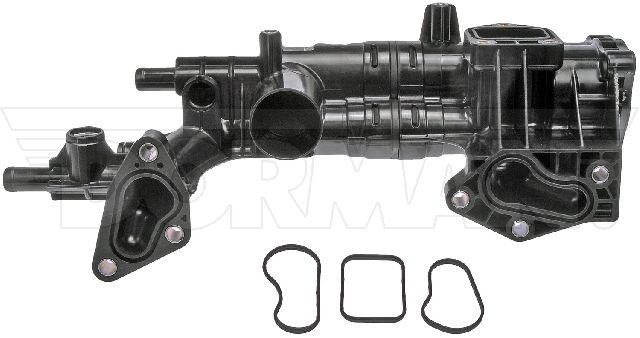
This code almost always means the engine thermostat is stuck open, preventing the engine from warming up. The most common fix for the 2.4L GDI engine is to replace the entire thermostat and housing assembly. Expect to pay $40-$80 for the part and about 1-2 hours for labor.
- P0126 on your Santa Fe means the engine is running too cold.
- The cause is almost certainly a thermostat that is stuck in the open position.
- For the 2.4L GDI engine, the best practice is to replace the entire thermostat and housing assembly, not just the thermostat itself.
- This is a DIY-friendly repair for someone with basic tools, but the cooling system must be properly refilled and bled of air afterward.
- Do not ignore the code, as it can mask other more serious issues and lead to long-term engine wear.
What's Unique About the 2013-2018 Hyundai Santa Fe
While a P0126 code points to a thermostat on most vehicles, the 2.4L GDI engine in the Santa Fe Sport has a known vulnerability with its plastic thermostat housing. The housing itself can degrade or fail, leading to issues. For this reason, mechanics and experienced DIYers often recommend replacing the entire thermostat and housing assembly as a single unit, rather than just the thermostat inside it, to prevent future leaks or comebacks. The recommended OEM part, 25600-2G500, is an updated version of the original part (25600-2G400) and is made with a more durable, fiber-infused ABS plastic to better resist warping and cracking.
Symptoms You May Notice
- Check Engine Light is on
- Engine temperature gauge reads lower than normal or takes a very long time to reach the middle
- Engine temperature gauge drops at highway speeds due to increased airflow over the radiator
- Heater blows lukewarm or cool air, especially when idling
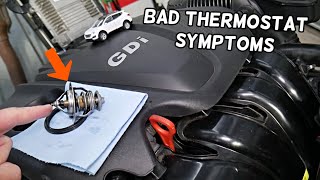
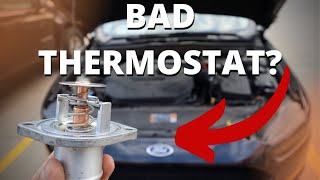
- Noticeably decreased fuel economy 🎬 Watch: A quick guide to common bad thermostat symptoms.
- Replacing only the thermostat insert instead of the complete housing assembly. While this may fix the code temporarily, a failing plastic housing could cause problems later.
Most Likely Causes
- Engine Thermostat Stuck Open 🔴 High Probability → Shop Integrated Thermostat Housing Assembly This is the most common failure for this code on virtually all vehicles, and especially on the Theta II engine family. The thermostat is designed to fail in the open position as a failsafe against overheating. On the 2.4L GDI, the entire plastic housing is also a common point of failure, with failures often occurring between 80,000 and 100,000 miles.
How to confirm: Use an OBD-II scanner to monitor live coolant temperature data while driving. If the temperature struggles to get above 170-180°F, especially at highway speeds, the thermostat is likely stuck open. You can also feel the upper radiator hose after a cold start; if it warms up almost immediately, coolant is flowing freely, indicating a stuck-open thermostat.
Typical fix: Replace the entire thermostat and housing assembly. Refill and bleed the cooling system.
Est. part cost: $40 - $80 - Faulty Engine Coolant Temperature (ECT) Sensor ⚪ Low Probability → Shop Engine Coolant Temperature Sensor On this platform, the ECT sensor is often integrated into the thermostat housing assembly. While it can fail, it is far less common than the mechanical failure of the thermostat itself.
How to confirm: Compare the ECT sensor reading on a cold engine with the Intake Air Temperature (IAT) sensor reading; they should be within a few degrees of each other. If the ECT reading is nonsensical (e.g., -40°F on a warm day), the sensor is bad. You can also check the sensor's resistance against a temperature chart.
Typical fix: Replace the engine coolant temperature sensor. Since it is often part of the thermostat housing on this engine, it is typically replaced along with the entire assembly.
Est. part cost: $20 - $50 - Low Engine Coolant Level / Air in System ⚪ Low Probability
How to confirm: Visually inspect the coolant reservoir and radiator (when the engine is cold) to ensure the level is correct. If the level is low, there is a leak that needs to be found and repaired.
Typical fix: Top off the coolant and properly bleed the system to remove any air pockets. If the level drops again, find and repair the source of the leak.
Est. part cost: $15 - $25 for coolant
Diagnosis Steps
- Check the Check Engine Light: Use an OBD-II scanner to confirm P0126 is the active code. Note any other codes like P0128 or P0125.
- Inspect Coolant Level: With the engine cold, check the coolant level in the overflow reservoir and the radiator. A low level indicates a leak that must be addressed.
- Monitor Live Data: With the scanner, observe the Engine Coolant Temperature (ECT) reading. Start the cold engine and watch the temperature rise. It should climb steadily to around 195-210°F and stabilize.
- Test Drive: During a test drive, if the temperature drops significantly at highway speeds (due to increased airflow over the radiator), it's a classic sign of a thermostat stuck open.
- Thermostat Check: If the engine never reaches operating temperature, the thermostat is the primary suspect.
- ECT Sensor Check: If the temperature gauge on the dash and the scanner reading seem erratic or incorrect (e.g., jumping from cold to hot instantly), suspect the ECT sensor or its wiring.
Parts You'll Likely Need
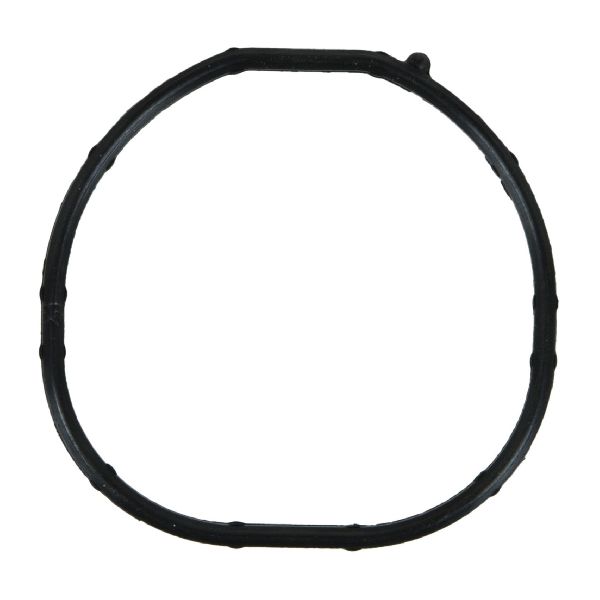
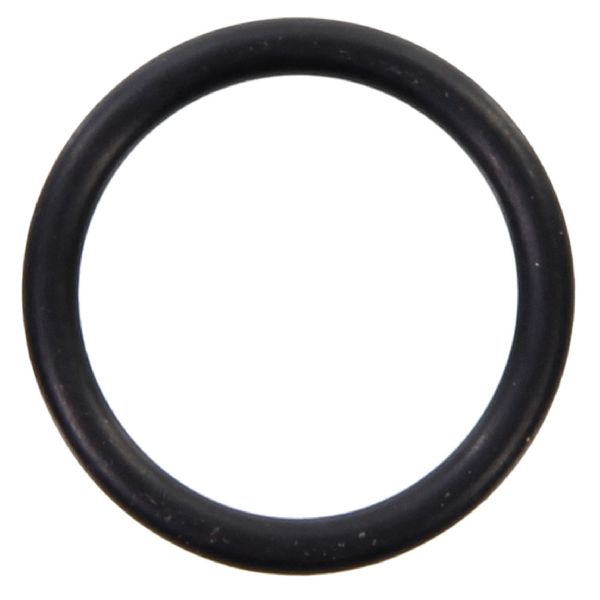
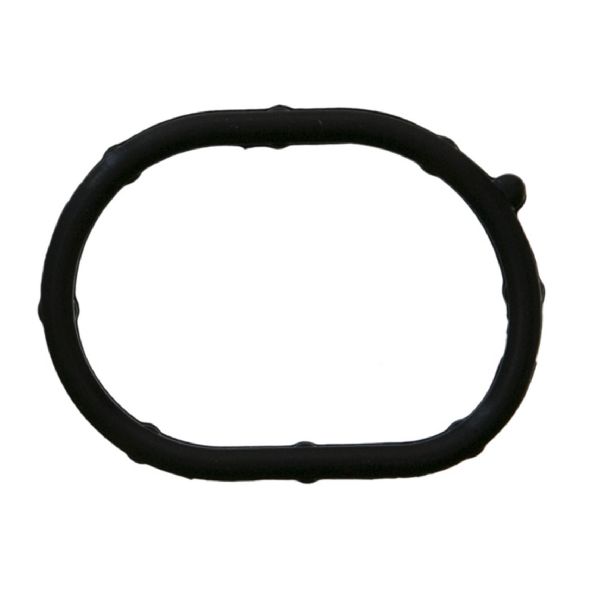
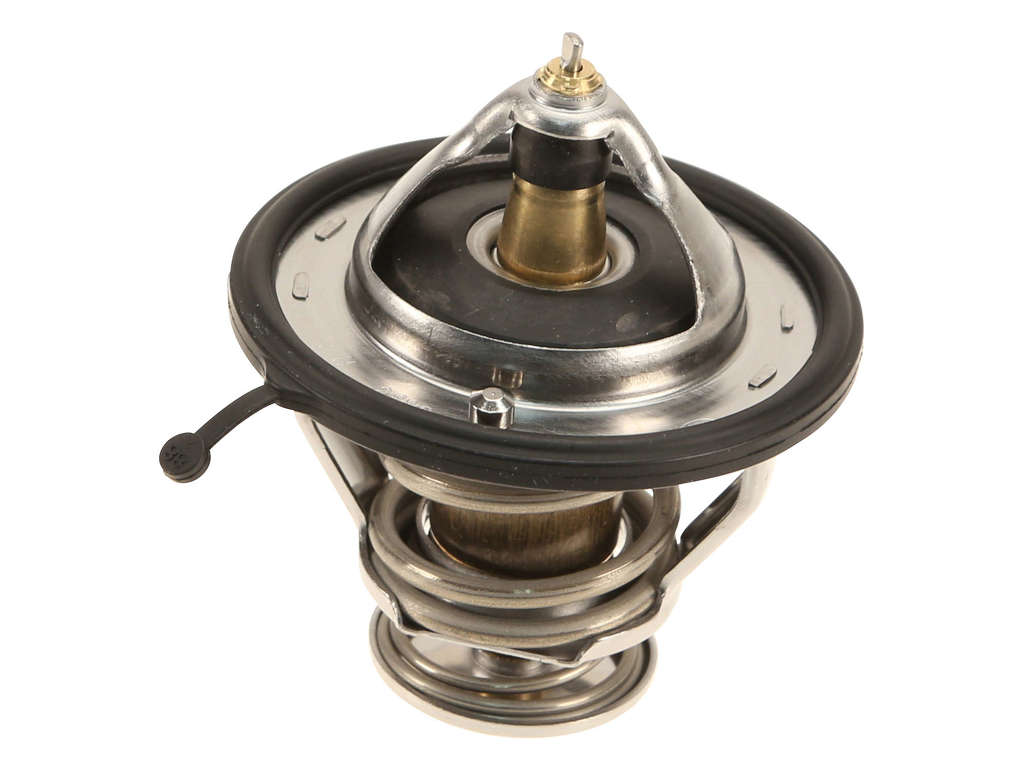
- Engine Coolant Thermostat Housing Assembly
(OEM #25600-2G500)— This is the most common cause of P0126. On the 2.4L GDI engine, the plastic housing is a known failure point, so replacing the entire assembly is the recommended, most durable repair. This part number supersedes the older 25600-2G400. Always confirm the exact part number with your vehicle's VIN, as variations exist.
Trusted brands: Hyundai Genuine, Dorman, Gates
OEM price range: $60-$90
Aftermarket price range: $40-$80 - Asian Vehicle Coolant (Green) — You will lose coolant when replacing the thermostat housing and will need to top off and bleed the system. Using the correct type of coolant (Phosphate-based Asian P-OAT) is critical.
Trusted brands: Hyundai Genuine, Pentofrost A2, Zerex Asian Vehicle
OEM price range: $25-$35 per gallon
Aftermarket price range: $15-$25 per gallon
Related Codes That Often Appear With This One
- P0128 — P0128 (Coolant Temperature Below Thermostat Regulating Temperature) is a very similar code and is often used by manufacturers for the same fault condition. Both point to the engine running too cool and are almost always caused by a stuck-open thermostat.
- P0125 — P0125 (Insufficient Coolant Temperature for Closed Loop Fuel Control) is another related code. It specifically indicates the engine isn't warm enough for the computer to rely on the oxygen sensors for fuel trim adjustments. All three codes (P0125, P0126, P0128) are frequently caused by a stuck-open thermostat.
Technical Service Bulletins (TSBs) & Recalls
- TSB 17-ST-001: While not related to code P0126, this TSB addresses a very common platform issue: a clicking or thud noise from the steering column. It details the replacement of the flexible MDPS (Motor Driven Power Steering) coupler, part number 56315-2K000-FFF.
Platform-Specific Known Issues
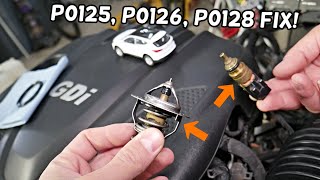
- Multiple Codes, Single Cause: An owner of a 2013 Hyundai Santa Fe reported getting codes P0125, P0126, and P0128 all at the same time. The fix for all three codes was replacing the thermostat, which is the root cause in the vast majority of cases for this group of codes on this vehicle. 🎬 Watch: How to fix codes P0125, P0126, and P0128 together.
Mechanic-Grade Diagnostic Values
- ECT Sensor Resistance — expected: Approximately 2.31 - 2.59 kΩ at 20°C (68°F), decreasing to around 0.32 kΩ at 80°C (176°F).. Failure: An infinite (Open Loop) or near-zero resistance reading indicates a failed sensor.
- ECT Sensor Signal Voltage (Key On, Engine Cold) — expected: Approximately 2.0V to 3.0V at 20°C (68°F), decreasing smoothly to around 0.5V at full operating temperature.. Failure: A voltage reading near 5V suggests an open circuit or poor ground; a voltage near 0V suggests a short to ground.
- ECT Sensor Reference Voltage (at connector, unplugged) — expected: Approximately 5V on the reference wire from the PCM.. Failure: Significantly lower or no voltage indicates a wiring or PCM issue upstream of the sensor.
- Scan Tool Live Data (Cold Engine, Key On) — expected: Engine Coolant Temperature (ECT) and Intake Air Temperature (IAT) should be within a few degrees of each other.. Failure: A large discrepancy between ECT and IAT readings points to a faulty ECT sensor or circuit.
Wiring & Ground Locations
- ECT Sensor Connector — Plugged into the ECT sensor on the thermostat housing assembly, located on the side of the engine.. This two-pin connector provides the signal and ground for the sensor. Pin 1 is typically the sensor ground, and Pin 2 is the signal wire to the PCM. Corrosion or damage here can directly cause incorrect temperature readings.
- Main Engine Ground Strap — Typically bolted from the engine block to the frame rail in the engine compartment.. A poor engine ground can cause erratic or incorrect readings for multiple sensors, including the ECT. On related Hyundai models, there have been known issues where this strap was bolted to a painted surface, causing a weak connection. The fix is to grind the paint off the frame to expose bare metal before reattaching the strap.
- Ground Point GC101 — A wiring document for the 2017 Santa Fe 2.4L lists 'GC101' as a ground for multiple engine components.. A poor connection at a shared ground point like this could cause erratic ECT sensor readings, leading to a P0126 code.
Real Owner Repair Stories
- hyundai-forums.com user 'sbr711' (2011 Hyundai Sonata (Uses related Theta II engine)) — Car was completely dead, battery would not take a charge or be jumped.
❌ Tried (didn't work) Jumping the battery, Attempting to charge the battery
✅ What actually fixed it The dealer discovered the main electrical ground strap was bolted to a painted surface on the frame, creating a poor connection. The technician fixed it by removing the bolt, grinding the paint off the frame to expose bare metal, applying dielectric grease, and re-securing the ground strap. This highlights a potential root cause for various electrical and sensor-related codes. - NHTSA ODI #11618243 — An owner reported that their vehicle was unsafe to drive after retrieving diagnostic codes P0140, P0172, and P0126. While the owner noted the P0126 code pertained to the knock sensor in their specific instance, there was no definitive diagnosis provided at the time of the report.
OEM Part Supersession History
25600-2G400→25600-2G500— The updated 25600-2G500 part is made from a more durable, fiber-infused ABS plastic to better resist the warping and cracking that the original polypropylene housing was prone to.
Model Year Variations Within This Range
- 2013-2018: No significant variations within the 2013-2018 Santa Fe Sport 2.4L models have been identified that would alter the diagnosis or primary repair for a P0126 code. The core issue remains the thermostat and its housing across this generation.
Diagnostic Flowchart
Other Known Issues on This Vehicle
Issues unrelated to this code that are worth knowing about as an owner of this generation:
- Catastrophic Engine Failure (Rod Bearing Failure) 🔴 High — Widespread, subject of multiple class-action lawsuits and recalls. Can occur at various mileages, often before 100,000 miles. Caused by manufacturing debris restricting oil flow to connecting rod bearings. (Ref: Multiple recalls and a lifetime warranty extension for the engine short block were issued for affected VINs that received the Knock Sensor Detection System (KSDS) software update.)
- Excessive Oil Consumption 🔴 High — Very common issue on the 2.4L GDI engine. Owners report needing to add a quart of oil every 1,000-2,000 miles. Often attributed to carbon-fouled piston rings. (Ref: Subject of class-action lawsuits. Dealers may perform an oil consumption test to verify the issue, which can lead to engine replacement under the extended warranty if criteria are met.)
- Steering Coupler Degradation 🟡 Low — Extremely common. The flexible rubber coupler in the electronic power steering column wears out, causing a distinct clicking or clunking sound when turning the steering wheel. Typically occurs after 50,000 miles. (Ref: Hyundai TSB 17-ST-001 describes the procedure for replacing the coupler (part # 56315-2K000-FFF).)
- Knock Sensor Detection System (KSDS) Activation (P1326) 🔴 High — This is not a standard sensor failure, but a specific code (P1326) triggered by a software update designed to detect vibrations from failing rod bearings. Its appearance puts the vehicle into limp mode and is a direct precursor to engine seizure. (Ref: Related to the engine failure recall campaign. The appearance of this code typically results in a dealer diagnosis for engine replacement under the extended warranty.)
Used vs. New Parts: Buying Guide for This Vehicle
When a used part is the smart pick: For this specific repair, a used part is NOT recommended. The thermostat is a wear-and-tear component and the plastic housing is a known failure point due to material degradation over time and heat cycles. The risk of purchasing a used part that is already near the end of its service life is extremely high.
What to inspect on the donor part:
- Not applicable as a used part is not advised.
OEM-only on this vehicle (don't cheap out):
- While not strictly 'OEM-only', it is highly recommended to use either a genuine Hyundai part (25600-2G500) or a high-quality aftermarket equivalent that specifically notes it is a replacement for the updated design. This ensures you get the more durable material and avoid a repeat failure.
Aftermarket brands forum-validated for this vehicle:
- Dorman
- Gates
Brands owners have reported issues with on this vehicle:
- Unbranded, low-cost 'white box' parts should be avoided, as they may use inferior plastic or thermostat components, leading to premature failure.
Real Owner Stories
Aggregated from forums and TSBs cited above. Mileages and costs reflect what owners reported in those sources.
2013 Hyundai Santa Fe 2.4L GDI
Symptoms: The vehicle triggered codes P0125, P0126, and P0128 simultaneously.
What fixed it: Replacing the thermostat, which was the root cause for all three codes.
Source hint: vehicle_specific_issues section 'Multiple Codes, Single Cause'
2018 Hyundai Santa Fe Sport 2.4L
Symptoms: The vehicle experienced severe engine problems starting with a P1326 knock sensor code, leading to a full engine replacement.
What fixed it: Engine replacement under the Theta II engine failure warranty/recall program.
Source hint: r/Hyundai - '2018 Santa Fe Sport 2.4 Liter Engine Replacement Experience.'
NHTSA Report ODI #11618243
Symptoms: An owner reported that the vehicle was unsafe to drive with diagnostic codes P0140 (O2 Circuit), P0172 (System Too Rich), and P0126 (Knock Sensor Circuit) present.
What fixed it: At the time of the report, there was no definitive diagnosis to determine the exact cause of the multiple codes.
Related OBD-II Codes
Frequently Asked Questions
Does TSB 17-ST-001 for the steering column noise relate to my P0126 code?
Is it common for the 2.4L GDI thermostat housing to fail at a specific mileage?
Can a P0126 code be a precursor to the catastrophic engine failure common on the Santa Fe?
Why is my Santa Fe heater blowing cool air while idling with this code?
Should I replace just the sensor or the whole housing on my 2.4L GDI?
Helpful Videos
We Have This Part in Stock


The information in this article is provided for general reference and educational purposes only. Vehicle specifications, procedures, and part compatibility can vary by production date, trim level, and region. Always consult your vehicle's factory service manual and verify part numbers before purchasing or performing repairs. Safety-critical components such as airbags, seat belts, and braking systems should be installed by a qualified professional.
- Hyundai Santa Fe:
- 🧭 Diagnostic Flowchart
- 🎬 Helpful Videos
- 🛍️ Shop This Part
- What's Unique About the 2013-2018 Hyundai Santa Fe
- Symptoms You May Notice
- Most Likely Causes
- Diagnosis Steps
- Parts You'll Likely Need
- Related Codes That Often Appear With This One
- Technical Service Bulletins (TSBs) & Recalls
- Platform-Specific Known Issues
- Mechanic-Grade Diagnostic Values
- Wiring & Ground Locations
- Real Owner Repair Stories
- OEM Part Supersession History
- Model Year Variations Within This Range
- Other Known Issues on This Vehicle
- Used vs. New Parts: Buying Guide for This Vehicle
- Real Owner Stories
- 2013 Hyundai Santa Fe 2.4L GDI
- 2018 Hyundai Santa Fe Sport 2.4L
- NHTSA Report ODI #11618243
- Related OBD-II Codes
- Frequently Asked Questions
- 🎟️ Get 5% Off