

P0126 on 2020-2024 Kia Telluride: Insufficient Coolant Temperature Causes and Fixes
On a 2020-2024 Kia Telluride, the P0126 code almost always means the engine thermostat assembly has failed and is stuck open. This requires replacing the entire thermostat control assembly, not just a simple thermostat. Expect the part to cost between $175 and $400 for an OEM replacement. The repair is critical for fuel economy, emissions, and heater performance.
- P0126 on a Telluride means the engine is running too cold, most likely due to a thermostat that is stuck open.
- The most common repair is to replace the entire thermostat control assembly (OEM Part #25600-3L380), not just a simple thermostat.
- The Hyundai Palisade, which shares the same 3.8L V6 engine, also commonly suffers from this exact issue.
- Driving with this code will reduce fuel efficiency and will cause the cabin heater to work poorly.
- There are no known recalls or TSBs from Kia for this specific problem on the 2020-2024 Telluride, but it is a widely acknowledged failure among owners and dealers.
What's Unique About the 2020-2024 Kia Telluride
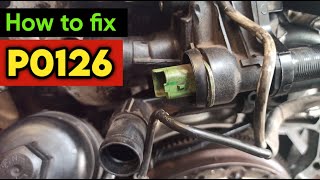
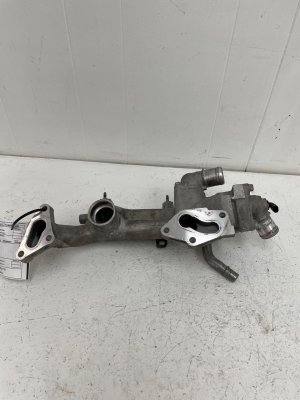
While the causes for P0126 are common 🎬 Watch: Understanding the P0126 trouble code across most vehicles, the primary repair part on the Telluride's 3.8L V6 is different from a traditional, simple thermostat. Kia uses an integrated "Coolant Temperature Control Assembly" or "Engine Coolant Thermostat Kit." This assembly includes the thermostat, housing, and an integrated electronic heater circuit. This heater allows the ECU to open the thermostat proactively for better temperature management. A failure of either the mechanical thermostat (stuck open) or the heater circuit can trigger a code. This integrated design means you cannot replace just the small, mechanical thermostat; the entire assembly must be replaced as a single unit, which makes the part more expensive than on many other vehicles.
Symptoms You May Notice
- Check Engine Light is on
- Engine temperature gauge on the dashboard reads lower than normal or takes a very long time to reach the middle
- Temperature gauge fluctuates or drops at highway speeds due to increased airflow over the radiator
- Heater may not blow hot air or takes much longer than usual to warm up, especially at idle
- Noticeable decrease in fuel economy
- Vehicle may not pass an emissions test
- Replacing the oxygen sensors. The PCM cannot rely on O2 sensor data when the engine is cold, but the O2 sensors themselves are rarely the cause of a P0126 code.
- Replacing the radiator. Unless the radiator is leaking and causing a low coolant condition, it is not a cause for the engine running too cool.
Most Likely Causes
- Stuck-Open Engine Thermostat Assembly 🔴 High Probability → Shop Integrated Thermostat Housing Assembly This is the most common cause for P0126 on any vehicle. The thermostat is designed to fail in the open position as a failsafe to prevent overheating. On the Telluride and its platform-mate, the Hyundai Palisade, the entire 🎬 See: DIY thermostat replacement on a Hyundai Palisade integrated assembly is a known failure point.
How to confirm: Monitor the engine coolant temperature using a live data scanner. If the temperature rises very slowly, struggles to reach ~195°F, or drops significantly when driving at highway speeds, the thermostat is likely stuck open. You can also feel the upper radiator hose shortly after a cold start; if it gets warm right away, coolant is flowing when it shouldn't be.
Typical fix: Replace the entire engine coolant thermostat control assembly. The system will also need to be drained, refilled, and bled of air. A new gasket should also be used.
Est. part cost: $175-$411 - Faulty Engine Coolant Temperature (ECT) Sensor ⚪ Low Probability → Shop Engine Coolant Temperature Sensor
How to confirm: Use a scan tool to compare the ECT sensor reading to the ambient air temperature sensor reading on a cold engine; they should be very close. If the ECT reading is illogical (e.g., -40°F on a warm day), the sensor or its wiring is faulty. You can also use an infrared thermometer to compare the actual temperature of the coolant housing to the sensor's reading to verify its accuracy.
Typical fix: Replace the engine coolant temperature sensor and check the wiring connector for corrosion or damage.
Est. part cost: $25-$75 - Low Engine Coolant Level ⚪ Low Probability
How to confirm: Visually inspect the coolant reservoir. When the engine is cool, the level should be between the 'MIN' and 'MAX' lines. If it's low, there is a leak in the system that must be found and repaired. A slow leak can prevent the system from reaching the proper temperature and pressure.
Typical fix: Top off the coolant with the correct type for your vehicle and pressure test the cooling system to find and repair the source of the leak.
Est. part cost: $20-$40 for coolant
Rare But Worth Checking
- Cooling Fan Stuck On: → Shop Engine Cooling Fan Blade If the electric cooling fans run continuously, even when the engine is cold, it can prevent the engine from warming up properly. This is usually caused by a faulty fan relay or a short in the control circuit.
- Wiring or Connector Issue: The wiring to the ECT sensor or the thermostat's integrated heater could be damaged, causing a high resistance that the PCM interprets as a very cold temperature or a circuit fault.
Diagnosis Steps
- Check for any Technical Service Bulletins (TSBs) or recalls. A deep search confirms there are no specific TSBs from Kia for P0126 on the Telluride, though the issue is well-documented in owner forums.
- Verify the engine coolant level is correct. Check when the engine is cold.
- Use an OBD-II scanner to check for any other accompanying codes, such as those related to the thermostat heater circuit (P0597, P0598).
- Use the scanner to monitor the live data from the Engine Coolant Temperature (ECT) sensor. On a cold start, monitor how quickly the temperature rises.
- If the temperature rises very slowly, never reaches full operating temperature (approx. 195-220°F), or drops at highway speeds, the thermostat assembly is almost certainly stuck open.
- If the temperature reading is erratic or clearly incorrect (e.g., reads -40°F), test the ECT sensor and its wiring circuit.
- Check if the electric cooling fans are running when they shouldn't be (i.e., when the engine is cold and the A/C is off).
- If the thermostat is confirmed as the fault, replace the entire thermostat control assembly (Part # 25600-3L380), 🎬 Watch: Step-by-step Kia Telluride thermostat assembly replacement refill the system with new coolant, and properly bleed all air from the system.
Parts You'll Likely Need
- Engine Coolant Thermostat Kit / Control Assembly
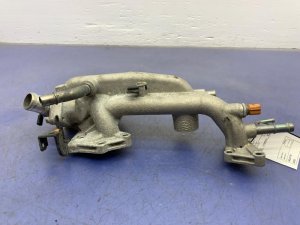
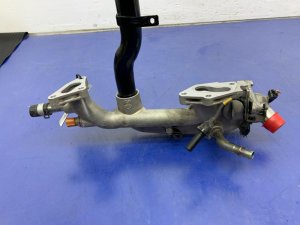
(OEM #25600-3L380)— This is the most common failure part for a P0126 code. The thermostat inside the assembly gets stuck open, preventing the engine from reaching operating temperature. On the Telluride, it is sold as a complete assembly.
Trusted brands: Kia (OEM)
OEM price range: $200-$411
Aftermarket price range: Not widely available - Engine Coolant / Antifreeze — The cooling system must be drained to replace the thermostat assembly, so you will need to refill it with new coolant.
OEM price range: $30-$50 per gallon
Aftermarket price range: $20-$40 per gallon
Related Codes That Often Appear With This One
- P0128: Coolant Temperature Below Thermostat Regulating Temperature (a very similar code)
- P0597: Thermostat Heater Control Circuit/Open
- P0598: Thermostat Heater Control Circuit Low
Platform-Specific Known Issues
- Owner Repair Experiences: Owners on forums like Reddit's r/KiaTelluride report dealers charging between $600 and $1000 for this repair. Some owners have noted the repair was covered under the 5yr/60k mile basic warranty, but generally not under the 10yr/100k mile powertrain warranty. DIY replacement is possible, but requires draining coolant and working in a somewhat tight space.
Mechanic-Grade Diagnostic Values
- Engine Coolant Temperature (ECT) Sensor Resistance — expected: Approximately 2000-3000 Ω at 20°C (68°F) and 200-300 Ω at 90°C (194°F).. Failure: Resistance is significantly outside the expected range for a given temperature, or the reading is open (infinite) or shorted (near zero).
- Engine Coolant Temperature (ECT) Sensor Signal Voltage — expected: Approximately 2.0V - 3.0V on a cold engine (key on, engine off), decreasing smoothly to around 0.5V when the engine is at full operating temperature.. Failure: Voltage is stuck high (near 5V) or low (near 0V), or does not change as the engine warms up, indicating a sensor or circuit fault.
- Electronic Thermostat Heater Coil Resistance — expected: Approximately 15-16 Ω.. Failure: An open circuit (infinite resistance) or a short circuit (near zero resistance) indicates a failed heater element within the thermostat assembly, which necessitates replacement of the entire unit. This will often be accompanied by codes P0597 or P0598.
Scan Tool Commands That Help
- Kia GDS (Global Diagnostic System): Thermostat Heater Actuation Test — This bidirectional command allows a technician to manually activate the electronic heater inside the thermostat assembly. It is used to verify that the heater circuit, wiring, and PCM control are functioning correctly. When activated, a technician can monitor live data to see if the command results in a change in coolant flow or temperature, helping to isolate a faulty component from a wiring issue.
- Kia GDS (Global Diagnostic System): Engine Coolant Filling Mode / Air Bleed Procedure — After replacing the thermostat assembly and refilling the coolant, this service function helps to properly bleed air from the cooling system. It may cycle the water pump or other components to purge trapped air pockets, which can be difficult to remove manually and can cause a P0126 code to return even with a new part.
Wiring & Ground Locations
- ECT Sensor Connector — Screwed into the thermostat housing assembly on the 3.8L V6 engine.. This two-pin connector provides the temperature signal to the PCM. Corrosion, damage, or a loose connection here can cause erratic or incorrect readings, leading to a P0126 code. One pin is the signal wire, and the other is a sensor ground.
- Thermostat Heater Connector — On the main body of the integrated thermostat control assembly.. This connector powers the electronic heater that assists in opening the thermostat. A fault here will typically set a P0597 or P0598 code but can be related to a P0126 condition. Checking for power and ground at this connector is a key diagnostic step.
- Engine Block Ground (e.g., G100/G102) — Typically located on the left front or left rear of the engine block/cylinder head.. Engine sensors, including the ECT, rely on a clean and secure ground connection to the engine block. A corroded or loose main engine ground can introduce resistance, skewing the ECT sensor's reading and potentially causing the PCM to misinterpret the engine's actual temperature.
Real Owner Repair Stories
- tellurideforum.org user (2020 Kia Telluride, 55,000 miles) — Check Engine Light with code P0126, temperature gauge was very slow to rise to normal operating temperature.
✅ What actually fixed it The dealership diagnosed a failed thermostat. They replaced the 'Control Assembly-Coolant' (Part # 25600-3L380) and the 'Gasket-Thermostat Case' (Part # 25514-3L000). The repair was covered under the 5yr/60k mile basic warranty and resolved the code.
OEM Part Supersession History
25600-3L380→25600-3L380— No supersession noted.
Heads up: The part number 25600-3L380 appears to be the consistent OEM part for all 2020-2024 Kia Telluride models with the 3.8L V6 engine. No major revisions or incompatible versions have been documented in parts catalogs.
Model Year Variations Within This Range
- 2020-2024: While the Kia Telluride received a significant cosmetic and interior technology refresh for the 2023 model year, the 3.8L V6 engine and its associated cooling system components, including the thermostat control assembly (25600-3L380), remained unchanged. Therefore, the causes and fixes for P0126 are identical across the entire 2020-2024 model range.
Diagnostic Flowchart
Other Known Issues on This Vehicle
Issues unrelated to this code that are worth knowing about as an owner of this generation:
- Spontaneously Cracking Windshields 🟠 Medium — Widespread enough to trigger a class-action lawsuit. Can occur at any mileage, often without obvious impact. (Ref: Kia issued a 'Customer Satisfaction Initiative' but no formal recall.)
- Tow Hitch Wiring Harness Fire Risk 🔴 High — Affects 2020-2022 models with the genuine Kia 4-pin tow hitch harness. Moisture can short the module, causing a fire even when parked. (Ref: Recall SC247 / NHTSA 22V-626)
- GDI Carbon Buildup on Intake Valves 🟠 Medium — An inherent issue with Gasoline Direct Injection (GDI) engines. Becomes problematic around 60,000-100,000 miles, causing misfires, rough idle, and power loss.
- High Beam Headlight Failure 🟠 Medium — Some owners of 2020 models reported intermittent or total failure of high beam headlights. (Ref: TSB SA380 was issued for inspection on a specific production range of 2020 models.)
Used vs. New Parts: Buying Guide for This Vehicle
When a used part is the smart pick: For this specific repair, a used part is strongly discouraged. The thermostat assembly is a known high-failure item, and the failure mode (stuck-open thermostat) is internal and cannot be visually inspected. The risk of getting a part that has already failed or is near the end of its service life is very high.
Donor-vehicle mileage cap: roughly under 20000 miles for the part to have meaningful remaining life.
What to inspect on the donor part:
- If a used part must be considered, source it from the lowest-mileage donor vehicle possible.
- Check for any signs of coolant leakage, staining, or corrosion around the housing and connectors.
- Ensure all plastic connector housings are intact and not brittle or cracked.
OEM-only on this vehicle (don't cheap out):
- Engine Coolant Thermostat Kit / Control Assembly
Aftermarket brands forum-validated for this vehicle:
- No widely available or forum-validated aftermarket brands are known for this specific integrated thermostat assembly. It is highly recommended to use the Kia OEM part (25600-3L380).
Brands owners have reported issues with on this vehicle:
- Unnamed, low-cost options found on marketplaces should be avoided due to the complexity of the integrated electronic heater and the high failure rate of the original part.
Real Owner Stories
Aggregated from forums and TSBs cited above. Mileages and costs reflect what owners reported in those sources.
2023 Kia Telluride S 3.8L V6
Symptoms: Poor A/C performance and an engine overheating warning.
What fixed it: Replacement of the 'Thermostat unit' and 'Gasket-coolant inlet' by the dealer.
Cost: $0-$0
Source hint: Reddit r/KiaTelluride - '2023 S engine overheated - UPDATE!!!!'
2020-2024 Kia Telluride 3.8L V6
Symptoms: Check engine light for P0126; dealer quoted a high price for replacement.
What fixed it: Thermostat replacement (OEM part cost confirmed around $200).
Cost: $600-$600
Source hint: Reddit r/KiaTelluride - 'Need New Thermostat'
Related OBD-II Codes
Frequently Asked Questions
Is there a Kia Technical Service Bulletin (TSB) for the P0126 code on my Telluride?
Will the 10-year/100,000-mile powertrain warranty cover the thermostat replacement?
What is the specific part number I need to fix the P0126 code on my 3.8L V6 Telluride?
Can I just replace the thermostat itself, or do I need the whole assembly?
How much should I expect to pay a Kia dealer for this repair?
Are there any other major recalls I should check for while my Telluride is at the shop for P0126?
Helpful Videos
We Have This Part in Stock

The information in this article is provided for general reference and educational purposes only. Vehicle specifications, procedures, and part compatibility can vary by production date, trim level, and region. Always consult your vehicle's factory service manual and verify part numbers before purchasing or performing repairs. Safety-critical components such as airbags, seat belts, and braking systems should be installed by a qualified professional.
- Kia Telluride:
- 🧭 Diagnostic Flowchart
- 🎬 Helpful Videos
- 🛍️ Shop This Part
- What's Unique About the 2020-2024 Kia Telluride
- Symptoms You May Notice
- Most Likely Causes
- Rare But Worth Checking
- Diagnosis Steps
- Parts You'll Likely Need
- Related Codes That Often Appear With This One
- Platform-Specific Known Issues
- Mechanic-Grade Diagnostic Values
- Scan Tool Commands That Help
- Wiring & Ground Locations
- Real Owner Repair Stories
- OEM Part Supersession History
- Model Year Variations Within This Range
- Other Known Issues on This Vehicle
- Used vs. New Parts: Buying Guide for This Vehicle
- Real Owner Stories
- 2023 Kia Telluride S 3.8L V6
- 2020-2024 Kia Telluride 3.8L V6
- Related OBD-II Codes
- Frequently Asked Questions
- 🎟️ Get 5% Off