

P0126 on 2014-2017 Mazda MAZDA6: Causes and Fixes for Insufficient Coolant Temperature
On a 2014-2017 Mazda6, code P0126 almost always points to a faulty thermostat that is part of the larger Coolant Control Valve (CCV) assembly. This causes the engine to warm up too slowly. While replacing the thermostat is the common fix, a PCM software glitch can also trigger this code on 2014 models, so checking for updates is a wise first step. For persistent issues, Mazda has an updated repair involving a dummy plug.
- P0126 on a 2014-2017 Mazda6 means the engine is not warming up quickly enough.
- The most likely cause is a thermostat that has failed and is stuck open.
- For 2014 models specifically, check with a dealer about a potential software update (TSB #01-010-13-2775B) before replacing any parts.
- The fix is typically to replace the thermostat, which is available as a separate part from the main Coolant Control Valve.
- Always use Mazda's specified FL22 coolant when refilling the system after the repair.
What's Unique About the 2014-2017 Mazda MAZDA6
Mazda's Skyactiv-G engines from this era use a complex, electronically controlled Coolant Control Valve (CCV) instead of a simple, traditional thermostat. This valve's purpose is to precisely manage engine temperature for efficiency. Inside the CCV is a small, mechanical 'failsafe' thermostat which is only supposed to open if the electronic valve fails and the engine overheats. The common problem is that this failsafe thermostat deforms and sticks open at normal temperatures, allowing coolant to constantly bypass the main valve and flow to the radiator, preventing the engine from warming up. This specific failure is so common that Mazda has issued multiple Technical Service Bulletins (TSBs) and a warranty extension (SSP D8) for this exact problem on many models, including the Mazda6. For early 2014 models, a TSB also exists that points to a PCM logic error, where the code is set even with a perfectly good thermostat, requiring a software update instead of a part replacement.
Diagnostic Flowchart
Tap your situation to follow the diagnostic path that matches what you're seeing on this vehicle.
Symptoms You May Notice
- Check Engine Light is on
- Engine takes a very long time to warm up
- Temperature gauge on the dashboard stays low or fluctuates, often not rising above the halfway mark.
- Blue low coolant temperature light stays on longer than usual, or comes back on while driving.
- Poor heater performance, especially when idling or at low speeds.
- Decreased fuel economy.
- Replacing the entire Coolant Control Valve assembly when only the less expensive internal thermostat has failed. Mazda now offers a service kit for just the thermostat, and more recently, a dummy plug kit which is the preferred permanent repair.
Most Likely Causes
- Failing Thermostat / Coolant Control Valve (CCV) 🔴 High Probability → Shop Engine Coolant Control Valve The small failsafe thermostat inside the main Coolant Control Valve assembly is a known weak point. It can get stuck open, allowing coolant to circulate through the radiator constantly, preventing the engine from warming up properly. TSBs and a massive warranty extension program (SSP D8) confirm this is a widespread, persistent design issue across many Mazda models.
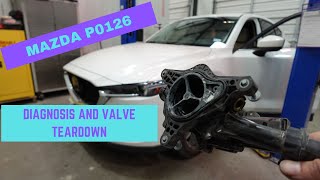
How to confirm: Use an OBD-II scanner to monitor live coolant temperature data. If the engine temperature struggles to rise above ~170-180°F during a 15-minute drive, the thermostat is likely stuck open. Freeze frame data for the code often shows a coolant temp between 104°F and 176°F, which according to TSBs, is a direct indicator for this failure. 🎬 Watch: A deep dive into the P0126 diagnosis and valve teardown.
Typical fix: Replace the thermostat. Mazda has released an updated repair that involves removing the faulty internal failsafe thermostat entirely and installing a 'dummy plug' (Part No. PYY3-15-SA1) to block the bypass passage, along with a PCM software update. This is considered a more permanent fix than just replacing the thermostat with another of the same design.
Est. part cost: $30-$70 for a thermostat (PE01-15-171) or the dummy plug kit (PYY3-15-SA1), $150-$250 for a complete Coolant Control Valve assembly. - Powertrain Control Module (PCM) Software Error 🟡 Medium Probability TSB #01-010-13-2775B specifically states that on some 2014 models, the code can be triggered even when the thermostat is functioning normally due to a software glitch in the PCM's monitoring logic. This is less likely on 2015-2017 models.
How to confirm: A Mazda dealership or a qualified independent shop with the appropriate tools can check your vehicle's PCM software version against the TSB to see if an update is available.
Typical fix: Reprogramming (reflashing) the PCM with updated software. Note that the latest fix for the thermostat issue also requires a PCM reflash.
Est. part cost: $0 (if under warranty), $100-$200 for a dealer reflash service. - Low Engine Coolant Level ⚪ Low Probability
How to confirm: Visually inspect the coolant reservoir and the radiator (when the engine is cold) to ensure the level is between the 'MIN' and 'MAX' marks. A low level can cause incorrect temperature readings.
Typical fix: Top off the coolant with the correct type (Mazda FL22). If the level drops again, you must find and repair the leak.
Est. part cost: $20-$30 for a gallon of coolant.
Rare But Worth Checking
- Faulty Engine Coolant Temperature (ECT) Sensor: → Shop Engine Coolant Temperature Sensor While far less common than a thermostat failure for this specific code on a Mazda, the sensor that reports the temperature to the PCM can fail and send inaccurate readings, causing the PCM to think the engine is cold when it's not.
Diagnosis Steps
- Check for a Check Engine Light and confirm the code is P0126 using an OBD-II scanner. Check for P0128 as well.
- Check the engine coolant level in the reservoir and radiator (only when the engine is completely cool). Top off with Mazda FL22 coolant if low.
- If you have a 2014 model, contact a Mazda dealer with your VIN to check for TSB #01-010-13-2775B regarding a potential PCM update. This should be done before replacing parts.
- Use a scanner to monitor live engine coolant temperature (ECT). Start the cold engine and watch the temperature rise as you drive. A healthy engine should reach ~195-210°F.
- If the temperature rises very slowly and struggles to exceed about 175-180°F, especially at highway speeds, the thermostat is almost certainly stuck open.
- Check the freeze frame data associated with the P0126 code. If the recorded ECT is between 104°F and 176°F, Mazda's own service literature points directly to replacing the thermostat/CCV.
- If the temperature gauge behaves erratically or gives impossible readings (e.g., jumps from cold to hot instantly), suspect a faulty ECT sensor or wiring.
- If the thermostat is confirmed to be the issue, proceed with replacement using the updated dummy plug kit (PYY3-15-SA1) and a PCM reflash for the most durable repair.
Parts You'll Likely Need
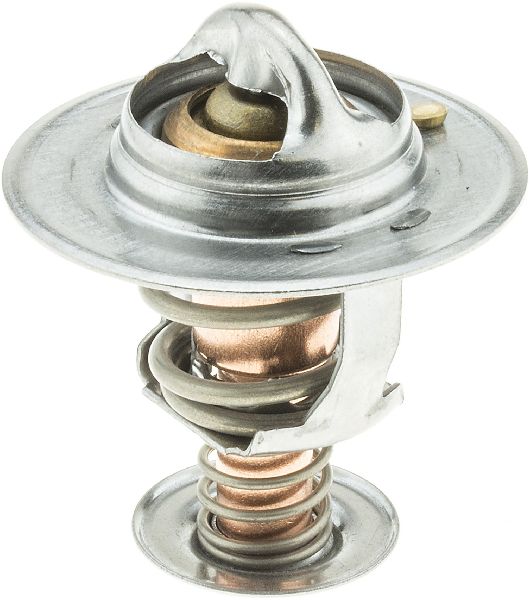
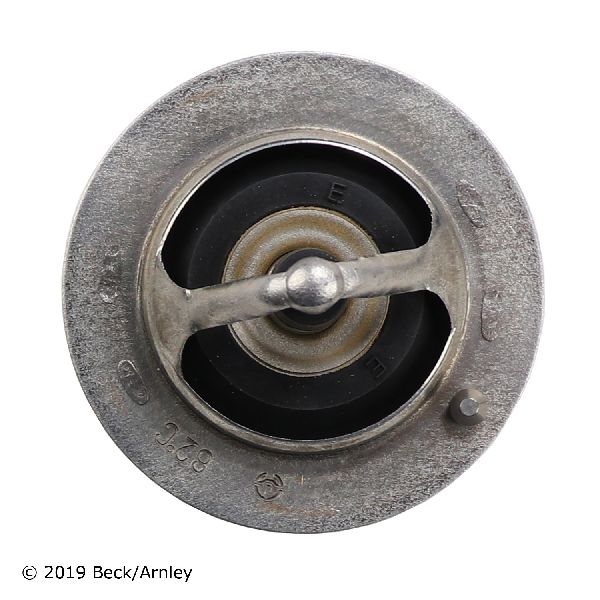
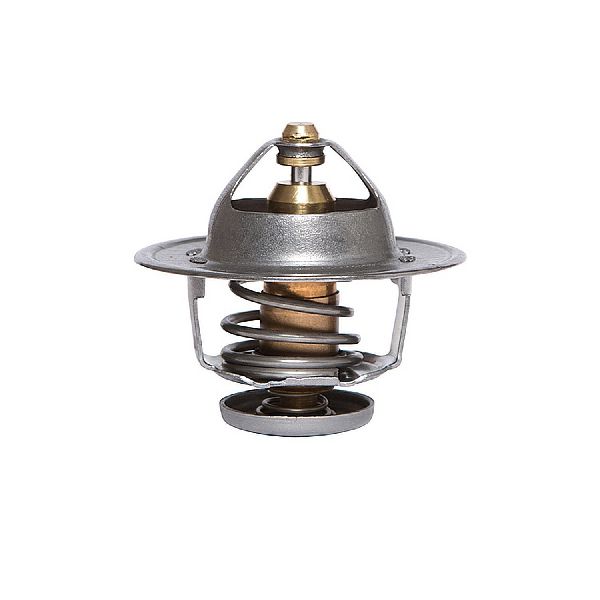
- Engine Coolant Thermostat
(OEM #PE01-15-171)— This is the most common failure point for code P0126. It fails in the open position, preventing the engine from reaching operating temperature. This is the simple thermostat replacement. 🎬 See this walkthrough on how to fix the P0126 code.
Trusted brands: Mazda Genuine
OEM price range: $30-$50
Aftermarket price range: $25-$50 - Dummy Plug Set for CCV (Updated Repair)
(OEM #PYY3-15-SA1)— This is part of Mazda's updated, more permanent fix. It replaces the failure-prone internal thermostat entirely, allowing the main electronic valve to control temperature without being bypassed. Requires a PCM reflash. 🎬 Watch: Learn why Mazda recommends the dummy plug for this repair.
Trusted brands: Mazda Genuine
OEM price range: $40-$70 - Mazda Long Life Coolant FL22
(OEM #0000-77-508F-20)— The cooling system must be drained to replace the thermostat, requiring a refill. It is critical to use the correct OEM-specified coolant to prevent system damage.
Trusted brands: Mazda Genuine
OEM price range: $25-$35 per gallon
Related Codes That Often Appear With This One
- P0128: Coolant Thermostat (Coolant Temperature Below Thermostat Regulating Temperature) - This is a very similar code and is often triggered by the same faulty thermostat issue.
- P2B61:00: Coolant Control Valve Circuit Range/Performance - If this code is present with P0126, TSBs indicate the problem is likely electrical (wiring, connector) rather than the mechanical thermostat, requiring a different diagnostic approach.
Technical Service Bulletins (TSBs) & Recalls
- 01-010-13-2775B: Notes that on certain 2014 vehicles, the P0126 code may illuminate despite the thermostat functioning normally, indicating a PCM logic issue.
- 01-001-26b: Describes symptoms of P0126 as taking longer to warm up and a fluctuating temperature gauge due to a stuck-open thermostat.
- SSPD8 Repair d / SSPD8 Repair c: Details a Special Service Program and warranty extension for P0126 on later model years (2018-2021 Mazda6), showing a persistent issue with this component and extending the warranty to 15 years/150,000 miles.
Platform-Specific Known Issues
- TSB #01-010-13-2775B: Specifically for 2014 Mazda6 models, this bulletin notes that the P0126 code may be stored in memory even if the thermostat is working correctly. The prescribed fix is a PCM software update.
- TSB #01-001-26b / SSPD8: While these apply to slightly later model years (2018-2021 Mazda6), they confirm a pattern of thermostat failures causing code P0126 across Mazda's lineup. Mazda issued a warranty extension program (SSP D8) for this issue to 15 years/150,000 miles, highlighting the prevalence of the problem.
- Updated Repair Strategy: For later models, Mazda's official repair evolved from replacing the thermostat to removing it and installing a 'dummy plug' and reflashing the PCM. This is considered the most permanent fix and is relevant for older models experiencing repeat failures.
Mechanic-Grade Diagnostic Values
- Engine Coolant Temperature (ECT) Sensor Resistance — expected: Approximately 2000-3000 Ω at 20°C (68°F), decreasing to 200-300 Ω at 90°C (194°F).. Failure: Readings that are infinite (open circuit), near zero (short circuit), or do not correspond with the known temperature of the coolant indicate a faulty sensor.
- Engine Coolant Temperature (ECT) Sensor Voltage (Signal Wire) — expected: Approximately 2.0V - 3.0V on a cold engine, dropping to around 0.5V when the engine is fully warmed up.. Failure: Voltage that is stuck high (e.g., 5V) or low, or does not change as the engine warms up, points to a sensor or wiring issue.
Hidden / Shadow Codes Worth Checking
- P0126:00: The ':00' is a Failure Type Code (FTC) specified by the ISO 15031-6 standard. In this context, it typically indicates a general 'Component Fault' without specifying further detail (e.g., circuit high/low). The TSBs for this issue consistently reference this specific code. (see via Most modern OBD-II scanners will display this two-byte fault code.)
Scan Tool Commands That Help
- Mazda IDS (Integrated Diagnostic System) or MDARS: PCM Reprogramming / Software Update — This is required for the 2014 model-specific TSB where the code is set due to a software glitch. It is also a mandatory step when performing the updated 'dummy plug' repair to ensure the PCM's cooling strategy is adjusted for the removed failsafe thermostat.
- Mazda M-MDS (Mazda Modular Diagnostic System): Data Logger - ECT PID Monitoring — Used to monitor and compare live data from ECT sensor 1 and ECT sensor 2 (if equipped) to diagnose sensor performance issues, as specified in some Mazda TSBs for other coolant temperature codes.
Wiring & Ground Locations
- Ground Strap near Thermostat — A ground strap is located on or above the thermostat housing itself.. This is the most proximate ground to the Coolant Control Valve. Corrosion or a loose connection here could directly impact the electronic portion of the CCV or the nearby ECT sensor.
- HPFP Area Ground — On the engine block near the High Pressure Fuel Pump (HPFP).. Forum users report that a loose or corroded ground in this location can cause a variety of sensor issues, including erratic readings from the ECT sensor which is in the general vicinity.
- Transmission Grounds — On top of and on the front of the transmission case.. These are major chassis-to-engine ground points. A poor connection here can create floating grounds and cause unpredictable behavior in multiple engine management sensors.
Real Owner Repair Stories
- Mazda Forum user (2022 Mazda CX-5 (similar Skyactiv system)) — Check Engine Light with code P0126 at 38,000 miles. After initial repair, symptoms returned at 57,000 miles with slow warm-up and CEL P0126 again.
❌ Tried (didn't work) The first repair attempt involved replacing the entire Coolant Control Valve, which only fixed the issue for about 19,000 miles.
✅ What actually fixed it The dealer performed the updated TSB repair: they removed the internal failsafe thermostat from the CCV, installed the 'dummy plug' kit, and performed a PCM software update. This permanently resolved the issue. - Reddit user in r/mazda (Mazda CX-5 (non-turbo)) — Engine would not warm up properly, with coolant temperature rarely exceeding 120-130°F instead of the normal 210°F. Heater performance was also poor. Crucially, there was NO check engine light.
❌ Tried (didn't work) Driving the vehicle and hoping the issue would resolve or trigger a light.
✅ What actually fixed it The owner described the symptoms in detail to the dealer. The dealer performed the TSB repair (dummy plug and PCM reflash) under the extended warranty, even without a code present, by noting a CEL in the service paperwork. The repair was successful, restoring normal warm-up times and heater function.
When the Usual Fixes Don't Work
- In cases of repeat failure, simply replacing the thermostat (PE01-15-171) or the entire Coolant Control Valve assembly has proven to be a temporary fix for some owners. One owner reported the P0126 code returning after just 19,000 miles following a full CCV replacement. The permanent solution in these comeback cases was the updated repair strategy of removing the internal thermostat and installing Mazda's 'dummy plug' kit (PYY3-15-SA1) along with a PCM reflash.
OEM Part Supersession History
PE01-15-171 (Thermostat)→PYY3-15-SA1 (Dummy Plug Kit)— The original repair of replacing the failure-prone thermostat was often not a permanent solution. Mazda's updated strategy is to remove the mechanical thermostat entirely and block its passage with a 'dummy plug', relying solely on the main electronic coolant control valve. This requires a corresponding PCM software update.
Heads up: Installing the dummy plug (PYY3-15-SA1) is not a direct replacement; it MUST be accompanied by a PCM reflash. Failure to update the software will result in incorrect cooling system management by the PCM.
Model Year Variations Within This Range
- 2014 only: TSB #01-010-13-2775B applies specifically to some 2014 models. It states the P0126 code can be set due to overly sensitive PCM logic, even with a perfectly functioning thermostat. The fix is a PCM software update, not a hardware replacement.
Helpful Videos
We Have This Part in Stock


The information in this article is provided for general reference and educational purposes only. Vehicle specifications, procedures, and part compatibility can vary by production date, trim level, and region. Always consult your vehicle's factory service manual and verify part numbers before purchasing or performing repairs. Safety-critical components such as airbags, seat belts, and braking systems should be installed by a qualified professional.
- Mazda MAZDA6:
- 🧭 Diagnostic Flowchart
- 🎬 Helpful Videos
- 🛍️ Shop This Part
- What's Unique About the 2014-2017 Mazda MAZDA6
- Symptoms You May Notice
- Most Likely Causes
- Rare But Worth Checking
- Diagnosis Steps
- Parts You'll Likely Need
- Related Codes That Often Appear With This One
- Technical Service Bulletins (TSBs) & Recalls
- Platform-Specific Known Issues
- Mechanic-Grade Diagnostic Values
- Hidden / Shadow Codes Worth Checking
- Scan Tool Commands That Help
- Wiring & Ground Locations
- Real Owner Repair Stories
- When the Usual Fixes Don't Work
- OEM Part Supersession History
- Model Year Variations Within This Range
- 🎟️ Get 5% Off