

P0126 on 2014-2021 Mitsubishi Outlander: Insufficient Coolant Temperature Fixes
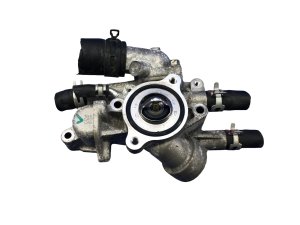
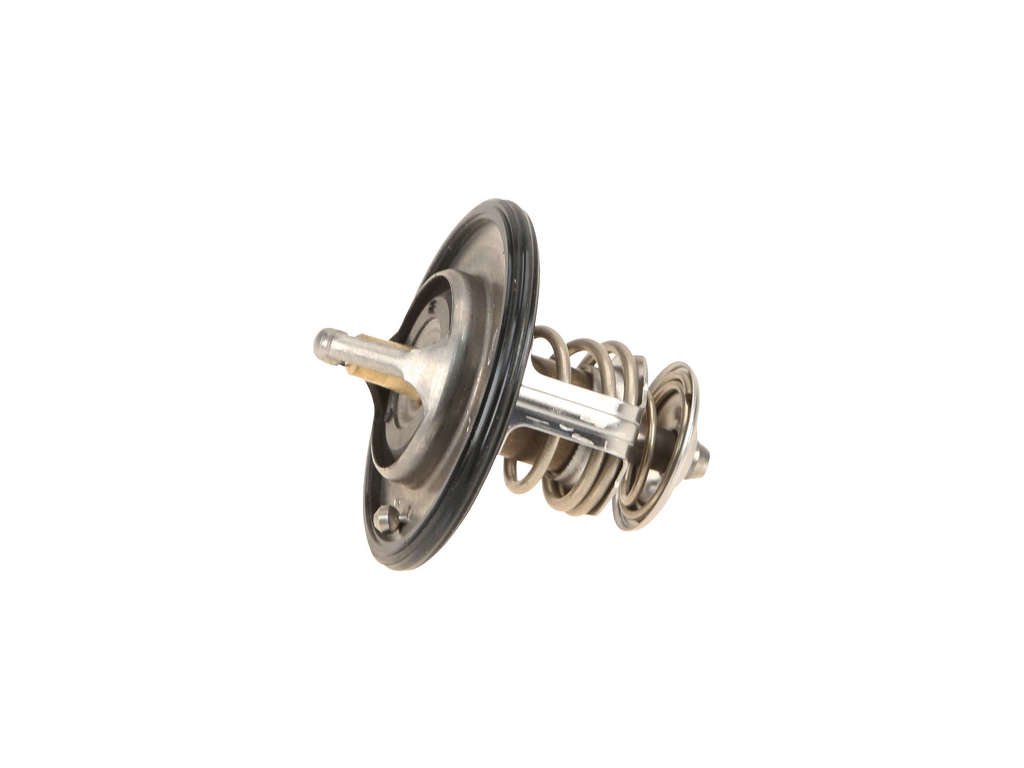
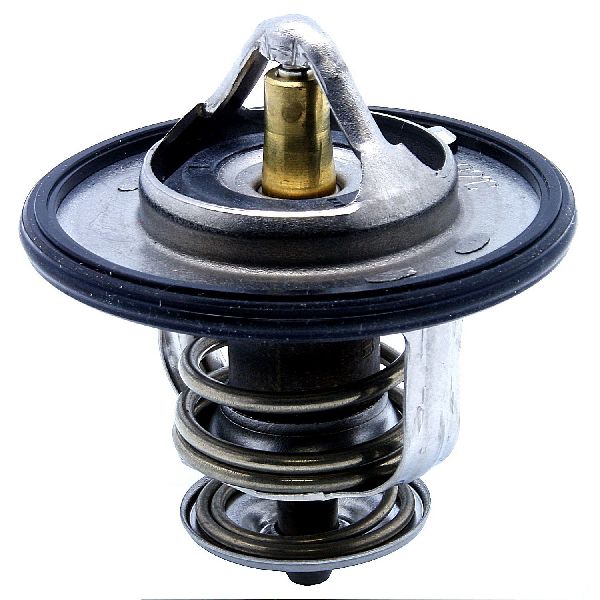
On a 2014-2021 Outlander, code P0126 is almost always caused by a thermostat that is stuck open. Replacing the thermostat is a common, DIY-friendly fix that typically costs between $20-$50 for the part. For the 2.4L 4J12 engine, the entire thermostat and housing assembly must be replaced.
- Code P0126 on your Outlander almost always means the thermostat is stuck open.
- Key symptoms include a low temperature gauge, poor cabin heat, and reduced fuel economy.
- This is a DIY-friendly repair for those with basic tools; the main part is inexpensive.
- Always use the correct temperature-rated thermostat (180°F or 189°F) and the correct type of blue Asian vehicle coolant.
- Driving with this code for too long can waste fuel and cause unnecessary wear on your engine.
What's Unique About the 2014-2021 Mitsubishi Outlander
For the third-generation Mitsubishi Outlander, the P0126 code does not point to a widespread, unique manufacturing defect but rather to the common failure of a standard cooling system component. A key difference between the two available engines is that on the 2.4L 4J12, the thermostat is integrated into a plastic housing and must be replaced as a single unit. The 3.0L V6 6B31 uses a more traditional, standalone thermostat. It is critical to use a replacement thermostat with the correct temperature rating, typically 180°F (82°C) or 189°F (88°C), as an incorrect one can prevent the issue from being resolved. Failures are generally due to normal wear and tear.
Symptoms You May Notice
- Check Engine Light is illuminated
- Engine temperature gauge on the dashboard stays low or takes a very long time to reach the normal operating position
- Cabin heater blows lukewarm or cool air, especially at idle
- Noticeable decrease in fuel economy
- Engine may run rough or idle high, particularly when cold
- Engine takes an unusually long time to warm up
- Replacing the oxygen (O2) sensors. People may mistakenly think a fuel system issue is causing the rough running when cold, but the P0126 code points directly to a cooling system problem.
- Replacing the Engine Coolant Temperature (ECT) sensor before confirming the thermostat's operation. The thermostat is the most likely cause by a wide margin.
Most Likely Causes
- Engine Thermostat Stuck Open 🔴 High Probability → Shop Integrated Thermostat Housing Assembly This is the most common failure mode for thermostats on most modern vehicles due to normal wear and tear of the internal spring and wax mechanism. It is the cause of P0126 in approximately 80% of cases.
How to confirm: After starting the engine cold, feel the upper radiator hose. It should remain cool for several minutes. If it starts to warm up almost immediately, the thermostat is likely stuck open, allowing coolant to circulate to the radiator prematurely.
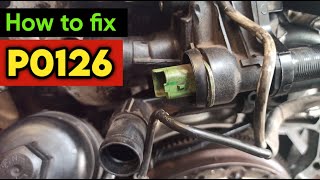
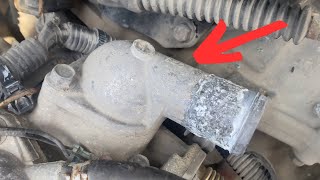
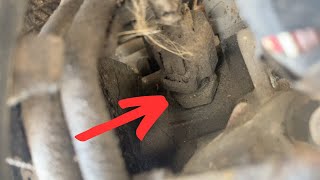
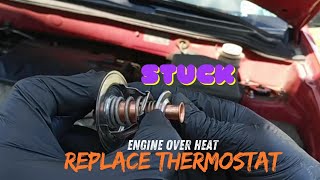
Typical fix: Replace the engine coolant thermostat and the corresponding gasket. For the 2.4L 4J12 engine, the entire integrated thermostat housing assembly must be replaced. 🎬 Watch: 2.4L thermostat location and replacement walkthrough It is also recommended to drain and refill the engine coolant at the same time.
Est. part cost: $25-$75 - Low Engine Coolant Level 🟡 Medium Probability Coolant can be lost over time through minor, undetected leaks in hoses, the radiator, or the water pump. An air pocket in the system, which can prevent the sensor from getting an accurate reading, can also cause this issue.
How to confirm: With the engine cool, check the coolant level in the overflow reservoir and the radiator itself. If the level is low, top it off and inspect the system for visible leaks.
Typical fix: Top off the coolant with a compatible blue, phosphate-based Asian vehicle coolant. If a leak is present, the leaking component (hose, radiator, etc.) must be replaced.
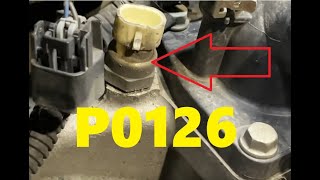
Est. part cost: $15-$30 for coolant - Faulty Engine Coolant Temperature (ECT) Sensor ⚪ Low Probability → Shop Engine Coolant Temperature Sensor While not as common as a thermostat failure, the ECT sensor can fail electrically, sending an incorrect (too low) temperature reading to the engine computer. On the 2.4L engine, the sensor is located on the right side of the engine. 🎬 See how to locate and replace the ECT sensor
How to confirm: Use an OBD-II scanner with live data to monitor the ECT sensor reading. Compare this reading to the actual engine temperature using an infrared thermometer pointed at the thermostat housing. If the readings differ significantly, the sensor is likely faulty.
Typical fix: Replace the Engine Coolant Temperature (ECT) sensor.
Est. part cost: $25-$60
Rare But Worth Checking
- Cooling Fan Running Constantly: → Shop Engine Cooling Fan Blade If the electric cooling fan is stuck on and runs as soon as the car is started, it can over-cool the engine, especially in colder weather, preventing it from reaching operating temperature. This is usually caused by a failed fan control relay or module.
- ECT Sensor Wiring Issue: → Shop Engine Coolant Temperature Sensor Damaged or corroded wiring or connectors for the ECT sensor can create high resistance, leading the ECM to interpret the signal as a very low temperature.
Diagnosis Steps
- Check for other stored trouble codes with an OBD-II scanner.
- With the engine completely cool, verify the engine coolant level in both the radiator and the overflow reservoir. Top off if necessary.
- Inspect the cooling system for any visible signs of coolant leaks (hoses, radiator, water pump, thermostat housing).
- Start the cold engine and feel the upper radiator hose. It should stay cool to the touch for at least 5-8 minutes. If it gets warm right away, the thermostat is stuck open and needs to be replaced.
- If the hose stays cool, use an OBD-II scanner to monitor the live data from the Engine Coolant Temperature (ECT) sensor as the engine warms up. The temperature should rise steadily to around 180-195°F (82-90°C) and then stabilize.
- If the temperature on the scanner never reaches the target range, but the heater is blowing hot air, suspect a faulty ECT sensor. You can verify this by comparing the scanner's reading to a reading from an infrared thermometer pointed at the thermostat housing.
- Check that the electric cooling fan is not running constantly from the moment the engine is started. If it is, diagnose the fan control circuit.
Parts You'll Likely Need
- Engine Coolant Thermostat
(OEM #4J12 (2.4L): 1305A803 (Integrated Housing) / 6B31 (3.0L): 1305A259 (Thermostat only))— This is the most common cause of P0126, as the internal mechanism fails and sticks in the open position, over-cooling the engine.
Trusted brands: Aisin, Motorad, Stant, Dayco
OEM price range: $40-$70
Aftermarket price range: $20-$50 - Engine Coolant / Antifreeze — Coolant must be drained to replace the thermostat and should be refilled with the correct type to ensure proper system function and prevent corrosion. Mitsubishi typically requires a blue, phosphate-based Asian vehicle coolant.
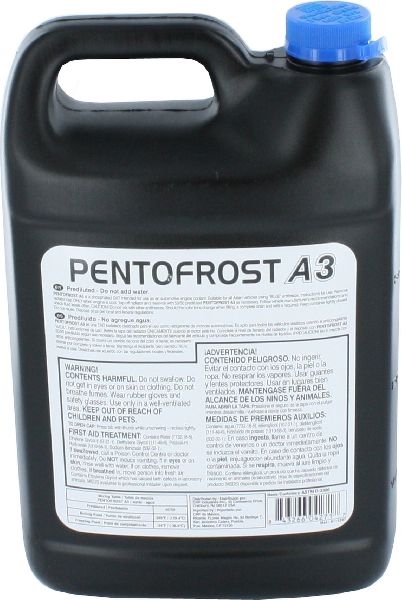
Trusted brands: Peak OET Blue, Pentofrost A3, Valvoline Asian Vehicle Blue
OEM price range: $25-$40 per gallon
Aftermarket price range: $15-$30 per gallon - Engine Coolant Temperature (ECT) Sensor
(OEM #1308A012 (interchanges with MD177572, MD182467, MR985034))— A less common but possible cause. If the sensor provides inaccurate low readings to the ECM, it can trigger the code.
Trusted brands: Delphi, NGK, Denso
OEM price range: $45-$70
Aftermarket price range: $25-$60
Related Codes That Often Appear With This One
- P0128 — P0128 (Coolant Temperature Below Thermostat Regulating Temperature) is a very similar code. Both are often caused by a stuck-open thermostat, and which code gets triggered can depend on the specific conditions and manufacturer logic.
Platform-Specific Known Issues
- Thermostat Replacement on 2.4L vs 3.0L: → Shop Integrated Thermostat Housing Assembly A key repair difference is that the 2.4L 4J12 engine's thermostat is integrated into its plastic housing and must be replaced as a complete assembly (Part No. 1305A803). The 3.0L V6 6B31 engine uses a conventional, separate thermostat (Part No. 1305A259) that can be replaced on its own.
- Owner Experience: A user on MitsubishiForums reported getting a P0126 code on their 2016 Outlander. After confirming the coolant level was correct, they replaced the thermostat and gasket, which completely resolved the check engine light and restored proper heater function. 🎬 Watch: Step-by-step guide to fixing the P0126 code This is a typical repair story for this platform.
Mechanic-Grade Diagnostic Values
- Engine Coolant Temperature (ECT) Sensor Resistance — expected: Approx. 2,200 - 3,000 Ω at 68°F (20°C) and 250 - 350 Ω at 176°F (80°C).. Failure: Resistance readings that are significantly higher or lower than the expected values for a given temperature, or an open/infinite resistance reading, indicate a faulty sensor.
Scan Tool Commands That Help
- Mitsubishi M.U.T.-III: CAN bus diagnostics — While P0126 is not a communication code, a related but different code (U0126) can be set for CAN timeout issues. Running a full CAN bus diagnostic with the dealer tool can rule out underlying communication problems that might be causing erratic behavior in very rare cases, though it is not a primary step for P0126.
OEM Part Supersession History
1305A283→1305A803— Standard part number update by the manufacturer for the 2.4L integrated thermostat housing.MD177572→1308A012— Standard part number update by the manufacturer for the Engine Coolant Temperature sensor.
Heads up: Some owners have reported issues with aftermarket ECT sensors reading inaccurately (too high or low), leading to persistent issues. Using a genuine OEM sensor is often recommended to ensure correct temperature reporting to the ECU.
Diagnostic Flowchart
Other Known Issues on This Vehicle
Issues unrelated to this code that are worth knowing about as an owner of this generation:
- CVT Transmission Failure/Shudder 🔴 High — More common in 2014-2016 models. Can manifest as whining, shuddering, hesitation, or complete failure. (Ref: TSB-15-23A-002 was issued to correct hydraulic pressure settings in the CVT. A class-action lawsuit was also filed regarding these issues.)
- Corroding Liftgate Gas Struts 🟠 Medium — Affects 2014-2020 Outlander models. Saltwater can penetrate the strut, causing corrosion and failure, which can lead to the liftgate falling unexpectedly. (Ref: NHTSA Recall 23V-246)
- Premature Suspension Component Wear 🟠 Medium — Owners report premature failure of front lower control arms, ball joints, and sway bar links, often before 80,000 miles, leading to clunking noises over bumps.
- Malfunctioning Infotainment System 🟡 Low — Complaints include the touchscreen freezing, becoming unresponsive, or the rearview camera failing to display. (Ref: Multiple software-related recalls have been issued for rearview camera failures.)
Used vs. New Parts: Buying Guide for This Vehicle
When a used part is the smart pick: For this repair, using used parts is generally not recommended. The primary cause, the thermostat, is a wear-and-tear item with a finite lifespan, and a used one carries a high risk of premature failure. The secondary cause, the ECT sensor, is inexpensive to buy new.
Donor-vehicle mileage cap: roughly under 50000 miles for the part to have meaningful remaining life.
What to inspect on the donor part:
- For a thermostat housing (2.4L), inspect carefully for any hairline cracks, especially around bolt holes and hose connections.
- Ensure any used electrical connectors for the ECT sensor are free of corrosion and have intact locking tabs.
OEM-only on this vehicle (don't cheap out):
- Engine Coolant Temperature (ECT) Sensor: While not strictly OEM-only, some forum users report that certain aftermarket sensors can provide inaccurate readings, causing persistent issues. Sticking with a genuine Mitsubishi or a top-tier OEM supplier like Denso is a safer bet.
Aftermarket brands forum-validated for this vehicle:
- Thermostat: Aisin, Gates, Stant (SuperStat line), Beck/Arnley
- Coolant: PEAK OET Blue, Pentofrost A3, Valvoline Asian Vehicle Blue
Brands owners have reported issues with on this vehicle:
- Thermostat: Some users have reported inconsistent quality and premature failures with budget or store-brand thermostats, specifically mentioning Motorad as having fluctuating performance.
Real Owner Stories
Aggregated from forums and TSBs cited above. Mileages and costs reflect what owners reported in those sources.
2016 Mitsubishi Outlander
Symptoms: Check engine light illuminated with code P0126; confirmed coolant level was correct but the heater was not functioning properly.
What fixed it: Replaced the thermostat and gasket.
Source hint: mitsubishiforum.com/forum/mitsubishi-outlander-10/p0126-insufficient-coolant-temp-50113/
Related OBD-II Codes
Frequently Asked Questions
I have a 2016 Outlander with P0126; is there a specific part number I should look for to fix the thermostat?
My Outlander is throwing P0126 and the heater is cold at idle. Could this be related to the CVT issues mentioned in TSB-15-23A-002?
Can I use any blue coolant to top off my 2014-2021 Outlander to clear P0126?
Is the P0126 code on my 2017 Outlander Sport related to the same issues as the standard Outlander?
I'm seeing P0126 and my liftgate won't stay up. Are these related?
Should I buy a used thermostat housing for my 2.4L Outlander to save money?
Helpful Videos
Used OEM Parts in Stock
New Aftermarket Parts Available


The information in this article is provided for general reference and educational purposes only. Vehicle specifications, procedures, and part compatibility can vary by production date, trim level, and region. Always consult your vehicle's factory service manual and verify part numbers before purchasing or performing repairs. Safety-critical components such as airbags, seat belts, and braking systems should be installed by a qualified professional.
- Mitsubishi Outlander:
- 🧭 Diagnostic Flowchart
- 🎬 Helpful Videos
- 🛍️ Shop This Part
- What's Unique About the 2014-2021 Mitsubishi Outlander
- Symptoms You May Notice
- Most Likely Causes
- Rare But Worth Checking
- Diagnosis Steps
- Parts You'll Likely Need
- Related Codes That Often Appear With This One
- Platform-Specific Known Issues
- Mechanic-Grade Diagnostic Values
- Scan Tool Commands That Help
- OEM Part Supersession History
- Other Known Issues on This Vehicle
- Used vs. New Parts: Buying Guide for This Vehicle
- Real Owner Stories
- 2016 Mitsubishi Outlander
- Related OBD-II Codes
- Frequently Asked Questions
- 🎟️ Get 5% Off