

P0126 on 2010-2015 Toyota Prius: Insufficient Coolant Temperature Causes and Fixes
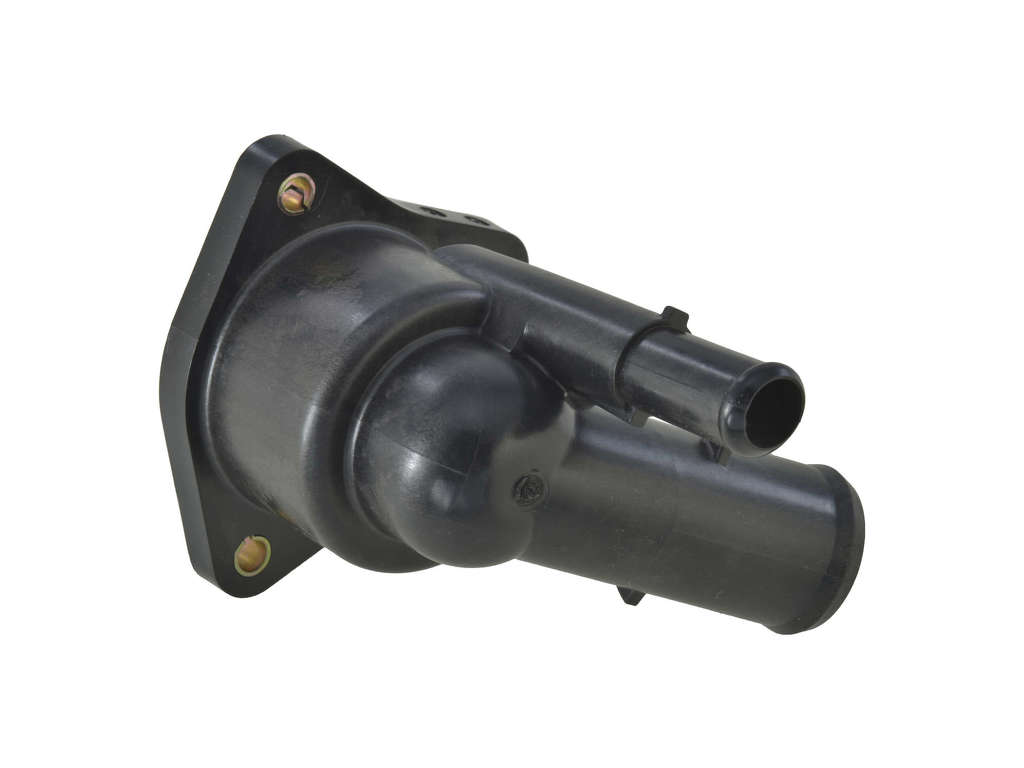
On a 2010-2015 Prius, code P0126 is almost always caused by a failed engine thermostat that is stuck open. The fix is to replace the entire water inlet and thermostat assembly. Expect to pay around $40-$70 for an OEM part, with a DIY difficulty of 3/5.
- P0126 on a Gen 3 Prius means the engine is running too cool, not overheating.
- The most likely cause by a wide margin is a stuck-open engine thermostat.
- The correct part to buy is the 'Water Inlet with Thermostat' assembly (OEM part # 16031-37010).
- Do not suspect the main electric water pump for this code; a bad water pump causes overheating and sets a different code (P261B).
- The repair is manageable for a DIYer comfortable with draining and refilling coolant, and will restore proper heater function and fuel economy.
What's Unique About the 2010-2015 Toyota Prius
While the Gen 3 Prius has a complex hybrid cooling system with an electric water pump, this specific code is rarely related to those advanced components. The P0126 code on this vehicle almost always points to a failure of the conventional, mechanical engine thermostat, just like in a non-hybrid car. The ECM expects the coolant temperature to reach a minimum of around 160-190°F (71-88°C) within a few minutes of startup. If it fails to do so, the code is set. Owners should not confuse this under-heating code with overheating issues, which might point to the electric water pump (a common failure that sets a different code, P261B).
Symptoms You May Notice
- Check Engine Light is on
- Engine takes much longer than usual to warm up
- Cabin heater blows lukewarm or cool air, especially when idling
- Noticeable decrease in fuel economy (MPG)
- The blue 'low coolant temp' light on the dash stays on longer than normal
- Engine may exhibit a rough or uneven idle during the extended warm-up period.
- Replacing the main electric water pump. A failed water pump on a Prius typically causes overheating and a P261B code, not an under-heating P0126 code.
- Replacing the ECT sensor without first confirming the thermostat is functioning correctly. The thermostat is the much more common failure point.
Most Likely Causes
- Stuck-Open Engine Thermostat 🔴 High Probability → Shop Integrated Thermostat Housing Assembly The thermostat is a mechanical wear-and-tear item. Over time, the spring or wax element can fail, causing it to remain open. This is the most common cause for P0126 by a significant margin, with some sources estimating an 80% likelihood.
How to confirm: Use an OBD-II scanner to monitor live coolant temperature. If the temperature rises very slowly, struggles to get above ~170°F (77°C), or drops significantly during highway driving, the thermostat is stuck open. You can also feel the upper radiator hose; if it gets warm almost immediately after a cold start, coolant is flowing prematurely, confirming a stuck-open thermostat.
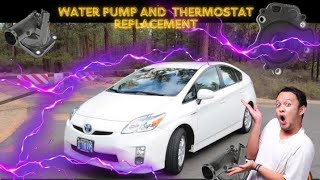
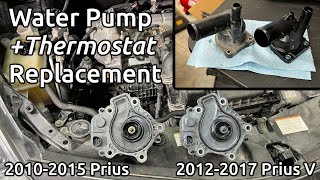
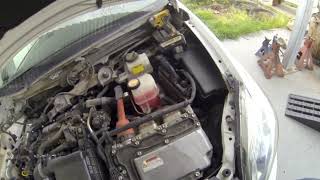
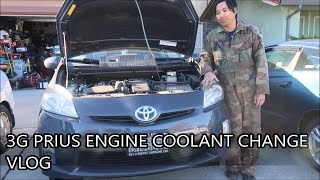
Typical fix: Replace the entire engine water inlet assembly, which includes the thermostat and gasket. The OEM part number is 16031-37010. 🎬 Watch: Step-by-step guide to replacing the engine thermostat
Est. part cost: $40-$70 - Faulty Engine Coolant Temperature (ECT) Sensor 🟡 Medium Probability → Shop Engine Coolant Temperature Sensor Sensors can fail electronically over time, sending inaccurate readings to the computer. While less common than the thermostat, a faulty sensor can send a false 'cold' signal.
How to confirm: With a cold engine, use a scan tool to compare the ECT reading to the ambient air temperature reading. They should be within a few degrees of each other. If the ECT reads an illogical temperature (e.g., -40°F or 250°F) on a cold engine, the sensor is bad. The sensor can also be tested with a multimeter by checking its resistance against the manufacturer's temperature/resistance chart.
Typical fix: Replace the engine coolant temperature sensor and top off any lost coolant. The sensor is located near the thermostat housing. 🎬 See this walkthrough for replacing the coolant temperature sensor
Est. part cost: $20-$50 - Low Engine Coolant or Air in the System ⚪ Low Probability Coolant levels can drop due to unrelated slow leaks (e.g., from the inverter pump or radiator). Air can enter the system if it was recently serviced and not properly bled, which can cause erratic sensor readings.
How to confirm: Visually inspect the coolant level in the engine coolant overflow reservoir and the inverter coolant reservoir. Check for pink/white crusty residue around hoses and the radiator, indicating a slow leak.
Typical fix: Top off the coolant with Toyota Super Long Life Coolant (pink) and properly bleed the air from the cooling system. A vacuum-fill tool is highly recommended for this engine to prevent air pockets. Find and repair 🎬 Watch: How to properly drain and refill Prius engine coolant any leaks.
Est. part cost: $25-$40 for coolant
Rare But Worth Checking
- Wiring or connector issue at the ECT sensor (corrosion, damage).
- Faulty engine cooling fan that is stuck on, causing over-cooling, especially in cold weather.
- Internal PCM/ECM fault, though this is extremely rare and should only be considered after all other possibilities are exhausted.
Diagnosis Steps
- Check the engine coolant level in the overflow reservoir. Ensure it is between the 'Full' and 'Low' marks. Do not open the radiator cap when the engine is hot.
- Connect an OBD-II scanner and view the live data for the Engine Coolant Temperature (ECT).
- On a completely cold engine (left overnight), verify the ECT reading is within a few degrees of the Intake Air Temperature (IAT) sensor reading.
- Start the engine and monitor the ECT. It should climb steadily. Feel the upper radiator hose. It should remain cool for the first several minutes.
- If the ECT rises very slowly, struggles to reach 180°F (82°C), and the upper radiator hose gets warm almost immediately, the thermostat is stuck open and is the confirmed culprit.
- If the ECT reaches operating temperature (approx. 185-200°F or 85-93°C) and then stabilizes, the thermostat is likely working. If the code still appears, investigate the ECT sensor circuit.
- If the temperature reading is erratic, nonsensical from the start (e.g., -40°F), or doesn't change, suspect a faulty ECT sensor or its wiring/connector.
- Inspect the area around the thermostat housing, water pump, and radiator for any signs of pink coolant leaks.
Parts You'll Likely Need
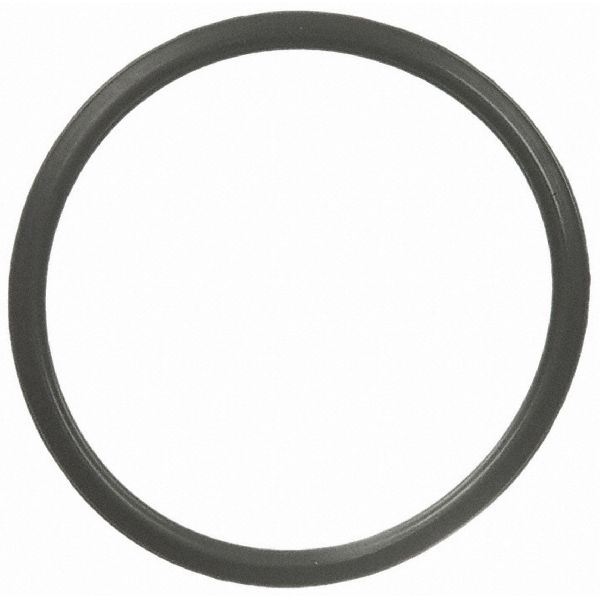
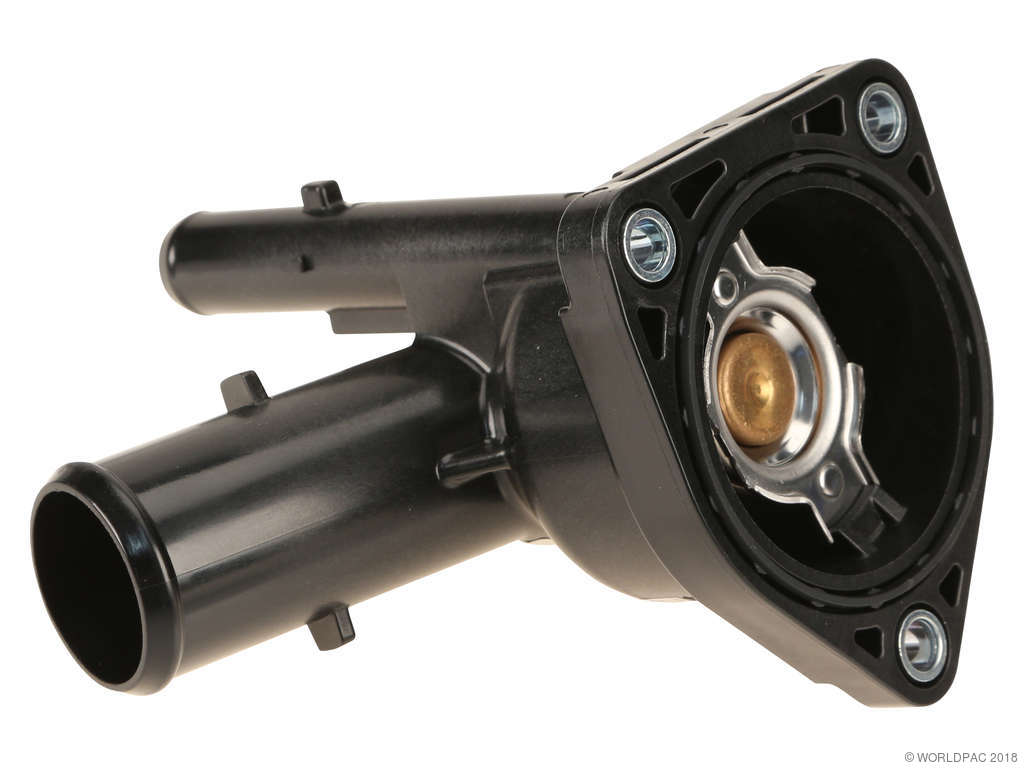
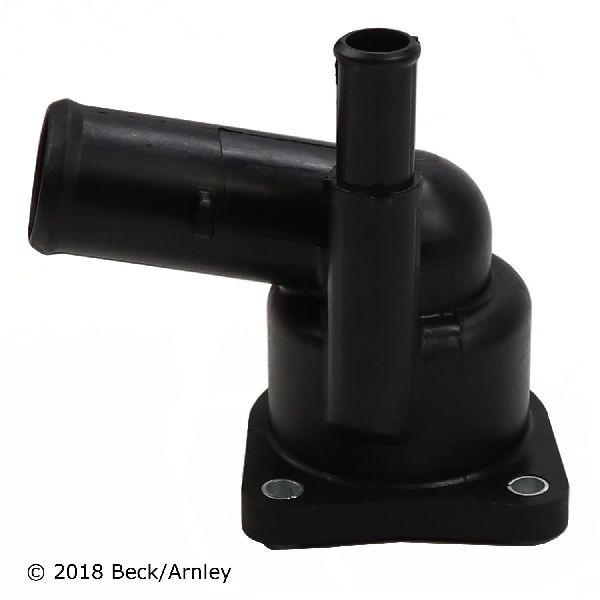
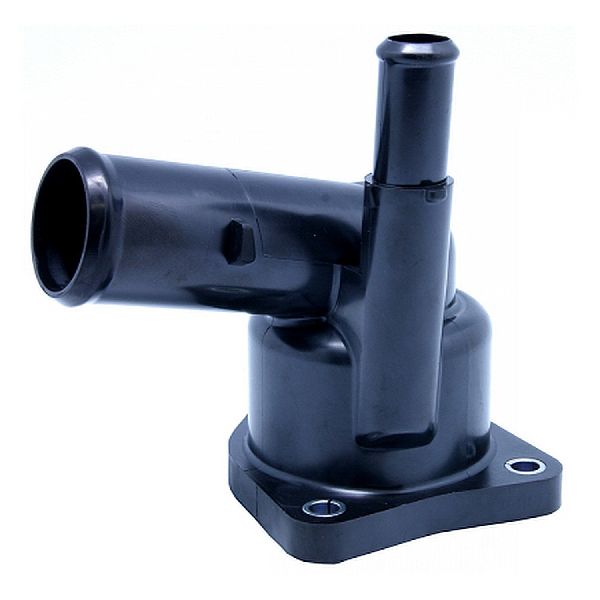
- Engine Water Inlet with Thermostat
(OEM #16031-37010)— This is the most common failure part for code P0126. The thermostat is integrated into this housing and fails in the open position, preventing the engine from warming up correctly.
Trusted brands: Toyota (OEM), Aisin (Often the OEM supplier)
OEM price range: $50-$70
Aftermarket price range: $30-$60 - Toyota Super Long Life 50/50 Pre-Diluted Engine Coolant
(OEM #00272-SLLC2)— You will lose coolant when replacing the thermostat and must refill the system with the correct OEM-spec fluid to prevent damage to cooling system components.
Trusted brands: Toyota (OEM)
OEM price range: $25-$35 per gallon
Related Codes That Often Appear With This One
- P0125 - Insufficient Coolant Temperature for Closed Loop Fuel Control (a closely related, often preceding code).
Mechanic-Grade Diagnostic Values
- Engine Coolant Temperature (ECT) Sensor Resistance — expected: Approx. 2,200 - 3,000 Ω at 20°C (68°F), dropping to approx. 250 - 350 Ω at 80°C (176°F).. Failure: Readings significantly outside this range, or resistance that does not change smoothly as the sensor is heated/cooled, indicate a faulty sensor.
- Engine Coolant Temperature (ECT) Sensor Signal Voltage (at sensor connector) — expected: Approx. 3.0 - 3.5 V on a cold engine (~20°C/68°F), dropping to approx. 1.0 - 1.3 V at normal operating temperature (~80°C/176°F).. Failure: Voltage that is stuck high (e.g., >4.5V) or low (e.g., <0.5V), or does not decrease as the engine warms up, points to a sensor or wiring issue.
- Scan Tool Live Data: Coolant Temperature at Idle — expected: Should stabilize between 85°C to 95°C (185°F to 203°F) after the engine is fully warmed up.. Failure: Temperature that struggles to exceed 77°C (170°F) or fluctuates wildly, especially dropping at highway speeds, strongly suggests a stuck-open thermostat.
Hidden / Shadow Codes Worth Checking
- Techstream 'Monitor Details': This is not a traditional code, but a hidden data set within the Toyota Techstream software. The ECM continuously runs internal readiness tests on systems like EGR, VVT, and Catalyst. The 'Monitor Details' screen shows the actual measured values from these tests, not just a pass/fail status. This allows a technician to see if a component is degrading and getting close to the failure threshold, even before a DTC is set. (see via Using Toyota Techstream software, navigate to the 'Engine and ECT' system, click 'Utility', then 'Monitor', and select the 'Details' icon for a completed test.)
Scan Tool Commands That Help
- Toyota Techstream: Active Test: 'Control the Electric Cooling Fan' — This command allows the technician to manually turn the radiator cooling fan ON and OFF. It is used to diagnose a rare cause of P0126 where the fan is stuck on, constantly over-cooling the engine. If the fan runs when commanded OFF, or fails to run when commanded ON, it indicates a problem with the fan motor or control circuit.
- Toyota Techstream (or compatible advanced scanner): Utility: 'Maintenance Mode' — This function forces the gasoline engine to run continuously, overriding the normal hybrid start-stop operation. It is essential to use this mode after replacing the thermostat to properly bleed air from the cooling system. With the engine running constantly, the water pump circulates coolant and allows trapped air to be purged.
Wiring & Ground Locations
- Engine Coolant Temperature (ECT) Sensor — Located on the engine at the rear of the cylinder head, near the thermostat housing assembly.. This is the primary sensor providing the temperature data to the ECM. Its connector (D6) and wiring are critical for an accurate reading.
- ECT Sensor to ECM Wiring Path — The wiring runs from the ECT sensor connector (D6) to the Engine Control Module (ECM) connector (D28). The ECM is located in the engine compartment on the driver's side.. To rule out a wiring fault, a technician can check for continuity. Pin D6-2 (THW, signal) should have continuity to Pin D28-64 at the ECM. Pin D6-1 (E2, ground) should have continuity to Pin D28-65 (ETHW) at the ECM.
Real Owner Repair Stories
- PriusChat Forum (Synthesized from multiple user reports) (2010-2015 Toyota Prius, various mileages (typically 100k-180k miles)) — Check engine light with code P0126, noticeably poor cabin heat (lukewarm air), and a drop in fuel economy by 5-10 MPG.
❌ Tried (didn't work) Clearing the code (it returns within a day or two)., Topping off coolant (level was already correct).
✅ What actually fixed it Replacing the entire engine water inlet with thermostat assembly (OEM Part # 16031-37010). After replacement and properly bleeding the cooling system, the check engine light stayed off, cabin heat became hot again, and fuel economy returned to normal.
OEM Part Supersession History
16031-37010→16031-37010— No supersession found. This part number appears to be stable and consistent for the entire 2010-2015 generation and is also used in other Toyota models with the 2ZR-FXE engine.
Diagnostic Flowchart
Other Known Issues on This Vehicle
Issues unrelated to this code that are worth knowing about as an owner of this generation:
- Clogged EGR Cooler, Pipe, and Intake Manifold Passages 🔴 High — Very common, typically starting after 100,000-150,000 miles. Leads to engine knocking, rough idle, and eventually head gasket failure if ignored. Often sets a P0401 code. (Ref: T-SB-0027-16 addresses rough idle and P0401 from carbon buildup.)
- Head Gasket Failure 🔴 High — A notorious issue for this generation, often occurring between 150,000-250,000 miles. It is frequently caused by the added engine stress from a clogged EGR system. Symptoms include a 'death rattle' on cold startup, coolant loss, and misfire codes (P030x).
- Excessive Oil Consumption 🟠 Medium — Common in models especially before 2014, due to low-tension piston rings designed for fuel economy. Can start as early as 60,000 miles but becomes more noticeable at higher mileage. (Ref: T-SB-0168-16 and T-SB-0169-16 detail the inspection and repair procedure, which involves replacing pistons and rings.)
- Brake Actuator Failure 🔴 High — A common and expensive failure. The actuator can fail internally, causing a loss of braking assist, loud noises, and multiple warning lights. NHTSA has investigated this issue multiple times. (Ref: Toyota issued a Warranty Enhancement Program (ZG1) extending coverage, but many failures occur after the extension expires. A recall was issued for some 2010 models.)
- Inverter (IPM) Failure 🔴 High — The Intelligent Power Module (IPM) within the inverter can fail from heat stress, causing the car to shut down while driving. Most common on earlier Gen 3 models. (Ref: Toyota issued a Customer Support Program (CSP) to update software and, if necessary, replace the inverter. This was part of a larger recall action.)
Used vs. New Parts: Buying Guide for This Vehicle
When a used part is the smart pick: For this repair, a used part from a salvage yard is NOT recommended. The thermostat is a mechanical wear-and-tear item with a finite lifespan. The labor involved in the replacement is significant enough that installing a used part with unknown history carries a high risk of premature failure, forcing you to do the job again.
What to inspect on the donor part:
- Not applicable as used part is not recommended.
OEM-only on this vehicle (don't cheap out):
- While not strictly 'OEM-only', it is strongly advised to use either the genuine Toyota part (16031-37010) or one from the known OEM supplier, Aisin.
Aftermarket brands forum-validated for this vehicle:
- Aisin: Widely believed to be the original equipment manufacturer for Toyota's cooling system components. Their parts are generally considered equivalent to OEM quality.
Brands owners have reported issues with on this vehicle:
- Generic, unbranded parts from online marketplaces. There are reports of extremely low-quality aftermarket thermostat housings made of flimsy plastic that can break during installation, leading to a much larger repair. It is worth paying the premium for a trusted brand for this critical component.
Real Owner Stories
Aggregated from forums and TSBs cited above. Mileages and costs reflect what owners reported in those sources.
2010-2015 Toyota Prius 1.8L Hybrid
Symptoms: The check engine light came on with code P0126. The owner noticed the car was taking much longer than usual to warm up and the heater was only blowing lukewarm air.
What fixed it: Replacing the thermostat (OEM part 16031-37010) resolved the code and restored proper heater function and fuel economy.
Source hint: PriusChat.com: P0126 Insufficient Coolant Temperature for Stable Operation
2011-2017 Lexus CT200h 1.8L Hybrid
Symptoms: The vehicle suffered from the same P0126 thermostat failure symptoms as its Prius platform mate, confirmed by forum discussions regarding the shared 2ZR-FXE engine.
What fixed it: Replacement of the 16031-37010 thermostat assembly.
Source hint: Platform mates section referencing Lexus CT200h forum posts
Related OBD-II Codes
Frequently Asked Questions
My 2012 Prius is throwing P0126 and the heater is barely warm. Is there a specific part I should buy?
Does T-SB-0027-16 apply to my P0126 code?
Can I use any coolant to top off my system if P0126 is caused by a low level?
Is the P0126 code related to the inverter failure covered by the Toyota Customer Support Program?
My Lexus CT200h has code P0126; is the repair the same as the Prius?
Could my P0126 code be a sign of the notorious Gen 3 head gasket failure?
Helpful Videos
We Have This Part in Stock


The information in this article is provided for general reference and educational purposes only. Vehicle specifications, procedures, and part compatibility can vary by production date, trim level, and region. Always consult your vehicle's factory service manual and verify part numbers before purchasing or performing repairs. Safety-critical components such as airbags, seat belts, and braking systems should be installed by a qualified professional.
- Toyota Prius:
- 🧭 Diagnostic Flowchart
- 🎬 Helpful Videos
- 🛍️ Shop This Part
- What's Unique About the 2010-2015 Toyota Prius
- Symptoms You May Notice
- Most Likely Causes
- Rare But Worth Checking
- Diagnosis Steps
- Parts You'll Likely Need
- Related Codes That Often Appear With This One
- Mechanic-Grade Diagnostic Values
- Hidden / Shadow Codes Worth Checking
- Scan Tool Commands That Help
- Wiring & Ground Locations
- Real Owner Repair Stories
- OEM Part Supersession History
- Other Known Issues on This Vehicle
- Used vs. New Parts: Buying Guide for This Vehicle
- Real Owner Stories
- 2010-2015 Toyota Prius 1.8L Hybrid
- 2011-2017 Lexus CT200h 1.8L Hybrid
- Related OBD-II Codes
- Frequently Asked Questions
- 🎟️ Get 5% Off