

P0126 on 2006-2012 Toyota RAV4 3.5L V6: Insufficient Coolant Temperature Causes and Fixes
On a 2006-2012 RAV4 with the 3.5L V6, code P0126 is almost always caused by a failed engine thermostat that is stuck open. This prevents the engine from warming up to its proper operating temperature. Replacing the thermostat and its gasket with an OEM part is the definitive fix. The job is known to be somewhat difficult due to tight access.
- P0126 on your RAV4 V6 means the engine is running too cool, not overheating.
- The most likely cause, by far, is a thermostat that has failed and is stuck open.
- Symptoms include a very slow-to-warm-up engine, a low temperature gauge, and a heater that doesn't blow hot air.
- The fix is to replace the thermostat and refill with Toyota's pink Super Long Life coolant.
- While you can drive the vehicle, you'll get poor gas mileage and should get it fixed to prevent long-term carbon buildup and ensure your heater works.
What's Unique About the 2006-2012 Toyota RAV4
For the RAV4 with the robust 2GR-FE V6 engine, the P0126 code is a very common and well-documented issue. While the engine itself is reliable, the mechanical thermostat is a frequent wear item that fails by sticking open. The repair is known to be more involved than on a four-cylinder due to its location behind an idler pulley and tight packaging around the V6, but it's a very common job for this specific engine across the Toyota and Lexus lineup.
Symptoms You May Notice
- Check Engine Light is illuminated
- Engine takes much longer than usual to warm up
- Temperature gauge on the dashboard stays on the low end and may drop during highway driving
- Cabin heater blows lukewarm or cool air, especially when idling or at low speeds
- Noticeable decrease in fuel economy
- Replacing the Engine Coolant Temperature (ECT) sensor when the thermostat is the actual cause. Always diagnose by watching the live temperature data before replacing parts.
- Assuming a major engine problem. This code is almost always related to the simple, inexpensive parts of the cooling system.
Most Likely Causes
- Engine Thermostat Stuck Open 🔴 High Probability → Shop Integrated Thermostat Housing Assembly The thermostat is a mechanical part with a spring and wax pellet that wears out over time. It is the most common failure point for this code on virtually all vehicles, including the 2GR-FE engine. It is designed to fail in the open position as a failsafe against overheating.
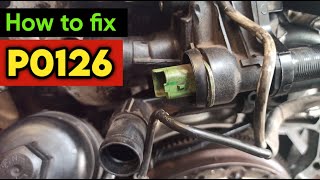
How to confirm: Use an OBD-II scanner to monitor 'Live Data' for the Engine Coolant Temperature. Start the engine cold. The temperature should rise steadily to about 180-195°F (82-90°C) and stabilize. If it warms up very slowly, never reaches this range, or the temperature drops significantly as you drive at highway speeds, the thermostat is stuck open. 🎬 See: How to diagnose and fix a P0126 code Another sign is the upper radiator hose getting warm immediately after a cold start, indicating coolant is circulating prematurely.
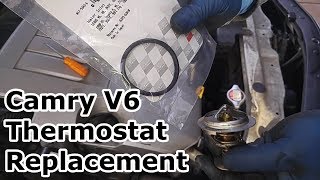
Typical fix: Replace the engine thermostat and gasket. The cooling system must be partially drained, then refilled and bled of air after the replacement. It is highly recommended to use an OEM Toyota thermostat.
Est. part cost: $25-$60 - Low Engine Coolant Level 🟡 Medium Probability Coolant can be lost over time due to minor, unseen leaks. The 2GR-FE is also known for potential water pump leaks as it ages, which would lead to a low coolant level and could cause this code if the ECT sensor is exposed to an air pocket.
How to confirm: With the engine completely cool, check the coolant level in both the plastic overflow reservoir and the radiator itself. If it is low, there is a leak somewhere in the system that needs to be found and fixed. A failing water pump may also produce a whining or grinding noise from the front of the engine.
Typical fix: Top off the coolant with Toyota Super Long Life Coolant (pink) and find and repair the source of the leak (e.g., water pump, hose, radiator). A pressure test of the cooling system can help locate the leak.
Est. part cost: $20-$30 for coolant - Faulty Engine Coolant Temperature (ECT) Sensor ⚪ Low Probability → Shop Engine Coolant Temperature Sensor While less common than a thermostat failure, the ECT sensor can fail, providing inaccurate readings to the ECM. However, this is an infrequent cause for P0126 on this platform.
How to confirm: With a cold engine, use a scan tool to compare the ECT sensor reading to the Intake Air Temperature (IAT) sensor reading. They should be within a few degrees of each other. If the ECT reads an illogical value (e.g., -40°F or 250°F) when the engine is cold, the sensor is bad.
Typical fix: Replace the Engine Coolant Temperature sensor.
Est. part cost: $40-$80
Rare But Worth Checking
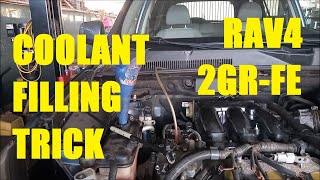
- Air in the Cooling System: If the cooling system was recently serviced, trapped air can cause erratic temperature readings or prevent proper circulation, potentially triggering this code. The system needs to be properly 'burped' or bled using a spill-free funnel. 🎬 Watch: How to fill and bleed the RAV4 V6 cooling system
- Cooling Fan Stuck On: → Shop Engine Cooling Fan Blade If an electric cooling fan relay fails in the 'on' position, the constant airflow can over-cool the engine, especially in cold weather, preventing it from reaching operating temperature.
Diagnosis Steps
- Check the engine coolant level in the reservoir and radiator (only when the engine is completely cold). Top off if low and inspect for leaks.
- Connect an OBD-II scanner and view the 'Live Data' for the Engine Coolant Temperature (ECT).
- With the engine cold, verify the ECT reading is close to the ambient air temperature and the Intake Air Temperature (IAT) reading.
- Start the engine and monitor the ECT reading. It should climb steadily. The upper radiator hose should remain cool for several minutes, then get hot quickly as the thermostat opens around 180°F (82°C).
- If the temperature rises very slowly and never reaches ~180-195°F, or if the upper radiator hose gets warm immediately, the thermostat is stuck open and must be replaced.
- If the temperature reading is erratic or illogical from the start (e.g., -40°F), the ECT sensor or its wiring is likely faulty.
- If the coolant level was low, perform a cooling system pressure test to identify the source of the leak. Pay close attention to the water pump weep hole.
Parts You'll Likely Need
- Engine Coolant Thermostat
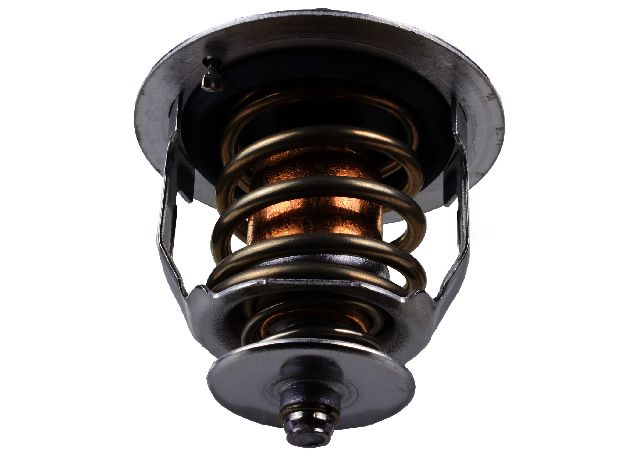
(OEM #90916-A3003)— This is the most common cause of P0126, as the mechanical thermostat fails in the open position over time. It is an 82°C / 180°F thermostat. Always use an OEM part for reliability.
Trusted brands: Toyota (Genuine), Aisin
OEM price range: $25-$40
Aftermarket price range: $15-$30 - Thermostat Gasket / Water Inlet Gasket
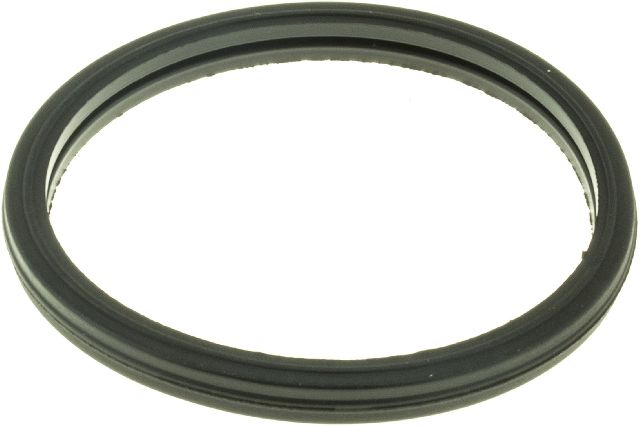
(OEM #16325-62010)— A new gasket is required to seal the thermostat housing and prevent leaks. It should always be replaced with the thermostat.
Trusted brands: Toyota (Genuine)
OEM price range: $5-$10 - Toyota Super Long Life Coolant (Pink)
(OEM #00272-SLLC2)— You will lose coolant when replacing the thermostat and must refill the system with the correct 50/50 pre-mixed fluid.
Trusted brands: Toyota (Genuine)
OEM price range: $25-$35 per gallon
Related Codes That Often Appear With This One
- P0128 — P0128 (Coolant Temperature Below Thermostat Regulating Temperature) is a very similar code and is often used interchangeably by different manufacturers for the same fault. The root cause is almost always the same: a stuck-open thermostat.
- P0125 — P0125 (Insufficient Coolant Temperature for Closed Loop Fuel Control) is an older, more general code for the same condition. P0126 is often a more specific version of P0125.
Platform-Specific Known Issues
- Accessing the thermostat on the 2GR-FE V6 is challenging. It is located behind a serpentine belt idler pulley which must be removed (14mm bolt). Access is tight due to the frame rail.
- The two 10mm nuts on the thermostat housing are often seized to the studs, meaning the entire stud will back out of the engine block. This is normal, but care must be taken not to break them.
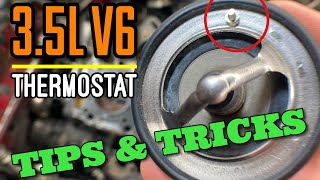
- A helpful trick for reinstalling the nuts in the tight space is to place a small piece of paper towel in the socket to hold the nut securely. 🎬 Watch: 2GR-FE V6 thermostat replacement tips and tricks
- When installing the new thermostat, ensure the small 'jiggle valve' or air bleed pin is positioned at the top (12 o'clock position) to allow trapped air to escape.
Mechanic-Grade Diagnostic Values
- Engine Coolant Temperature (ECT) Sensor Resistance — expected: At 20°C (68°F): ~2,000-3,000 Ohms. At 80°C (176°F): ~250-350 Ohms. At 90°C (194°F): ~200-300 Ohms.. Failure: Resistance readings that are infinite (open circuit), zero (short circuit), or do not smoothly decrease as the sensor is heated indicate a faulty sensor.
- ECT Sensor Fail-Safe Value — expected: If the ECM detects a fault with the ECT sensor (e.g., codes P0115, P0117, P0118), it will enter a fail-safe mode.. Failure: In fail-safe mode, the ECM substitutes a fixed temperature value, typically 80°C (176°F), to calculate fuel and timing. This can be observed on a scan tool's live data.
Scan Tool Commands That Help
- Toyota Techstream: Data List Monitoring (Powertrain > Engine > Data List) — This is the primary function used to diagnose P0126. The technician monitors the 'Coolant Temp' PID from a cold start to verify if the temperature rises slowly, fails to reach the target of ~82°C, or drops at highway speeds, which confirms a stuck-open thermostat.
- Toyota Techstream: Active Test > Control the Cooling Fan — This command allows the technician to manually turn the cooling fans on and off. It is used to rule out a rare cause of P0126 where a failed fan control module or relay causes the fans to run constantly, over-cooling the engine.
Wiring & Ground Locations
- ECT Sensor Connector — On the thermostat housing, where the upper radiator hose connects to the engine. On the 2GR-FE, it is near the front (radiator side) of the engine, below the intake air ducting.. This is the primary connection point for the sensor. A loose, corroded, or damaged connector will cause incorrect temperature readings, potentially leading to a P0126 or other ECT-related codes like P0117/P0118.
- Engine Harness Ground Points — The 2GR-FE has critical grounds for the engine harness located on the valve covers, which then attach to a metal bracket on the strut tower. Another key ground is on the front of the cylinder head.. Improper or corroded engine grounds can cause a host of spurious sensor readings and DTCs. A poor ground can create a voltage offset, causing the ECM to misinterpret the ECT sensor's resistance reading, leading to an incorrect temperature calculation.
Real Owner Repair Stories
- YouTube channel 'amcfc' (2006-2012 Toyota RAV4 (4-cyl, but demonstrates a relevant issue)) — Check Engine Light with code P0172 (Engine Running Rich), which was caused by a bad ECT sensor.
❌ Tried (didn't work) Initial diagnosis pointed towards a rich condition, which could be misdiagnosed as injectors or O2 sensors.
✅ What actually fixed it The ECT sensor was replaced, but the technician noted the plastic locking tab on the pigtail connector was broken. This could lead to a poor connection over time. The ultimate fix was replacing the sensor and also installing a new pigtail connector to ensure a secure, weatherproof connection, preventing future intermittent faults.
OEM Part Supersession History
90916-03129, 90916-03084→90916-A3003— Standard part consolidation and updates over time.
Heads up: 90916-A3003 is the correct and current OEM thermostat for this application. While older numbers may exist in old stock, A3003 is the verified replacement.
Diagnostic Flowchart
Other Known Issues on This Vehicle
Issues unrelated to this code that are worth knowing about as an owner of this generation:
- Rupturing VVT-i Oil Line 🔴 High — Common on 2006-2009 models. The original rubber section of the line degrades, leading to a sudden and catastrophic loss of engine oil. (Ref: LSC 90K (Limited Service Campaign). Toyota issued a campaign to replace the original rubber/metal line with an all-metal line.)
- Intermediate Steering Shaft Clunk 🟠 Medium — Very common across 2006-2012 models. A clunking or popping noise is heard and felt in the steering wheel at low speeds due to wear in the shaft's U-joint. (Ref: T-SB-0318-08 / T-SB-0033-11. Bulletins were released to replace the original shaft with an improved part.)
- Water Pump Failure 🟠 Medium — A known wear item on the 2GR-FE, often failing after 80,000 miles. Can present as a coolant leak from the weep hole or a grinding/whining noise.
- Oil Consumption (Early Models) 🟡 Low — Some reports on 2006-2008 V6 models mention higher than normal oil consumption, though it is much less prevalent than on the 4-cylinder (2AZ-FE) engine.
- Ignition Coil Failure 🟡 Low — As with many vehicles, individual ignition coils can fail with age and mileage, causing a misfire (e.g., P030x codes) and a rough running engine.
Used vs. New Parts: Buying Guide for This Vehicle
When a used part is the smart pick: For a P0126 repair, using used parts is almost never a smart choice. The primary failure components (thermostat, ECT sensor) are inexpensive wear items.
What to inspect on the donor part:
- Not applicable. Do not purchase used thermostats or sensors for this repair.
OEM-only on this vehicle (don't cheap out):
- Engine Coolant Thermostat: The temperature regulation of the OEM Toyota/Aisin thermostat is critical for proper engine operation and to prevent the code from returning. Aftermarket thermostats are known to have wider temperature tolerances or fail prematurely, leading to a repeat repair.
- Thermostat Gasket: Always use a new OEM gasket to ensure a proper seal and prevent leaks.
Aftermarket brands forum-validated for this vehicle:
- Aisin (for the thermostat, as they are often the OEM supplier)
- Denso (for the ECT sensor, as they are the OEM supplier for most Toyota electronics)
Brands owners have reported issues with on this vehicle:
- Generic, no-name 'white box' thermostats and sensors from online marketplaces. These parts frequently fail to meet OEM specifications for temperature rating and durability, often causing the P0126 code to return shortly after installation.
Real Owner Stories
Aggregated from forums and TSBs cited above. Mileages and costs reflect what owners reported in those sources.
2007 Toyota RAV4 V6
Symptoms: The owner received a P0126 code and sought advice from the community regarding the cause.
What fixed it: The community identified a stuck-open thermostat as the cause, which is the most common failure point for this code.
Source hint: https://www.toyotanation.com/threads/p0126-on-2007-rav4-v6.1672334/
Toyota RAV4 V6 (2006-2012)
Symptoms: Owner diagnosed a P0126 code and performed a thermostat replacement to resolve the issue.
What fixed it: Replacing the thermostat fixed the P0126 code.
Source hint: https://www.rav4world.com/threads/p0126-and-replacing-thermostat-on-v6.86244/
2006-2012 Toyota RAV4 2GR-FE V6
Symptoms: The process of replacing the thermostat was described as difficult, specifically noting the need to remove the idler pulley to gain access.
What fixed it: Thermostat replacement (noting the 14mm idler pulley bolt and 10mm housing nuts).
Source hint: https://www.youtube.com/watch?v=k_0a-lE533s - 'Bundy's Garage'
Related OBD-II Codes
Frequently Asked Questions
Is there a specific TSB for the steering clunk I'm hearing along with this P0126 code on my 2010 RAV4 V6?
I'm seeing P0126 and noticed a pink crust near the front of my 2GR-FE engine. What is that?
Should I use an aftermarket thermostat to save money on my RAV4 V6 repair?
Why is the labor for a thermostat replacement so high on the RAV4 3.5L V6?
My 2008 RAV4 V6 has a P0126; is there a major engine safety issue I should check while fixing this?
How do I ensure I don't get air pockets in the system after replacing the thermostat?
Helpful Videos
We Have This Part in Stock


The information in this article is provided for general reference and educational purposes only. Vehicle specifications, procedures, and part compatibility can vary by production date, trim level, and region. Always consult your vehicle's factory service manual and verify part numbers before purchasing or performing repairs. Safety-critical components such as airbags, seat belts, and braking systems should be installed by a qualified professional.
- Toyota RAV4:
- 🧭 Diagnostic Flowchart
- 🎬 Helpful Videos
- 🛍️ Shop This Part
- What's Unique About the 2006-2012 Toyota RAV4
- Symptoms You May Notice
- Most Likely Causes
- Rare But Worth Checking
- Diagnosis Steps
- Parts You'll Likely Need
- Related Codes That Often Appear With This One
- Platform-Specific Known Issues
- Mechanic-Grade Diagnostic Values
- Scan Tool Commands That Help
- Wiring & Ground Locations
- Real Owner Repair Stories
- OEM Part Supersession History
- Other Known Issues on This Vehicle
- Used vs. New Parts: Buying Guide for This Vehicle
- Real Owner Stories
- 2007 Toyota RAV4 V6
- Toyota RAV4 V6 (2006-2012)
- 2006-2012 Toyota RAV4 2GR-FE V6
- Related OBD-II Codes
- Frequently Asked Questions
- 🎟️ Get 5% Off