

P0128 on 2008-2016 Audi TT 2.0L TFSI: Causes and Fixes for Low Coolant Temperature
On a 2008-2016 Audi TT with the 2.0L TFSI engine, code P0128 almost always means the thermostat is stuck open. This is a common failure. The part itself is not expensive, but replacement is labor-intensive as it is located under the intake manifold on later engines or behind the alternator on earlier ones, making it a difficult job.
- P0128 on your Audi TT almost certainly means you need a new thermostat.
- The most reliable symptom is the engine temperature gauge not reaching or holding at the 90°C (middle) position.
- Due to the part's location under the intake manifold, expect high labor costs at a shop or a challenging (4-6+ hour) DIY job.
- It is highly recommended to replace the water pump at the same time as the thermostat.
- Ensure you use the correct G12/G13 specification coolant when refilling the system.
What's Unique About the 2008-2016 Audi TT
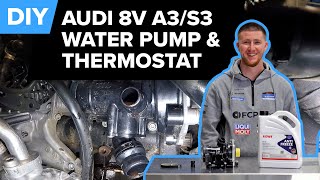
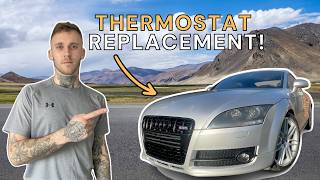
For the Audi TT 2.0L TFSI, this code is a very common indicator of a failed thermostat. The complexity of the repair is the main platform-specific issue. On the earlier EA113 engine, the thermostat is located behind the alternator, requiring its removal for access. 🎬 Watch: Step-by-step thermostat replacement for the EA113 BWA engine. On the later EA888 engines, the thermostat is part of a larger water pump assembly located underneath the intake manifold. 🎬 See how to remove the EA888 thermostat and water pump. Both locations make replacement a significantly more involved and labor-intensive job compared to other vehicles where the thermostat is easily accessible.
Generation note: The 2008-2016 range covers two generations: the Mk2 (Type 8J, 2008-2014) and the early Mk3 (Type FV/8S, 2014-2016). Both generations used versions of the 2.0L TFSI engine (EA113 and EA888 Gen1/2 in the Mk2; EA888 Gen3 in the Mk3). While P0128 has the same meaning, the specific thermostat/water pump assembly part numbers and design differ significantly. It is crucial to get parts that match your specific model year and engine code (e.g., BWA, CCTA, or CNTC).
Symptoms You May Notice
- Check Engine Light is on.
- Temperature gauge on the dashboard takes a very long time to reach the middle (90°C or ~195°F), or never reaches it at all.
- Temperature gauge drops from normal operating temperature when driving at highway speeds or coasting downhill.
- Heater does not blow hot air, or the air is only lukewarm, especially at idle.
- Noticeable decrease in fuel economy.
- Replacing the coolant temperature sensor when the thermostat is the actual problem. It's tempting because the sensor is cheaper and easier to replace, but the symptoms (slow to warm, cools at speed) strongly point to the thermostat.
Most Likely Causes
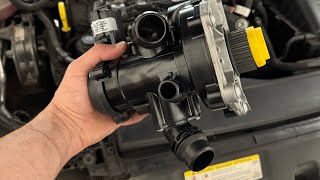
- Thermostat Stuck Open 🔴 High Probability → Shop Integrated Thermostat Housing Assembly The thermostat assembly on this platform is a known failure point. The internal valve can fail and stick in the open position, allowing coolant to constantly circulate through the radiator and preventing the engine from warming up properly. On EA888 engines, the entire plastic housing assembly is prone to warping and cracking from heat cycles, which can cause both leaks and thermostat failure.
How to confirm: Use an OBD-II scanner to monitor live coolant temperature data. Start the car from cold and watch the temperature rise. If it rises extremely slowly, never reaches the target of ~90-95°C (194-203°F), or drops significantly during highway driving, the thermostat is almost certainly stuck open. You can also feel the upper radiator hose; it should remain cool until the engine reaches operating temperature, then become hot. If it gets warm gradually from startup, the thermostat is open.
Typical fix: Replace the entire thermostat and housing assembly. On EA888 engines, this is an integrated unit with the water pump. Due to its location (behind alternator on EA113, under intake on EA888), this is a labor-intensive job. It is highly recommended to replace the water pump at the same time, as they are often a combined unit or require the same labor to access.
Est. part cost: $100-$350 - Faulty Engine Coolant Temperature (ECT) Sensor ⚪ Low Probability → Shop Engine Coolant Temperature Sensor While less common than a thermostat failure for this specific code, sensors can fail and send inaccurate readings to the ECM.
How to confirm: Compare the ECT sensor reading on an OBD-II scanner to the ambient air temperature when the car is completely cold (after sitting overnight). They should be within a few degrees of each other. If the reading is illogical (e.g., shows -40°F on a warm day) or doesn't change as the engine warms up, the sensor is likely bad.
Typical fix: Replace the engine coolant temperature sensor. This is typically an easier and less expensive repair than the thermostat.
Est. part cost: $20-$50 - Low Engine Coolant Level ⚪ Low Probability The plastic thermostat and water pump housings on these engines can develop cracks and leak over time, a very common issue. While a leak often causes overheating, if it introduces a significant air pocket near the ECT sensor, it could cause an erratic low reading and trigger P0128.
How to confirm: Visually inspect the coolant reservoir to see if the level is below the 'MIN' mark. Look for signs of pink or purple dried coolant crust around the thermostat housing, water pump, and hoses. A cooling system pressure test is the definitive way to find leaks.
Typical fix: Find and repair the source of the leak, which is often the thermostat/water pump housing itself. Top off the system with the correct G12/G13 coolant and properly bleed the air out.
Est. part cost: $10-$500+, depending on the source of the leak
Rare But Worth Checking
- Cooling Fan Stuck On: → Shop Engine Cooling Fan Blade If the electric cooling fan runs continuously from the moment the car is started (even when cold), it can over-cool the engine, especially in cold weather or at low speeds. This is usually caused by a failed fan control module or a faulty relay.
Diagnosis Steps
- Read the code with an OBD-II scanner to confirm P0128 is present.
- Check the engine coolant level in the reservoir when the engine is cold. Ensure it is between the 'MIN' and 'MAX' lines. If low, inspect for pink/purple crusty residue around the water pump/thermostat area, which indicates a common leak.
- Use the scanner's live data feature to monitor the Engine Coolant Temperature (ECT).
- Start the engine from cold. Compare the initial ECT reading to the Intake Air Temperature (IAT). They should be nearly identical.
- Drive the vehicle. The temperature should reach and hold steady at approximately 90-105°C (194-221°F).
- If the temperature is very slow to rise, never reaches the target, or drops significantly when driving at highway speeds, the thermostat is the primary suspect.
- If the temperature reading on the scanner is erratic, nonsensical from the start (e.g., -40°), or never changes, suspect the ECT sensor or its wiring.
- Check the cooling fan. It should not be running at full speed when the engine is cold.
Parts You'll Likely Need
- Thermostat Assembly / Water Pump Assembly
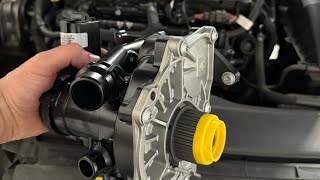
(OEM #EA113 (e.g., TT BWA engine): 06F121111H. EA888 Gen 2 (e.g., TT CCTA engine): 06H121026DD. EA888 Gen 3 (e.g., 2015+ TT): 06L121111H (or later revisions like J, K, L, M, P).)🎬 Watch this DIY guide for Mk3 TT water pump replacement. — This is the most common cause of P0128. On the EA113, it's a separate thermostat. On the EA888, the thermostat and water pump are an integrated plastic assembly prone to leaks and internal failure. It is critical to get the correct part for your specific engine.
Trusted brands: INA, Mahle, Behr, OEM
OEM price range: $250-$450
Aftermarket price range: $150-$350 - Engine Coolant / Antifreeze
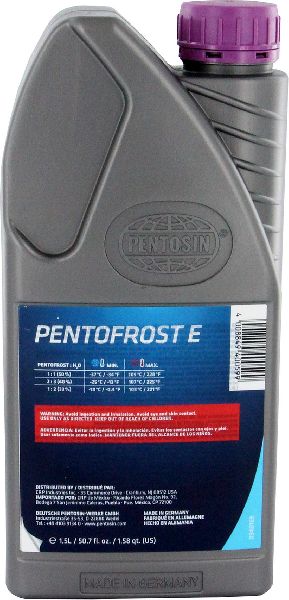
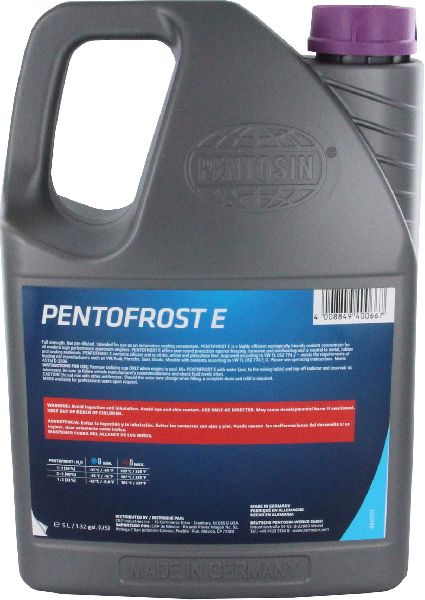
(OEM #G12++ or G13 (check vehicle specifics))— The cooling system must be drained to replace the thermostat. You will need 1-2 gallons of 50/50 mixed coolant to refill the system.
Trusted brands: Pentosin, Febi, OEM
OEM price range: $25-$40 per gallon
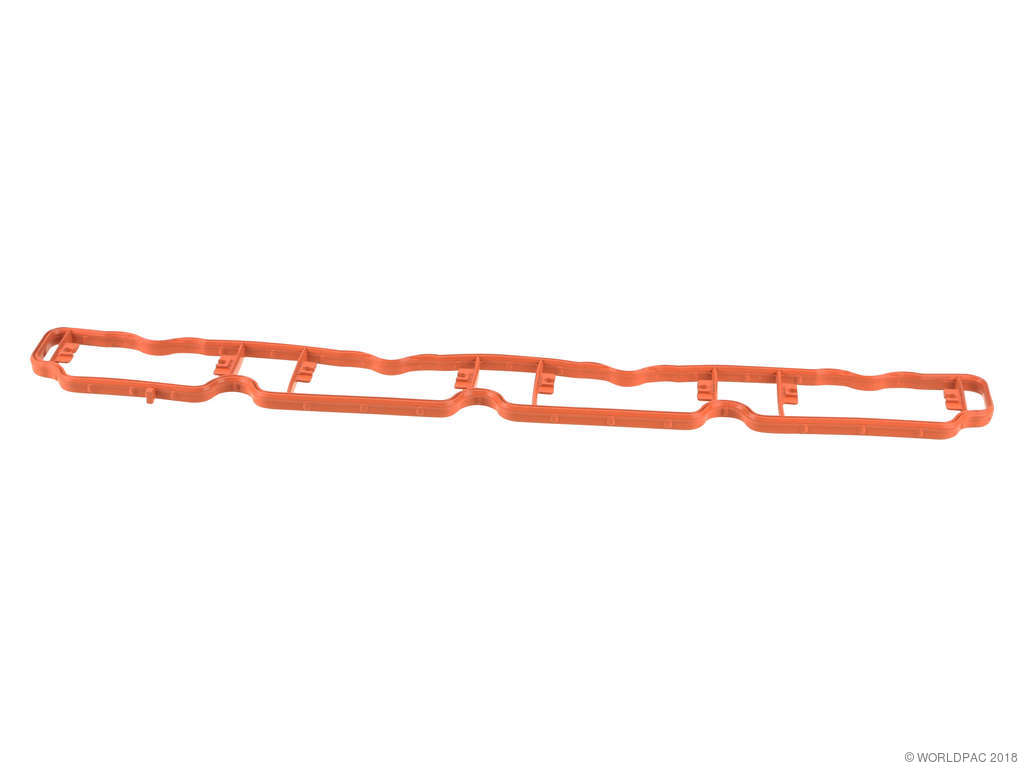
Aftermarket price range: $20-$30 per gallon - Intake Manifold Gasket — For EA888 engines, the intake manifold must be removed to access the water pump/thermostat. The gasket is a single-use item and must be replaced to prevent vacuum leaks.
Trusted brands: Victor Reinz, Elring, OEM
OEM price range: $30-$50
Aftermarket price range: $15-$30
Related Codes That Often Appear With This One
- P2181 — P2181 (Cooling System Performance) is another common code on VW/Audi vehicles that points to the same fundamental problem: the engine isn't reaching or maintaining its target temperature correctly. It's often triggered by the same faulty thermostat.
- P00B7 — P00B7 (Coolant Flow Low/Performance) is often seen on the EA888 Gen 3 engine when the complex thermostat assembly fails internally, for example, if the small electric motor that controls coolant flow stops working.
Technical Service Bulletins (TSBs) & Recalls
- TSB 2052657: This informational TSB addresses coolant leaks from the water pump and thermostat housing on EA888 engines, acknowledging the common failure. It advises on diagnosis and requires photographic evidence for warranty claims involving both components.
Platform-Specific Known Issues
- The location of the thermostat makes this a difficult job. On EA113 engines, the alternator must be removed. On EA888 engines, the intake manifold must be removed. A DIY replacement requires significant time and mechanical skill.
- The original thermostat and water pump housings are made of plastic which can become brittle with age and heat cycles, leading to cracks and leaks. This was the subject of a class-action lawsuit for some EA888 engines.
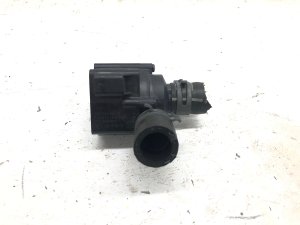
- When replacing the EA888 Gen 3 water pump, it is also recommended to replace the small plastic coolant union pipe (Part No. 06L121131) that connects to it, as it is also prone to becoming brittle and leaking.
Mechanic-Grade Diagnostic Values
- Engine Coolant Temperature (ECT/G62) Sensor Resistance — expected: At ~20°C (68°F), resistance should be 2,200 - 3,000 Ω. At ~80°C (176°F), resistance should be 250 - 350 Ω.. Failure: Readings that are infinite (open circuit), near zero (short circuit), or do not decrease smoothly as the sensor warms up indicate a faulty sensor.
- Engine Coolant Temperature (ECT/G62) Sensor Signal Voltage — expected: With key-on, engine-off (cold), voltage should be 3.0V - 3.5V. At normal operating temperature (~80-90°C), voltage should drop to 1.0V - 1.3V.. Failure: Voltage that is stuck high (e.g., 5V) or low (e.g., 0V), or does not change with temperature, points to a sensor or wiring issue.
- VCDS Live Data - Coolant Temperature Comparison — expected: Using Measuring Value Blocks (MVB) in VCDS, monitor both the G62 (engine coolant temp) and G83 (radiator outlet temp) sensors. When the engine is warming up, G62 should rise steadily while G83 stays near ambient temperature. Once the thermostat opens, G83's temperature will rise sharply and approach G62's reading.. Failure: If the G83 temperature rises gradually along with the G62 temperature from a cold start, the thermostat is stuck open.
Hidden / Shadow Codes Worth Checking
- P3081: This is a manufacturer-specific (VAG) code for 'Engine Temperature Too Low'. It is functionally identical to the generic P0128 code. (see via This code may be displayed on VW/Audi specific diagnostic tools like VCDS or ODIS, while generic OBD-II scanners will typically show P0128.)
Scan Tool Commands That Help
- VCDS (VAG-COM) / ODIS: Basic Settings - 'Bleed Cooling Circuit' or 'Bleed Cooling System' — This is a required procedure after replacing a thermostat, water pump, or draining the coolant on EA888 engines. The complex system has multiple pumps and valves that trap air, and this function cycles them to properly bleed the system and prevent air pockets which can cause cooling issues or false sensor readings.
- VCDS (VAG-COM) / ODIS: Basic Settings - 'Engine temperature management actuator' Adaptation — On EA888 Gen 3 engines (2014+), this function must be run after replacing the thermostat/water pump assembly. It teaches the Engine Control Module the mechanical end-stops of the new thermostat's rotary slide valve, which is critical for correct temperature regulation. Failure to perform this can result in overheating or persistent codes.
Wiring & Ground Locations
- Engine Bay Main Ground Stud — Typically located on the chassis frame rail or bulkhead, often near the battery. It is identifiable by a cluster of brown wires bolted to a single stud.. The ECT sensor (G62) and its associated circuits rely on a clean ground connection. A corroded or loose main engine ground can introduce resistance, causing incorrect sensor readings and potentially triggering a P0128 code.
- G62 / G83 Sensor Identification — Many TT models have two coolant sensors. The G62 sensor, which provides the primary reading for the ECU and temperature gauge, is on the engine block/cylinder head. The G83 sensor is located at the radiator outlet and is primarily for cooling fan control.. A common misdiagnosis is replacing the easily accessible G83 radiator sensor when the fault lies with the G62 engine sensor. P0128 is almost always related to the G62 reading and thermostat performance, not the G83.
- Ground Connection 12 & 131 — For the TT (8J), wiring diagrams show 'Ground connection, in engine compartment, left' (12) and 'Ground connection -2-, in engine compartment wiring harness' (131) as key ground points.. These are specific grounding points for the engine wiring harness. A fault in these connections could affect multiple sensors, including the ECT sensor.
Real Owner Repair Stories
- North American Motoring forum user (2009 Mini Cooper S (similar electronically controlled thermostat concept)) — P0128 code returned immediately after replacing the entire thermostat housing assembly.
❌ Tried (didn't work) Replacing the thermostat assembly.
✅ What actually fixed it The electrical connector on the new thermostat housing was not fully seated. Although it looked connected, it had not 'clicked' into place. Pushing on it until it was securely clipped resolved the issue, indicating a poor electrical connection was mimicking a part failure. - YouTube user comment (Audi with EA888 engine) — Intermittent fault for 'coolant bypass valve circuit open' and coolant loss.
❌ Tried (didn't work) Initial diagnosis pointed towards replacing the entire water pump/thermostat assembly.
✅ What actually fixed it The owner discovered water had ingressed into the electrical connector for the coolant pump. After drying the connector thoroughly with a hairdryer and ensuring a tight seal, the fault code disappeared. The fix was the connector and wiring, not the expensive pump assembly itself.
OEM Part Supersession History
06L121111H→06L121111J, 06L121111K, 06L121111L, 06L121111M, 06L121111P— This applies to the EA888 Gen 3 water pump/thermostat assembly. The frequent revisions indicate ongoing efforts by VW/Audi to resolve the high failure rate of this part, primarily related to plastic warping, seal leaks, and internal actuator failures.
Heads up: Always use the latest available revision for your vehicle. While older revisions may physically fit, they contain the original design flaws that the newer parts aim to correct.
Model Year Variations Within This Range
- 2014-2016 (Mk3 with EA888 Gen 3): The thermostat is a complex, electronically controlled unit featuring two rotary slide valves managed by an actuator (N493). This allows for more precise temperature management but adds a new failure point: the electric actuator motor or its internal gears can fail, which is diagnosed by running an output test in VCDS. This failure often triggers P00B7 in addition to P0128.
- 2008-2014 (Mk2 with EA113 / EA888 Gen 1/2): These engines use a more traditional, though still electronically assisted, wax-pellet thermostat. The EA113 has a separate thermostat located behind the alternator, while the EA888 Gen 1/2 integrates it into the water pump housing, but without the complex rotary slide valve system of the Gen 3.
Diagnostic Flowchart
Other Known Issues on This Vehicle
Issues unrelated to this code that are worth knowing about as an owner of this generation:
- Timing Chain Tensioner Failure (EA888 Gen1/Gen2) 🔴 High — Common on pre-2013 EA888 engines, typically between 60,000-100,000 miles. An updated tensioner design mitigates the issue. A rattling noise on cold start is a key symptom.
- Excessive Oil Consumption (EA888 Gen1/Gen2) 🟠 Medium — Affects certain 2.0 TFSI engines, particularly from 2009-2011, due to piston ring design. Can manifest as early as 50,000 miles. (Ref: Subject of a class-action lawsuit which has since been settled.)
- S-Tronic (DSG) Mechatronic Unit Failure 🔴 High — Can occur on vehicles equipped with the S-Tronic/DSG transmission, often after 70,000 miles. Symptoms include flashing 'PRNDS' light, harsh shifting, and loss of drive. (Ref: A recall was issued for some models due to false temperature readings causing a loss of drive.)
- Water Pump / Thermostat Housing Leaks (EA888 Gen 3) 🟠 Medium → Shop Integrated Thermostat Housing Assembly — Extremely common on 2014+ models with the EA888 Gen 3 engine. The plastic housing can warp or crack, causing coolant leaks, often between 50,000-80,000 km. (Ref: TSB 2052657 addresses this issue. Also part of a class-action settlement.)
- Carbon Buildup on Intake Valves 🟠 Medium — A common issue for all direct-injection (FSI/TFSI) engines. Typically requires cleaning every 60,000-80,000 miles to prevent misfires and performance loss.
Used vs. New Parts: Buying Guide for This Vehicle
When a used part is the smart pick: For this specific repair, sourcing a used part from a junkyard is NOT recommended for the primary failure component, the thermostat/water pump assembly. The failure rate is exceptionally high due to the degradation of plastic components from heat cycles.
What to inspect on the donor part:
- Not applicable, as a used thermostat/water pump assembly should be avoided regardless of visual condition or mileage.
OEM-only on this vehicle (don't cheap out):
- Thermostat / Water Pump Assembly: While not strictly 'OEM-only', it is highly advisable to use either a genuine OEM part or a part from a known OEM supplier (e.g., INA, Mahle, Behr). The complexity and high failure rate of this part make it a poor candidate for budget aftermarket brands.
Aftermarket brands forum-validated for this vehicle:
- INA
- Mahle
- Behr
- Pentosin (for G12/G13 Coolant)
Brands owners have reported issues with on this vehicle:
- Unbranded, low-cost thermostat/water pump assemblies from online marketplaces. These often use inferior plastics and seals that can fail prematurely, leading to a repeat of a very labor-intensive repair.
Real Owner Stories
Aggregated from forums and TSBs cited above. Mileages and costs reflect what owners reported in those sources.
2008-2016 Audi TT 2.0L TFSI (BWA engine)
Symptoms: Owner sought guidance on how to change the thermostat, likely due to the common failure of the internal valve sticking open.
What fixed it: Replacement of the thermostat and housing assembly.
Source hint: ttforum.co.uk - 'how-to-change-thermostat-2-0-tfsi-bwa-pics'
2014+ Audi TT/A3 (EA888 Gen 3) — ~40000 miles
Symptoms: Coolant leaks from the plastic housing which can warp or crack due to heat cycles.
What fixed it: Replacement of the integrated water pump and thermostat module.
Source hint: TSB 2052657
Related OBD-II Codes
Frequently Asked Questions
Is there a TSB for the coolant leaks and thermostat issues on my EA888 engine?
Why is the thermostat replacement so expensive on my Audi TT 2.0L TFSI?
Should I replace the water pump when fixing the P0128 code on my Audi TT?
Is there a specific part I should replace alongside the water pump on a Gen 3 EA888 engine?
Was there any legal action regarding the cooling system failures on this vehicle?
Can a low coolant level cause the P0128 code on my Audi?
Helpful Videos
Used OEM Parts in Stock
New Aftermarket Parts Available



The information in this article is provided for general reference and educational purposes only. Vehicle specifications, procedures, and part compatibility can vary by production date, trim level, and region. Always consult your vehicle's factory service manual and verify part numbers before purchasing or performing repairs. Safety-critical components such as airbags, seat belts, and braking systems should be installed by a qualified professional.
- Audi TT:
- 🧭 Diagnostic Flowchart
- 🎬 Helpful Videos
- 🛍️ Shop This Part
- What's Unique About the 2008-2016 Audi TT
- Symptoms You May Notice
- Most Likely Causes
- Rare But Worth Checking
- Diagnosis Steps
- Parts You'll Likely Need
- Related Codes That Often Appear With This One
- Technical Service Bulletins (TSBs) & Recalls
- Platform-Specific Known Issues
- Mechanic-Grade Diagnostic Values
- Hidden / Shadow Codes Worth Checking
- Scan Tool Commands That Help
- Wiring & Ground Locations
- Real Owner Repair Stories
- OEM Part Supersession History
- Model Year Variations Within This Range
- Other Known Issues on This Vehicle
- Used vs. New Parts: Buying Guide for This Vehicle
- Real Owner Stories
- 2008-2016 Audi TT 2.0L TFSI (BWA engine)
- 2014+ Audi TT/A3 (EA888 Gen 3) — ~40000 miles
- Related OBD-II Codes
- Frequently Asked Questions
- 🎟️ Get 5% Off