

P0128 on 2008-2013 BMW 1-Series N52: Coolant Temp Below Thermostat Regulating Temperature
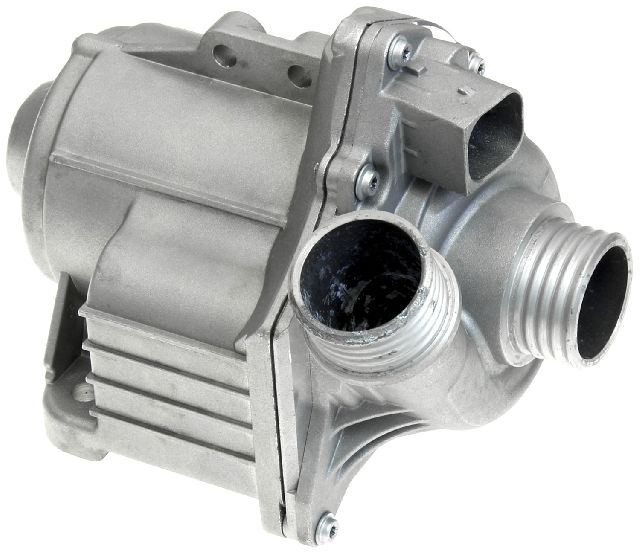
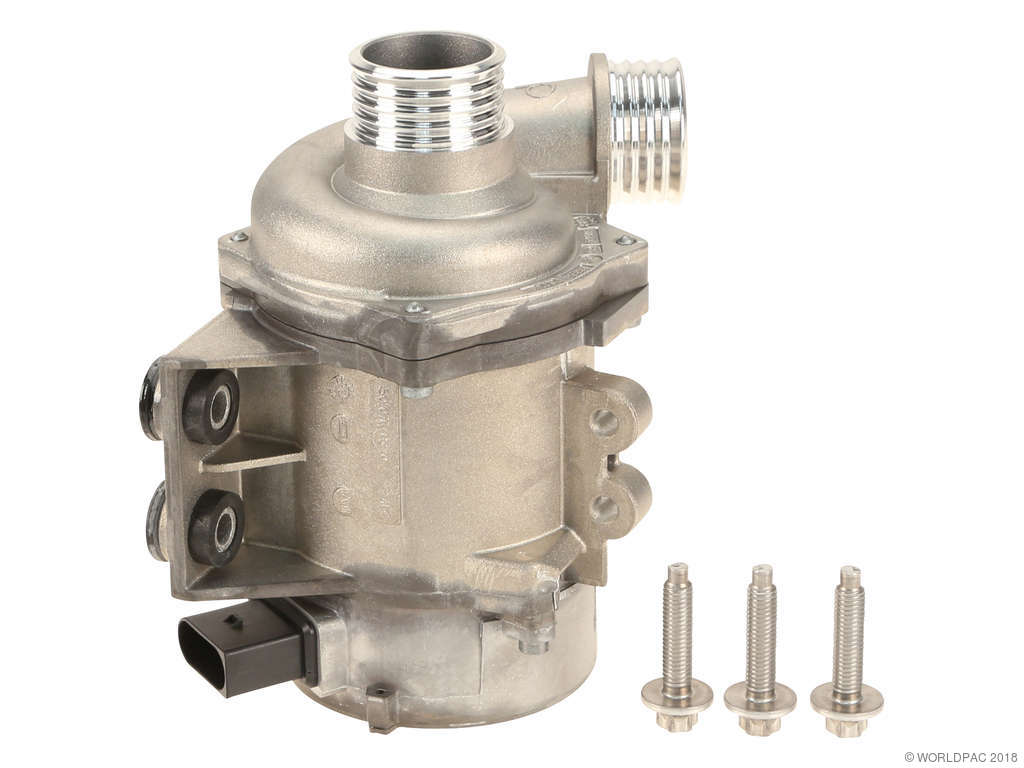
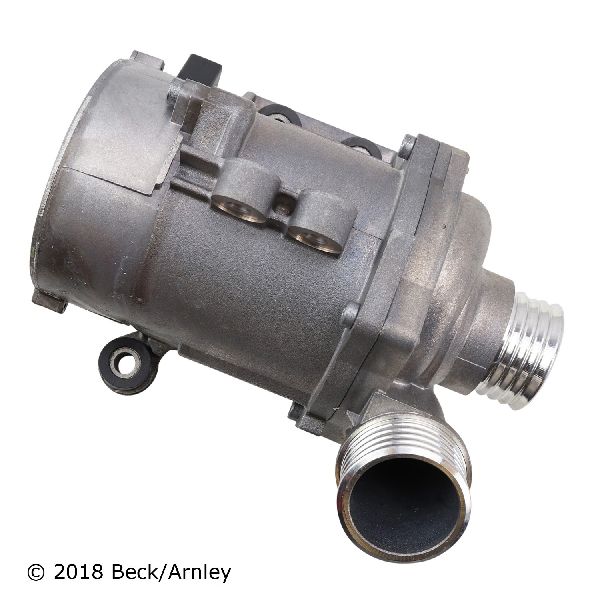
On the N52 engine, P0128 almost always means the thermostat is failing and stuck open. It's an electronically controlled unit that fails with age. Expect to pay $100-$150 for an OEM-quality replacement part and budget 2-3 hours for DIY replacement. It is highly recommended to replace the electric water pump at the same time.
- P0128 on a BMW 1-Series with the N52 engine is overwhelmingly caused by a failed thermostat that is stuck open or has a failed internal heating element.
- Symptoms include a slow-to-warm engine, low temperature gauge readings at speed, poor cabin heat, and the cooling fan running at maximum speed on startup.
- The recommended repair is to replace the entire thermostat assembly. Due to overlapping labor, it is highly advisable to replace the electric water pump at the same time as preventative maintenance.
- A proper electronic bleed procedure is critical after the repair to avoid trapping air in the system, which can cause similar symptoms.
What's Unique About the 2008-2013 BMW 1-Series
The BMW N52 engine uses a map-controlled thermostat, which is more complex than a simple mechanical one. It has an internal heating element that allows the DME to force it open for better performance and cooling on demand, or keep it closed to warm the engine faster. This design introduces an electrical failure point. The P0128 code is often triggered not because the thermostat is mechanically stuck, but because the internal heating element has failed (an open circuit), which the DME detects during its initial checks. A forum user on 5series.net described how to test this: the resistance across the two pins on the thermostat's electrical connector should be approximately 16 ohms; an infinite reading indicates a failed internal heater.
Symptoms You May Notice
- Check Engine Light (SES light) is on.
- Engine takes a very long time to warm up.
- Temperature gauge on the dash reads lower than normal, especially during highway driving (for models equipped with a gauge).
- Cabin heater may not blow as hot as it should, or may blow hot at idle and cool down while driving.
- A noticeable decrease in fuel economy.
- Cooling fan runs at high speed shortly after starting the car, even when cold. This is a default fail-safe mode triggered by the DME when it detects a fault in the cooling system.
- Replacing the coolant temperature sensor when the thermostat is the actual problem. The thermostat is the most common cause by a large margin. Always diagnose the thermostat's mechanical and electrical function before replacing other parts.
Most Likely Causes
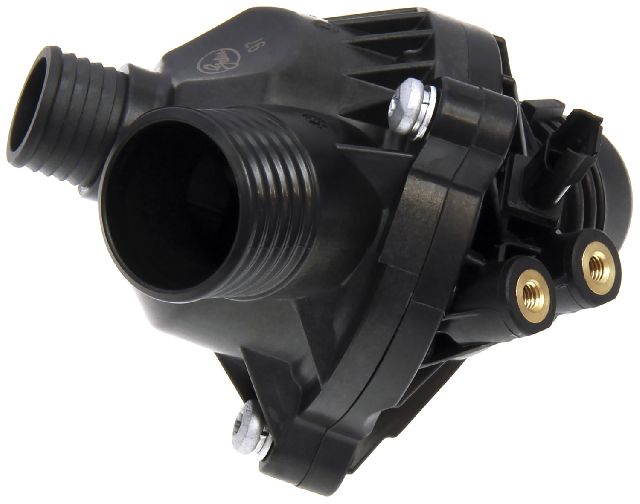
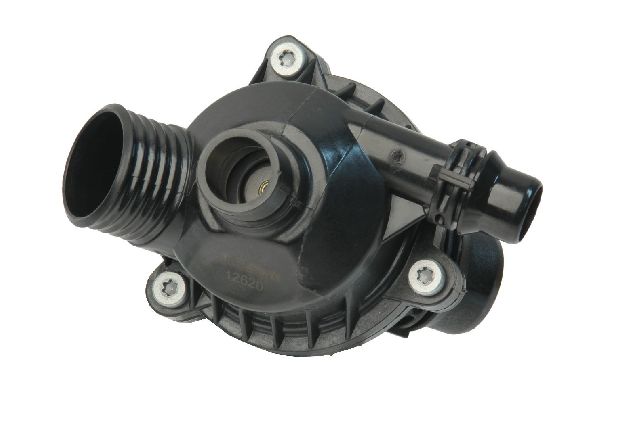
- Failing or Stuck-Open Thermostat 🔴 High Probability → Shop Integrated Thermostat Housing Assembly The electronically controlled thermostat on the N52 is a known failure point. It can fail mechanically (stuck open) or, more commonly, the internal heater circuit fails, both of which will trigger P0128.
How to confirm: Monitor live coolant temperature data with an OBD-II scanner or through the BMW hidden menu. The N52's target temperature is around 97°C (207°F) for normal operation. If the temperature struggles to reach this, hovers around 79-84°C, or drops significantly at highway speeds, the thermostat is stuck open. You can also test the internal heater's resistance with a multimeter; it should be ~16 ohms. One technician measured a faulty thermostat at 15.3 ohms when the spec was 10-14 ohms.
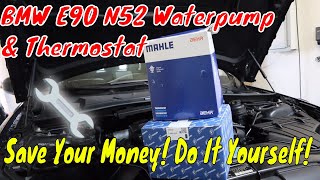
Typical fix: Replace the entire thermostat assembly. 🎬 Watch: Step-by-step guide to replacing the water pump and thermostat. It is a single unit with the housing. A full coolant drain and fill is required, followed by the specific electronic bleed procedure.
Est. part cost: $90-$150 - Faulty Engine Coolant Temperature (ECT) Sensor ⚪ Low Probability → Shop Engine Coolant Temperature Sensor While less common than thermostat failure, sensors can fail and send incorrect readings to the DME. On the N52, the primary sensor is located on the cylinder head. A failure here can trick the DME into thinking the engine is cold when it is not.
How to confirm: Compare the ECT sensor reading on a scan tool to a known good temperature reading (e.g., an infrared thermometer aimed at the sensor housing) on a cold engine. The readings should be very close. If the sensor reads an illogical temperature (e.g., -40°F), it is faulty. A user on a Bimmerpost forum noted that after replacing the thermostat twice, the P0128 code was finally fixed by replacing the ECT sensor on the head.
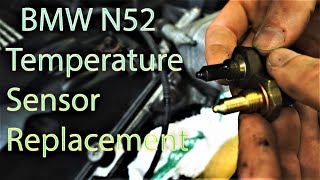
Typical fix: Replace the engine coolant temperature sensor. 🎬 See this walkthrough on how to replace the ECT sensor. It is often located on the cylinder head and can be replaced with minimal coolant loss if done quickly.
Est. part cost: $20-$40 - Low Engine Coolant Level / Air in System ⚪ Low Probability If the coolant level is low, air pockets can form, especially around the temperature sensor, causing it to read incorrectly. This is usually a result of a leak elsewhere in the system (e.g., radiator, hoses, water pump).
How to confirm: Visually inspect the coolant expansion tank when the engine is cold. If the level is below the 'MIN' mark, there is a leak. After any cooling system repair, an improper bleed procedure can also trap air. A forum member fixed a recurring P0128 by 'burping' the system while hot to release trapped air, then topping off the coolant.
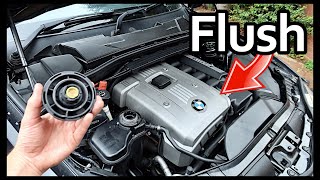
Typical fix: Find and repair the source of the coolant leak. Then, properly fill and bleed the cooling system. The N52 has a specific electronic bleeding procedure that must be followed, which involves turning the ignition on, setting heat to max, and holding the accelerator pedal for 10-12 seconds 🎬 Watch: Complete coolant flush and electronic bleeding procedure. to activate the water pump.
Est. part cost: $0-$50 (for coolant)
Rare But Worth Checking
- Incorrect Coolant Mixture: A user on a forum noted that using a coolant/water mixture with too much water triggered the code. Always use a 50/50 mixture of approved BMW coolant (G48, typically blue) and distilled water.
- Defective New Thermostat: → Shop Integrated Thermostat Housing Assembly Owners on forums have reported receiving a new thermostat that was defective out of the box, causing the P0128 code to return immediately after replacement. This highlights the importance of using OEM/OES quality parts from reputable suppliers.
Diagnosis Steps
- Read the code with an OBD-II scanner to confirm P0128 is present. For more detail, use a BMW-specific tool like ISTA to read manufacturer codes (e.g., 00279B).
- Check the engine coolant level in the expansion tank (when the engine is cold). Top up if necessary with a 50/50 mix of BMW-approved G48 coolant and distilled water.
- Use a scan tool to monitor the Engine Coolant Temperature data stream. Start the car from cold.
- Observe the temperature as the car warms up. It should rise steadily to around 97°C (207°F) and stabilize.
- If the temperature takes an excessively long time to warm up, or if it drops significantly when driving at highway speeds, the thermostat is almost certainly stuck open and needs to be replaced.
- If the temperature gauge behaves erratically or shows an obviously incorrect value (e.g., -40°F), the coolant temperature sensor is the more likely culprit.
- If the thermostat has already been replaced and the code returns, suspect a defective replacement part, air in the system from an improper bleed, or the less common ECT sensor failure. Perform the electronic bleed procedure again to ensure no air is trapped.
Parts You'll Likely Need
- Engine Coolant Thermostat Assembly
(OEM #11537549476)— This is the most common failure item for code P0128 on the N52 engine. The original unit fails over time, either mechanically or electrically, causing the engine to run too cool.
Trusted brands: Behr, Mahle, Genuine BMW
OEM price range: $120-$160
Aftermarket price range: $90-$120 - BMW Antifreeze/Coolant
(OEM #82141467704)— The cooling system must be drained to replace the thermostat. You will need to refill it with the correct type of coolant (typically blue G48). Always mix 50/50 with distilled water.
Trusted brands: Genuine BMW, Pentofrost
OEM price range: $25-$35 per gallon
Aftermarket price range: $20-$30 per gallon - Thermostat to Water Pump Bolts — The bolts holding the thermostat and water pump are often aluminum and are single-use (torque-to-yield). They should be replaced any time they are removed to ensure proper clamping force and prevent future leaks.
Trusted brands: Genuine BMW
OEM price range: $5-$15 for a set
Platform-Specific Known Issues
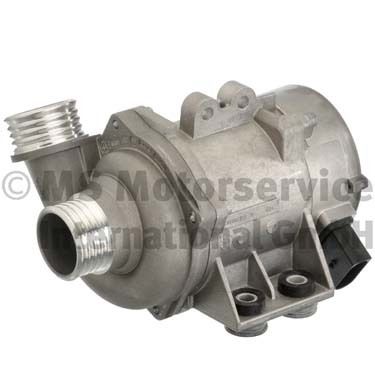
- The N52 engine's electric water pump and thermostat are often replaced together as preventative maintenance, as they have similar service lives (typically failing between 60,000-90,000 miles) and require draining the cooling system. If one fails, it's wise to consider replacing the other if it's also original to save on future labor costs.
- Accessing the thermostat and water pump can be challenging. Many DIY guides, like one from a user on Bimmerpost, recommend removing the cooling fan and anti-roll bar to create enough space to remove the components from below the car.
Mechanic-Grade Diagnostic Values
- Thermostat internal heater resistance — expected: 10 - 16 Ohms. Failure: An infinite reading (open circuit) or a value outside the specified range. One technician measured a faulty unit at 15.3 Ohms when the spec was 10-14 Ohms.
- Voltage at thermostat connector pin 1 (Orange wire) — expected: Battery Voltage (approx. 12V) with ignition on. Failure: No voltage indicates a problem with the power supply from the DME, likely a blown fuse (F78 for pre-2008 models, F37 for 2008+).
Hidden / Shadow Codes Worth Checking
- 2EF4: Map thermostat, mechanism. This code specifically points to a mechanical problem with the thermostat, such as being stuck open. (see via BMW-specific diagnostic software like ISTA or INPA.)
- 2F07: Map thermostat, mechanism. Similar to 2EF4, this indicates a fault with the thermostat's function, often logged alongside P0128. (see via BMW-specific diagnostic software like ISTA or INPA.)
Scan Tool Commands That Help
- ISTA/INPA: Cooling system bleed procedure — This is a mandatory service function after replacing any cooling system component (thermostat, water pump, hoses) to electronically activate the water pump and purge all air from the system. Failure to do this can cause air pockets, leading to incorrect temperature readings and repeat P0128 codes.
- ISTA/INPA: Water pump speed test — To verify if the electric water pump is responding to commands from the DME. While not a direct test for the thermostat, it helps confirm the overall health of the cooling system's electronic components.
- ISTA: Component Test Plan / Call up ECU functions — Within the DME module functions, you can view the status of various PIDs (Parameter IDs), which may include the requested vs. actual position or duty cycle of the map-controlled thermostat, helping to diagnose if it's responding to DME commands.
Wiring & Ground Locations
- Thermostat Connector (X6279) — On the thermostat housing itself, connected to the main engine harness.. This is the connection point for power and control. Pin 1 (Orange wire) is power from the DME, and Pin 2 (White wire) is the control signal wire from the DME. A loose or corroded connection here can mimic a failed thermostat.
- DME Connector X60007, Pin 19 — In the electronics box (E-box) in the engine bay, this is the specific pin on the DME (MSV80) that sends the control signal to the thermostat.. A technician can probe this pin (typically a white wire) to test the signal directly from the DME, ruling out a wiring issue between the DME and the thermostat.
- Main Engine Ground Strap — On the driver's side (LHD cars), connecting the engine mount bracket to the chassis frame rail, underneath the car.. While not a direct cause, a corroded or broken main engine ground can cause a host of bizarre electrical issues and incorrect sensor readings across the engine management system. Given the electronic nature of the thermostat, ensuring a solid ground is a crucial, though often overlooked, diagnostic step.
Real Owner Repair Stories
- Bimmerpost user 'gabylonfive' (BMW 3-series (E9x) with N52, had upgraded to a CSF aluminum radiator.) — Recurring P0128 code.
❌ Tried (didn't work) Replaced the thermostat twice, assuming the first replacement was defective.
✅ What actually fixed it Replacing the engine coolant temperature (ECT) sensor located in the cylinder head finally resolved the code. - Bimmerpost user ''02onthebrain' (BMW 3-series (E9x) with N52.) — P0128 code returned after replacing the water pump and thermostat.
❌ Tried (didn't work) Initial replacement of water pump and thermostat., Replacing the thermostat a second time, suspecting a defective part.
✅ What actually fixed it A combination of replacing the radiator, the coolant temperature sensor in the engine block, the expansion tank cap, and performing the bleed procedure multiple times finally cleared the code.
When the Usual Fixes Don't Work
- While the thermostat is the cause of P0128 in over 90% of cases, there are documented instances where the code persisted after multiple thermostat replacements. In one such case on a Bimmerpost forum, the final fix was replacing the engine coolant temperature (ECT) sensor on the cylinder head. This suggests that if a quality thermostat replacement doesn't fix the code, the ECT sensor should be the next primary suspect, especially if the system has been properly bled.
OEM Part Supersession History
11537536655→11537544788, then 11537549476— Likely internal design improvements to the thermostat mechanism or heater element for better reliability.
Model Year Variations Within This Range
- 2008 and later: The fuse powering the thermostat circuit changed. For pre-2008 models, it is often fuse F78. For 2008 and later models, it is fuse F37. This is critical when diagnosing a no-power condition at the thermostat connector.
Diagnostic Flowchart
Other Known Issues on This Vehicle
Issues unrelated to this code that are worth knowing about as an owner of this generation:
- Electric Water Pump Failure 🔴 High — Commonly fails between 60,000 and 90,000 miles. Failure is often sudden and can cause rapid overheating, leading to engine damage if not addressed immediately.
- Valve Cover and Gasket Oil Leaks 🟠 Medium — Very common, typically occurring around 80,000-100,000 miles. The plastic valve cover itself can crack, and the gasket becomes hard and brittle, leading to oil leaking onto the hot exhaust manifold, causing a burning smell and smoke.
- Oil Filter Housing Gasket (OFHG) Leak 🟠 Medium — Another extremely common oil leak. The gasket degrades over time, allowing oil to leak down the side of the engine. If left untreated, it can degrade the serpentine belt, causing it to slip off and potentially get ingested into the engine through the main crank seal, leading to catastrophic failure.
- VANOS Solenoid Failure/Clogging 🟡 Low — Common around 70,000+ miles. Solenoids get clogged with oil debris, causing rough idle, hesitation, and fault codes related to camshaft position. Cleaning is a temporary fix; replacement is often required for a permanent solution.
- Ignition Coil Failure 🟡 Low — Coils can fail intermittently, causing engine misfires, rough running, and a flashing check engine light. They are relatively easy and inexpensive to replace.
Used vs. New Parts: Buying Guide for This Vehicle
When a used part is the smart pick: For this specific repair, using a used part is strongly discouraged. The thermostat and the related electric water pump are electronic components with a well-documented, finite service life of approximately 60,000-100,000 miles. A used part has unknown remaining life and is very likely to fail soon after installation, negating any cost savings.
What to inspect on the donor part:
- Not applicable, as used electronic cooling parts for the N52 are not recommended.
OEM-only on this vehicle (don't cheap out):
- Engine Coolant Thermostat Assembly
- Electric Water Pump
Aftermarket brands forum-validated for this vehicle:
- Mahle (often the original equipment manufacturer, or OEM, with the BMW logo scratched off)
- Behr (also a known OEM supplier for BMW cooling components)
- Pierburg (OEM for the water pump)
- Wahler (another OEM supplier for thermostats)
Brands owners have reported issues with on this vehicle:
- Unnamed or generic 'chinesium' brands from marketplaces like eBay or Amazon are highly discouraged for critical components like the water pump and thermostat. Forum users report high failure rates for these parts, leading to repeat repairs.
Real Owner Stories
Aggregated from forums and TSBs cited above. Mileages and costs reflect what owners reported in those sources.
2006-2013 BMW 3-Series N52 (E90)
Symptoms: The car was running fine, but the Service Engine Soon (SES) light stayed on with code P0128, specifically during cold weather.
What fixed it: Replacement of the thermostat due to an internal heater circuit failure.
Source hint: bimmerpost.com thread titled 'SES P0128' on the E90 forum
2006-2013 BMW 3-Series N52 (E90)
Symptoms: Code P0128 persisted even after replacing the thermostat twice and the water pump.
What fixed it: Replacing the engine coolant temperature (ECT) sensor located on the cylinder head.
Source hint: bimmerpost.com thread titled 'replaced thermostats and water pump getting code p0128'
2006-2008 BMW Z4 3.0si (E85/E86)
Symptoms: The cooling fan was running at full speed starting from a cold start.
What fixed it: Addressed cooling system fault codes; the symptom is linked to both water pump and thermostat failures.
Source hint: z4-forum.com thread 'N52 Waterpump fail symptoms and fault code?'
2008-2013 BMW 1-Series N52 — ~75000 miles
Symptoms: Recurring P0128 code after cooling system service.
What fixed it: 'Burping' the system while hot to release trapped air and topping off the coolant level.
Source hint: Forum member report regarding air in system and improper bleed
Related OBD-II Codes
Frequently Asked Questions
Why is my cooling fan running at high speed immediately after I start my 1-Series, even when the engine is cold?
What is the target operating temperature for the N52 engine in my BMW?
I replaced my thermostat but the P0128 code returned. What else could it be on the N52?
How do I perform the electronic bleed procedure after replacing cooling parts on my 1-Series?
Is it true I should replace the water pump at the same time as the thermostat?
Can I test the thermostat heater with a multimeter to confirm it's bad?
Helpful Videos
We Have This Part in Stock

The information in this article is provided for general reference and educational purposes only. Vehicle specifications, procedures, and part compatibility can vary by production date, trim level, and region. Always consult your vehicle's factory service manual and verify part numbers before purchasing or performing repairs. Safety-critical components such as airbags, seat belts, and braking systems should be installed by a qualified professional.
- BMW 1-Series:
- 🧭 Diagnostic Flowchart
- 🎬 Helpful Videos
- 🛍️ Shop This Part
- What's Unique About the 2008-2013 BMW 1-Series
- Symptoms You May Notice
- Most Likely Causes
- Rare But Worth Checking
- Diagnosis Steps
- Parts You'll Likely Need
- Platform-Specific Known Issues
- Mechanic-Grade Diagnostic Values
- Hidden / Shadow Codes Worth Checking
- Scan Tool Commands That Help
- Wiring & Ground Locations
- Real Owner Repair Stories
- When the Usual Fixes Don't Work
- OEM Part Supersession History
- Model Year Variations Within This Range
- Other Known Issues on This Vehicle
- Used vs. New Parts: Buying Guide for This Vehicle
- Real Owner Stories
- 2006-2013 BMW 3-Series N52 (E90)
- 2006-2013 BMW 3-Series N52 (E90)
- 2006-2008 BMW Z4 3.0si (E85/E86)
- 2008-2013 BMW 1-Series N52 — ~75000 miles
- Related OBD-II Codes
- Frequently Asked Questions
- 🎟️ Get 5% Off