

P0128 on 2011-2017 BMW X3 N20: Coolant Temperature Below Regulation Causes and Fixes
On a 2013-2017 BMW X3 with the N20 engine, code P0128 is almost always caused by a failed engine thermostat that is stuck in the open position. Replacing the complete thermostat assembly is the standard fix. The part costs between $100 and $250, and DIY replacement is manageable for experienced individuals. It is crucial to use the correct BMW HT-12 coolant and perform the electronic bleeding procedure after replacement.
- P0128 on your N20-powered X3 almost certainly means you need a new thermostat assembly.
- You can continue to drive the car, but you'll experience poor fuel economy and weak cabin heat until it's fixed.
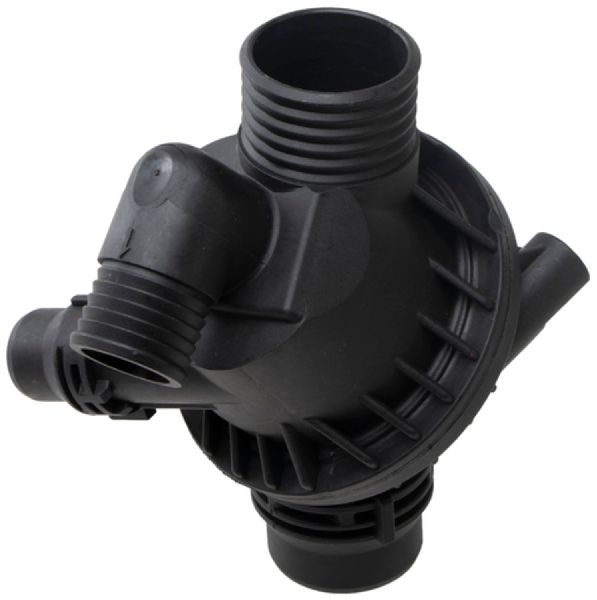
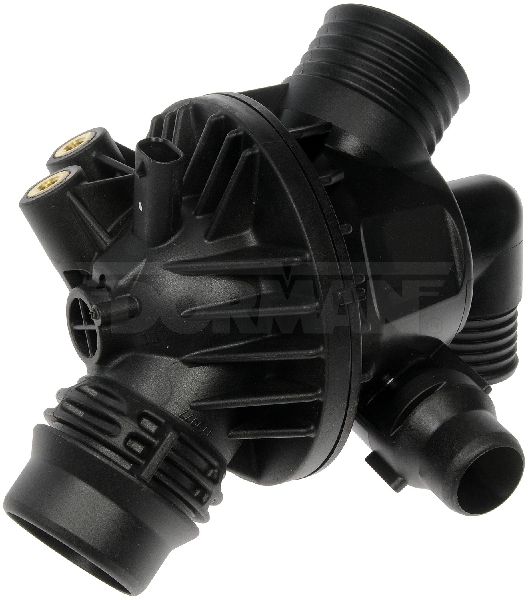
- The correct part is the entire thermostat housing assembly, OEM part number 11538635689.
- After replacement, the cooling system must be refilled with BMW HT-12 coolant and properly bled to prevent air pockets and a return of the code.
What's Unique About the 2011-2017 BMW X3
The BMW N20 engine uses a sophisticated, electronically controlled 'map' thermostat, not a simple mechanical one. This design has an internal heating element that allows the DME to manage engine temperatures more precisely for efficiency and emissions. However, this complexity introduces an electrical failure point, though the most common failure is mechanical. The P0128 code is overwhelmingly triggered because the thermostat assembly has failed and is stuck in the open position, which is a very common issue on this engine. As a fail-safe for this condition, the DME will often command the electric radiator fan to run at high speed, even on a cold start.
Generation note: The 2011-2017 year range covers the F25 generation of the BMW X3. However, the N20 2.0L Turbo engine was only available in the xDrive28i model from the 2013-2017 model years. The 2011-2012 xDrive28i used a different (N52) engine. This guide is specific to the N20-equipped models.
Symptoms You May Notice
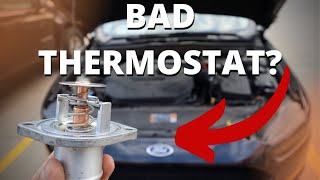
🎬 Watch: A quick breakdown of common bad thermostat symptoms.- Check Engine Light is on
- Engine takes a very long time to warm up
- Engine temperature gauge (or oil temperature gauge in the cluster) stays low or drops during highway driving
- Poor or no heat from the cabin heater, especially on cold days
- Decreased fuel economy
- Engine fan running at high speed even when the engine is cold (a common fail-safe reaction)
- Replacing the coolant temperature sensor when the thermostat is the actual problem. P0128 by itself, without other sensor-specific codes, almost always points to the thermostat.
- Assuming the water pump is faulty. A failing water pump on the N20 typically causes overheating and different codes, not an under-temperature condition.
Most Likely Causes
- Engine Coolant Thermostat Stuck Open 🔴 High Probability → Shop Integrated Thermostat Housing Assembly The electronically controlled thermostat used on the N20 engine is a known high-failure item, commonly getting stuck in the open position as a fail-safe. This is a well-documented issue across all BMW models using this engine.
How to confirm: Use an OBD-II scanner with live data to monitor the engine coolant temperature. If the engine fails to reach and maintain its target operating temperature (approx. 105-110°C or 221-230°F) after 15-20 minutes of driving, the thermostat is almost certainly stuck open. The temperature may rise while idling but drop significantly at highway speeds. A simple physical check is the 'Upper Hose Test' on a cold engine: if the upper radiator hose becomes warm within the first 1-2 minutes of starting, coolant is flowing prematurely, confirming the thermostat is stuck open.
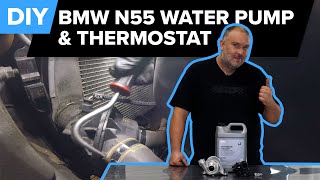
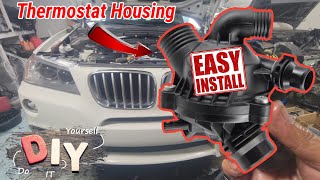
Typical fix: Replace the entire engine coolant thermostat housing assembly. The cooling system must be drained, refilled with the correct BMW HT-12 coolant, and properly bled using the vehicle's electronic bleed procedure. This procedure involves turning the ignition on (engine off), setting the heater to max and fan to low, then holding the accelerator pedal down for 10 seconds to activate the electric water pump.
Est. part cost: $100-$250 - Low Engine Coolant Level ⚪ Low Probability While not a primary cause of P0128, BMWs of this era can develop coolant leaks from various plastic components like the expansion tank, radiator, and hoses, which can become brittle over time. A significant loss of coolant could theoretically affect temperature readings, but it would typically lead to overheating codes.
How to confirm: Visually inspect the coolant expansion tank when the engine is cold. If the level is below the minimum mark, there is a leak in the system that needs to be found and repaired. A coolant system pressure test is the definitive way to find a leak.
Typical fix: Top off the coolant and pressure test the system to find the source of the leak. Replace the leaking component (e.g., hose, expansion tank, water pump).
Est. part cost: $50-$300 - Faulty Engine Coolant Temperature Sensor ⚪ Low Probability → Shop Engine Coolant Temperature Sensor This is not a common failure. On the N20, the main coolant temperature sensor is integrated into the thermostat housing, so it gets replaced with the thermostat anyway. A faulty sensor would typically set other specific fault codes related to the sensor circuit itself.
How to confirm: On a cold engine, use a scan tool to compare the Engine Coolant Temperature (ECT) reading with the Intake Air Temperature (IAT) and Ambient Air Temperature readings. They should be within a few degrees of each other. If the ECT reading is illogical (e.g., -40°F) or doesn't change as the engine warms, the sensor is likely faulty.
Typical fix: Replace the engine coolant temperature sensor. Since it is part of the thermostat assembly on the N20, the fix is the same as replacing a failed thermostat.
Est. part cost: $25-$70
Rare But Worth Checking
- Cooling Fan Stuck On: → Shop Engine Cooling Fan Blade If the electric cooling fan runs constantly at high speed, even when the engine is cold, it can prevent the engine from warming up properly. This is usually a symptom of the P0128 code itself, as the DME enters a fail-safe mode due to the faulty thermostat. However, a separate failure in the fan control module could also cause this, though it is much less likely.
- DME Software Issue: In very rare cases, outdated engine computer (DME) software can have incorrect logic for triggering P0128. A dealer can check for available software updates, though this is far less common than a hardware failure.
Diagnosis Steps
- Check for other Diagnostic Trouble Codes (DTCs). Address any codes related to the temperature sensor circuit or thermostat control circuit first.
- With the engine cold, check the coolant level in the expansion tank and top off if necessary.
- Use an OBD-II scanner with live data to monitor the Engine Coolant Temperature (ECT).
- Start the engine and let it idle. The temperature should rise steadily.
- Drive the vehicle for 15-20 minutes, including some time at highway speeds. The temperature should reach and hold steady around 105-110°C (221-230°F).
- If the temperature fails to reach this range or drops significantly while driving at speed, the thermostat is stuck open and must be replaced.
- Alternatively, perform the 'Upper Hose Test' on a completely cold engine. If the upper radiator hose gets warm within the first 1-2 minutes, the thermostat is confirmed to be stuck open.
- After replacement, perform the electronic coolant system bleeding procedure. This is critical for removing air pockets.
Parts You'll Likely Need
- Engine Coolant Thermostat Assembly
(OEM #11538635689)— This is the most common failure item for code P0128 on the N20 engine. It fails by sticking open, preventing the engine from reaching operating temperature. This part number supersedes several previous versions, including 11538648791.
Trusted brands: Genuine BMW, Mahle (often the OEM supplier), Behr
OEM price range: $150-$200
Aftermarket price range: $100-$160 - BMW HT-12 Antifreeze / Coolant
(OEM #83192468442)— The cooling system must be drained to replace the thermostat and refilled with the correct G48 (HT-12) coolant to protect the engine and cooling system components. Mixing coolant types is not permitted.
Trusted brands: Genuine BMW
OEM price range: $25-$35 per gallon
Aftermarket price range: $20-$30 per gallon
Technical Service Bulletins (TSBs) & Recalls
- SIB 01 01 16 / B010116: Details a limited warranty extension for the engine coolant thermostat to 10 years/120,000 miles for certain N20/N26 engines, including the 2013-2014 X3 xDrive28i.
Platform-Specific Known Issues
- There was a warranty extension for the thermostat on some N20/N26 engines (SIB 01 01 16) to 10 years/120,000 miles. This covered F25 X3 xDrive28i models produced up to March 31, 2014. It is worth checking with a BMW dealer with your VIN to see if your vehicle was covered, although this program is likely expired for most vehicles in this year range now.
Mechanic-Grade Diagnostic Values
- Engine Coolant Temperature (ECT) Sensor Resistance — expected: At 20°C (68°F): ~2,200 - 3,000 Ω. At 80°C (176°F): ~250 - 350 Ω.. Failure: Resistance is infinite (open circuit) or near zero (short circuit), or does not decrease smoothly as the sensor warms up.
- Voltage at Thermostat Heater Element Connector — expected: The DME sends a Pulse Width Modulated (PWM) signal to the heater. Diagnosis is typically not done with a simple voltage check.. Failure: An open or short in the heater circuit will set a specific shadow code, such as '1D2404' or '2EF4 map thermostat mechanism'. Diagnosis is based on these codes rather than direct voltage measurement.
Hidden / Shadow Codes Worth Checking
- 1D2404: Map-controlled thermostat, activation: Line disconnection. This indicates an electrical fault, specifically an open circuit to the thermostat's internal heater. (see via BMW-specific scan tools like ISTA, Foxwell, or advanced Launch scanners.)
- 2EF4: Map thermostat, mechanism. This fault indicates a mechanical problem, such as the thermostat being physically jammed open or closed. For a P0128 code, it means jammed open. (see via BMW-specific scan tools like ISTA or other tools capable of reading manufacturer-specific codes.)
Scan Tool Commands That Help
- ISTA (BMW Dealer Software): Cooling system test plan / Component activation — To command the thermostat's internal heater on and off to check for an electrical response. This can help differentiate between a mechanical jam and an electrical failure, though both typically require replacing the assembly.
- ISTA (BMW Dealer Software): Service Function - Cooling system bleeding procedure — This is the mandatory final step after replacing the thermostat or any cooling system component. It runs the electric water pump for approximately 10-12 minutes to systematically purge all air from the engine, heater core, and radiator to prevent air pockets that can cause cooling issues.
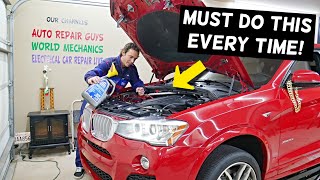
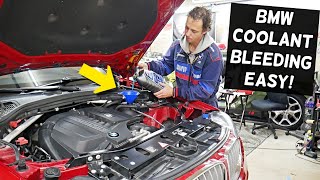
- User-Initiated (No Tool Required): Manual Coolant Bleeding Procedure — For DIY repairs without access to ISTA. With ignition on (engine off), set heater to max temp, fan to lowest speed, and hold the accelerator pedal down for 10-15 seconds. This activates the electric water pump's 10-12 minute bleed cycle.
Wiring & Ground Locations
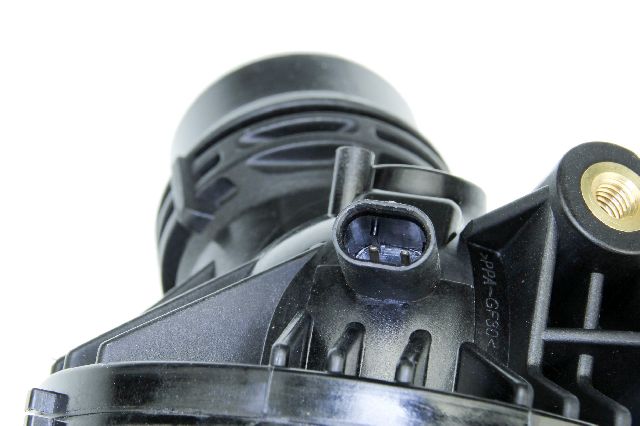
- Thermostat Electrical Connector — Directly on the thermostat housing, which is located on the front of the engine, below the intake air ducting.. This 4-pin connector provides power to the internal heater and carries the signal from the integrated coolant temperature sensor. A loose or corroded connector can cause electrical faults and trigger shadow codes.
- Engine Ground Strap — Varies slightly by model, but typically a braided strap connecting the engine block to the vehicle's chassis, often near one of the engine mounts.. A corroded or broken main engine ground strap can cause a wide range of bizarre electrical issues, including sensor malfunctions. While not a primary cause for P0128, it's a known BMW issue and can contribute to erroneous sensor readings if the ground path is poor.
Real Owner Repair Stories
- YouTube video by '2012-2016 Bmw 328i/320i N20 Thermostat Replacement' (BMW F30 328i with N20 engine) — Check Engine Light with a code indicating the thermostat was stuck open.
✅ What actually fixed it The problem was resolved by replacing the entire thermostat housing assembly with a new part from ECS Tuning. The repair involved draining the coolant, removing intake components for access, replacing the thermostat, and performing the electronic coolant bleeding procedure.
OEM Part Supersession History
11537588257, 11537633476, 11537633477, 11538636594, 11538636595, 11538648791→11538635689— Revisions by BMW to improve reliability and address the common failure mode.
Heads up: All previous part numbers are superseded by 11538635689. When replacing, it is critical to use the latest revision to ensure the most reliable part is installed.
Diagnostic Flowchart
Other Known Issues on This Vehicle
Issues unrelated to this code that are worth knowing about as an owner of this generation:
- Timing Chain Guide Failure 🔴 High — Common on pre-2015 models, typically between 60,000-100,000 miles. Symptoms include a distinct whining/whirring noise from the front of the engine. Failure can be catastrophic, leading to engine destruction. (Ref: BMW issued a warranty extension (7 years/70,000 miles, later updated) and TSB SIB 11 03 17 for this issue.)
- Oil Filter Housing Gasket Leak 🟠 Medium — Very common failure. The gasket hardens and becomes brittle over time, causing oil to leak down the side of the engine block. While the leak itself is a moderate issue, on other BMW engines it can cause the serpentine belt to fail and be ingested by the engine; this is less of a risk on the N20 due to crankshaft pulley design.
- Valve Cover & Gasket Leak 🟠 Medium — The plastic valve cover can warp or crack, and the gasket becomes brittle, leading to oil leaks onto the exhaust manifold (causing a burning smell) and into the spark plug wells.
- Electric Water Pump Failure 🟠 Medium — The electric water pump is a common failure item on many BMWs of this era, including the N20. Failure typically occurs between 60,000-80,000 miles and will cause rapid overheating, unlike the P0128 under-temp code.
- Sunroof Drain Blockage / Rattles 🟡 Low — The panoramic sunroof drains can become clogged with debris, causing water to leak into the cabin, potentially damaging electronics. The mechanism can also develop rattles over time.
Used vs. New Parts: Buying Guide for This Vehicle
When a used part is the smart pick: For this specific repair, buying a used thermostat is strongly discouraged. The part has a very high failure rate, and a used unit from a salvage yard has an unknown history and a high probability of failing soon after installation, forcing you to do the labor-intensive job twice.
What to inspect on the donor part:
- Not applicable, as used purchase is not recommended.
OEM-only on this vehicle (don't cheap out):
- While not strictly 'OEM-only', using a Genuine BMW part or a part from the original equipment manufacturer (OEM) is highly recommended for the thermostat assembly. This ensures the highest quality and longevity.
Aftermarket brands forum-validated for this vehicle:
- Mahle (often the OEM supplier for BMW)
- Behr
Brands owners have reported issues with on this vehicle:
- Unnamed, no-brand, or white-box parts from online marketplaces should be avoided. The complexity of the electronic thermostat means these cheaper alternatives often have a very short service life.
Real Owner Stories
Aggregated from forums and TSBs cited above. Mileages and costs reflect what owners reported in those sources.
2014 BMW Z4 sDrive28i (N20)
Symptoms: Owner reported a P0128 code appearing on their vehicle which shares the N20 engine architecture.
What fixed it: The thermostat was identified as the definitive cause and required replacement.
Source hint: Reddit (r/BmwTech) thread 'P0128 code on 2014 Z4'
2013-2014 BMW X3 xDrive28i (N20)
Symptoms: The engine fails to reach or maintain target operating temperature, often triggered by a thermostat stuck in the open position as a fail-safe.
What fixed it: Replacement of the engine coolant thermostat under a 10-year/120,000-mile warranty extension.
Source hint: SIB 01 01 16 / B010116
BMW F25 X3 (N20)
Symptoms: Owner experienced a 'Coolant Thermostat Malfunction' resulting in a P0128 code.
What fixed it: The owner resolved the issue by replacing the thermostat.
Source hint: BimmerFest thread 'P0128 Coolant Thermostat Malfunction'
BMW 328i (F30) N20
Symptoms: Low temperature gauge readings and poor cabin heat, especially noticed during colder weather.
What fixed it: Replacement of the electronically controlled thermostat (P/N 11538635689).
Source hint: Bimmerpost (f30.bimmerpost.com) thread 1587851
Related OBD-II Codes
Frequently Asked Questions
Is there a warranty extension for the thermostat on my 2014 BMW X3 xDrive28i?
Why is my X3's engine fan running at high speed when I first start the car?
Can I just replace the sensor, or do I need the whole thermostat assembly for my N20 engine?
What is the 'Upper Hose Test' I keep hearing about for BMW cooling issues?
How do I bleed the cooling system on my X3 after replacing the thermostat?
What type of coolant should I use for my 2011-2017 X3 N20?
Helpful Videos

We Have This Part in Stock




The information in this article is provided for general reference and educational purposes only. Vehicle specifications, procedures, and part compatibility can vary by production date, trim level, and region. Always consult your vehicle's factory service manual and verify part numbers before purchasing or performing repairs. Safety-critical components such as airbags, seat belts, and braking systems should be installed by a qualified professional.
- BMW X3:
- 🧭 Diagnostic Flowchart
- 🎬 Helpful Videos
- 🛍️ Shop This Part
- What's Unique About the 2011-2017 BMW X3
- Symptoms You May Notice
- Most Likely Causes
- Rare But Worth Checking
- Diagnosis Steps
- Parts You'll Likely Need
- Technical Service Bulletins (TSBs) & Recalls
- Platform-Specific Known Issues
- Mechanic-Grade Diagnostic Values
- Hidden / Shadow Codes Worth Checking
- Scan Tool Commands That Help
- Wiring & Ground Locations
- Real Owner Repair Stories
- OEM Part Supersession History
- Other Known Issues on This Vehicle
- Used vs. New Parts: Buying Guide for This Vehicle
- Real Owner Stories
- 2014 BMW Z4 sDrive28i (N20)
- 2013-2014 BMW X3 xDrive28i (N20)
- BMW F25 X3 (N20)
- BMW 328i (F30) N20
- Related OBD-II Codes
- Frequently Asked Questions
- 🎟️ Get 5% Off