

P0128 on 2019-2023 Chevrolet Blazer: Coolant Temp, Causes, and Fixes
On a 2019-2023 Blazer, code P0128 is almost always caused by a faulty thermostat that is stuck open. This can also cause the A/C to stop working and a 'Service Steering' message to appear. On the 3.6L V6, the thermostat is difficult to access, so expect a repair cost of $400-$700.
- P0128 on a 2019-2023 Blazer is most likely a bad thermostat, but can also be a bad coolant temperature sensor.
- Do not be alarmed by the 'Service Steering Message' or A/C failure; these are programmed fail-safes and should resolve after fixing the P0128 code.
- On the 3.6L V6, the thermostat and sensor are under the intake manifold. It is highly recommended to replace both parts at the same time to save on significant labor costs.
- If you have a 2021 model, check for TSB 22-NA-054, as a simple ECM reprogram might be the fix instead of part replacement.
- Always check the coolant level first, as a low level or air pocket can also trigger this code.
What's Unique About the 2019-2023 Chevrolet Blazer
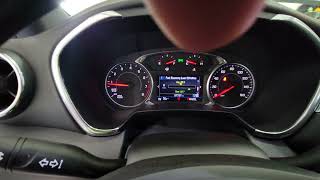
On this generation of Chevrolet Blazer and its platform mates (like the GMC Acadia and Cadillac XT5), a P0128 code often triggers secondary warnings that can be misleading. Owners frequently report a 'Service Steering Message' or 'Steering Assist is Reduced' and loss of air conditioning at the same time the check engine light appears. This is a programmed fail-safe response; the vehicle's computer disables these systems because it cannot trust the engine temperature reading. A GM Technical Service Bulletin (PIT5967) confirms this link, advising technicians to fix the P0128 code first to resolve the steering message, 🎬 Watch how the P0128 code triggers steering assist warnings. as the steering module reduces assist to compensate for what it thinks is cold, thick grease in the steering gear.
Symptoms You May Notice
- Check Engine Light illuminated
- Temperature gauge is inoperative or reads lower than normal
- Cooling fans run continuously at high speed, even when the engine is cold
- Air conditioning (A/C) does not work or blows warm air
- Message on the driver information center (DIC) stating 'Service Steering Message' or 'Steering Assist is Reduced'
- Heater may not blow warm air, or takes a very long time to warm up
- Slightly reduced fuel economy over time
- Replacing the A/C condenser or other A/C components because the air conditioning is not working.
- Diagnosing a fault with the power steering system due to the 'Service Steering' message, without first checking for powertrain codes like P0128.
Most Likely Causes
- Faulty Engine Thermostat 🔴 High Probability → Shop Integrated Thermostat Housing Assembly The thermostat is a mechanical part that can fail by sticking in the open position, which is the most frequent cause of P0128 on most vehicles, including the Blazer and its platform mates with the 3.6L LGX engine.
How to confirm: Use an OBD-II scanner with live data to monitor the Engine Coolant Temperature (ECT) pid. Start the engine cold and watch the temperature. If it rises very slowly and struggles to reach or maintain the normal operating range (approx. 195-220°F), often plateauing around 170-176°F, the thermostat is likely stuck open.
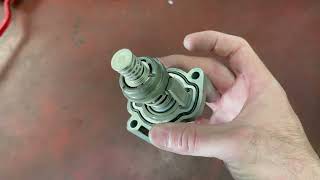
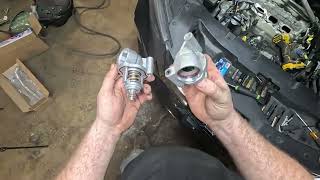
Typical fix: Replace the engine thermostat and housing assembly. On the 3.6L V6 engine, this part is located under the intake manifold, making the job labor-intensive. 🎬 See a walkthrough of this 3.6L thermostat replacement. It is highly recommended to replace the ECT sensor, intake manifold gaskets, and coolant crossover pipe O-rings at the same time.
Est. part cost: $70-$150 - Faulty Engine Coolant Temperature (ECT) Sensor 🟡 Medium Probability → Shop Engine Coolant Temperature Sensor The ECT sensor can fail and send inaccurate (too low) readings to the ECM, making the computer think the engine is cold when it is not. NHTSA ODI #11627479 notes that faulty ECT wiring can also be the root cause of the P0128 code and associated steering assist reduction.
How to confirm: With the engine cold after sitting overnight, use a scan tool to compare the ECT reading with the Intake Air Temperature (IAT) reading. They should be within a few degrees of each other. If the ECT reading is significantly lower or nonsensical (e.g., -40°F), the sensor is likely bad.
Typical fix: Replace the ECT sensor. On the 3.6L V6, the sensor is located next to the thermostat housing under the intake manifold, so it is best to replace it during a thermostat job to avoid duplicate labor. 🎬 Watch this guide on replacing the coolant temperature sensor.
Est. part cost: $15-$40 - Low Engine Coolant Level ⚪ Low Probability A coolant leak can lead to air pockets in the cooling system. If an air pocket gets trapped around the ECT sensor, it can cause an inaccurate reading and trigger P0128.
How to confirm: Visually inspect the coolant reservoir and radiator (when the engine is cool) to ensure the coolant is at the proper level. Check for any visible signs of coolant leaks under the vehicle or around the engine bay.
Typical fix: Find and repair the source of the coolant leak, then properly refill and bleed the cooling system to remove all air pockets. - ECM Calibration Error (2021 models) ⚪ Low Probability TSB 22-NA-054 was issued for some 2021 Blazers with the 3.6L V6 (LGX) engine, indicating that a software timing error could cause a false P0128 code, along with an inaccurate temp gauge and fans running after shutoff.
How to confirm: This must be confirmed by a Chevrolet dealership or a qualified shop with access to GM's service information. They will check the current calibration of the ECM against available updates.
Typical fix: Reprogram the Engine Control Module (ECM) with the latest software calibration.
Est. part cost: $0 (if under warranty), or shop labor for reprogramming.
Rare But Worth Checking
- Cooling Fan Stuck On: → Shop Engine Cooling Fan Blade A faulty fan relay or module could cause the cooling fans to run constantly, over-cooling the engine, especially during highway driving. However, on the Blazer, the fans running constantly is more often a *symptom* of the P0128 code, not the cause.
- Wiring or Connector Issue: Damaged wiring or a corroded connector at the ECT sensor can cause an incorrect signal, but this is less common than sensor or thermostat failure.
Diagnosis Steps
- Verify the code with an OBD-II scanner. Note any other codes, such as U0401.
- Check for any Technical Service Bulletins (TSBs) related to P0128 for your specific vehicle and engine, especially TSB 22-NA-054 for 2021 models and PIT5967 for the 'Service Steering' message.
- With the engine cold, check the coolant level in the reservoir and radiator. Top off if low and inspect for leaks.
- Use a scan tool to view live data. Compare the Engine Coolant Temperature (ECT) and Intake Air Temperature (IAT) sensors with the engine off and cold. They should be nearly identical (within 5°F).
- Start the engine and monitor the ECT reading as the vehicle warms up. If the temperature rises very slowly, drops at highway speeds, or fails to reach at least 190-195°F after 10-15 minutes of driving, the thermostat is the primary suspect.
- If the temperature reading is erratic, stuck at a very low value (like -40°F), or doesn't match the IAT sensor when cold, the ECT sensor or its wiring is the likely culprit.
- If TSB 22-NA-054 applies to your 2021 model, consult a dealer about an ECM reprogram before replacing parts.
- If parts replacement is necessary, plan to replace the thermostat housing, ECT sensor, and related gaskets/seals at the same time due to the labor-intensive location under the intake manifold on the 3.6L V6.
Parts You'll Likely Need
- Engine Coolant Thermostat Housing Assembly (3.6L V6)
(OEM #12678779)— This is the most common failure part for code P0128. The thermostat is integrated into the housing and fails by sticking open. This part number supersedes 12670557 and 12673659.
Trusted brands: ACDelco, GM Genuine
OEM price range: $100-$180
Aftermarket price range: $70-$120 - Engine Coolant Thermostat Kit (2.5L I4)
(OEM #11RM34K)— The most common failure part for code P0128 on the 4-cylinder engine.
Trusted brands: ACDelco, GM Genuine, Gates
OEM price range: $50-$80
Aftermarket price range: $30-$60 - Engine Coolant Temperature (ECT) Sensor
(OEM #12650595)— The second most likely cause. On the 3.6L V6, it is located under the intake manifold and should be replaced along with the thermostat to save on future labor costs.
Trusted brands: ACDelco, Bosch, Delphi
OEM price range: $20-$40
Aftermarket price range: $15-$30 - Intake Manifold Gasket Set (3.6L V6)
(OEM #12648665)— Required when removing the intake manifold to access the thermostat and ECT sensor on the 3.6L V6 engine.
Trusted brands: ACDelco, Fel-Pro
OEM price range: $30-$50
Aftermarket price range: $20-$40
Related Codes That Often Appear With This One
- U0401 - Invalid Data Received From ECM/PCM
Technical Service Bulletins (TSBs) & Recalls
- PIT5967: Explains that a 'Service Steering Message' can be set as a protective measure when P0128 is present. It instructs technicians to diagnose and repair P0128 first before addressing the steering system.
- 22-NA-054: For some 2021 models with the 3.6L V6, this TSB addresses a potential ECM software issue that can falsely trigger P0128. The fix is an ECM reprogram.
- Bulletin #PIT5967 (dated 2023-01-04): Specifically addresses vehicles arriving at dealers with a "Service Steering Message" but no steering-related codes; technicians are told to look for P0128 and resolve it first.
- MC-10137654-9999: An earlier TSB from 2017 for the X
Platform-Specific Known Issues
- On the 3.6L V6 engine, the thermostat and ECT sensor are located under the intake manifold, requiring 3-4 hours of labor for replacement.
- A 'Service Steering Message' is a common, and confusing, symptom of code P0128 on this vehicle, as confirmed by GM TSB PIT5967.
- Some DIY repair videos show a method to replace the thermostat without completely removing the fuel rail, which can save time and complexity.
Mechanic-Grade Diagnostic Values
- Engine Coolant Temperature (ECT) Sensor Resistance — expected: Approximately 3,500 Ohms at 68°F (20°C) and ~180 Ohms at 212°F (100°C).. Failure: An infinite reading (open circuit), near-zero reading (short circuit), or a value that does not plausibly correspond to the actual coolant temperature indicates a faulty sensor.
- Engine Coolant Temperature (ECT) Sensor Voltage (Key On, Engine Off) — expected: On a cold-soaked engine, the signal wire should read approximately 3.0-3.5V. This voltage should drop to under 1.0V at full operating temperature. The reference wire should show a steady 5V.. Failure: A signal voltage that is stuck high (near 5V) or low (near 0V) regardless of temperature, or does not change as the engine warms up, points to a sensor or wiring issue.
Scan Tool Commands That Help
- GDS2 (GM Global Diagnostic System 2): Cooling Fan Bidirectional Control — To test the functionality of the cooling fan relays and motors independently. If the fans can be commanded on and off with the scan tool but run constantly when the P0128 code is present, it confirms the fans are running as a fail-safe response to the code, not because of a primary fan circuit fault.
- GDS2 (GM Global Diagnostic System 2): Engine Control Module (ECM) Reprogramming — This is the specific fix required by TSB 22-NA-054 for certain 2021 models that set a false P0128 due to a software timing error. This function is used to load the updated calibration file into the ECM.
Wiring & Ground Locations
- B34 Engine Coolant Temperature Sensor Connector — On the thermostat housing, located under the intake manifold on the 3.6L LGX V6 engine.. This is the direct connection point for the sensor. Damage to the connector, pins, or wiring harness at this location from heat or improper service can cause an open or short in the ECT circuit, leading to a P0128 code.
- G103 / G104 — Primary engine grounds are typically located on the cylinder heads or engine block. For many GM vehicles, G103 is on the cowl above the brake booster, grounding the BCM and other modules, while G104 can be on the cylinder head itself. A loose or corroded ground at these points can create an unstable reference for the ECM and its sensors.. A poor engine ground can cause incorrect sensor readings. The ECM relies on a stable ground reference to accurately interpret the voltage from the ECT sensor. A faulty ground can make a good sensor appear to be reading incorrectly, leading to a misdiagnosis.
Real Owner Repair Stories
- YouTube user 'James Foster LS3 TA' (2020 Chevrolet Blazer, 60,000 miles) — Steering assist warning message, temperature gauge drops to zero, cooling fans run on high, A/C blows hot air, P0128 code present.
❌ Tried (didn't work) The owner initially replaced both the thermostat and the ECT sensor as a preventative measure, which required removing the intake manifold.
✅ What actually fixed it The problem returned two months after the initial repair. The owner then tested the *old* thermostat that was removed and found it did not open in boiling water, confirming it was faulty. The video ends with the owner suspecting the *new* replacement thermostat also failed after only two months, highlighting potential issues with aftermarket part quality for this specific component. The immediate fix was clearing the code, which temporarily restored function, but the underlying part failure persisted. - Reddit user in r/CarHelp (2020 Chevrolet Blazer) — 'Driver assist is reduced' message, Check Engine Light on, temperature gauge stuck on 'C'.
❌ Tried (didn't work) Initially, the user was unsure of the cause.
✅ What actually fixed it The user reported that resetting the car's dashboard 'fixed itself'. However, another user with the same symptoms chimed in, stating that this was a temporary fix and their issue eventually progressed to throwing the P0128 code, confirming the link between the symptoms and the underlying cooling system fault. - NHTSA ODI #11589284 — An owner of a vehicle with just over 63,000 miles reported the check engine light came on and a private garage diagnosed the P0128 code as a coolant system issue, concluding the thermostat was the cause.
- NHTSA ODI #11661668 — One owner reported a P0128 code at 35,000 miles that failed to resolve even after multiple expensive repairs involving the coolant temperature sensor and thermostat.
- NHTSA ODI #11657344 — An owner reported that their AC stopped blowing cold air and the auto start system stopped working, with a diagnostic tool reading code P0128 for the coolant thermostat.
OEM Part Supersession History
12670557, 12673659→12678779— Standard part evolution and potential design updates by the manufacturer to improve reliability or manufacturing.
Heads up: The newer part number (12678779) is the correct replacement for the earlier numbers on this platform. Using old stock of the superseded parts is not recommended.
Model Year Variations Within This Range
- 2021: A specific batch of 2021 Blazers with the 3.6L V6 may have an ECM calibration timing error that can falsely trigger a P0128 code. GM issued TSB 22-NA-054 for this issue. The fix is not parts replacement but an ECM reprogram by a dealer.
Diagnostic Flowchart
Other Known Issues on This Vehicle
Issues unrelated to this code that are worth knowing about as an owner of this generation:
- Transmission Shudder (Torque Converter) 🟠 Medium — Common issue on vehicles with the 9-speed automatic transmission, often felt as a vibration or rumble strip feeling at low speeds (25-50 mph). (Ref: TSB 23-NA-072 (replaces PIP5608J) advises a fluid flush with a specific type of fluid or, in severe cases, torque converter replacement.)
- Auto Start/Stop System Malfunction or Failure 🟡 Low — Owners report the system failing to engage, sometimes due to an aging battery that still tests 'good' but is below the threshold for the system. Can also be related to a missing bolt on the start/stop accumulator. (Ref: NHTSA Recall 20V668000 for missing start/stop accumulator bolts on some 2019-2020 models.)
- 'Shift to Park' Error Message 🟠 Medium — A well-documented electrical issue where the vehicle does not recognize it is in Park, preventing it from shutting off correctly and sometimes triggering alarms.
- Blank or Unresponsive Infotainment Screen 🟡 Low — Multiple reports of the main infotainment screen going black, freezing, or becoming unresponsive, sometimes requiring a vehicle restart to temporarily fix.
Used vs. New Parts: Buying Guide for This Vehicle
When a used part is the smart pick: For this specific repair, using used parts is generally not recommended. However, if major components like the intake manifold were damaged during repair, a used manifold from a low-mileage donor vehicle could be a cost-effective replacement.
Donor-vehicle mileage cap: roughly under 50000 miles for the part to have meaningful remaining life.
What to inspect on the donor part:
- For a used intake manifold, check for cracks, warping, and ensure all mounting points are intact.
- Verify the donor vehicle was not in a front-end collision that could have stressed the plastic components.
OEM-only on this vehicle (don't cheap out):
- Engine Coolant Thermostat Housing Assembly: Given reports of premature failure even with new parts, sticking with GM Genuine or ACDelco is the safest bet over unproven aftermarket brands or used parts. A thermostat is a critical wear item and a used one has no verifiable remaining life.
- Engine Coolant Temperature (ECT) Sensor: This is a low-cost electronic part. The risk of getting a faulty used sensor outweighs the small savings. Always buy new.
Aftermarket brands forum-validated for this vehicle:
- Fel-Pro: For the required intake manifold gaskets, Fel-Pro is a highly regarded aftermarket brand that often meets or exceeds OEM specifications, sometimes using more robust materials like metal carriers instead of plastic.
Brands owners have reported issues with on this vehicle:
- Unbranded/white-box thermostats: As seen in one of the repair stories, even new aftermarket thermostats can fail quickly. Avoid the cheapest options from online marketplaces without a reputable brand name and warranty.
Real Owner Stories
Aggregated from forums and TSBs cited above. Mileages and costs reflect what owners reported in those sources.
2020 Chevrolet Blazer 3.6L V6
Symptoms: The temperature gauge stopped working (stayed at the bottom) and a 'Service Steering' warning appeared on the dashboard.
What fixed it: Replacement of the engine thermostat assembly.
Source hint: YouTube video '2020 Blazer 3.6L thermostat replacement'
2021 Chevrolet Blazer 3.6L V6
Symptoms: Check engine light P0128, inaccurate temperature gauge, and cooling fans running after the engine was shut off.
What fixed it: Reprogramming the Engine Control Module (ECM) per TSB 22-NA-054.
Source hint: TSB 22-NA-054
2017 GMC Acadia (Platform Mate) 3.6L LGX
Symptoms: P0128 code set, 'Steering Assist is Reduced' message displayed, and the heater took a very long time to warm up.
What fixed it: Replacement of the thermostat and ECT sensor located under the intake manifold.
Source hint: YouTube video on Cadillac XT5/GMC Acadia platform
2021 Chevrolet Blazer
Symptoms: P0128, AC not working, Steering Assist Reduced, and Temp Gauge not working.
What fixed it: The problem was identified as being caused by faulty ECT wiring.
Source hint: NHTSA ODI #11627479
Related OBD-II Codes
Frequently Asked Questions
Why is my 2021 Chevrolet Blazer showing a 'Service Steering' message along with a P0128 code?
Is there a software update for the P0128 code on the 2021 Blazer 3.6L?
Where are the thermostat and ECT sensor located on the 3.6L V6 Blazer?
Why are my cooling fans running at high speed even when I first start my Blazer?
Can I replace the thermostat on my 3.6L Blazer without removing the fuel rails?
Helpful Videos

We Have This Part in Stock


The information in this article is provided for general reference and educational purposes only. Vehicle specifications, procedures, and part compatibility can vary by production date, trim level, and region. Always consult your vehicle's factory service manual and verify part numbers before purchasing or performing repairs. Safety-critical components such as airbags, seat belts, and braking systems should be installed by a qualified professional.
- Chevrolet Blazer:
- 🧭 Diagnostic Flowchart
- 🎬 Helpful Videos
- 🛍️ Shop This Part
- What's Unique About the 2019-2023 Chevrolet Blazer
- Symptoms You May Notice
- Most Likely Causes
- Rare But Worth Checking
- Diagnosis Steps
- Parts You'll Likely Need
- Related Codes That Often Appear With This One
- Technical Service Bulletins (TSBs) & Recalls
- Platform-Specific Known Issues
- Mechanic-Grade Diagnostic Values
- Scan Tool Commands That Help
- Wiring & Ground Locations
- Real Owner Repair Stories
- OEM Part Supersession History
- Model Year Variations Within This Range
- Other Known Issues on This Vehicle
- Used vs. New Parts: Buying Guide for This Vehicle
- Real Owner Stories
- 2020 Chevrolet Blazer 3.6L V6
- 2021 Chevrolet Blazer 3.6L V6
- 2017 GMC Acadia (Platform Mate) 3.6L LGX
- 2021 Chevrolet Blazer
- Related OBD-II Codes
- Frequently Asked Questions
- 🎟️ Get 5% Off