

P0128 on 2009-2010 Chrysler PT Cruiser: Thermostat Rationality Causes and Fixes
On a 2009-2010 PT Cruiser, code P0128 is most often caused by a thermostat that is stuck open, requiring a 195°F OEM-spec part for replacement. Before replacing parts, be aware of a manufacturer's bulletin (TSB #18-016-13) that identifies a software glitch as a possible cause in cold weather (below 50°F), requiring a PCM update from a dealer. A new Mopar thermostat (Part No. 68210220AA) is a common DIY fix costing around $25-$50 for the part.
- P0128 on a 2009-2010 PT Cruiser means the engine is running too cold.
- The most frequent cause is a thermostat stuck in the open position.
- Before replacing any parts, be aware of Chrysler TSB #18-016-13, which indicates a software update for the engine computer might be the real fix, especially if the problem occurs in cold weather.
- Symptoms include a low reading on the temperature gauge, slow warm-up, and poor cabin heat.
- Replacing the thermostat is a DIY-friendly job that can save significant labor costs.
What's Unique About the 2009-2010 Chrysler PT CRUISER
For this specific PT Cruiser (and related 2004-2010 models), the P0128 code has a significant non-hardware cause. Chrysler issued Technical Service Bulletin (TSB) #18-016-13, which states that the vehicle's original PCM software can be overly sensitive, especially in ambient temperatures below 50°F (10°C). The bulletin explains that airflow across the coolant temperature sensor in cold weather can cause the predicted coolant temperature to deviate from the actual temperature, improperly maturing the P0128 DTC. Therefore, unlike many other vehicles where P0128 almost always means a bad thermostat, on the PT Cruiser, a software update could be the actual fix.
Diagnostic Flowchart
Tap your situation to follow the diagnostic path that matches what you're seeing on this vehicle.
Generation note: The underlying causes and the applicability of TSB #18-016-13 extend to all 2004-2010 PT Cruisers with the 2.4L engine and an automatic transmission.
Symptoms You May Notice
- Check Engine Light is on
- Engine temperature gauge reads lower than normal or drops during highway driving
- Engine takes a very long time to warm up
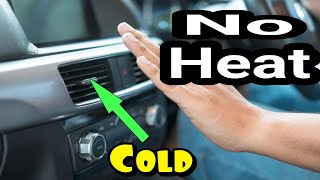
- Heater blows lukewarm air or no heat at all
- Decreased fuel mileage
- Replacing the thermostat when the actual problem is the PCM software calibration. It is crucial to be aware of TSB #18-016-13 to avoid unnecessary repairs, especially if the problem only occurs in cold weather.
- Using a cheaper, aftermarket thermostat. Many owner accounts and mechanic videos stress that using a non-OEM or a 180°F thermostat instead of the specified 195°F unit can cause the P0128 code to return.
Most Likely Causes
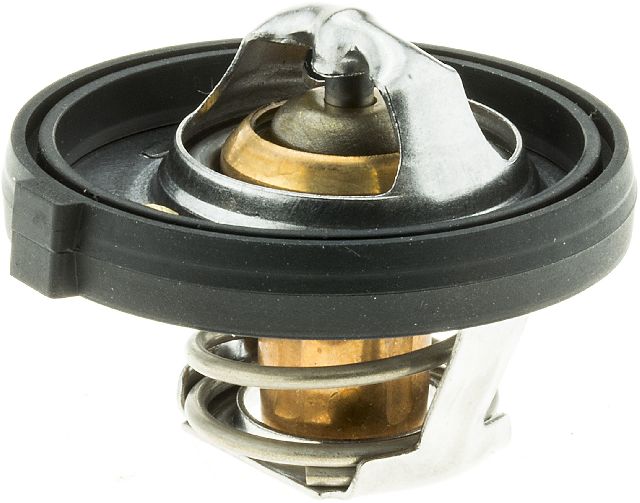
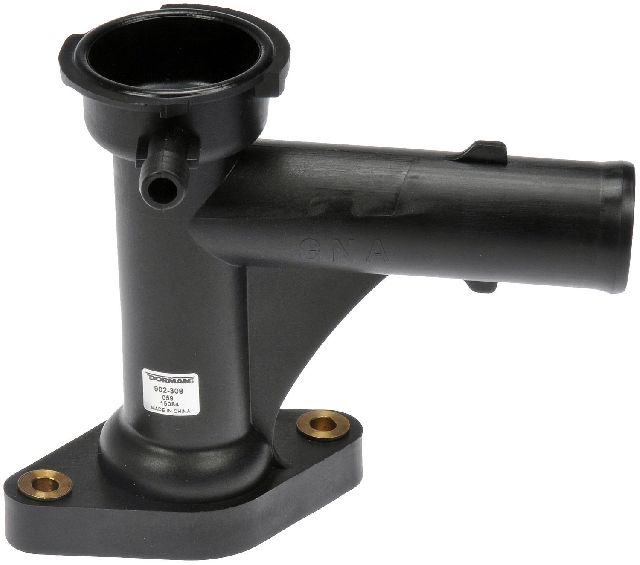
- Thermostat Stuck Open 🔴 High Probability → Shop Integrated Thermostat Housing Assembly Thermostats are wear-and-tear items that can fail and stick in the open position, allowing coolant to circulate constantly and preventing the engine from warming up. Using aftermarket or incorrect temperature (non-195°F) thermostats is a known cause for the code to return.
How to confirm: Monitor the engine temperature with a scan tool. If it rises very slowly, struggles to reach ~195°F (90°C), and drops at highway speeds, the thermostat is almost certainly stuck open. You can also feel the upper radiator hose; it should not get warm until the engine reaches operating temperature. A removed thermostat will often be visibly stuck open.
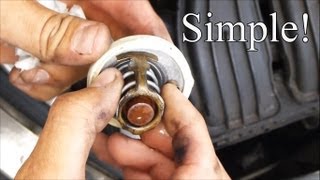
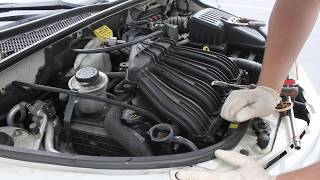
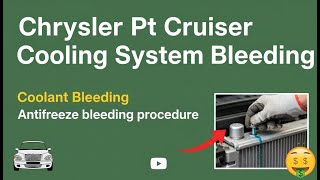
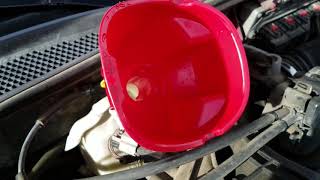
Typical fix: Replace the thermostat and gasket with an OEM Mopar part (Part No. 68210220AA). It is located under the coolant filler neck housing. 🎬 See this walkthrough on how to replace the thermostat After replacement, it is critical to properly bleed all air from the cooling system using the bleeder screw to prevent false readings. 🎬 Watch: How to properly bleed air from the cooling system
Est. part cost: $25-$70 - Powertrain Control Module (PCM) Software Calibration 🟡 Medium Probability → Shop Engine Control Module (ECM) As per TSB #18-016-13, the factory software calibration may improperly trigger a P0128 code in colder weather (below 50°F/10°C) due to a discrepancy between predicted and actual coolant temperatures. This applies to 2004-2010 models with the 2.4L engine and automatic transmission.
How to confirm: If the thermostat and sensor are confirmed to be working correctly, especially if the issue only occurs in cold weather, the TSB is the likely cause. A Chrysler dealer or a shop with a wiTECH scan tool can check your VIN and see if the software update has been applied.
Typical fix: Reprogram the Powertrain Control Module (PCM) with the updated software specified in the TSB. This must be done by a professional with the proper equipment.
Est. part cost: $0 (software only, but dealer labor charges will apply) - Low Engine Coolant Level ⚪ Low Probability Leaks in the cooling system can cause the coolant level to drop. If the level is low enough, the coolant temperature sensor may be exposed to an air pocket, leading to an inaccurate reading and triggering the code.
How to confirm: Visually inspect the coolant reservoir and radiator (when the engine is cold). If the level is below the 'MIN' line, top it off and check for leaks from hoses, the radiator, or the water pump.
Typical fix: Top off the coolant with the correct type (Chrysler recommends an HOAT-based coolant) and repair any leaks found.
Est. part cost: $15-$30 - Faulty Engine Coolant Temperature (ECT) Sensor ⚪ Low Probability → Shop Engine Coolant Temperature Sensor
How to confirm: Using a scan tool, watch the live data from the ECT sensor. If the reading is erratic, doesn't change as the engine warms up, or is clearly incorrect (e.g., reads -40°F on a warm day), the sensor is likely bad.
Typical fix: Replace the ECT sensor. On the PT Cruiser, it is located on the thermostat housing. The Mopar part number is 5269870AB or 05033313AA depending on the specific build. Verify the correct part with your VIN.
Est. part cost: $25-$75
Rare But Worth Checking
- Cooling Fan Stuck On: → Shop Engine Cooling Fan Blade If the electric cooling fan runs continuously, even when the engine is cold, it can prevent the engine from reaching operating temperature. This could be caused by a faulty fan relay, a short in the wiring, or a bad temperature sensor commanding it to stay on.
Diagnosis Steps
- Check for other DTCs with a scan tool to ensure P0128 is the only issue. If other sensor codes (like P0116 for the ECT) are present, diagnose them first.
- Inspect Coolant Level: With the engine cold, check the coolant level in the overflow reservoir and radiator. Top off if low and inspect for visible leaks.
- Monitor Live Data: Connect a scan tool and monitor the Engine Coolant Temperature (ECT) reading. Start the cold engine and watch the temperature rise.
- Evaluate Warm-up: The temperature should rise steadily to around 195-210°F and stabilize. If it warms up extremely slowly, or if the temperature drops significantly when driving at highway speeds, a stuck-open thermostat is the most likely cause.
- Check for TSB: If the thermostat and sensor appear to be functioning correctly, investigate TSB #18-016-13. This is especially relevant if the code only appears in ambient temperatures below 50°F (10°C). A dealer can verify if your vehicle's VIN is affected and if the software update has been performed.
- Inspect Cooling Fan: Ensure the cooling fan is not running constantly as soon as the car is started from cold.
- Bleed the System: If any parts are replaced, ensure the cooling system is properly bled of air using the bleeder valve near the thermostat housing to prevent air pockets and inaccurate sensor readings.
Parts You'll Likely Need
- Engine Coolant Thermostat
(OEM #68210220AA (replaces 5278144AA))— This is the most common cause of P0128. They are a wear item and often fail by sticking open, preventing the engine from warming up properly. Using the OEM 195°F thermostat is highly recommended.
Trusted brands: Mopar, Stant, Motorad
OEM price range: $30-$60
Aftermarket price range: $15-$40 - Engine Coolant Temperature (ECT) Sensor
(OEM #5269870AB / 05033313AA)— A less common but possible cause. A faulty sensor can send incorrect data to the PCM, triggering the code. Part number may vary, so confirm with VIN.
Trusted brands: Mopar, Delphi, NTK
OEM price range: $40-$70
Aftermarket price range: $25-$50
Technical Service Bulletins (TSBs) & Recalls
- 18-016-13: Addresses a condition where the PCM calibration improperly matures a P0128 DTC in colder ambient temperatures on 2004-2010 PT Cruisers with 2.4L engines and automatic transmissions. Advises reprogramming the PCM with new software.
Platform-Specific Known Issues
- A Powertrain Control Module (PCM) software update may be required to fix this code, as detailed in Chrysler TSB #18-016-13. The bulletin notes that the original software for 2004-2010 models can be too sensitive in cold weather (below 50°F/10°C), falsely triggering the P0128 code.
Mechanic-Grade Diagnostic Values
- ECT Sensor Resistance (unplugged) — expected: Approximately 2,000 to 3,000 Ohms at an ambient temperature of 68°F (20°C).. Failure: A reading of infinite resistance (open circuit) or zero resistance (short circuit) indicates a failed sensor.
- ECT Sensor Signal Voltage (Key On, Engine Off, Cold) — expected: Approximately 2.8V to 3.2V.. Failure: Voltage significantly outside this range, or a reading near 5V (open circuit) or 0V (short circuit), points to a sensor or wiring issue.
- ECT Sensor Signal Voltage (Engine at Operating Temp) — expected: Voltage should drop to approximately 0.8V to 1.2V.. Failure: If the voltage remains high (e.g., above 2.0V) after the engine has warmed up, it indicates the coolant is not reaching temperature, likely due to a stuck-open thermostat.
Hidden / Shadow Codes Worth Checking
- Mode $06 Failure: Before a P0128 code fully matures and illuminates the Check Engine Light (a 'two-trip' fault), the initial failure is often logged in the Mode $06 diagnostic data. An advanced scan tool can read this data to see if the 'Thermostat Monitor' has failed its last test cycle, even before a pending code (Mode $07) is stored. (see via Advanced OBD-II scan tool with Mode $06 capability.)
Scan Tool Commands That Help
- Chrysler wiTECH or DRBIII: Powertrain Control Module (PCM) Reprogramming — This is not a diagnostic test, but the required service function to apply the software update specified in TSB #18-016-13. This is used after confirming the thermostat and sensor are functioning correctly, especially if the P0128 code appears primarily in cold weather.
Wiring & Ground Locations
- ECT Sensor Circuit at PCM — The Powertrain Control Module (PCM) is located on the firewall, behind the power distribution center.. The ECT sensor sends its signal directly to the PCM. At the C1 connector, Pin 20 (VT/OR wire) is the ECT Sensor signal, and Pin 27 (BK/LB wire) is the sensor ground. Checking for voltage and continuity at these pins can isolate a wiring problem from a sensor failure.
- G105 — Located on the left front inner fender.. This is a primary engine-related ground point. A corroded or loose G105 ground can cause erratic readings from various engine sensors, including the ECT sensor, leading to false codes.
- Cylinder Head Ground — A ground strap runs from the strut tower to the back of the cylinder head.. The cylinder head is where the ECT sensor is physically located (in the thermostat housing). A poor ground connection here can directly impact the sensor's ability to provide an accurate reading to the PCM.
Real Owner Repair Stories
- Dodge Journey Forum (2014 Dodge Journey 3.6L with 177k miles (Similar Chrysler/Dodge platform)) — Check Engine Light with code P0128. Live data showed coolant temperature would not rise above the mid-180°F range.
✅ What actually fixed it Replacing the thermostat with a new aftermarket (Murray brand) part. After replacement, a test drive showed temperatures rising into the low 200°F range and the code was resolved. - North American Motoring forum (2009 Mini Clubman S (Different vehicle, but illustrates a common P0128 pitfall)) — P0128 code appeared three months after replacing a cracked thermostat housing with an aftermarket part.
❌ Tried (didn't work) The initial repair was done with a brand new aftermarket thermostat housing assembly.
✅ What actually fixed it The issue was resolved by replacing the new aftermarket thermostat with a more expensive, higher-quality OEM (Original Equipment Manufacturer) version.
"I Checked Everything" — The Actual Cause
- In a case on a different vehicle (BMW N54), a persistent P0128 code that appeared after a thermostat replacement was ultimately traced to a failing water pump. The pump's electronics were malfunctioning, causing it to run at full speed continuously, which over-cooled the engine and triggered the P0128 code. This is an example of an electrical component failure causing a symptom that appears purely mechanical (engine too cool).
OEM Part Supersession History
5278144AA, P5278144AA→68210220AA— Standard part number update and consolidation by the manufacturer.
Heads up: No incompatibility is noted; 68210220AA is the correct direct replacement for the earlier part numbers for all 2.4L PT Cruiser engines.
Model Year Variations Within This Range
- 2010: For the 2010 model year, Chrysler simplified the PT Cruiser lineup to a single trim called the 'Classic'. The turbocharged engine option was discontinued. Therefore, any 2010 PT Cruiser will have the 150-hp naturally aspirated 2.4L engine with a 4-speed automatic transmission. A 2009 model could have either the naturally aspirated or the 180-hp turbocharged engine.
Helpful Videos
We Have This Part in Stock


The information in this article is provided for general reference and educational purposes only. Vehicle specifications, procedures, and part compatibility can vary by production date, trim level, and region. Always consult your vehicle's factory service manual and verify part numbers before purchasing or performing repairs. Safety-critical components such as airbags, seat belts, and braking systems should be installed by a qualified professional.
- Chrysler PT CRUISER:
- 🧭 Diagnostic Flowchart
- 🎬 Helpful Videos
- 🛍️ Shop This Part
- What's Unique About the 2009-2010 Chrysler PT CRUISER
- Symptoms You May Notice
- Most Likely Causes
- Rare But Worth Checking
- Diagnosis Steps
- Parts You'll Likely Need
- Technical Service Bulletins (TSBs) & Recalls
- Platform-Specific Known Issues
- Mechanic-Grade Diagnostic Values
- Hidden / Shadow Codes Worth Checking
- Scan Tool Commands That Help
- Wiring & Ground Locations
- Real Owner Repair Stories
- "I Checked Everything" — The Actual Cause
- OEM Part Supersession History
- Model Year Variations Within This Range
- 🎟️ Get 5% Off