

P0128 on 2015-2020 Ford Edge 3.5L V6: Causes and Fixes for Coolant Temperature Fault
On a 2015-2020 Ford Edge with the 3.5L V6 engine, code P0128 almost always means the engine thermostat is stuck open. The most common fix is to replace the entire thermostat and housing assembly, which costs about $50-$90 for the OEM part (Motorcraft RT-1234). Before replacing, verify the coolant level is correct, as a low level can be a sign of the platform's more serious internal water pump issue.
- P0128 on a 3.5L Ford Edge means the engine is running too cool, and the cause is almost certainly a thermostat that is stuck open.
- The correct fix is to replace the entire thermostat and housing assembly (Motorcraft RT-1234), not just the insert.
- Before replacing parts, always check the coolant level. A low level can also trigger this code and might be a symptom of a more serious internal water pump leak.
- Always refill the cooling system with Ford's specified yellow coolant, Motorcraft VC-13-G.
What's Unique About the 2015-2020 Ford Edge
While P0128 can have complex causes on other Ford engines, it's a very straightforward issue on the 3.5L V6 in the Ford Edge. Unlike the EcoBoost versions which have Technical Service Bulletins (TSBs) for wiring or sensor issues, the 3.5L's problem is almost always a simple mechanical failure of the thermostat sticking open. However, a critical note for this engine is its internal, timing-chain-driven water pump; if P0128 is triggered by a low coolant level, it could be an early warning of this pump failing and leaking coolant into the engine oil, which can lead to catastrophic engine damage.
Symptoms You May Notice
- Check Engine Light is on
- Engine temperature gauge reads lower than normal or stays on 'C'
- Heater blows cool or lukewarm air, especially on the highway
- Reduced fuel economy
- Engine takes a very long time to warm up
- Temperature gauge drops at highway speeds and may rise again in city traffic
- Replacing the ECT sensor when the thermostat is actually the problem. Because the thermostat is the most common cause by a large margin, it should be the primary suspect unless diagnostic data clearly points to the sensor.
Most Likely Causes
- Engine Thermostat Stuck Open 🔴 High Probability → Shop Integrated Thermostat Housing Assembly Thermostats are a common wear-and-tear item designed to fail in the open position as a failsafe to prevent overheating. On the 3.5L V6, this is the most frequent cause of P0128 by a wide margin.
How to confirm: Monitor the engine temperature gauge or live ECT data on a scan tool. If the temperature rises very slowly, stays low, or drops significantly when driving at highway speeds, the thermostat is likely stuck open. A physical check can also be done: with a cold engine, feel the upper radiator hose. It should remain cool until the engine warms up (to ~190°F), then get hot suddenly. If it warms up gradually with the engine, the thermostat is stuck open.
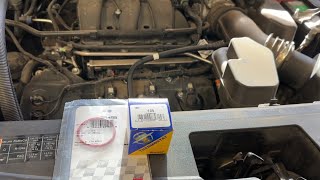
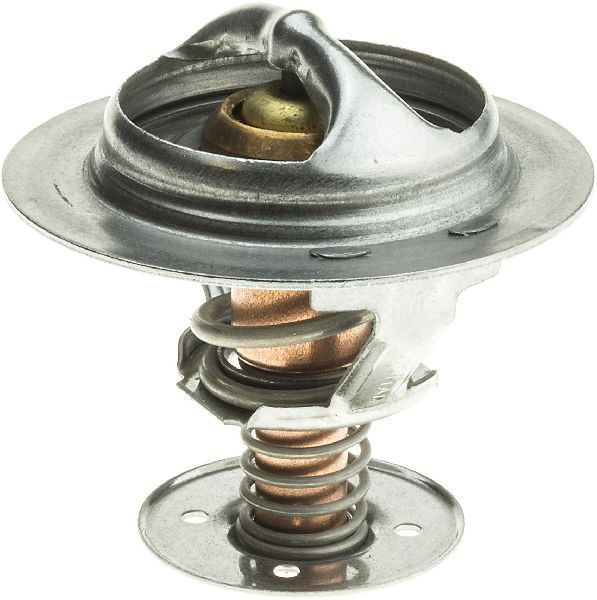
Typical fix: Replace the entire engine coolant thermostat and housing assembly. It is strongly recommended to replace the complete assembly (Motorcraft RT-1234) rather than just the thermostat insert to prevent leaks from the aged plastic housing.
Est. part cost: $50-$90 - Low Engine Coolant Level 🟡 Medium Probability Coolant loss can occur on any vehicle due to leaks. On this specific engine, it's critical to check for leaks from the weep hole channel that drains near the alternator and A/C compressor, as this indicates a failing internal water pump—a serious and expensive issue for the 3.5L V6.
How to confirm: Visually inspect the coolant level in the overflow reservoir when the engine is cold. If it is low, inspect the engine bay for signs of leaks (puddles, dried coolant residue, especially a trail from behind the alternator pulley).
Typical fix: Top off the coolant with the correct type (Motorcraft VC-13-G Yellow) and find and repair the source of the leak. If no external leak is found but the level continues to drop, the internal water pump should be suspected.
Est. part cost: $20-$40 for coolant - Faulty Engine Coolant Temperature (ECT) Sensor ⚪ Low Probability → Shop Engine Coolant Temperature Sensor While less common than a thermostat failure for this specific code, sensors can fail and send incorrect readings to the PCM. This is a more common issue on the 2.7L EcoBoost engine than the 3.5L V6.
How to confirm: With a scan tool, check the ECT reading on a cold engine after it has sat overnight. The ECT reading should be very close to the Intake Air Temperature (IAT) and ambient air temperature. If the ECT reads a wildly different value (e.g., -40°F or 250°F), the sensor is faulty.
Typical fix: Replace the Engine Coolant Temperature (ECT) sensor (Motorcraft part DY1145).
Est. part cost: $25-$55
Rare But Worth Checking
- Cooling Fan Stuck On: → Shop Engine Cooling Fan Blade If the radiator fan runs continuously at high speed, even when the engine is cold, it can over-cool the engine and prevent it from reaching operating temperature. This can be caused by a failed fan control module or a short in the wiring.
Diagnosis Steps
- Read the trouble code with an OBD-II scanner to confirm P0128 is present.
- Check the engine coolant level in the reservoir when the engine is cold. Ensure it is at the 'COLD FILL' line.
- If the coolant is low, carefully inspect the engine bay for any signs of leaks. Pay close attention to the area around the alternator and A/C compressor, as a leak from the weep hole there indicates a failing internal water pump.
- If the coolant level is correct, use a scan tool to monitor live data. Compare the Engine Coolant Temperature (ECT) and Intake Air Temperature (IAT) readings on a cold engine. They should be within a few degrees of each other.
- Start the engine and monitor the ECT reading as it warms up. The temperature should climb steadily to around 190-200°F and stabilize. If it warms up very slowly or the temperature drops significantly while driving, the thermostat is stuck open.
- As an alternative to step 5, feel the upper radiator hose after starting the engine cold. If it warms up gradually, the thermostat is open. If it stays cool for several minutes and then gets hot quickly, the thermostat is working correctly.
- If the cold ECT reading was incorrect in step 4, or if the reading is erratic, the ECT sensor or its wiring is the likely culprit.
Parts You'll Likely Need
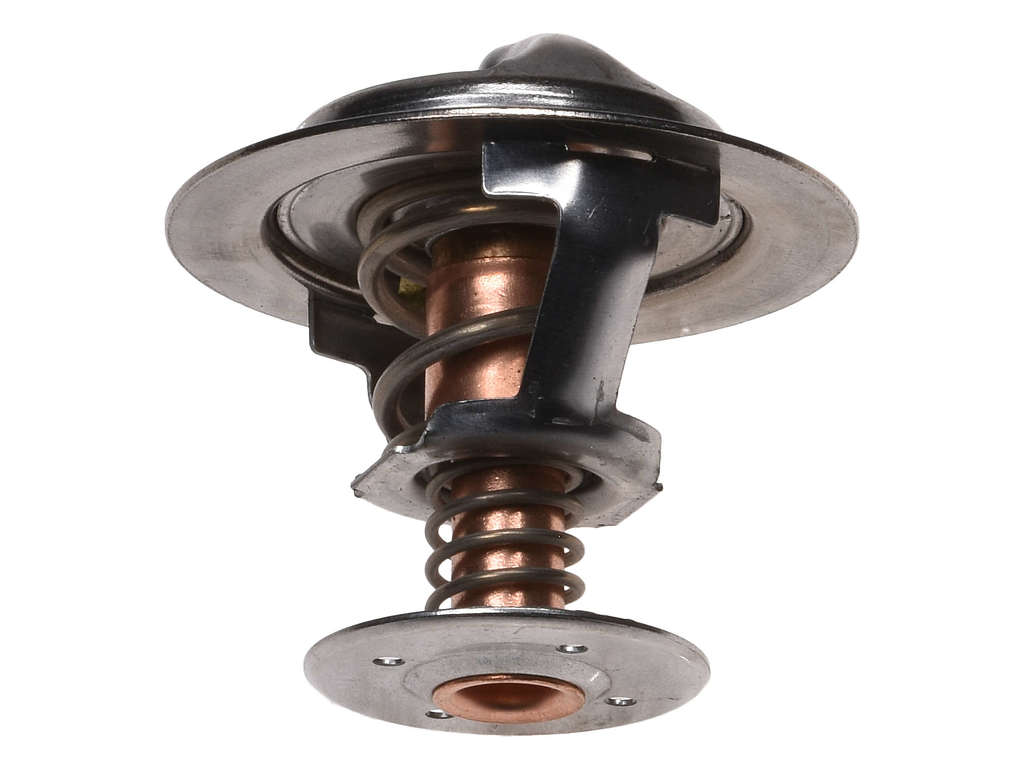
- Engine Coolant Thermostat Assembly
(OEM #7L3Z-8575-D (or superseding 7L3Z-8575-E))— This is the most common cause of P0128 on the 3.5L V6, as the thermostat fails in the open position. Replacing the entire housing prevents future leaks from the plastic assembly.
Trusted brands: Motorcraft (RT-1234), Gates
OEM price range: $50-$90
Aftermarket price range: $40-$70 - Engine Coolant Temperature (ECT) Sensor
(OEM #DY1145)— A less common but possible cause. A faulty sensor can send incorrect low-temperature readings to the computer, triggering the code.
Trusted brands: Motorcraft, Bosch, NTK
OEM price range: $25-$55
Aftermarket price range: $15-$40 - Motorcraft Yellow Antifreeze/Coolant
(OEM #VC-13-G)— The cooling system must be drained and refilled when replacing the thermostat. It is critical to use the correct Ford-specified P-OAT coolant to prevent cooling system damage.
Trusted brands: Motorcraft
OEM price range: $20-$30 per gallon
Technical Service Bulletins (TSBs) & Recalls
- No TSBs are specifically issued for code P0128 on the 2015-2020 Ford Edge with the 3.5L V6 engine. TSBs that exist for P0128 on other Ford engines (like TSB 21-2168 for the 2.7L) are not applicable as they address different root causes.
Platform-Specific Known Issues
- Internal Water Pump: The 3.5L V6 features an internal, timing-chain-driven water pump. A failure can cause coolant to leak into the engine oil, leading to catastrophic engine damage. A low coolant level, which can trigger P0128, should be investigated with this potential failure in mind.
Mechanic-Grade Diagnostic Values
- ECT Sensor Resistance vs. Temperature — expected: Approx. 58.7k Ω @ 50°F (10°C), 32.6k Ω @ 32°F (0°C), 8.6k Ω @ 83°F (28°C), and 1.18k Ω @ 212°F (100°C).. Failure: Infinite resistance (open circuit), near-zero resistance (short circuit), or values that do not change as temperature changes.
- ECT Sensor Signal Voltage (at sensor connector, KOEO) — expected: On a cold engine (e.g., 68°F/20°C), the signal wire should read approximately 3.0V-3.5V. This voltage will drop as the engine warms, reaching approximately 0.28V - 0.5V at full operating temperature.. Failure: A signal stuck high (near 5.0V) or low (near 0V), or a signal that does not change with temperature, indicates a sensor or circuit fault.
- Scan Tool Sensor Cross-Check (Cold Soak) — expected: After the vehicle has sat for 8+ hours, the Engine Coolant Temp (ECT), Intake Air Temp (IAT), and Ambient Air Temp (AAT) PIDs should all be within a few degrees of each other.. Failure: If the ECT reading is significantly different (e.g., reads -40°F or 150°F when ambient is 70°F), the sensor is providing an illogical reading and is likely faulty.
Scan Tool Commands That Help
- Ford IDS (or equivalent professional scanner): Cooling Fan Control Bidirectional Test — This command allows the technician to manually turn the cooling fans on and off. It is used to diagnose the rare cause of P0128 where the fan is stuck on due to a faulty fan control module, causing the engine to be over-cooled.
Wiring & Ground Locations
- ECT Sensor — Located in the engine valley between the cylinder banks, underneath the upper and lower intake manifolds.. Its difficult-to-access location makes direct testing of the sensor or its connector labor-intensive. Technicians often test the wiring at the PCM first to avoid unnecessary disassembly.
- C1064 — The 2-pin electrical connector that plugs into the ECT sensor itself, located under the intake manifold.. This is the direct connection point for the sensor. Any damage or corrosion here will cause faulty readings, but it is very difficult to inspect visually.
- G104 / G107 — Main engine compartment ground points, typically located on the left front (G104) and right front (G107) of the engine bay.. While a less common cause, a poor engine or PCM ground can cause erratic readings on multiple sensors, including the ECT. This would be a valid check if circuit testing reveals unstable voltages.
OEM Part Supersession History
7L3Z-8575-D→7L3Z-8575-E— Likely minor revisions for material composition or manufacturing process improvements to enhance durability and sealing.
Heads up: The parts are interchangeable, with 7L3Z-8575-E being the current recommended service part. This part number also supersedes a long list of previous numbers including 3L3Z8575AA, F8AZ8575BA, and others, indicating a long history of revisions.
Diagnostic Flowchart
Other Known Issues on This Vehicle
Issues unrelated to this code that are worth knowing about as an owner of this generation:
- Internal Timing-Chain-Driven Water Pump Failure 🔴 High — Common after 60,000-100,000 miles. Failure can be gradual (external weep hole leak) or sudden (internal seal failure). (Ref: No recall, but this issue is the subject of multiple class-action lawsuits. A known design flaw.)
- AWD Power Transfer Unit (PTU) Failure 🟠 Medium — Common on AWD models, especially over 50,000 miles. Failure is caused by gear oil overheating due to proximity to the exhaust with no cooling and no drain plug for service.
- Brake Booster Diaphragm Failure 🟠 Medium — More common on earlier 2010-2014 models but can occur on 2015+ models. The internal diaphragm tears, causing a hissing noise and a hard brake pedal. (Ref: Ford Customer Satisfaction Program 13N02 extended the warranty for this part on earlier models.)
Used vs. New Parts: Buying Guide for This Vehicle
When a used part is the smart pick: Almost never for this repair. The thermostat and ECT sensor are wear items and should be purchased new. A used wiring harness pigtail for the ECT sensor (C1064) could be a viable option if the original connector is damaged during repair, as it is just wire and plastic.
Donor-vehicle mileage cap: roughly under 100000 miles for the part to have meaningful remaining life.
What to inspect on the donor part:
- For a pigtail, ensure there is no brittleness in the plastic.
- Check for clean, uncorroded pins.
- Ensure at least 4-6 inches of wire is available to allow for proper splicing.
OEM-only on this vehicle (don't cheap out):
- Engine Coolant Thermostat Assembly (Motorcraft RT-1234): Strongly recommended to use the OEM assembly to prevent leaks from the plastic housing, which can be a problem with lower-quality aftermarket parts.
- Engine Coolant (Motorcraft VC-13-G Yellow): It is critical to use the Ford-specified P-OAT coolant. Mixing coolant types or using a generic 'all-makes' coolant can lead to corrosion and damage to the cooling system, including the internal water pump seals.
Aftermarket brands forum-validated for this vehicle:
- Gates (for thermostat assembly): Generally considered a reputable OEM-equivalent supplier for cooling system components.
Real Owner Stories
Aggregated from forums and TSBs cited above. Mileages and costs reflect what owners reported in those sources.
2010 Ford Edge 3.5L V6
Symptoms: The heater blows warm air and then quickly goes cold.
What fixed it: Likely a stuck-open thermostat or air in the cooling system.
Source hint: Reddit r/MechanicAdvice - 2010 Ford Edge Heater Issue
2015-2020 Ford Edge 3.5L V6 — ~80000 miles
Symptoms: Low coolant level and potential leaks from the weep hole channel near the alternator.
What fixed it: Investigation of the internal, timing-chain-driven water pump which can leak into the engine oil.
Source hint: Ford Edge Forum - Water Pump Failure Prevention
Related OBD-II Codes
Frequently Asked Questions
Does TSB 21-2168 for the 2.7L engine apply to my 2015-2020 Ford Edge 3.5L V6?
Should I just replace the thermostat insert to save money on my 3.5L Edge?
My 2015 Edge has P0128 and the coolant is low; could this be the internal water pump?
What specific coolant should I use to top off my 2015-2020 Ford Edge?
Is the ECT sensor failure common on the 3.5L V6 compared to other Edge engines?
Why does my temperature gauge drop when I'm driving on the highway but rise in the city?
Helpful Videos
We Have This Part in Stock


The information in this article is provided for general reference and educational purposes only. Vehicle specifications, procedures, and part compatibility can vary by production date, trim level, and region. Always consult your vehicle's factory service manual and verify part numbers before purchasing or performing repairs. Safety-critical components such as airbags, seat belts, and braking systems should be installed by a qualified professional.
- Ford Edge:
- 🧭 Diagnostic Flowchart
- 🎬 Helpful Videos
- 🛍️ Shop This Part
- What's Unique About the 2015-2020 Ford Edge
- Symptoms You May Notice
- Most Likely Causes
- Rare But Worth Checking
- Diagnosis Steps
- Parts You'll Likely Need
- Technical Service Bulletins (TSBs) & Recalls
- Platform-Specific Known Issues
- Mechanic-Grade Diagnostic Values
- Scan Tool Commands That Help
- Wiring & Ground Locations
- OEM Part Supersession History
- Other Known Issues on This Vehicle
- Used vs. New Parts: Buying Guide for This Vehicle
- Real Owner Stories
- 2010 Ford Edge 3.5L V6
- 2015-2020 Ford Edge 3.5L V6 — ~80000 miles
- Related OBD-II Codes
- Frequently Asked Questions
- 🎟️ Get 5% Off