

P0128 on 2019-2020 Ford Edge 2.0L EcoBoost: Causes and Fixes for Engine Running Too Cool
On a 2019-2020 Ford Edge with the 2.0L EcoBoost, code P0128 almost always means the engine thermostat is stuck open. The most common fix is to replace the entire thermostat and housing assembly. Before replacing parts, check the coolant level, as loss could indicate a more serious internal leak. For 2019 models built before Jan 23, 2019, a PCM update (TSB 19-2046) should be ruled out first.
- P0128 on your Ford Edge is almost certainly caused by a thermostat that is stuck open.
- The recommended repair is to replace the entire thermostat and housing assembly (Motorcraft part RT-1233), not just the thermostat itself.
- Always use the specified Motorcraft Yellow coolant (or an equivalent) when refilling the system.
- While unlikely, have a dealer check for a PCM software update (TSB 19-2046) if replacing the thermostat does not fix the issue.
- Be aware of the more serious, known issue of coolant leaking into the engine on this platform, and monitor your coolant level closely.
What's Unique About the 2019-2020 Ford Edge
For the 2.0L EcoBoost engine in the Ford Edge, the P0128 code is overwhelmingly tied to a failing thermostat. However, two key platform-specific issues must be considered. First, Ford issued Technical Service Bulletin (TSB) 19-2046 for some 2019 models (built on or before Jan 23, 2019) indicating that a PCM software update could be required to fix this code, making it important to rule out software issues before replacing parts. Second, this engine family is known for coolant intrusion issues. While P0128 is a 'too cool' code, it can be triggered by low coolant from an internal leak, which is a far more serious problem than a bad thermostat.
Symptoms You May Notice
- Check Engine Light is illuminated
- Engine temperature gauge reads lower than normal, or drops at highway speeds
- Heater takes a long time to blow warm air, or doesn't get very hot
- Noticeably longer engine warm-up time
- Slight decrease in fuel economy
- Cooling fans seem to run excessively or at inappropriate times (if the PCM cannot get a reliable temperature reading)
- Replacing only the ECT sensor without confirming it's faulty. The thermostat is far more likely to be the cause.
- Replacing just the thermostat insert instead of the entire housing assembly. The plastic housing is a common point of failure and should be replaced with the thermostat to prevent future leaks.
- Ignoring P0128 as just a 'stuck thermostat' without checking for slow coolant loss, potentially missing an early sign of the catastrophic coolant intrusion engine failure.
Most Likely Causes
- Engine Thermostat Stuck Open 🔴 High Probability → Shop Integrated Thermostat Housing Assembly The thermostat is designed to fail in the open position as a safety measure to prevent overheating. The part is integrated into a plastic housing that can degrade over time, making replacement of the entire assembly the standard, reliable repair.
How to confirm: After a cold start, monitor the temperature of the upper radiator hose. If it starts to get warm almost immediately (within the first 1-2 minutes), coolant is flowing to the radiator, meaning the thermostat is stuck open. It should remain cool until the engine reaches operating temperature (around 190-195°F).
Typical fix: Replace the entire engine thermostat and housing assembly. It is also necessary to drain and refill some of the engine coolant with Motorcraft Yellow VC-13-G.
Est. part cost: $45-$70 for OEM Motorcraft assembly, $25-$50 for aftermarket. - Low Engine Coolant 🟡 Medium Probability This engine family has a well-documented design flaw where coolant can intrude into the cylinders (see TSBs 19-2346, 22-2223). This causes slow, unexplained coolant loss. A low coolant level can create air pockets in the system, preventing the ECT sensor from getting an accurate reading and triggering P0128.
How to confirm: Visually inspect the coolant level in the degas bottle (coolant reservoir) when the engine is cold. If low, look for signs of external leaks (puddles, residue) or internal leaks (white smoke from exhaust on startup, rough idle, steam from the oil cap when hot).
Typical fix: Top off the coolant with the correct Ford-specified type (Motorcraft Yellow Pre-diluted, VC-13-G). If the level drops again without external leaks, a cooling system pressure test and cylinder leak-down test are needed to diagnose an internal leak, which may require engine replacement.
Est. part cost: $20-$30 for a gallon of coolant. - Faulty Engine Coolant Temperature (ECT) Sensor ⚪ Low Probability → Shop Engine Coolant Temperature Sensor Sensors can fail, but it's much less common than a thermostat failure for this specific code. Wiring issues at connector C1064 can also cause faulty readings.
How to confirm: Using an OBD-II scan tool, compare the ECT sensor reading to the Intake Air Temperature (IAT) sensor reading after the vehicle has been sitting overnight (cold soak). The two readings should be within a few degrees of each other. If the ECT reads significantly different (e.g., -40°F), the sensor or its circuit is faulty.
Typical fix: Replace the ECT sensor and top off any lost coolant. Inspect wiring and connector C1064 for damage or corrosion.
Est. part cost: $25-$60 for the sensor. RepairPal estimates a professional replacement could be $354-$390 due to labor.
Rare But Worth Checking
- PCM Software Update Required: Ford issued TSB 19-2046 for some 2019 2.0L EcoBoost models built on or before Jan 23, 2019, which states a PCM re-program may be needed to resolve a P0128 code. This should be checked by a dealer or a shop with Ford's diagnostic tool (FDSRS).
- Cooling Fan Stuck On: → Shop Engine Cooling Fan Blade If the radiator fan runs at high speed continuously, even when the engine is cold, it can over-cool the engine and trigger P0128. This is usually caused by a failed fan control module, relay, or a faulty sensor signal causing the PCM to default to maximum cooling.
Diagnosis Steps
- Check for any other stored trouble codes with an OBD-II scanner.
- With the engine cold, check the coolant level in the reservoir. Ensure it is between the MIN and MAX marks. If low, this is a critical clue.
- If the coolant is low, top it off with Motorcraft Yellow coolant (VC-13-G) and inspect for visible leaks around hoses, the radiator, and the water pump. Note any sweet smell or white smoke from the exhaust on startup.
- Using a scan tool, compare the Engine Coolant Temperature (ECT) and Intake Air Temperature (IAT) readings on a cold engine. They should be within 5°F (3°C) of each other.
- Start the engine from cold. Feel the upper radiator hose. If it becomes warm within the first couple of minutes, the thermostat is stuck open and must be replaced.
- If the hose remains cool, allow the vehicle to idle and monitor the ECT on the scan tool. It should steadily climb to the thermostat's opening temperature (typically 190-195°F) and stabilize. If it never reaches this temperature or drops significantly at highway speeds, the thermostat is the likely cause.
- If the vehicle is a 2019 model built before 01/23/2019, check with a dealer if TSB 19-2046 (PCM reprogram) applies and has been performed.
- If coolant loss is evident but no external leaks are found, perform a cooling system pressure test to check for internal leaks (e.g., EGR cooler, cylinder head/block).
Parts You'll Likely Need
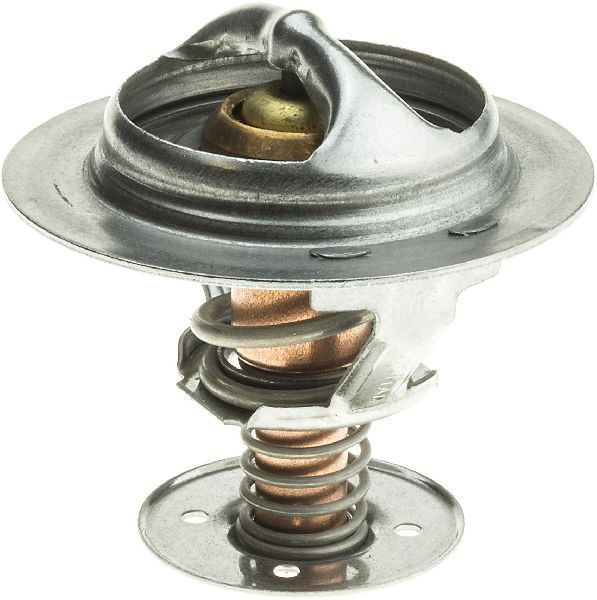
- Engine Coolant Thermostat Assembly
(OEM #DS7Z-8575-C (supersedes DS7Z-8575-A, DS7Z-8575-B))— This is the most common failure for code P0128. The part includes the thermostat, gasket, and the plastic housing. Using the latest superseded part number ensures any design updates are included.
Trusted brands: Motorcraft, Gates, Motorad
OEM price range: $45-$70
Aftermarket price range: $25-$50 - Engine Coolant
(OEM #VC-13-G (Yellow Pre-diluted))— Coolant must be drained to replace the thermostat. It's critical to use the correct Motorcraft Yellow P-OAT coolant to prevent cooling system damage. Do not mix with other colors/types.
Trusted brands: Motorcraft, PEAK OET (Yellow), Valvoline Zerex (Yellow)
OEM price range: $20-$30 per gallon
Aftermarket price range: $18-$25 per gallon
Related Codes That Often Appear With This One
- P0217 (Engine Overtemperature Condition) and P1299 (Cylinder Head Overtemperature Protection Active) may be seen if the root cause is a significant internal coolant leak that leads to both low coolant levels and eventual overheating.
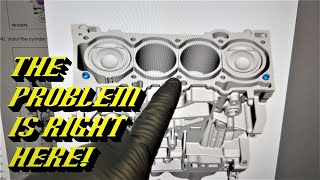
- P0300-P0304 (Cylinder Misfire Codes) can occur if coolant intrusion is the cause of coolant loss, fouling spark plugs. 🎬 Watch: Understanding the 2.0L EcoBoost coolant consumption and misfire issue
Technical Service Bulletins (TSBs) & Recalls
- TSB 19-2046 - For some 2019 Edge/Nautilus 2.0L models built before 1/23/2019, a PCM reprogram may resolve P0128 and other DTCs.
Platform-Specific Known Issues
- TSB 19-2046: Some 2019 models built on or before Jan 23, 2019 may require a PCM software update to correct a false P0128 code.
- TSB 19-2346 / 22-2223: While not directly causing P0128, these TSBs address a serious design flaw in some 2.0L EcoBoost engines where coolant can leak into the cylinders. Unexplained coolant loss that triggers P0128 could be an early symptom of this much larger problem, which often requires a new long block.
Mechanic-Grade Diagnostic Values
- Engine Coolant Temperature (ECT) Sensor Resistance — expected: Approx. 2000-3000 Ω at 68°F (20°C) and 200-300 Ω at 194°F (90°C).. Failure: A reading near zero ohms suggests a shorted sensor; an infinite reading (open circuit) indicates internal failure. Resistance should decrease smoothly as temperature rises.
- ECT Sensor Signal Voltage at Connector C1064 (Key On, Engine Off) — expected: Between 0.5V and 4.5V, decreasing as the engine warms up. A cold engine should show approx. 2.0V - 3.0V.. Failure: A reading stuck near 5.0V indicates an open circuit or bad ground. A reading near 0.2V or less indicates a short to ground.
Hidden / Shadow Codes Worth Checking
- P0217, P1299, P044C, P1026, P2457: These are not shadow codes, but a cluster of DTCs often stored alongside P0128 when the root cause is a leaking EGR cooler, as per TSB 20-2234. Seeing these codes with P0128 strongly suggests a more complex issue than just a thermostat. (see via Standard OBD-II scanner. The presence of this group of codes is the key diagnostic clue.)
Scan Tool Commands That Help
- Ford IDS / High-End Bidirectional Scanner: Active Command > Cooling Fan / Active Grille Shutter — Use this command to diagnose an edge-case failure. If the thermostat and ECT sensor test good but P0128 persists, you can command the active grille shutters and cooling fans to verify they are not stuck in a position that is over-cooling the engine.
- Ford IDS / ForScan: Live Data PID Monitoring (ECT, CHT, IAT) — This is the primary diagnostic function. Monitor Engine Coolant Temperature (ECT) and compare it to Intake Air Temperature (IAT) on a cold-soaked engine; they should be within a few degrees. Then, watch the ECT rise after startup to verify thermostat operation.
Wiring & Ground Locations
- C1064 — The 2-pin electrical connector that plugs directly into the Engine Coolant Temperature (ECT) sensor. On the 2.0L EcoBoost, the sensor is on the coolant outlet housing on the firewall side of the engine.. This is the primary connection for the ECT sensor. A poor connection, corrosion, or damaged wires at this connector can cause erratic or failed readings, leading to P0128 or other ECT-related codes.
- G108 — A primary engine and PCM ground, typically located on the driver's side shock tower or the top of the transmission housing in the engine bay on this platform.. All sensor reference voltages, including the ECT's, rely on a solid PCM ground. A corroded or loose connection at this point can cause erratic sensor readings across the system, including the ECT sensor.
Real Owner Repair Stories
- Aggregated from TSB 20-2234 and owner forums (2019 Ford Edge 2.0L EcoBoost I4) — Owner reported low coolant levels, white smoke from the tailpipe with a burnt smell, rough idle, and hesitation. P0128 was present along with other codes like P0217 (over-temperature).
❌ Tried (didn't work) Topping off coolant (level dropped again), Considering thermostat replacement as the sole cause of P0128
✅ What actually fixed it The root cause was a leaking EGR cooler, a known issue documented in Ford TSB 20-2234. The fix required replacing the EGR cooler assembly and reprogramming the PCM. The P0128 code was a secondary symptom of coolant loss and air pockets, not the primary failure.
"I Checked Everything" — The Actual Cause
- For code P0128, the equivalent of a 'smoke test clean' scenario is when both the thermostat and ECT sensor appear to function correctly during bench tests or simple checks. The hidden cause is often slow, unexplained coolant loss due to a leaking EGR cooler (per TSB 20-2234). This leak creates air pockets in the cooling system, causing the ECT sensor to provide an inaccurate, low reading to the PCM, which then triggers P0128 even though the thermostat and sensor are not the primary points of failure.
OEM Part Supersession History
DS7Z-8575-A, DS7Z-8575-B→DS7Z-8575-C— The specific reason for the supersession is not officially published, but multiple revisions to a part like a plastic thermostat housing typically indicate improvements to address issues like cracking, warping, or premature thermostat failure in the original design.
Model Year Variations Within This Range
- 2019 models built on or before January 23, 2019: These models may have a PCM software version that is overly sensitive and can set a false P0128. TSB 19-2046 calls for a PCM reprogram to correct the logic before replacing any parts.
- 2019 vs. 2020: The engine block design related to the infamous 'coolant intrusion' flaw was reportedly updated mid-2019. This means a 2020 model is less likely to suffer from coolant leaking into the cylinders via a cracked block, but both 2019 and 2020 models are still susceptible to coolant loss from the EGR cooler, which can also trigger P0128.
Diagnostic Flowchart
Other Known Issues on This Vehicle
Issues unrelated to this code that are worth knowing about as an owner of this generation:
- Coolant Intrusion into Cylinders 🔴 High — A well-documented design flaw affecting 2.0L EcoBoost engines. Can occur at relatively low mileage (under 50,000 miles). (Ref: TSB 22-2223, TSB 23-2092 (for later models), TSB 19-2346 (for earlier blocks))
- 8F35 Transmission Shudder/Jerking 🟠 Medium — Commonly reported issue, especially at low speeds (under 35 mph). May be resolved with a software update in some cases. (Ref: TSB 21-2389)
- AWD System Noise/Vibration 🟡 Low — Some owners report a chatter, shudder, or grinding noise from the rear during low-speed turns. (Ref: SSM 52064, SSM 51823)
- SYNC 3 Infotainment System Glitches 🟡 Low — Reports include blank screens, system freezing, and connectivity issues with Apple CarPlay/Android Auto. Often fixed with a soft reset or software update. (Ref: SSM 51589 (re: Android Auto))
- Leaking Turbocharger Oil Lines 🟠 Medium — Some EcoBoost engines may develop oil leaks from the turbocharger's oil supply or drain lines/seals.
Used vs. New Parts: Buying Guide for This Vehicle
When a used part is the smart pick: For this specific repair, using used parts is not recommended. The primary failure components are low-cost wear items.
What to inspect on the donor part:
- Not applicable. Do not use salvaged parts for this repair.
OEM-only on this vehicle (don't cheap out):
- Engine Coolant: While not a 'part', it is critical to use only the Ford-specified Motorcraft Yellow P-OAT coolant (VC-13-G) or a direct equivalent. Mixing coolant types can cause chemical reactions that lead to system damage, gelling, and blockages.
Aftermarket brands forum-validated for this vehicle:
- Thermostat Assembly: Gates, Motorad
- ECT Sensor: NTK, Standard Motor Products (SMP)
Brands owners have reported issues with on this vehicle:
- Unbranded, no-name thermostat assemblies from online marketplaces. The plastic quality can be poor, leading to premature cracking and leaks.
Real Owner Stories
Aggregated from forums and TSBs cited above. Mileages and costs reflect what owners reported in those sources.
2019 Ford Edge 2.0L EcoBoost
Symptoms: Symptoms started with no heat, followed by an overheating warning despite the temperature gauge appearing normal, stalling, and white smoke from the exhaust.
What fixed it: The symptoms were identified as classic coolant intrusion, a known issue for this engine family that can manifest after initial cooling system codes.
Source hint: Reddit r/FordEdge thread titled '2019 ford edge 2.0l ecoboost egr coolant intrusion'
2019 Ford Edge 2.0L EcoBoost
Symptoms: The vehicle experienced power loss and visible smoke from the exhaust.
What fixed it: Diagnosis of coolant intrusion which required a full engine replacement.
Source hint: Reddit r/FordEdge thread titled '2019 edge coolant intrusion'
2018 Ford Edge 2.0L EcoBoost
Symptoms: Rough idle on the first start of the day, occasional white exhaust smoke, and steam visible from the oil fill cap when the engine was hot.
What fixed it: These were identified as early symptoms of coolant intrusion into the cylinders.
Source hint: Reddit r/FordEdge thread titled 'coolant intrusion'
Related OBD-II Codes
Frequently Asked Questions
Does TSB 19-2046 apply to my 2019 Ford Edge 2.0L EcoBoost?
What specific coolant should I use to top off my 2019-2020 Edge?
Can I just replace the thermostat, or do I need the whole housing?
Is P0128 related to the coolant intrusion issue mentioned in TSB 22-2223?
Why are my cooling fans running constantly when the engine isn't even hot?
How can I tell if my P0128 is a sensor failure or a stuck thermostat?
Helpful Videos
We Have This Part in Stock


The information in this article is provided for general reference and educational purposes only. Vehicle specifications, procedures, and part compatibility can vary by production date, trim level, and region. Always consult your vehicle's factory service manual and verify part numbers before purchasing or performing repairs. Safety-critical components such as airbags, seat belts, and braking systems should be installed by a qualified professional.
- Ford Edge:
- 🧭 Diagnostic Flowchart
- 🎬 Helpful Videos
- 🛍️ Shop This Part
- What's Unique About the 2019-2020 Ford Edge
- Symptoms You May Notice
- Most Likely Causes
- Rare But Worth Checking
- Diagnosis Steps
- Parts You'll Likely Need
- Related Codes That Often Appear With This One
- Technical Service Bulletins (TSBs) & Recalls
- Platform-Specific Known Issues
- Mechanic-Grade Diagnostic Values
- Hidden / Shadow Codes Worth Checking
- Scan Tool Commands That Help
- Wiring & Ground Locations
- Real Owner Repair Stories
- "I Checked Everything" — The Actual Cause
- OEM Part Supersession History
- Model Year Variations Within This Range
- Other Known Issues on This Vehicle
- Used vs. New Parts: Buying Guide for This Vehicle
- Real Owner Stories
- 2019 Ford Edge 2.0L EcoBoost
- 2019 Ford Edge 2.0L EcoBoost
- 2018 Ford Edge 2.0L EcoBoost
- Related OBD-II Codes
- Frequently Asked Questions
- 🎟️ Get 5% Off