

P0128 on 2008-2012 Ford Escape: Causes and Fixes for Coolant Temperature Issues
On a 2008-2012 Ford Escape, code P0128 almost always means the thermostat is stuck open. The most reliable fix is to replace the entire thermostat and housing assembly. Expect to pay between $30-$80 for an aftermarket part and $90-$150 for an OEM Motorcraft part. It's a common DIY job with a difficulty of 2/5 for the 2.3L and 4/5 for the 3.0L V6 due to access issues.
- P0128 on your Escape means the engine is running too cool, not too hot.
- The most likely cause, in over 95% of cases, is a thermostat that is stuck in the open position.
- You can continue to drive the vehicle, but you will experience poor fuel economy and lack of cabin heat until it is repaired.
- For a lasting repair, replace the entire thermostat and housing assembly, not just the thermostat itself, to prevent leaks from the aged plastic housing.
- Always refill the cooling system with Ford-specified Motorcraft Gold coolant (or equivalent) after the repair to prevent system damage.
What's Unique About the 2008-2012 Ford Escape
The 2008-2012 Ford Escape (second generation) and its platform mates (Mercury Mariner, Mazda Tribute) use a conventional cooling system design, making P0128 a very common and straightforward diagnosis. Unlike later Escape models with EcoBoost engines that have more complex cooling systems, the P0128 code on this generation is almost always a simple case of a failed thermostat. The primary difference between the two engines is the difficulty of the repair; the thermostat on the 3.0L V6 is significantly harder to access, being buried in the engine valley under other components, making the labor cost much higher. The 2.3L/2.5L 4-cylinder thermostat is on the side of the engine and is much easier for a DIY repair.
🎬 Watch this step-by-step thermostat housing replacement for 4-cylinder engines.Symptoms You May Notice
- Check Engine Light is on
- Temperature gauge reads lower than normal or stays on 'C'
- Heater blows lukewarm or cold air, especially in winter
- Decreased fuel economy
- Engine takes a very long time to warm up
- Temperature gauge drops at highway speeds
- A sweet smell of coolant, which could indicate a leak from a cracked plastic thermostat housing.
- Replacing only the ECT sensor without confirming it's faulty. The thermostat is the most common cause by a wide margin.
Most Likely Causes
- Thermostat Stuck Open 🔴 High Probability → Shop Integrated Thermostat Housing Assembly Thermostats are a common wear-and-tear item designed to fail in the open position as a failsafe against overheating. The plastic housing assembly also becomes brittle with age and can crack, causing leaks.
How to confirm: Monitor the temperature gauge while driving. If it stays in the cold range, especially at highway speeds, the thermostat is likely stuck open. A scan tool can also show the live coolant temperature data, which will struggle to reach the typical 180-195°F operating range. You can also use an infrared thermometer to check the temperature of the upper radiator hose; if it gets warm immediately after a cold start, the thermostat is open. 🎬 Watch a quick video on two DIY methods to confirm the code.
Typical fix: Replace the thermostat and housing assembly. It is highly recommended to replace the entire assembly, as the plastic housings can become brittle and leak, and the new part includes a new gasket.
Est. part cost: $30 - $150 - Low Engine Coolant Level 🟡 Medium Probability Leaks can develop over time from hoses, the radiator, or the thermostat housing itself, which is a known failure point. Manufacturer Bulletin #TSB 20-2234 notes that vehicles may exhibit low coolant levels in conjunction with P0128 and other cooling-related codes.
How to confirm: Visually inspect the coolant reservoir tank when the engine is cold. The level should be between the 'MIN' and 'MAX' lines. Check for visible signs of leaks (orange or green fluid) under the vehicle or crusty residue around cooling system components.
Typical fix: Find and repair the source of the leak, then top off or refill the cooling system with the correct Ford-specified coolant (Motorcraft Gold VC-7-B or equivalent).
Est. part cost: $25 - $40 for coolant, plus parts for leak repair - Faulty Engine Coolant Temperature (ECT) Sensor ⚪ Low Probability → Shop Engine Coolant Temperature Sensor While less common than thermostat failure, sensors can fail over time by sending inaccurate readings to the PCM. Manufacturer Bulletin #TSB 21-2168 indicates that an intermittent drop in ECT voltage can cause an incorrectly illuminated MIL with code P0128.
How to confirm: Use a scan tool to compare the ECT sensor reading to the ambient air temperature sensor reading after the vehicle has been sitting overnight (cold soak). The readings should be within a few degrees of each other. If the ECT reading is skewed significantly, the sensor is likely faulty.
Typical fix: Replace the Engine Coolant Temperature sensor. On the Escape Hybrid, this is often a Cylinder Head Temperature (CHT) sensor instead of a direct ECT.
Est. part cost: $20 - $60
Rare But Worth Checking
- Cooling Fan Stuck On: → Shop Engine Cooling Fan Blade If the electric cooling fan runs constantly, even when the engine is cold, it can prevent the engine from reaching operating temperature. This is usually caused by a failed fan relay, control module, or a faulty sensor sending an erroneous overheat signal.
- PCM Software Issues: In some Ford vehicles, an incorrectly illuminated MIL with P0128 may be due to software in the powertrain control module (PCM), as documented in Bulletin #TSB 25-2348 and Bulletin #TSB 25-2486.
Diagnosis Steps
- Verify the Check Engine Light is on and code P0128 is present using an OBD-II scanner.
- Check the engine coolant level in the reservoir. Ensure it is between the MIN and MAX marks when cold. If low, top it off with the correct coolant and inspect for leaks.
- Start the engine from cold and monitor the temperature gauge on the dashboard. Observe if it takes an unusually long time to move or if it stays in the cold range.
- Using a scan tool with live data, monitor the Engine Coolant Temperature (ECT) value. Drive the vehicle and see if the temperature reaches and maintains the normal operating range (typically 180-195°F). If it stays low, especially at highway speeds, the thermostat is almost certainly stuck open.
- As an alternative test, use an infrared thermometer on the upper radiator hose right after a cold start. If the hose warms up gradually with the engine, the thermostat is likely stuck open. A properly functioning thermostat would keep the hose cold until the engine reaches operating temperature, at which point the hose would get hot quickly.
- If the temperature reads erratically or doesn't match the gauge, check the ECT sensor. With a cold engine, compare the ECT reading to the Intake Air Temp (IAT) reading on a scan tool. They should be very close. If not, the ECT sensor may be faulty.
- If the coolant level is correct and the sensor appears to be reading correctly, the most likely cause is a stuck-open thermostat. Proceed with replacement of the thermostat and housing assembly.
Parts You'll Likely Need
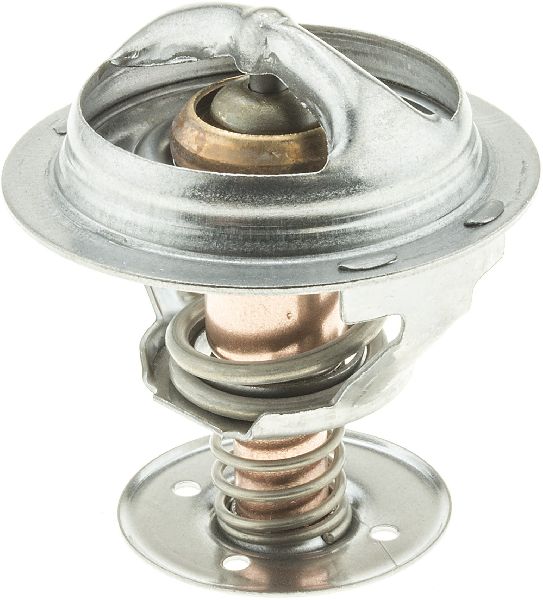
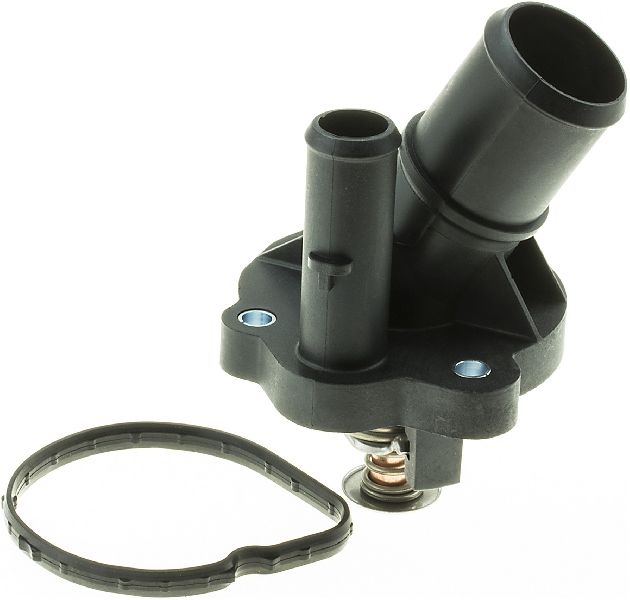
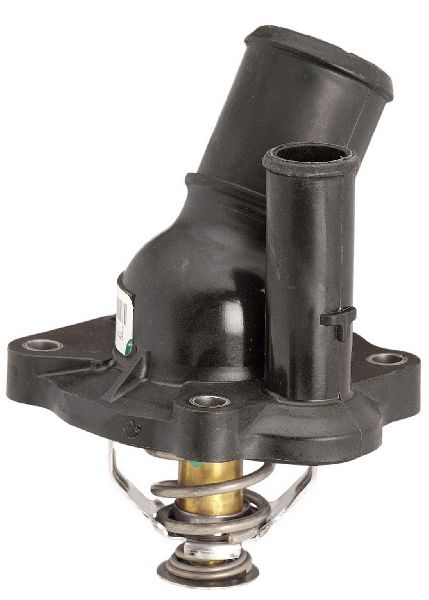
- Thermostat and Housing Assembly
(OEM #3M4Z-8575-B (for 2.3L/2.5L I4) or Motorcraft RT-1214. For 3.0L V6, use Motorcraft RT-1175 (thermostat only) or complete housing assembly like Motorcraft RH159.)— This is the most common failure item for code P0128. The thermostat sticks open, and replacing the entire assembly prevents future leaks from the plastic housing.
Trusted brands: Motorcraft, Gates, Stant, Dorman
OEM price range: $90-$150
Aftermarket price range: $30-$80 - Engine Coolant / Antifreeze
(OEM #Motorcraft Gold Concentrated Antifreeze/Coolant (VC-7-B))— The cooling system must be drained to replace the thermostat. Refill with fresh coolant that meets Ford's WSS-M97B51-A1 specification (Motorcraft Gold). Do not mix coolant types.
Trusted brands: Motorcraft, Zerex G-05, Prestone
OEM price range: $25-$40 per gallon
Aftermarket price range: $20-$30 per gallon
Technical Service Bulletins (TSBs) & Recalls
- No specific Technical Service Bulletins (TSBs) from Ford directly address the P0128 code or thermostat failure for the 2008-2012 Escape. Most cooling system TSBs and recalls for the Escape nameplate apply to newer generations with EcoBoost engines.
- Manufacturer Bulletin #TSB 25-2348 and Bulletin #TSB 25-2486 note that some Ford vehicles may exhibit an incorrectly illuminated MIL with DTC P0128 due to PCM software.
- Bulletin #TSB 21-2168 describes a condition where an intermittent drop in ECT voltage can trigger P0128 along with other codes like P0116 or P0117.
Platform-Specific Known Issues
- V6 Thermostat Accessibility: → Shop Integrated Thermostat Housing Assembly Access to the thermostat on the 3.0L Duratec V6 is significantly more difficult than on the 4-cylinder engine. It is located in the engine valley, requiring more time and potentially the removal of other components like the intake manifold for full access, drastically increasing labor time and cost. 🎬 See how to access and replace the thermostat on V6 models.
- Brittle Plastic Housing: The original thermostat housings on both engines are made of plastic that becomes brittle over many heat cycles, leading to cracks, coolant leaks, and sometimes broken bolt bosses. This is why replacing the entire assembly is strongly recommended over just the thermostat insert.
Mechanic-Grade Diagnostic Values
- Engine Coolant Temperature (ECT) Sensor Resistance — expected: Approximately 2000Ω to 3000Ω at 68°F (20°C). Resistance should decrease as temperature rises, down to 200Ω to 300Ω at 194°F (90°C).. Failure: An open circuit (infinite resistance) or a value that does not change with temperature indicates a failed sensor. A reading that is significantly out of the expected range for a given temperature also points to a faulty sensor.
- Engine Coolant Temperature (ECT) Sensor Voltage (at connector) — expected: The PCM supplies a 5V reference voltage to the sensor circuit. The return voltage to the PCM will vary with temperature, typically around 2.0V when cold and dropping to around 0.5V when the engine is at full operating temperature.. Failure: If the reference voltage from the PCM is missing or incorrect (e.g., significantly lower than 5V with the sensor unplugged), there may be a wiring or PCM issue. If the return voltage is stuck high or low regardless of temperature, the sensor or its wiring is faulty.
Scan Tool Commands That Help
- ForScan / Ford IDS: Live Data PID Monitoring (ECT, CHT, IAT) — This is the primary diagnostic function. Use it to monitor the Engine Coolant Temperature (ECT) or Cylinder Head Temperature (CHT) from a cold start. Compare the ECT/CHT reading to the Intake Air Temperature (IAT) reading after an overnight cold soak; they should be within a few degrees of each other. A significant discrepancy points to a faulty sensor before the engine is even started.
- ForScan / Ford IDS: Clear KAM (Keep Alive Memory) — After replacing a component like a thermostat or ECT sensor, it's good practice to clear the Keep Alive Memory. This resets adaptive learning tables within the PCM, forcing it to re-learn parameters with the new, correctly functioning components. This can sometimes resolve issues faster than waiting for the PCM to adapt on its own.
Wiring & Ground Locations
- G104 — At the left front corner of the engine compartment, near the Battery Junction Box (BJB).. This is a primary engine compartment ground point. A corroded or loose G104 can cause erratic behavior from various sensors that use it as a ground reference, including potentially the ECT/CHT circuit, leading to incorrect temperature readings by the PCM.
- G110 — On the 2.3L, it's at the left rear of the engine compartment. On the 3.0L, it's at the left front corner of the engine compartment.. Another critical engine ground. Poor connection here can affect PCM and sensor operation, potentially creating a voltage offset that makes the PCM misinterpret the ECT sensor's signal.
- ECT/CHT Sensor Connector — On the 2.3L/2.5L, the sensor is often a CHT located on the cylinder head. On the 3.0L, the ECT is typically on the thermostat housing in the engine valley.. The connector itself is a known failure point. The drain path in the cylinder head can get clogged, allowing moisture and debris to collect and corrode the sensor and its connector pins, causing false readings and triggering P0128.
Real Owner Repair Stories
- Electric Vehicle Forums (2007 Ford Escape Hybrid (2.3L-based)) — Check engine light with code P0128. Engine warms up and heat works fine.
❌ Tried (didn't work) Initial diagnosis was uncertain between the sensor and thermostat.
✅ What actually fixed it The root cause was a corroded Cylinder Head Temperature (CHT) sensor and its electrical connector. The pocket where the sensor sits had become plugged with dirt, trapping moisture and causing corrosion. Replacing the sensor and the pigtail connector solved the issue. - NHTSA ODI #11640247 — An owner reported receiving a high estimate for various repairs including a coolant flush and code P0128 after waiting for recall plans and assistance.
OEM Part Supersession History
3M4Z-8575-A, 3M4Z-8575-AB→3M4Z-8575-B— Standard part revision and consolidation by the manufacturer.
Heads up: These part numbers are for the 2.3L and 2.5L 4-cylinder engine thermostat and housing assembly. They are generally interchangeable for the specified model years, with the 'B' revision being the latest and most commonly available service part.
Model Year Variations Within This Range
- 2008: The 2008 model year was the last year for the 2.3L Duratec I4 engine in the Escape.
- 2009-2012: Starting in 2009, the base engine was updated to the 2.5L Duratec I4. While the engine displacement changed, the thermostat housing part number (3M4Z-8575-B) and general location remained the same, making the repair procedure very similar for all 4-cylinder models in this range.
- 2008-2012 Hybrid: Hybrid models use an Atkinson-cycle version of the 2.3L/2.5L engine and often rely on a Cylinder Head Temperature (CHT) sensor for engine temperature readings rather than a direct Engine Coolant Temperature (ECT) sensor. This makes checking the CHT sensor and its connector for corrosion a more critical diagnostic step for P0128 on Hybrid models.
Diagnostic Flowchart
Real Owner Stories
Aggregated from forums and TSBs cited above. Mileages and costs reflect what owners reported in those sources.
2010 Ford Escape 3.0L V6 — 175000 miles
Symptoms: Check Engine Light with code P0128, temperature gauge usually reads below normal, one instance of overheating while towing.
What fixed it: Not specified in the thread; user was asking for diagnostic advice.
Source hint: Reddit r/AskMechanics
2007 Ford Escape Hybrid
Symptoms: P0128 code present, shop quoted nearly $400 for the repair.
What fixed it: Replaced the thermostat with an OEM part.
Cost: $151
Source hint: Electric Vehicle Forums
Related OBD-II Codes
Frequently Asked Questions
Are there any TSBs or recalls for the P0128 code on my 2008-2012 Ford Escape?
Why is the thermostat replacement so expensive on my 3.0L V6 Escape compared to the 4-cylinder?
Should I replace just the thermostat insert or the whole housing on my Escape?
I smell a sweet odor coming from my engine and have a P0128 code. What does this mean?
Can I use a cheap aftermarket thermostat to fix the P0128 code?
Does the Escape Hybrid use the same coolant temperature sensor as the standard 2.3L or 3.0L?
Will my Mercury Mariner or Mazda Tribute have this same P0128 issue?
Helpful Videos
![How to Fix FORD P0128 Engine Code in 3 Minutes [2 DIY Methods / Only $7.34]](https://img.youtube.com/vi/nUD6fDJpoV4/mqdefault.jpg)
We Have This Part in Stock


The information in this article is provided for general reference and educational purposes only. Vehicle specifications, procedures, and part compatibility can vary by production date, trim level, and region. Always consult your vehicle's factory service manual and verify part numbers before purchasing or performing repairs. Safety-critical components such as airbags, seat belts, and braking systems should be installed by a qualified professional.
- Ford Escape:
- 🧭 Diagnostic Flowchart
- 🎬 Helpful Videos
- 🛍️ Shop This Part
- What's Unique About the 2008-2012 Ford Escape
- Symptoms You May Notice
- Most Likely Causes
- Rare But Worth Checking
- Diagnosis Steps
- Parts You'll Likely Need
- Technical Service Bulletins (TSBs) & Recalls
- Platform-Specific Known Issues
- Mechanic-Grade Diagnostic Values
- Scan Tool Commands That Help
- Wiring & Ground Locations
- Real Owner Repair Stories
- OEM Part Supersession History
- Model Year Variations Within This Range
- Real Owner Stories
- 2010 Ford Escape 3.0L V6 — 175000 miles
- 2007 Ford Escape Hybrid
- Related OBD-II Codes
- Frequently Asked Questions
- 🎟️ Get 5% Off