

P0128 on 2005-2012 Ford Escape Hybrid: Causes and Fixes for Engine Running Too Cool
On a 2005-2012 Ford Escape Hybrid, code P0128 almost always means the engine coolant thermostat is stuck open. The most reliable fix is replacing the entire thermostat and housing assembly with an OEM Motorcraft part to prevent premature failure of aftermarket units. Expect to pay $40-$80 for an aftermarket part or $90-$150 for an OEM Motorcraft part. The job is DIY-friendly with a difficulty of 2/5.
- P0128 on your Escape Hybrid means the engine is running too cold, not too hot.
- The most probable cause, in over 9 out of 10 cases, is a thermostat stuck in the open position.
- For a durable repair, replace the entire thermostat and housing assembly, not just the thermostat itself.
- Always refill the cooling system with the Ford-specified coolant for your model year (typically Motorcraft Gold for this range) to prevent corrosion and other issues.
- While less likely, a corroded Cylinder Head Temperature (CHT) sensor can also cause this code and is a known issue on these engines.
What's Unique About the 2005-2012 Ford Escape Hybrid
The Ford Escape Hybrid of this era uses a Cylinder Head Temperature (CHT) sensor to infer coolant temperature, rather than a traditional Engine Coolant Temperature (ECT) sensor that is submerged in coolant. The CHT sensor is a 'dry' sensor that measures the metal temperature of the cylinder head. While the P0128 code is still overwhelmingly caused by a simple mechanical thermostat failure, this sensor difference is a key diagnostic point. A faulty CHT sensor or its wiring, which can corrode in its location on the engine, is a possible, though less common, cause of this code.
Generation note: This guide covers two generations of the Ford Escape Hybrid: the first generation (2005-2007) with the 2.3L engine and the second generation (2008-2012) with the 2.5L engine. The causes, symptoms, and primary fix for code P0128 are consistent across both generations and engine sizes.
Symptoms You May Notice
- Check Engine Light illuminated
- Engine takes a very long time to warm up
- Temperature gauge reads lower than normal or drops at highway speeds
- Heater blows lukewarm or cold air
- Noticeable decrease in fuel economy
- Replacing the CHT sensor when the thermostat is the actual problem. Because the thermostat is the cause over 90% of the time, it should be the first part replaced unless diagnostic data clearly points to the sensor (e.g., a completely illogical temperature reading on a cold soak test).
Most Likely Causes
- Thermostat Stuck Open 🔴 High Probability → Shop Integrated Thermostat Housing Assembly Thermostats are mechanical wear items designed to fail in the open position as a failsafe against overheating. The OEM thermostat is rated to open at 190°F; when it fails, it allows coolant to circulate constantly, preventing the engine from reaching this temperature. The plastic housing can also become brittle with age.
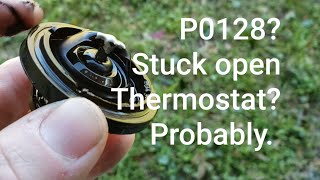
How to confirm: After a cold start, the upper radiator hose should remain cool until the engine reaches operating temperature (around 190°F). If the hose starts to get warm almost immediately, coolant is flowing prematurely, indicating a stuck-open thermostat.
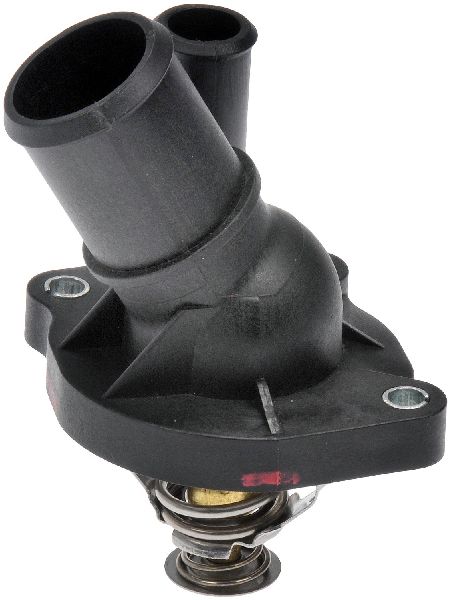
Typical fix: Replace the entire thermostat and housing assembly. This prevents potential leaks from the old, brittle plastic housing. Using an OEM Motorcraft part is highly recommended by owners to avoid premature failure of aftermarket alternatives.
Est. part cost: $40-$150 - Low Engine Coolant 🟡 Medium Probability Coolant can be consumed by other issues or leak over time. Low levels can create air pockets in the system, preventing the CHT sensor from getting an accurate reading of the head's temperature, which the PCM uses to infer coolant temperature. A similar condition is noted in manufacturer records for other Ford platforms, such as TSB 20-2234, where P0128 is accompanied by low coolant levels.
How to confirm: Visually inspect the coolant level in the degas bottle (reservoir) when the engine is cool. The level should be between the 'MIN' and 'MAX' lines. If low, inspect for visible leaks from hoses, the radiator, or the water pump.
Typical fix: Top off the coolant with the correct type (Motorcraft Gold for 2005-2010, Motorcraft Orange for 2011-2012) and bleed any air from the system. If the level drops again, a leak must be found and repaired.
Est. part cost: $20-$40 for a gallon of coolant - Faulty Cylinder Head Temperature (CHT) Sensor or Connector ⚪ Low Probability The CHT sensor sits in a well on the cylinder head where moisture can collect, leading to corrosion of the sensor body and electrical connector. This corrosion can cause incorrect resistance, leading to a false low-temperature reading. Ford TSB 12-5-5 (superseding earlier versions) addresses this exact issue on the 2.5L engine. Additionally, TSB 21-2168 notes that an intermittent drop in engine coolant temperature voltage can trigger P0128 and related sensor codes.
How to confirm: With a scan tool, compare the CHT sensor reading to the ambient air temperature reading 🎬 Watch: A professional walkthrough of the P0128 diagnostic process. after the vehicle has sat overnight (cold soak). The readings should be within a few degrees of each other. If the CHT reading is significantly different (e.g., reading -40°F), the sensor or its wiring is likely faulty.
Typical fix: Replace the CHT sensor and, if corroded, the connector pigtail. Apply dielectric grease to the new connector to prevent future moisture intrusion. The sensor is located on the top of the cylinder head.
Est. part cost: $25-$75
Rare But Worth Checking
- Cooling Fan Stuck On: → Shop Engine Cooling Fan Blade If the electric cooling fan runs constantly, even when the engine is cold, it can over-cool the engine and prevent it from reaching operating temperature, triggering a P0128. This is usually caused by a failed fan relay or a short in the control wiring.
- PCM Software Issues: While less common on this specific hybrid platform, manufacturer bulletins for other Ford models, such as TSB 25-2348 and TSB 25-2486, indicate that an incorrectly illuminated MIL with code P0128 can sometimes be due to software in the powertrain control module (PCM).
Diagnosis Steps
- Check for other Diagnostic Trouble Codes (DTCs). Additional codes related to temperature sensors (e.g., P0116, P0117) could point toward a sensor issue rather than the thermostat.
- Inspect Coolant Level and Condition. Ensure the coolant reservoir is filled to the proper level when the engine is cold. Low coolant can cause this code.
- Perform a 'Cold Soak' Sensor Check. After the vehicle has been parked overnight, use a scan tool to view live data. Compare the Cylinder Head Temperature (CHT) and Ambient Air Temperature (AAT) readings. They should be within 5°F (3°C) of each other. If not, the CHT sensor is suspect.
- Monitor Warm-Up Behavior. Start the engine from cold and feel the upper radiator hose. It should remain cool for several minutes. If it starts to warm up almost immediately, the thermostat is stuck open and allowing coolant to circulate prematurely.
- Watch Live Data. Use a scan tool to monitor the CHT reading as the engine warms up. The temperature should rise steadily to about 190-200°F and then stabilize. If it rises very slowly, never reaches 190°F, or drops significantly when driving at speed, the thermostat is the most likely cause.
- If the thermostat and coolant level are confirmed to be good, inspect the CHT sensor and its connector for signs of corrosion or damage. The sensor is located on the cylinder head.
Parts You'll Likely Need
- Engine Coolant Thermostat and Housing Assembly
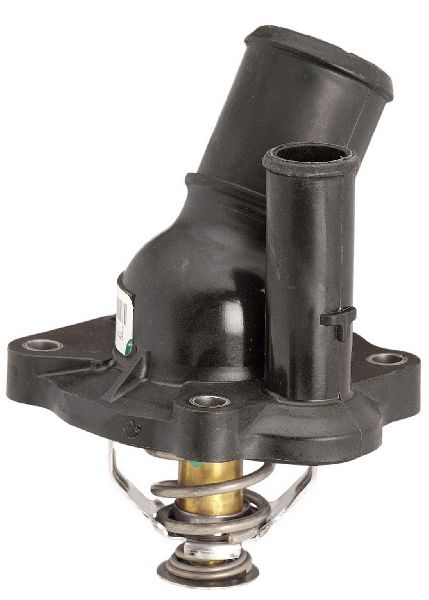
(OEM #3M4Z-8575-B (supersedes 3m4z8575a, 3m4z8575ab))— This is the most common failure item for code P0128. The thermostat sticks open, and replacing the entire assembly is recommended to prevent leaks from the aged plastic housing. The OEM thermostat opens at 190°F.
Trusted brands: Motorcraft (OEM), Stant, Gates, Hella, Four Seasons
OEM price range: $90-$150
Aftermarket price range: $40-$80 - Engine Coolant / Antifreeze
(OEM #VC-7-B (Motorcraft Gold) for 2005-2010; VC-3-D (Motorcraft Orange) for 2011-2012)— The cooling system must be drained to replace the thermostat. It's critical to refill with the correct coolant type to prevent system damage. 2005-2010 models use a HOAT coolant (Ford Gold), while 2011-2012 models switched to an OAT coolant (Ford Orange).
Trusted brands: Motorcraft, Zerex G-05 (for Gold), Prestone Dex-Cool (for Orange)
OEM price range: $25-$40
Aftermarket price range: $20-$30 - Cylinder Head Temperature (CHT) Sensor
(OEM #9L8Z-6G004-E (example for 2.5L, verify by VIN))— A less common but possible cause. If the sensor fails or its connector corrodes, it can send false low-temperature readings to the PCM.
Trusted brands: Motorcraft (OEM), NGK, Dorman, Standard Motor Products 🎬 Watch: How to fix common Ford P0128 temperature codes.
OEM price range: $40-$80
Aftermarket price range: $20-$50
Technical Service Bulletins (TSBs) & Recalls
- While no specific TSB for P0128 on this platform was found, Ford TSB 12-5-5 addresses corrosion of the CHT sensor connector on the 2.5L engine, which can cause this code. The most relevant official action for this vehicle generation is Recall 14S19 for the separate MECS pump, which does not cause P0128 but is a critical cooling system component.
Platform-Specific Known Issues
- Real-World Repair Story: Thermostat Fix: → Shop Integrated Thermostat Housing Assembly A user on a Ford Escape forum with a 2006 Hybrid reported a P0128 code. After confirming the upper radiator hose got warm immediately after a cold start, they replaced the thermostat and housing assembly. The repair successfully cleared the code and restored normal engine operating temperature and cabin heat. This is the typical experience for most owners with this code.
- Real-World Repair Story: CHT Sensor Corrosion: On a Ford-Trucks forum, a technician noted that on the 2.5L engine, they have seen cases where water pools in the CHT sensor's recess in the cylinder head, causing the sensor and its electrical connector to corrode and fail, leading to erratic temperature readings and codes like P0128.
Mechanic-Grade Diagnostic Values
- Cylinder Head Temperature (CHT) Sensor Resistance — expected: Approx. 2,200 - 3,000 Ω at 20°C (68°F); Approx. 250 - 350 Ω at 80°C (176°F).. Failure: An open circuit (infinite resistance) or a reading that is drastically different from the expected value at a known temperature indicates a failed sensor. For example, a reading of 100,000 Ω on a warm engine.
- CHT Sensor Voltage (at PCM) — expected: Approx. 3.0 - 3.5V on a cold engine (~20°C/68°F); Approx. 1.0 - 1.3V at normal operating temperature (~80°C/176°F).. Failure: Voltage that is stuck high (e.g., >4.5V) or low (e.g., <0.5V) regardless of temperature change, or does not correlate with the resistance check, points to a wiring or PCM issue.
Hidden / Shadow Codes Worth Checking
- Mode $06, TID $84, CID $01: This refers to the On-Board Test Results for the Thermostat Monitor. While not a 'code' in the traditional sense, a failing value here can indicate a P0128 is imminent. A scan tool that can read Mode $06 data will show test values and limits. If the measured warm-up time is approaching the maximum limit, it suggests the thermostat is becoming slow to react or is leaking by. (see via A professional scan tool or an advanced DIY tool/app (like FORScan) that can access OBD-II Mode $06 test results.)
Scan Tool Commands That Help
- Ford IDS / FORScan: Live Data PID Monitoring (CHT, IAT, ECT_SOAK_TIME) — This is the primary diagnostic method. Graphing the CHT and IAT from a cold soak (engine off overnight) is critical. They should start within a few degrees of each other. ECT_SOAK_TIME shows how long the PCM has registered the vehicle as being off, confirming a valid cold start for the P0128 monitor to run.
Wiring & Ground Locations
- C1164 — The electrical connector for the Cylinder Head Temperature (CHT) sensor, located on the top of the cylinder head between ignition coils for cylinders #2 and #3 on the 2.5L engine.. This connector is in a recessed well prone to collecting water, leading to corrosion of the pins and high resistance in the CHT circuit. This corrosion can cause false low-temperature readings, triggering a P0128 even with a good thermostat.
- CHT Sensor Wires — At PCM connector C175B, the CHT signal wire is Pin 39 (Blue/Grey wire) and the Signal Return (ground) is Pin 49 (Green/White wire).. If the sensor and connector are good, a continuity test from connector C1164 to these pins can identify a break or short in the harness. A high resistance on the SIGRTN wire can also cause incorrect readings.
- G109 — A primary engine compartment ground located on the firewall, rear of the engine compartment.. This is a major ground point for engine control components. While not directly the CHT sensor's ground (which is a dedicated signal return to the PCM), a poor G109 can cause electrical noise and erratic behavior in the PCM, potentially affecting sensor readings.
Real Owner Repair Stories
- YouTube video by 'How to Automotive' (2006 Ford Escape Hybrid 2.3L) — Not specified, but the repair is for the thermostat.
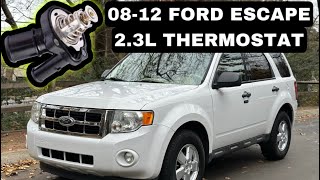
✅ What actually fixed it The video demonstrates a complete replacement of the thermostat and housing assembly. The technician notes the difficulty of accessing the bottom bolt and shows how to work around the belt tensioner to complete the job. - YouTube video by 'FordTechMakuloco' (General Ford 2.3L/2.5L engines) — P0128 and P0125 codes.
✅ What actually fixed it The technician replaces the entire thermostat and housing assembly, emphasizing that this is the only correct repair and that just replacing the thermostat insert is a mistake. He also highlights the importance of using a Motorcraft part to avoid premature failure of aftermarket units. - NHTSA ODI #11640247 — An owner reported receiving a high repair estimate that included a coolant flush and code P0128 after seeking assistance for other engine components and waiting for recall plans.
OEM Part Supersession History
3M4Z-8575-A, 3M4Z-8575-AB→3M4Z-8575-B— Likely minor revisions to the plastic molding, gasket material, or thermostat calibration for improved durability and performance. Part supersessions are common as manufacturers refine designs over a part's lifecycle.TSB 11-8-17, TSB 11-10-5→TSB 12-5-5— Expanded the model years and applications covered for the CHT sensor connector corrosion issue. This indicates Ford recognized the problem across a wider range of vehicles with the 2.5L engine over time.
Model Year Variations Within This Range
- 2005-2008 vs 2009-2012: The primary engine changed from a 2.3L Atkinson cycle I4 to a 2.5L Atkinson cycle I4 starting in the 2009 model year. While the P0128 causes are identical, the physical location of some components and access for the thermostat replacement may vary slightly. The CHT sensor corrosion issue is more formally documented via TSB for the 2.5L engine.
- 2005-2010 vs 2011-2012: The specified engine coolant changed. 2005-2010 models require Motorcraft Gold (HOAT) coolant (P/N VC-7-B). 2011-2012 models require Motorcraft Orange (OAT) coolant (P/N VC-3-D). Using the wrong coolant can lead to corrosion and cooling system damage.
Diagnostic Flowchart
Other Known Issues on This Vehicle
Issues unrelated to this code that are worth knowing about as an owner of this generation:
- Motor Electronics Coolant Pump (MECS) Failure 🔴 High — Very common on 2005-2008 models, leading to a recall. The pump for the separate hybrid electronics cooling loop fails, causing the 'Stop Safely Now' warning and powertrain shutdown. (Ref: Recall 14S19 / NHTSA 14V-526.)
- Cracked ABS Tone Ring 🟠 Medium — Common across all years. Rust builds up under the front axle CV shaft tone rings, causing them to crack. This triggers the ABS and traction control lights and can cause erratic brake pedal feedback.
- Blend Door Actuator Failure 🟡 Low — Widespread issue. The plastic gears inside the HVAC blend door actuators fail, causing a persistent clicking or knocking sound from behind the dashboard, especially when starting the vehicle or changing temperature settings.
- Severe Subframe/Shock Tower Rust 🔴 High — Prevalent in first-generation (2005-2007) models, especially in salt-belt regions. The rear passenger-side wheel well and shock tower can rust through completely, leading to structural failure.
Used vs. New Parts: Buying Guide for This Vehicle
When a used part is the smart pick: For this specific P0128 repair, using used parts is NOT recommended. The primary failure components (thermostat, CHT sensor) are wear items or prone to age-related failure. The cost savings of a used part are minimal compared to the labor involved and the high risk of premature failure.
What to inspect on the donor part:
- Not applicable as used parts are not advised for this repair.
OEM-only on this vehicle (don't cheap out):
- Engine Coolant Thermostat and Housing Assembly
Aftermarket brands forum-validated for this vehicle:
- Stant (Thermostat)
- Gates (Thermostat)
- NGK (CHT Sensor)
- Standard Motor Products (SMP) (CHT Sensor)
Brands owners have reported issues with on this vehicle:
- Unbranded, 'white box' thermostat assemblies from online marketplaces are frequently reported on forums to fail within months, either by leaking from the housing or failing to regulate temperature correctly.
Real Owner Stories
Aggregated from forums and TSBs cited above. Mileages and costs reflect what owners reported in those sources.
2006 Ford Escape Hybrid 2.3L
Symptoms: Check engine light illuminated, upper radiator hose got warm immediately after a cold start, and poor cabin heat.
What fixed it: Replaced the thermostat and housing assembly.
Source hint: vehicle_specific_issues: Real-World Repair Story: Thermostat Fix
2009-2012 Ford Escape Hybrid 2.5L
Symptoms: Erratic temperature readings and P0128 code; water pooling in the sensor's recess in the cylinder head.
What fixed it: Replacement of the CHT sensor and the electrical connector pigtail with dielectric grease applied to prevent moisture intrusion.
Source hint: vehicle_specific_issues: Real-World Repair Story: CHT Sensor Corrosion
Related OBD-II Codes
Frequently Asked Questions
Does Ford TSB 12-5-5 apply to my 2.5L Escape Hybrid's P0128 code?
Which coolant should I use for my 2011 Ford Escape Hybrid to avoid cooling system issues?
Can I just replace the thermostat, or do I need the whole housing?
Is the P0128 code related to the MECS pump recall (14S19)?
Why does my temperature gauge drop when I'm driving on the highway?
What part number is recommended for the thermostat replacement?
Helpful Videos

We Have This Part in Stock


The information in this article is provided for general reference and educational purposes only. Vehicle specifications, procedures, and part compatibility can vary by production date, trim level, and region. Always consult your vehicle's factory service manual and verify part numbers before purchasing or performing repairs. Safety-critical components such as airbags, seat belts, and braking systems should be installed by a qualified professional.
- Ford Escape Hybrid:
- 🧭 Diagnostic Flowchart
- 🎬 Helpful Videos
- 🛍️ Shop This Part
- What's Unique About the 2005-2012 Ford Escape Hybrid
- Symptoms You May Notice
- Most Likely Causes
- Rare But Worth Checking
- Diagnosis Steps
- Parts You'll Likely Need
- Technical Service Bulletins (TSBs) & Recalls
- Platform-Specific Known Issues
- Mechanic-Grade Diagnostic Values
- Hidden / Shadow Codes Worth Checking
- Scan Tool Commands That Help
- Wiring & Ground Locations
- Real Owner Repair Stories
- OEM Part Supersession History
- Model Year Variations Within This Range
- Other Known Issues on This Vehicle
- Used vs. New Parts: Buying Guide for This Vehicle
- Real Owner Stories
- 2006 Ford Escape Hybrid 2.3L
- 2009-2012 Ford Escape Hybrid 2.5L
- Related OBD-II Codes
- Frequently Asked Questions
- 🎟️ Get 5% Off