

P0128 on 2006-2010 Ford Explorer 4.0L V6: Causes, Fixes, and Parts
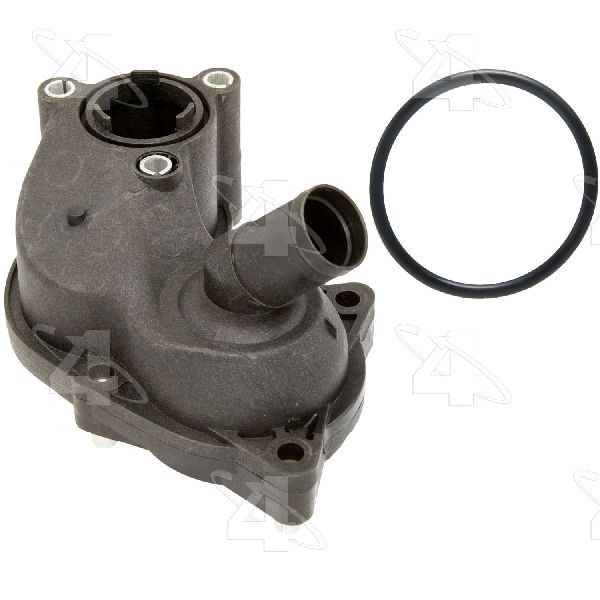
On a 2006-2010 Ford Explorer with the 4.0L V6, code P0128 almost always means the thermostat is stuck open. The most reliable fix is replacing the entire thermostat and housing assembly, which costs around $40-$80 for an aftermarket part. Many owners upgrade to a more durable all-aluminum housing to prevent future failures of the OEM plastic design. This is a common DIY job with a difficulty of 2/5.
- P0128 on a 2006-2010 Explorer 4.0L almost always points to a faulty thermostat that is stuck open.
- The most common symptom, besides the check engine light, is a temperature gauge that reads low and poor performance from the cabin heater.
- Due to the high failure rate of the original plastic thermostat housing, it is strongly recommended to replace the entire assembly, not just the thermostat insert.
- This is a very manageable DIY repair for those with basic tools, with the main steps being draining some coolant, swapping the part, and then refilling and bleeding the system.
- Always check the coolant level first; a low level due to a leak can also cause this code.
What's Unique About the 2006-2010 Ford Explorer
The 4.0L SOHC V6 engine in this generation of Explorer is well-known for issues with its cooling system components. A very common failure point is the original plastic thermostat housing, which can crack at its seams or become brittle with age and heat cycles, causing leaks or housing a failing thermostat. While the thermostat itself can be replaced separately, many owners and mechanics opt to replace the entire housing assembly due to the plastic becoming brittle and bolts seizing or spinning in the housing. Upgrading to a cast-aluminum aftermarket housing is a popular, permanent fix.
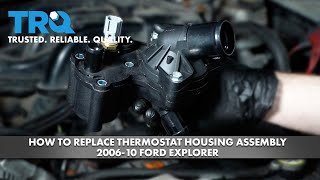
🎬 Watch: Complete step-by-step guide to replacing the thermostat housing assembly.Symptoms You May Notice
- Check Engine Light is on
- Temperature gauge reads lower than normal, stays on 'C' for a long time, or never reaches the middle.
- Heater blows lukewarm air or takes a very long time to get warm, especially in winter.
- Slightly reduced fuel economy because the engine stays in its 'warm-up' fuel enrichment mode longer.
- Temperature gauge may drop noticeably when driving at highway speeds as airflow through the radiator increases cooling.
- Replacing only the ECT sensor when the thermostat is the actual problem. While the sensor can fail, a stuck thermostat is far more common for this code.
- Replacing only the thermostat insert and not the entire housing. The plastic housing itself is the most common failure point due to cracking and leaking, so replacing only the insert is often a temporary fix.
Most Likely Causes
- Thermostat Stuck Open 🔴 High Probability → Shop Integrated Thermostat Housing Assembly The thermostat is a mechanical wear item. On the 4.0L V6, the entire plastic housing assembly is a known weak point, often failing and requiring replacement of the integrated thermostat. Modern thermostats are designed to fail in the open position as a safety measure to prevent overheating.
How to confirm: Monitor the temperature gauge or live data on a scan tool. If the engine warms up very slowly or the temperature drops significantly at highway speeds, the thermostat is likely stuck open, allowing coolant to circulate to the radiator constantly. The upper radiator hose will warm up gradually from a cold start, instead of remaining cool and then suddenly getting hot.
Typical fix: Replace the thermostat. It is highly recommended to replace the entire thermostat housing assembly, which includes a new thermostat and gasket. Many owners opt for a more durable cast-aluminum aftermarket housing instead of another OEM plastic unit.
Est. part cost: $40-$80 for an aftermarket assembly, $100+ for OEM (Motorcraft). - Low Engine Coolant Level 🟡 Medium Probability The plastic thermostat housing is a very common source of coolant leaks on this engine, often cracking at the molded seams. A leaking radiator or hoses are also possibilities. A low coolant level can introduce air into the system, preventing the ECT sensor from getting an accurate reading. Manufacturer service bulletin TSB 20-2234 notes that vehicles may exhibit an illuminated MIL with P0128 and low coolant levels.
How to confirm: Visually inspect the coolant level in the overflow reservoir when the engine is cold. Check for signs of coolant leaks (often a sweet smell or visible pink/yellow residue) around the thermostat housing, radiator, and hoses. The top of the engine valley around the housing is a key area to check for pooling coolant.
Typical fix: Find and repair the source of the leak, then top off and bleed the cooling system. If the thermostat housing is leaking, it must be replaced.
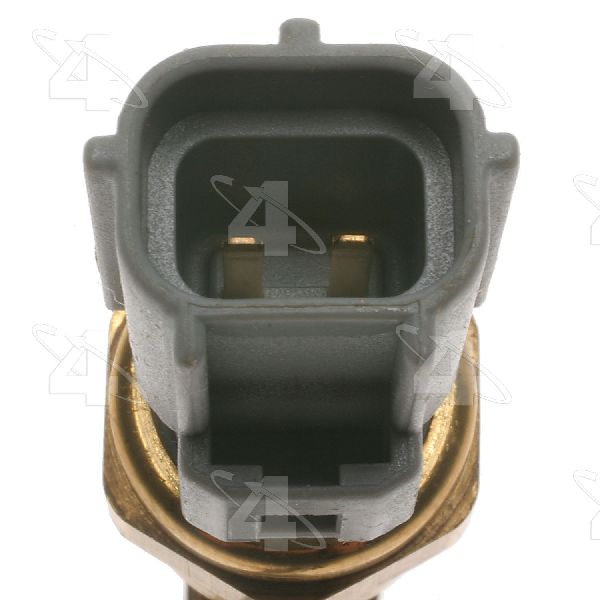
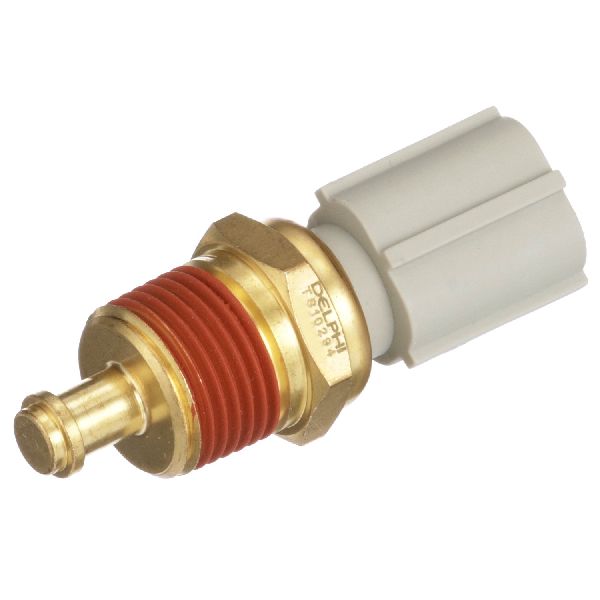
Est. part cost: $0 if it's just a loose hose clamp, or $40-$80 for a new thermostat housing if that is the source of the leak. - Faulty Engine Coolant Temperature (ECT) Sensor ⚪ Low Probability → Shop Engine Coolant Temperature Sensor
How to confirm: With the engine cold, use a scan tool to compare the ECT sensor reading to the Intake Air Temperature (IAT) sensor reading. They should be within a few degrees of each other. If the ECT reading is skewed significantly lower, or its reading is erratic, the sensor is likely faulty. Manufacturer bulletin SSM 49407 indicates that an incorrectly illuminated MIL with code P0128 may be due to the engine coolant temperature (ECT) sensor or ECT sensor wiring harness.
Typical fix: Replace the ECT sensor. On the 4.0L V6, the sensor is located on the thermostat housing and is held in by a small clip, making it easy to replace during a housing swap.
Est. part cost: $15-$40
Rare But Worth Checking
- Cooling Fan Stuck On: → Shop Engine Cooling Fan Blade If the electric cooling fan runs constantly, even when the engine is cold, it can over-cool the engine and prevent it from reaching operating temperature, triggering a P0128 code. This is typically caused by a failed fan control module or relay, and is less common than a thermostat issue for this code.
- PCM Software Issues: In some Ford vehicles, an incorrectly illuminated MIL with code P0128 may be due to the software in the PCM, as noted in TSB 25-2348 and TSB 25-2486.
Diagnosis Steps
- Check for a Check Engine Light and confirm the presence of code P0128 using an OBD-II scanner.
- With the engine cold, check the coolant level in the degas (overflow) bottle. If it is low, inspect for leaks, paying close attention to the plastic thermostat housing and the valley of the engine beneath it.
- Start the engine and monitor the temperature gauge on the dashboard. It should steadily rise to the middle of the normal range (usually within 5-10 minutes). If it rises very slowly or stays in the cold range, the thermostat is most likely stuck open.
- As a further test, feel the upper radiator hose after a few minutes of idling from a cold start. It should remain cool until the engine reaches operating temperature (around 190-195°F), at which point it will suddenly become hot as the thermostat opens. If it warms up gradually, the thermostat is leaking or stuck open.
- If the temperature gauge behaves erratically or gives an implausible reading, test the Engine Coolant Temperature (ECT) sensor and its wiring.
- If all other components check out, the most probable cause is a faulty thermostat, which should be replaced along with its housing.
- After repair, properly bleed the cooling system to remove any trapped air, which can cause similar symptoms. Parking the vehicle on an incline (nose up) can help.
Parts You'll Likely Need
- Thermostat Housing Assembly
(OEM #6L2Z-8592-FA (Motorcraft RH158))— This is the most common failure. The original plastic housing becomes brittle, cracking at the seams and causing leaks or issues with the integrated thermostat. Replacing the whole assembly is the most reliable repair.
Trusted brands: Motorcraft (OEM Plastic), Dorman (Plastic or Aluminum), Gates (Plastic)
OEM price range: $100-$140
Aftermarket price range: $40-$80 - Engine Coolant Temperature Sensor
(OEM #3L8Z-12A648-A (Motorcraft DY1145))— While less common than a thermostat failure, a faulty ECT sensor can send incorrect data to the PCM, causing a P0128 code. It's inexpensive and easy to replace if diagnosed as the fault, and often replaced proactively during a thermostat housing job.
Trusted brands: Motorcraft, Bosch, Standard Motor Products
OEM price range: $25-$40
Aftermarket price range: $15-$30 - Engine Coolant/Antifreeze
(OEM #Motorcraft Premium Gold VC-7-B)— The system must be partially drained to perform the repair and then refilled and bled. This vehicle uses Ford-specific G-05 type (yellow/gold) coolant. Using the wrong type can cause corrosion.
Trusted brands: Motorcraft, Zerex G-05, PEAK OET North American Vehicles Gold
OEM price range: $20-$30 per gallon
Aftermarket price range: $18-$25 per gallon
Platform-Specific Known Issues
- The plastic thermostat housing on the 4.0L SOHC V6 is a notorious failure point. It is prone to cracking and leaking coolant, particularly at the seams.
- The bolts securing the thermostat housing can sometimes seize or the brass inserts in the plastic housing can spin, complicating the replacement and often forcing the replacement of the entire assembly.
- The rearmost bolt on the thermostat housing can be difficult to access, often requiring a wobbly socket or a flex-head wrench. 🎬 See this walkthrough for replacing the upper thermostat housing.
- When replacing the housing, it is a good time to inspect the short crossover hose that runs from the bottom of the housing to the water pump, as it can swell and burst.
Mechanic-Grade Diagnostic Values
- Engine Coolant Temperature (ECT) Sensor Resistance — expected: Approx. 37 kΩ at 70°F (21°C), dropping to approx. 2.4 kΩ at 200°F (93°C).. Failure: Readings that are infinite (open circuit), near zero (short circuit), or do not correspond with the known temperature of the coolant indicate a faulty sensor.
- Mode $06, Test ID $86, Component ID $11 (Thermostat Monitor) — expected: The reported test value (actual ECT reading during the test) should be greater than the minimum threshold value stored by the PCM.. Failure: If the test value is less than the minimum threshold, it indicates the engine did not warm up as expected, confirming the condition for P0128.
- ECT Sensor Voltage (Signal Wire to Ground) — expected: Approx. 3.0-3.5V with key on, engine off at 70°F (21°C). Voltage should decrease smoothly as the engine warms up, typically to around 0.5-1.0V at full operating temperature.. Failure: Voltage stuck high (e.g., 5V) or low, or erratic readings that don't correlate with engine temperature changes.
Scan Tool Commands That Help
- Ford IDS / FORScan / High-End Bidirectional Scanner: Cooling Fan Control (On/Off) — Use this command to rule out a 'fan stuck on' condition. If you can command the fan off but it continues to run, the fan control module or relay is faulty. This helps diagnose a rare cause for P0128.
- Ford IDS / FORScan / High-End Bidirectional Scanner: Reset KAM (Keep Alive Memory) — Perform this after replacing the thermostat or ECT sensor. It clears the PCM's adaptive learning tables, forcing it to immediately use the inputs from the new components to relearn the engine warm-up curve, which can prevent the code from returning during the initial drive cycles.
Wiring & Ground Locations
- G102 / G104 — Commonly located on the passenger side of the engine compartment, either on the front of the engine block or on the radiator core support.. This is a primary engine and PCM ground point. Corrosion or a loose connection here can cause erratic readings from multiple sensors, including the ECT sensor, leading to incorrect data and potentially triggering a P0128.
- PCM Connector C175e — The main engine computer (PCM), typically located in the engine bay near the firewall.. For direct sensor circuit testing, Pin 38 (Light Green/Red wire) is the ECT signal and Pin 35 (Grey/Red wire) is the Signal Return (sensor ground) from the PCM. Testing for voltage and continuity at these pins can isolate a wiring fault between the sensor and the computer.
Real Owner Repair Stories
- ExplorerForum.com user reports (2007 Ford Explorer 4.0L V6) — P0128 code returned shortly after replacing the thermostat and housing assembly.
❌ Tried (didn't work) Initial replacement of the thermostat housing assembly with an aftermarket part.
✅ What actually fixed it The new aftermarket thermostat was defective out of the box. Replacing it a second time with a genuine Motorcraft thermostat assembly resolved the issue permanently. - Ford-Trucks.com forum user (2008 Ford Explorer 4.0L V6) — Persistent P0128 code and a very slow, hard-to-find coolant leak.
❌ Tried (didn't work) Replacing only the thermostat insert, not the full housing.
✅ What actually fixed it The original plastic housing had a hairline crack at a seam, causing a slow leak and allowing air into the system. Replacing the entire assembly with a cast aluminum aftermarket housing fixed the leak and the P0128 code for good. - NHTSA ODI #11640247 — An owner reported receiving a repair estimate that included a coolant flush and code P0128 after other engine work was performed.
OEM Part Supersession History
OEM Plastic Housing (e.g., 6L2Z-8592-FA)→Aftermarket Aluminum Housing (e.g., Dorman 902-210)— The aftermarket developed cast aluminum housings to provide a permanent solution to the OEM plastic design's tendency to crack and leak at the seams.
Heads up: While not an OEM supersession, it's a critical upgrade path. Ensure the aluminum kit comes with all necessary gaskets and a new thermostat, as some are sold as bare housings.
Diagnostic Flowchart
Real Owner Stories
Aggregated from forums and TSBs cited above. Mileages and costs reflect what owners reported in those sources.
2009 Ford Explorer 4.0L — 74000 miles
Symptoms: Check Engine Light with code P0128 came on, was cleared, and then returned. Coolant level is perfect, no leaks observed.
What fixed it: The user was advised that the most likely culprit is a thermostat that is stuck open or randomly sticking open, and that it should be changed.
Source hint: Car Talk Community
2007 Ford Explorer 4.0L
Symptoms: Triggered a P0128 code.
What fixed it: Replaced the entire thermostat housing assembly, not just the thermostat, due to the high failure rate of the plastic housing.
Source hint: ExplorerForum.com thread titled 'P0128 code on 07 explorer 4.0'
2008 Ford Explorer 4.0L
Symptoms: Failed OEM plastic thermostat housing.
What fixed it: Replaced the failed OEM plastic housing with a cast-aluminum aftermarket version for long-term durability.
Source hint: Ford-Trucks.com thread titled 'All metal 08 Explorer thermostat housing'
Related OBD-II Codes
Frequently Asked Questions
Why is the thermostat housing on my 2006-2010 Explorer 4.0L considered a weak point?
Should I replace just the thermostat or the entire housing assembly to fix my P0128 code?
What should I watch out for when removing the thermostat housing bolts on the 4.0L Cologne V6?
I have a P0128 code but my coolant level is perfect. What is the most likely cause?
Are there any other hoses I should check while replacing the thermostat housing on my Explorer?
How can I properly bleed the cooling system on my Explorer after replacing the thermostat housing?
Helpful Videos
We Have This Part in Stock


The information in this article is provided for general reference and educational purposes only. Vehicle specifications, procedures, and part compatibility can vary by production date, trim level, and region. Always consult your vehicle's factory service manual and verify part numbers before purchasing or performing repairs. Safety-critical components such as airbags, seat belts, and braking systems should be installed by a qualified professional.
- Ford Explorer:
- 🧭 Diagnostic Flowchart
- 🎬 Helpful Videos
- 🛍️ Shop This Part
- What's Unique About the 2006-2010 Ford Explorer
- Symptoms You May Notice
- Most Likely Causes
- Rare But Worth Checking
- Diagnosis Steps
- Parts You'll Likely Need
- Platform-Specific Known Issues
- Mechanic-Grade Diagnostic Values
- Scan Tool Commands That Help
- Wiring & Ground Locations
- Real Owner Repair Stories
- OEM Part Supersession History
- Real Owner Stories
- 2009 Ford Explorer 4.0L — 74000 miles
- 2007 Ford Explorer 4.0L
- 2008 Ford Explorer 4.0L
- Related OBD-II Codes
- Frequently Asked Questions
- 🎟️ Get 5% Off