

P0128 on 2022-2026 Ford Maverick Hybrid: Causes and Fixes
On a 2022-2026 Maverick Hybrid, code P0128 is most often caused by a low coolant level due to a failing Exhaust Heat Exchanger (EHE), a known platform issue. This part can leak internally, burning coolant without a visible puddle. This failure is widely discussed in owner forums. If the coolant level is normal, the next most likely cause is a stuck-open thermostat. The EHE is often replaced under the 8-year/100,000-mile emissions or hybrid warranty.
- For a P0128 code on a Maverick Hybrid, your first step should always be to check the engine coolant level. If it's low, you likely have a leaking Exhaust Heat Exchanger (EHE).
- The EHE is a known weak point on this truck. The good news is that its replacement is frequently covered under the 8-year/100,000-mile hybrid/emissions warranty.
- If the coolant level is consistently full, then proceed with diagnosing a stuck-open thermostat, which is the classic cause for this code.
- Always use Ford's specified yellow coolant (Motorcraft VC-13DL-G) when refilling the system to protect hybrid-specific components.
What's Unique About the 2022-2026 Ford Maverick Hybrid
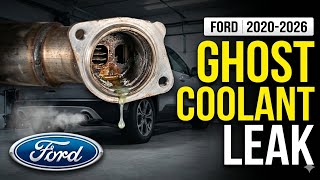
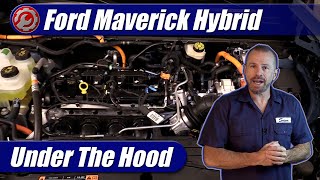
🎬 See a detailed breakdown of the Maverick hybrid engineWhat makes the Maverick Hybrid unique for this code is its Exhaust Heat Exchanger (EHE). This component uses hot exhaust gases to quickly warm the engine and battery coolant, which is crucial for efficiency in a hybrid system. Unfortunately, the EHE on this platform is a common failure point, often developing internal cracks from thermal stress that cause coolant to be forced into the exhaust stream—a "ghost leak" that doesn't leave a puddle. This slow coolant loss is a primary reason for a P0128 code on this specific vehicle, often before a more traditional thermostat failure occurs.
Symptoms You May Notice
- Check Engine Light is on
- Engine takes a very long time to warm up
- Poor or no heat from the cabin heater
- Temperature gauge reads lower than normal, especially at highway speeds
- Low coolant warning light on the dashboard
- A gurgling sound from behind the dashboard after shutdown
- A faint, sweet smell (like maple syrup) from the exhaust, especially on a cold start
- Needing to frequently add coolant to the engine (forward) reservoir
- Replacing the thermostat when the actual problem is a low coolant level from a leaking Exhaust Heat Exchanger. Always check the coolant level in the engine (forward) reservoir first on this vehicle before suspecting the thermostat.
Most Likely Causes
- Leaking Exhaust Heat Exchanger (EHE) causing low coolant 🔴 High Probability This is a well-documented failure point on the 2.5L Duratec Hybrid engine used in the Maverick and Escape. The part can develop internal cracks, leading to coolant being burned in the exhaust, or external cracks in its plastic housing.
How to confirm: Check the engine coolant reservoir (the larger, forward-most of the two reservoirs, typically with a yellow cap). If it is low or empty, this is the most likely cause. You can also look for a sweet smell from the exhaust or physically inspect the EHE, which is located under the vehicle, for signs of external leakage (pink/white crusty residue).
Typical fix: The Exhaust Heat Exchanger must be replaced. This repair is often covered under Ford's hybrid or emissions warranty (typically 8 years/100,000 miles), which owners have confirmed in forums. Ford has an updated Workshop Manual procedure (WSM 309-00) that does not require removing the entire exhaust system, reducing labor time.
Est. part cost: $350-$750 - Stuck-Open Engine Coolant Thermostat 🟡 Medium Probability → Shop Integrated Thermostat Housing Assembly This is a common failure on all modern vehicles. The thermostat is a mechanical valve that can wear out and fail in the open position, allowing coolant to circulate constantly and preventing the engine from warming up properly.
How to confirm: If the coolant level is full, this is the next suspect. Monitor the live engine coolant temperature with a scan tool. The temperature may rise slowly and then drop significantly when driving at highway speeds as cool air hits the radiator. The upper radiator hose may also get warm almost immediately after a cold start, when it should remain cool until the engine reaches operating temperature.
Typical fix: Replace the thermostat and housing assembly. It is highly recommended to replace the entire assembly (housing, thermostat, and gasket) rather than just the thermostat itself to prevent leaks. The updated part is a common fix.
Est. part cost: $230-$340 - Faulty Engine Coolant Temperature (ECT) Sensor ⚪ Low Probability → Shop Engine Coolant Temperature Sensor
How to confirm: Use a scan tool to compare the ECT sensor reading to the ambient air temperature sensor reading on a cold engine; they should be very close. If the ECT sensor reads an illogical temperature (e.g., -40°F or 250°F) when the engine is cold, it has failed.
Typical fix: Replace the ECT sensor. On many engines, it is threaded into the thermostat housing or cylinder head. A manufacturer service bulletin for other Ford models, TSB #21-2168, notes that P0128 can be caused by an intermittent drop in ECT voltage.
Est. part cost: $25-$60
Rare But Worth Checking
- Cooling Fan Stuck On: → Shop Engine Cooling Fan Blade If the electric radiator fan runs constantly, even when the engine is cold, it can over-cool the engine and prevent it from reaching operating temperature, triggering a P0128. This is usually caused by a failed fan control module or a stuck relay.
- PCM Software Errors: While less common on the Maverick, manufacturer bulletins for other Ford vehicles, such as TSB #25-2348 and TSB #25-2486, indicate that an incorrectly illuminated MIL with code P0128 may be due to software in the Powertrain Control Module (PCM).
Diagnosis Steps
- Check the engine coolant level in the forward-most of the two coolant reservoirs under the hood (this is the engine system, the rear one is for the power electronics). The engine should be cool when checking.
- If the coolant level is low, carefully inspect the Exhaust Heat Exchanger (EHE) on the underside of the vehicle for any signs of pink or white crusty residue, indicating an external leak. Note any sweet smell from the exhaust after starting.
- If the coolant level is low and no external leak is found, an internal EHE leak ('ghost leak') is highly probable. Top off the coolant with the correct fluid and monitor the level over several days to confirm it is being lost. Schedule a dealer visit to have it inspected under the emissions/hybrid warranty.
- If the coolant level is full, the next step is to check the thermostat. Use a scan tool to monitor the Engine Coolant Temperature (ECT) data PID. Start the engine from cold and watch the temperature rise. It should climb steadily to ~195°F and stabilize. If it climbs, then drops sharply at speed, or never reaches the target temperature, the thermostat is likely stuck open.
- If the thermostat appears to be working and the coolant is full, test the ECT sensor. With the engine cold, its reading should be within a few degrees of the Intake Air Temperature (IAT) sensor reading. If it's skewed, the sensor is likely faulty.
- Finally, verify that the electric cooling fan is not running constantly as soon as the vehicle is started.
Parts You'll Likely Need
- Exhaust Heat Exchanger
(OEM #NZ6Z-5B260-B)— This is the most common and vehicle-specific cause of coolant loss that leads to a P0128 code on the Maverick Hybrid. It is a known failure point.
Trusted brands: Motorcraft
OEM price range: $400-$750 - Engine Coolant Thermostat Housing Assembly
(OEM #LX6Z-8A586-B)— If the coolant system is full and not leaking, a thermostat stuck in the open position is the next most likely cause. It is sold as a complete assembly with the housing. This part number supersedes LX6Z-8A586-A.
Trusted brands: Motorcraft
OEM price range: $220-$340
Aftermarket price range: $150-$250 - Motorcraft Yellow Prediluted Antifreeze/Coolant
(OEM #VC-13DL-G)— The system must be refilled with the correct OEM-specified coolant after replacing the thermostat or EHE to prevent corrosion and ensure proper operation. 🎬 Watch: How to refill and bleed the cooling system
Trusted brands: Motorcraft
OEM price range: $20-$30 per gallon
Technical Service Bulletins (TSBs) & Recalls
- WSM 309-00: While not a TSB, this is an updated Workshop Manual procedure that allows for the replacement of the Exhaust Heat Exchanger without removing the entire exhaust system, significantly reducing labor costs for the repair.
- TSB #20-2234: Although for a different model, this bulletin notes that vehicles may exhibit an illuminated MIL with P0128 and low coolant levels, reinforcing the link between coolant loss and this code.
- No specific TSB for P0128 on this model was found, but the EHE failure is a widely acknowledged issue handled under warranty.
Platform-Specific Known Issues
- The Exhaust Heat Exchanger (EHE) on the 2.5L Duratec Hybrid engine is prone to internal and external coolant leaks. This is a widely discussed issue among owners and is often repaired under the vehicle's 8-year/100,000-mile hybrid or emissions warranty.
Mechanic-Grade Diagnostic Values
- Engine Coolant Temperature (ECT) Sensor Resistance — expected: Approximately 2,000 to 3,000 Ohms at 68°F (20°C).. Failure: A reading of infinite resistance (open circuit) or very low resistance (short circuit) indicates a failed sensor.
Scan Tool Commands That Help
- Ford IDS, FORScan, or equivalent professional scanner: Cooling Fan Control — To verify if the cooling fan can be commanded on and off. This helps rule out a stuck fan relay or control module, which would cause the fan to run constantly and trigger a P0128 by over-cooling the engine.
- Ford IDS, FORScan, or equivalent professional scanner: Active Grille Shutter (AGS) Actuator Test — To command the grille shutters to open and close, verifying the actuator motor and linkage are functional. If the shutters fail to move when commanded, it points to a mechanical or electrical fault in the AGS system.
Wiring & Ground Locations
- Engine Bay Ground Stud — A prominent ground stud is located on the inner fender in the engine compartment, often used as the negative connection point for jump-starting.. A poor ground connection for the PCM or related sensors can cause erratic readings. While not a primary cause for P0128, ensuring all engine bay grounds are clean and tight is a fundamental step in any electrical diagnosis.
- Passenger Footwell Ground Bolts — Two threaded, grounded bolts are reported to be on the firewall in the passenger footwell, located just under and to the left of the Body Control Module (BCM) and fuse box.. These grounds serve various interior and body electronics. A fault here is less likely to cause P0128 but is a known, accessible grounding point for diagnostic purposes.
"I Checked Everything" — The Actual Cause
- A standard cold cooling system pressure test may show no leaks, yet the vehicle still loses coolant. This occurs with the internal Exhaust Heat Exchanger (EHE) failure. The crack in the exchanger may only open and allow coolant to be forced into the exhaust stream under the combined thermal stress of hot exhaust gases and the higher pressure of a running, hot cooling system. A static, cold pressure test does not replicate these specific conditions, so the leak goes undetected.
OEM Part Supersession History
LX6Z-8A586-A→LX6Z-8A586-B— Standard part revision by the manufacturer, likely for improved reliability or minor design change.
Model Year Variations Within This Range
- Early 2022 models: Some early production Maverick Hybrids were subject to a recall where dealers would remove one or two blades from the Active Grille Shutter assembly. This was reportedly to mitigate a potential engine fire risk by ensuring adequate airflow. Later models were produced with this change or a different solution, so not all vehicles will have the full set of shutter blades.
Diagnostic Flowchart
Other Known Issues on This Vehicle
Issues unrelated to this code that are worth knowing about as an owner of this generation:
- 12V Battery Drain / Deep Sleep Mode 🟠 Medium — Very common on 2022-2024 models. Can occur at any mileage. Often caused by software glitches in modules (ABS, ACCM) that stay awake when the vehicle is off. (Ref: SSM 53801, SSM 50804, Recall 25S02 / NHTSA 25V-019 for replacing certain Enhanced Flooded Batteries with AGM batteries.)
- Trailer Tow Wiring Harness Missing Circuit 🟡 Low — Affects 2023 models built between 11/23/2022 and 02/10/2023 equipped with the Class II Trailer Tow package. (Ref: Recall 23C04 / NHTSA 23V-160.)
- Rear Axle Wire Harness Chafing 🔴 High — A risk on certain 2022-2023 models, where the harness can rub, potentially damaging the electric parking brake wiring. (Ref: Recall 23S35 / NHTSA 23V-509.)
- Engine Surging / Glowing Catalytic Converter in Cold Weather 🔴 High — An early issue on 2022 models in cold climates during remote start, where excessive fuel would be dumped, causing engine surging and overheating the catalytic converter. (Ref: Addressed by a PCM software update TSB.)
Used vs. New Parts: Buying Guide for This Vehicle
When a used part is the smart pick: For this specific trouble code, using used parts is not recommended. The primary causes are wear items (thermostat) or known high-failure-rate components (EHE).
What to inspect on the donor part:
- Not applicable as used parts are not advised for this repair.
OEM-only on this vehicle (don't cheap out):
- Exhaust Heat Exchanger (EHE): Due to the high rate of failure from thermal stress, installing a used EHE is extremely risky as it may have limited remaining life or fail shortly after installation. Aftermarket options are not widely available or validated, making new OEM (Motorcraft) the only reliable choice.
Aftermarket brands forum-validated for this vehicle:
- For the Engine Coolant Thermostat Assembly, while OEM (Motorcraft) is the safest choice, reputable aftermarket brands that manufacture for OEMs (e.g., Mahle, Gates) are generally considered reliable alternatives if available.
Brands owners have reported issues with on this vehicle:
- Avoid unbranded, 'white-box' thermostats and EHEs from online marketplaces. The quality control is often poor, and failure can lead to repeat labor costs or more significant engine issues.
Real Owner Stories
Aggregated from forums and TSBs cited above. Mileages and costs reflect what owners reported in those sources.
2025 Ford Maverick Hybrid 2.5L — 7000 miles
Symptoms: Heat exchanger failure occurring at very low mileage.
What fixed it: Replacement of the heat exchanger under warranty.
Source hint: MaverickTruckClub.com: Thread titled 'Heat exchanger failure at 7k miles on 25 Hybrid'
2022 Ford Maverick Hybrid 2.5L
Symptoms: Coolant loss without a visible puddle under the vehicle (ghost leak).
What fixed it: Replacement of the Exhaust Heat Exchanger (EHE).
Source hint: reddit.com/r/FordMaverickTruck owner discussions
2022 Ford Maverick Hybrid 2.5L
Symptoms: Check engine light for P0128, low coolant in the forward reservoir, and a sweet smell from the exhaust.
What fixed it: Replacement of the Exhaust Heat Exchanger; owner confirmed coverage under the 8-year/100,000-mile hybrid/emissions warranty.
Source hint: MaverickTruckClub.com: 'Beware: Heat Exchanger not covered under warranty' thread
Ford Owner Report — NHTSA ODI #11640247
Symptoms: An owner reported receiving a $3500 estimate for several repairs including a coolant flush and code P0128 after a converter replacement.
What fixed it: The owner was informed that technicians added coils and plugs while waiting for assistance.
Related OBD-II Codes
Frequently Asked Questions
Is the Exhaust Heat Exchanger (EHE) failure on my 2022-2026 Maverick Hybrid covered under warranty?
I have a 'ghost leak' where my coolant disappears but there are no puddles. Is this related to P0128?
Does the repair for the Exhaust Heat Exchanger require removing the entire exhaust system?
Which coolant reservoir should I check if I have a P0128 code on my Maverick Hybrid?
Can a 12V battery issue cause the P0128 code on my Maverick?
My Maverick Hybrid is surging and the catalytic converter is glowing in cold weather; is this P0128?
Helpful Videos

The information in this article is provided for general reference and educational purposes only. Vehicle specifications, procedures, and part compatibility can vary by production date, trim level, and region. Always consult your vehicle's factory service manual and verify part numbers before purchasing or performing repairs. Safety-critical components such as airbags, seat belts, and braking systems should be installed by a qualified professional.
- Ford Maverick Hybrid:
- 🧭 Diagnostic Flowchart
- 🎬 Helpful Videos
- What's Unique About the 2022-2026 Ford Maverick Hybrid
- Symptoms You May Notice
- Most Likely Causes
- Rare But Worth Checking
- Diagnosis Steps
- Parts You'll Likely Need
- Technical Service Bulletins (TSBs) & Recalls
- Platform-Specific Known Issues
- Mechanic-Grade Diagnostic Values
- Scan Tool Commands That Help
- Wiring & Ground Locations
- "I Checked Everything" — The Actual Cause
- OEM Part Supersession History
- Model Year Variations Within This Range
- Other Known Issues on This Vehicle
- Used vs. New Parts: Buying Guide for This Vehicle
- Real Owner Stories
- 2025 Ford Maverick Hybrid 2.5L — 7000 miles
- 2022 Ford Maverick Hybrid 2.5L
- 2022 Ford Maverick Hybrid 2.5L
- Ford Owner Report — NHTSA ODI #11640247
- Related OBD-II Codes
- Frequently Asked Questions
- 🎟️ Get 5% Off