

P0128 on 2020-2024 Ford Mustang 5.0L: Coolant Temp Below Thermostat Regulating Temp Causes & Fixes
On a 2020-2024 Ford Mustang with the 5.0L V8, code P0128 almost always means the engine thermostat is stuck open. Replacing the thermostat with a new Motorcraft unit is the most common fix. Expect to pay around $40-$70 for an OEM part, with a DIY difficulty of 2/5.
- P0128 means your Mustang's engine isn't warming up as fast as the computer expects.
- The problem is almost always a thermostat that is stuck in the open position.
- The fix is to replace the thermostat and its gasket/O-ring. This is a DIY-friendly job for most home mechanics.
- It is highly recommended to use a genuine Motorcraft thermostat (part # BR3Z-8575-F) to ensure a lasting repair.
- While you can drive the car, you should fix it soon to restore proper fuel economy and heater function.
What's Unique About the 2020-2024 Ford Mustang
The 5.0L Coyote V8 in the Mustang uses a 'cold-side' thermostat, which is a specific design. Using a generic or incorrect type of thermostat can fail to resolve the P0128 code and may lead to other cooling system issues. While the failure is standard (a stuck-open thermostat), it is critical to use the correct OEM Motorcraft part to ensure proper function and avoid repeat repairs. Some owners on forums have noted premature thermostat failures even at low mileage, sometimes under 11,000 miles.
Generation note: The 2020-2024 year range covers the end of the S550 generation (2020-2023) and the beginning of the S650 generation (2024). While both generations feature the 5.0L Coyote V8, cooling system components may have slight differences. However, the diagnostic principles and the primary cause for P0128 (a faulty thermostat) remain consistent across these years.
Symptoms You May Notice
- Check Engine Light is on.
- Engine temperature gauge reads lower than normal or takes a very long time to reach the middle of the gauge.
- Poor heater performance, with air from the vents being lukewarm or cold.
- Decreased fuel economy, as the engine stays in its richer 'warm-up' fuel mode for too long.
- Replacing the coolant temperature sensor when the thermostat is the actual problem. The sensor is often accurately reporting a low temperature; it is not the cause of it.
Most Likely Causes
- Thermostat Stuck Open 🔴 High Probability → Shop Integrated Thermostat Housing Assembly The thermostat is a mechanical wear item designed to fail in the open position as a fail-safe to prevent overheating. This is the most common cause for P0128 on virtually all modern vehicles, including the Mustang and its platform-mate, the F-150.
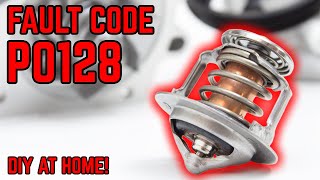
How to confirm: Use an OBD-II scanner to monitor the live engine coolant temperature data. Start the engine from cold and watch the temperature rise. It should climb steadily to around 190-200°F and stabilize. If it warms up extremely slowly, never reaches this temperature (e.g., maxes out at 160-170°F), or drops significantly at highway speeds, the thermostat is almost certainly stuck open. 🎬 Watch: A quick guide to diagnosing and fixing code P0128.
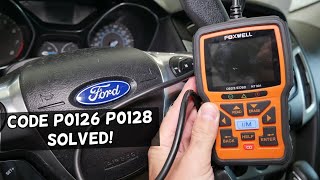
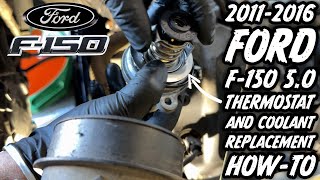
Typical fix: Replace the engine coolant thermostat and the corresponding O-ring or gasket. 🎬 See this walkthrough for replacing the Coyote 5.0 thermostat and coolant. It is highly recommended to use an OEM Motorcraft thermostat to avoid defective-out-of-the-box parts or incorrect calibration. In some forum-reported cases, the plastic thermostat housing itself was also to blame 🎬 Watch: How to resolve persistent P0128 and P0126 temperature codes. and required replacement.
Est. part cost: $40-$70 - Low Engine Coolant Level ⚪ Low Probability While not specific to this platform, any vehicle can develop coolant leaks over time. A manufacturer service bulletin, TSB 20-2234, notes that an illuminated MIL with code P0128 may also be accompanied by a low coolant level.
How to confirm: Visually inspect the coolant level in the degas bottle (coolant reservoir) when the engine is cold. The level should be between the 'MIN' and 'MAX' lines. Also, inspect for any visible signs of coolant leaks around hoses, the radiator, and the water pump.
Typical fix: Top off the coolant with the correct Ford-specified fluid (Motorcraft Yellow P-OAT). If a leak is present, the leaking component must be repaired or replaced.
Est. part cost: $20-$40 for coolant - Faulty Engine Coolant Temperature (ECT) Sensor ⚪ Low Probability → Shop Engine Coolant Temperature Sensor Sensors can fail, but it's far less common for an ECT sensor to cause a P0128 code than a thermostat failure. Manufacturer bulletin TSB 21-2168 indicates that an incorrectly illuminated MIL with P0128 may be caused by an intermittent drop in the engine coolant temperature (ECT) voltage.
How to confirm: With the engine cold after sitting overnight, use a scan tool to compare the ECT sensor reading with the Intake Air Temperature (IAT) sensor reading. They should be within a few degrees of each other. If the ECT reading is illogical (e.g., -40°F on a warm day), the sensor is likely bad.
Typical fix: Replace the Engine Coolant Temperature sensor.
Est. part cost: $25-$50
Rare But Worth Checking
- Cooling Fan Running Constantly: → Shop Engine Cooling Fan Blade If the electric cooling fans are stuck on and run continuously, even when the engine is cold, they can over-cool the engine and prevent it from reaching operating temperature, triggering a P0128 code. This is usually caused by a faulty fan control module, a stuck relay, or as a fail-safe response to a bad ECT sensor reading.
- Internal Debris in Coolant: In a rare case reported on a Mustang6G.com forum for a GT350, microscopic metal shavings in the coolant prevented a new thermostat from closing properly, causing a persistent P0128 code after a replacement. The fix required multiple cooling system flushes to remove the debris.
- Active Grille Shutter Fault: On related platforms like the F-150, a malfunctioning Active Grille Shutter system that is stuck in the open position could slightly increase engine warm-up time, potentially contributing to a P0128 code in marginal conditions, especially in very cold weather.
Diagnosis Steps
- Check for other DTCs: Use an OBD-II scanner to see if any other codes are present that might point to a specific sensor or circuit issue.
- Inspect Coolant Level and Condition: With the engine cold, check the coolant level in the reservoir. Ensure it is between the MIN and MAX marks. Low coolant can cause this code.
- Monitor Live Data: Use a scanner to view the live data stream for the Engine Coolant Temperature (ECT). Watch the temperature as the engine warms up from a cold start. The temperature should rise steadily to approximately 190-200°F and then stabilize as the thermostat opens and closes.
- Analyze Temperature Behavior: If the temperature rises very slowly, never reaches the target range (e.g., plateaus around 160-170°F), or drops sharply when driving at highway speeds, the thermostat is almost certainly stuck open and needs to be replaced.
- Verify Sensor Accuracy: If the thermostat appears to be working but the code persists, check the ECT sensor's accuracy. When the engine is cold, its reading should be very close to the Intake Air Temperature (IAT) sensor's reading.
- Check Cooling Fan Operation: Ensure the cooling fans are not running constantly when the engine is cold. They should only activate when needed (e.g., A/C is on, or engine temp exceeds a certain threshold).
Parts You'll Likely Need
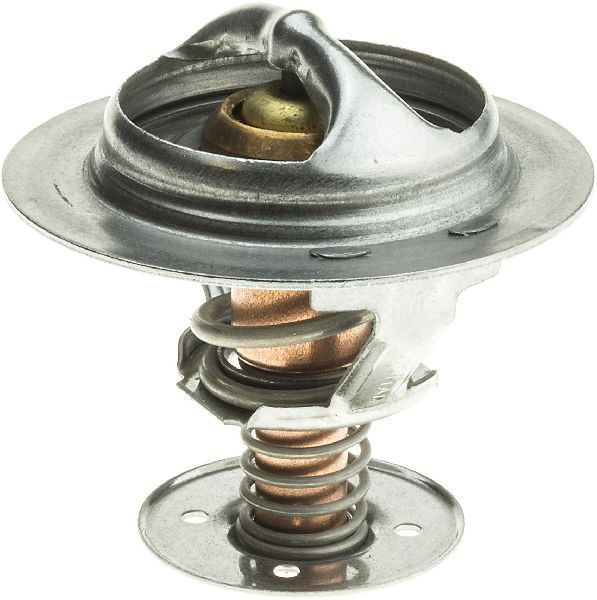
- Engine Coolant Thermostat
(OEM #BR3Z-8575-F)— This is the part that fails in the vast majority of P0128 cases. It gets stuck open, preventing the engine from reaching its efficient operating temperature. This part number supersedes BR3Z-8575-C and BR3Z-8575-E.
Trusted brands: Motorcraft
OEM price range: $40-$70
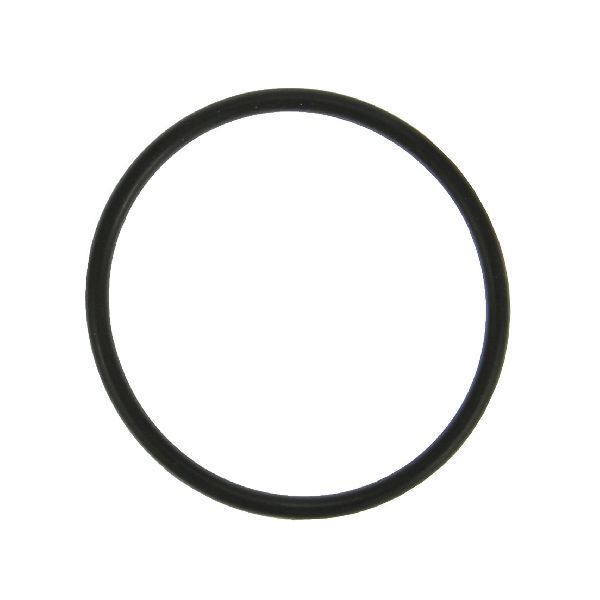
Aftermarket price range: $20-$50 - Thermostat Housing O-Ring
(OEM #7T4Z-8590-A)— This seal is critical for preventing leaks when replacing the thermostat. It should always be replaced during the job.
Trusted brands: Motorcraft
OEM price range: $5-$10
Aftermarket price range: $2-$5 - Ford VC-13-G Yellow Concentrated Antifreeze/Coolant
(OEM #VC-13-G)— You will lose some coolant when replacing the thermostat, so you will need the correct type to top off the system. The Mustang requires a specific P-OAT (Phosphated Organic Acid Technology) coolant.
Trusted brands: Motorcraft
OEM price range: $25-$35 per gallon
Related Codes That Often Appear With This One
- P0125 — P0125 (Insufficient Coolant Temperature for Closed Loop Fuel Control) is a closely related code that can be set for similar reasons, as the engine is not getting hot enough to enter the more efficient closed-loop fuel control mode.
- P0420 / P0430 — According to TSB 25-2348, P0128 may appear alongside catalyst efficiency codes P0420 and P0430 due to PCM software issues.
Mechanic-Grade Diagnostic Values
- Engine Coolant Temperature (ECT) Sensor Resistance — expected: Approximately 2000-3000 Ω at 20°C (68°F) and 200-300 Ω at 90°C (194°F).. Failure: Readings significantly outside of the expected resistance range for a given temperature indicate a faulty sensor.
- ECT Sensor Voltage (Signal Wire to Ground) — expected: Approximately 2.0V - 3.0V on a cold engine, dropping to around 0.5V when the engine is at full operating temperature.. Failure: A voltage that is stuck, does not change with temperature, or is illogical (e.g., 5V or 0V) points to a sensor or wiring circuit fault.
- Mode $06 Thermostat Monitor Test — expected: The PCM runs a timer and expects the coolant temperature to rise to a target value (e.g., 175°F) within a calculated time. A successful test will show a test value within the MIN/MAX limits set by the manufacturer.. Failure: A test value that exceeds the maximum limit indicates the engine warmed up too slowly, flagging a P0128. This is often identified under Test ID (TID) $84 on Ford vehicles.
Hidden / Shadow Codes Worth Checking
- Mode $06, TID:$84: Thermostat Monitor. This test measures the time it takes for the engine coolant to reach a minimum calibrated temperature. A failure of this monitor is what directly triggers the P0128 DTC. (see via A professional scan tool or an advanced consumer tool (like FORScan) that can access OBD-II Mode $06 data. The results will show a test value and the maximum allowed value; if the test value is higher, the monitor failed.)
Scan Tool Commands That Help
- Ford IDS / FORScan: Datalogger / Live Data Monitoring — This is the primary tool for diagnosing P0128. A technician will graph the Engine Coolant Temperature (ECT), Cylinder Head Temperature (CHT), and Intake Air Temperature (IAT) PIDs from a cold start to observe the warm-up curve and confirm if it's too slow or fails to reach the target temperature (approx. 190-200°F).
- Ford IDS / FORScan: Active Grille Shutter (AGS) Bidirectional Control — If a stuck-open thermostat is ruled out, a technician can use this command to cycle the active grille shutters. This verifies if the shutters are physically stuck open, which could cause overcooling at speed and contribute to a P0128 code.
- Ford IDS: PCM Reprogramming — In rare cases, particularly on other Ford models, a P0128 can be triggered by overly sensitive PCM logic. Ford has issued Technical Service Bulletins (TSBs) for other vehicles to update the PCM software to correct this. If all mechanical causes are ruled out, checking for an available PCM update for the Mustang is a valid diagnostic step. TSB 25-2486 notes that an incorrectly illuminated MIL with P0128 may be due to the software in the PCM.
Wiring & Ground Locations
- ECT Sensor Connector — On the 5.0L Coyote, the primary temperature reading for the PCM often comes from the Cylinder Head Temperature (CHT) sensor, which serves the same function. It is located on one of the cylinder heads, threaded into the metal.. The CHT sensor has two wires: a signal wire and a signal return (ground) wire that goes back to the PCM. Damage to this connector or wiring can cause an incorrect temperature reading, potentially mimicking a P0128 fault, though it's more likely to set a specific sensor circuit code.
- CHT/ECT Connector Pinout — At the sensor connector.. For testing, a technician would probe the two pins. One is the Signal Return (ground reference from the PCM) and the other is the CHT Signal wire. Checking for resistance across these two pins on the sensor side, or checking for reference voltage and continuity on the harness side, is a key step in ruling out a bad sensor versus a wiring problem.
Real Owner Repair Stories
- Ford Truck Enthusiasts Forum user 'Vinnie' (2014 Ford F-150 5.0L (Platform mate with same engine/thermostat design)) — Persistent P0128 code, engine temperature maxing out at 158°F even in cold weather with 80% of the radiator blocked.
❌ Tried (didn't work) Replaced thermostat twice with OEM parts., Replaced mass air flow sensor., Replaced cylinder head temperature sensor., Blocked radiator with cardboard.
✅ What actually fixed it The issue was unresolved in the thread, but the strong community consensus was that despite using OEM parts, the owner had received a defective-out-of-the-box thermostat, or had installed it backwards. The key takeaway is that even a new OEM part can be faulty, and the symptoms pointed overwhelmingly to a thermostat stuck open. - Reddit user on r/FordTrucks (2014 F-150 5.0L) — Coolant spraying from the bottom of the thermostat housing after a water pump and thermostat replacement.
❌ Tried (didn't work) Initial assembly with new gaskets.
✅ What actually fixed it The gasket between the two halves of the plastic thermostat housing was the culprit. The user confirmed that the housing bolts must be torqued to spec (approx. 96 in-lbs) to properly compress the gasket and create a seal. This highlights the importance of correct reassembly procedure to prevent leaks that could lead to a P0128. - NHTSA ODI #11640247 — An owner reported receiving a $3500 estimate for several repairs including coils, plugs, and a coolant flush after receiving code P0128 following a converter replacement.
OEM Part Supersession History
BR3Z-8575-C, BR3Z-8575-E→BR3Z-8575-F, then BR3Z-8575-G— Part revisions by Ford are common to improve reliability, material composition, or manufacturing process. While the exact reason isn't publicly stated, it's often to address premature failure rates of the original design.
Heads up: All listed part numbers are for the same 190°F thermostat and are interchangeable. Using the latest revision (BR3Z-8575-G) is always recommended to get the most updated design.7L3Z-8575-E→Motorcraft RT-1254— This is a common cross-reference where a Ford part number is associated with a Motorcraft service part number. They are the same component.
Model Year Variations Within This Range
- 2024+: The 2024+ S650 generation Mustang continues to use a 5.0L V8 and a similar cooling system design. Parts catalogs confirm that the same 190°F thermostat is specified for the S650, indicating the diagnosis and repair for P0128 remain consistent with the late S550 generation.
Diagnostic Flowchart
Other Known Issues on This Vehicle
Issues unrelated to this code that are worth knowing about as an owner of this generation:
- 10R80 Automatic Transmission Issues 🟠 Medium — Commonly reported issues include harsh/erratic shifting, delayed engagement, and torque converter shudder. Problems can arise from valve body faults, CDF drum failures, or software calibration. (Ref: Ford has issued software updates and revised parts like the CDF drum to address some of these concerns.)
- A/C Evaporator Leaks / Freezing 🔴 High — A well-documented issue where the A/C evaporator core leaks refrigerant or freezes up, causing a loss of airflow that returns after the vehicle sits. This is a very labor-intensive repair requiring full dashboard removal. (Ref: TSB 22-2089 addresses the evaporator freezing issue for F-150s and Expeditions, and TSB 18-2166 addresses evaporator leaks on 2015-2017 Mustangs.)
- Excessive Oil Consumption 🟠 Medium — Some Gen 3 Coyote engines (2018-2020) may consume more oil than expected, attributed to high intake manifold vacuum during deceleration. (Ref: TSB 19-2365 was released for the F-150, involving a PCM reprogram and a new dipstick to address the concern.)
- Engine "BBQ Tick" or Rattle 🟡 Low — Some Coyote engines exhibit a ticking or light knocking sound, often when cold, sometimes referred to as the "BBQ tick." While often considered a normal characteristic by Ford, it can be a source of owner concern. (Ref: TSB 18-2354 was issued for a specific deceleration rattle on 2018 F-150s, addressed with a PCM update.)
Used vs. New Parts: Buying Guide for This Vehicle
When a used part is the smart pick: Almost never for this repair. The primary failure part, the thermostat, is an inexpensive wear item. The risk of getting a used part that is already near the end of its life or is defective is extremely high and not worth the minimal cost savings.
Donor-vehicle mileage cap: roughly under 10000 miles for the part to have meaningful remaining life.
What to inspect on the donor part:
- If forced to get a used part (e.g., the entire thermostat housing assembly is unavailable new), source from the lowest mileage vehicle possible.
- Visually inspect the plastic housing for any signs of hairline cracks, chalky appearance, or warping, especially around the sealing surfaces and bolt holes.
OEM-only on this vehicle (don't cheap out):
- Engine Coolant Thermostat
Aftermarket brands forum-validated for this vehicle:
- While Motorcraft (OEM) is highly recommended, some users have reported success with thermostats from Stant, but experiences can be mixed. Given the small price difference, OEM is the safer choice.
Brands owners have reported issues with on this vehicle:
- Unbranded, 'white-box' parts from online marketplaces. These often have poor quality control and may be calibrated to the wrong temperature, guaranteeing a repeat failure of the P0128 code.
Real Owner Stories
Aggregated from forums and TSBs cited above. Mileages and costs reflect what owners reported in those sources.
2020 Ford Mustang GT350R 5.2L V8 — 4000 miles
Symptoms: The vehicle threw a DTC code P0128 at very low mileage.
What fixed it: The community consensus determined the cause was a stuck-open thermostat.
Source hint: Mustang6G.com - Thread '350R throwing DTC code P0128'
Ford Mustang GT350 5.2L V8 — 11000 miles
Symptoms: Check engine light with code P0128.
What fixed it: Replacement of the thermostat and the thermostat housing.
Source hint: Mustang6G.com - Thread 'Check engine light - code P0128'
Ford Mustang 5.0L Coyote V8
Symptoms: A repeat P0128 check engine light error code after initial repair attempts.
What fixed it: A full cooling system flush was required because microscopic metal shavings in the coolant were preventing the new thermostat from closing.
Source hint: Mustang6G.com - Thread 'P0128 check engine light error code'
2011-2024 Ford F-150 5.0L Coyote V8
Symptoms: P0128 code indicating the engine is not reaching operating temperature.
What fixed it: Replacement of the Motorcraft thermostat and the O-ring (P/N 7T4Z-8590-A).
Source hint: Ford F150 Forum - Thread '5.0L Thermostat Replacement Suggestions'
Related OBD-II Codes
Frequently Asked Questions
My 2020 Mustang GT is throwing P0128; should I use an aftermarket thermostat?
I replaced the thermostat on my 5.0L Mustang but the P0128 code came back immediately. What else could it be?
Does the P0128 code on my Mustang relate to the 'BBQ Tick' mentioned in TSB 18-2354?
What specific coolant should I use to top off my 2020-2024 Mustang if the level is low?
Are there any specific seals I need when replacing the thermostat on a Coyote 5.0L?
Could my Mustang's cooling fans be causing the P0128 code?
Helpful Videos
We Have This Part in Stock


The information in this article is provided for general reference and educational purposes only. Vehicle specifications, procedures, and part compatibility can vary by production date, trim level, and region. Always consult your vehicle's factory service manual and verify part numbers before purchasing or performing repairs. Safety-critical components such as airbags, seat belts, and braking systems should be installed by a qualified professional.
- Ford Mustang:
- 🧭 Diagnostic Flowchart
- 🎬 Helpful Videos
- 🛍️ Shop This Part
- What's Unique About the 2020-2024 Ford Mustang
- Symptoms You May Notice
- Most Likely Causes
- Rare But Worth Checking
- Diagnosis Steps
- Parts You'll Likely Need
- Related Codes That Often Appear With This One
- Mechanic-Grade Diagnostic Values
- Hidden / Shadow Codes Worth Checking
- Scan Tool Commands That Help
- Wiring & Ground Locations
- Real Owner Repair Stories
- OEM Part Supersession History
- Model Year Variations Within This Range
- Other Known Issues on This Vehicle
- Used vs. New Parts: Buying Guide for This Vehicle
- Real Owner Stories
- 2020 Ford Mustang GT350R 5.2L V8 — 4000 miles
- Ford Mustang GT350 5.2L V8 — 11000 miles
- Ford Mustang 5.0L Coyote V8
- 2011-2024 Ford F-150 5.0L Coyote V8
- Related OBD-II Codes
- Frequently Asked Questions
- 🎟️ Get 5% Off