

P0128 on 2001-2005 Honda Civic: Causes and Fixes for Low Coolant Temperature
For a 2001-2005 Honda Civic (D17 engine), code P0128 almost always means the engine thermostat has failed and is stuck open. This is a very common, well-documented, and relatively easy DIY repair. A new OEM-spec thermostat and gasket typically costs between $20 and $50.
- P0128 on a 2001-2005 Civic is overwhelmingly caused by a bad thermostat that is stuck open.
- Symptoms include a low reading on the temperature gauge, poor heater performance, and reduced fuel economy.
- Replacing the thermostat and gasket is a common, inexpensive, and relatively easy DIY job that usually solves the problem.
- Always use Honda Type 2 (blue) coolant when refilling the system.
- If you have a 2001-2002 model and a new thermostat doesn't fix the code, look into Honda TSB 03-002 about a potential software update.
What's Unique About the 2001-2005 Honda Civic
The 7th generation Honda Civic (2001-2005) with the D17 engine is highly susceptible to this code as the thermostats age. It's one of the most frequently discussed codes in owner forums for this vehicle. The failure is predictable: the thermostat fails in the open position, preventing the engine from reaching optimal temperature. For the 2001-2002 models specifically, Honda issued a Technical Service Bulletin (TSB 03-002) noting that the original engine computer software could be overly sensitive and trigger a false P0128 code. The official fix in this case is a software reflash at a dealership, which should be considered only after verifying the mechanical parts are working correctly.
Symptoms You May Notice
- Check Engine Light is on.
- Engine temperature gauge on the dashboard reads lower than normal (e.g., only a few bars) or takes a very long time to move up from 'C', especially during highway driving.
- Heater takes a long time to blow warm air, or the air is only lukewarm, particularly in colder weather.
- Noticeable decrease in fuel economy because the engine stays in its 'warm-up' open-loop fuel enrichment mode.
- Replacing the Engine Coolant Temperature (ECT) sensor when the thermostat is actually the problem. The thermostat is the most common failure point and should be the first part suspected.
- Replacing parts without confirming the failure. For example, a user on CivicForums.com replaced the thermostat for a P0128, but the code returned, suggesting the issue could be the ECT sensor or, on an '01-'02 model, the ECM software.
Most Likely Causes
- Thermostat stuck open 🔴 High Probability → Shop Integrated Thermostat Housing Assembly Thermostats are wear-and-tear items designed to fail in the open position to prevent overheating. After 15+ years and many thermal cycles, the internal spring mechanism weakens, causing it to remain partially or fully open. This is the most common cause for P0128 on this Civic.
How to confirm: From a cold start, feel the large upper radiator hose. It should remain cool for several minutes while the engine warms up. If it starts to get warm almost immediately (within 1-2 minutes), coolant is flowing through the radiator, confirming the thermostat is stuck open. A properly functioning thermostat will cause a sudden rush of hot coolant through the hose once the engine reaches operating temperature.
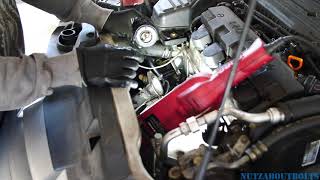
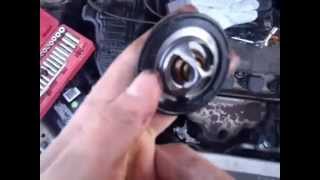
Typical fix: Replace the thermostat and its rubber gasket. This involves partially draining the coolant, removing the two 10mm bolts on the thermostat housing, swapping the part, and refilling/bleeding the coolant system. It is crucial to install the thermostat with the jiggle pin/valve at the top (12 o'clock position) to allow trapped air to escape. 🎬 Watch: How to properly replace and install the new thermostat.
Est. part cost: $15-$40 - Faulty Engine Coolant Temperature (ECT) Sensor 🟡 Medium Probability → Shop Engine Coolant Temperature Sensor While Honda sensors are generally reliable, they can fail with age, sending incorrect, lower-than-actual temperature readings to the engine computer. This can trick the ECM into thinking the engine isn't warming up.
How to confirm: Use an OBD-II scanner with live data to monitor the ECT reading from a cold start. The temperature should rise steadily. If the reading is irrational (e.g., stuck at -40°F), jumps erratically, or reads significantly different from the ambient air temperature after sitting overnight, the sensor is likely bad.
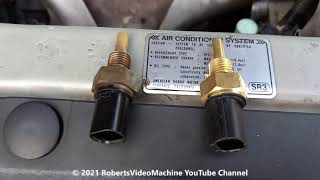
Typical fix: Replace the Engine Coolant Temperature sensor. It is threaded into the thermostat housing area and requires a 17mm deep socket to remove. 🎬 See this DIY walkthrough for replacing the ECT sensor. Be prepared for some coolant to spill when the old sensor is removed.
Est. part cost: $20-$50 - Low engine coolant level / Air in system ⚪ Low Probability Leaks can develop over time from hoses, the radiator, or the water pump. A significant air pocket in the system (often introduced during a previous repair) can sit around the ECT sensor, causing it to read incorrectly. However, low coolant more often leads to overheating.
How to confirm: Visually inspect the coolant level in the radiator (when the engine is cold) and in the overflow reservoir. If low, there is a leak in the system that must be found and repaired. If the level is fine, the system may need to be 'burped' or bled to remove trapped air.
Typical fix: Find and repair the source of the coolant leak. Refill and bleed the cooling system using a spill-proof funnel kit for best results. The bleed procedure involves running the engine with the radiator cap off until the cooling fans cycle twice, ensuring all air is expelled.
Est. part cost: $15-$25 for coolant
Rare But Worth Checking
- ECM/PCM Software Issue (2001-2002 models): Honda TSB 03-002 states that for 2001-2002 Civics, the original software parameters for triggering P0128 were too aggressive. The fix is a software update (reflash) at a Honda dealership. This should be the last resort after confirming the thermostat and ECT sensor are functioning correctly.
- Cooling fan running constantly: → Shop Engine Cooling Fan Blade If a faulty fan relay, switch, or shorted wiring causes the radiator fan to run continuously, even when the engine is cold, it can over-cool the engine and prevent it from reaching operating temperature, triggering a P0128. This is uncommon but possible.
- Incorrect Thermostat Installed: → Shop Integrated Thermostat Housing Assembly Using a thermostat with a lower-than-specified opening temperature can cause this code. The OEM thermostat is rated for 78°C (172°F). Some aftermarket parts may open sooner, preventing the engine from reaching the temperature expected by the ECM. Always use an OEM or OEM-spec thermostat.
Diagnosis Steps
- Check the coolant level in the radiator (when cold) and overflow tank. Ensure it is full. If it's low, top it off and check for leaks.
- Use an OBD-II scanner to confirm P0128 is the only code. Check the freeze frame data to see the engine temperature and vehicle speed when the code was set. 🎬 Watch: A step-by-step guide to diagnosing P0128 on this Civic.
- Thermostat Check: From a cold start, start the engine and feel the upper radiator hose. It should stay cool for at least 3-5 minutes. If it starts warming up almost immediately, the thermostat is stuck open and must be replaced.
- ECT Sensor Check: If the hose stays cold, use a scanner with live data to monitor the Engine Coolant Temperature. Watch the temperature rise from a cold start. It should steadily increase to around 180-195°F (82-90°C). If the temperature reading on the scanner is erratic, nonsensical (e.g., -40°F), or rises extremely slowly, suspect a faulty ECT sensor or wiring.
- Fan Check: Ensure the cooling fans are not running constantly from a cold start. They should only activate once the engine is fully warmed up.
- Repair and Bleed: Based on the findings, replace the faulty component (most likely the thermostat). It is critical to properly bleed all air from the cooling system afterward using a spill-proof funnel.
- TSB for 2001-2002 Models: If the thermostat and sensor have been replaced with OEM-spec parts and the system is properly bled, but the code persists on a 2001-2002 model, contact a Honda dealer about TSB 03-002 for an ECM software update.
Parts You'll Likely Need
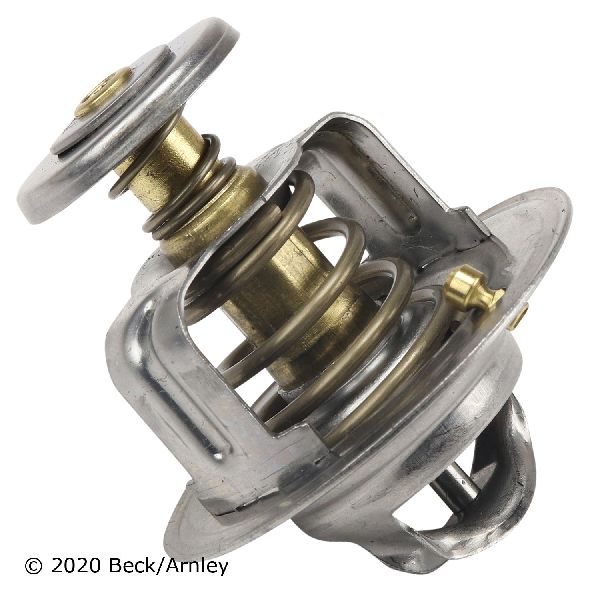
- Engine Coolant Thermostat
(OEM #19301-PAA-306 (supersedes 19301-P08-316))— This is the most common cause of P0128, as the original thermostat fails by sticking open. The part number 19301-PAA-306 is the current OEM replacement which includes the gasket.
Trusted brands: Honda Genuine (Nippon Thermostat), Tama, Gates
OEM price range: $25-$40
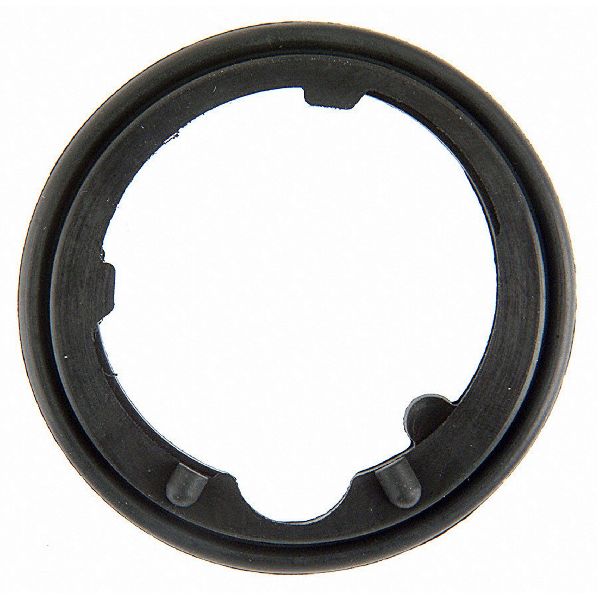
Aftermarket price range: $15-$30 - Thermostat Gasket
(OEM #Included with 19301-PAA-306 (or 19305-P08-020 if separate))— The gasket provides the seal for the thermostat housing and should always be replaced with the thermostat to prevent leaks. The current OEM thermostat kit includes it.
Trusted brands: Honda Genuine, Fel-Pro
OEM price range: $5-$10
Aftermarket price range: $2-$5 - Engine Coolant Temperature (ECT) Sensor
(OEM #37870-PLC-004)— This is the second most likely cause if the thermostat replacement does not fix the issue, or if live data shows erratic readings.
Trusted brands: Honda Genuine, Denso, NTK, Santech
OEM price range: $45-$70
Aftermarket price range: $20-$40 - Honda Type 2 Coolant (Blue)
(OEM #OL999-9011)— You will lose coolant when replacing the thermostat or sensor. It is highly recommended to use Honda's specific blue coolant to avoid corrosion or compatibility issues with cooling system components. At least one gallon will be needed.
Trusted brands: Honda Genuine
OEM price range: $20-$30
Aftermarket price range: N/A
Technical Service Bulletins (TSBs) & Recalls
- A03-002 - MIL Comes On With DTC P0128. Affects 2001-02 Civic models and suggests an ECM/PCM software update as the corrective action because the original parameters were too narrow.
- TSB Bulletin #A13-044 - Notes that the MIL may come on with DTC P0128 (Cooling System Malfunction) stored. According to the bulletin, the thermostat jiggle valve may intermittently stick open and cause the PCM to store this code.
Platform-Specific Known Issues
- TSB 03-002: For 2001-2002 Civics, the ECM may have overly sensitive parameters for setting P0128. A software update may be required if new parts don't fix the code. This should be investigated after confirming mechanical parts are good.
- Thermostat Housing Bolt Torque: The two 10mm bolts for the thermostat housing should be torqued to approximately 89 inch-pounds (about 7.4 ft-lbs). Over-tightening can damage the housing or bolts.
Mechanic-Grade Diagnostic Values
- ECT Sensor Resistance — expected: Approx. 2000-3000 Ω at 20°C (68°F), and 200-400 Ω at normal operating temperature (80-90°C or 176-194°F).. Failure: A reading of infinite resistance (open circuit), zero resistance (short circuit), or values significantly outside the expected range for a given temperature indicates a faulty sensor.
- ECT Sensor Connector Voltage (Key On, Engine Off) — expected: Approximately 5.0V reference voltage on the Red/Black or similar color wire from the ECM/PCM. The signal return wire voltage will be high when cold (e.g., 3.0-3.5V) and drop as the engine warms up (e.g., ~1.0V).. Failure: No voltage or significantly lower than 5.0V on the reference wire points to a wiring or ECM issue. A signal voltage that doesn't change with temperature indicates a bad sensor.
Wiring & Ground Locations
- G101 — Bolted to the thermostat housing/water outlet area on the engine block.. This is the primary ground point for the engine control module (ECM/PCM) and its sensors, including the ECT sensor. A corroded, loose, or broken G101 ground can cause erratic or incorrect readings from the ECT sensor, potentially leading to a false P0128 code or other electrical issues.
- ECT Sensor Connector — Plugged into the ECT sensor, which is threaded into the thermostat housing.. The two pins on the connector are for the 5V reference from the ECM and the signal return. For D17 engines, the signal wire is typically Green/White and goes to pin C7 at the ECM. The ground reference wire is typically Green/Black and goes to pin A25 at the ECM. Verifying voltage and continuity at these pins is critical for diagnosing a wiring fault versus a sensor fault.
Real Owner Repair Stories
- CivicForums.com user (2002 Honda Civic) — Check Engine Light with code P0128.
❌ Tried (didn't work) Replacing the thermostat with an aftermarket part.
✅ What actually fixed it The code persisted after replacing the thermostat. The owner was advised that for the 2001-2002 model year, the issue could be overly sensitive software in the engine computer. The final resolution pointed towards investigating the TSB 03-002, which requires a software reflash at a dealership, after confirming the new thermostat and ECT sensor were functioning correctly.
OEM Part Supersession History
19301-P08-316→19301-PAA-306— Updated part design/supplier. The new part number is the current OEM replacement.
Heads up: The new part 19301-PAA-306 includes the thermostat and the required gasket. It has superseded a long list of previous part numbers including 19301-P08-316, 19301-P08-305, and others. Using a non-OEM thermostat is a common cause for the code to return, as their opening temperature may not match the 78°C OEM spec precisely.
Model Year Variations Within This Range
- 2001-2002: The original ECM/PCM software had overly sensitive parameters for triggering the P0128 code. Honda issued Technical Service Bulletin (TSB) 03-002 to address this. If mechanical parts (thermostat, sensor) are confirmed to be good, the final fix for these specific years may be a software reflash at a dealership.
Diagnostic Flowchart
Real Owner Stories
Aggregated from forums and TSBs cited above. Mileages and costs reflect what owners reported in those sources.
2003 Honda Civic LX
Symptoms: Check Engine Light on, code for Coolant Thermostat. Car does not overheat and heater works.
What fixed it: A commenter suggested the code likely means the engine isn't reaching operating temperature fast enough and recommended to 'replace the thermostat and gasket and bleed the system.'
Source hint: r/MechanicAdvice - 2003 Honda Civic LX check engine light is on but nothing is wrong
2002 Honda Civic
Symptoms: CEL P0128. Replaced thermostat and ECT sensor, but experienced a longer crank time after replacing the ECT sensor.
What fixed it: Replaced thermostat and ECT sensor (though ECT replacement caused longer crank times).
Source hint: Honda-Tech.com - https://honda-tech.com/forums/honda-civic-2001-2005-78/cel-p0128-replaced-thermostat-replaced-ect-sensor-car-cranks-longer-start-now-3270005/
2003 Honda Civic
Symptoms: P0128 code returned even after replacing the thermostat with an OEM part.
What fixed it: Further diagnosis of the ECT sensor was needed after OEM thermostat replacement didn't permanently clear the code.
Source hint: CivicForums.com - https://www.civicforums.com/forums/181-7th-generation-civic-2001-2005/370200-p0128-code.html
2001-2002 Honda Civic
Symptoms: P0128 code persists despite a thermostat that appears to be working.
What fixed it: ECM/PCM software update per TSB 03-002 to correct overly narrow parameters.
Source hint: CivicForums.com - https://www.civicforums.com/forums/181-7th-generation-civic-2001-2005/298321-p0128-coolant-thermostat-coolant-temperature-below-thermostat-regulating-temperature.html
Related OBD-II Codes
Frequently Asked Questions
Does TSB 03-002 apply to my 2001-2005 Honda Civic for code P0128?
How should the thermostat be positioned when installing it on this Civic engine?
What is the torque spec for the thermostat housing bolts on the 2001-2005 Civic?
Why is my Civic setting a P0128 code after I just replaced the coolant?
What size socket do I need to remove the Engine Coolant Temperature (ECT) sensor?
I have a 2001-2005 Acura 1.7 EL. Does it have the same P0128 issues as the Civic?
Helpful Videos
We Have This Part in Stock


The information in this article is provided for general reference and educational purposes only. Vehicle specifications, procedures, and part compatibility can vary by production date, trim level, and region. Always consult your vehicle's factory service manual and verify part numbers before purchasing or performing repairs. Safety-critical components such as airbags, seat belts, and braking systems should be installed by a qualified professional.
- Honda Civic:
- 🧭 Diagnostic Flowchart
- 🎬 Helpful Videos
- 🛍️ Shop This Part
- What's Unique About the 2001-2005 Honda Civic
- Symptoms You May Notice
- Most Likely Causes
- Rare But Worth Checking
- Diagnosis Steps
- Parts You'll Likely Need
- Technical Service Bulletins (TSBs) & Recalls
- Platform-Specific Known Issues
- Mechanic-Grade Diagnostic Values
- Wiring & Ground Locations
- Real Owner Repair Stories
- OEM Part Supersession History
- Model Year Variations Within This Range
- Real Owner Stories
- 2003 Honda Civic LX
- 2002 Honda Civic
- 2003 Honda Civic
- 2001-2002 Honda Civic
- Related OBD-II Codes
- Frequently Asked Questions
- 🎟️ Get 5% Off