

P0128 on 2018-2022 Mazda CX-5 2.5L: Coolant Temp & Thermostat Fixes
This code almost always means the thermostat inside the Coolant Control Valve (CCV) is stuck open. This is a known issue covered by a Mazda warranty extension (SSPD8) for 15 years/150,000 miles. Contact a dealer with your VIN to see if your vehicle is covered for a free repair before buying parts. The official fix involves replacing a thermostat kit, not the entire expensive CCV assembly.
- P0128 on your CX-5 is almost certainly a stuck-open thermostat.
- **DO NOT** buy any parts until you have called a Mazda dealer with your VIN to check for warranty coverage under Special Service Program SSPD8.
- The failure is so common that Mazda extended the warranty to 15 years or 150,000 miles for this specific issue.
- Symptoms include a slow-to-warm engine, poor heater output, and a temperature gauge that drops at highway speeds.
- If not covered by warranty, the repair involves replacing a thermostat kit inside the Coolant Control Valve, which is a moderately difficult DIY job.
What's Unique About the 2018-2022 Mazda CX-5
Unlike older cars with a simple, cheap thermostat, your 2018-2022 CX-5 uses a more complex and expensive integrated unit called a Coolant Control Valve (CCV). Inside this electronically controlled valve is a small, mechanical fail-safe thermostat that is prone to failing and sticking open. When it sticks open, it creates a bypass loop that prevents the CCV from properly regulating temperature, causing the engine to run cool. This problem is so common that Mazda issued a Special Service Program (SSPD8) to extend the warranty for this specific failure, which often triggers the more specific code P0126.
Symptoms You May Notice
- Check Engine Light is on
- Engine takes a very long time to warm up
- Temperature gauge fluctuates, often dropping at highway speeds or when coasting downhill.
- Heater performance is poor, blowing lukewarm air, especially at idle.
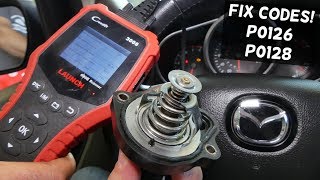
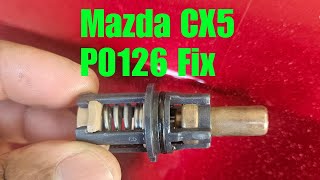
- The blue low coolant temperature light may stay on longer than usual or reappear while driving. 🎬 Watch: A quick guide to fixing the P0126 code
- Replacing the Engine Coolant Temperature (ECT) sensor when the thermostat is the actual cause.
- Paying for a thermostat replacement out-of-pocket without first checking for coverage under Mazda's SSPD8 warranty extension.
- Replacing the entire Coolant Control Valve (CCV) assembly for a P0126/P0128 code, when the official updated repair is to install the less expensive thermostat kit per TSB 01-005/24.
Most Likely Causes
- Thermostat Stuck Open (inside Coolant Control Valve) 🔴 High Probability → Shop Integrated Thermostat Housing Assembly This is a widespread, documented issue. The fail-safe thermostat within the Coolant Control Valve assembly can fail, allowing coolant to circulate prematurely and preventing the engine from warming up correctly. Mazda has acknowledged this with a warranty extension program (SSPD8).
How to confirm: Monitor the coolant temperature gauge or live data on a scan tool. If the temperature rises at idle but drops significantly (e.g., below 180°F) once you start driving at speed, the thermostat is likely stuck open. A Mazda dealer can confirm the failure and check for warranty coverage using your VIN. The presence of code P0126 is a very strong confirmation.
Typical fix: Replace the thermostat kit. Under Mazda's TSB 01-005/24, dealers now replace a smaller thermostat kit within the CCV rather than the entire expensive assembly. This repair is covered if your vehicle falls under the SSPD8 warranty extension (15 years/150,000 miles).
Est. part cost: $0 (under warranty) | $400-$700 (out of pocket at a shop) - Low Engine Coolant ⚪ Low Probability
How to confirm: Check the coolant level in the overflow reservoir when the engine is cold. If it's below the 'MIN' or 'LOW' line, the system is low. Also, check for visible leaks around hoses, the radiator, and the water pump. An air pocket in the system can also cause erratic temperature readings.
Typical fix: Top off the system with Mazda-specified FL22 coolant. If a leak is present, the leaking component must be repaired or replaced. If an air pocket is suspected, the system needs to be properly bled.
Est. part cost: $25-$35 for a gallon of coolant
Rare But Worth Checking
- Faulty Engine Coolant Temperature (ECT) Sensor: → Shop Engine Coolant Temperature Sensor While possible, this is much less common than thermostat failure for this code on this vehicle. The ECT sensor tells the computer the coolant temperature. If it sends an incorrectly low reading, it can trigger P0128. However, on this platform, the thermostat is the overwhelmingly likely culprit. A failing sensor would typically not cause the temperature gauge to drop with highway driving.
- PCM Control Logic Issues: In some instances, the Check Engine Light may illuminate with DTC P0128:00 due to improper control logic of the Powertrain Control Module (PCM). Manufacturer TSB Bulletin #01-021-13-2817A notes that updating the PCM control logic can correct this specific concern.
Diagnosis Steps
- Check for Warranty Coverage First: Before any diagnosis, call a Mazda dealership with your Vehicle Identification Number (VIN). Ask them to check if your vehicle is covered under the Special Service Program SSPD8 for the thermostat failure. This can save you significant time and money.
- Verify Symptoms: Confirm the presence of symptoms like a slow-to-warm-up engine, fluctuating temperature gauge (especially dropping at highway speed), and poor heat.
- Check Coolant Level: With the engine cold, inspect the coolant overflow tank. Ensure the level is between the MIN and MAX lines. If low, top it off with Mazda FL22 coolant and check for leaks.
- Scan for Codes: Use an OBD-II scanner to confirm P0128 and/or P0126 are present. The presence of P0126 is the specific condition covered by the warranty extension.
- Monitor Live Data: Use the scanner to watch the live coolant temperature data. Start the cold engine. The temperature should climb steadily to around 190-210°F and stabilize. If you start driving and the temperature drops significantly (e.g., to 150-160°F), it's a classic sign of a thermostat stuck open.
- Confirm the Faulty Part: Based on the symptoms, codes, and live data, the fail-safe thermostat within the CCV is the confirmed point of failure. Proceed with replacement, ideally under warranty at a Mazda dealer.
Parts You'll Likely Need
- Engine Coolant Thermostat Kit
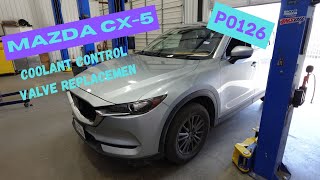
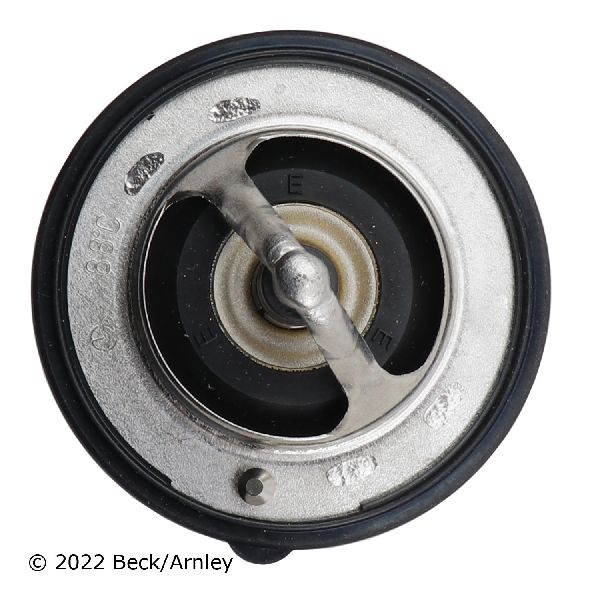
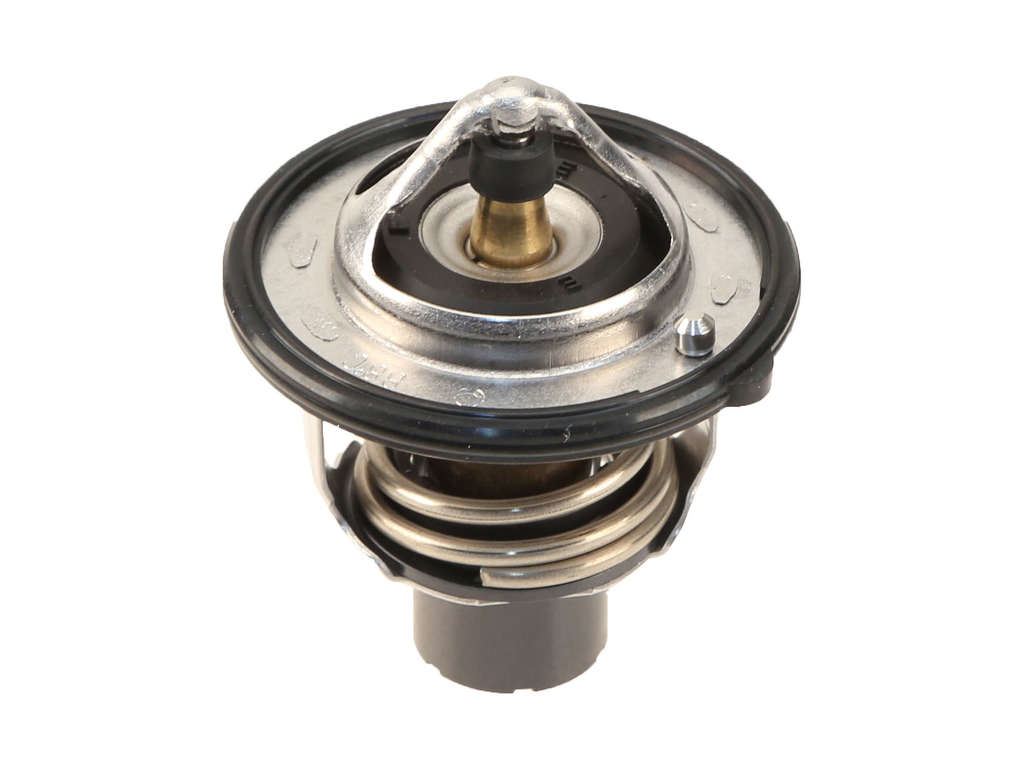
(OEM #PYY2-15-SA1 (Thermostat Set/Kit))— This is the component that fails. For the 2018-2022 2.5L engine, it's part of the Coolant Control Valve. Mazda now services it with a kit instead of the full assembly for this specific issue, as detailed in TSB 01-005/24. The full CCV assembly is PYFA-15-16ZB. 🎬 See this walkthrough of the coolant control valve replacement
Trusted brands: Mazda (OEM)
OEM price range: $70-$100 for the kit, $250-$350 for the full CCV assembly.
Aftermarket price range: $80-$150 for an aftermarket assembly. - Mazda Long Life Coolant FL22
(OEM #0000-77-508F-20)— The cooling system must be partially drained to replace the thermostat, and it must be refilled with the correct type of coolant. Using a different coolant type can cause system damage.
Trusted brands: Mazda (OEM)
OEM price range: $25-$35 per gallon - Water Outlet Gasket
(OEM #PYFB-15-169)— This gasket for the lower radiator hose component is listed as a required replacement part in TSB 01-005/24 when performing the thermostat kit replacement.
Trusted brands: Mazda (OEM)
OEM price range: $5-$15
Related Codes That Often Appear With This One
- P0126 — P0126 ('Insufficient Coolant Temperature for Stable Operation') is the more specific Mazda code for a stuck-open thermostat. P0128 is the generic equivalent. Seeing either code on this vehicle points to the same thermostat problem, and P0126 is the primary trigger for the SSPD8 warranty extension.
- P1285 / P1299 — As noted in TSB Bulletin #01-005-20-3704, some vehicles may exhibit these codes alongside P0128, where engine temperature may be cold and report as hot, or vice versa, potentially affecting cooling fan operation.
Technical Service Bulletins (TSBs) & Recalls
- TSB 01-005/24: Details the repair procedure for replacing the thermostat kit (P/N PYY2-15-SA1) within the Coolant Control Valve to fix DTC P0126:00. This TSB supersedes TSB 01-005/23.
- SSPD8: This is the Special Service Program (Warranty Extension) that covers the cost of the repair detailed in TSB 01-005/24 for 15 years or 150,000 miles. It applies to a wide range of Mazda models with the 2.5L non-turbo engine.
- TSB Bulletin #01-021-13-2817A: Addresses instances where vehicles experience a MIL on with DTC P0128:00 caused by improper control logic of the PCM, requiring a software update to correct the problem.
- TSB Bulletin #01-005-20-3704: Describes a condition where P0128 may appear with P1285 or P1299, causing incorrect cylinder head temperature reporting and erratic cooling fan operation.
Platform-Specific Known Issues
- Mazda Warranty Extension (SSPD8): Mazda has extended the warranty to 15 years or 150,000 miles for the specific issue of the thermostat sticking open within the Coolant Control Valve on 2018-2025 CX-5 models (non-turbo). This program specifically covers repairs for DTC P0126, which is directly related to P0128. Owners who have already paid for this repair may be eligible for reimbursement.
- Evolving Repair Procedure: Initially, dealers replaced the entire Coolant Control Valve. The procedure was then updated via TSB 01-005/24 to only replace a thermostat kit (P/N PYY2-15-SA1) inside the valve. More recent 2025/2026 updates to the TSB suggest a new fix that involves removing the fail-safe thermostat entirely and installing a 'dummy plug' to block the bypass passage, paired with a PCM reflash. Owners should confirm the latest procedure with their dealer.
Mechanic-Grade Diagnostic Values
- Engine Coolant Temperature (ECT) Sensor Resistance — expected: Approximately 2,200-3,000 Ohms at 20°C (68°F) and 250-350 Ohms at 80°C (176°F).. Failure: Readings that are significantly outside this range, or an open/short circuit, indicate a faulty sensor.
- Engine Coolant Temperature (ECT) Sensor Voltage — expected: Approximately 3.0-3.5V on a cold start (~20°C) and dropping to around 1.0-1.3V at normal operating temperature (~80°C).. Failure: Voltage that is stuck high or low, or does not change smoothly as the engine warms up.
- PCM Fault-Triggering Threshold (from Freeze Frame Data) — expected: Normal operating temperature is ~190-210°F. The code P0126/P0128 often triggers when the ECT is between 104°F and 176°F when it should be higher.. Failure: If the freeze frame data for the code shows an ECT value in the 150-160°F range during highway driving, it strongly suggests a thermostat stuck open.
Scan Tool Commands That Help
- Mazda IDS / MDARS: Active Test / Bidirectional Control of the Coolant Control Valve (CCV) — This factory-level tool function allows a technician to command the electronic portion of the CCV to open or close. This can help determine if the electronic motor in the CCV is functional, separate from the mechanical fail-safe thermostat which is the common failure point. If the valve responds to commands but the engine still runs cool, it further isolates the problem to the internal, mechanical thermostat.
- Mazda IDS / MDARS: PCM Reprogramming — A PCM reflash is required when performing the latest 'dummy plug' repair procedure outlined in TSBs from late 2025. The updated software changes the control logic for the CCV now that the mechanical fail-safe thermostat has been physically removed.
Wiring & Ground Locations
- ECT Sensor Connector — The Engine Coolant Temperature (ECT) sensor is screwed into the Coolant Control Valve (CCV) assembly itself. The connector plugs directly onto the sensor.. While rarely the cause, checking for a secure connection and undamaged wiring at the ECT sensor is a basic diagnostic step. A poor connection could cause incorrect temperature readings, though it's less likely to mimic the specific symptom of temperature dropping at highway speeds.
- Engine/Powertrain Ground Points — General engine ground points are located on the engine block, cylinder head, and chassis. Specific ground point diagrams can be found in the official Mazda service manual or through paid wiring diagram services.. A poor ground connection for the engine sensor array could theoretically cause erratic readings from the ECT sensor. However, this would typically be accompanied by other sensor-related fault codes and is not a common cause for an isolated P0128.
Real Owner Repair Stories
- YouTube video by 'How to Fix the Problem' (2020 Mazda CX-5) — Check Engine Light with code P0126, stating the thermostat was stuck open.
❌ Tried (didn't work) The user went straight to the correct diagnosis.
✅ What actually fixed it The owner removed the Coolant Control Valve assembly and found that a rubber seal on the internal fail-safe thermostat was not seating properly, allowing coolant to bypass. He replaced the 'thermostat set' which included the small thermostat and a new water outlet gasket, which resolved the code. - Mazdas247 Forum User (2020 Mazda CX-5 with under 30k miles) — Check Engine Light with P0126, temperature gauge reading low and fluctuating. Heater performance was still normal.
❌ Tried (didn't work) User cleared the code, but the symptoms of low/fluctuating temperature persisted. The dealer initially refused warranty repair because the Check Engine Light was not actively on at the time of the visit, even though the fault was likely stored in history.
✅ What actually fixed it The issue was confirmed to be the Coolant Control Valve. The user's experience highlights a critical process issue: for warranty claims, dealers may require the fault to be active (Check Engine Light on) when the vehicle is brought in, so owners should avoid clearing the code before a dealer visit.
OEM Part Supersession History
PYFA-15-16Z, PYFA-15-16ZA→PYFA-15-16ZB— Revision of the complete Coolant Control Valve assembly. The earlier parts were prone to the internal thermostat failure.N/A (Full CCV Assembly Replacement PYFA-15-16ZB)→PYY2-15-SA1 (Thermostat Kit)— Mazda issued TSB 01-005/24 to service only the failed internal thermostat instead of replacing the entire expensive CCV assembly. This kit became the primary repair part for P0126/P0128.
Heads up: This is not a direct supersession but a change in repair strategy. The kit is used to repair the assembly.PYY2-15-SA1 (Thermostat Kit)→Unknown P/N ('Dummy Plug for CCV set')— A TSB revision in late 2025 introduced a new procedure to remove the fail-safe thermostat entirely and block its passage with a plug, relying solely on the electronic valve and updated PCM logic.
Heads up: This procedure requires a mandatory PCM reflash to work correctly. Simply installing the plug without the software update will likely cause issues.
Diagnostic Flowchart
Other Known Issues on This Vehicle
Issues unrelated to this code that are worth knowing about as an owner of this generation:
- Carbon Buildup on Intake Valves 🟠 Medium — Common on direct-injection engines, may become noticeable after 60,000-80,000 miles, causing slight performance or efficiency loss. The PY-VPS uses supplemental port injection to help mitigate this, but it can still occur.
- Thin Exterior Paint 🟡 Low — A very common complaint among owners, especially for the 'Soul Red Crystal' color. The paint is known to be susceptible to chips and scratches from normal driving.
- Cracked Cylinder Head (Cylinder Deactivation Models) 🔴 High — A known but relatively uncommon issue primarily affecting 2.5L non-turbo engines WITH cylinder deactivation. Can cause coolant loss and overheating. Mazda has released updated cylinder head part numbers to address this. (Ref: Internal service information exists, but no widespread recall.)
- Premature Brake Wear 🟡 Low — Some owners report faster-than-expected wear on brake pads and rotors.
- Infotainment 'Ghost Touch' 🟡 Low — Some owners have reported the infotainment screen registering touches without user input, or becoming unresponsive.
Used vs. New Parts: Buying Guide for This Vehicle
When a used part is the smart pick: For this specific repair, a used part is almost never a smart choice. The primary failure is a well-documented design flaw in the internal fail-safe thermostat. A used Coolant Control Valve (CCV) from a salvage yard is highly likely to contain the same defective thermostat, which may have already failed or will fail soon after installation.
What to inspect on the donor part:
- Not applicable, as purchasing a used CCV assembly is strongly discouraged.
OEM-only on this vehicle (don't cheap out):
- Engine Coolant Thermostat Kit (PYY2-15-SA1): This is a specific kit created by Mazda for the TSB repair. Aftermarket equivalents are not available or validated.
- Mazda Long Life Coolant FL22: While some aftermarket coolants claim compatibility, using the OEM FL22 coolant is the safest choice to prevent cooling system issues and corrosion.
Aftermarket brands forum-validated for this vehicle:
- For the complete Coolant Control Valve assembly (PYFA-15-16ZB), no specific aftermarket brands have been consistently validated by owner forums as being reliable. The OEM Mazda part is the most trusted option.
Brands owners have reported issues with on this vehicle:
- No specific brands are consistently cited as poor quality, but extreme low-cost, no-name parts from online marketplaces should be avoided due to the complexity of the component and the critical role it plays in engine temperature management.
Real Owner Stories
Aggregated from forums and TSBs cited above. Mileages and costs reflect what owners reported in those sources.
2018-2025 Mazda CX-5 2.5L Non-Turbo
Symptoms: Temperature gauges fluctuating and interactions with dealers regarding the SSPD8 program.
What fixed it: Repair detailed in TSB 01-005/24 (thermostat kit replacement) covered under the SSPD8 warranty extension.
Source hint: Mazdas247.com thread titled 'Warranty extension for fail-safe thermostat'
2018-2025 Mazda CX-5 2.5L Non-Turbo
Symptoms: Code P0126/P0128 and the associated symptoms of the engine not warming up.
What fixed it: A 'dummy plug' fix to block the bypass passage paired with a PCM reflash.
Source hint: Reddit (r/CX5) thread titled 'SSPD8 Warranty Extension/P0126 - Coolant Control Valve (CCV) - New Permanent Fix'
Related OBD-II Codes
Frequently Asked Questions
Is there a warranty extension for the thermostat issue on my 2018-2022 Mazda CX-5?
Does TSB 01-005/24 apply to my P0128/P0126 code?
Can I get reimbursed if I already paid for a Coolant Control Valve replacement?
Why does my temperature gauge drop when I drive on the highway but stay normal at idle?
Is the dealer going to replace the entire Coolant Control Valve assembly?
Does this thermostat issue affect the CX-5 Turbo models?
Helpful Videos
We Have This Part in Stock


The information in this article is provided for general reference and educational purposes only. Vehicle specifications, procedures, and part compatibility can vary by production date, trim level, and region. Always consult your vehicle's factory service manual and verify part numbers before purchasing or performing repairs. Safety-critical components such as airbags, seat belts, and braking systems should be installed by a qualified professional.
- Mazda CX-5:
- 🧭 Diagnostic Flowchart
- 🎬 Helpful Videos
- 🛍️ Shop This Part
- What's Unique About the 2018-2022 Mazda CX-5
- Symptoms You May Notice
- Most Likely Causes
- Rare But Worth Checking
- Diagnosis Steps
- Parts You'll Likely Need
- Related Codes That Often Appear With This One
- Technical Service Bulletins (TSBs) & Recalls
- Platform-Specific Known Issues
- Mechanic-Grade Diagnostic Values
- Scan Tool Commands That Help
- Wiring & Ground Locations
- Real Owner Repair Stories
- OEM Part Supersession History
- Other Known Issues on This Vehicle
- Used vs. New Parts: Buying Guide for This Vehicle
- Real Owner Stories
- 2018-2025 Mazda CX-5 2.5L Non-Turbo
- 2018-2025 Mazda CX-5 2.5L Non-Turbo
- Related OBD-II Codes
- Frequently Asked Questions
- 🎟️ Get 5% Off