

P0128 on 2007-2015 Mazda CX-9 3.7L: Coolant Temperature Below Thermostat Regulating Temperature Fixes
On a 2007-2015 Mazda CX-9, code P0128 is almost always caused by a thermostat that is stuck open. The fix requires replacing the entire thermostat and housing assembly, which is a labor-intensive job as it's located under the intake manifold. Expect to pay $250-$400 for parts and 3-5 hours of labor.
- P0128 on the CX-9 almost always points to a stuck-open thermostat.
- The thermostat and ECT sensor are located under the intake manifolds, making replacement a labor-intensive job (3-5 hours).
- It is highly recommended to replace the thermostat housing assembly, ECT sensor, and intake gaskets all at once to avoid duplicate labor costs in the future.
- While you can drive with this code, it will cause poor fuel economy and can lead to increased long-term engine wear.
What's Unique About the 2007-2015 Mazda CX-9
The key challenge with the first-generation Mazda CX-9 is the location of the cooling system's key components. Both the thermostat housing and the Engine Coolant Temperature (ECT) sensor are buried under the upper and lower intake manifolds. This turns what is a simple, quick repair on many other vehicles into a significantly more complex and labor-intensive job, dramatically increasing the cost of the fix. This engine architecture is shared with several Ford and Lincoln models, which experience the same repair difficulty.
Symptoms You May Notice
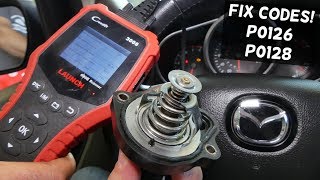
- Check Engine Light is on 🎬 Watch: A quick breakdown of P0128 causes and fixes.
- Engine temperature gauge reads lower than normal, or drops while driving at highway speeds
- Heater may not blow hot air or takes a very long time to warm up
- Slight decrease in fuel economy
- Cooling fans may run constantly as a fail-safe measure
- Replacing only the ECT sensor without confirming it's bad. The thermostat is the much more common failure point, and since both parts require removing the intake manifold, misdiagnosing the issue can lead to a very expensive and repeated repair.
Most Likely Causes
- Thermostat Stuck Open 🔴 High Probability → Shop Integrated Thermostat Housing Assembly The thermostat is a mechanical wear item. On the 3.7L V6, it is integrated into a housing that is typically replaced as a single unit. Over time, the mechanical spring can weaken or the valve can get stuck, causing it to fail in the open position.
How to confirm: Use an OBD-II scanner with live data to monitor the coolant temperature. Start the engine from cold. If the temperature rises very slowly, or if it rises to normal at idle but then drops significantly (e.g., below 180°F) when you start driving at highway speeds, the thermostat is almost certainly stuck open, allowing constant coolant flow to the radiator. The OEM thermostat is rated to open at 180°F (82°C).
Typical fix: Replace the entire thermostat and housing assembly. Due to its location under the intake manifolds, this is a labor-intensive job requiring removal of the intake system to gain access. It is highly recommended to replace the intake manifold gaskets at the same time.
Est. part cost: $150-$270 - Low Engine Coolant 🟡 Medium Probability While not specific to this vehicle, coolant can be lost from various leaks in the system. On the CX-9, potential leak points include radiator hoses, the radiator itself, or, more seriously, the internal water pump (though a water pump failure often presents with more severe symptoms).
How to confirm: Visually inspect the coolant level in the overflow reservoir when the engine is cold. If it is below the 'MIN' line, the system is low. An air pocket trapped near the ECT sensor due to low coolant can cause an inaccurate, low reading. Also check for visible signs of coolant leaks (green or pink residue) around the engine bay.
Typical fix: Top off the coolant with the correct Mazda-specified fluid (typically FL22) and bleed any air from the system. Investigate the source of the coolant loss, as the system should be sealed. If the water pump is suspected, it is a major repair.
Est. part cost: $20-$40 - Faulty Engine Coolant Temperature (ECT) Sensor ⚪ Low Probability → Shop Engine Coolant Temperature Sensor
How to confirm: With the engine cold after sitting overnight, use a scan tool to compare the ECT reading with the Intake Air Temperature (IAT) reading. They should be within a few degrees of each other. If the ECT reading is significantly different (e.g., showing -40°F), the sensor is likely faulty. A more advanced test involves checking the sensor's resistance with a multimeter; for example, at 68°F (20°C), the resistance should be between 2,000 and 3,000 Ohms.
Typical fix: Replace the ECT sensor. On this engine, the sensor is also located under the lower intake manifold, making it very difficult to access. It is often recommended to replace the ECT sensor preventatively 🎬 Watch: How to replace the coolant temperature sensor on this engine. if you are already replacing the thermostat housing due to the shared labor.
Est. part cost: $25-$50
Rare But Worth Checking
- Cooling Fan Stuck On: → Shop Engine Cooling Fan Blade If the electric cooling fan runs constantly, even when the engine is cold, it can over-cool the engine and prevent it from reaching operating temperature, triggering a P0128 code. This is usually caused by a failed fan control module or a stuck relay. Manufacturer service bulletin #01-005-20-3704 notes that incorrect cylinder head temperature readings can also affect engine cooling fan operation.
Diagnosis Steps
- Check for other stored trouble codes. Address those first if they are present. Manufacturer bulletin #01-005-20-3704 indicates that P0128 may appear alongside P1285 or P1299, where the engine temperature may be cold but report as hot, or vice versa.
- With the engine cold, check the coolant level in the reservoir and top it off if necessary.
- Use an OBD-II scanner to view live data. Compare the Engine Coolant Temperature (ECT) and Intake Air Temperature (IAT) readings. They should be within 2-3 degrees of each other. If not, the ECT sensor is suspect.
- Start the engine and monitor the ECT reading as it warms up. It should climb steadily to around 195-210°F.
- Drive the vehicle at highway speeds. If the temperature drops significantly (e.g., below 180°F), the thermostat is stuck open and needs to be replaced.
- If the thermostat and sensor appear to be working correctly, check if the radiator cooling fan is running at all times, which could indicate a faulty fan controller.
Parts You'll Likely Need
- Thermostat Housing Assembly
(OEM #CA60-15-170A)— This is the most common cause of P0128. The original thermostat is integrated into this housing, and it is typically replaced as a complete unit. This part number fits 2008-2015 CX-9 models with the 3.7L V6.
Trusted brands: Mazda (OEM), Motorad, Gates, Four Seasons
OEM price range: $240-$270
Aftermarket price range: $150-$200 - Engine Coolant Temperature (ECT) Sensor
(OEM #L3H5-18-840)— While a less common cause, this sensor can fail and send incorrect readings. Due to its inaccessible location under the intake, it's often replaced at the same time as the thermostat housing to avoid future labor costs.
Trusted brands: Holstein, Standard Motor Products, Walker Products
OEM price range: $40-$60
Aftermarket price range: $25-$45 - Intake Manifold Gaskets — These are one-time-use gaskets and MUST be replaced anytime the upper and lower intake manifolds are removed to access the thermostat or ECT sensor. The torque for the intake manifold bolts is critical and is specified at 8.5-11.5 Nm (76-101 in-lbf).
Trusted brands: Mazda (OEM), Fel-Pro, Mahle
OEM price range: $50-$80
Aftermarket price range: $30-$50
Technical Service Bulletins (TSBs) & Recalls
- SSP 93 - Power Brake Unit Warranty Extension Program for 2007-2013 CX-9.
- SSP 92 - A warranty extension for the Power Transfer Output unit (transfer case) mentioned in forums.
- 01-016/16 - Service bulletin regarding identification of water pump coolant leaks.
- 01-021/13 - A bulletin for other Mazda models (Mazda3, Mazda5, CX-5) notes that a false P0128 can be set due to PCM logic, requiring a reflash. While not listed for the CX-9, it establishes a precedent for this type of issue within the brand.
- Bulletin #01-021-13-2817B - Specifically addresses P0128:00 (Thermostat Stuck Open) on related Mazda models, noting the concern is caused by improper control logic of the PCM.
- Bulletin #01-005-20-3704 - Notes that some vehicles may exhibit a MIL with DTC P0128 where the engine temperature reports incorrectly (hot when cold or cold when hot), potentially affecting fan operation.
Platform-Specific Known Issues
- A user on Mazdas247.com reported a persistent P0128 code on a Mazda Protege even after replacing the thermostat and sensors, indicating that in very rare cases, a PCM reflash might be discussed by service writers, though this is not a common solution for the CX-9.
- The internal water pump on the 3.7L V6 is a known major failure point. While it typically causes overheating or coolant mixing with oil, an early-stage failure with reduced flow could potentially contribute to erratic temperature regulation.
Mechanic-Grade Diagnostic Values
- Engine Coolant Temperature (ECT) Sensor Resistance — expected: 2,000 - 3,000 Ohms (2.0-3.0 kΩ). Failure: A reading outside this range, or an open/short circuit, indicates a faulty sensor.
- Intake Manifold Bolt Torque — expected: 8.5-11.5 Nm (76-101 in-lbf). Failure: Incorrect torque can lead to vacuum leaks (if too loose) or damaged gaskets/manifold (if too tight), causing performance issues unrelated to P0128 but critical to the repair.
- Thermostat Opening Temperature — expected: 180°F (82°C). Failure: If the upper radiator hose gets hot significantly below this temperature, the thermostat is opening too soon. If the engine temperature on a scan tool drops well below this at highway speed, it is stuck open.
Scan Tool Commands That Help
- FORScan: Live Data Monitoring (PID) — FORScan is a powerful diagnostic tool for Ford and Mazda vehicles that provides access to manufacturer-specific PIDs beyond generic OBD-II. For P0128, a technician would use it to simultaneously graph ECT, IAT, vehicle speed, and engine RPM to precisely observe when the temperature drops in relation to driving conditions, confirming a stuck-open thermostat.
- Generic OBD-II Scanner: Mode $06 Test Results — Mode $06 can show the results of the PCM's internal self-tests before a full-blown code is set. A technician might check the test results for the 'Thermostat Monitor' (if available for this specific vehicle) to see if it is passing, failing, or borderline, which can help confirm a diagnosis before replacing parts.
Wiring & Ground Locations
- PCM Location — Located in the left rear corner of the engine compartment.. Knowing the PCM's location is necessary for any advanced wiring diagnostics, such as checking for continuity or voltage drops on the ECT sensor circuit directly at the computer's connector.
- G11 Ground — Located behind the left side of the dashboard.. Wiring diagrams indicate G11 is a common ground point for various components controlled by the PCM. A poor connection at this ground could potentially cause erratic sensor readings, though it would likely trigger multiple other codes along with P0128.
- Fuse & Relay Box — Center front of the engine compartment.. This box contains fuses and relays for systems like the cooling fan. A stuck cooling fan relay located here could cause the fans to run constantly, leading to a P0128 code.
Model Year Variations Within This Range
- 2007: The 2007 model year used a 3.5L V6 engine, while 2008-2015 models used the 3.7L V6. While the cooling system architecture and the P0128 diagnosis are nearly identical, some part numbers for gaskets or hoses may differ. The thermostat housing assembly, however, is often listed as compatible with both.
Diagnostic Flowchart
Other Known Issues on This Vehicle
Issues unrelated to this code that are worth knowing about as an owner of this generation:
- Internal Water Pump Failure 🔴 High — Commonly occurs between 80,000 and 120,000 miles. Failure allows coolant to mix with engine oil, leading to catastrophic engine bearing damage and likely engine replacement. (Ref: Mazda TSB 01-016/16 discusses criteria for identifying leaks but is not a recall.)
- AWD Transfer Case (PTU) Failure 🔴 High — Common on AWD models, often before 100,000 miles. The unit is located near the hot exhaust, causing the gear oil to break down, leading to overheating and internal failure. (Ref: Mazda USA offered a warranty extension (SSP 92) to 9 years for this issue on some model years.)
- Power Brake Booster Failure 🟠 Medium — Affects 2007-2013 models. The internal diaphragm can tear, causing a hard brake pedal, increased stopping distance, and a hissing noise from the pedal area. (Ref: Mazda issued a warranty extension program (SSP 93) covering this part for 7 years or 90,000 miles.)
Used vs. New Parts: Buying Guide for This Vehicle
When a used part is the smart pick: For this specific repair, using used parts is strongly discouraged. The primary failure parts (thermostat, ECT sensor, gaskets) are wear items or single-use components. Given the extremely high labor cost to access these parts under the intake manifold, the risk of a used part failing prematurely far outweighs any potential cost savings.
What to inspect on the donor part:
- Not applicable, as used mechanical cooling system parts are not recommended for this repair.
OEM-only on this vehicle (don't cheap out):
- Thermostat Housing Assembly: While quality aftermarket options exist, the OEM Mazda part (CA60-15-170A) is the safest choice to guarantee correct fitment and thermostat calibration, avoiding a costly repeat of the 5+ hour repair.
- Internal Water Pump: If a water pump replacement is deemed necessary, using an OEM part is critical due to its internal, timing-chain-driven design. Aftermarket kits are available but forum and mechanic consensus strongly advises against them for such a vital component.
Aftermarket brands forum-validated for this vehicle:
- Gaskets: Fel-Pro, Mahle
- Thermostat/Housing: Gates, Motorad, Beck/Arnley
- Coolant: Mazda FL22 is specified, do not mix with other types.
Brands owners have reported issues with on this vehicle:
- No-name or unbranded thermostat assemblies from online marketplaces. An incorrectly calibrated thermostat (opening at the wrong temperature) will not solve the P0128 code and will require the entire job to be redone.
Real Owner Stories
Aggregated from forums and TSBs cited above. Mileages and costs reflect what owners reported in those sources.
Mazda Protege (referenced in CX-9 context)
Symptoms: Persistent P0128 code that remained even after the owner replaced both the thermostat and the sensors.
What fixed it: The context indicates that in rare cases like this, a PCM reflash is the discussed solution for persistent logic errors.
Source hint: Mazdas247.com thread titled 'thermostat'
Related OBD-II Codes
Frequently Asked Questions
Is there a TSB for a false P0128 code on the Mazda CX-9?
What type of coolant should I use for my 2007-2015 Mazda CX-9 to prevent P0128 issues?
Why is the labor cost so high to fix a P0128 on the 3.7L V6 engine?
Should I replace the ECT sensor at the same time as the thermostat?
Can a failing water pump cause a P0128 code on my CX-9?
Does the CX-9 share this thermostat issue with any other vehicles?
Helpful Videos
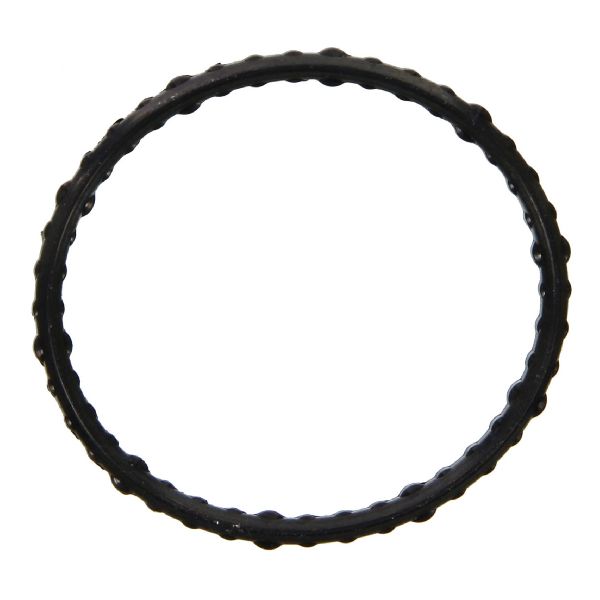
We Have This Part in Stock

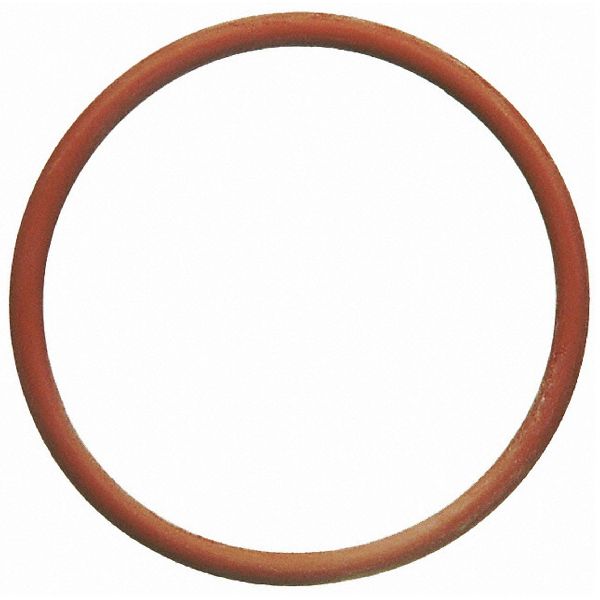
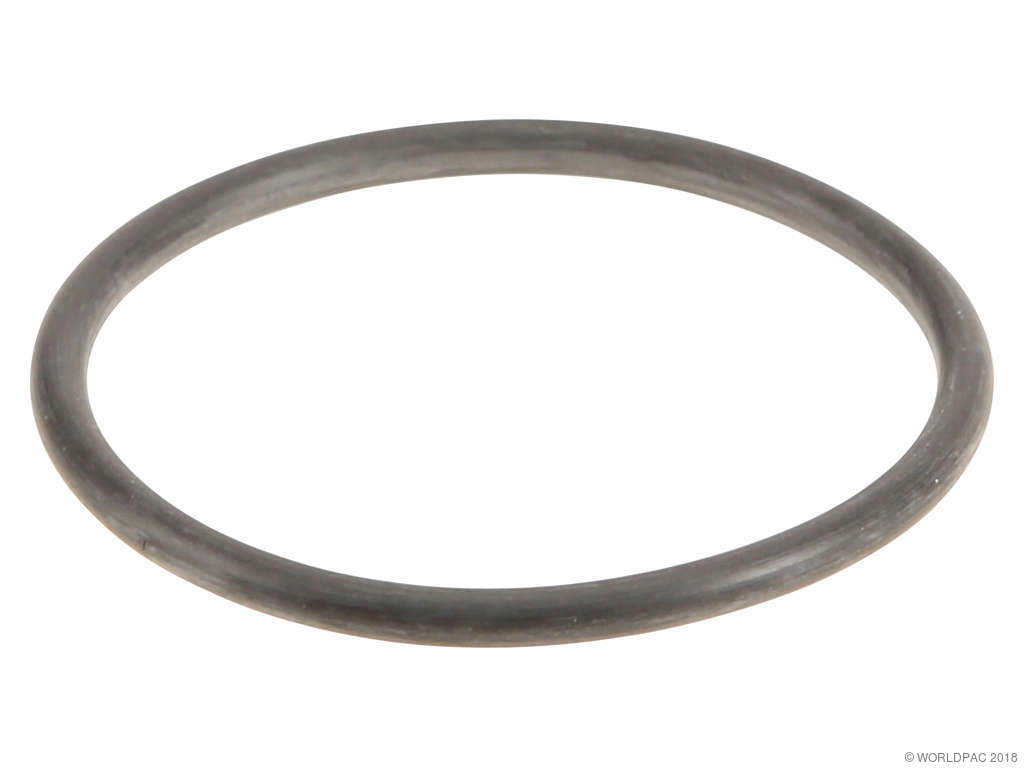


The information in this article is provided for general reference and educational purposes only. Vehicle specifications, procedures, and part compatibility can vary by production date, trim level, and region. Always consult your vehicle's factory service manual and verify part numbers before purchasing or performing repairs. Safety-critical components such as airbags, seat belts, and braking systems should be installed by a qualified professional.
- Mazda CX-9:
- 🧭 Diagnostic Flowchart
- 🎬 Helpful Videos
- 🛍️ Shop This Part
- What's Unique About the 2007-2015 Mazda CX-9
- Symptoms You May Notice
- Most Likely Causes
- Rare But Worth Checking
- Diagnosis Steps
- Parts You'll Likely Need
- Technical Service Bulletins (TSBs) & Recalls
- Platform-Specific Known Issues
- Mechanic-Grade Diagnostic Values
- Scan Tool Commands That Help
- Wiring & Ground Locations
- Model Year Variations Within This Range
- Other Known Issues on This Vehicle
- Used vs. New Parts: Buying Guide for This Vehicle
- Real Owner Stories
- Mazda Protege (referenced in CX-9 context)
- Related OBD-II Codes
- Frequently Asked Questions
- 🎟️ Get 5% Off