

P0128 on 2007-2013 Mini Cooper: Coolant Temperature Below Normal Causes and Fixes
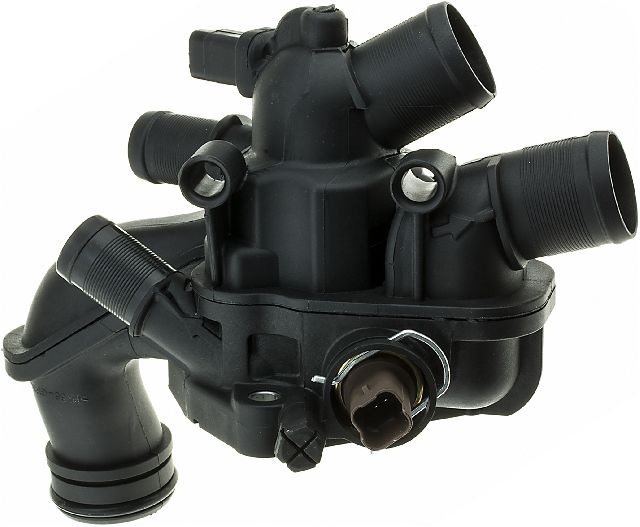
On a 2nd Gen Mini Cooper, P0128 almost always means the thermostat is stuck open. It's sold as a complete housing with the sensor. Expect to pay $100-$200 for an OEM part and another $20-$40 for a potential wiring adapter, depending on your car's production date. It's a common and well-documented failure that also affects the earlier N14 engine.
- P0128 on a 2nd Gen Mini almost always points to a failed thermostat assembly.
- A key symptom is the radiator fan running at full speed, even after the car is turned off.
- The fix involves replacing the entire thermostat housing, not just an internal part.
- Before buying parts, verify your car's production month/year to see if you need a wiring harness adapter for the new thermostat.
- It's highly recommended to also replace the plastic coolant pipe running from the thermostat to the water pump, as it's likely to break during the repair.
What's Unique About the 2007-2013 Mini Cooper
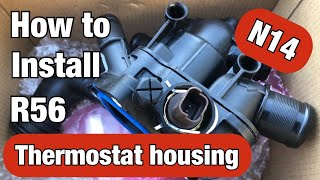
The 2nd generation Mini Cooper (R56 platform) is known for issues with its cooling system, specifically the thermostat assembly. Unlike many cars where the thermostat is a simple, separate mechanical part, on the N14 and N18 engines, it's an electronically controlled unit integrated into a complex plastic housing with the temperature sensor. This entire assembly is a notorious failure point, frequently getting stuck open, which directly causes the P0128 code. The fix isn't just a simple thermostat swap; it's the replacement of the entire housing assembly. 🎬 Watch: Step-by-step thermostat housing replacement for the N14 engine. Due to multiple part revisions, a wiring harness adapter may also be required.
Generation note: The specified year range 2007-2013 covers the entire second generation of the Mini Cooper (R55, R56, R57, etc.). However, the N18 engine was primarily used in 2011-2013 'S' models. The 2007-2010 'S' models used the N14 engine. The P0128 code and its primary cause—a failed thermostat housing—are extremely common on BOTH the N14 and N18 engines, as well as the base N12 and N16 engines.
Symptoms You May Notice
- Check Engine Light is on.
- Radiator cooling fan runs constantly at high speed, even after the engine is shut off. This is a common failsafe response from the ECM when it detects an implausible coolant temperature reading.
- Poor or no heat from the cabin heater, as the coolant isn't getting hot enough.
- Engine temperature gauge on the dashboard reads lower than normal or takes a very long time to move.
- Potentially reduced fuel economy because the engine stays in its 'warm-up' fuel enrichment mode for too long.
- In some cases, the car may be hard to start or refuse to start after a short stop when the fan has been running, as the ECM may be getting conflicting temperature data affecting the air/fuel mixture.
- Replacing only the coolant temperature sensor. On these Minis, the sensor is part of the housing, and the root cause is almost always the mechanical thermostat inside, not the sensor itself.
- Assuming the cooling fan is the problem. The fan running constantly is a *symptom* of the P0128 code, not the cause. The ECM commands the fan on as a precaution when it can't trust the temperature readings.
Most Likely Causes
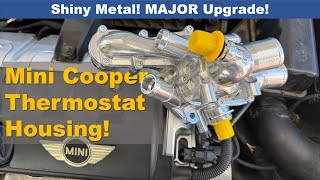
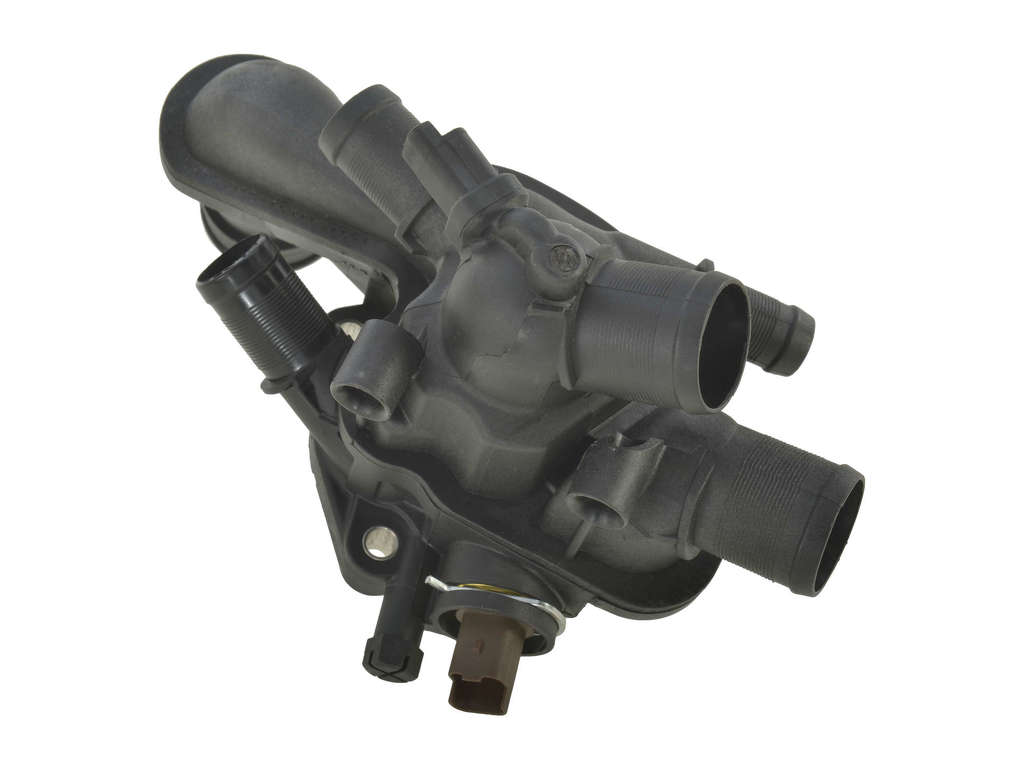
- Thermostat Stuck Open 🔴 High Probability → Shop Integrated Thermostat Housing Assembly The thermostat is integrated into a plastic housing that is a well-documented, high-failure-rate item on this platform. 🎬 See this overview of the upgraded thermostat housing assembly. The internal mechanism fails, causing it to remain open and over-cool the engine. This is the most common cause for P0128.
How to confirm: Use an OBD-II scanner to monitor live coolant temperature data. From a cold start, the temperature should rise steadily to ~105°C (221°F). If the temperature rises very slowly and plateaus at a much lower temperature (e.g., 60-80°C or 150-170°F), the thermostat is almost certainly stuck open. You can also feel the upper radiator hose; it should remain cool until the engine reaches operating temp, then become hot. If it gets warm gradually from a cold start, the thermostat is open.
Typical fix: Replace the entire thermostat housing assembly, which includes the thermostat and coolant temperature sensor. It's also wise to replace the plastic coolant pipe that connects to it at the same time, as it becomes brittle and often breaks during removal. Properly bleeding the system after replacement is critical.
Est. part cost: $100-$250 - Low Engine Coolant Level 🟡 Medium Probability The failure-prone thermostat housing is a common source of coolant leaks. A low coolant level can cause air pockets in the system, leading to inaccurate readings by the temperature sensor, which can trigger P0128.
How to confirm: Visually inspect the coolant reservoir to ensure the level is between the MIN and MAX marks. Check for signs of blue/green crusty residue around the thermostat housing, water pump, and radiator hoses, indicating a leak.
Typical fix: Find and repair the source of the leak (often the thermostat housing itself or the water pump) and then properly refill and bleed the cooling system.
Est. part cost: $0-$250
Rare But Worth Checking
- Faulty Coolant Temperature Sensor or Wiring: → Shop Engine Coolant Temperature Sensor This is rare because the sensor is typically replaced with the thermostat housing. However, if the housing was recently replaced, a loose or broken connector clip can cause the connection to fail, triggering the code. In rare cases, the wiring harness itself can be damaged. Swapping the two similar-looking connectors on the thermostat housing by mistake can also cause persistent codes.
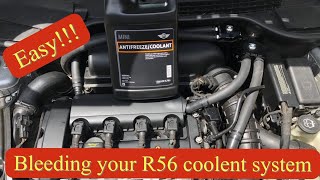
- Air Trapped in the Cooling System: If the cooling system was recently serviced and not bled properly, an air pocket can get trapped near the temperature sensor, causing inaccurate readings and triggering P0128. The system must be bled using the bleeder screw on the thermostat housing. 🎬 Watch: How to find the coolant bleed port location.
Diagnosis Steps
- Read the code with an OBD-II scanner to confirm P0128 is present. Note any other related codes like P112B or the MINI-specific 2F07.
- Check the engine coolant level in the expansion tank. If it is low, top it off and check for obvious leaks, paying close attention to the thermostat housing area.
- Use the scanner's live data function to monitor 'Engine Coolant Temperature'.
- Start the engine from cold and watch the temperature reading. It should climb steadily. On an N18 engine, normal operating temperature is around 105°C (221°F).
- If the temperature climbs very slowly or gets stuck around 60-80°C (140-176°F) even after 10-15 minutes of driving, the thermostat is stuck open and the housing assembly must be replaced.
- If the temperature reading is nonsensical from the start (e.g., reads -40°F or 250°F on a cold engine), suspect a faulty sensor or wiring issue. Check that the connector is securely clipped on.
- Before ordering parts, visually inspect the thermostat housing connector. Note its color and pin configuration. Check your vehicle's production date to determine if you need a wiring adapter.
- After replacing parts, perform a proper cooling system bleed procedure. This involves opening the bleeder screw on the thermostat housing while filling, running the engine with the heater on high, and topping off coolant until no more air bubbles emerge.
Parts You'll Likely Need
- Thermostat Housing Assembly
(OEM #11538674895 (latest), supersedes 11537647751, 11537534521)— This is the primary cause of code P0128. The original plastic units fail, and this integrated assembly contains the thermostat, housing, and temperature sensor.
Trusted brands: MINI (OEM), Mahle/Behr, Febi Bilstein
OEM price range: $150-$250
Aftermarket price range: $70-$150 - Thermostat Wiring Harness Adapter
(OEM #12518611289 or 12518614952)— Mini updated the thermostat design, which changed the electrical connector. Depending on your car's production date, you may need an adapter to connect the new thermostat to the old engine harness. Vehicles produced before 07/2012 typically need 12518611289. Vehicles produced between 07/2012 and 02/2013 may need 12518614952. Check before ordering if the thermostat has not been replaced before.
Trusted brands: MINI (OEM)
OEM price range: $20-$45
Aftermarket price range: $15-$30 - Coolant Pipe (Thermostat to Water Pump)
(OEM #11537589713)— This plastic pipe becomes extremely brittle with age and often breaks during the thermostat replacement. It is highly recommended to replace it at the same time. Upgraded aluminum versions are available and recommended.
Trusted brands: MINI (OEM), URO Parts (Aluminum), ECS Tuning (Aluminum)
OEM price range: $30-$50
Aftermarket price range: $20-$60
Related Codes That Often Appear With This One
- P112B: Engine Coolant Temperature Sensor 1 Minimum Temperature not Reached
- P173B: Invalid Engine Coolant Temperature
- P0117: Engine Coolant Temperature Sensor Circuit Low Voltage
- 2F07: A MINI-specific hexadecimal code for 'MAP thermostat mechanism' or 'Coolant Temperature Map Plausibility', often indicating the thermostat is mechanically stuck.
Technical Service Bulletins (TSBs) & Recalls
- SI M61 05 07: A TSB regarding bad ground points (X13004 and/or X4) causing various electrical problems and communication failures with control modules. While not directly for P0128, poor grounds can cause unpredictable sensor readings.
- SIB 01 02 18: A limited warranty extension for the N18 thermostat with housing to 10 years/120,000 miles for certain model years, acknowledging the high failure rate of the component.
Platform-Specific Known Issues
- The plastic thermostat housing is a notorious weak point, prone to cracking, leaking, and internal failure.
- Due to design updates, replacing the thermostat often requires a wiring harness adapter. Check your vehicle's production date before ordering parts. Models made before July 2012 typically need adapter 12518611289. Models between July 2012 and Feb 2013 may need 12518614952.
- There are two similar electrical connectors on the thermostat housing. It is possible to mix them up during reinstallation, which will cause persistent coolant temperature-related fault codes.
Mechanic-Grade Diagnostic Values
- Engine Coolant Temperature Sensor (ECT) Resistance — expected: Approximately 2,200-3,000 Ω at 20°C (68°F) and 250-350 Ω at 80°C (176°F).. Failure: Significantly higher resistance at operating temperature (e.g., 600-1000 Ω at 80°C) indicates a faulty sensor that will cause the ECU to calculate a colder temperature than actual. An open circuit (infinite resistance) or short circuit (near zero resistance) also indicates failure.
- Engine Coolant Temperature Sensor (ECT) Voltage — expected: Approximately 3.0-3.5V on a cold start (~20°C) and dropping to 1.0-1.3V at normal operating temperature (~80°C).. Failure: Voltage that does not decrease as the engine warms, or a reading that is stuck high or low (e.g., near 5V or 0V), points to a sensor or wiring issue.
- Live Data Coolant Temperature (Scan Tool) — expected: Should rise steadily from ambient temperature to a stable operating temperature of approximately 105°C (221°F) in normal mode, and may drop to around 215-219°F when sport mode is engaged or A/C is on.. Failure: Temperature plateaus at a low value (e.g., 60-80°C / 140-176°F) or takes an excessively long time to warm up, indicating a thermostat stuck open. Erratic or bouncing temperature readings can indicate air in the system.
Hidden / Shadow Codes Worth Checking
- 2F07: This is a common MINI-specific fault code that translates to "MAP thermostat mechanism" or "Coolant Temperature Map Plausibility." It almost always accompanies the generic P0128 code and specifically points to the thermostat being mechanically stuck open or not operating as commanded by the DME. (see via A BMW/MINI-specific scan tool (like ISTA, Autologic, or advanced consumer tools like Foxwell/Schwaben) is required to read these manufacturer-specific hexadecimal codes.)
- 348A: Another MINI-specific code described as "Program map thermostat: Sticking in open position." This is a more explicit confirmation that the DME has detected the thermostat is physically stuck open, directly causing the P0128 condition. (see via Requires a BMW/MINI-specific scan tool capable of reading detailed fault descriptions.)
Scan Tool Commands That Help
- ISTA (or equivalent professional scan tool): Cooling System Bleed Procedure / Venting procedure — After replacing the thermostat housing or any part of the cooling system. Some MINI models have an electric water pump that can be activated by the scan tool to properly bleed air from the system without running the engine. This ensures no air pockets are trapped near the sensor, which could cause a repeat P0128 code.
- ThinkTool Pros (or similar advanced scan tool): Guided Test for 2F07 — When diagnosing code 2F07, some advanced scan tools offer a guided diagnostic test plan. This function walks the technician through a logical series of checks for the thermostat circuit, although the ultimate conclusion is often to replace the housing.
Wiring & Ground Locations
- Engine-to-Body Ground Strap — Typically a braided strap bolted from the engine block or transmission to the chassis rail. On an R56, a key ground strap is located on the right side engine mount (left side when looking at the engine bay).. A corroded or broken main engine ground can cause a host of electrical issues, including erratic sensor readings. While not a primary cause, an unstable ground reference for the DME can lead to incorrect interpretation of the coolant temperature sensor data, potentially contributing to the fault.
- Thermostat Housing Connectors — On the thermostat housing itself. There are two similar-looking electrical connectors in close proximity.. It is a common mistake to swap the connectors for the MAP-controlled thermostat heater and the temperature sensor during reassembly. This will prevent the thermostat from operating correctly and cause immediate and persistent fault codes. The plugs have small, unique keying fins to prevent this, but they can be forced or broken.
- DME Ground Points — On the driver's side in front of the firewall, near the DME and fuse box. There are typically three brown ground wires bundled together.. These are critical grounds for the engine management system. Corrosion here can affect the reference voltage for multiple sensors, including the coolant temperature sensor, leading to incorrect readings and fault codes.
Real Owner Repair Stories
- Reddit user /u/Sbbike (2009 MINI R56 S) — P0128 code, engine temp never got above 155°F. Coolant level was fine.
❌ Tried (didn't work) Topping off coolant., Replacing the separate coolant temperature sensor first, which also triggered a P112B code.
✅ What actually fixed it The thermostat housing, which had been replaced less than 7,000 miles prior, had failed again. It was replaced under a parts warranty, which resolved both the P0128 and P112B codes. - North American Motoring user 'Forcerecontrojan' (2007 MINI R56 with 132k miles) — Code 2F07 (Map Thermostat, mechanism) after thermostat replacement.
❌ Tried (didn't work) Replacing the thermostat with an aftermarket OE replacement., Using either the old OEM sensor or the new generic sensor that came with the aftermarket housing., Flushing the system.
✅ What actually fixed it A vendor in the thread noted they stopped selling aftermarket thermostats due to high failure rates and only recommend genuine OE units. Another user pointed out the risk of swapping the PCV heater connector with the temp sensor connector, which can fry the thermostat. The implied fix is to use a genuine OEM thermostat and verify correct wiring. - Pelican Parts Forum user 'Dread Nought' (2008 MINI Clubman S (N14 Engine)) — Persistent 2F07 code after replacing a cracked thermostat housing.
❌ Tried (didn't work) Replacing the thermostat housing with a new 'Rein' brand aftermarket unit. The code returned., Replacing the Rein unit with a second, new Rein unit under warranty. The code still returned, with observed temperatures struggling to reach the target.
✅ What actually fixed it After two failed aftermarket units, installing a genuine OEM MINI/BMW part finally allowed the car to operate in the correct temperature range and cleared the 2F07 code for good.
When the Usual Fixes Don't Work
- While P0128 is almost always a failed thermostat, there are documented cases where the fix is not that simple. One owner on North American Motoring went through a new aftermarket thermostat and a new OEM thermostat, both of which failed to solve the problem. The issue persisted through an auxiliary water pump replacement and a full ECU software update, leaving both the owner and mechanic stumped, suggesting a rare underlying electrical or module issue can, in extreme cases, mimic a simple thermostat failure. In another case, a user found that reverting their aftermarket ECU tune to the stock software resolved the P0128 and 2F07 codes, indicating the tune itself was affecting the engine's ability to meet the required temperature parameters.
OEM Part Supersession History
11537534521, 11537647751→11538674895— The thermostat housing has undergone multiple revisions by MINI to address the high failure rate due to cracking plastic and internal thermostat failure. The latest part number represents the most current and supposedly most durable design.
Heads up: The connector design changed during the production run. Installing the latest thermostat (11538674895) on an older vehicle requires a wiring harness adapter. Cars built before 07/2012 need adapter 12518611289. Cars built between 07/2012 and 02/2013 need adapter 12518614952. Cars built after 02/2013 should not need an adapter.
Model Year Variations Within This Range
- Pre-07/2012: Vehicles produced before July 2012 with the original thermostat require wiring harness adapter 12518611289 when upgrading to the latest OEM thermostat housing.
- 07/2012 - 02/2013: Vehicles produced in this window require a different wiring harness adapter, part number 12518614952, when installing the latest OEM thermostat housing.
- Post-02/2013: Vehicles produced after February 2013 should have the updated engine harness that connects directly to the newest thermostat housing design without needing an adapter.
Diagnostic Flowchart
Other Known Issues on This Vehicle
Issues unrelated to this code that are worth knowing about as an owner of this generation:
- Timing Chain 'Death Rattle' 🔴 High — Very common on N14 engines (2007-2010), less common but still present on N18. Caused by a faulty tensioner and chain stretch, often noticeable on cold starts. Can lead to catastrophic engine failure if ignored. (Ref: Multiple TSBs were issued, and a class-action lawsuit led to an extended warranty/reimbursement program for this issue on N14 engines. Service Action SI M 17 01 11 addressed a tensioner seal leak on some N18s.)
- High-Pressure Fuel Pump (HPFP) Failure 🔴 High — Common on both N14 and N18 engines. Symptoms include long cranks, rough cold starts, stumbling, and low power (limp mode), often with code 2880. (Ref: An extended warranty was offered for the HPFP on many affected vehicles due to the high failure rate.)
- Intake Valve Carbon Buildup 🟠 Medium — Inevitable on all direct-injection engines (N14/N18). Causes hesitation, misfires, and loss of power. Typically requires cleaning via walnut shell blasting every 40k-60k miles.
- Excessive Oil Consumption 🟠 Medium — More prevalent on the N14 engine but can affect the N18. Caused by issues with piston rings or valve stem seals. Requires frequent oil level checks between changes.
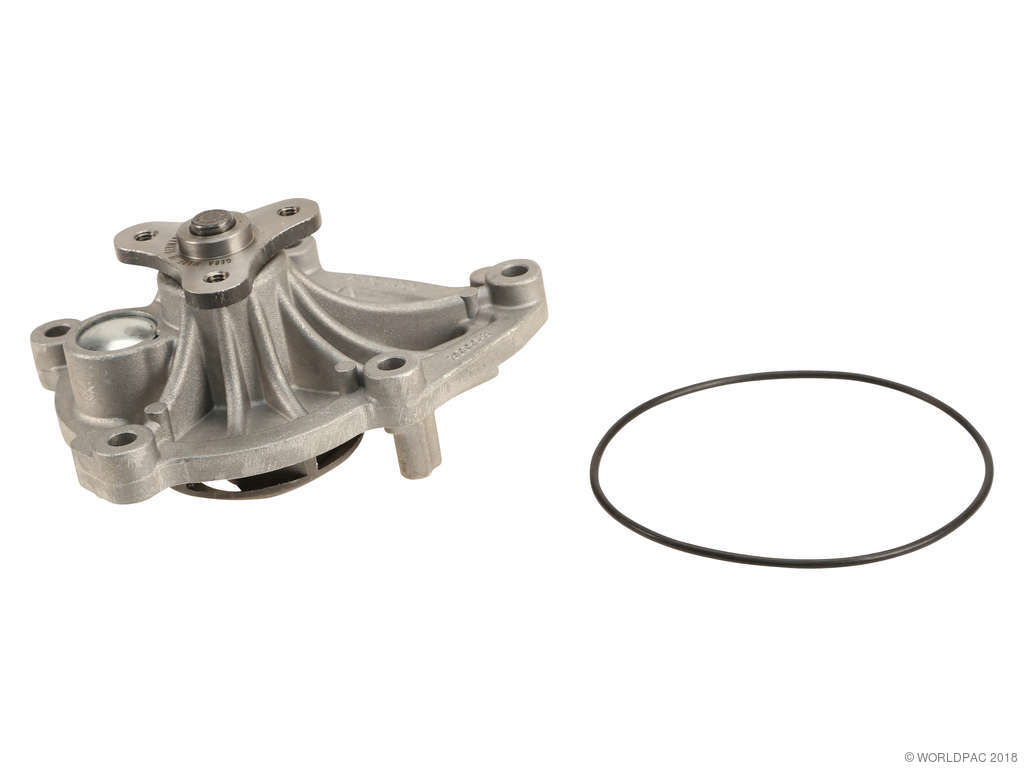
- Water Pump and Coolant Pipe Leaks 🟠 Medium — The water pump is another plastic component prone to leaking. The pipe connecting the thermostat to the water pump also becomes brittle and can crack or break, especially during thermostat service.
Used vs. New Parts: Buying Guide for This Vehicle
When a used part is the smart pick: For this specific repair (P0128), using a part from a salvage or donor vehicle is strongly discouraged. The primary failure component, the thermostat housing, is a known high-failure item due to material degradation and design flaws. A used part is highly likely to have a very short remaining service life or could even be faulty upon installation.
What to inspect on the donor part:
- Not applicable. Do not use a salvaged thermostat housing for this repair.
OEM-only on this vehicle (don't cheap out):
- Thermostat Housing Assembly: Multiple forum threads and mechanic reports indicate a high failure rate for aftermarket thermostat housings, with some being defective right out of the box. To avoid repeat repairs, using a genuine MINI OEM part (the latest superseded version) is the most reliable option.
Aftermarket brands forum-validated for this vehicle:
- Mahle/Behr: Mahle is an OEM supplier for MINI, so their branded parts are generally considered equivalent to genuine MINI parts and are a reliable alternative.
Brands owners have reported issues with on this vehicle:
- Unbranded or generic parts: Reports suggest lower-quality aftermarket brands (such as 'Rein' in one documented case) may not regulate temperature correctly, leading to a persistent P0128/2F07 code even with a new part.
- Nordic: One user reported a persistent 2F07 code after installing a Nordic-branded thermostat, replacing it under warranty, and still having the same issue.
Real Owner Stories
Aggregated from forums and TSBs cited above. Mileages and costs reflect what owners reported in those sources.
2011 Mini Cooper S N18
Symptoms: The radiator fan ran constantly and the engine temperature would not exceed 67°C.
What fixed it: Replacement of the thermostat housing assembly.
Source hint: North American Motoring - Thread 'Mulptile thermostats replacement, P0128, and fan constantly running'
2009 Mini Cooper S R56
Symptoms: The vehicle threw P0128 and P112B codes only one year after the thermostat had been previously replaced. A new temperature sensor did not fix the issue.
What fixed it: The shop confirmed the replacement thermostat had failed internally and replaced the housing again under warranty.
Source hint: Reddit (r/MINI) - Thread 'P0128 code - R56 check engine light'
2011-2013 Mini Cooper N18 — 15000 miles
Symptoms: The car threw a P0128 code shortly after a service visit.
What fixed it: The cause was a broken clip on the temperature sensor connector that had worked itself loose; re-securing the connector and clearing the code resolved the issue.
Source hint: Reddit (r/MINI) - Thread 'Car threw a p0128 after only about 15k miles on a new thermostat'
Related OBD-II Codes
Frequently Asked Questions
Is there a warranty extension for the thermostat housing on my N18 Mini Cooper?
Why is my radiator fan running at high speed even after I turn off my Mini?
I'm replacing the thermostat on my 2011 Cooper S; do I need a special wiring adapter?
Can I just replace the temperature sensor to fix P0128?
Why did my Mini start having trouble starting after a short stop when the fan was running?
What is the normal operating temperature for the N18 engine I should look for on my scanner?
Helpful Videos
We Have This Part in Stock

The information in this article is provided for general reference and educational purposes only. Vehicle specifications, procedures, and part compatibility can vary by production date, trim level, and region. Always consult your vehicle's factory service manual and verify part numbers before purchasing or performing repairs. Safety-critical components such as airbags, seat belts, and braking systems should be installed by a qualified professional.
- Mini Cooper:
- 🧭 Diagnostic Flowchart
- 🎬 Helpful Videos
- 🛍️ Shop This Part
- What's Unique About the 2007-2013 Mini Cooper
- Symptoms You May Notice
- Most Likely Causes
- Rare But Worth Checking
- Diagnosis Steps
- Parts You'll Likely Need
- Related Codes That Often Appear With This One
- Technical Service Bulletins (TSBs) & Recalls
- Platform-Specific Known Issues
- Mechanic-Grade Diagnostic Values
- Hidden / Shadow Codes Worth Checking
- Scan Tool Commands That Help
- Wiring & Ground Locations
- Real Owner Repair Stories
- When the Usual Fixes Don't Work
- OEM Part Supersession History
- Model Year Variations Within This Range
- Other Known Issues on This Vehicle
- Used vs. New Parts: Buying Guide for This Vehicle
- Real Owner Stories
- 2011 Mini Cooper S N18
- 2009 Mini Cooper S R56
- 2011-2013 Mini Cooper N18 — 15000 miles
- Related OBD-II Codes
- Frequently Asked Questions
- 🎟️ Get 5% Off