

P0128 on 2002-2007 Mitsubishi Lancer: Causes and Fixes for Coolant Temperature Issues
On a 2002-2007 Lancer, code P0128 almost always means the engine thermostat is stuck open and needs to be replaced. This is a simple, low-cost DIY fix with an aftermarket part costing around $15-$30. The OEM specified temperature is typically 82°C (180°F).
- P0128 on a 2002-2007 Lancer almost certainly means you need a new thermostat.
- Key symptoms are a low-reading temperature gauge and a heater that doesn't get hot.
- This is a DIY-friendly repair that can be done with basic tools (like a 12mm socket) in about an hour.
- Always use a new gasket with the new thermostat and ensure the jiggle pin on the thermostat is installed in the 12 o'clock (up) position to help bleed air from the system.
- Do not use a low-temperature 'racing' thermostat on a stock engine, as it will keep the engine too cool and likely cause the P0128 code to appear. Stick to the OEM-specified 82°C (180°F) temperature.
What's Unique About the 2002-2007 Mitsubishi Lancer
For the 2002-2007 Mitsubishi Lancer, the P0128 code is a very common and straightforward issue. Unlike some other vehicles that may have software glitches or complex diagnostic paths for this code, the cause on this Lancer generation is overwhelmingly a simple mechanical failure. The cooling system design is conventional, with the thermostat located on the engine block where the lower radiator hose connects. Its accessibility and the high failure rate of the mechanical thermostat make diagnosis and repair simpler than on cars where the thermostat is difficult to access or where electronic issues are more common.
Symptoms You May Notice
- Check Engine Light is on
- Temperature gauge on the dashboard stays low or takes a very long time to reach the middle.
- Heater blows lukewarm or cool air, even after the car has been running for a while.
- Slightly decreased fuel economy.
- On some GM vehicles with a similar issue, the A/C might be disabled by the ECU, though this is not commonly reported for the Lancer.
- Replacing the coolant temperature sensor when the thermostat is the actual problem. The thermostat is the most likely culprit by a wide margin and should typically be the first part replaced after confirming the coolant level is correct.
Most Likely Causes
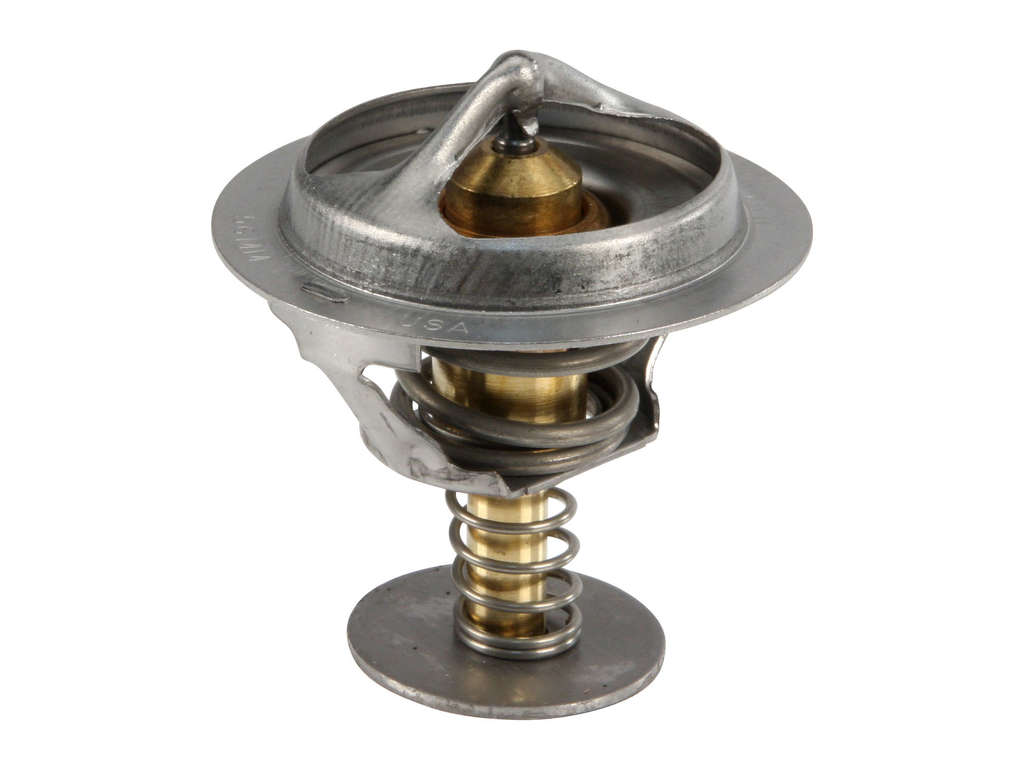
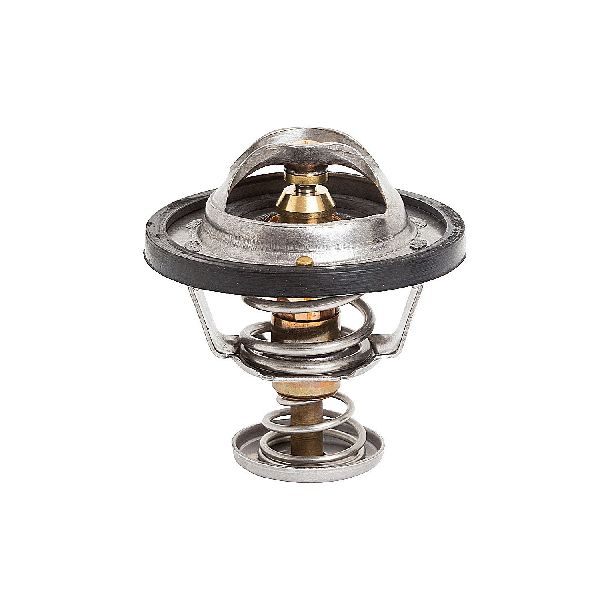
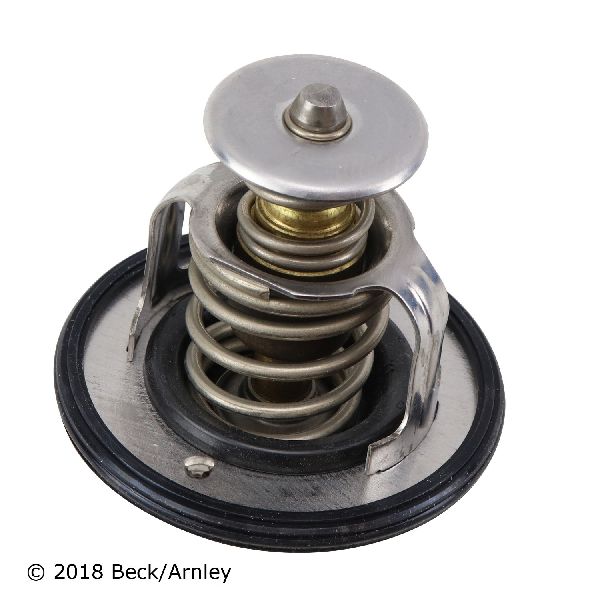
- Engine Thermostat Stuck Open 🔴 High Probability → Shop Integrated Thermostat Housing Assembly This is the most common failure mode for thermostats. Over time, the wax element or spring mechanism weakens, causing it to fail in the open position. It is the number one cause for P0128 on this platform.
How to confirm: After a cold start, feel the upper and lower radiator hoses. If the thermostat is working correctly, the upper hose will get hot while the lower hose remains cool until the engine reaches operating temperature (around 180°F). If both hoses warm up at roughly the same rate, the thermostat is stuck open, allowing coolant to circulate prematurely through the radiator.
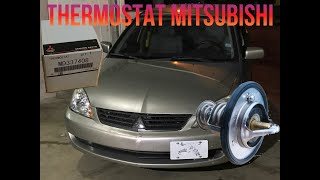
Typical fix: Replace the engine coolant thermostat and gasket. This involves draining some coolant, removing the two 12mm bolts on the thermostat housing, swapping the part, cleaning the mating surfaces, and refilling/bleeding the cooling system. 🎬 See this step-by-step thermostat installation for 03-06 Lancers.
Est. part cost: $15-$40 - Low Engine Coolant Level 🟡 Medium Probability Leaks in the cooling system can introduce air, creating pockets that prevent the coolant temperature sensor from getting an accurate reading. While not a Lancer-specific issue, it's a basic check that should always be performed first.
How to confirm: Check the coolant level in the reservoir and radiator when the engine is cold. If it is low, top it off and inspect the system for leaks (hoses, radiator, water pump).
Typical fix: Top off the coolant and bleed any air from the system. If a leak is present, the leaking component must be repaired or replaced.
Est. part cost: $15-$25 for a jug of coolant - Faulty Engine Coolant Temperature (ECT) Sensor ⚪ Low Probability → Shop Engine Coolant Temperature Sensor
How to confirm: With a cold engine, use a scan tool to compare the ECT sensor reading to the Intake Air Temperature (IAT) sensor reading. They should be within a few degrees of each other. If the ECT reading is illogical (e.g., -40°F or 250°F on a cold engine), the sensor is likely bad. However, if the sensor shows a plausible but slow-to-rise temperature, the thermostat is more likely the culprit.
Typical fix: Replace the engine coolant temperature sensor. This is often done only after a thermostat replacement fails to resolve the code, as it is a much less common cause.
Est. part cost: $20-$50
Rare But Worth Checking
- Cooling Fan Stuck On: → Shop Engine Cooling Fan Blade If the electric cooling fan runs constantly, even when the engine is cold, it can prevent the engine from warming up. This is usually caused by a failed fan relay or a short in the wiring.
- Faulty Engine Control Module (ECM): → Shop Engine Control Module (ECM) This is extremely rare, but a malfunctioning ECM could theoretically misinterpret sensor data. This should only be considered after all other possibilities have been exhaustively ruled out.
Diagnosis Steps
- Check for the Check Engine Light and confirm code P0128 with an OBD-II scanner. 🎬 Watch this professional diagnostic walkthrough for code P0128.
- With the engine cold, check the coolant level in the radiator and overflow reservoir. Top off if low.
- Start the engine and monitor the temperature gauge. Note if it fails to reach the normal operating position (typically the halfway mark).
- Use a scan tool to monitor live data for the Engine Coolant Temperature (ECT). Observe if it struggles to rise above 170°F (77°C) during a 10-15 minute drive.
- To confirm a stuck-open thermostat, carefully feel the radiator hoses. If the lower hose warms up at the same time as the upper hose, the thermostat is open and allowing coolant to flow to the radiator prematurely.
- If the thermostat appears to be working correctly, investigate the ECT sensor by comparing its cold reading to the ambient air temperature.
- Check that the radiator cooling fan is not running constantly from the moment the car is started.
Parts You'll Likely Need
- Engine Coolant Thermostat
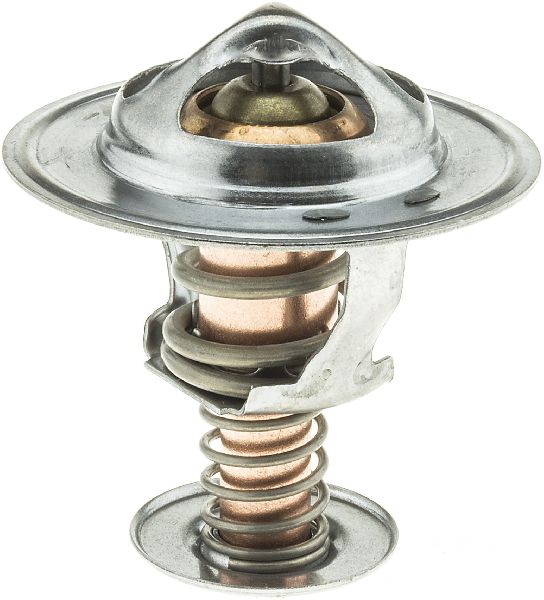
(OEM #MD337408 (for 2.0L 4G94), 1305A802 (for 2.4L 4G69, may supersede MN187250))— This is the cause for code P0128 in the vast majority of cases. It is a mechanical part that wears out and gets stuck open. The correct OEM temperature is 82°C (180°F).
Trusted brands: OEM Mitsubishi, Stant (e.g., 14028), Gates (e.g., TH31482G1), Aisin, Vernet
OEM price range: $30-$50
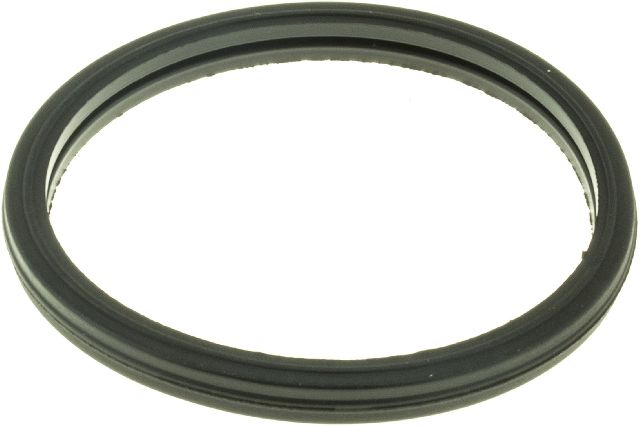
Aftermarket price range: $15-$30 - Thermostat Gasket / Seal — A new gasket or seal is required when replacing the thermostat to prevent coolant leaks. It is often included with the new thermostat.
OEM price range: $5-$10
Aftermarket price range: $2-$5
Technical Service Bulletins (TSBs) & Recalls
- TSB Bulletin #TSB-26-14-001: This manufacturer service bulletin provides specific guidance for technicians when the check engine light is on with P0128-00 stored in the Engine ECU. While originally issued for the Outlander, it reflects Mitsubishi's standard diagnostic path for this code.
- TSB Bulletin #WB2026-007: This warranty bulletin provides instructions on submitting a warranty claim when the check engine light is on with P0128-00 stored in the Engine ECU.
Platform-Specific Known Issues
- Jiggle Valve Orientation: When installing the new thermostat, the small 'jiggle valve' or pin must be oriented at the top (12 o'clock position). This allows trapped air to bleed out of the system more effectively.
- Avoid Low-Temperature 'Racing' Thermostats: → Shop Integrated Thermostat Housing Assembly Using a lower-temperature thermostat (e.g., 71°C or from brands like Mishimoto) on a stock, daily-driven Lancer is a common cause of a P0128 code. The ECU expects to see a specific temperature within a set time, and these thermostats keep the engine too cool, triggering the code and leading to poor fuel economy.
- DIY Repair Story: A DIY video for a Lancer shows the thermostat housing is secured by two 12mm bolts. The bolts should be torqued to 19 Newton-meters upon reinstallation. The job requires draining some coolant, removing the air intake for access, cleaning the old gasket material from the housing surfaces, and properly bleeding the system afterward. 🎬 Watch how to flush the radiator and replace hoses.
Mechanic-Grade Diagnostic Values
- Engine Coolant Temperature (ECT) Sensor Resistance — expected: Approximately 2,200 - 3,000 Ω at 20°C (68°F) and 250 - 350 Ω at 80°C (176°F).. Failure: Readings significantly outside of the expected range for a given temperature indicate a faulty sensor.
- Engine Coolant Temperature (ECT) Sensor Voltage (at sensor connector) — expected: Approximately 2.0V - 3.0V on a cold start, dropping to around 0.5V - 1.3V when the engine is at normal operating temperature (approx. 80-90°C).. Failure: Voltage that does not decrease as the engine warms up, or is stuck high (e.g., 5V) or low (e.g., 0V), points to a sensor or wiring issue.
- Live Data: ECT vs. IAT on Cold Soak — expected: On a completely cold engine (e.g., sitting overnight), the Engine Coolant Temperature (ECT) and Intake Air Temperature (IAT) sensor readings on a scan tool should be within a few degrees of each other.. Failure: A significant difference between the two readings on a cold engine points to a fault in the ECT sensor or its circuit.
Scan Tool Commands That Help
- Mitsubishi MUT-II / MUT-III or equivalent professional scan tool: Data List - Item 13 (Intake Air Temp) & Item 21 (Engine Coolant Temp) — Used during the initial diagnosis to compare IAT and ECT readings on a cold-soaked engine and to monitor the ECT reading as the engine warms up to verify if it is rising correctly and reaching the target temperature of ~82°C.
Wiring & Ground Locations
- Engine Coolant Temperature (ECT) Sensor Location — On both the 2.0L (4G94) and 2.4L (4G69) engines, the ECT sensor is located on the thermostat housing, near where the upper radiator hose connects to the engine. On some diagrams for the 2.0L Turbo engine, it is shown on the rear of the cylinder head.. Accurate location is necessary for testing the sensor's resistance, checking its voltage, and inspecting the connector and wiring for damage, which are secondary diagnostic steps for P0128.
- ECT Sensor Connector — A 2-pin, grey plastic connector that plugs directly into the ECT sensor.. Corrosion or damage to the connector or its two wires can cause incorrect readings, leading to a P0128 code even if the sensor itself is functional. The connector provides the points for back-probing to test voltage.
- G11 (Ground Point) — Located at the rear of the engine, below the cylinder head.. This is a primary engine ground. A poor connection here could potentially affect various sensors, including the ECT, by creating an unstable ground reference for the sensor circuit.
- G15 (Ground Point) — Located under the left front kick panel inside the cabin.. This ground point is associated with the Engine Control Module (ECM). A fault at this location could cause a variety of engine management issues, though it is a very rare cause for an isolated P0128 code.
Real Owner Repair Stories
- EvolutionM.net Forum User (Mitsubishi Lancer (year not specified, during clutch install)) — Temperature gauge in the cluster stopped working after a clutch replacement.
❌ Tried (didn't work) Visually inspecting the engine bay for disconnected wires.
✅ What actually fixed it The user discovered that while the gauge was dead, a laptop connected to the ECU could still read an accurate temperature. This indicates the issue was likely with the separate temperature sending unit for the gauge (often a single-wire sensor), not the two-wire ECT sensor that the ECU uses to set code P0128. This highlights that some models have two separate sensors.
OEM Part Supersession History
MN187250→1305A802 (also supersedes 1305A048)— Part consolidation and potential design update by the manufacturer.
Heads up: The new part number 1305A802 is the correct replacement for the original. Using old stock of MN187250 is acceptable, but 1305A802 is the current OEM part.
Model Year Variations Within This Range
- 2002-2007: Lancers with the 2.0L engine (ES, LS, OZ Rally) typically use a single cooling fan assembly. Models with the 2.4L engine (Ralliart) use a dual fan setup. While not a direct cause of P0128, a failure in the fan system (e.g., fan stuck on) would involve different parts depending on the engine.
- 2002-2007: Some Lancers may use two separate temperature sensors: a two-wire Engine Coolant Temperature (ECT) sensor for the ECU and a one-wire temperature sending unit for the dashboard gauge. A failure of the gauge sender would not typically cause a P0128 code, which relies on the ECU's sensor, but can cause confusion during diagnosis if the gauge reads incorrectly.
Diagnostic Flowchart
Real Owner Stories
Aggregated from forums and TSBs cited above. Mileages and costs reflect what owners reported in those sources.
Mitsubishi Lancer Evolution
Symptoms: Constantly getting the CEL for 'coolant temp below thermostat regulating temp' after installing a 160-degree thermostat.
What fixed it: The user disabled the code via software tuning using 'Periphery 3 (FDA) bit 15 ("P0128 CT Below Reg")'.
Source hint: Coolant Temp CEL periphery bit - EvolutionM.net
Mitsubishi Lancer Evolution
Symptoms: Immediately got a P0128 code after installing a lower-temperature Ralliart thermostat (71°C).
What fixed it: Identified that the ECU is sensitive to the engine not reaching the expected OEM temperature; requires an OEM-spec thermostat or an ECU tune to resolve.
Source hint: EvolutionM.net - 'SES P0128 and Ralliart thermostat'
Mitsubishi Lancer Evolution
Symptoms: Got a P0128 code in cold weather after installing a full Mishimoto cooling system including a racing thermostat.
What fixed it: Identified the lower-temp racing thermostat as the direct cause of the code in cold weather.
Source hint: Reddit r/MitsubishiEvolution
Mitsubishi Lancer
Symptoms: Check Engine Light on due to a failed thermostat.
What fixed it: Replaced the thermostat. Drained coolant, removed the air intake for access, removed two 12mm bolts, cleaned old gasket material, installed new thermostat (torqued to 19 Nm), and properly bled the system.
Source hint: DIY Repair Story
Related OBD-II Codes
Frequently Asked Questions
I installed a Mishimoto racing thermostat on my Lancer and now I have a P0128 code. Why?
When replacing the thermostat on my 2002-2007 Lancer, does the jiggle valve need to be in a specific position?
What is the torque spec for the thermostat housing bolts on this Lancer?
Can I disable the P0128 code if I want to keep my 160-degree performance thermostat on my Lancer Evolution?
Does the 2003-2006 Mitsubishi Outlander share this P0128 issue with the Lancer?
How can I quickly test if my Lancer's thermostat is stuck open without removing it?
Helpful Videos


We Have This Part in Stock


The information in this article is provided for general reference and educational purposes only. Vehicle specifications, procedures, and part compatibility can vary by production date, trim level, and region. Always consult your vehicle's factory service manual and verify part numbers before purchasing or performing repairs. Safety-critical components such as airbags, seat belts, and braking systems should be installed by a qualified professional.
- Mitsubishi Lancer:
- 🧭 Diagnostic Flowchart
- 🎬 Helpful Videos
- 🛍️ Shop This Part
- What's Unique About the 2002-2007 Mitsubishi Lancer
- Symptoms You May Notice
- Most Likely Causes
- Rare But Worth Checking
- Diagnosis Steps
- Parts You'll Likely Need
- Technical Service Bulletins (TSBs) & Recalls
- Platform-Specific Known Issues
- Mechanic-Grade Diagnostic Values
- Scan Tool Commands That Help
- Wiring & Ground Locations
- Real Owner Repair Stories
- OEM Part Supersession History
- Model Year Variations Within This Range
- Real Owner Stories
- Mitsubishi Lancer Evolution
- Mitsubishi Lancer Evolution
- Mitsubishi Lancer Evolution
- Mitsubishi Lancer
- Related OBD-II Codes
- Frequently Asked Questions
- 🎟️ Get 5% Off