

P0128 on 2008-2017 Mitsubishi Lancer: Coolant Temperature Below Thermostat Regulating Temperature Causes and Fixes
On a 2008-2017 Mitsubishi Lancer, code P0128 is almost always caused by a faulty engine thermostat that is stuck open. This is a common, well-documented failure for this platform and its relatives. Replacing the thermostat and gasket is a straightforward, DIY-friendly fix, with aftermarket parts costing around $20-$40.
- Don't panic, P0128 is a minor issue and is very common on this Lancer generation.
- The cause is almost certainly a thermostat that has failed in the open position.
- It is a DIY-friendly repair that costs under $50 in parts and takes about an hour.
- Fixing it will restore your fuel economy and cabin heater performance.
What's Unique About the 2008-2017 Mitsubishi Lancer
For the 2008-2017 Mitsubishi Lancer (Lancer X generation), equipped with the 4B11 (2.0L) or 4B12 (2.4L) engines, the P0128 code is a very common and straightforward issue. The cooling system uses a conventional, mechanical thermostat that is a known wear-and-tear item. Unlike in some other vehicles where this code might be caused by software glitches or complex sensor issues, the cause on the Lancer is overwhelmingly a simple mechanical failure of the thermostat sticking open. This issue is also prevalent in platform-mates like the Dodge Caliber and Jeep Compass that share the same 'World Engine' architecture.
Symptoms You May Notice
- Check Engine Light is on
- Engine temperature gauge stays on the 'cold' side or takes an unusually long time to reach the middle.
- Heater blows lukewarm or cold air, even after the engine has been running for a while.
- Noticeable decrease in fuel economy.
- Engine seems to run normally otherwise
- Replacing the coolant temperature sensor when the thermostat is the actual problem. If P0128 is the only code present, the thermostat is the most likely culprit.
- Installing a lower-temperature 'racing' thermostat. The stock ECU expects to see a specific temperature range and using a thermostat that opens earlier (e.g., 71°C) will often cause the P0128 code to set because the engine runs too cool for the ECU's parameters.
Most Likely Causes
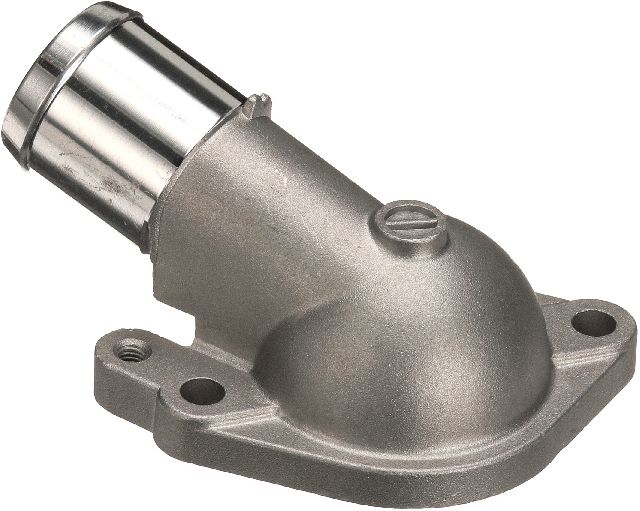
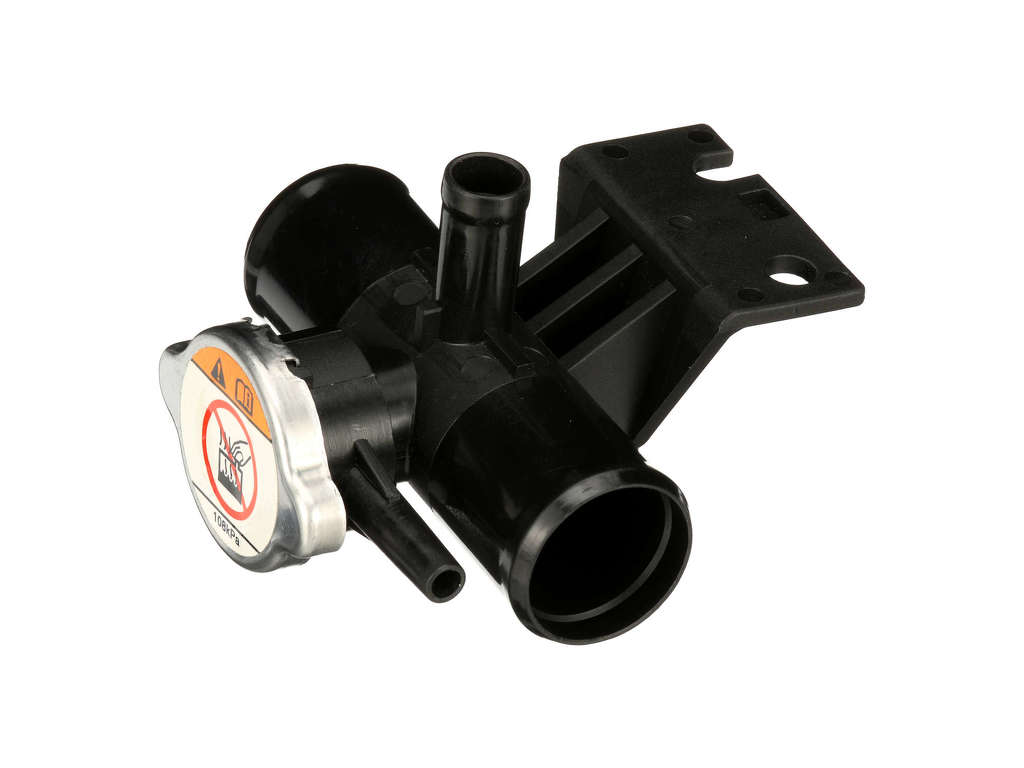
- Engine Thermostat Stuck Open 🔴 High Probability → Shop Integrated Thermostat Housing Assembly The thermostat is a mechanical part with a finite lifespan that is known to fail in the open position on this platform. It is a common wear-and-tear item, designed to fail open to prevent overheating.
How to confirm: With a cold engine, start the car and feel the upper and lower radiator hoses. If both hoses warm up at roughly the same rate, the thermostat is stuck open, allowing coolant to circulate through the radiator prematurely. A properly functioning thermostat would keep the lower hose cool until the engine reaches its opening temperature (around 180-188°F).
Typical fix: Replace the engine coolant thermostat and the corresponding gasket or seal. The OEM thermostat is rated to open at 188°F (87°C). After replacement, the cooling system must be refilled with a compatible P-OAT (blue) coolant and properly bled of any air. Ensure the jiggle pin on the new thermostat is installed 🎬 See this walkthrough for replacing the thermostat on 2.4L engines. in the 12 o'clock (up) position to aid in bleeding air.
Est. part cost: $20-$50 - Low Engine Coolant Level 🟡 Medium Probability
How to confirm: Visually inspect the coolant level in the overflow reservoir and the radiator (only when the engine is completely cool). If the level is below the 'MIN' mark, it is low.
Typical fix: Top off the coolant to the proper level using a compatible coolant type (Mitsubishi Genuine Long Life Blue P-OAT or equivalent). Inspect the system for any visible leaks from hoses, the radiator, or the water pump that may have caused the low level.
Est. part cost: $15-$25 for a gallon of coolant - Faulty Engine Coolant Temperature (ECT) Sensor ⚪ Low Probability → Shop Engine Coolant Temperature Sensor
How to confirm: Use an OBD-II scanner to monitor the live data from the ECT sensor. 🎬 Watch a pro mechanic diagnose the P0128 code step-by-step. If the reading is erratic, nonsensical (e.g., shows -40°F), or never changes, the sensor is likely faulty. A faulty ECT sensor often triggers other specific codes (like P0117 or P0118) in addition to P0128. On the 2.0L (4B11) engine, the sensor is at the back of the thermostat housing; on the 2.4L (4B12), it's on the right side of the engine.
Typical fix: Replace the engine coolant temperature sensor. This is typically a small sensor threaded into the engine block or thermostat housing.
Est. part cost: $20-$60
Rare But Worth Checking
- Cooling Fan Stuck On: → Shop Engine Cooling Fan Blade If the electric cooling fan runs constantly, even when the engine is cold, it can over-cool the engine and prevent it from reaching operating temperature, triggering P0128. This is usually easy to diagnose by listening for the fan immediately after a cold start. This could be caused by a faulty fan relay, which was subject to a recall (SR-17-005) on some 2015-2016 models.
Diagnosis Steps
- Check for other DTCs. If P0128 is the only code, the thermostat is highly suspect.
- Inspect Coolant Level: With the engine cold, check the coolant level in the reservoir and radiator. Top off if low and check for leaks.
- Observe Temperature Gauge: Start the engine from cold and watch the temperature gauge. Note if it rises to the normal operating range (usually the middle of the gauge) within 10-15 minutes of driving. If it stays low, especially at highway speeds, the thermostat is likely stuck open.
- Check Heater Performance: Turn the heater on full blast. If the air is not hot after the engine should have warmed up, it's a strong indicator the thermostat is stuck open.
- Feel Radiator Hoses: Carefully feel the upper and lower radiator hoses (be cautious of moving parts and hot surfaces). If both hoses get warm at the same time, the thermostat has failed open.
- Monitor Live Data: If you have a scan tool, monitor the coolant temperature reading. If it rises very slowly and struggles to get above 70-75°C (160-167°F), especially during highway driving, the thermostat is the most likely cause.
- If the above steps point to the thermostat, replace it along with its gasket. Ensure the system is properly refilled and bled of air afterwards. If the temperature readings are erratic or illogical, test the ECT sensor and its circuit.
Parts You'll Likely Need
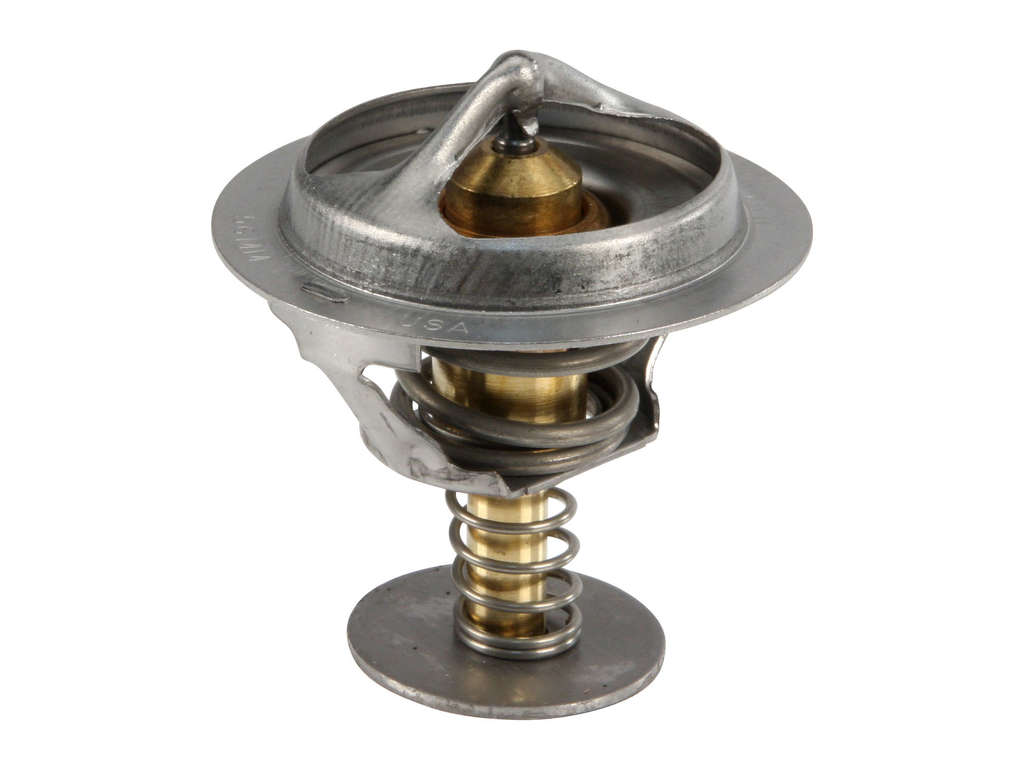
- Engine Coolant Thermostat
(OEM #1305A803)— This is the most common cause of code P0128 on the Lancer, as the original part wears out and gets stuck in the open position. The OEM part is specified to open at 188°F (87°C).
Trusted brands: Mitsubishi Genuine, Aisin, Gates, Stant, Motorad
OEM price range: $25-$50
Aftermarket price range: $20-$40 - Thermostat Gasket/Seal
(OEM #Included with 1305A803)— A new seal is required to prevent leaks when replacing the thermostat. It is often included in a kit with the new thermostat.
OEM price range: $5-$15
Aftermarket price range: $2-$10 - Engine Coolant Temperature (ECT) Sensor
(OEM #1308A012)— Replaced if diagnosis points to a faulty sensor (uncommon for just P0128). The sensor is responsible for reporting the coolant temperature to the ECU.
Trusted brands: Mitsubishi Genuine, NGK/NTK, Standard Motor Products (SMP)
OEM price range: $60-$90
Aftermarket price range: $25-$50 - Engine Coolant
(OEM #MZ320125)— You will lose some coolant when replacing the thermostat, which will need to be replaced. It's also a good time to perform a coolant flush if the service is overdue. Use a blue, P-OAT based Asian vehicle coolant.
Trusted brands: Mitsubishi Genuine Long Life Coolant, PEAK OET Asian Vehicle Blue, Zerex Asian Vehicle Blue
OEM price range: $25-$35 per gallon
Aftermarket price range: $15-$25 per gallon
Technical Service Bulletins (TSBs) & Recalls
- While no TSB directly addresses P0128, a recall (SR-17-005) was issued for faulty power relays in some 2015-2016 Lancers. A failed fan relay could cause the cooling fan to run constantly, potentially contributing to a P0128 code.
- Manufacturer TSB Bulletin #TSB-26-14-001 provides guidance for when the check engine light is on with P0128-00 stored in the Engine ECU.
- Manufacturer TSB Bulletin #WB2026-007 provides specific instructions on submitting a warranty claim when the check engine light is on with P0128-00 stored in the Engine ECU.
Platform-Specific Known Issues
- The thermostat replacement is a very common repair. Many owners on forums report successfully performing this as a DIY job in about an hour.
- When refilling coolant, it is important to properly 'burp' or bleed the system of air to prevent air pockets which can cause erratic temperature readings and poor heater performance.
Mechanic-Grade Diagnostic Values
- Engine Coolant Temperature (ECT) Sensor Resistance — expected: Approx. 2,200 - 3,000 Ω at 20°C (68°F) and 250 - 350 Ω at 80°C (176°F).. Failure: Readings that are infinite (open circuit), near zero (short circuit), or do not decrease smoothly as the sensor is heated indicate a faulty sensor.
- Engine Coolant Temperature (ECT) Sensor Signal Voltage — expected: Approx. 3.0 - 3.5V on a cold engine (~20°C/68°F), dropping to around 1.0 - 1.3V at normal operating temperature (~80°C/176°F), measured on the signal wire with the key on.. Failure: Voltage that is stuck at 5V or 0V, or does not change with engine temperature, points to a sensor or wiring issue.
Scan Tool Commands That Help
- Mitsubishi MUT-II / MUT-III or equivalent: Data List - Item 21 (Engine Coolant Temp) — Use this to monitor the live ECT reading as the engine warms up. This is the primary method to confirm if the engine is failing to reach the target temperature of ~82°C (180°F), which strongly suggests a stuck-open thermostat.
Wiring & Ground Locations
- Engine Coolant Temperature (ECT) Sensor Connector — On the thermostat housing, which is where the upper radiator hose connects to the engine. For the 4B11/4B12, this is on the rear of the cylinder head.. This is the connector to test for signal voltage and sensor resistance. A corroded or damaged connector can cause incorrect readings, mimicking a failed sensor.
- G17 (Engine Compartment Ground) — Located on the left front of the engine compartment.. This is a primary ground point for several engine components and sensors. A loose or corroded ground at this location could potentially affect the ECT sensor circuit, although it is an uncommon cause for P0128.
Real Owner Repair Stories
- EvolutionM forum user (2008 Mitsubishi Lancer) — Check Engine Light with code P0128, temperature gauge never reaching the halfway mark.
❌ Tried (didn't work) Initially suspected a sensor issue but did not replace it.
✅ What actually fixed it Replacing the engine thermostat and gasket resolved the code and allowed the engine to reach normal operating temperature.
OEM Part Supersession History
1305A283→1305A803— Standard part revision by the manufacturer. The parts are interchangeable.
Model Year Variations Within This Range
- 2015-2016: Some 2015-2016 Lancer models were subject to a safety recall (SR-17-005) for faulty power relays. A defective radiator fan relay could cause the fan to run constantly, leading to over-cooling and potentially triggering a P0128 code.
Diagnostic Flowchart
Other Known Issues on This Vehicle
Issues unrelated to this code that are worth knowing about as an owner of this generation:
- CVT Transmission Overheating and Failure 🔴 High — Common, especially on earlier models (2008-2012). Symptoms like whining, hesitation, and slipping can appear after 80,000 km. (Ref: Software updates were issued to address some hesitation issues, but many problems are mechanical wear or heat-related. A class-action lawsuit was filed regarding these issues.)
- Clear Coat Paint Peeling 🟡 Low — Very common, particularly on darker colors and cars exposed to high UV/sunlight. Peeling often starts on the roof, trunk, and hood. (Ref: No official TSB or recall, generally considered a cosmetic issue by the manufacturer and repairs are rarely covered out of warranty.)
- Faulty TPMS Sensors 🟡 Low — Sensor batteries have a finite life (typically 7-10 years), leading to frequent TPMS warning lights as these vehicles age. Sensors themselves can also fail.
- Suspension Component Wear 🟠 Medium — Premature wear of suspension bushings, stabilizer links, and control arm components can occur, leading to clunking noises, instability, and uneven tire wear.
- Engine Stalling (Relay Failure) 🔴 High — A recall was issued for 2015-2016 models due to defective electrical relays that could cause the engine to stall, overheat, or lose power. (Ref: Recall SR-17-005)
Used vs. New Parts: Buying Guide for This Vehicle
When a used part is the smart pick: For this repair, using a used part is generally not recommended. The primary failure part, the thermostat, is a low-cost wear-and-tear item. The risk of a used thermostat failing shortly after installation outweighs the small cost savings.
OEM-only on this vehicle (don't cheap out):
- No parts for this repair are strictly OEM-only. However, using an OEM or a reputable OEM-supplier (like Aisin) thermostat is highly recommended for reliability.
Aftermarket brands forum-validated for this vehicle:
- Aisin
- Gates
- Stant
- Motorad
- NGK/NTK (for ECT sensor)
Brands owners have reported issues with on this vehicle:
- Avoid unbranded, 'white-box' thermostats from online marketplaces. Also, avoid 'performance' or low-temperature thermostats unless the vehicle's ECU is specifically tuned for them, as they will cause the P0128 code to persist.
Real Owner Stories
Aggregated from forums and TSBs cited above. Mileages and costs reflect what owners reported in those sources.
2010 Mitsubishi Lancer GTS
Symptoms: The owner experienced a P0128 code accompanied by a low temperature gauge reading and a lack of heat from the vents.
What fixed it: Replacing the thermostat resolved the issue.
Source hint: 9th Lancer thread titled 'P0128 Code on my 2010 Lancer GTS'
2008-2015 Mitsubishi Lancer (General)
Symptoms: Multiple owners reported the Check Engine Light on with the temperature gauge failing to reach the halfway mark.
What fixed it: Replacement of the thermostat.
Source hint: EvolutionM thread titled 'P0128 Code - Thermostat? - EvolutionM'
Related OBD-II Codes
Frequently Asked Questions
Could the engine stalling recall (SR-17-005) be related to my P0128 code on a 2015 Lancer?
What specific coolant should I use for my Lancer after replacing the thermostat?
Is there a specific way the thermostat needs to be oriented in the 4B11 or 4B12 engine?
Where is the ECT sensor located on the 2.4L (4B12) Lancer engine?
My 2010 Lancer GTS has no heat and a low temp gauge; is this a known issue?
Helpful Videos
![How to Fix P0128 Engine Code in 3 Minutes [2 DIY Methods / Only $7.34]](https://img.youtube.com/vi/AfDXh4cko84/mqdefault.jpg)
We Have This Part in Stock



The information in this article is provided for general reference and educational purposes only. Vehicle specifications, procedures, and part compatibility can vary by production date, trim level, and region. Always consult your vehicle's factory service manual and verify part numbers before purchasing or performing repairs. Safety-critical components such as airbags, seat belts, and braking systems should be installed by a qualified professional.
- Mitsubishi Lancer:
- 🧭 Diagnostic Flowchart
- 🎬 Helpful Videos
- 🛍️ Shop This Part
- What's Unique About the 2008-2017 Mitsubishi Lancer
- Symptoms You May Notice
- Most Likely Causes
- Rare But Worth Checking
- Diagnosis Steps
- Parts You'll Likely Need
- Technical Service Bulletins (TSBs) & Recalls
- Platform-Specific Known Issues
- Mechanic-Grade Diagnostic Values
- Scan Tool Commands That Help
- Wiring & Ground Locations
- Real Owner Repair Stories
- OEM Part Supersession History
- Model Year Variations Within This Range
- Other Known Issues on This Vehicle
- Used vs. New Parts: Buying Guide for This Vehicle
- Real Owner Stories
- 2010 Mitsubishi Lancer GTS
- 2008-2015 Mitsubishi Lancer (General)
- Related OBD-II Codes
- Frequently Asked Questions
- 🎟️ Get 5% Off