

P0128 on 2003-2006 Mitsubishi Outlander: Coolant Temperature Below Thermostat Regulating Temperature
On a 2003-2006 Outlander, the P0128 code is almost always caused by a thermostat that is stuck open. Replacing the thermostat and gasket is the most common fix, a DIY-friendly job costing between $20-$50 for parts. The correct OEM-spec thermostat opens at 82°C (180°F) for the 4G69 engine (2004-2006) and 88°C (190°F) for the 4G64 engine (2003).
- P0128 on the 2003-2006 Outlander means the engine is taking too long to warm up.
- The most likely cause, by far, is a thermostat that is stuck in the open position. The correct replacement opens at 82°C (180°F).
- Before buying parts, check your coolant level. A low level or air in the system can also cause this code, especially after a recent coolant service.
- Replacing the thermostat and gasket is a relatively simple and inexpensive DIY job that usually resolves the issue. Ensure the jiggle pin is at the 12 o'clock position.
- If a new thermostat doesn't fix it, the next most likely culprit is the Engine Coolant Temperature Sensor (OEM Part #: MR985034).
What's Unique About the 2003-2006 Mitsubishi Outlander
For the first-generation Outlander, this code is a straightforward indicator of a cooling system component failure, rather than a complex software issue. The engine's computer has very specific time and temperature parameters for setting this code. Unlike some newer vehicles that use complex, integrated thermostat housings, the 2003-2006 Outlander uses a simple, separate, and easily accessible mechanical thermostat located at the end of the lower radiator hose. This makes diagnosis and repair much simpler. A key difference within this generation is the engine change from the 4G64 in 2003 to the 4G69 in 2004-2006, which use different thermostats with different opening temperatures.
Symptoms You May Notice
- Check Engine Light is on
- Engine temperature gauge on the dashboard reads lower than normal, or drops towards 'C' at highway speeds and may rise in city traffic
- Heater blows lukewarm or cool air instead of hot, especially in colder weather
- Slightly decreased fuel economy due to the engine running rich in 'open loop'.
- Engine takes an unusually long time to warm up
- Replacing the radiator cap when it is not the cause of the problem.
- Replacing the Engine Control Module (ECM), which is listed as a theoretical possibility in technical documents but is extremely rare in practice.
Most Likely Causes
- Thermostat Stuck Open 🔴 High Probability → Shop Integrated Thermostat Housing Assembly Thermostats are wear-and-tear items. After many years and heating/cooling cycles, the spring mechanism can weaken or the wax element can fail, causing it to fail in the open position. This is the most common cause for P0128.
How to confirm: After the engine has been completely cold for several hours, start the engine and feel the upper radiator hose. It should remain cool for several minutes. If it starts to get warm almost immediately (within 1-2 minutes), the thermostat is stuck open, allowing coolant to circulate to the radiator prematurely. Conversely, if the temperature gauge never reaches the middle and the heater blows cool, it's a strong indicator.
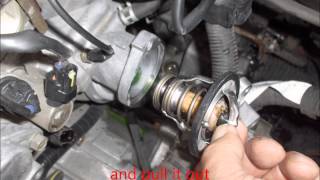
Typical fix: Replace the engine coolant thermostat and the corresponding gasket. The thermostat is located in a housing where the lower radiator hose connects to the engine. It is highly recommended to drain and replace the engine coolant with a proper phosphate-based Asian vehicle formula at the same time and properly bleed the system of air. 🎬 See this walkthrough for replacing the thermostat on your Outlander.
Est. part cost: $15-$40 - Low Engine Coolant / Air in System 🟡 Medium Probability Coolant leaks can develop over time from hoses, the radiator, or the water pump. A low coolant level can create an air pocket in the system, especially around the temperature sensor, which can cause it to read incorrectly and trigger this code. This is a common issue after incomplete coolant servicing.
How to confirm: Visually inspect the coolant level in the overflow reservoir and the radiator (only when the engine is cold). Check for any visible signs of green or blue coolant leaks under the vehicle or around the engine bay. If you hear a 'gurgling' or 'waterfall' sound from the dashboard area on startup, it's a classic sign of air in the heater core.
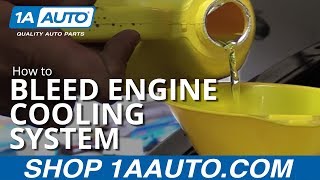
Typical fix: Find and repair the source of the leak. Top off or refill the cooling system with the correct type of coolant (phosphate-based Asian vehicle coolant) and properly bleed the air from the system. This often involves running the engine with the radiator cap off and the heater on high until the thermostat opens and all air bubbles are purged.
Est. part cost: $5-$25 for coolant, more if a part needs replacement. - Faulty Engine Coolant Temperature (ECT) Sensor ⚪ Low Probability → Shop Engine Coolant Temperature Sensor While generally reliable, sensors can fail with age, sending inaccurate or erratic temperature readings to the ECM. This is a less common cause for P0128 than the thermostat itself.
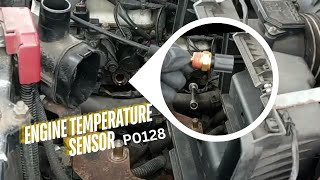
How to confirm: Use an OBD-II scanner to monitor the live data from the ECT sensor. If the reading is nonsensical (e.g., reads -40°F), jumps around erratically, or never changes even as the engine warms up, the sensor is likely bad. The sensor is located on the thermostat housing, making it easy to access.
Typical fix: Replace the Engine Coolant Temperature Sensor. This is a simple screw-in part, though a small amount of coolant will leak out during replacement.
Est. part cost: $20-$60
Rare But Worth Checking
- Cooling Fan Stuck On: → Shop Engine Cooling Fan Blade If the electric radiator fan runs constantly, even when the engine is cold, it can over-cool the engine and prevent it from reaching operating temperature in time. This is usually caused by a failed fan relay or fan control module, and is less common on this platform for this specific code.
- Incorrect Thermostat Installed: → Shop Integrated Thermostat Housing Assembly Installing a thermostat with a lower-than-specified opening temperature (e.g., a 170°F or a 'racing' thermostat) can cause the P0128 code because the ECM's parameters are programmed for the factory 180°F (82°C) or 190°F (88°C) thermostat, depending on the engine. The engine will run cooler than the computer expects.
Diagnosis Steps
- Check for a Check Engine Light and scan for codes. Confirm P0128 is present.
- With the engine cold, check the coolant level in the overflow reservoir and radiator. Top off if necessary.
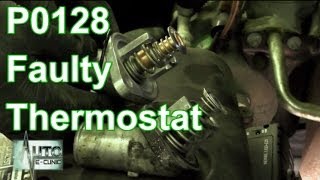
- Start the cold engine and feel the upper radiator hose. If it warms up within the first 1-2 minutes, the thermostat is stuck open. 🎬 Watch: How to diagnose a faulty thermostat and P0128 code. Proceed to replace it.
- If the hose stays cold, turn the cabin heater on high. Note if the air is hot or only only lukewarm. Lukewarm air points to a thermostat issue.
- Monitor the engine temperature gauge on the dashboard during a drive. Does it stay on 'C', drop at highway speeds, or take an unusually long time to move?
- Use an OBD-II scanner to monitor live coolant temperature data. Watch the temperature as the engine warms up. It should rise steadily and stabilize around 180-195°F (82-90°C). If it's slow to rise or never reaches this range, the thermostat is the most likely culprit.
- If the scanner data seems illogical (e.g., -40°F) or doesn't match the physical temperature of the engine, suspect a faulty ECT sensor.
- Visually inspect the electric cooling fans to ensure they are not running constantly from a cold start.
Parts You'll Likely Need
- Engine Coolant Thermostat
(OEM #MD315301 (4G69, 82°C/180°F), MD972903 (4G64, 88°C/190°F))— This is the most common cause of P0128, as they fail by sticking open, preventing the engine from warming up properly. It is critical to use the correct temperature thermostat for your specific engine.
Trusted brands: Mitsubishi Genuine, Aisin, Stant (e.g., 14078), Gates, Tridon
OEM price range: $30-$50
Aftermarket price range: $15-$40 - Engine Coolant Temperature Sensor
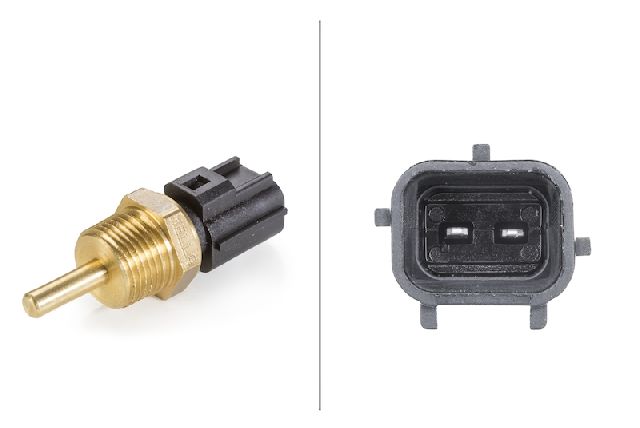
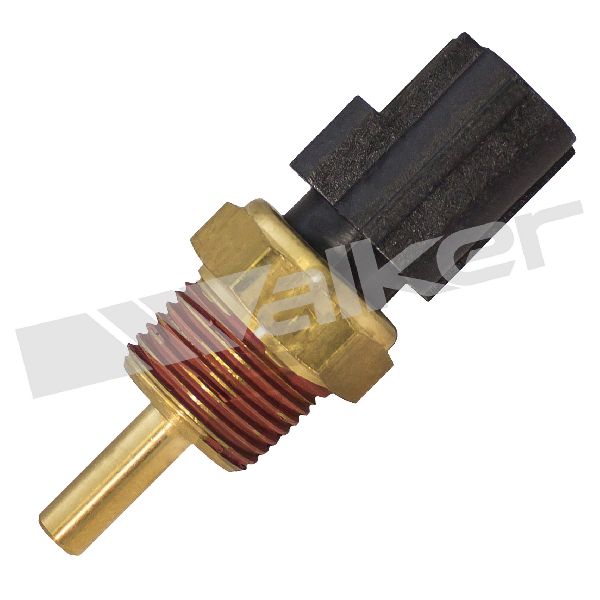
(OEM #MR985034)— This is the second most likely part to fail. If the thermostat replacement does not fix the issue, or if scan tool data is erratic, this sensor is the next logical replacement. 🎬 Watch: How to replace the engine coolant temperature sensor.
Trusted brands: NGK, Delphi, Denso, Standard Motor Products
OEM price range: $40-$70
Aftermarket price range: $20-$60 - Thermostat Gasket / Seal
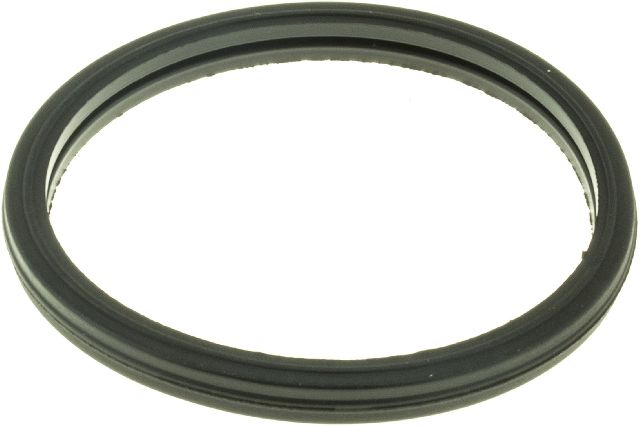
(OEM #Included with thermostat kit)— A new gasket or seal must always be used when replacing the thermostat to prevent leaks. Often included with the new thermostat.
Trusted brands: Fel-Pro, Victor Reinz
OEM price range: $5-$15
Aftermarket price range: $3-$10
Technical Service Bulletins (TSBs) & Recalls
- TSB Bulletin #TSB-26-14-001: This technical bulletin provides specific guidance for technicians when the check engine light is on with P0128-00 stored in the Engine ECU.
- TSB Bulletin #WB2026-007: This warranty bulletin provides instructions on submitting a warranty claim when the check engine light is on with either P2096-00 or P0128-00 stored in the Engine ECU.
Platform-Specific Known Issues
- Thermostat Location: → Shop Integrated Thermostat Housing Assembly On the 2.4L 4G64/4G69 engines, the thermostat is located in a housing at the end of the lower radiator hose, where it connects to the engine block. Access requires removing the air filter box and intake tube.
- Jiggle Valve Orientation: When installing the new thermostat, the small 'jiggle valve' or 'jiggle pin' on the flange of the thermostat must be oriented at the top, in the 12 o'clock position. This allows trapped air to bleed past the thermostat when it is closed.
Mechanic-Grade Diagnostic Values
- Engine Coolant Temperature (ECT) Sensor Resistance — expected: Approx. 2,200 - 3,000 Ω at 20°C (68°F); Approx. 250 - 350 Ω at 80°C (176°F).. Failure: Readings that are infinite (open circuit), zero (short circuit), or significantly outside the expected range for a given temperature indicate a faulty sensor.
- Engine Coolant Temperature (ECT) Sensor Voltage — expected: Approx. 2.0V - 3.0V on a cold start (e.g., 20°C / 68°F), dropping to approx. 0.5V - 1.0V at normal operating temperature (e.g., 90°C / 194°F).. Failure: Voltage that is stuck high (e.g., >4.5V) or low, or does not change as the engine warms up, points to a sensor or wiring issue.
Wiring & Ground Locations
- G12 — At the left rear of the engine compartment.. This is a primary engine ground point. A corroded or loose connection at G12 could affect the reference ground for multiple sensors, including the ECT sensor, potentially causing incorrect readings that could contribute to or mimic a P0128 fault.
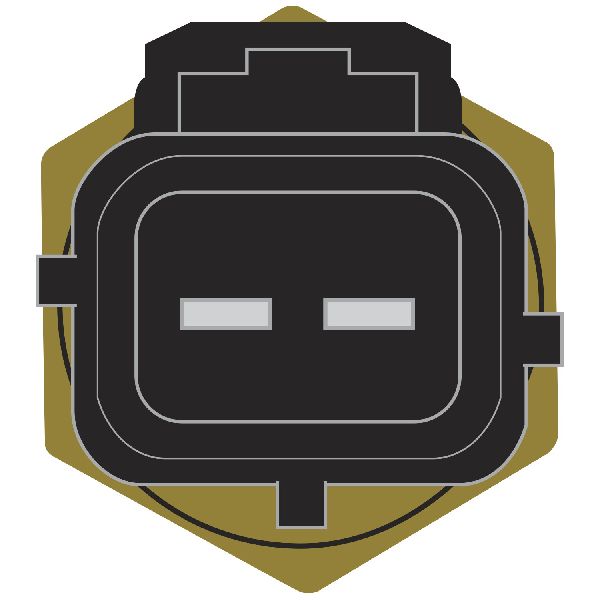
- B-05 — The 2-pin electrical connector for the Engine Coolant Temperature sensor, located on the thermostat housing on the rear of the cylinder head.. This is the direct connection point for testing the ECT sensor and its wiring. Technicians test for resistance across the sensor's pins and check for 5V reference and ground from the ECM at this connector.
Real Owner Repair Stories
- YouTube user 'TT Autogarages' (2006 Mitsubishi Outlander) — Check Engine Light with code P0128.
❌ Tried (didn't work) The owner decided to replace the sensor first before the thermostat, based on the code.
✅ What actually fixed it The owner replaced the Engine Coolant Temperature (ECT) sensor. He advised that for an inexpensive sensor on a higher mileage vehicle, it's often better to just replace it rather than test it and risk it failing under driving conditions later. - YouTube user 'EricTheCarGuy' for TRQ (Generic vehicle, but demonstrates the universal diagnostic process.) — Check Engine Light with code P0128. Scan tool showed coolant temp was not rising past 181°F.
❌ Tried (didn't work) Revving the engine to try and build heat did not raise the temperature to the proper operating range.
✅ What actually fixed it Upon removal, the thermostat was found to be physically broken and stuck in a partially open position. Replacing the thermostat and bleeding the cooling system resolved the issue, with the new operating temperature stabilizing around 212°F.
OEM Part Supersession History
MD005131, MD997221, MD997604→MD972903— Standard part evolution and consolidation by the manufacturer.
Heads up: This is the 88°C thermostat for the 2003 4G64 engine. Do not use in 2004-2006 models.
Model Year Variations Within This Range
- 2003 only: The 2003 Outlander uses the 2.4L SOHC 4G64 engine. The correct OEM thermostat is an 88°C (190°F) unit, part number MD972903.
- 2004-2006: The 2004-2006 Outlander uses the 2.4L SOHC MIVEC 4G69 engine. The correct OEM thermostat is an 82°C (180°F) unit, part number MD315301. Using the 88°C thermostat from the earlier engine may not set a code but is not to the manufacturer's specification. Using a thermostat rated lower than 82°C will likely trigger a P0128 code.
Diagnostic Flowchart
Real Owner Stories
Aggregated from forums and TSBs cited above. Mileages and costs reflect what owners reported in those sources.
2006 Mitsubishi Outlander
Symptoms: Check engine light came on, code P0128, scanner indicated 'engine is running cold.'
What fixed it: Replaced the engine temperature coolant sensor. The owner advised replacing the sensor on high-mileage vehicles rather than testing it, as it is an inexpensive part.
Cost: $12-$15
Source hint: YouTube comment by TT Autogarages ('#p0128 Engine light!!! Here's How to replace your temperature coolant sensor on mitsubishi outlander - YouTube')
2003 Mitsubishi Galant (4G64 engine)
Symptoms: Check engine light illuminated with a P0128 code three weeks after installing a lower-temperature (68°C) Mishimoto thermostat.
What fixed it: The issue was identified as the non-OEM temperature thermostat. The ECU expects to see a higher operating temperature, confirming that lower-temp thermostats will trigger this code on the 4G64 platform.
Source hint: Reddit r/MechanicAdvice - 'P0128 after installing low-temp thermostat'
Related OBD-II Codes
Frequently Asked Questions
Where is the thermostat located on my 2003-2006 Mitsubishi Outlander?
Is there a specific way the new thermostat needs to be installed on the 2.4L engine?
What type of coolant should I use when refilling my Outlander after fixing a P0128 code?
I hear a gurgling sound from the dashboard when I start my Outlander. Could this be related to the P0128 code?
Can I install a lower-temperature performance thermostat to keep my 4G64 engine cooler?
How can I quickly test if my Outlander's thermostat is stuck open without removing it?
Helpful Videos
We Have This Part in Stock


The information in this article is provided for general reference and educational purposes only. Vehicle specifications, procedures, and part compatibility can vary by production date, trim level, and region. Always consult your vehicle's factory service manual and verify part numbers before purchasing or performing repairs. Safety-critical components such as airbags, seat belts, and braking systems should be installed by a qualified professional.
- Mitsubishi Outlander:
- 🧭 Diagnostic Flowchart
- 🎬 Helpful Videos
- 🛍️ Shop This Part
- What's Unique About the 2003-2006 Mitsubishi Outlander
- Symptoms You May Notice
- Most Likely Causes
- Rare But Worth Checking
- Diagnosis Steps
- Parts You'll Likely Need
- Technical Service Bulletins (TSBs) & Recalls
- Platform-Specific Known Issues
- Mechanic-Grade Diagnostic Values
- Wiring & Ground Locations
- Real Owner Repair Stories
- OEM Part Supersession History
- Model Year Variations Within This Range
- Real Owner Stories
- 2006 Mitsubishi Outlander
- 2003 Mitsubishi Galant (4G64 engine)
- Related OBD-II Codes
- Frequently Asked Questions
- 🎟️ Get 5% Off