

P0128 on 2014-2021 Mitsubishi Outlander: Coolant Temperature and Thermostat Guide
Code P0128 on a 2014-2021 Mitsubishi Outlander almost always means the engine thermostat is stuck open and needs to be replaced. It's a common, DIY-friendly repair with parts costing between $25 and $75. For the 2.4L engine, the entire thermostat housing assembly must be replaced.
- P0128 on a 2014-2021 Outlander is almost always caused by a thermostat that is stuck open.
- Symptoms include a Check Engine Light, a low-reading temperature gauge, and poor heater performance.
- This is a highly DIY-able repair, with the main part costing between $25 and $75.
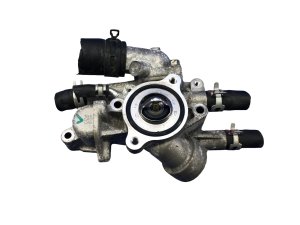
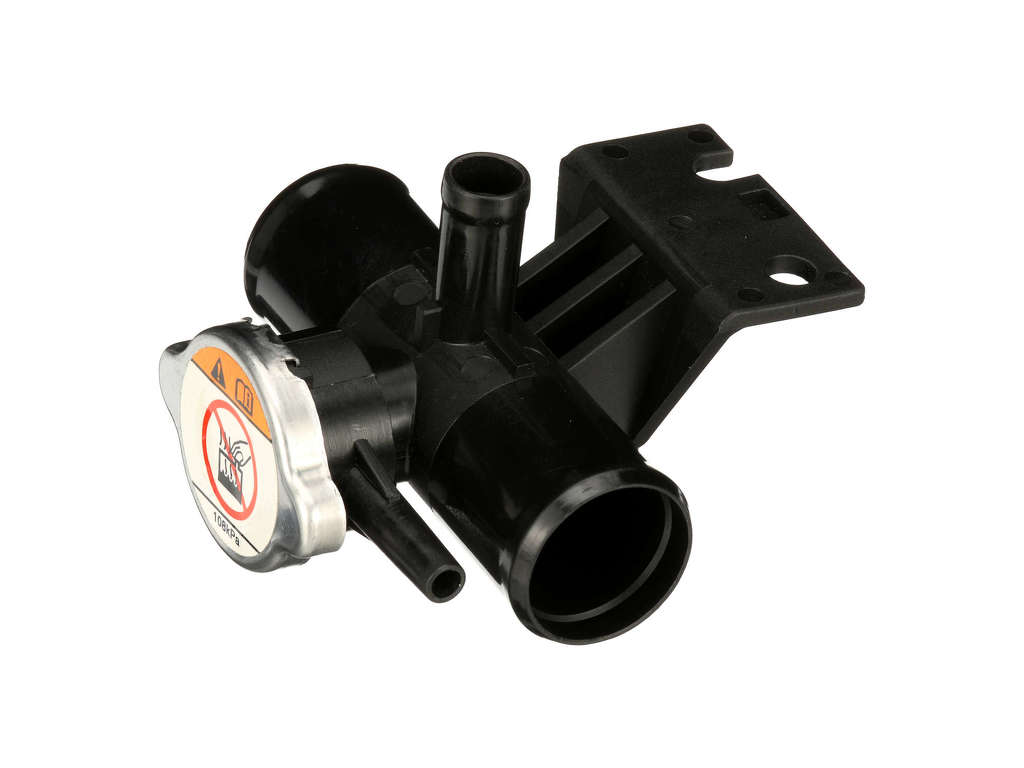
- On the 2.4L 4J12 engine, the entire thermostat housing must be replaced, not just the thermostat itself.
- For the 3.0L V6, bleeding air from the cooling system after the repair can be tricky and may require elevating the front of the vehicle.
What's Unique About the 2014-2021 Mitsubishi Outlander
For the third-generation Outlander, the P0128 code is a straightforward cooling system fault, almost universally pointing to a failed thermostat that is stuck in the open position. There are no widespread manufacturer defects, recalls, or complex diagnostic issues associated with this code on this platform. The cooling systems for both the 4J12 and 6B31 engines are conventional. A key difference is that on the 2.4L 4J12 engine, the thermostat is integrated into a plastic housing and must be replaced as a single assembly. The 3.0L V6 uses a more traditional, standalone thermostat.
Symptoms You May Notice
- Check Engine Light is on
- Engine temperature gauge reads lower than normal or takes a very long time to reach the middle
- Heater blows lukewarm or cool air, especially on cold days
- Noticeable decrease in fuel economy
- Replacing the coolant temperature sensor first without confirming the thermostat is working properly. A stuck-open thermostat is the most common cause by a wide margin.
Most Likely Causes
- Engine Thermostat Stuck Open 🔴 High Probability → Shop Integrated Thermostat Housing Assembly Thermostats are wear-and-tear items. The internal wax pellet mechanism can weaken over time, causing the valve to fail in the open position, which is the most common failure mode. On the 2.4L engine, the entire plastic housing can also develop cracks over time.
How to confirm: Monitor the live coolant temperature data with an OBD-II scanner. If the temperature struggles to rise above 170-175°F (77-79°C) during normal driving or drops significantly at highway speeds, the thermostat is likely stuck open.
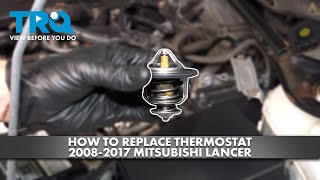
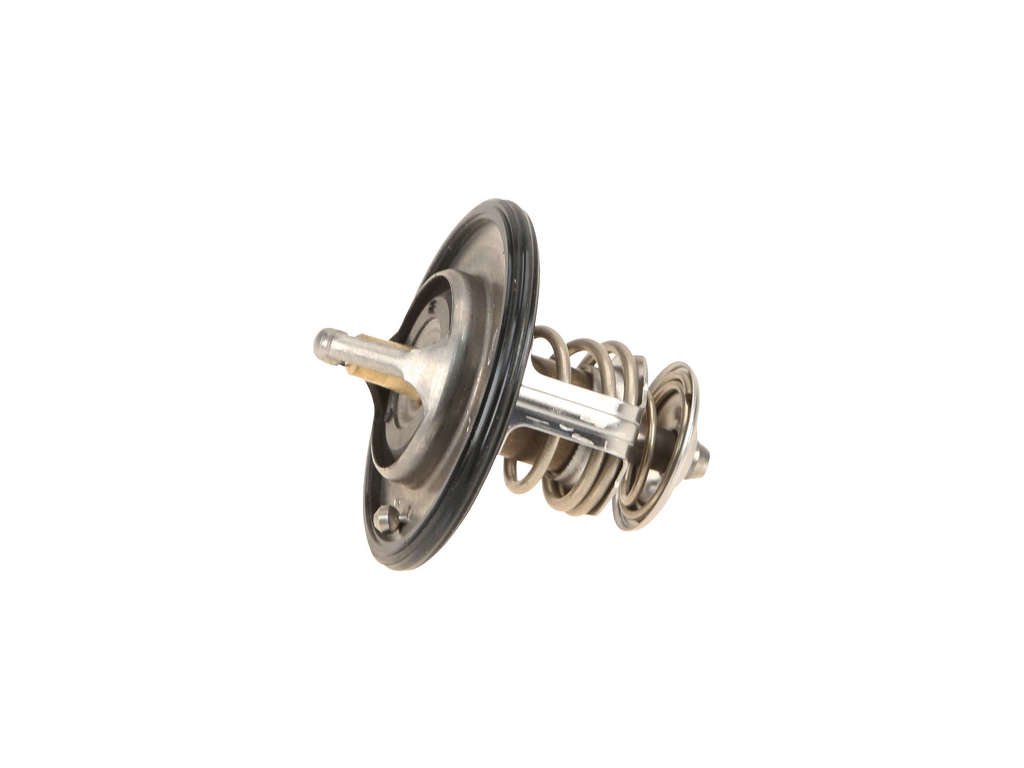
Typical fix: Replace the engine coolant thermostat and gasket. For the 2.4L 4J12 engine, the entire integrated thermostat housing assembly must be replaced. 🎬 Watch: This walkthrough shows how to replace the 2.4L thermostat housing. For the 3.0L 6B31, the thermostat can be replaced individually. Always drain and refill the coolant.
Est. part cost: $25-$75 - Low Engine Coolant Level 🟡 Medium Probability Coolant can be lost over time due to small, undetected leaks in hoses, the radiator, or the water pump. An air pocket can form in the system, preventing the coolant temperature sensor from getting an accurate reading.
How to confirm: Visually inspect the coolant level in the overflow reservoir and the radiator (only when the engine is completely cool). If it is low, top it off and check for leaks.
Typical fix: Top off the coolant with a compatible blue, phosphate-based Asian vehicle coolant like Mitsubishi Genuine Super Long Life Coolant Premium. If the level drops again, find and repair the source of the leak.
Est. part cost: $20-$40 - Faulty Engine Coolant Temperature (ECT) Sensor ⚪ Low Probability → Shop Engine Coolant Temperature Sensor While not as common as thermostat failure, the ECT sensor can fail, sending incorrect low-temperature readings to the ECM.
How to confirm: With a cold engine, use a scan tool to compare the ECT sensor reading to the Intake Air Temperature (IAT) sensor reading. They should be within a few degrees of each other. If the ECT reading is skewed significantly lower, the sensor is likely faulty.
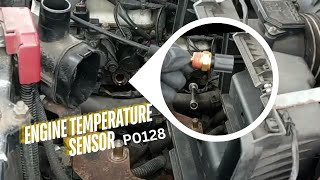
Typical fix: Replace the engine coolant temperature sensor. The OEM part number is 1308A012. 🎬 See this video to find and replace the coolant temperature sensor.
Est. part cost: $20-$50
Rare But Worth Checking
- Cooling Fan Stuck On: → Shop Engine Cooling Fan Blade A rare electrical issue, such as a failed fan control relay, could cause the cooling fan to run continuously. This would over-cool the engine, especially at idle or low speeds, and could trigger a P0128.
Diagnosis Steps
- Check for other DTCs: Use an OBD-II scanner to see if any other codes are present that could indicate a related issue.
- Inspect Coolant Level and Condition: With the engine cold, check the coolant level in the reservoir and radiator. Ensure it is full and the coolant is clean. Low coolant can cause this code.
- Monitor Coolant Temperature: Use a scan tool to watch the live data from the Engine Coolant Temperature (ECT) sensor. Start the engine from cold and watch the temperature rise.
- Analyze Temperature Behavior: The temperature should climb steadily to around 189-194°F (87-90°C) and then stabilize as the thermostat opens and closes. If it's slow to warm up, never reaches this temperature (hovering around or below 171°F/77°C), or drops sharply when driving at highway speeds, the thermostat is almost certainly stuck open.
- Test the ECT Sensor: If the thermostat appears to be working, test the ECT sensor. Compare its reading to the Intake Air Temperature sensor on a cold engine. They should be nearly identical. If not, the ECT sensor is suspect.
- Inspect Cooling Fan: Ensure the cooling fan is not running constantly when the engine is cold. It should only activate when the coolant reaches a high temperature or the A/C is on.
Parts You'll Likely Need
- Engine Coolant Thermostat
(OEM #4J12 (2.4L): 1305A803 (Integrated Housing) / 6B31 (3.0L): 1305A259 (Thermostat only))— This is the most common cause of P0128. The thermostat fails in the open position, preventing the engine from reaching operating temperature.
Trusted brands: Mitsubishi Genuine, Motorad, Dayco, Gates
OEM price range: $50-$90
Aftermarket price range: $25-$50 - Engine Coolant Temperature Sensor
(OEM #1308A012)— A less common but possible cause. If the sensor provides inaccurate low readings to the ECM, it can trigger the code.
Trusted brands: Mitsubishi Genuine, Denso, NGK, Standard Motor Products
OEM price range: $60-$90
Aftermarket price range: $20-$50 - Engine Coolant
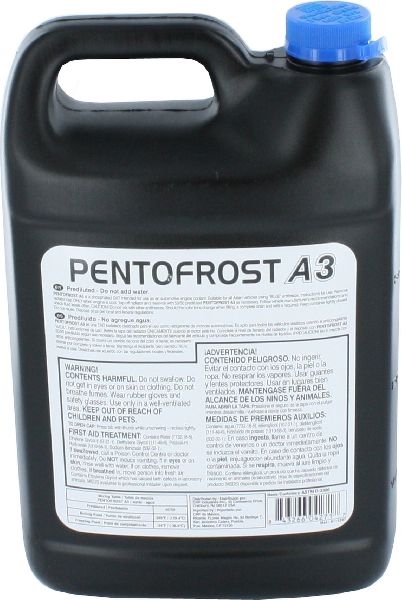
(OEM #MZ320125 (Super Long Life Coolant Premium))— The system will need to be drained 🎬 Watch: A quick guide to replacing the temperature sensor and clearing codes. to replace the thermostat and refilled with the correct type of coolant.
Trusted brands: Mitsubishi Genuine Super Long Life Coolant, PEAK OET Blue, Valvoline Asian Vehicle Blue
OEM price range: $30-$40 per gallon
Aftermarket price range: $20-$30 per gallon
Technical Service Bulletins (TSBs) & Recalls
- TSB-26-14-001: While this TSB is for the future 2026 Outlander, it documents a P0128 code issue being investigated by Mitsubishi, showing that thermostat regulation logic is an area of ongoing manufacturer attention.
- Bulletin #WB2026-007: This manufacturer bulletin provides instructions on submitting a warranty claim when the check engine light is on with P0128-00 stored in the Engine ECU.
Platform-Specific Known Issues
- On the 2.4L 4J12 engine, the thermostat is part of a larger plastic housing assembly and cannot be replaced separately. The entire housing must be unbolted and replaced.
- The 3.0L 6B31 V6 engine does not have a dedicated coolant bleeder screw, which can make removing air from the system after a coolant service more difficult. The front of the vehicle may need to be elevated to help air travel to the radiator cap opening.
Mechanic-Grade Diagnostic Values
- Engine Coolant Temperature (ECT) Sensor Resistance — expected: 2.1 - 2.7 kΩ at 20°C (68°F), 0.26 - 0.36 kΩ at 80°C (176°F).. Failure: Resistance readings that are significantly outside the expected range for a given temperature indicate a faulty sensor.
- Engine Coolant Temperature (ECT) Sensor Signal Voltage (Key On, Engine Off) — expected: Approximately 2.8V to 3.2V on a cold engine (e.g., 20°C / 68°F).. Failure: A voltage that is significantly lower (e.g., 1.5V) on a cold engine suggests a skewed sensor that is incorrectly reporting a warmer temperature to the ECM.
Scan Tool Commands That Help
- Mitsubishi M.U.T.-III SE (or equivalent advanced scanner): OBD-II Drive Cycle - Pattern 3 or Pattern 10 — After replacing a component and clearing the DTC, the official Mitsubishi procedure requires performing a specific drive cycle to allow the ECM to re-run its internal monitor and confirm the fault is resolved. This prevents the code from returning unexpectedly.
Wiring & Ground Locations
- B-05 — On the engine wiring harness, connecting to the Engine Coolant Temperature sensor.. This is the specific connector for the ECT sensor. Technicians testing for voltage, resistance, or signal integrity would probe the pins at this connector.
- Engine Block Ground — A primary ground strap connecting the negative battery terminal to the engine block.. The ECT sensor circuit relies on a stable ground reference via the ECM, which is grounded to the engine and chassis. A corroded or loose engine block ground can introduce electrical noise and cause erratic sensor readings, although this is a rare cause for P0128.
OEM Part Supersession History
1305A283→1305A803— Standard part revision, likely for improved material durability or minor design change.
Heads up: The parts are interchangeable; 1305A803 is the correct replacement for the original 1305A283.
Model Year Variations Within This Range
- 2014-2021: No significant variations related to the cause or repair of P0128 have been documented within this generation. The primary difference remains between the 2.4L (integrated thermostat housing) and 3.0L V6 (standalone thermostat) engines across all years.
Diagnostic Flowchart
Other Known Issues on This Vehicle
Issues unrelated to this code that are worth knowing about as an owner of this generation:
- CVT Shudder, Hesitation, or Failure (2.4L) 🔴 High — Common complaint, especially on vehicles with deferred maintenance. Can occur at various mileages. Proper and timely CVT fluid changes are critical. (Ref: TSB-22-23-001REV (and earlier versions) addresses shudder/surge conditions and provides diagnostic procedures.)
- Timing Belt Service (3.0L V6) 🔴 High — This is a critical maintenance item. The 6B31 is an interference engine, meaning a snapped belt will cause catastrophic engine damage. The recommended service interval is typically around 90,000-105,000 km (approx. 60,000-65,000 miles), but can be reduced if oil leaks onto the belt.
- Oil Consumption (Primarily 2.4L) 🟠 Medium — Some owners report noticeable oil consumption between changes, requiring regular monitoring of the oil level. Not a universal problem but documented enough to be a known quirk.
- Premature Brake Wear 🟡 Low — Some owners, particularly of the 2018 model year, have reported faster-than-expected wear on brake pads and rotors.
Used vs. New Parts: Buying Guide for This Vehicle
When a used part is the smart pick: For the 3.0L V6, a used thermostat housing (the metal pipe portion, not the thermostat itself) from a low-mileage donor is a safe bet if the original is damaged or corroded. For the 2.4L, a used integrated housing is generally not recommended due to the risk of hidden cracks in the plastic.
Donor-vehicle mileage cap: roughly under 60000 miles for the part to have meaningful remaining life.
What to inspect on the donor part:
- For the 2.4L integrated housing, inspect the plastic meticulously for any hairline cracks, especially around the hose necks and bolt holes.
- Check for chalky white or colored residue, which indicates a past coolant leak.
- Ensure all electrical connector pins on a used ECT sensor are straight and free of corrosion.
OEM-only on this vehicle (don't cheap out):
- Engine Coolant Thermostat: While aftermarket thermostats are available, the OEM part is calibrated to the exact temperature (approx. 189°F/87°C) required by the ECM logic. Using a thermostat with a different temperature rating can cause the P0128 code to persist.
Aftermarket brands forum-validated for this vehicle:
- ECT Sensor: Denso, NGK/NTK
- Thermostat (if OEM is unavailable): Gates, Motorad, Dayco
Brands owners have reported issues with on this vehicle:
- Unnamed, 'white-box' electronic sensors and thermostat assemblies from online marketplaces should be avoided, as their calibration and long-term reliability are often poor.
Real Owner Stories
Aggregated from forums and TSBs cited above. Mileages and costs reflect what owners reported in those sources.
2014 Mitsubishi Outlander 3.0L V6
Symptoms: A user discussed a squeaking noise and sought advice on differentiating between a serpentine belt issue and a timing belt problem, which is a critical maintenance item on this engine.
What fixed it: The discussion emphasized that the 6B31 is an interference engine and requires a timing belt service around 60,000-65,000 miles to prevent catastrophic damage.
Source hint: Reddit - r/MitsubishiOutlander
2013-Present Mitsubishi Outlander Sport 2.4L 4J12
Symptoms: Owners report the thermostat sticking open, leading to the P0128 failure mode.
What fixed it: Replacement of the integrated thermostat housing assembly, as the thermostat cannot be replaced separately on the 4J12 engine.
Source hint: vehicle_specific_issues / platform_mates
Related OBD-II Codes
Frequently Asked Questions
Can I just replace the thermostat on my 2014-2021 Outlander 2.4L 4J12 engine?
Is there a specific coolant I should use for my Mitsubishi Outlander to avoid P0128 issues?
I'm seeing P0128 on a newer model; is Mitsubishi investigating this?
Why is my 3.0L V6 Outlander so difficult to bleed after a coolant change?
Can I use an aftermarket thermostat to fix the P0128 code?
What part number do I need if my ECT sensor is the cause of the P0128?
Helpful Videos
Used OEM Parts in Stock
New Aftermarket Parts Available


The information in this article is provided for general reference and educational purposes only. Vehicle specifications, procedures, and part compatibility can vary by production date, trim level, and region. Always consult your vehicle's factory service manual and verify part numbers before purchasing or performing repairs. Safety-critical components such as airbags, seat belts, and braking systems should be installed by a qualified professional.
- Mitsubishi Outlander:
- 🧭 Diagnostic Flowchart
- 🎬 Helpful Videos
- 🛍️ Shop This Part
- What's Unique About the 2014-2021 Mitsubishi Outlander
- Symptoms You May Notice
- Most Likely Causes
- Rare But Worth Checking
- Diagnosis Steps
- Parts You'll Likely Need
- Technical Service Bulletins (TSBs) & Recalls
- Platform-Specific Known Issues
- Mechanic-Grade Diagnostic Values
- Scan Tool Commands That Help
- Wiring & Ground Locations
- OEM Part Supersession History
- Model Year Variations Within This Range
- Other Known Issues on This Vehicle
- Used vs. New Parts: Buying Guide for This Vehicle
- Real Owner Stories
- 2014 Mitsubishi Outlander 3.0L V6
- 2013-Present Mitsubishi Outlander Sport 2.4L 4J12
- Related OBD-II Codes
- Frequently Asked Questions
- 🎟️ Get 5% Off