

P0128 on 2007-2012 Nissan Sentra: Causes and Fixes for Coolant Temperature Issues
On a 2007-2012 Nissan Sentra, code P0128 almost always means the engine thermostat is stuck open and needs to be replaced. In some specific cases, particularly on 2007 models, a simple software update (reprogram) of the engine computer by a dealer may be the required fix, as outlined in a Nissan TSB.
- P0128 on a 2007-2012 Sentra means the engine is running too cold, not too hot.
- The most likely cause by far is a thermostat that is stuck in the open position.
- Before replacing any parts, check the coolant level first, as a low level can trigger this code.
- Be aware of Nissan TSB NTB21-006; if you have no other symptoms, the fix might be a dealer-performed ECM software update, not a new thermostat.
- When replacing the thermostat, use the correct part for your engine (2.0L or 2.5L) and refill with Nissan Blue coolant.
What's Unique About the 2007-2012 Nissan Sentra
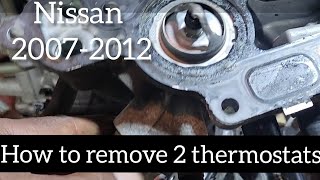
While a stuck thermostat is the most common culprit for a P0128 code on most cars, Nissan has issued a Technical Service Bulletin (TSB) specifically for some 2007 Sentra models for this code. This bulletin notes that if the P0128 code is present without any other symptoms or drivability problems, the actual cause may be the software calibration in the Engine Control Module (ECM). In these cases, the fix is not to replace parts, but to have a Nissan dealer reprogram the ECM with updated software. Additionally, the 2.5L SE-R models are unique in that they have two thermostats, though only one is typically responsible for this code.
🎬 See how to locate and change both thermostat housings.Symptoms You May Notice
- Check Engine Light is on
- Heater takes a very long time to blow warm air or doesn't get very hot
- Engine temperature gauge on the dashboard reads lower than normal, often staying below the halfway mark
- Temperature gauge may drop while driving at highway speeds or coasting downhill
- Noticeable decrease in fuel economy
- Replacing the Engine Coolant Temperature (ECT) sensor when the thermostat is actually the problem. The thermostat is the more common failure point for this specific code.
- Replacing the thermostat with a cheap, low-quality aftermarket part that opens at the wrong temperature or fails quickly. Using an OEM or high-quality OEM-spec thermostat is recommended.
Most Likely Causes
- Stuck-Open Engine Thermostat 🔴 High Probability → Shop Integrated Thermostat Housing Assembly This is the most common failure mode for thermostats in general. The internal wax pellet or spring mechanism wears out or the rubber seal fails, causing it to fail in the open position, allowing coolant to circulate constantly and preventing the engine from reaching operating temperature quickly.
How to confirm: With a cold engine, start the car and feel the upper radiator hose. It should remain cool for several minutes. If it starts to get warm almost immediately, the thermostat is likely stuck open, allowing coolant to flow to the radiator prematurely. Alternatively, a scan tool can show the coolant temperature rising very slowly and failing to reach the target temperature (often around 180-205°F).
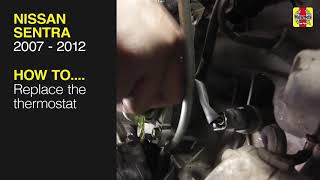
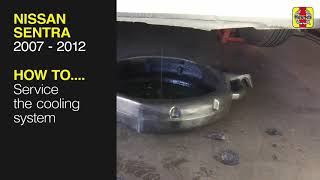
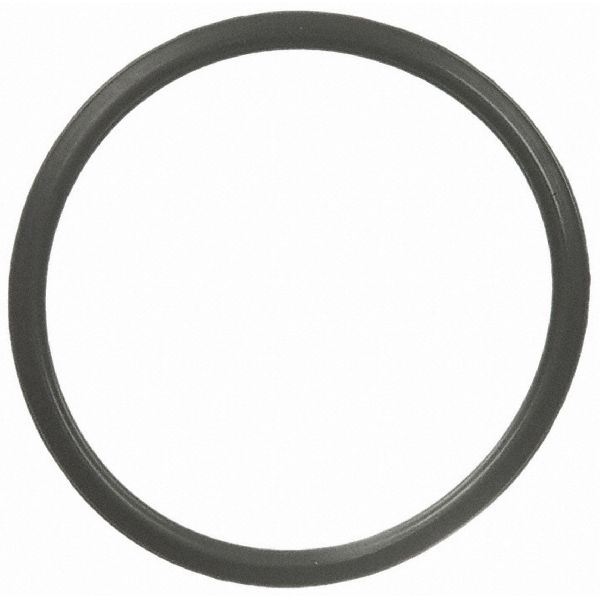
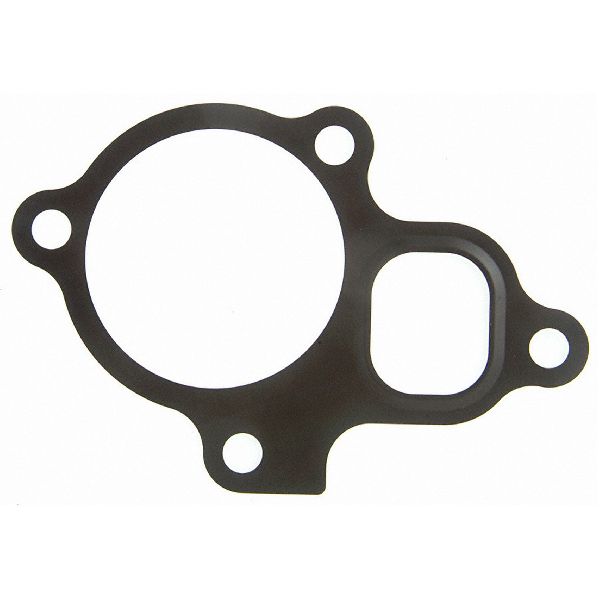
Typical fix: Replace the engine thermostat and gasket, or the entire thermostat housing assembly. 🎬 Watch: Step-by-step guide to replacing the thermostat housing assembly. For the 2.0L MR20DE, this is often done as a complete housing assembly. Refill with fresh Nissan Blue Long Life Antifreeze/Coolant and properly bleed the air from the system. 🎬 Watch: How to properly service and bleed your cooling system.
Est. part cost: $20-$150 - Low Engine Coolant Level 🟡 Medium Probability Coolant can be lost over time due to small, undetected leaks in hoses, the radiator, or the water pump. A low level can cause air pockets in the system, which may gather around the ECT sensor and cause an inaccurate reading, triggering a P0128.
How to confirm: Visually inspect the coolant level in the overflow reservoir and the radiator (only when the engine is completely cool). If low, top it off and monitor for any signs of leaks (puddles under the car, sweet smell, white residue on hoses).
Typical fix: Top off the coolant and inspect the cooling system for leaks. Repair any leaks found. A cooling system pressure test is the most effective way to find small leaks.
Est. part cost: $15-$30 for coolant - Engine Control Module (ECM) Software Calibration Error ⚪ Low Probability → Shop Engine Control Module (ECM) Nissan has issued a Technical Service Bulletin (TSB) for some 2007 Sentra models where the ECM's parameters for triggering P0128 are too sensitive. In these specific cases, the fix is not a hardware replacement but an ECM reprogram performed by a dealer. This is a known pattern for Nissan vehicles.
How to confirm: This must be confirmed by a Nissan dealership or a qualified shop with access to Nissan's technical bulletins and programming tools. They will check for applicable TSBs and the current ECM software version for your VIN.
Typical fix: Reprogram the ECM with updated software provided by Nissan. This is not a DIY repair.
Est. part cost: $0-$200 for labor/programming - Faulty Engine Coolant Temperature (ECT) Sensor ⚪ Low Probability → Shop Engine Coolant Temperature Sensor While sensors can fail, they are generally less likely to be the cause of P0128 than the thermostat. A faulty ECT sensor would typically trigger other codes as well (like P0117, P0118) or give completely illogical readings. It's a common misdiagnosis for P0128.
How to confirm: Use a scan tool to monitor the ECT sensor reading with a cold engine. It should be very close to the ambient air temperature. If the reading is illogical (e.g., reads 200°F on a cold morning, or -40°F), the sensor is bad. Resistance can also be checked with a multimeter.
Typical fix: Replace the ECT sensor and clear the codes.
Est. part cost: $25-$75
Rare But Worth Checking
- Cooling Fan Stuck On: → Shop Engine Cooling Fan Blade If the electric cooling fan runs constantly, even when the engine is cold and the A/C is off, it can over-cool the engine and prevent it from reaching operating temperature, triggering P0128. This is usually caused by a failed fan relay, fan control module, or shorted wiring.
Diagnosis Steps
- Check for other stored trouble codes with an OBD-II scanner. Codes for the ECT sensor (P0117, P0118) would point away from the thermostat.
- With the engine cold, check the coolant level in the reservoir and radiator. Top off if necessary.
- Inspect for any visible signs of coolant leaks around hoses, the radiator, and the water pump.
- Start the engine from cold and monitor the live data from the ECT sensor on a scan tool. The temperature should rise steadily. Note how long it takes to reach ~180°F.
- Feel the upper radiator hose. It should stay cool for the first few minutes of operation and then get hot suddenly as the thermostat opens. If it warms up gradually from the start, the thermostat is stuck open.
- If the temperature rises very slowly or drops at highway speeds, the thermostat is almost certainly the cause.
- If the thermostat appears to be working correctly but the code persists, especially on a 2007 model, consult a Nissan dealer about potential TSBs related to an ECM reprogram for your specific vehicle.
- After repair, clear the codes. Note that some systems require several drive cycles for the code to clear on its own if a scanner is not used.
Parts You'll Likely Need
- Engine Coolant Thermostat Housing Assembly (2.0L MR20DE)
(OEM #11060-ET00A)— This is the most common part to fail, causing P0128. For the 2.0L engine, it is often replaced as a complete housing assembly. This part number supersedes 11060-ET000 and 11060-ET00C.
Trusted brands: Nissan (OEM), Dorman, Four Seasons, Gates
OEM price range: $150-$215
Aftermarket price range: $40-$120 - Engine Coolant Thermostat Housing Assembly (2.5L QR25DE)
(OEM #11060-ET80A)— This is the correct housing for the larger 2.5L engine found in SE-R models. It is the most likely cause of code P0128. Note that the QR25DE engine actually has two thermostats, but this is the primary one related to P0128.
Trusted brands: Nissan (OEM), Dorman, Gates
OEM price range: $105-$150
Aftermarket price range: $35-$90 - Nissan Long Life Antifreeze/Coolant (Blue)
(OEM #999MP-L25500P)— The cooling system must be drained to replace the thermostat. It is critical to refill with the correct OEM-specified fluid to prevent corrosion and ensure system longevity.
Trusted brands: Nissan (OEM), Pentofrost A3, Beck/Arnley, Idemitsu
OEM price range: $25-$35 per gallon
Aftermarket price range: $20-$30 per gallon
Technical Service Bulletins (TSBs) & Recalls
- NTB21-006 / NTB21-006A: While this TSB applies to 2021 Nissan Versa and not the 2007-2012 Sentra, it is cited as an example of Nissan's known procedure for fixing erroneous P0128 codes via an ECM reprogram. It instructs technicians to check the ECM part number and, if it matches a list, reprogram it instead of replacing parts. Bulletin #NTB21-006 specifically notes that if the MIL is on with DTC P0128 (THERMSTAT FNCTN) stored and there are no drivability concerns, an ECM update is the required action.
Platform-Specific Known Issues
- A Nissan Technical Service Bulletin (TSB) was issued for some 2007 Sentra models where the P0128 code can be triggered incorrectly due to sensitive ECM software. The fix is not a part replacement but an ECM reprogram performed by a dealer.
- The 2.0L MR20DE engine has the thermostat located in a housing on the driver's side of the engine, below the alternator, which can be somewhat difficult to access.
- Properly bleeding the air out of the cooling system after a thermostat replacement is critical. Air pockets can cause incorrect temperature readings and trigger the P0128 code to return.
Mechanic-Grade Diagnostic Values
- Engine Coolant Temperature (ECT) Sensor Resistance — expected: Approximately 2,000Ω - 3,000Ω at 20°C (68°F) and 200Ω - 350Ω at 80-90°C (176-194°F).. Failure: Readings that are significantly outside this range, or an open/infinite resistance reading, indicate a faulty sensor.
- Engine Coolant Temperature (ECT) Sensor Voltage (Key On, Engine Off) — expected: Approximately 3.0V - 3.5V on a cold engine (20°C / 68°F).. Failure: A voltage that is illogically low (e.g., 0.5V on a cold engine) or high suggests a sensor or wiring issue.
- Engine Coolant Temperature (ECT) Sensor Voltage (Engine at Operating Temp) — expected: Approximately 0.5V - 1.3V when the engine is fully warmed up (80°C+).. Failure: Voltage that remains high (e.g., above 2.0V) after the engine should be warm indicates the ECM is not seeing the temperature rise, which could be a thermostat or sensor issue.
Wiring & Ground Locations
- Engine Control Harness Ground — General locations for engine grounds on the B16 Sentra include the rear and right-rear side of the engine block/compartment.. The ECT sensor, like all engine sensors, relies on a clean ground connection to provide an accurate signal to the ECM. A corroded or loose engine ground can introduce voltage offsets, causing the ECM to receive an incorrect temperature reading and potentially trigger a P0128 code even if the sensor and thermostat are good.
Real Owner Repair Stories
- Reddit user in r/MechanicAdvice (2012 Honda Civic (similar P0128 diagnostic principle)) — P0128 code returned two months after replacing the thermostat with an aftermarket part.
❌ Tried (didn't work) Replacing the thermostat with an 'OEM equivalent' from an auto parts store.
✅ What actually fixed it The discussion concluded that the likely causes for the return of the code were a faulty new aftermarket thermostat, the car not being driven long enough to warm up (less likely given the commute), a faulty ECT sensor, or a cooling fan stuck on. The story highlights the risk of non-OEM parts failing prematurely. - Car Talk Community Forum User (Not specified, but general P0128 diagnosis) — Check engine light with P0128 returned immediately after a mechanic replaced the thermostat.
❌ Tried (didn't work) Having a mechanic replace the thermostat.
✅ What actually fixed it The user's freeze frame data showed the engine at only 160°F after 7 minutes on the highway. The community identified the most likely causes as the mechanic installing the wrong temperature thermostat (e.g., a cooler 180°F instead of a 195°F OEM spec) or, more likely, failing to properly bleed the air from the cooling system, causing an air pocket at the ECT sensor. - NHTSA ODI #10958658 — An owner reported that after having a power steering column fixed and an air intake flow hose replaced, they continued to get error codes that come and go, specifically P0122, P0128, and P0123.
When the Usual Fixes Don't Work
- While replacing the thermostat is the most common fix, there are numerous owner accounts of the P0128 code returning. The most frequent reasons for this are the use of a low-quality aftermarket thermostat that fails quickly or has an incorrect opening temperature, and failure to properly bleed all air from the cooling system after the repair. In rarer cases, particularly on 2007 models, the true cause is a software calibration issue in the ECM that requires a dealer reprogram to fix.
OEM Part Supersession History
22630-0M200→22630-7Y000— Standard part revision and consolidation across multiple Nissan platforms.
Heads up: The new part number (22630-7Y000) is the correct service part for all 2007-2012 Sentra models.
Model Year Variations Within This Range
- 2007: A specific Technical Service Bulletin (TSB) was issued for some 2007 models that could set a P0128. The fix may require reprogramming the ECM rather than replacing the thermostat.
- 2007-2012 (SE-R Models): Models with the 2.5L QR25DE engine (SE-R and SE-R Spec V) are equipped with two thermostats. While P0128 is almost always caused by the primary thermostat, awareness of the second is crucial to avoid diagnostic confusion.
Diagnostic Flowchart
Real Owner Stories
Aggregated from forums and TSBs cited above. Mileages and costs reflect what owners reported in those sources.
2006 Nissan Sentra
Symptoms: Received a P0128 code.
What fixed it: Replaced the thermostat and ECT sensor, but the code kept returning. This highlighted that a simple parts-swap doesn't always work, pointing toward a more complex cause like ECM logic or an incorrect aftermarket part.
Source hint: Reddit r/MechanicAdvice - 2006 Nissan Sentra p0128 help
2007 Nissan Sentra
Symptoms: P0128 code triggered incorrectly despite the cooling system functioning properly.
What fixed it: Reprogrammed the Engine Control Module (ECM) with updated software provided by Nissan, resolving the overly sensitive parameters that were setting the code.
Source hint: Nissan Technical Service Bulletin (TSB) / Vehicle Specific Issues
Nissan Vehicle (NPORA Forums)
Symptoms: P0128 code with engine coolant temperature reading too low.
What fixed it: Replaced the thermostat. A technician noted that if the coolant level is full, the issue is almost always the thermostat, and they simply replace it rather than spending time testing it.
Source hint: NPORA Forums - P0128 Help, Engine Coolant Temp too low
Related OBD-II Codes
Frequently Asked Questions
Is there a Technical Service Bulletin (TSB) for the P0128 code on my 2007 Nissan Sentra?
Where is the thermostat located on the 2007-2012 Sentra with the 2.0L MR20DE engine?
I replaced the thermostat on my Sentra, but the P0128 code came back. What did I do wrong?
My Sentra's heater is blowing warm air just fine, but I have a P0128 code. Can I delay the repair?
What type of coolant should I use when replacing the thermostat housing on my 2007-2012 Sentra?
Helpful Videos
We Have This Part in Stock


The information in this article is provided for general reference and educational purposes only. Vehicle specifications, procedures, and part compatibility can vary by production date, trim level, and region. Always consult your vehicle's factory service manual and verify part numbers before purchasing or performing repairs. Safety-critical components such as airbags, seat belts, and braking systems should be installed by a qualified professional.
- Nissan Sentra:
- 🧭 Diagnostic Flowchart
- 🎬 Helpful Videos
- 🛍️ Shop This Part
- What's Unique About the 2007-2012 Nissan Sentra
- Symptoms You May Notice
- Most Likely Causes
- Rare But Worth Checking
- Diagnosis Steps
- Parts You'll Likely Need
- Technical Service Bulletins (TSBs) & Recalls
- Platform-Specific Known Issues
- Mechanic-Grade Diagnostic Values
- Wiring & Ground Locations
- Real Owner Repair Stories
- When the Usual Fixes Don't Work
- OEM Part Supersession History
- Model Year Variations Within This Range
- Real Owner Stories
- 2006 Nissan Sentra
- 2007 Nissan Sentra
- Nissan Vehicle (NPORA Forums)
- Related OBD-II Codes
- Frequently Asked Questions
- 🎟️ Get 5% Off