

P0128 on 2007-2009 Saturn Aura 3.6L V6: Causes and Fixes for a Cool-Running Engine
On a 2007-2009 Saturn Aura with the 3.6L V6, code P0128 almost always means the engine thermostat is stuck open and needs to be replaced. This is a very common, well-documented failure for this GM engine. The repair involves replacing the thermostat and housing assembly, costing between $50 and $150 for the part, and is a manageable DIY job for many.
- P0128 on your 3.6L Aura means the engine is running too cool, not overheating.
- The most likely cause, by a very wide margin, is a thermostat that has failed in the open position.
- Symptoms include a low temperature gauge reading, poor cabin heat, and reduced fuel economy.
- The fix is to replace the thermostat/housing assembly and properly bleed the air from the cooling system.
- While you're working in the area, consider replacing the ECT sensor as a preventative measure.
- Be aware of other major known issues for this car, such as timing chain stretch and transmission wave plate failure, which are unrelated to P0128 but important for owners to know.
What's Unique About the 2007-2009 Saturn Aura
The Saturn Aura uses engines common across the General Motors family, including the 3.6L LY7 V6. For these GM engines, the P0128 code is overwhelmingly caused by a simple mechanical failure: the thermostat sticking in the open position. While electronic sensors can fail, the thermostat is the most frequent point of failure for this specific code on this platform. The repair is well-documented on similar GM vehicles like the Chevrolet Malibu and Pontiac G6, confirming it as a common issue for this engine family.
Symptoms You May Notice
- Check Engine Light is on
- Engine temperature gauge reads lower than normal, often staying below the halfway mark
- Temperature gauge drops noticeably at highway speeds
- Heater blows lukewarm or cool air, instead of hot
- Noticeable decrease in fuel economy
- Cooling fans may run constantly even when the engine is cold
- Replacing the Engine Coolant Temperature (ECT) sensor when the thermostat is the actual problem. While the sensor can fail, the thermostat is far more likely to be the cause of a solitary P0128 code.
- Replacing the radiator cap, which does not typically cause a P0128 code.
- Replacing the water pump, which usually causes an overheating condition (P0125), not an under-heating one.
Most Likely Causes
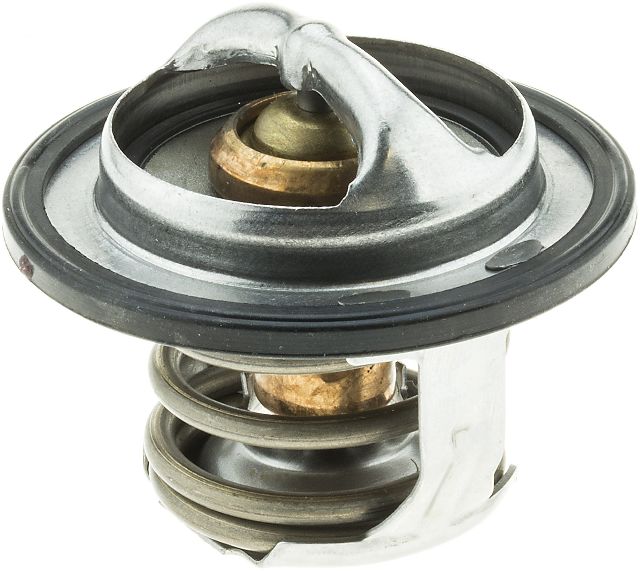
- Engine Thermostat Stuck Open 🔴 High Probability → Shop Integrated Thermostat Housing Assembly The thermostat assembly is a known high-failure part on this generation of GM V6 engines, often due to the degradation of its internal seal.
How to confirm: Monitor the Engine Coolant Temperature (ECT) with a scan tool. If the temperature fails to reach ~180°F after 10-15 minutes of driving, or if it drops significantly at highway speeds, the thermostat is likely stuck open. A simple physical check is to feel the upper radiator hose shortly after a cold start; if it gets warm within the first couple of minutes, coolant is flowing to the radiator prematurely, confirming the thermostat is open.
Typical fix: Replace the entire engine coolant thermostat and housing assembly. Access requires removing the air intake ducting and throttle body. Ensure the new thermostat's air bleed valve is oriented at the top during installation. The system must be refilled with DEX-COOL coolant and properly bled of all air after the repair.
Est. part cost: $50-$150 - Faulty Engine Coolant Temperature (ECT) Sensor 🟡 Medium Probability → Shop Engine Coolant Temperature Sensor
How to confirm: With the engine cold, use a scan tool to compare the ECT reading to the Intake Air Temperature (IAT) reading. They should be within a few degrees of each other. If the ECT reading is illogical (e.g., -40°F or 250°F on a cold engine), the sensor is bad. A faulty ECT sensor will often set other codes like P0117 or P0118.
Typical fix: Replace the Engine Coolant Temperature sensor. On the 3.6L V6, it is located near the thermostat housing, making it wise to replace at the same time as the thermostat.
Est. part cost: $20-$50 - Low Engine Coolant Level ⚪ Low Probability
How to confirm: Visually inspect the coolant level in the coolant reservoir (expansion tank) when the engine is cold. If it is below the 'COLD FULL' line, the level is low. An air pocket near the ECT sensor due to low coolant can cause an inaccurate reading.
Typical fix: Top off the cooling system with a 50/50 mix of DEX-COOL approved coolant and water. If the level drops again, you must find and repair the source of the leak.
Est. part cost: $20-$35 for a gallon of coolant
Rare But Worth Checking
- Cooling Fan Stuck On: → Shop Engine Cooling Fan Blade A faulty fan relay or fan control module could cause the cooling fans to run continuously, even when the engine is cold. This would prevent the engine from reaching operating temperature, especially in cold weather or at idle.
Diagnosis Steps
- Verify the code: Use an OBD-II scanner to confirm that P0128 is the only code present. If other codes exist (especially ECT sensor circuit codes like P0117/P0118), address them first.
- Check Coolant Level: Before starting, check the coolant level in the reservoir. If it's low, top it off with DEX-COOL coolant and check for visible leaks.
- Monitor Live Data: Use a scan tool to monitor the Engine Coolant Temperature (ECT) sensor data. Start the cold engine and watch the temperature rise. It should climb steadily.
- Physical Hose Check: Within the first 2-3 minutes of the engine running from cold, carefully feel the large upper radiator hose. It should remain cool. If it starts to get warm quickly, coolant is flowing through the radiator, indicating a stuck-open thermostat.
- Test Drive: Drive the vehicle for 10-15 minutes. The coolant temperature should reach and maintain approximately 180-195°F. If the temperature struggles to get over 160-170°F, or if it rises while idling but drops significantly once you start driving at highway speeds, the thermostat is almost certainly stuck open.
- Inspect ECT Sensor: If the thermostat appears to be working correctly, test the ECT sensor. Compare its cold reading to the IAT sensor reading—they should be within 5°F of each other.
- Inspect Cooling Fans: Ensure the cooling fans are not running constantly from the moment you start the car.
- Repair and Bleed: Based on the findings, replace the faulty component (most often the thermostat assembly). Afterwards, it is critical to properly bleed all air from the cooling system. This can be done using a spill-free funnel kit while running the engine with the heat on high.
Parts You'll Likely Need
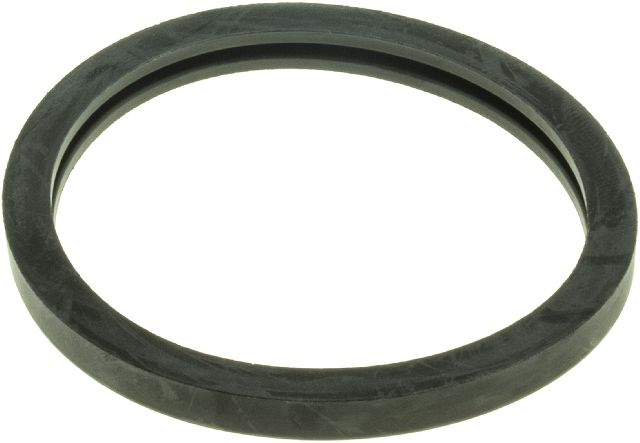
- Engine Coolant Thermostat Housing Assembly
(OEM #12622410 (may be superseded by 12651113))— This is the most common cause of P0128 on the 3.6L V6 engine, as the original part is prone to getting stuck open. The replacement is the entire housing which includes the thermostat and seal.
Trusted brands: ACDelco (OEM), Gates, Dorman
OEM price range: $80-$150
Aftermarket price range: $50-$100 - Engine Coolant Temperature (ECT) Sensor
(OEM #12639899)— This is the second most likely cause if the thermostat is confirmed to be working correctly. It can send false temperature readings to the engine computer. It's often replaced preventatively during a thermostat job due to its location.
Trusted brands: ACDelco (OEM), Bosch, NTK
OEM price range: $30-$60
Aftermarket price range: $20-$40 - DEX-COOL Antifreeze/Coolant — Required to refill the system after replacing the thermostat or ECT sensor. You will lose coolant during the repair. Use a 50/50 pre-mixed solution or concentrate mixed with distilled water.
Trusted brands: ACDelco, Prestone, Peak
OEM price range: $25-$40
Aftermarket price range: $20-$35
Technical Service Bulletins (TSBs) & Recalls
- PIT5967: While not for this specific vehicle year, this GM document notes that a P0128 code can trigger a 'Service Steering Message' on some newer GM vehicles to protect steering components from a potential (but undetected) overheat. This highlights a known GM fail-safe strategy where a P0128 code can cause seemingly unrelated warning messages.
Platform-Specific Known Issues
- Owner Experience: Thermostat Replacement: → Shop Integrated Thermostat Housing Assembly An owner of a 2008 Saturn Aura XR on SaturnFans.com reported getting the P0128 code along with poor heater performance. After replacing the thermostat and ECT sensor, the temperature gauge returned to its normal position (just under halfway) and the heater worked properly again. The owner noted the job was straightforward but required draining some coolant and carefully bleeding the system afterward to get all the air out.
Mechanic-Grade Diagnostic Values
- Engine Coolant Temperature (ECT) Sensor Resistance — expected: Approximately 2,000-3,000 Ohms at 68°F (20°C).. Failure: A reading that is infinite (open circuit), near zero (shorted), or does not correspond to the temperature/resistance chart indicates a faulty sensor.
- Engine Coolant Temperature (ECT) Sensor Voltage (Key On, Engine Off) — expected: Approximately 3.0 - 3.5V on a cold engine (~20°C/68°F).. Failure: A voltage reading near 5.0V suggests an open circuit or bad ground, while a reading near 0V suggests a short to ground.
- Mode 6 Thermostat Monitor Test (TID $82) — expected: The test value should be below the maximum allowable limit set by the manufacturer.. Failure: A test value exceeding the maximum limit indicates the engine is warming up too slowly, which will flag P0128 and strongly suggests a stuck-open thermostat.
Scan Tool Commands That Help
- GM Tech2 / GDS2: Cooling Fan Relay Control — This bidirectional command allows a technician to manually turn the cooling fans on and off. It is used to verify if the fan control circuit, relays, and fan motors are working correctly, helping to rule out a 'fan stuck on' condition as the cause of P0128.
Wiring & Ground Locations
- Engine Control Module (ECM) — Located on the left side of the engine compartment, in front of the battery.. The ECM receives the signal from the ECT sensor and determines if the warm-up time is too long, setting the P0128 code. All related wiring terminates here.
- Engine Coolant Temperature (ECT) Sensor — On the 3.6L V6, the sensor is located near the thermostat housing, under the throttle body.. This is the primary sensor that provides the engine temperature data to the ECM. A corroded connector or damaged wiring at this location will cause incorrect readings.
- G105 / G111 / G113 — For the 3.6L engine, G105 is at the center rear of the engine, G111 is on the top rear right side, and G113 is on the center left side cylinder head.. These are critical engine block and cylinder head grounds. The ECT sensor relies on a solid engine ground for an accurate reading. A loose or corroded ground at these points can introduce voltage offsets, causing the ECM to receive a skewed temperature signal.
Real Owner Repair Stories
- SaturnFans.com Forum User (2008 Saturn Aura XE 2.4L (platform-mate engine with similar issue)) — Check Engine Light with code P0128, temperature gauge would not go past the first tick mark, and the heater was not blowing hot air.
❌ Tried (didn't work) Initially suspected the ECT sensor but did not replace it.
✅ What actually fixed it Replacing the engine coolant thermostat assembly fixed all symptoms. After the replacement and bleeding the system, the temperature gauge returned to the normal middle position and the heater worked correctly.
OEM Part Supersession History
12615097→12622410— Part number consolidation and potential minor design updates over the life of the platform.
Heads up: The part number 12622410 is listed for 2.2L and 2.4L engines, not the 3.6L V6. The correct thermostat housing for the 3.6L LY7 is a different part number. The Pass 2 OEM number of 12622410 is incorrect for the V6. A correct part number for the 3.6L thermostat housing is closer to 12608814 or similar, though multiple revisions exist.
Diagnostic Flowchart
Other Known Issues on This Vehicle
Issues unrelated to this code that are worth knowing about as an owner of this generation:
- Premature Timing Chain Stretch 🔴 High — Very common, typically occurs between 80,000-150,000 miles. Can lead to catastrophic engine failure if ignored. (Ref: GM Special Coverage #11340 / TSB #12-06-01-009D covered this issue for 10 years/120,000 miles and included an ECM reprogram for the oil life monitor. This coverage is now expired.)
- 3-5-R Wave Plate Failure (6T70/6T75 Transmission) 🔴 High — Common failure leading to a loss of 3rd, 5th, and Reverse gears, often requiring a transmission rebuild. Typically occurs between 70,000 and 120,000 miles. (Ref: GM Special Coverage #14404B extended the warranty for this specific failure to 10 years/120,000 miles. This coverage is now expired.)
- Sudden Loss of Electric Power Steering (EPS) 🔴 High — Widespread issue where power steering assist is suddenly lost, increasing crash risk at low speeds. (Ref: NHTSA Campaign ID: 14V153000 (GM Recall #N140115). Dealers were instructed to replace faulty steering components.)
Used vs. New Parts: Buying Guide for This Vehicle
When a used part is the smart pick: For this repair, a used part is strongly discouraged. The thermostat is a wear-and-tear item with a known failure rate due to its internal seal degrading. A used thermostat carries a high risk of failing in the same manner as the original part shortly after installation.
What to inspect on the donor part:
- Not applicable, as a new part is the only recommended path.
OEM-only on this vehicle (don't cheap out):
- Engine Coolant Thermostat Assembly
Aftermarket brands forum-validated for this vehicle:
- ACDelco (OEM): Overwhelmingly recommended on forums as the most reliable option to ensure correct operating temperature.
- Gates: Generally considered a reliable second choice if ACDelco is unavailable, though some users have reported they can run slightly cooler than OEM spec.
Brands owners have reported issues with on this vehicle:
- Generic/No-Name Brands: Many forum users report that cheap, unbranded thermostats often fail quickly or are inaccurate out of the box.
- Motorad: Some users have reported issues with Motorad thermostats on other GM applications, suggesting potential quality control variance.
- Dorman: While a popular aftermarket brand, some owners express concern about the long-term durability of their plastic cooling system components compared to OEM.
Real Owner Stories
Aggregated from forums and TSBs cited above. Mileages and costs reflect what owners reported in those sources.
2008 Saturn Aura XR 3.6L V6
Symptoms: Check engine light (P0128) along with poor heater performance; the heater was only blowing lukewarm air.
What fixed it: Replaced the thermostat and ECT sensor, followed by draining and carefully bleeding the coolant system.
Source hint: SaturnFans.com Forum
2008-2012 Chevrolet Malibu 3.6L LY7 V6
Symptoms: Fault code P0128; engine not reaching operating temperature.
What fixed it: Replacement of the thermostat assembly, which required removing the air intake for access, and a system bleed.
Source hint: Video: 2008-2012 Chevy Malibu Thermostat Replacement P0128 by G Automotive
Related OBD-II Codes
Frequently Asked Questions
Why is my Saturn Aura showing a 'Service Steering Message' along with the P0128 code?
Is there a specific way to install the thermostat on the 3.6L LY7 V6 to prevent air pockets?
Can I use any coolant to top off my 2007-2009 Saturn Aura?
My temperature gauge drops when I'm on the highway; is this a sensor or a thermostat issue?
Is the P0128 code related to the Electric Power Steering (EPS) recall on the Saturn Aura?
Should I replace the ECT sensor at the same time as the thermostat on my 3.6L Aura?
Helpful Videos
We Have This Part in Stock


The information in this article is provided for general reference and educational purposes only. Vehicle specifications, procedures, and part compatibility can vary by production date, trim level, and region. Always consult your vehicle's factory service manual and verify part numbers before purchasing or performing repairs. Safety-critical components such as airbags, seat belts, and braking systems should be installed by a qualified professional.
- Saturn Aura:
- 🧭 Diagnostic Flowchart
- 🎬 Helpful Videos
- 🛍️ Shop This Part
- What's Unique About the 2007-2009 Saturn Aura
- Symptoms You May Notice
- Most Likely Causes
- Rare But Worth Checking
- Diagnosis Steps
- Parts You'll Likely Need
- Technical Service Bulletins (TSBs) & Recalls
- Platform-Specific Known Issues
- Mechanic-Grade Diagnostic Values
- Scan Tool Commands That Help
- Wiring & Ground Locations
- Real Owner Repair Stories
- OEM Part Supersession History
- Other Known Issues on This Vehicle
- Used vs. New Parts: Buying Guide for This Vehicle
- Real Owner Stories
- 2008 Saturn Aura XR 3.6L V6
- 2008-2012 Chevrolet Malibu 3.6L LY7 V6
- Related OBD-II Codes
- Frequently Asked Questions
- 🎟️ Get 5% Off